

Life and work
Anouk Aimée was a French actress. Born: 27 April 1932. Died: 18 June 2024. Citizenship recorded in the biographical source: France.
Anouk Aimée was a French actress. Born on 27 April 1932, this profile follows Anouk Aimée through existing screen stories and their real settings. The connected credits include La Dolce Vita (1960) and 8½ (1963). The location trail reaches Trevi Fountain, Via Vittorio Veneto and Piazza del Popolo, with existing stories in Rome. Each stop belongs to a particular work and moment, keeping the creative credit beside the place that gives the story its geography. Explore the films and programmes below to move between performances, collaborators and settings, and use each location’s own story for the documented connection. These are work locations; a credit alone does not establish a personal visit to every mapped stop. The credit and location sources remain alongside each story for further reading.
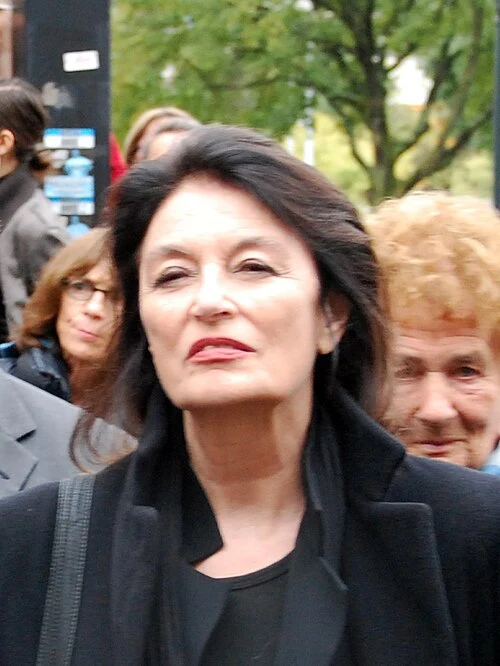
← All peopleFollow the geography ↓Source photograph is cropped from Jean-Marc Ayrault’s tribute-to-Jacques-Demy photograph. Resized without enlargement and converted to WebP. The existing People portrait frame may crop the photograph. Source colours retained.
Anouk Aimée was a French actress. Born: 27 April 1932. Died: 18 June 2024. Citizenship recorded in the biographical source: France.
Anouk Aimée is credited as cast member on La Dolce Vita. The work’s existing location story leads to Trevi Fountain. Trevi Fountain carries Sylvia and Marcello into one of cinema’s defining night images, but the World keeps the working monument separate from the staged fiction.
La Dolce Vita — credits ↗︎La Dolce Vita — location reference ↗︎
Anouk Aimée is credited as cast member on 8½. The work’s existing location story leads to Cinecittà Studios. Cinecittà is the necessary starting point: the studio culture Fellini made his creative home and the place where the film’s sets, auditions and spectacle could turn filmmaking itself into subject matter.
Explore 9 connections. Each connection links to its evidence; outlined circles mark approximate areas, not exact buildings or camera positions.
La Dolce Vita — Trevi Fountain
Trevi Fountain carries Sylvia and Marcello into one of cinema’s defining night images, but the World keeps the working monument separate from the staged fiction.
Piazza di Trevi, 00187 Roma RM
Open street map ↗︎La Dolce Vita — Via Vittorio Veneto
Via Veneto supplies the film’s social engine: cafés, photographers and arrivals repeatedly turn looking into a profession.
Via Vittorio Veneto, Roma
Open street map ↗︎La Dolce Vita — Cinecittà Studios
Cinecittà is the necessary counter-image to the streets: the studio system where Fellini could rebuild reality at the scale of memory.
8½ — Cinecittà Studios
Cinecittà is the necessary starting point: the studio culture Fellini made his creative home and the place where the film’s sets, auditions and spectacle could turn filmmaking itself into subject matter.
Via Tuscolana 1055, Roma
Open street map ↗︎La Dolce Vita — Piazza del Popolo
Piazza del Popolo widens the route into the public promenades and thresholds of Fellini’s modern Rome.
Piazza del Popolo, Roma
Open street map ↗︎La Dolce Vita — Villa Borghese
Villa Borghese closes on cultivated landscape and leisure—the composed surface beneath the film’s restless appetite.
Piazzale Scipione Borghese 5, Roma
Open street map ↗︎8½ — Castello della Cecchignola
At Cecchignola, the film built Guido’s family tomb in the military area and used the district for the spa world—a landscape in which memory, health ritual and production design become inseparable.
Vicolo della Cecchignoletta, 00143 Roma RM
Open street map ↗︎8½ — Paradiso sul Mare
Paradiso sul Mare in Anzio is a design reference rather than a claimed filming site: Italy for Movies identifies the casino as the architectural model for the spa that Fellini reshaped on screen.
Riviera Zanardelli 2, 00042 Anzio RM
Open street map ↗︎8½ — Via dell’Idroscalo
The skeletal launch tower for Guido’s abandoned science-fiction film was built on Via dell’Idroscalo at Lido di Ostia. It is the film’s clearest monument to ambition without conviction.
Via dell’Idroscalo, 00121 Roma RM
Open street map ↗︎8½ — Isola Sacra
Isola Sacra carries the Saraghina beach memory. Young Guido’s fascination, his punishment and the adult director’s self-mythology meet in one of 8½’s most recognisable returns to childhood.
Isola Sacra, Fiumicino RM
Open street map ↗︎Follow the work through its real places.
Federico Fellini
Federico Fellini
Cinema, fountains, studios and midnight streets. Follow the city where antiquity and modern image-making share the frame.
Flash: fire the flashbulb to expose Paparazzo’s contact sheet of thirteen real places in and around Rome.
Kite: pull Guido down from the sky on his rope, rub the s-syllables out of asa nisi masa to open real places, count Fellini’s films to eight and a half, then bring the cast into the ring round the launch tower.
Follow collaborators through their work and the real places tied to it.
Claudia Cardinale was an Italian actress. Born on 15 April 1938, this profile follows Claudia Cardinale through existing screen stories and their real settings. The connected credits include 8½ (1963). The location trail reaches Cinecittà Studios, Castello della Cecchignola and Via dell’Idroscalo, with existing stories in Rome. Each stop belongs to a particular work and moment, keeping the creative credit beside the place that gives the story its geography. Explore the films and programmes below to move between performances, collaborators and settings, and use each location’s own story for the documented connection. These are work locations; a credit alone does not establish a personal visit to every mapped stop. The credit and location sources remain alongside each story for further reading.