

Life and work
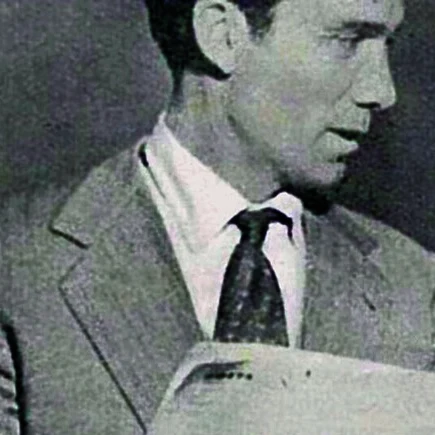
Lamberto Maggiorani was an actor. Born: 28 August 1909. Died: 22 April 1983. Citizenship recorded in the biographical source: Italy and Kingdom of Italy.
Lamberto Maggiorani was an actor. Born on 28 August 1909, this profile follows Lamberto Maggiorani through existing screen stories and their real settings. The connected credits include Bicycle Thieves (1948). The location trail reaches Piazza Vittorio Emanuele II, Porta Portese and Gazometro, with existing stories in Rome. Each stop belongs to a particular work and moment, keeping the creative credit beside the place that gives the story its geography. Explore the films and programmes below to move between performances, collaborators and settings, and use each location’s own story for the documented connection. These are work locations; a credit alone does not establish a personal visit to every mapped stop. The credit and location sources remain alongside each story for further reading.
← All peopleFollow the geography ↓Sharper provider-supplied source retained; portrait crop/resize without enlargement or reconstruction. Cropped to an individual portrait. Resized without enlargement and converted to WebP. The existing People portrait frame may crop the photograph. Source colours retained.
Lamberto Maggiorani was an actor. Born: 28 August 1909. Died: 22 April 1983. Citizenship recorded in the biographical source: Italy and Kingdom of Italy.
Lamberto Maggiorani is credited as cast member on Bicycle Thieves. The work’s existing location story leads to Piazza Vittorio Emanuele II. Antonio searches the market at Piazza Vittorio for the stolen bicycle, turning the crowded square into part of the film’s working economy.
Bicycle Thieves — credits ↗︎Bicycle Thieves — location reference ↗︎
Explore 5 connections. Each connection links to its evidence; outlined circles mark approximate areas, not exact buildings or camera positions.
Bicycle Thieves — Piazza Vittorio Emanuele II
Antonio searches the market at Piazza Vittorio for the stolen bicycle, turning the crowded square into part of the film’s working economy.
Piazza Vittorio Emanuele II, Roma
Open street map ↗︎Bicycle Thieves — Porta Portese
The search continues at Porta Portese, where the market’s scale makes the bicycle feel both visible everywhere and impossible to recover.
Via Portuense, 00153 Roma RM
Open street map ↗︎Bicycle Thieves — Gazometro
The Gazometro appears as Antonio follows the thief and the beggar through Ostiense, fixing the pursuit within the industrial city.
Via del Commercio, 00154 Roma RM
Open street map ↗︎Bicycle Thieves — Santi Nereo e Achilleo
The chase reaches Santi Nereo e Achilleo on Viale delle Terme di Caracalla; the church is a documented location, not a generic Rome landmark.
Viale delle Terme di Caracalla, 00153 Roma RM
Open street map ↗︎Bicycle Thieves — Ponte Duca d’Aosta
Ponte Duca d’Aosta carries the search toward the river and the stadium geography of the film’s closing movement.
Ponte Duca d’Aosta, 00194 Roma RM
Open street map ↗︎Follow the work through its real places.
Bicycle Thieves
Cinema, fountains, studios and midnight streets. Follow the city where antiquity and modern image-making share the frame.
Follow Bicycle Thieves through 5 real places in Rome. Postwar Rome becomes the film’s working map of precarity, pursuit and moral exhaustion.
Follow collaborators through their work and the real places tied to it.
Vittorio De Sica was an Italian film director. Born on 7 July 1901, this profile follows Vittorio De Sica through existing screen stories and their real settings. The connected credits include Bicycle Thieves (1948). The location trail reaches Piazza Vittorio Emanuele II, Porta Portese and Gazometro, with existing stories in Rome. Each stop belongs to a particular work and moment, keeping the creative credit beside the place that gives the story its geography. Explore the films and programmes below to move between performances, collaborators and settings, and use each location’s own story for the documented connection. These are work locations; a credit alone does not establish a personal visit to every mapped stop. The credit and location sources remain alongside each story for further reading.