

Life and work
Patricia Neal was an American stage and film actress. Born: 20 January 1926. Died: 8 August 2010. Citizenship recorded in the biographical source: United States.
Patricia Neal was an American stage and film actress. Born on 20 January 1926, this profile follows Patricia Neal through existing screen stories and their real settings. The connected credits include Breakfast at Tiffany's (1961). The location trail reaches Tiffany & Co. — The Landmark and Stephen A. Schwarzman Building. Each stop belongs to a particular work and moment, keeping the creative credit beside the place that gives the story its geography. Explore the films and programmes below to move between performances, collaborators and settings, and use each location’s own story for the documented connection. These are work locations; a credit alone does not establish a personal visit to every mapped stop. The credit and location sources remain alongside each story for further reading.
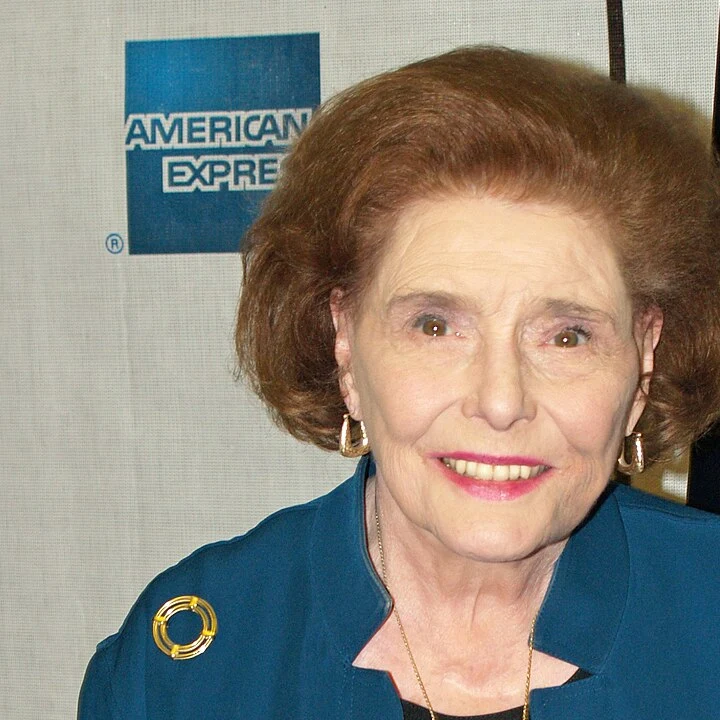
← All peopleFollow the geography ↓Original photograph cropped to the named subject and resized without enlargement; creator and licence retained. Cropped to an individual portrait. Resized without enlargement and converted to WebP. The existing People portrait frame may crop the photograph. Source colours retained. Adapted image retains CC BY-SA 3.0.
Patricia Neal was an American stage and film actress. Born: 20 January 1926. Died: 8 August 2010. Citizenship recorded in the biographical source: United States.
Patricia Neal is credited as cast member on Breakfast at Tiffany's. The work’s existing location story leads to Tiffany & Co. — The Landmark. The opening places Holly Golightly at the Fifth Avenue flagship window. The actual storefront and the story's New York geography align.
Breakfast at Tiffany's — credits ↗︎Tiffany & Co. — The Landmark ↗︎
Explore 2 connections. Each connection links to its evidence; outlined circles mark approximate areas, not exact buildings or camera positions.
Holly Golightly eats breakfast outside Tiffany's
The opening places Holly Golightly at the Fifth Avenue flagship window. The actual storefront and the story's New York geography align.
727 Fifth Avenue, New York, NY 10022
Open street map ↗︎The 42nd Street library appears in Breakfast at Tiffany's
NYPL records the film as the first major feature to use the 42nd Street library.
476 Fifth Avenue, New York, NY 10018
Open street map ↗︎Follow the work through its real places.
Blake Edwards
Street corners, fire escapes and subway rhythms. A city to read at walking pace.
Dawn: finish breakfast before 7.30, then walk through the doors.
Follow collaborators through their work and the real places tied to it.
Henry Mancini was an American film composer. Born on 16 April 1924, this profile follows Henry Mancini through existing screen stories and their real settings. The connected credits include Breakfast at Tiffany's (1961) and Columbo (1968). The location trail reaches Tiffany & Co. — The Landmark, Stephen A. Schwarzman Building and The Biltmore Los Angeles. Each stop belongs to a particular work and moment, keeping the creative credit beside the place that gives the story its geography. Explore the films and programmes below to move between performances, collaborators and settings, and use each location’s own story for the documented connection. These are work locations; a credit alone does not establish a personal visit to every mapped stop. The credit and location sources remain alongside each story for further reading.
George Peppard was an American actor. Born on 1 October 1928, this profile follows George Peppard through existing screen stories and their real settings. The connected credits include Breakfast at Tiffany's (1961) and The A-Team (1983). The location trail reaches Tiffany & Co. — The Landmark, Stephen A. Schwarzman Building and Westin Bonaventure Hotel. Each stop belongs to a particular work and moment, keeping the creative credit beside the place that gives the story its geography. Explore the films and programmes below to move between performances, collaborators and settings, and use each location’s own story for the documented connection. These are work locations; a credit alone does not establish a personal visit to every mapped stop. The credit and location sources remain alongside each story for further reading.