
Abbey Road Studios
St John’s Wood, London
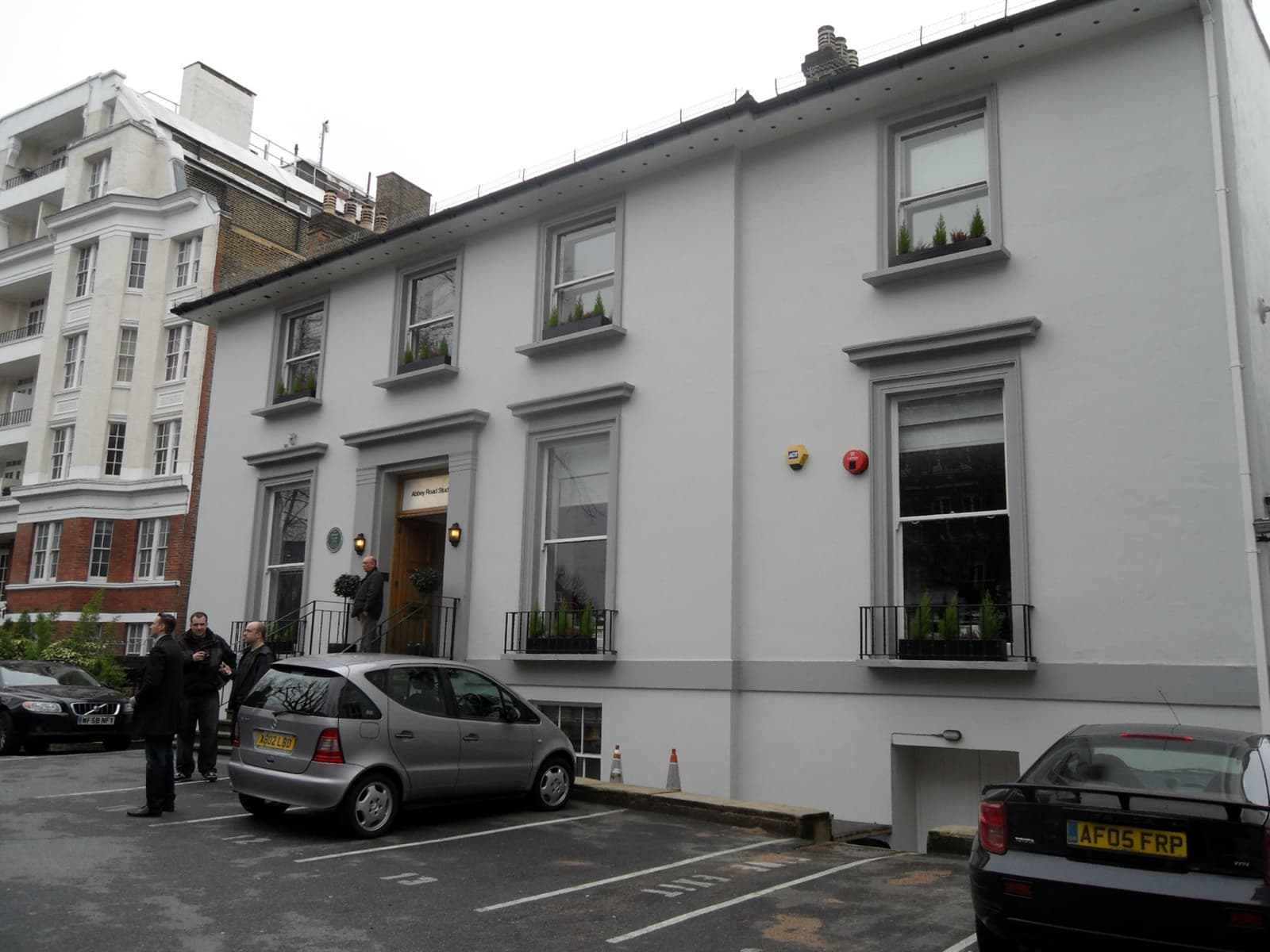

The album takes shape at EMI
1969
The Beatles returned to their North London EMI studios to record Abbey Road. [3]
1969 · album
The recording rooms and zebra crossing that gave the Beatles’ last-recorded album its sound, title and public image.
A studio album acquired the name of a real road, then put that road on its cover. Abbey Road joins two places with different jobs: the recording complex where the Beatles worked and the crossing outside where Iain Macmillan photographed them. The photograph makes the geography unusually legible. The album’s public image sits a short distance from the rooms that produced its music.
Markers identify buildings or documented location references. They do not mark an exact recording room, stage position or camera angle.
For Abbey Road, the Beatles returned to their North London recording base after the different working approach of the Let It Be sessions. The official album history describes a return to deliberately constructed arrangements. That makes the studio a creative setting rather than a discography footnote. The road was not merely a title selected for an unrelated record: the building and its immediate surroundings became the album’s organising image. Keep the interior recording history distinct from the public pavement outside. [3]
On 8 August 1969, the band assembled at EMI and stepped onto the nearby crossing. Iain Macmillan worked from a stepladder in the road while a policeman stopped traffic, exposing six frames. A mundane piece of street infrastructure became the photograph on an album sleeve. The sequence is unusually precise geographic evidence: the studio’s own history identifies the date, photographer and setting. The story needs both the workplace and the street, without multiplying each photographed step into another Place. [1]
St John’s Wood, London
1969
The Beatles returned to their North London EMI studios to record Abbey Road. [3]
St John’s Wood, London
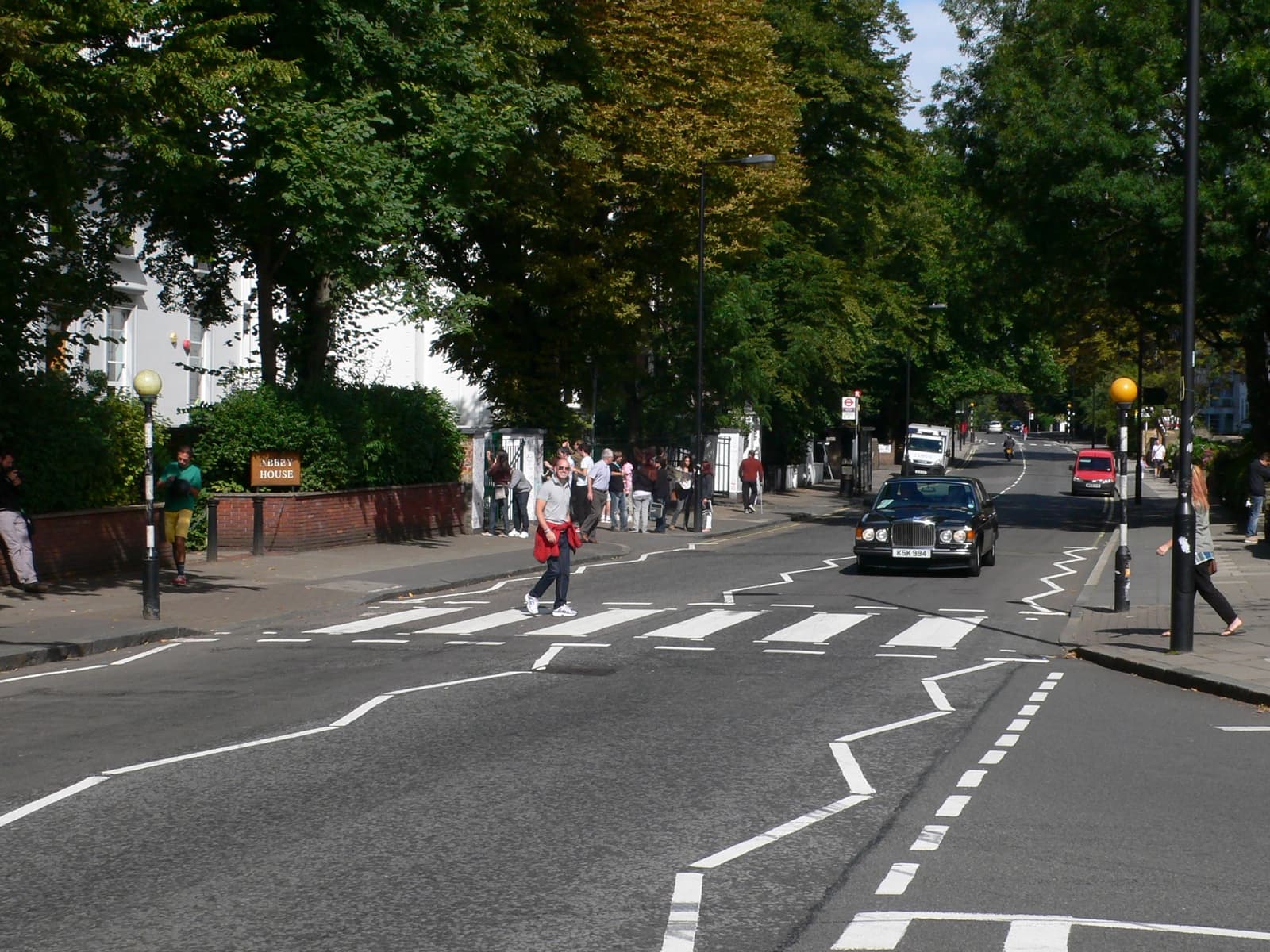
8 August 1969
Iain Macmillan photographed the Beatles at the zebra crossing outside EMI Studios on 8 August 1969, taking six shots while a policeman held traffic. [1]
Begin with the relationship between the studio entrance and the crossing. This is a road, so use the crossing normally and keep traffic and other pedestrians moving. A view of the exterior does not include permission to enter the recording rooms.
