

La Dolce Vita ↗︎
Federico Fellini
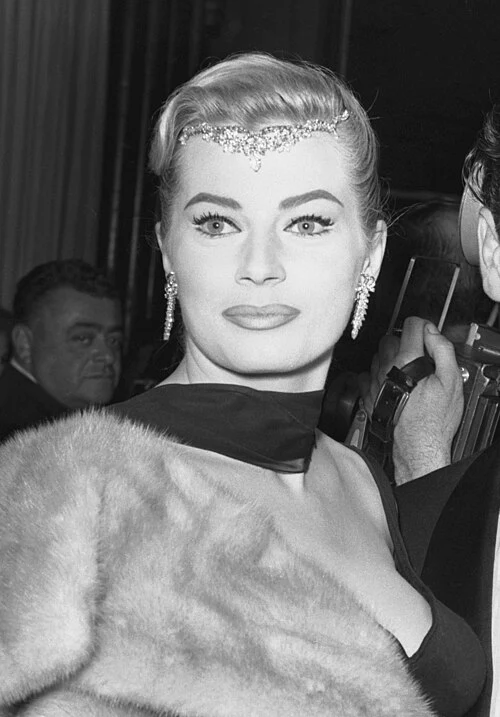
La Dolce Vita connects Ekberg to the Trevi Fountain and the film’s night-time Rome.
← All peopleFollow the geography ↓Source photograph; portrait crop/resize without enlargement or reconstruction. Resized without enlargement and converted to WebP. The existing People portrait frame may crop the photograph. Source colours retained.
Follow the work through its real places.
Federico Fellini
Discover the story behind each place.
Trevi Fountain carries Sylvia and Marcello into one of cinema’s defining night images, but the World keeps the working monument separate from the staged fiction.
La Dolce Vita — location reference ↗︎Via Veneto supplies the film’s social engine: cafés, photographers and arrivals repeatedly turn looking into a profession.
La Dolce Vita — location reference ↗︎Piazza del Popolo widens the route into the public promenades and thresholds of Fellini’s modern Rome.
La Dolce Vita — location reference ↗︎Cinecittà is the necessary counter-image to the streets: the studio system where Fellini could rebuild reality at the scale of memory.
La Dolce Vita — location reference ↗︎Villa Borghese closes on cultivated landscape and leisure—the composed surface beneath the film’s restless appetite.
La Dolce Vita — location reference ↗︎5 sourced places connected to the story.
 Rome
Piazza di Trevi, 00187 Roma RM
 Rome
Via Vittorio Veneto, Roma
 Rome
Via Tuscolana 1055, Roma
 Rome
Piazza del Popolo, Roma
 Rome
Piazzale Scipione Borghese 5, Roma
Cinema, fountains, studios and midnight streets. Follow the city where antiquity and modern image-making share the frame.
Flash: fire the flashbulb to expose Paparazzo’s contact sheet of thirteen real places in and around Rome.
Follow collaborators through their work and the real places tied to it.
Anouk Aimée was a French actress. Born on 27 April 1932, this profile follows Anouk Aimée through existing screen stories and their real settings. The connected credits include La Dolce Vita (1960) and 8½ (1963). The location trail reaches Trevi Fountain, Via Vittorio Veneto and Piazza del Popolo, with existing stories in Rome. Each stop belongs to a particular work and moment, keeping the creative credit beside the place that gives the story its geography. Explore the films and programmes below to move between performances, collaborators and settings, and use each location’s own story for the documented connection. These are work locations; a credit alone does not establish a personal visit to every mapped stop. The credit and location sources remain alongside each story for further reading.