Skip to content
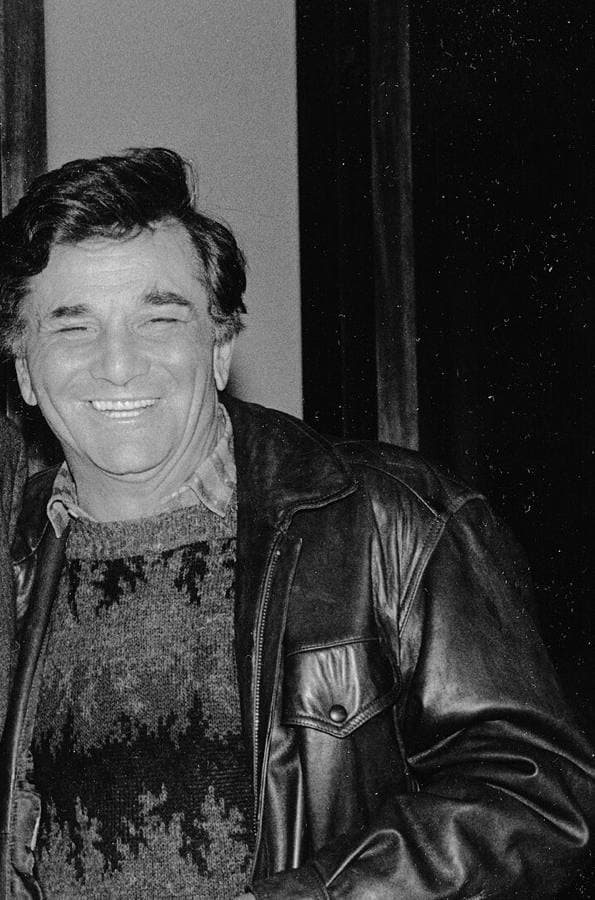
Peter Falk in a leather jacket and patterned jumper, smiling, black-and-white
Peter Falk in Boston, between 1984 and 1987, the years of Wings of Desire (cropped from a photograph with Mayor Raymond Flynn). City of Boston Archives (Mayor’s Office, city photographer) · CC BY 2.0
Peter Falkhimself · c. 1985
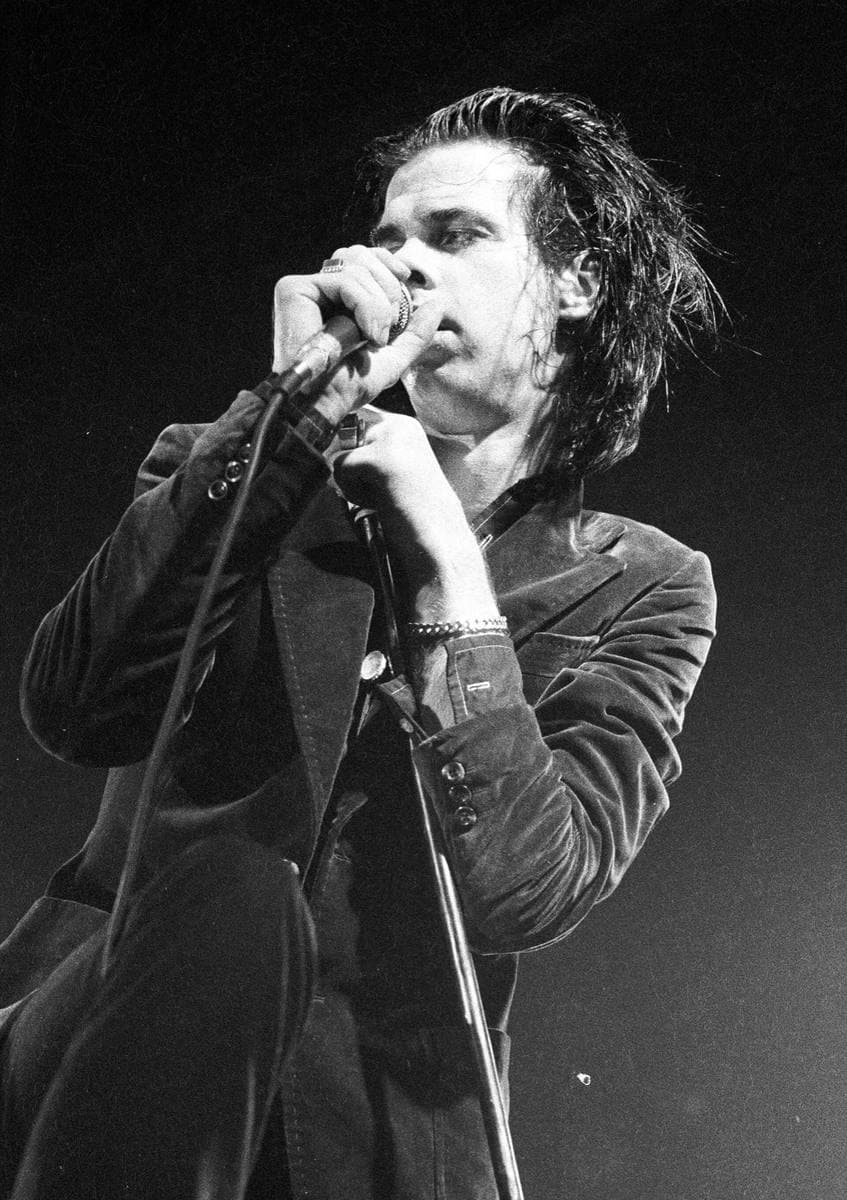
Nick Cave singing into a hand-held microphone, black-and-white
Nick Cave on stage at Futurama in Deinze, Belgium, in 1986, the year before he played himself in the film. Yves Lorson (crop by Bigbitgnom) · CC BY 2.0
Nick Cavehimself · 1986

West Berlin · autumn 1986 · Wim Wenders

Wings of Desire

Der Himmel über Berlin

Two angels watch a walled city from its high places and hear what people think. Look down with them, and rest a hand on the city.

Hold until the ring closes.

The angels’ work

The record

The angels are unseen. They listen to what people think, rest a hand on a shoulder, and keep, Cassiel says, a record of what is real. Here are the thirteen places of their Berlin. Rest a hand on each, hold until the ring closes, and it goes into the record.

Where we read it
  • The angels listen to people’s thoughts and comfort the distressed; Cassiel describes their purpose as keeping a record of reality. The holding gesture is this page’s own.

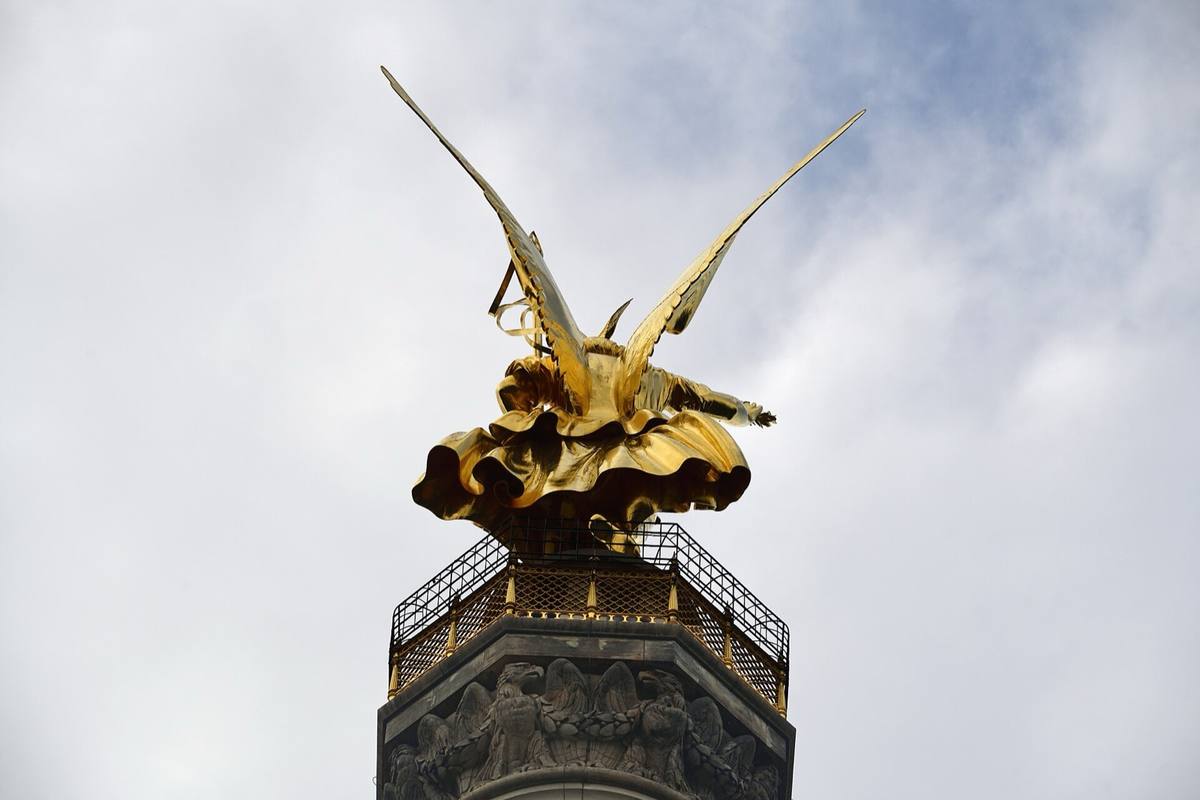
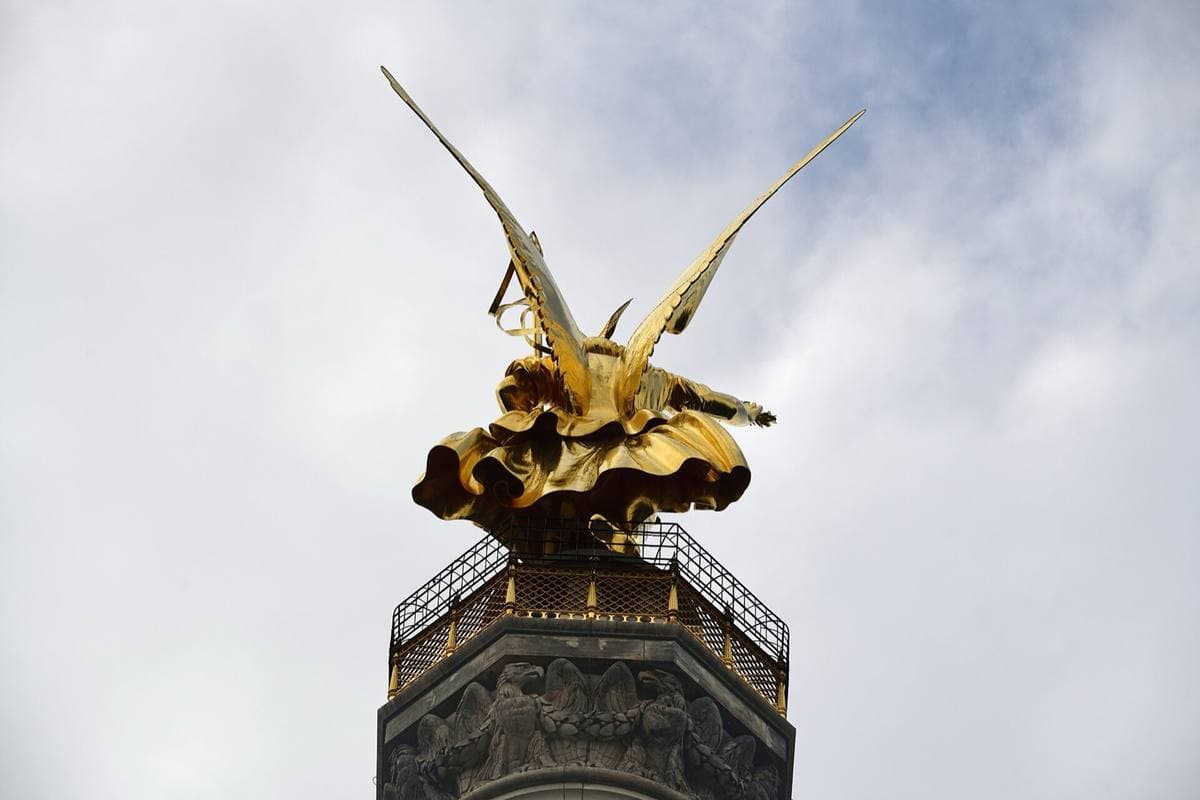
  1. A gilded winged figure on top of a column against a pale sky
    The gilded Victoria on the Victory Column, wings spread over the Tiergarten, in 2021. Dosseman · CC BY-SA 4.0

    Großer Stern, Tiergarten

    The Victory Column

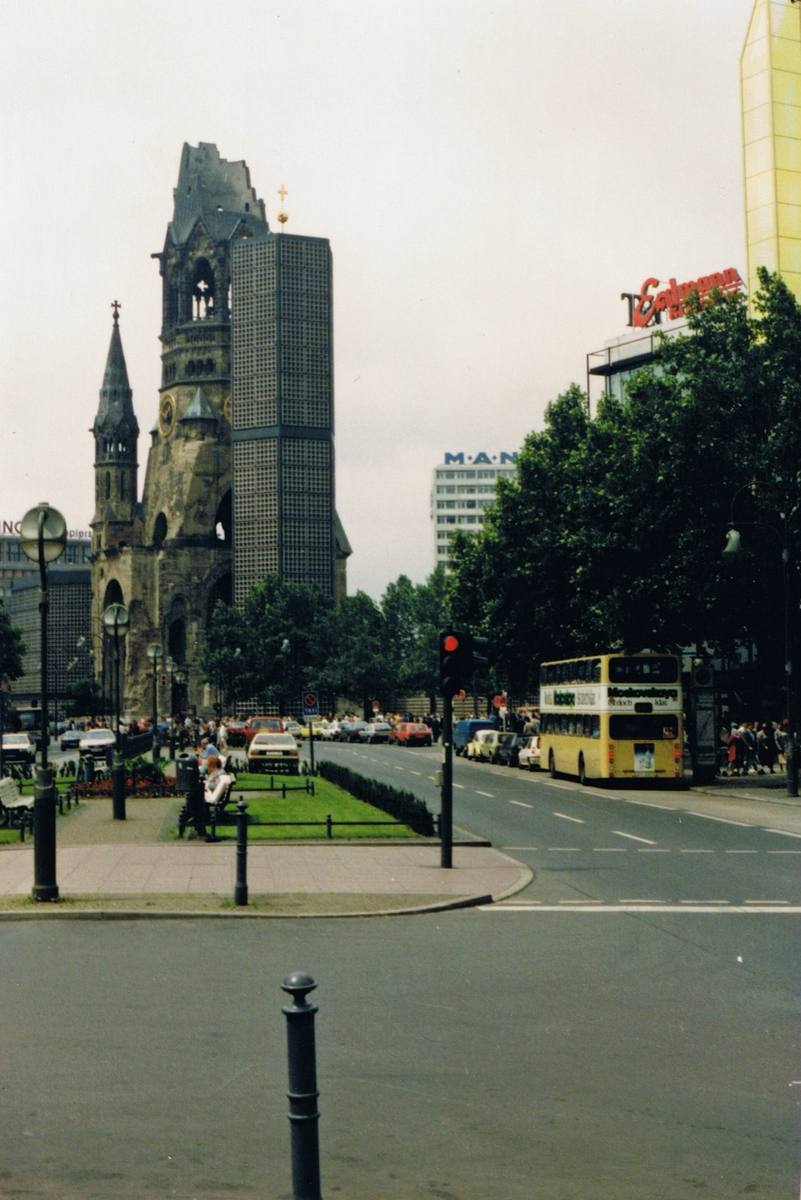
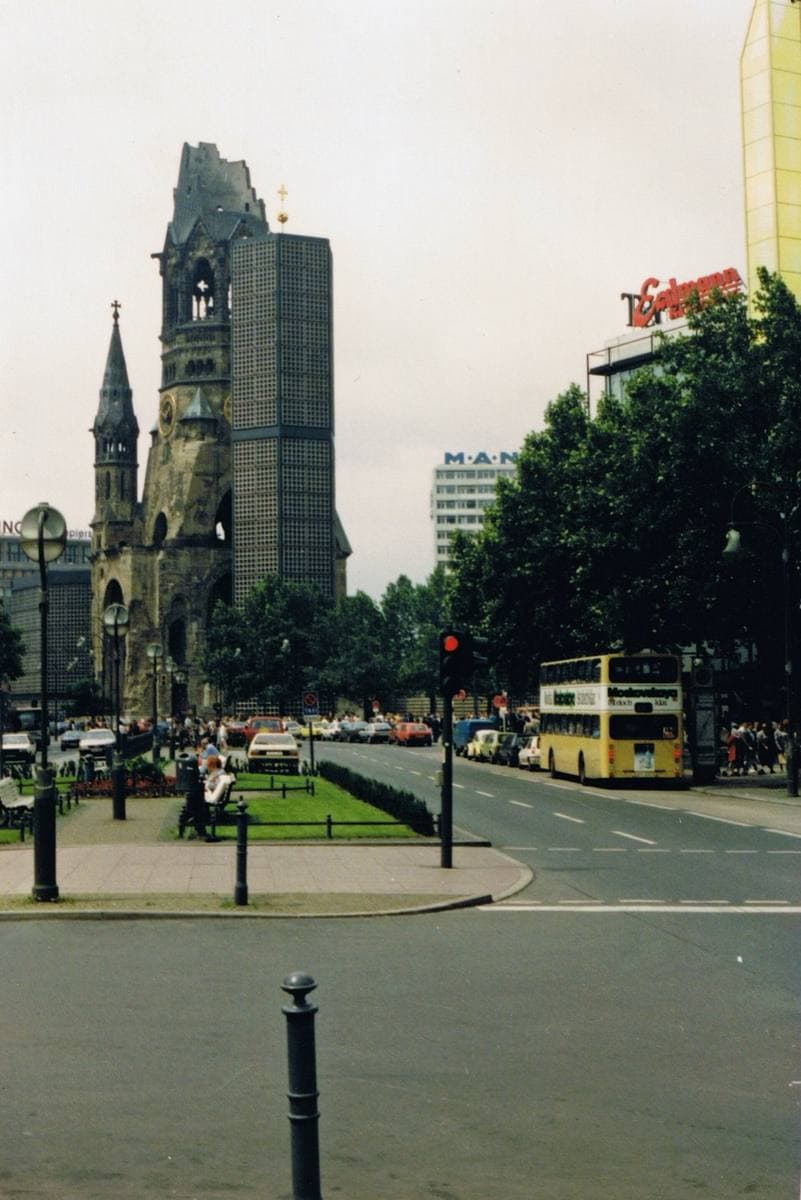
  2. The broken church spire beside a modern tower, with traffic and a double-decker bus
    The ruined tower of the Kaiser Wilhelm Memorial Church in July 1987, two months after the film’s premiere. Huhu Uet · CC BY 3.0

    Breitscheidplatz, Charlottenburg

    Kaiser Wilhelm Memorial Church

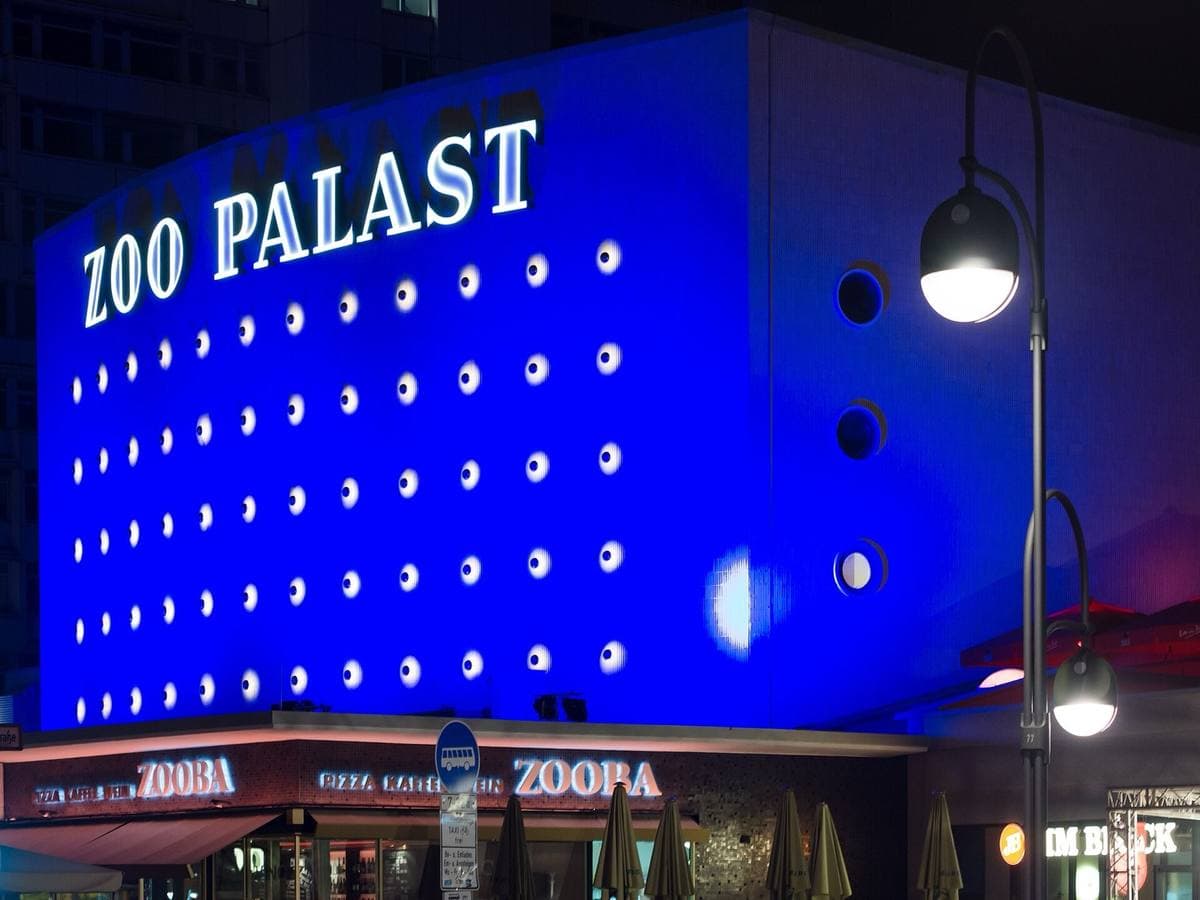
  3. A cinema front glowing blue at night with the name ZOO PALAST
    The Zoo Palast lit blue at night in 2014, a year after it reopened. Sebastian Rittau · CC BY 4.0

    Hardenbergstraße 29a, Charlottenburg

    Zoo Palast

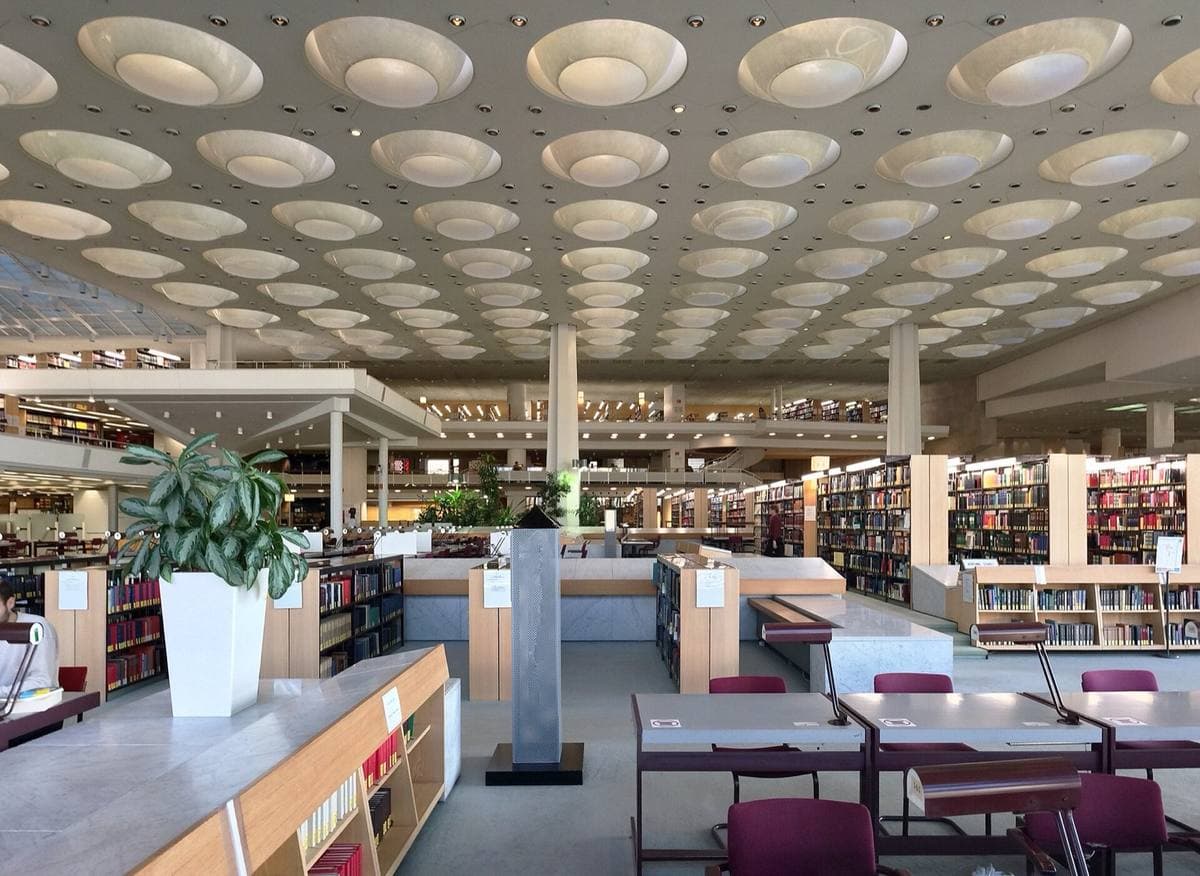
  4. A wide reading room with rows of desks under a ceiling of round skylights
    The reading room on Potsdamer Straße in 2017, under Scharoun’s round roof lights. Gunnar Klack · CC BY-SA 4.0

    Potsdamer Straße 33, Tiergarten

    State Library, Potsdamer Straße

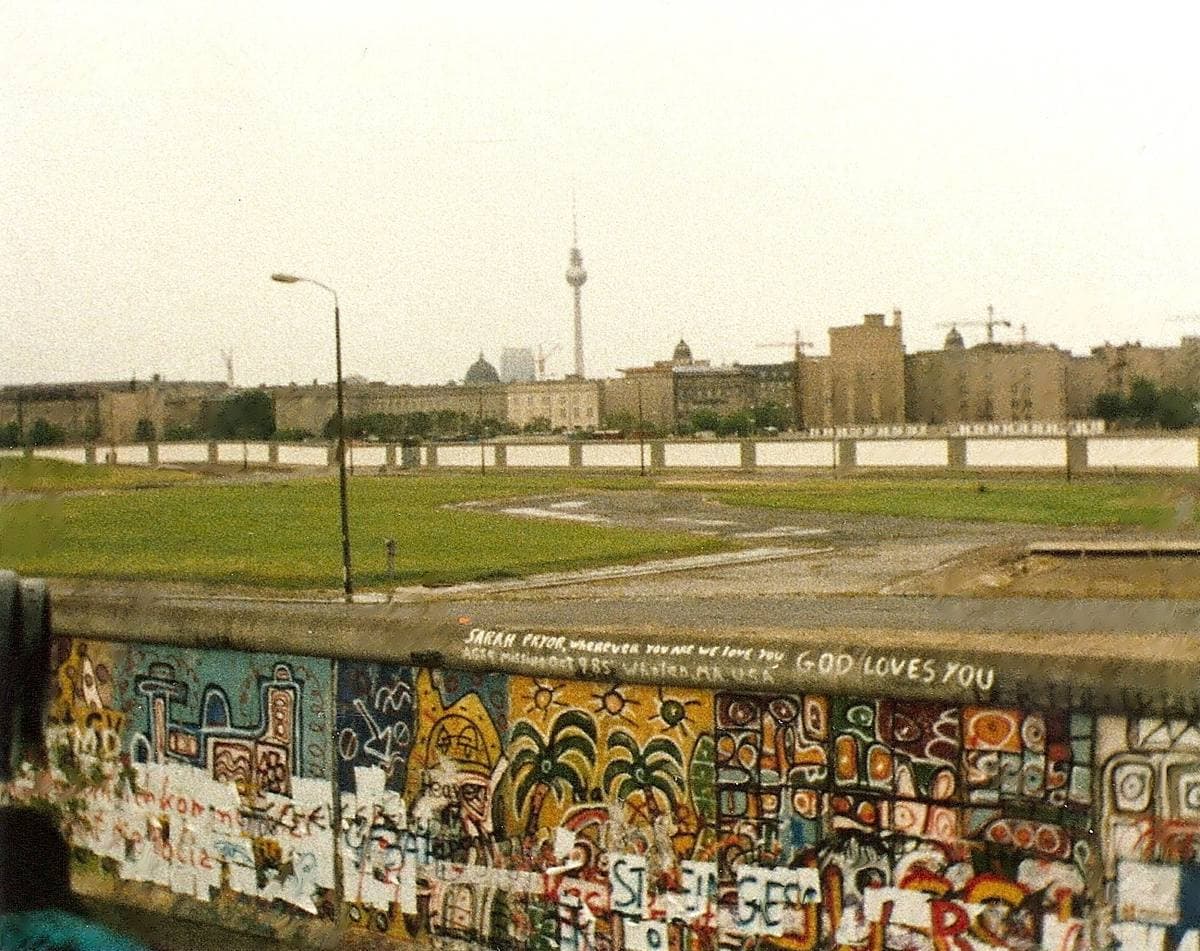
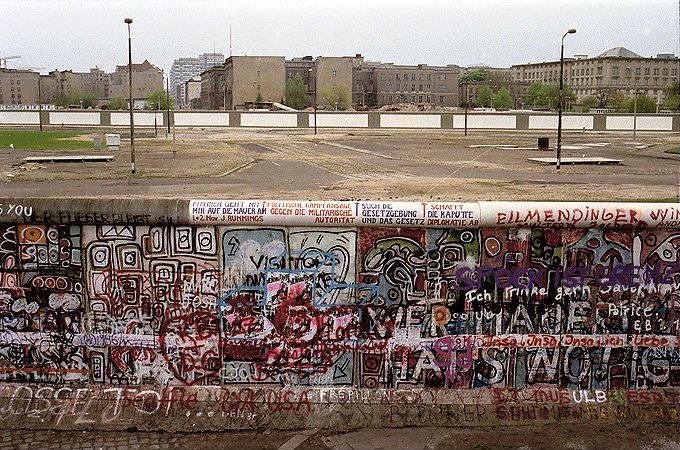
  5. A painted wall across rough ground, with the Berlin television tower in the distance
    The site of Potsdamer Platz from West Berlin in May 1986: painted Wall, empty ground and the East Berlin television tower beyond. Lyricmac · CC BY-SA 3.0

    Potsdamer Platz, Mitte

    Potsdamer Platz

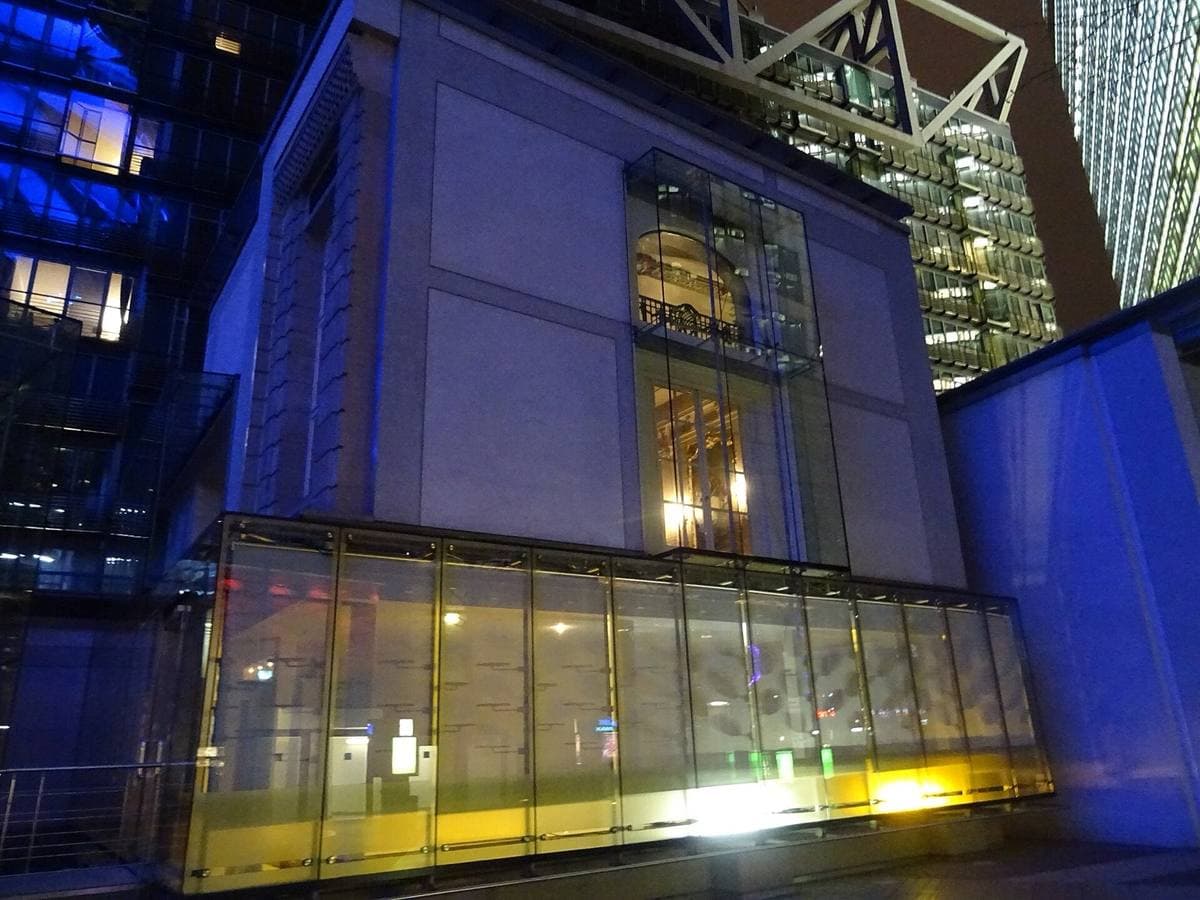
  6. An old hotel façade inside a glass atrium, lit blue at night
    What is left of the Hotel Esplanade’s Kaisersaal, lit blue behind the glass of the Sony Center, in 2019. Gregor Julien Straube · CC BY-SA 4.0

    Bellevuestraße, inside the Sony Center

    The Esplanade’s Kaisersaal

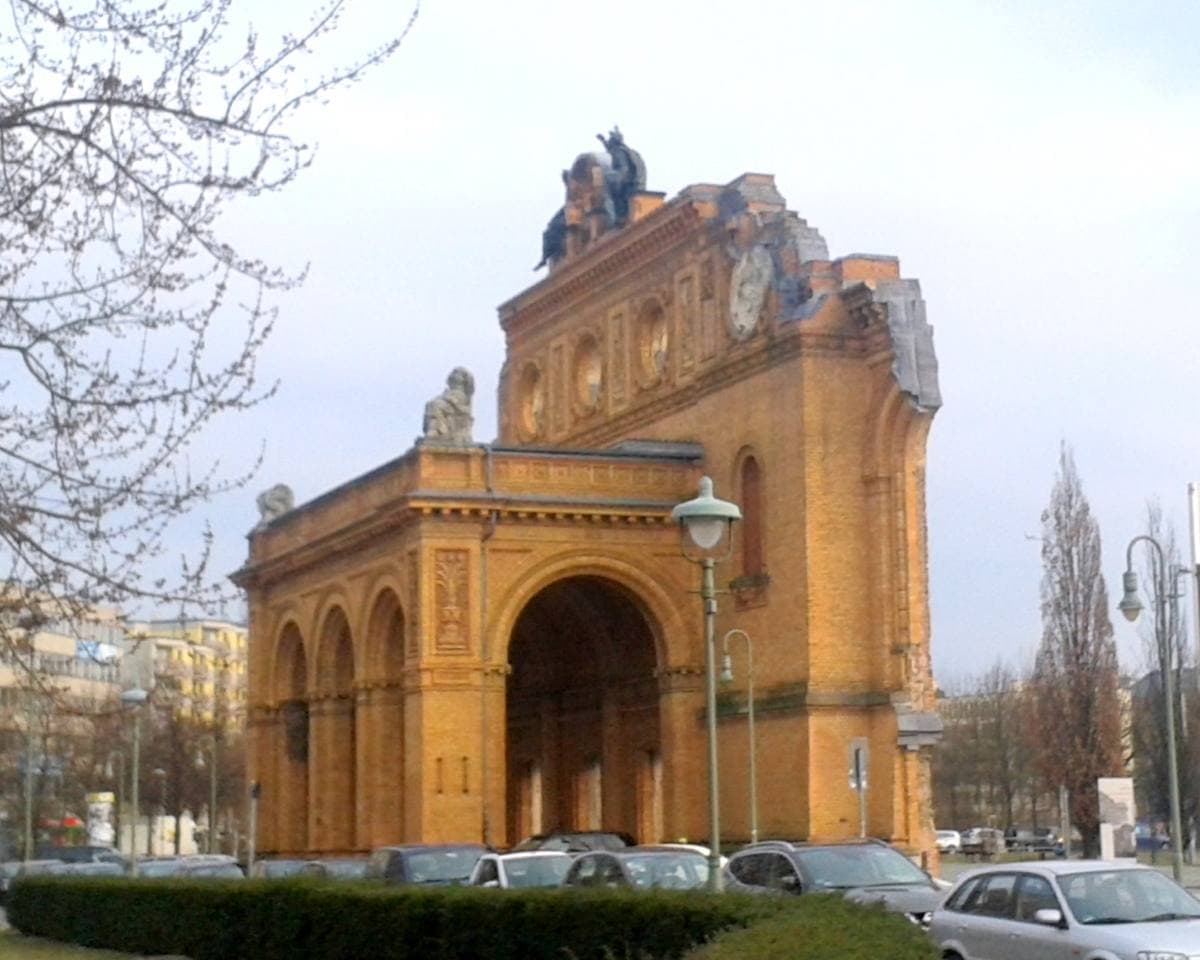
  7. A ruined brick station façade with an arched entrance, standing alone
    The surviving portico of the Anhalter Bahnhof on Askanischer Platz in 2015. Harshiitart · CC BY-SA 4.0

    Askanischer Platz, Kreuzberg

    The Anhalter Bahnhof ruin

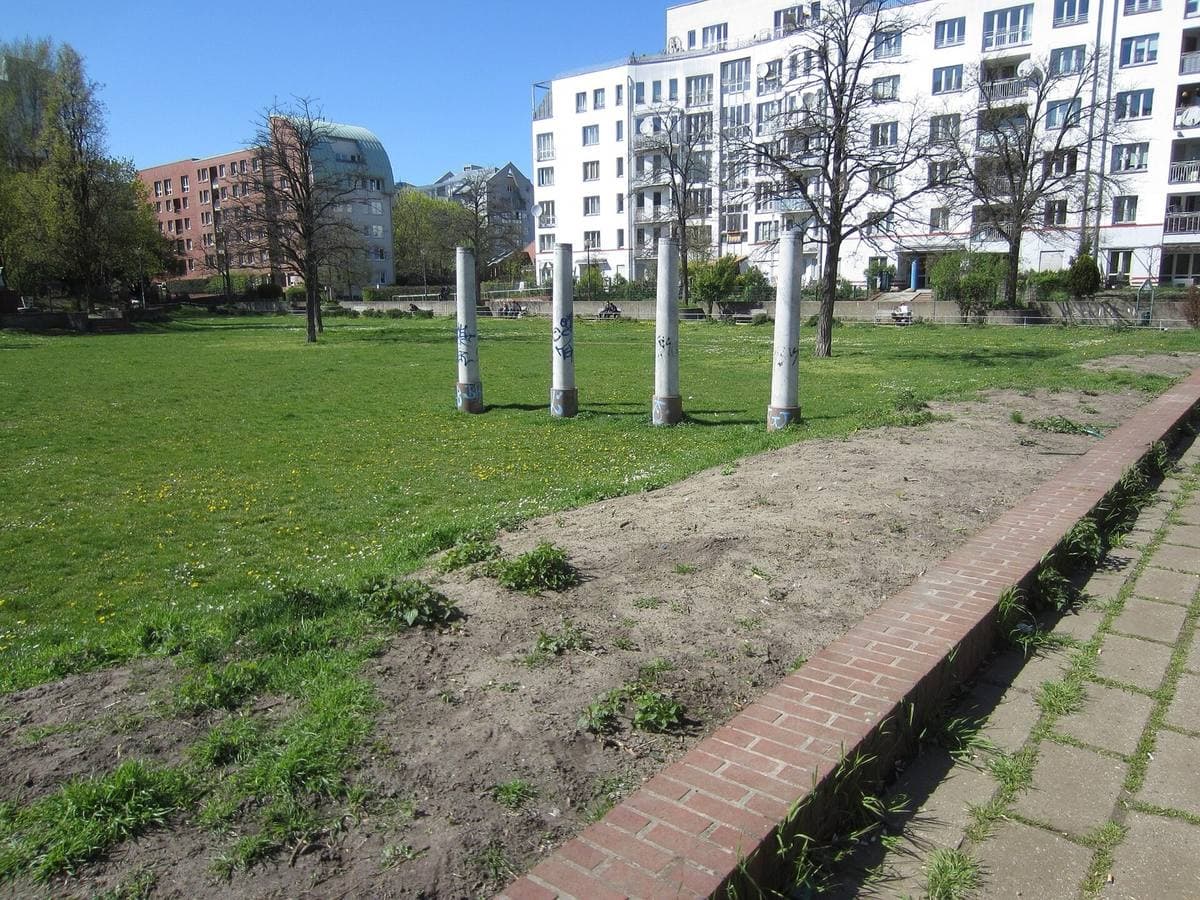
  8. A grassy park with tall white posts and apartment blocks behind
    Theodor-Wolff-Park in 2016, the ground where the circus camped in 1986. Another Believer · CC BY-SA 4.0

    Theodor-Wolff-Park, off Franz-Klühs-Straße, Kreuzberg

    The circus ground

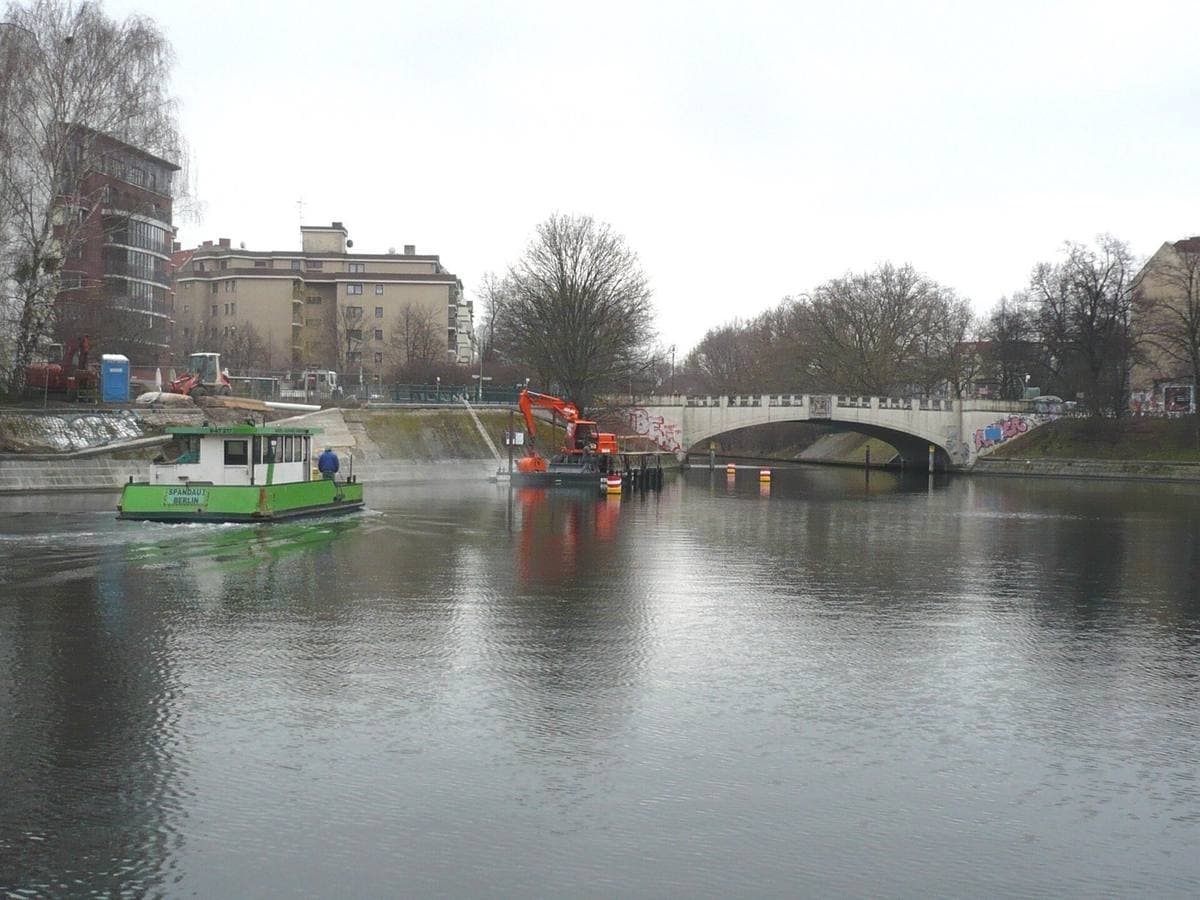
  9. A low arched bridge over a wide canal with bare trees
    The Lohmühlenbrücke over the canal in 2016, open again to Treptow. Roehrensee · CC BY-SA 4.0

    Maybachufer to Lohmühlenstraße, Neukölln and Treptow

    Lohmühlenbrücke

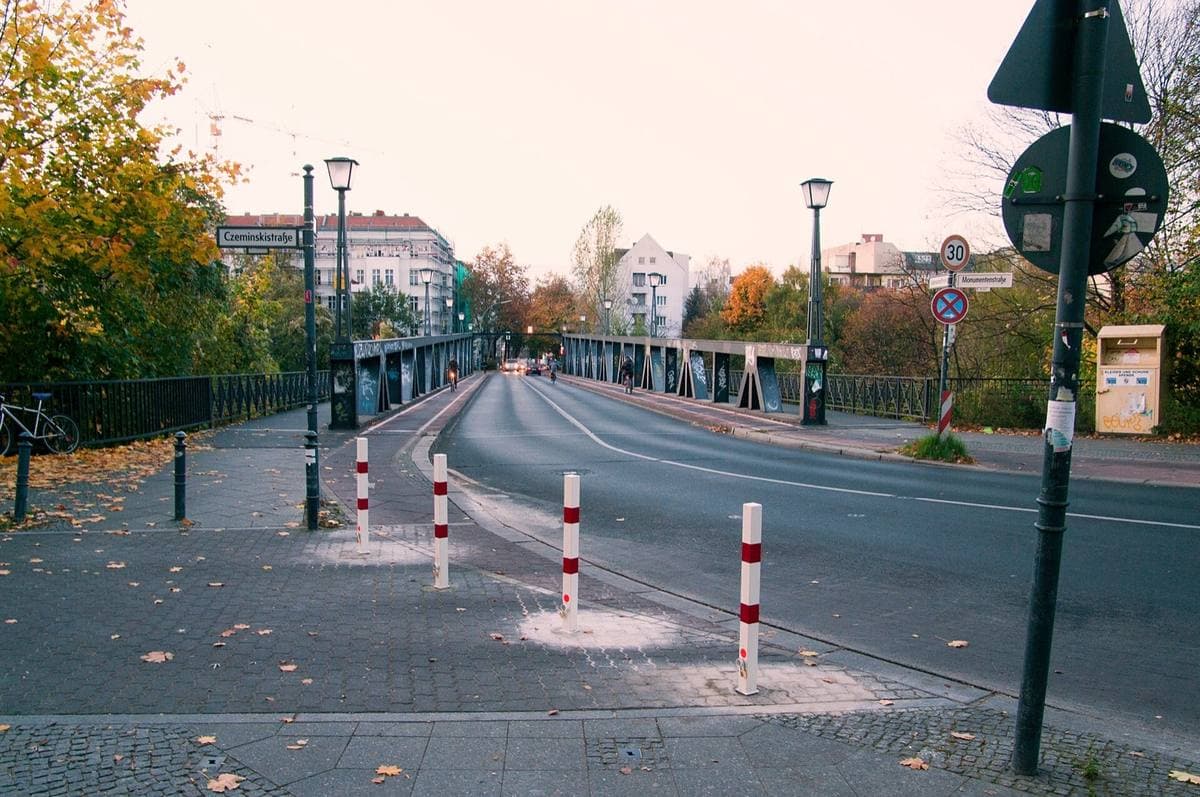
  10. A steel truss bridge with a curving road and autumn trees
    The Langenscheidtbrücke in 2012: the 1987–89 replacement that kept the old bridge’s look. Dirk Ingo Franke · CC BY 3.0

    Langenscheidtstraße over the railway, Schöneberg

    Langenscheidtbrücke

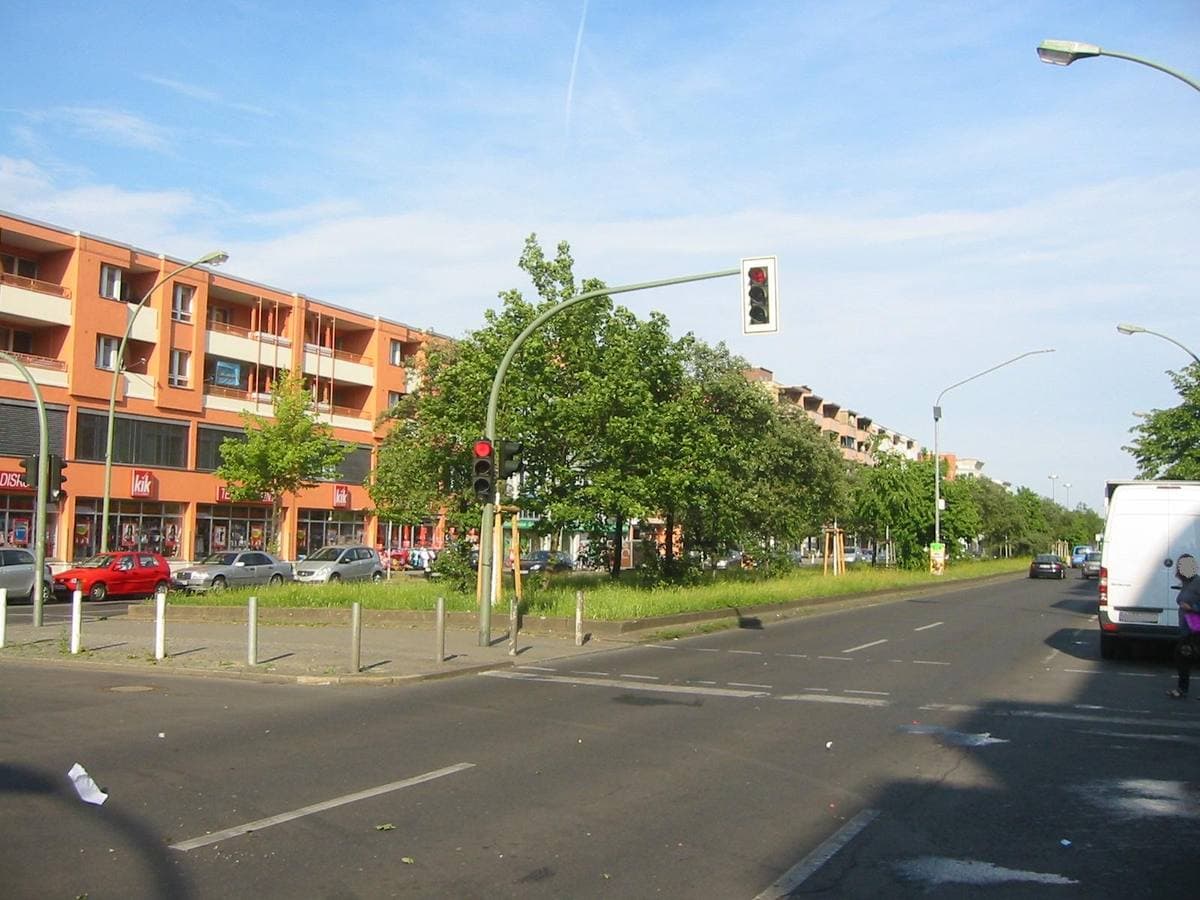
  11. A wide street with apartment blocks, trees and parked cars
    Goebenstraße in Schöneberg, the street of the antiques shop, in 2011. Assenmacher · CC BY-SA 3.0

    Goebenstraße, Schöneberg

    The antiques shop

  12. A massive concrete bunker beneath a housing block raised on columns
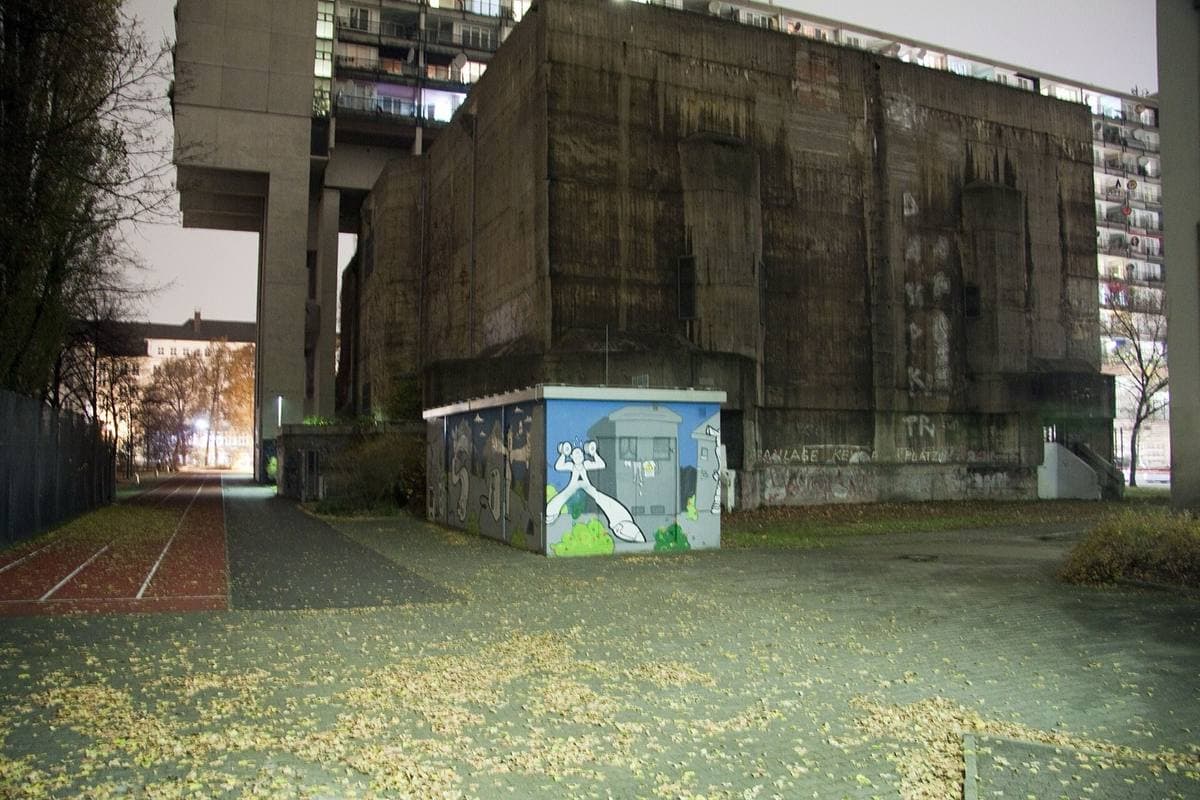
    The wartime bunker on Pallasstraße under the stilts of the Pallasseum, in 2012. Scottvanlooy · CC BY-SA 3.0

    Pallasstraße, Schöneberg

    The Pallasstraße bunker

  13. A closed white-and-red kiosk with a canopy on a pavement corner
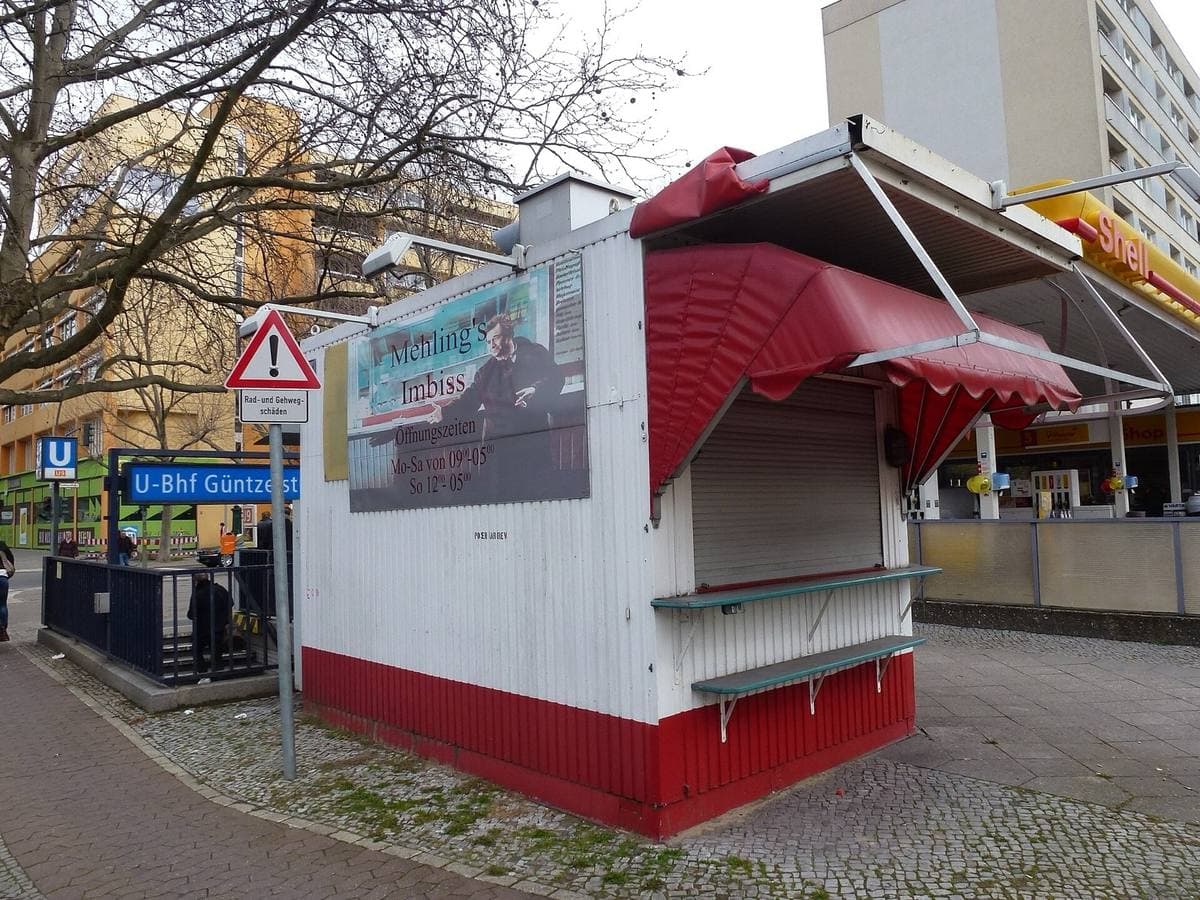
    The empty snack kiosk on Bundesallee by Güntzelstraße station on 31 March 2016. Fridolin freudenfett · CC BY-SA 4.0

    Bundesallee at Trautenaustraße, Wilmersdorf

    The snack kiosk, Bundesallee

The Tiergarten and the City West

The high places.

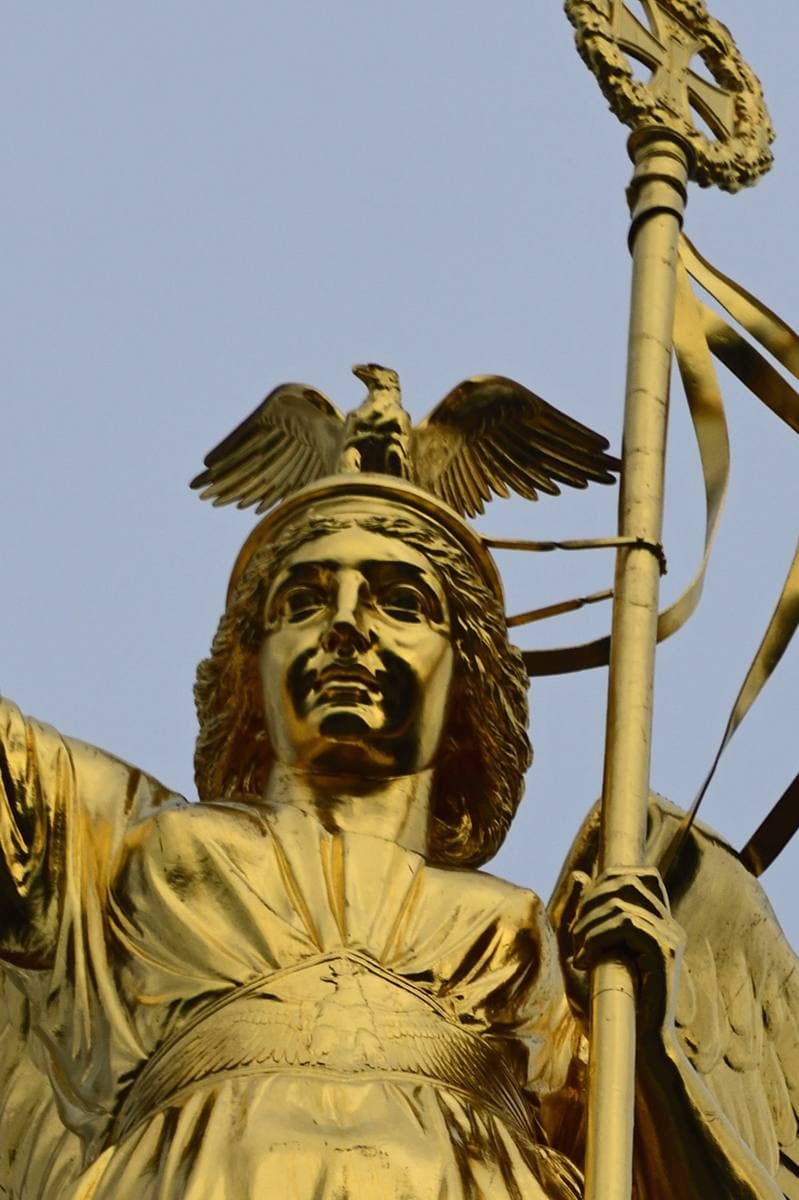
Close view of a gilded statue with a laurel wreath and a staff
Victoria close up, from the viewing gallery below her, in 2021. Dosseman · CC BY-SA 4.0

Großer Stern, Tiergarten

The Victory Column

In the film the column is one of the high places where the angels sit and look down on the city.

In the film, the gilded angel on the column is a replica made in the studio.

Heinrich Strack designed the column, inaugurated on 2 September 1873. In 1938–39 the Nazis moved it from Königsplatz to the Großer Stern and raised it by about 6.5 metres.

Berliners call the gilded Victoria Goldelse. The viewing platform is directly beneath her, 285 steps up.

Open daily, 9.30am to 7pm in summer and to 5.30pm in winter; closed on 24 December. Adults €4.50, reduced €3.50, cash only.
Where we read it
The broken church spire beside a modern tower, with traffic and a double-decker bus
The ruined tower of the Kaiser Wilhelm Memorial Church in July 1987, two months after the film’s premiere. Huhu Uet · CC BY 3.0

Breitscheidplatz, Charlottenburg

Kaiser Wilhelm Memorial Church

In early scenes the angels stand on the church and look down. The BFI found the spot otherwise unchanged.

An air raid on the night of 22 November 1943 left the church badly damaged. The broken spire was kept, and its ground floor became a memorial hall.

Egon Eiermann’s new church beside it was built from 1959 to 1963; its walls hold 21,292 pieces of stained glass, mostly blue. Berliners call the ruin the hollow tooth.

The new church is open daily from 10am to 6pm outside services. The exhibition in the memorial hall closed for renovation on 29 August 2026; tours of the church ensemble go on.

Where we read it

Why black and white

Wenders reasoned that angels, who have never had a body, would not see colour, so their scenes are black and white and the human ones are in colour. Henri Alekan shot the black-and-white sequences through a silk stocking that had belonged to his grandmother.

Where we read it
  • Angels’ scenes in black and white because, as Wenders reasoned, angels without physical experience would not see colour; Alekan’s grandmother’s silk stocking as a filter.

A wide reading room with rows of desks under a ceiling of round skylights
The reading room on Potsdamer Straße in 2017, under Scharoun’s round roof lights. Gunnar Klack · CC BY-SA 4.0

Potsdamer Straße 33

The reading room.

The library has a starring role: in its reading room two angels read the thoughts of the people at the desks.

Hans Scharoun designed it, with much of the work by Edgar Wisniewski. Building began in 1967 and it opened to the public in 1978.

In 2030 it closes for eleven years of renovation; as a listed building, every piece removed must be photographed, catalogued and numbered first.

Jürgen Knieper’s score names the place in one of its cues: Die Kathedral der Bücher, the cathedral of books.

An English-language tour of the building runs on the second Wednesday of every month; meet at the information point in the entrance hall, Potsdamer Straße 33. The building closes for renovation in 2030.

Where we read it
A long pale library building behind a road junction, with cars and a traffic light
The State Library on Potsdamer Straße on 8 November 1986, while Wings of Desire was being shot. Willy Pragher (Landesarchiv Baden-Württemberg) · CC BY 4.0

Curt Bois as Homer, the old storyteller

Homer’s square.

Homer searches the empty field for Potsdamer Platz and finds only rubble, weeds and the graffiti-covered Wall. After the Wall went up in 1961 the busy crossing became desolate. Only the Weinhaus Huth and part of the Hotel Esplanade survived nearby.

Choose a year

May 1986, from the western side: painted Wall, empty ground, the East Berlin television tower beyond. Homer searches a field like this for the square and finds only the Wall.

A public square. The replica of the 1924 traffic tower stands at the junction; Leipziger Platz is the octagon to the east.

Where we read it
A painted wall across rough ground, with the Berlin television tower in the distance
The site of Potsdamer Platz from West Berlin in May 1986: painted Wall, empty ground and the East Berlin television tower beyond. Lyricmac · CC BY-SA 3.0
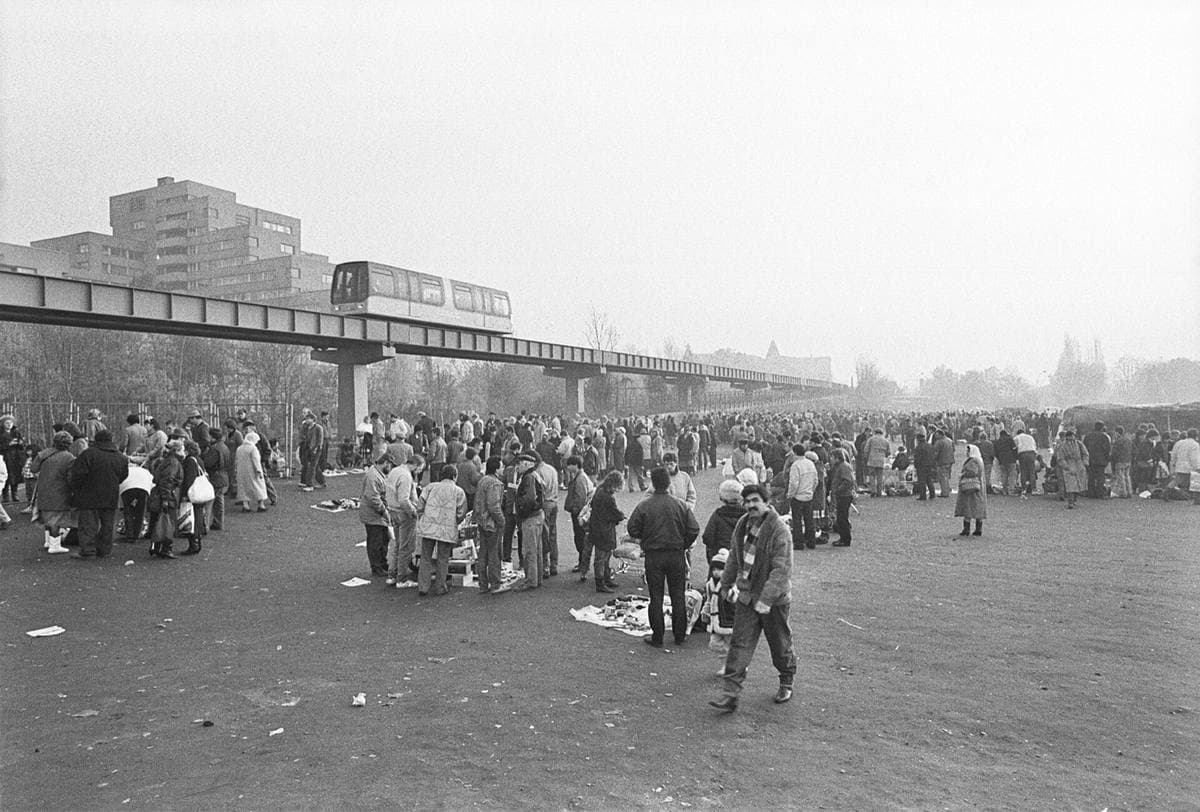
Crowds at an open-air market with an elevated track running behind, black-and-white
The flea market by Potsdamer Platz on 14 November 1989, five days after the Wall opened, with the M-Bahn track behind. Gerd Danigel · CC BY 3.0

The disused track of the M-Bahn, a West Berlin maglev line that ended near the square, is in the film. It was taken down in 1991–92.

An old hotel façade inside a glass atrium, lit blue at night
What is left of the Hotel Esplanade’s Kaisersaal, lit blue behind the glass of the Sony Center, in 2019. Gregor Julien Straube · CC BY-SA 4.0

Bellevuestraße, inside the Sony Center

The Esplanade’s Kaisersaal

The Nick Cave concert, and the bar where Damiel and Marion finally meet, were shot in what was left of the Hotel Esplanade.

The hotel opened in 1908. Bombing in 1944–45 destroyed about 90 per cent of it; the Kaisersaal and the breakfast hall survived.

In March 1996 engineers moved the Kaisersaal 75 metres to make way for the Sony Center, at a cost of 75 million marks.

The Kaisersaal can be seen from behind the glass façade of the Sony Center complex.

Where we read it
Nick Cave singing into a hand-held microphone, black-and-white
Nick Cave on stage at Futurama in Deinze, Belgium, in 1986, the year before he played himself in the film. Yves Lorson (crop by Bigbitgnom) · CC BY 2.0

Nick Cave and the Bad Seeds, and Crime & the City Solution, play themselves.

Where we read it
Viator · Ad / affiliate

The Berlin Wall on foot

Berlin

Live marketplace results for walking tours of the Wall. None is built round this film; check each route for Potsdamer Platz and Kreuzberg.

Live marketplace results · itineraries change

Compare tours

Neukölln to Treptow, over the canal

The bridge to the Wall.

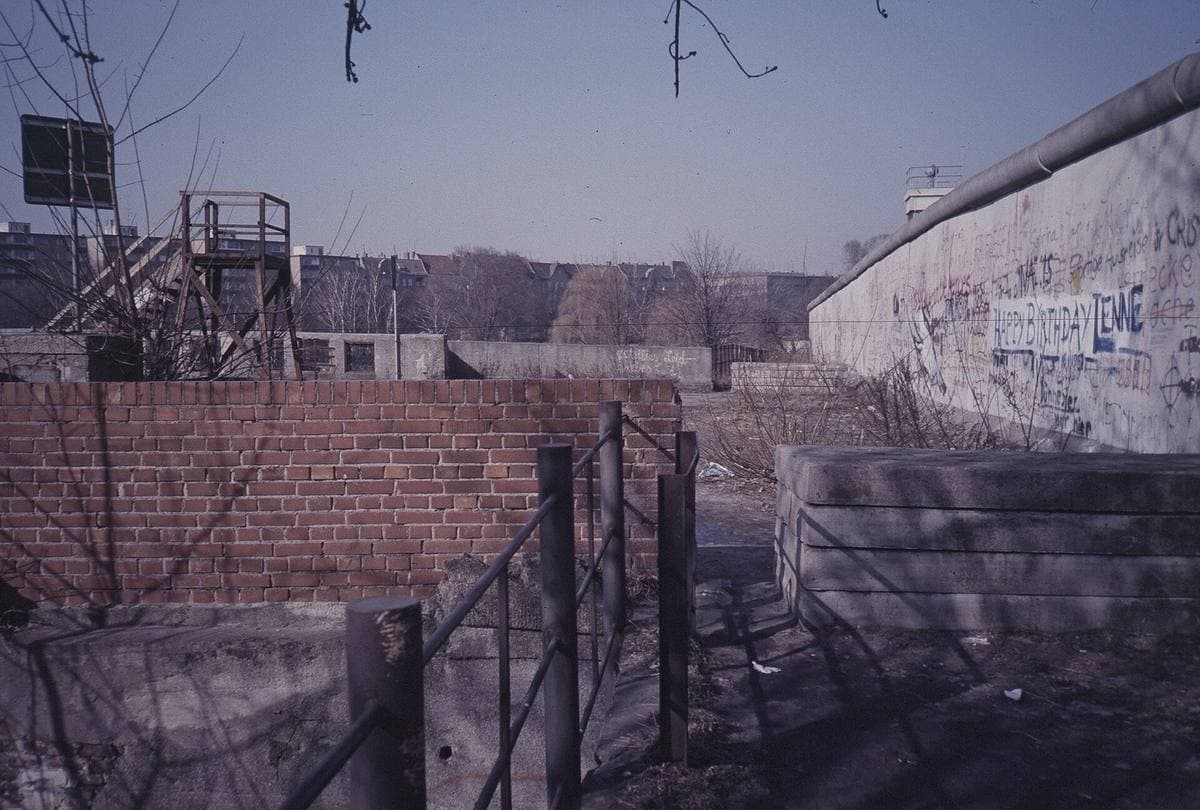
Damiel and Cassiel walk over the bridge towards the Wall, which closed off its far side: a road to nowhere. Walk it in 1987, or today.

The Berlin Wall closing off the end of a bridge, with a watchtower beyond
The Wall at the Lohmühlenbrücke on 13 March 1987, three weeks after the last day of shooting. Roehrensee · CC BY-SA 3.0

Step 1 of 4: Maybachufer, Neukölln

Built in 1920–21, it crosses the Neuköllner Schifffahrtskanal just before it joins the Landwehrkanal.

A land swap in 1988 put Lohmühlenplatz in West Berlin, and by 1989 the bridge had been renovated to carry traffic again.

A public road bridge. Walk it from Maybachufer in Neukölln to Lohmühlenstraße in Treptow.

Where we read it
Graffiti on the Berlin Wall in front of an empty strip and distant buildings
The Wall at Potsdamer Platz on 1 May 1987, looking across Leipziger Platz. Willy Pragher (Landesarchiv Baden-Württemberg) · CC BY 3.0

Smuggled across.

Most of the Wall in the film is real, but not all of it was filmed from the West. The cinematographer Thomas Plenert shot in East Berlin, and the actor Hanns Zischler smuggled the footage across; by agreement, his part was kept quiet. The death strip itself was a set, built for the film.

Where we read it
A ruined brick station façade with an arched entrance, standing alone
The surviving portico of the Anhalter Bahnhof on Askanischer Platz in 2015. Harshiitart · CC BY-SA 4.0

Askanischer Platz, Kreuzberg

The Anhalter Bahnhof ruin

The ruin of the Anhalter Bahnhof is one of the West Berlin places where the film was shot.

Franz Schwechten’s station opened in 1880. Air raids wrecked it; it closed in 1952 and was demolished in 1960, leaving part of the front standing.

The Tempodrom has stood on part of the site since 2001.

The portico stands on its own on Askanischer Platz, beside the S-Bahn station of the same name.

Where we read it

Schöneberg and Wilmersdorf

Coming down.

Damiel gives up being an angel. He bleeds, sees colour and tastes coffee for the first time. Peter Falk, in Berlin to make a film, is a former angel himself; he senses Damiel and tells him what being human is like.

Where we read it
  • Damiel becomes mortal and bleeds, sees colour and tastes food and coffee; Falk, a former angel, senses Damiel and describes human life.

Peter Falk in a leather jacket and patterned jumper, smiling, black-and-white
Peter Falk in Boston, between 1984 and 1987, the years of Wings of Desire (cropped from a photograph with Mayor Raymond Flynn). City of Boston Archives (Mayor’s Office, city photographer) · CC BY 2.0
Peter Falk recorded much of his voice-over in Los Angeles, after he had left Berlin.
Where we read it
A bridge over the railway
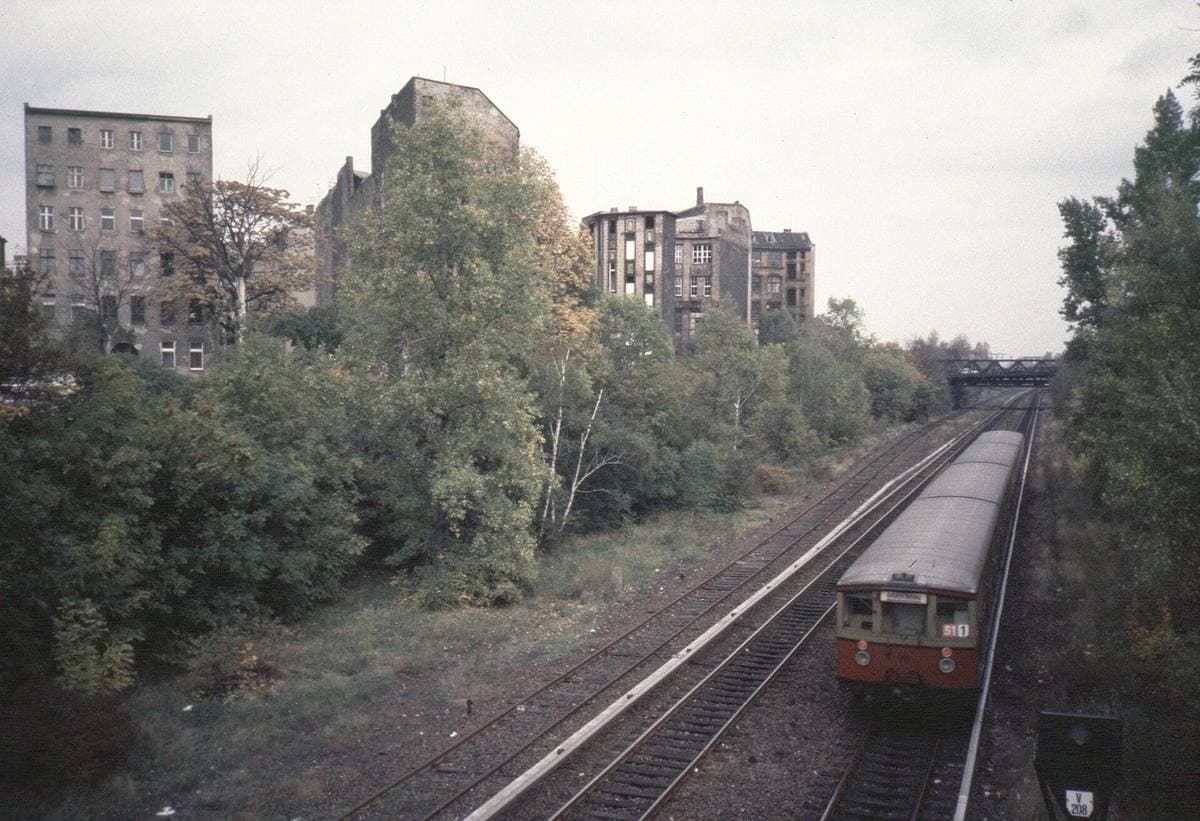
An S-Bahn train in a green railway cutting between apartment blocks
From the old Langenscheidtbrücke on 9 October 1986, eleven days before filming began: the railway cutting below. Roehrensee · CC BY-SA 3.0

Langenscheidtstraße over the railway, Schöneberg

Langenscheidtbrücke

Damiel comforts a dying motorcyclist on the bridge; the man leans against the ironwork at a spot that looks the same today.

The film caught the old bridge of 1898–99. It was demolished in 1987 and replaced by a welded steel bridge that kept its look.

A fire on 17 December 2025 closed it to cars; people on foot and on bikes can still cross.

A cue on the soundtrack is named for the scene: Der Sterbende auf der Brücke, the dying man on the bridge.

Walk or cycle across from Langenscheidtstraße to Monumentenstraße. It has been closed to cars since a fire in December 2025.

Where we read it
The armour
A wide street with apartment blocks, trees and parked cars
Goebenstraße in Schöneberg, the street of the antiques shop, in 2011. Assenmacher · CC BY-SA 3.0

Goebenstraße, Schöneberg

The antiques shop

Damiel trades his armour for second-hand clothes at an antiques shop at Goebenstraße 6. The shop has gone; the building is recognisably the same, but its doorway is now a window.

A private building on a residential street: named here and kept off the map.

Where we read it
The film within the film
A massive concrete bunker beneath a housing block raised on columns
The wartime bunker on Pallasstraße under the stilts of the Pallasseum, in 2012. Scottvanlooy · CC BY-SA 3.0

Pallasstraße, Schöneberg

The Pallasstraße bunker

Peter Falk’s film about the Nazi era is shot here: the bunker is the film within the film’s set.

Forced labourers, most of them from Soviet territory occupied by the Wehrmacht, built it in 1943–45; only the shell was finished.

The stilted wing of the Pallasseum, the housing block once called the Sozialpalast, was built over it.

Seen from Pallasstraße, under the columns of the Pallasseum. Inside it is used for school history work and occasional events.

Where we read it
A hatch on Bundesallee
A closed white-and-red kiosk with a canopy on a pavement corner
The empty snack kiosk on Bundesallee by Güntzelstraße station on 31 March 2016. Fridolin freudenfett · CC BY-SA 4.0

Bundesallee at Trautenaustraße, Wilmersdorf

The snack kiosk, Bundesallee

Wenders shot a scene at the red-and-white kiosk; a still of Peter Falk at its counter was stuck to it.

Called Berlin & Friends, it was counted among the best currywurst stands in Berlin for more than 35 years. Richard von Weizsäcker, Bruno Ganz and Otto Sander were among its well-known customers.

By March 2016 it had stood empty for six years, and the district wanted to pull it down.

It stood at the north-eastern entrance of Güntzelstraße station, opened on 29 January 1971.

Take the U9 to Güntzelstraße and come up the north-eastern exit, at the corner of Bundesallee and Trautenaustraße.

Where we read it
A grassy park with tall white posts and apartment blocks behind
Theodor-Wolff-Park in 2016, the ground where the circus camped in 1986. Another Believer · CC BY-SA 4.0

Kreuzberg, south of Checkpoint Charlie

Circus Alekan.

Marion’s circus camps on bare land by the housing estate on Franz-Klühs-Straße. The ground where an elephant walks is now Theodor-Wolff-Park, and the circus plot is a football court.

The circus is called Circus Alekan, after the film’s cinematographer, Henri Alekan. The Tommy-Weisbecker-Haus shows in the background.

The park was built for the International Building Exhibition, finished in 1988 and named after the journalist Theodor Wolff in 1993.

Solveig Dommartin, who plays Marion, learned the trapeze and the rope in eight weeks and did the work herself, with no stunt double. Laurent Petitgand wrote the circus music.

Where we read it

A public park between Friedrichstraße, Franz-Klühs-Straße and Wilhelmstraße, a few streets south of Checkpoint Charlie.

Where we read it
An old tenement with tall windows and a painted mural
The Tommy-Weisbecker-Haus on Wilhelmstraße in 2016, seen behind the circus in the film. Fred Romero · CC BY 2.0

The people

Who made it.

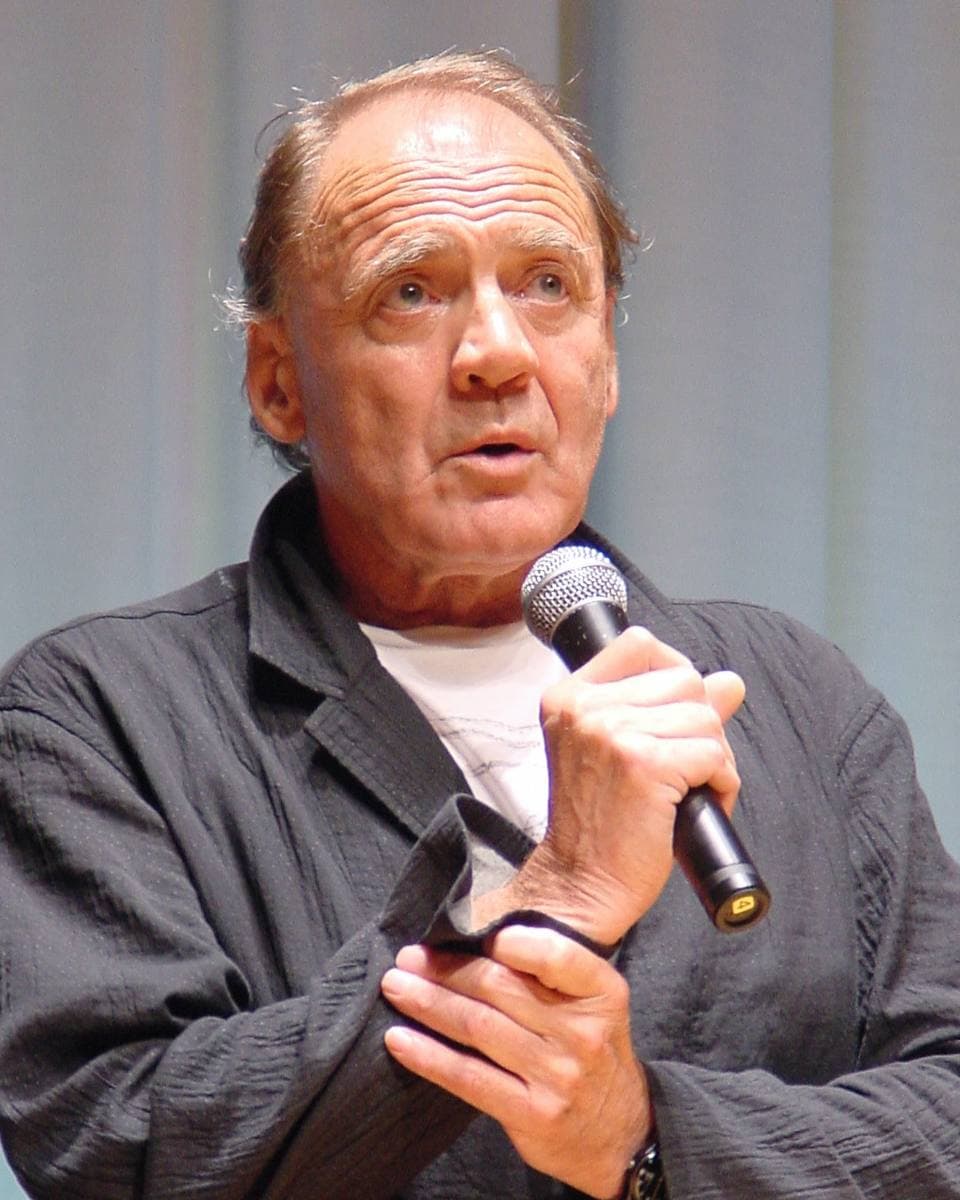
  • Bruno Ganz speaking into a microphone, his hand raised
    Bruno Ganz in Tokyo in June 2005, eighteen years after the film; no free photograph of him from the 1980s has been found. Yasu · CC BY-SA 3.0
    Bruno GanzDamiel · Tokyo, 2005
  • Peter Falk in a leather jacket and patterned jumper, smiling, black-and-white
    Peter Falk in Boston, between 1984 and 1987, the years of Wings of Desire (cropped from a photograph with Mayor Raymond Flynn). City of Boston Archives (Mayor’s Office, city photographer) · CC BY 2.0
    Peter FalkHimself · c. 1985
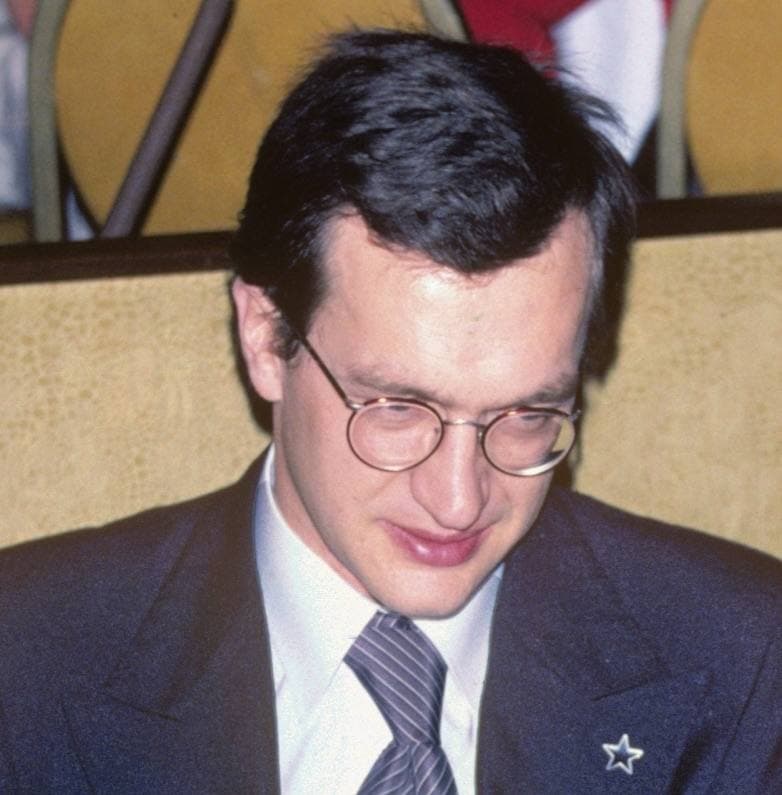
  • Wim Wenders in round glasses and a striped tie, looking down
    Wim Wenders in 1978, nine years before Wings of Desire; no free photograph of him from 1987 has been found. Alan Light · CC BY 2.0
    Wim WendersDirector · 1978
  • Nick Cave singing into a hand-held microphone, black-and-white
    Nick Cave on stage at Futurama in Deinze, Belgium, in 1986, the year before he played himself in the film. Yves Lorson (crop by Bigbitgnom) · CC BY 2.0
    Nick CaveHimself · 1986

Wim Wenders wrote it with Peter Handke, who wrote much of the dialogue, the narration and the Song of Childhood that runs through it. Henri Alekan shot it. Bruno Ganz is Damiel, Otto Sander is Cassiel, Solveig Dommartin is Marion, and Curt Bois, in his last feature after an eighty-year career, is Homer. The closing titles dedicate it to all the former angels, and to Ozu, Truffaut and Tarkovsky by their first names.

Where we read it
  • Writers, Handke’s contributions, Alekan, the cast, Curt Bois’s last feature in an 80-year career, and the dedication to Yasujirō Ozu, François Truffaut and Andrei Tarkovsky.

  1. 20 Oct 1986First day of shooting in West Berlin
  2. 18 Feb 1987Last day, after a winter break
  3. 5mDeutsche Mark, the budget
  4. 17 May 1987Premiere at Cannes; Wenders won best director
Where we read it
A cinema front glowing blue at night with the name ZOO PALAST
The Zoo Palast lit blue at night in 2014, a year after it reopened. Sebastian Rittau · CC BY 4.0

Hardenbergstraße 29a, Charlottenburg

Zoo Palast

The film had its German premiere here on 27 October 1987, five months after Cannes.

It opened as the Ufa-Palast am Zoo on 18 September 1919. After its 1957 reopening it became the main venue of the Berlin film festival.

It closed in December 2010, was renovated and reopened on 27 November 2013.

A working cinema with 1,700 seats, open for screenings. It is about 160 metres from the Memorial Church.

Where we read it

Wenders went back to the same angels in Faraway, So Close! in 1993; Hollywood remade the film as City of Angels in 1998.

Hotel Zoo Berlin

Hotel Zoo Berlin

Charlottenburg

A hotel at Kurfürstendamm 25, on the same boulevard as the Memorial Church, with 127 rooms from the Petit Room to the 40 square metre Grand Deluxe.

See the hotel

Go there.

Where it is now

12 places you can visit, all inside what was West Berlin. The antiques shop on Goebenstraße is a private building: named here, not on the map.

Pins mark public places; private homes are named but not pinned.

  • General reference · Public access · Coordinate precision: building · Not an exact scene or camera position; not a visitor route. Open daily, 9.30am to 7pm in summer and to 5.30pm in winter; closed on 24 December. Adults €4.50, reduced €3.50, cash only.
  • General reference · Public access · Coordinate precision: building · Not an exact scene or camera position; not a visitor route. The new church is open daily from 10am to 6pm outside services. The exhibition in the memorial hall closed for renovation on 29 August 2026; tours of the church ensemble go on.

  • General reference · Public access · Coordinate precision: building · Not an exact scene or camera position; not a visitor route. A working cinema with 1,700 seats, open for screenings. It is about 160 metres from the Memorial Church.

  1. A gilded winged figure on top of a column against a pale sky
    The gilded Victoria on the Victory Column, wings spread over the Tiergarten, in 2021. Dosseman · CC BY-SA 4.0

    Großer Stern, Tiergarten

    The Victory Column

    In the film the column is one of the high places where the angels sit and look down on the city.

    Open daily, 9.30am to 7pm in summer and to 5.30pm in winter; closed on 24 December. Adults €4.50, reduced €3.50, cash only.
    Where we read it
  2. The broken church spire beside a modern tower, with traffic and a double-decker bus
    The ruined tower of the Kaiser Wilhelm Memorial Church in July 1987, two months after the film’s premiere. Huhu Uet · CC BY 3.0

    Breitscheidplatz, Charlottenburg

    Kaiser Wilhelm Memorial Church

    In early scenes the angels stand on the church and look down. The BFI found the spot otherwise unchanged.

    The new church is open daily from 10am to 6pm outside services. The exhibition in the memorial hall closed for renovation on 29 August 2026; tours of the church ensemble go on.

    Where we read it
  3. A cinema front glowing blue at night with the name ZOO PALAST
    The Zoo Palast lit blue at night in 2014, a year after it reopened. Sebastian Rittau · CC BY 4.0

    Hardenbergstraße 29a, Charlottenburg

    Zoo Palast

    The film had its German premiere here on 27 October 1987, five months after Cannes.

    A working cinema with 1,700 seats, open for screenings. It is about 160 metres from the Memorial Church.

    Where we read it

Stay

On the Kurfürstendamm.

A hotel on the same boulevard as the Memorial Church.

Hotel Zoo Berlin

Hotel Zoo Berlin

Charlottenburg

A hotel at Kurfürstendamm 25, on the same boulevard as the Memorial Church, with 127 rooms from the Petit Room to the 40 square metre Grand Deluxe.

See the hotel

Go there

On foot.

Walking tours of the Wall and film-location tours of Berlin.

Viator · Ad / affiliate

The Berlin Wall on foot

Berlin

Live marketplace results for walking tours of the Wall. None is built round this film; check each route for Potsdamer Platz and Kreuzberg.

Live marketplace results · itineraries change

Compare tours
Viator · Ad / affiliate

Berlin film locations

Berlin

Live marketplace results for film-location tours of Berlin. Check each itinerary for the Tiergarten and Potsdamer Platz.

Live marketplace results · itineraries change

Compare tours

What’s on

This month.

A tour of the library in English, and Saturday vespers under the blue glass.

Checking current event dates…

Take it home

The book and the record.

The 1987 book of the film, Wenders on film-making, and the soundtrack on CD.

Bookshop.org UK · Ad / affiliate

Der Himmel über Berlin

Wim Wenders and Peter Handke · Suhrkamp

The book of the film, published by Suhrkamp in 1987, in German.

Find the book
Bookshop.org UK · Ad / affiliate

On Film

Wim Wenders · Faber and Faber

Wenders’s collected writing on film-making, published by Faber in 2001.

Find the book
eBay · Ad / affiliate

Wings of Desire (Der Himmel über Berlin)

Various artists · CD, The Fine Line, 1988

Jürgen Knieper’s score with Nick Cave and the Bad Seeds, Crime & the City Solution, Laurie Anderson and Laurent Petitgand’s circus music, released in Britain in July 1988.

Live marketplace search · listings and condition change

Find a copy

Dates, prices, rooms and stock change: confirm with the provider before you travel or buy. A stay or tour is described as a filming location only where the card says so.

The angels’ record

Every place and moment behind this page, with sources.

13 of 13 places · 13 of 13 Moments

  • The Victory Column

    Großer Stern, Tiergarten

    • The high places

      Damiel and Cassiel sit high on the Victory Column and look down on the city.

  • Kaiser Wilhelm Memorial Church

    Breitscheidplatz, Charlottenburg

    • On the church

      In early scenes the angels stand on the Memorial Church and look down.

  • Zoo Palast

    Hardenbergstraße 29a, Charlottenburg

    • The Berlin premiere

      The film has its German premiere at the Zoo Palast on 27 October 1987.

  • State Library, Potsdamer Straße

    Potsdamer Straße 33, Tiergarten

    • The reading room

      In the reading room the angels listen to the thoughts of the readers.

  • Potsdamer Platz

    Potsdamer Platz, Mitte

    • Homer’s square

      Homer, an old storyteller, searches an empty field for Potsdamer Platz and finds only the Wall.

  • The Esplanade’s Kaisersaal

    Bellevuestraße, inside the Sony Center

    • The bar

      Damiel meets Marion at a bar during a Nick Cave concert.

  • The Anhalter Bahnhof ruin

    Askanischer Platz, Kreuzberg

    • The station ruin

      The film is shot at the ruin of the Anhalter Bahnhof.

  • The circus ground

    Theodor-Wolff-Park, off Franz-Klühs-Straße, Kreuzberg

    • Circus Alekan

      Marion, a trapeze artist, works in a circus that is closing; it camps on waste ground in Kreuzberg.

  • Lohmühlenbrücke

    Maybachufer to Lohmühlenstraße, Neukölln and Treptow

    • Towards the Wall

      Damiel and Cassiel walk across a bridge that ends at the Wall.

  • Langenscheidtbrücke

    Langenscheidtstraße over the railway, Schöneberg

    • The dying man

      Damiel comforts a dying motorcyclist on a bridge over the railway.

  • The antiques shop

    Goebenstraße, Schöneberg

    • The armour

      Now mortal, Damiel trades his armour for second-hand clothes at an antiques shop.

  • The Pallasstraße bunker

    Pallasstraße, Schöneberg

    • The film within the film

      Peter Falk, playing himself, comes to Berlin to make a film about the Nazi era.

  • The snack kiosk, Bundesallee

    Bundesallee at Trautenaustraße, Wilmersdorf

    • At the kiosk

      Peter Falk stands at a snack kiosk on Bundesallee.

Privacy