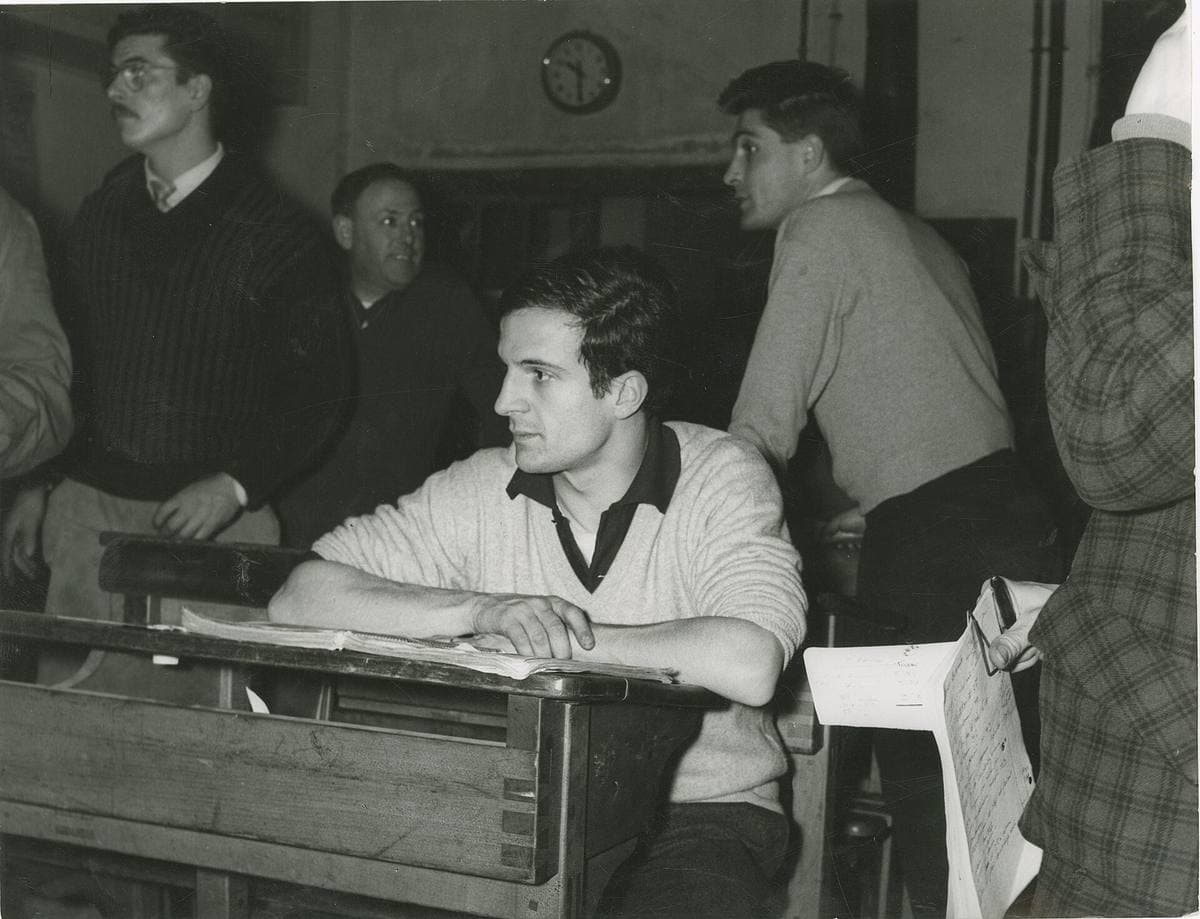
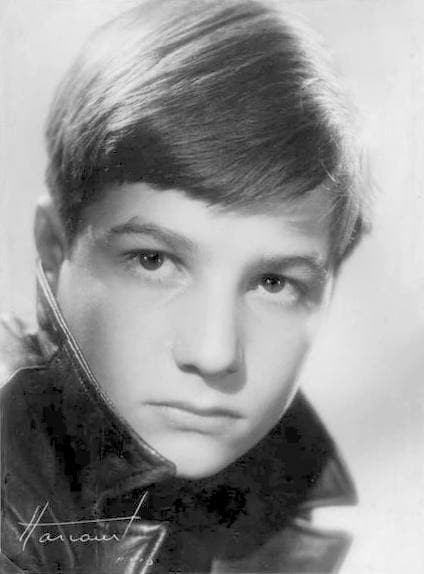
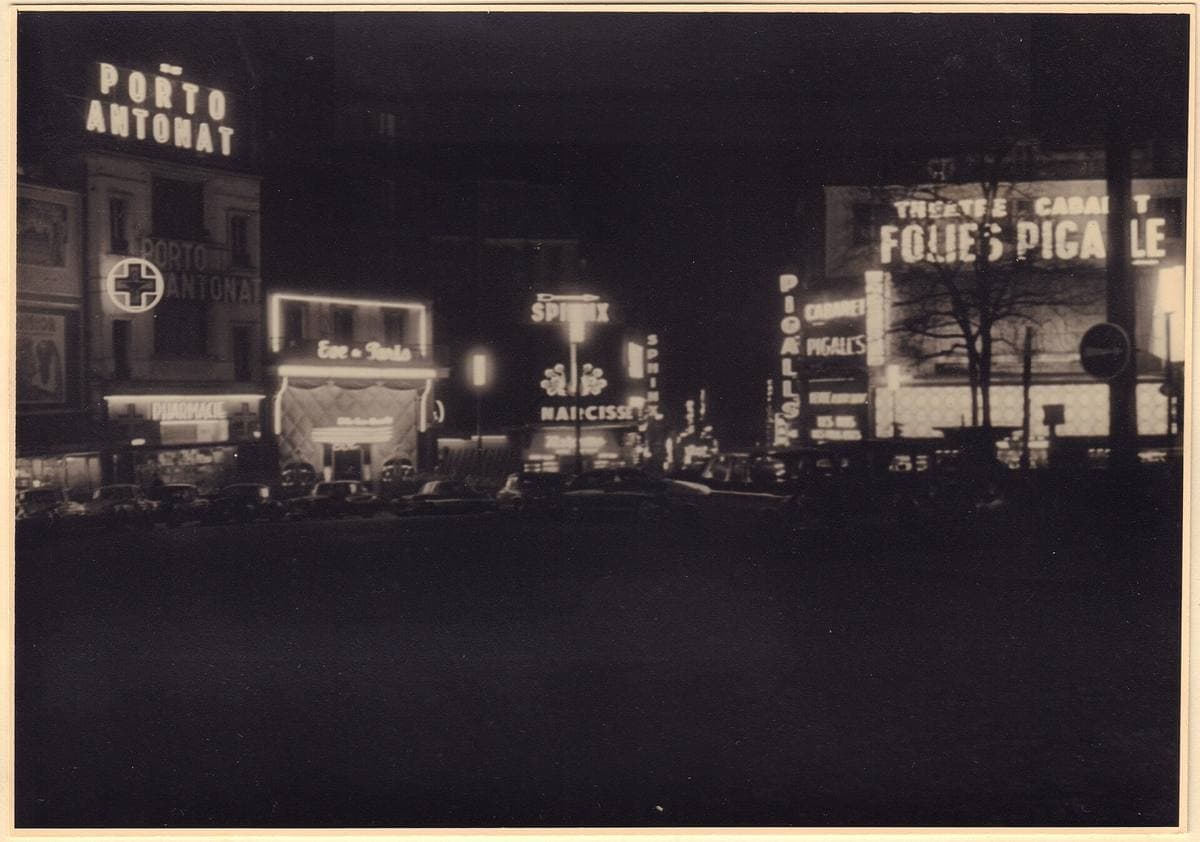
François Truffaut in 1959, leaning on a wooden school desk. Unknown photographer, Touring Club Italiano archive · CC BY-SA 4.0François Truffaut, 1959Jean-Pierre Léaud photographed by Studio Harcourt in 1959, the year The 400 Blows came out. Studio Harcourt · Public domainJean-Pierre Léaud, 1959Place Pigalle at night in April 1959, with the Folies Pigalle and Narcisse signs lit. Wim Zevenhek or Johanna Deus · CC0Place Pigalle, April 1959
Paris, le 10 novembre 1958
Les 400 coups
The 400 Blows · François Truffaut · 1959
A boy runs from school, through the ninth arrondissement and Pigalle, all the way to the sea. Truffaut grew up in these streets.
Villers-sur-Mer, December 1958 · a camera car beside the boy
Run, then freeze.
Truffaut shot Antoine’s last run from a car keeping pace beside Léaud, and ended the film on a frozen frame. Here the film’s places run past the camera instead. Press Freeze where you want to stop. Let it run and it stops by itself, at the sea.
Where we read it
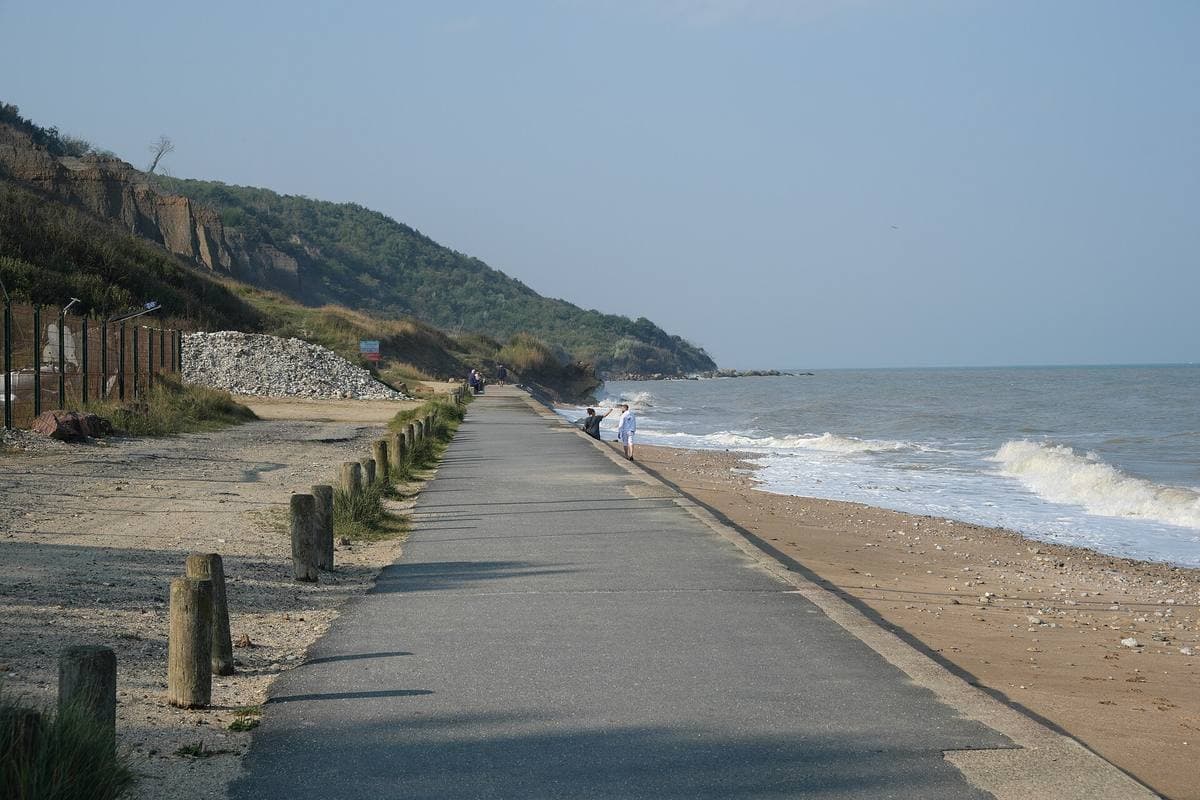
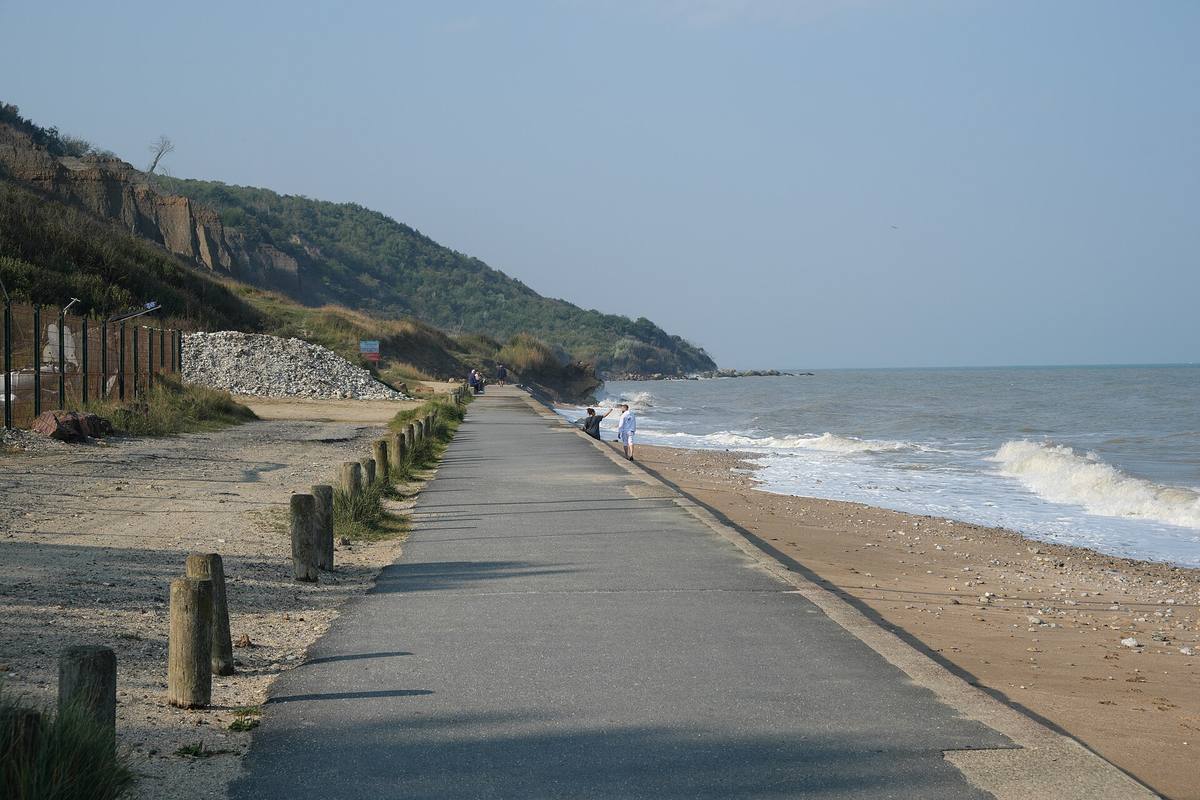
The last sequence was filmed on the beach at Villers-sur-Mer from a tracking car, between 16 and 22 December 1958.
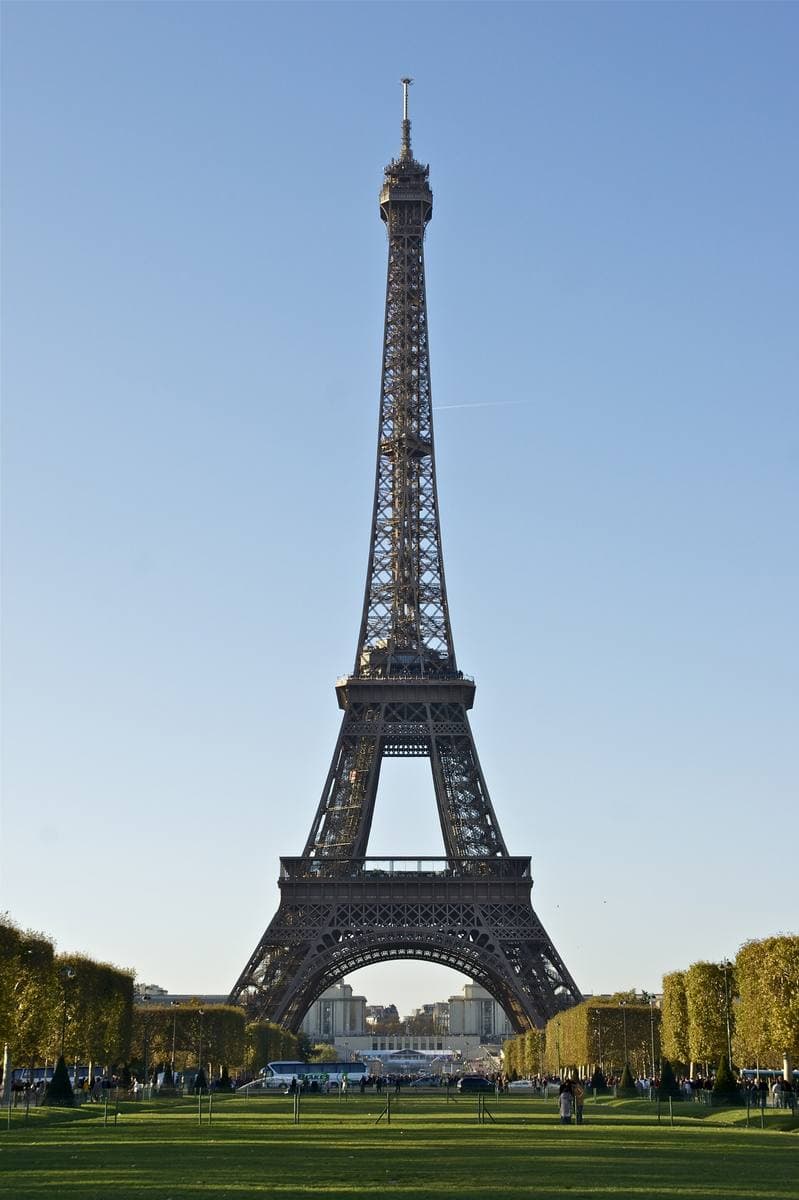
The Eiffel Tower from the Champ de Mars, October 2011. Jebulon · CC001 · The Champ de Mars
Place d’Iéna in 2021, with the equestrian statue of Washington. Polymagou · CC BY-SA 4.002 · Place d’Iéna
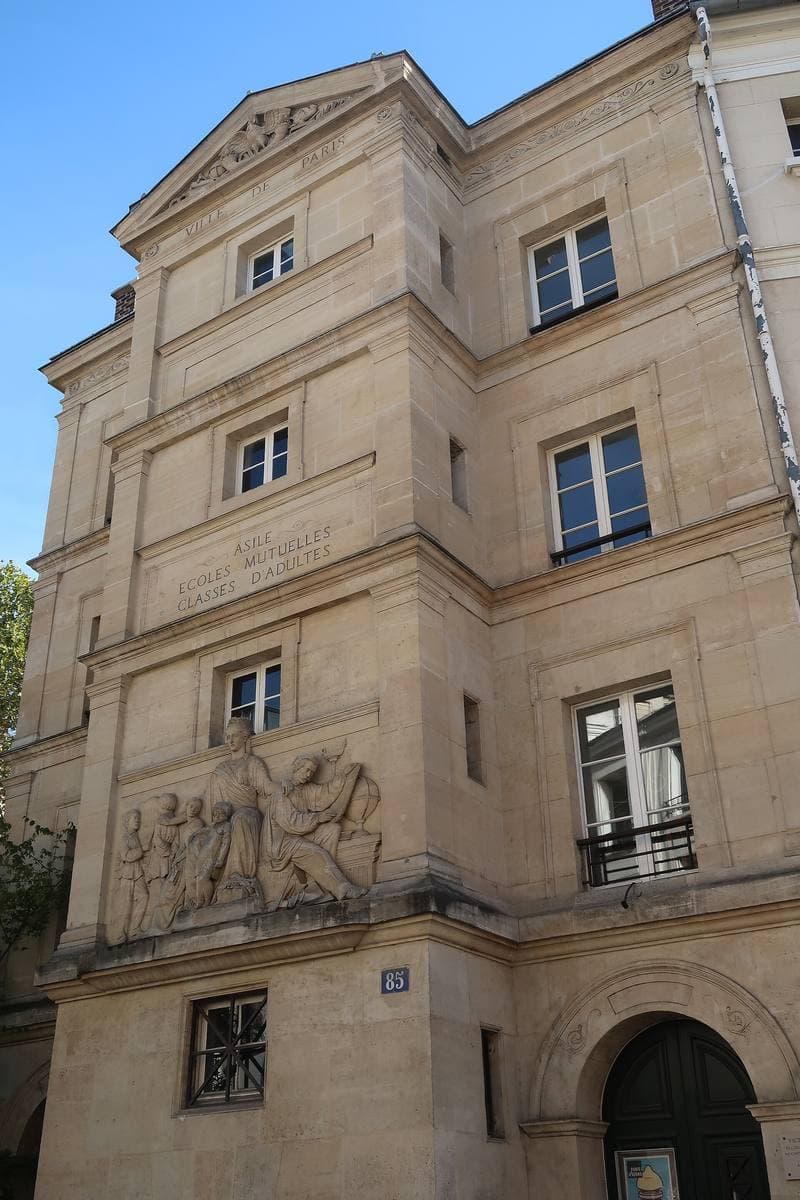
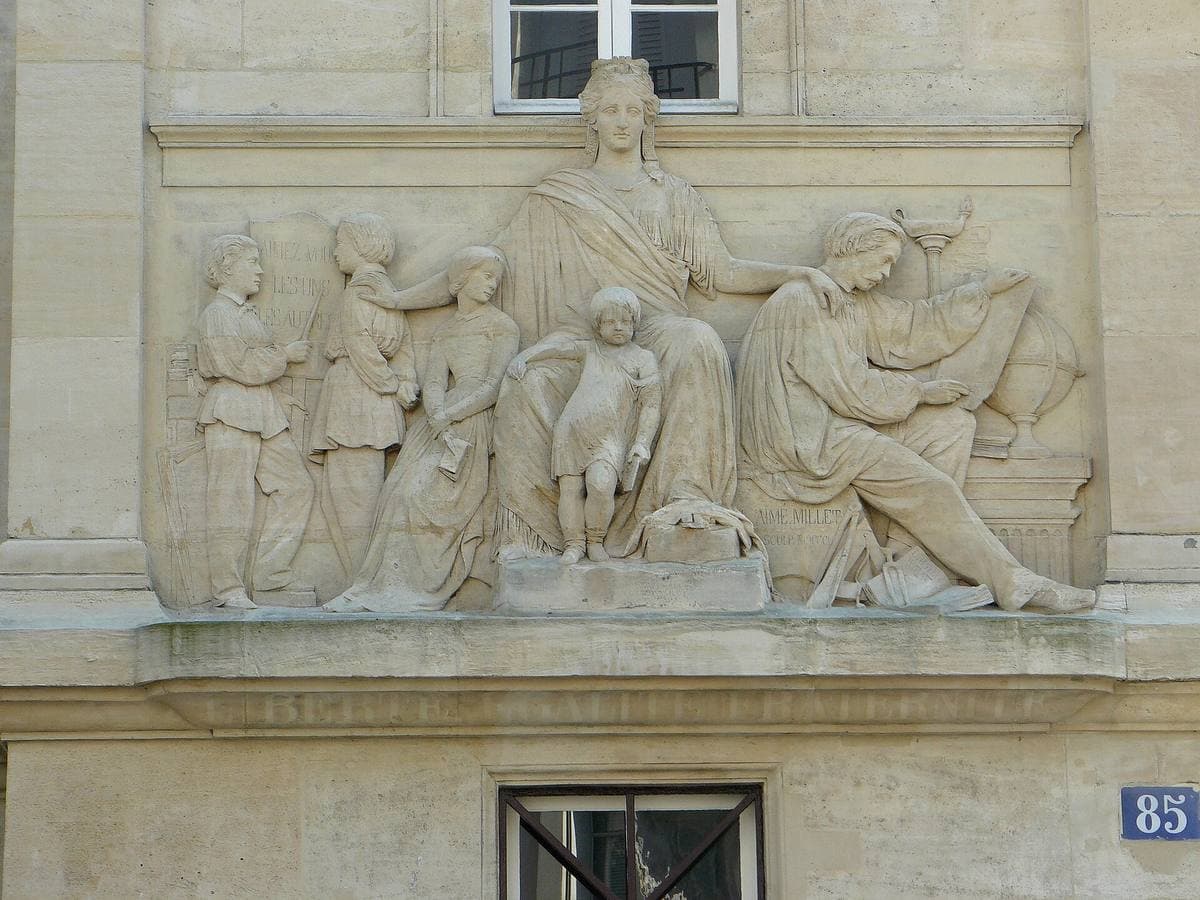
85 rue de Vaugirard in 2018, with Aimé Millet’s bas-relief over the windows. Celette · CC BY-SA 4.003 · The school
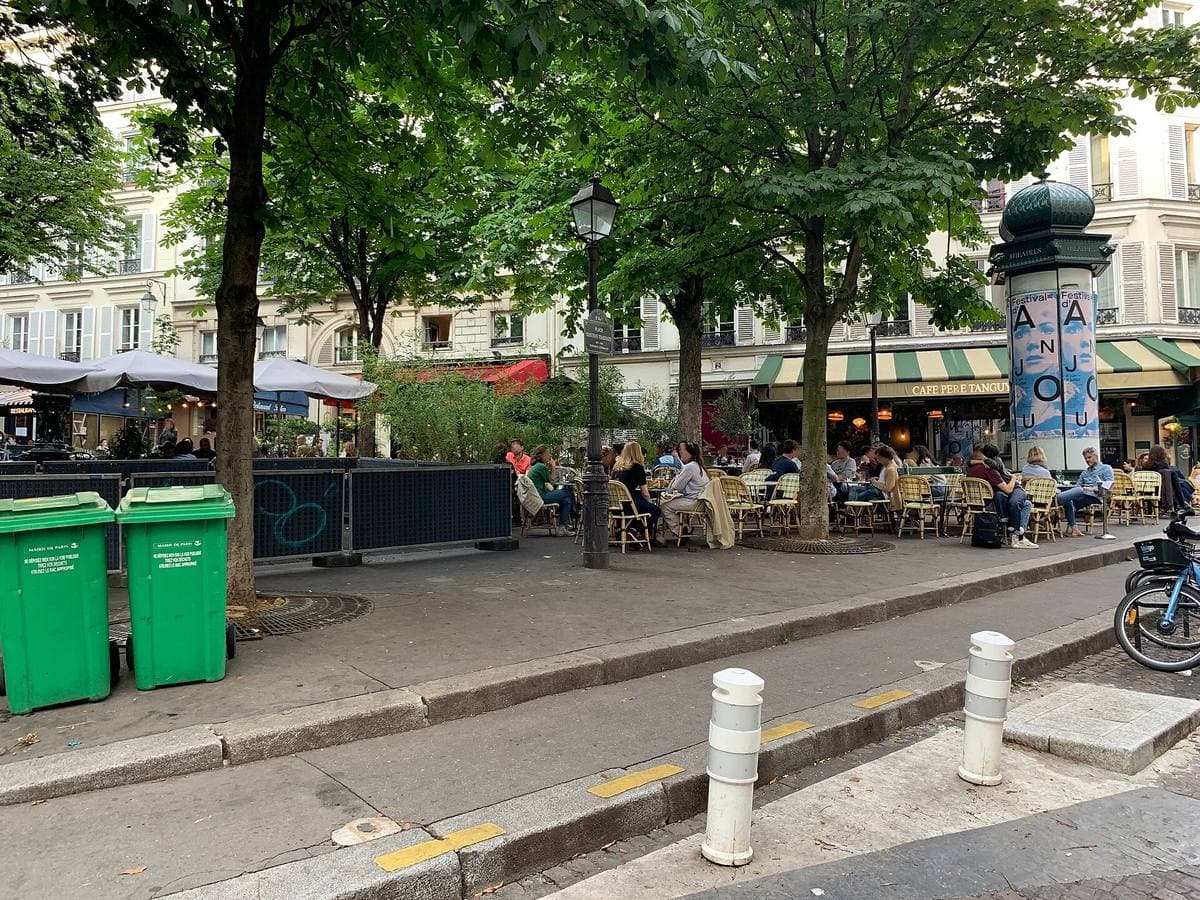
Place Gustave-Toudouze in 2021: café tables under the trees. Chabe01 · CC BY-SA 4.004 · Place Gustave-Toudouze
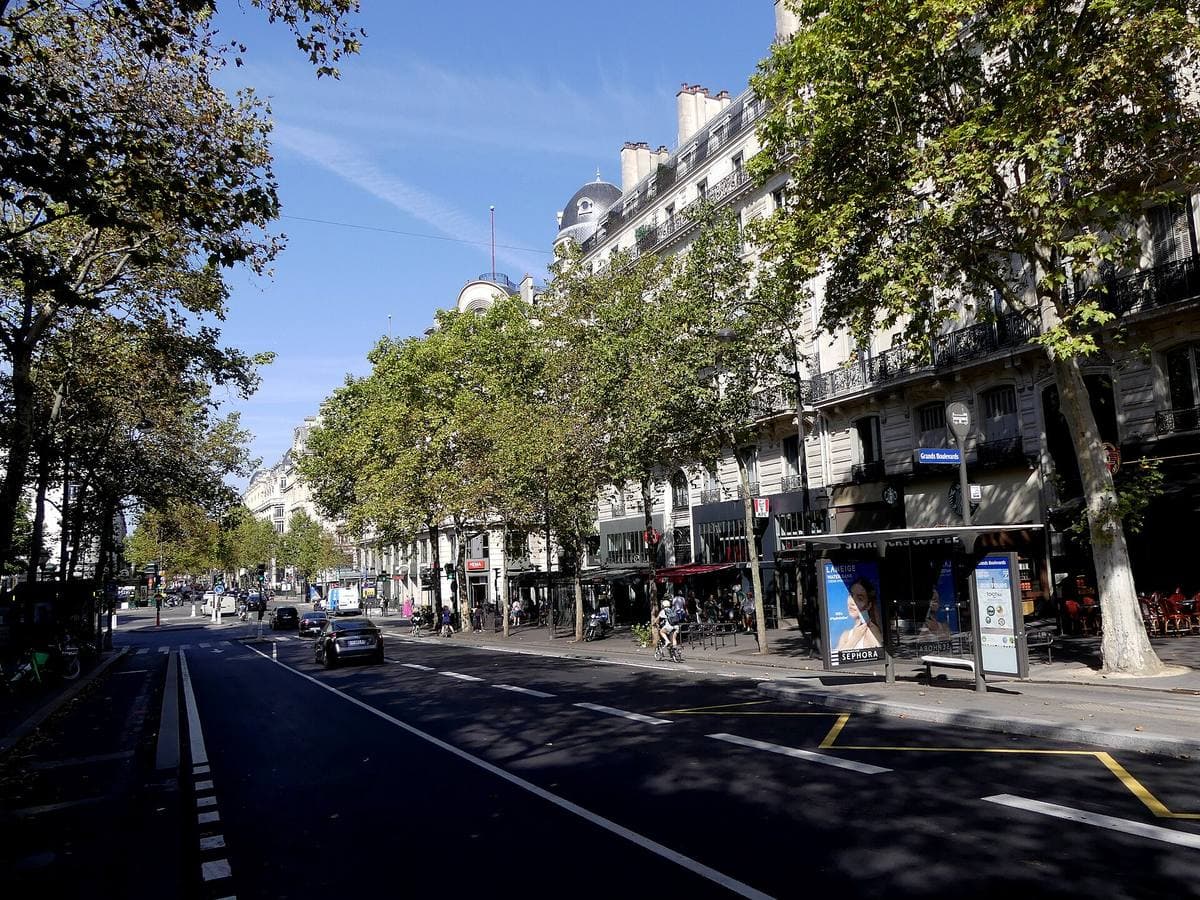
Boulevard Montmartre in September 2023. Florian Pépellin · CC BY-SA 4.005 · The Astor cinema
Place Pigalle at night in April 1959, with the Folies Pigalle and Narcisse signs lit. Wim Zevenhek or Johanna Deus · CC006 · Place Pigalle and the boulevard de Clichy
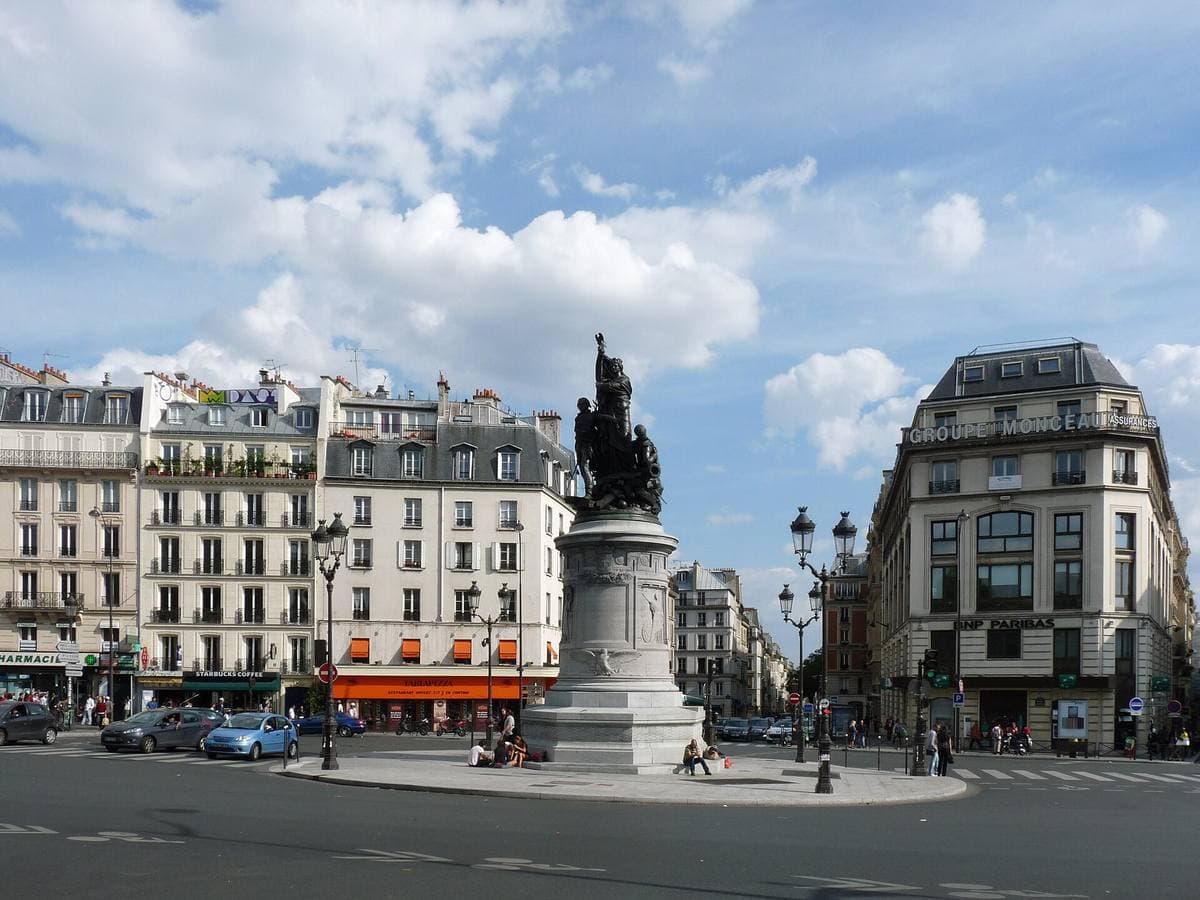
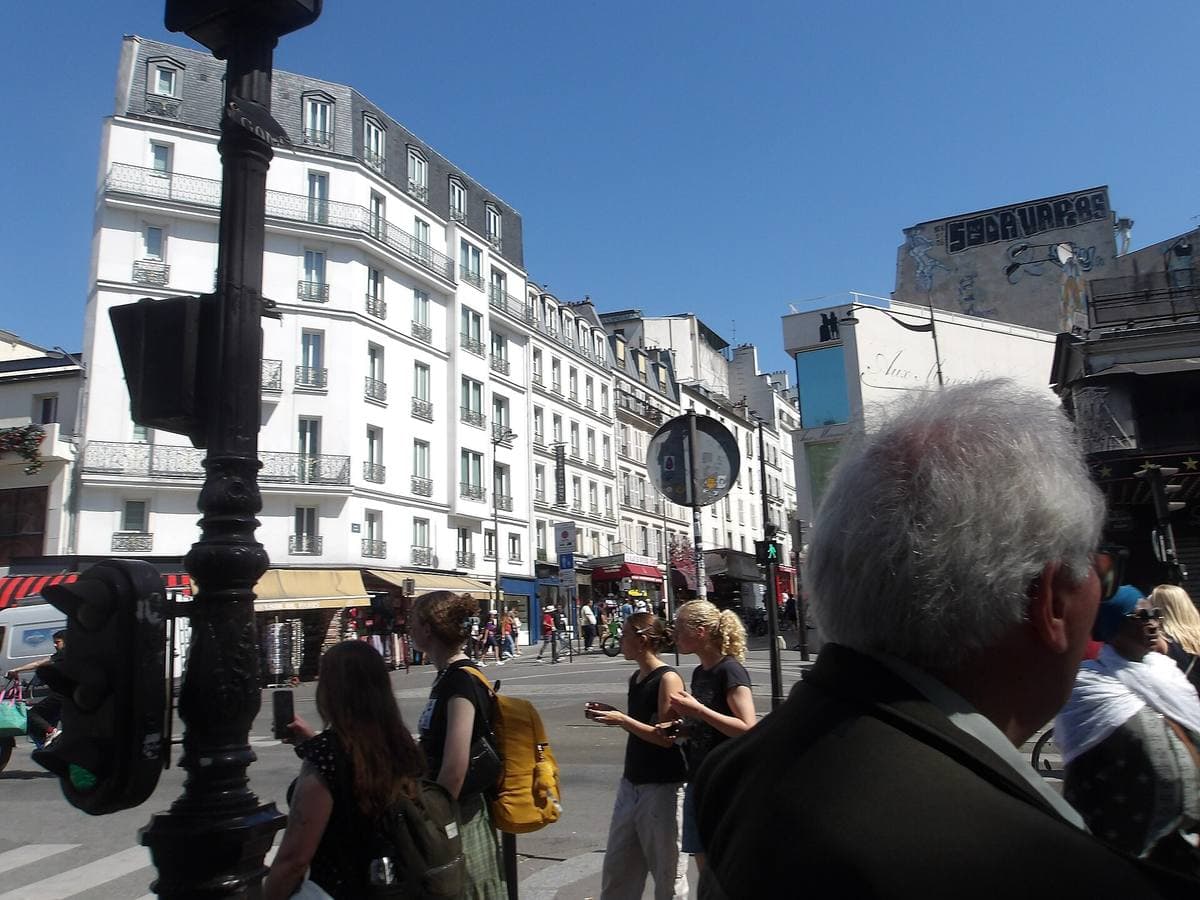
Place de Clichy in July 2011, with the Moncey monument at its centre. Ralf.treinen · CC BY-SA 3.007 · Place de Clichy
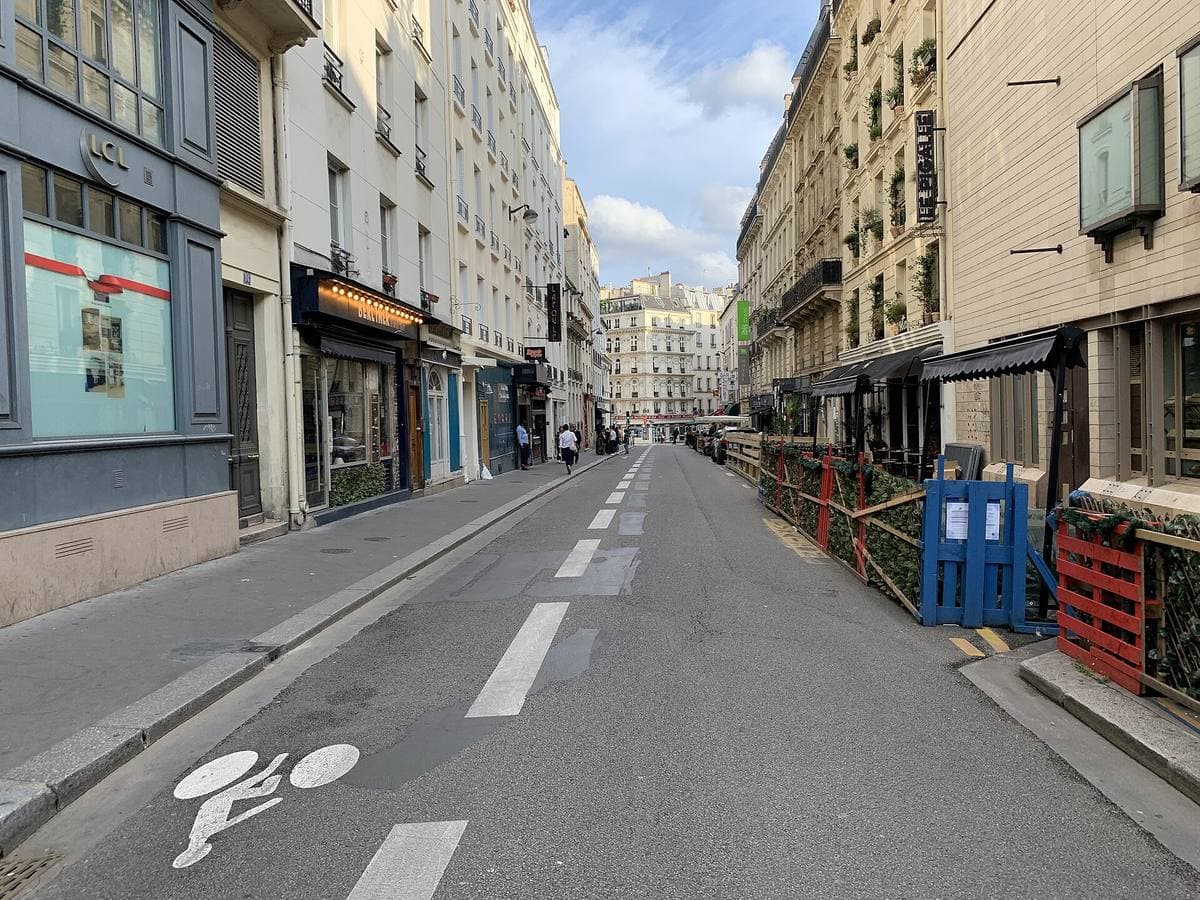
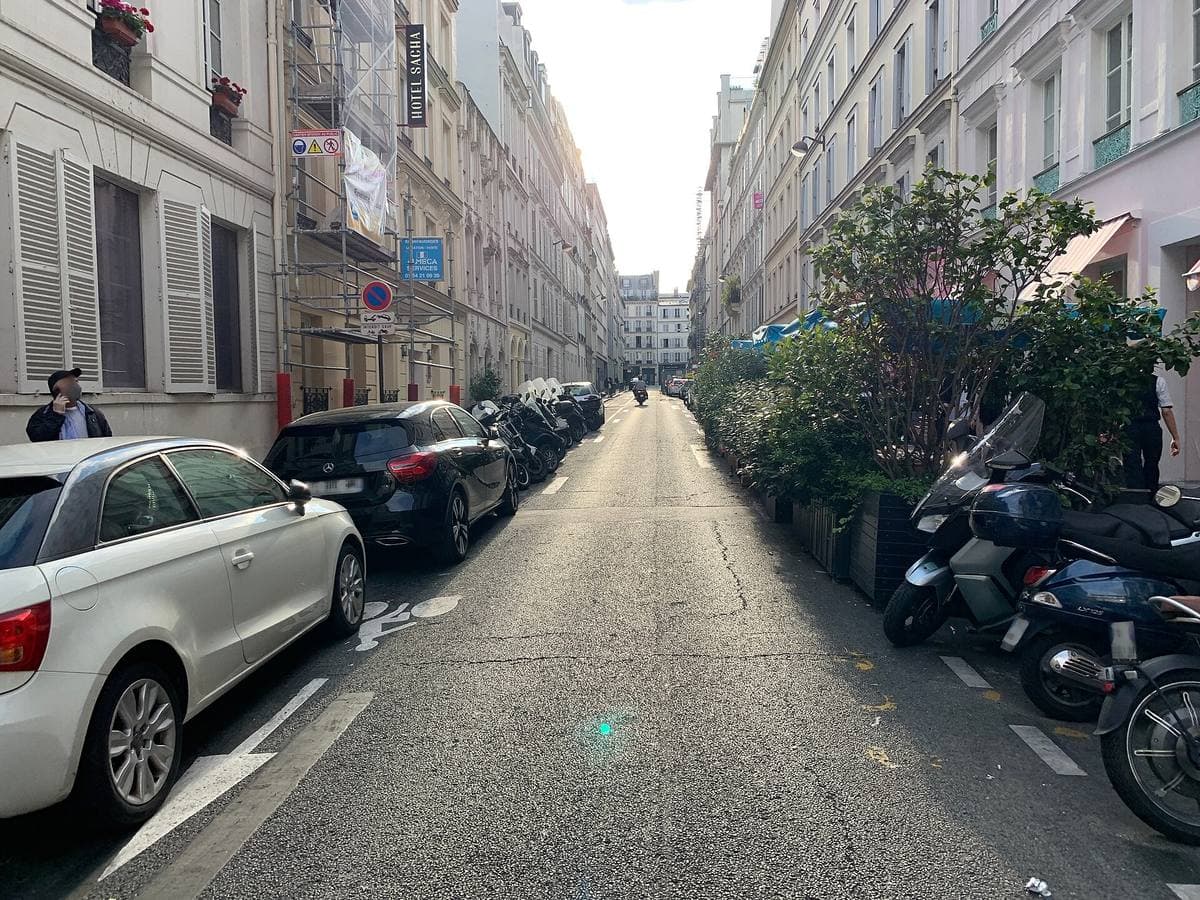
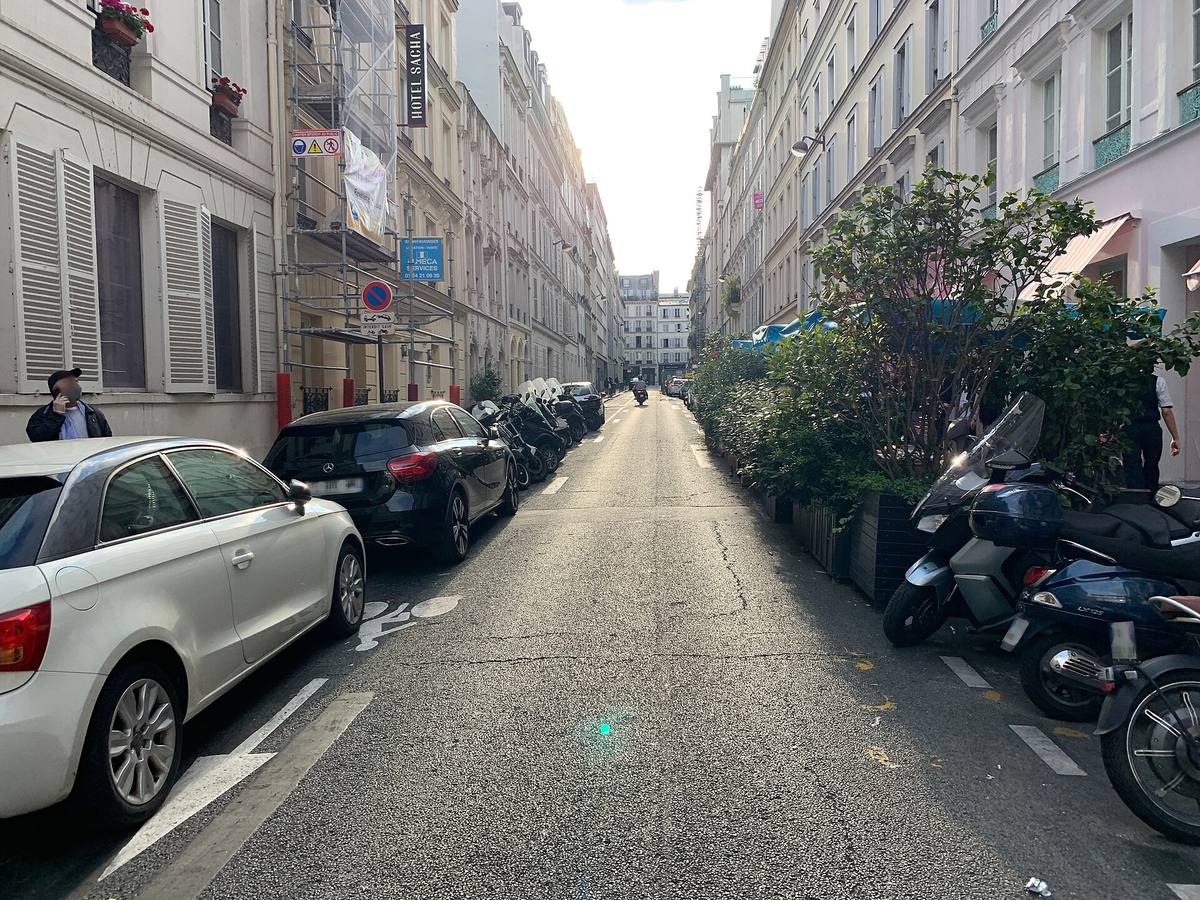
Rue Frochot in 2021, the public street beside the gated avenue. Chabe01 · CC BY-SA 4.008 · René’s street
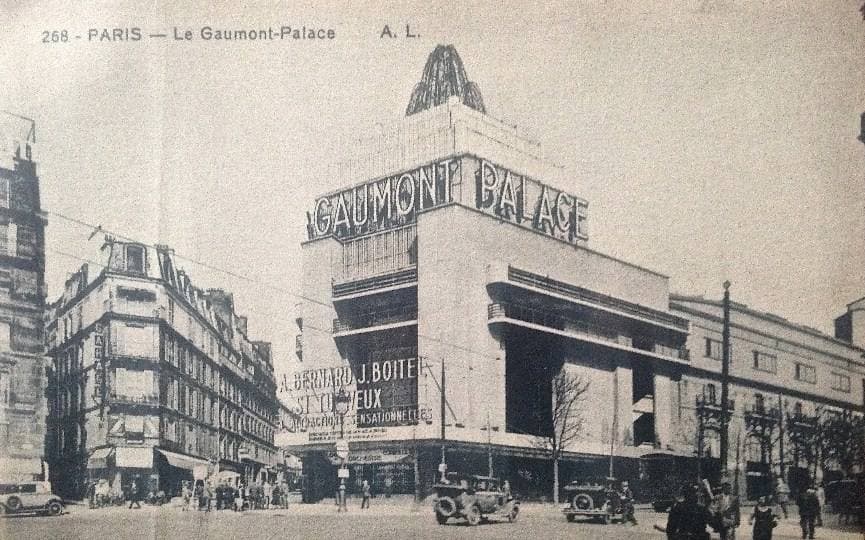
The Gaumont-Palace on its 1931 façade, from a postcard made before 1934. A. L. · Public domain09 · The Gaumont-Palace
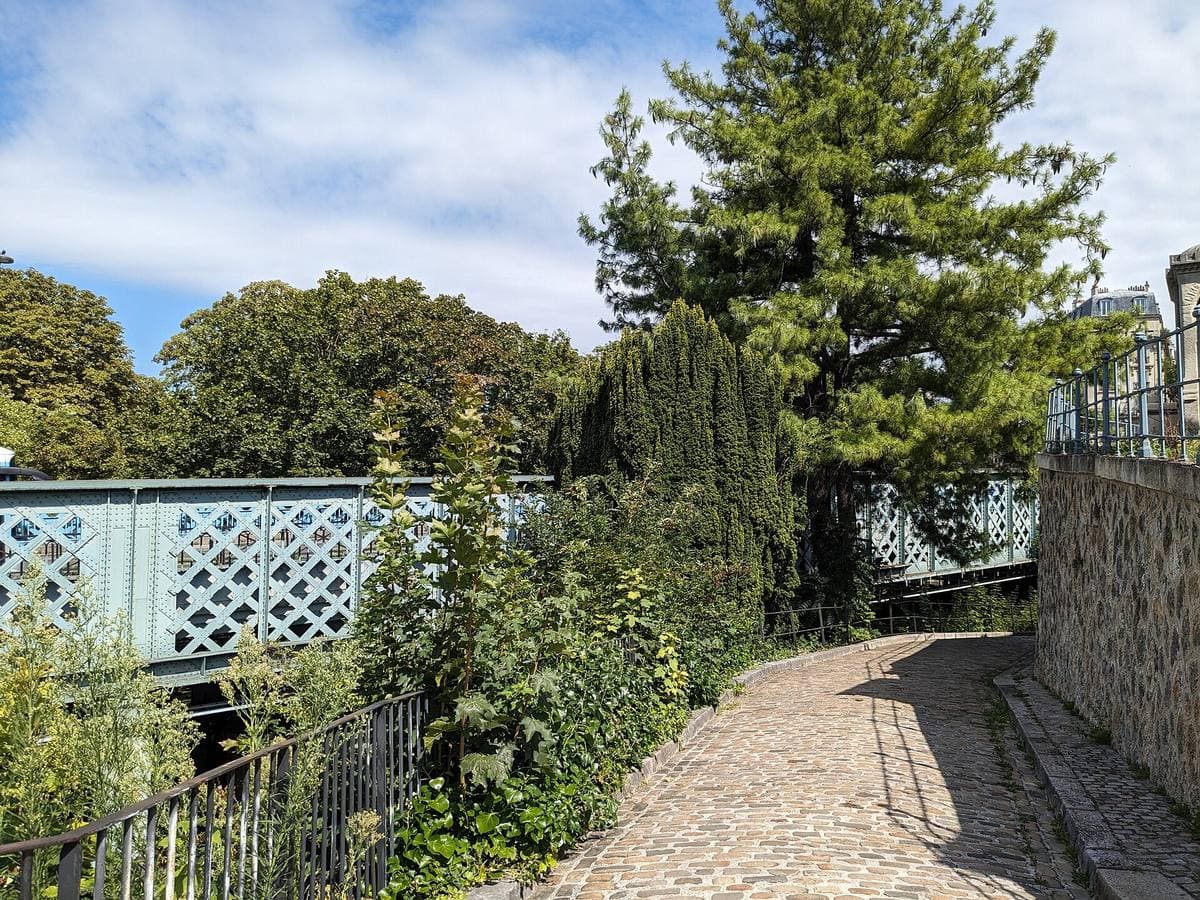
The Caulaincourt ramp and bridge over the Montmartre cemetery in 2023. Romainbehar · CC010 · The Montmartre cemetery stairs
Where rue Lepic and rue Puget meet the boulevard de Clichy, May 2026. Shlumble · CC BY 4.011 · Rue Lepic
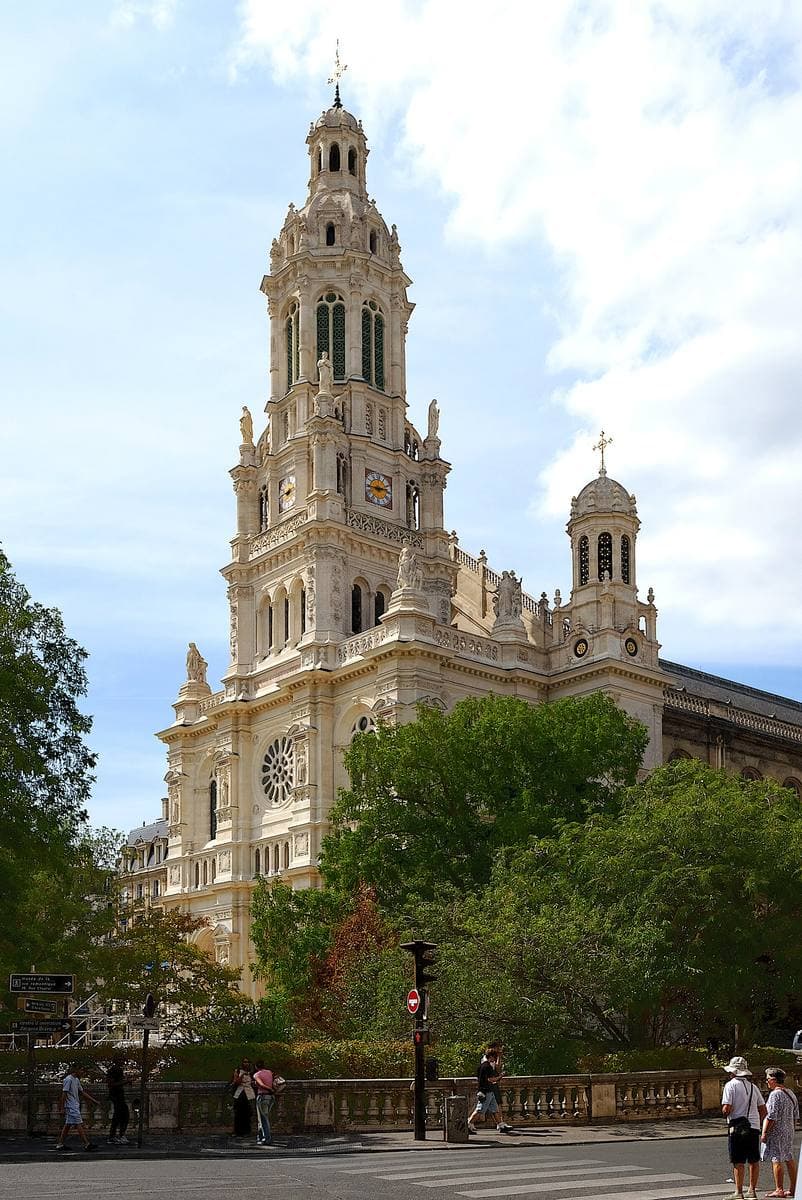
The Sainte-Trinité church above its square in July 2026. Mbzt · CC BY 4.012 · The Trinité fountains
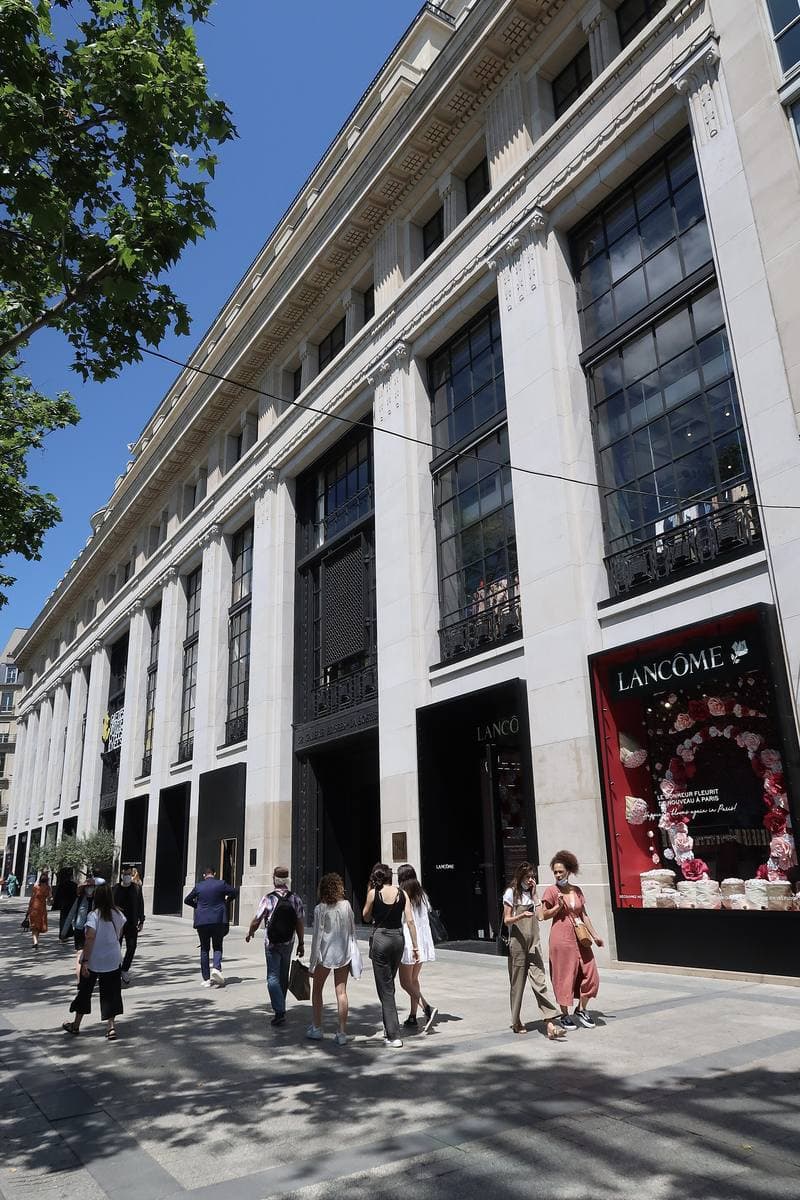
52–60 avenue des Champs-Élysées in May 2021. Polymagou · CC BY-SA 4.013 · The typewriter arcade
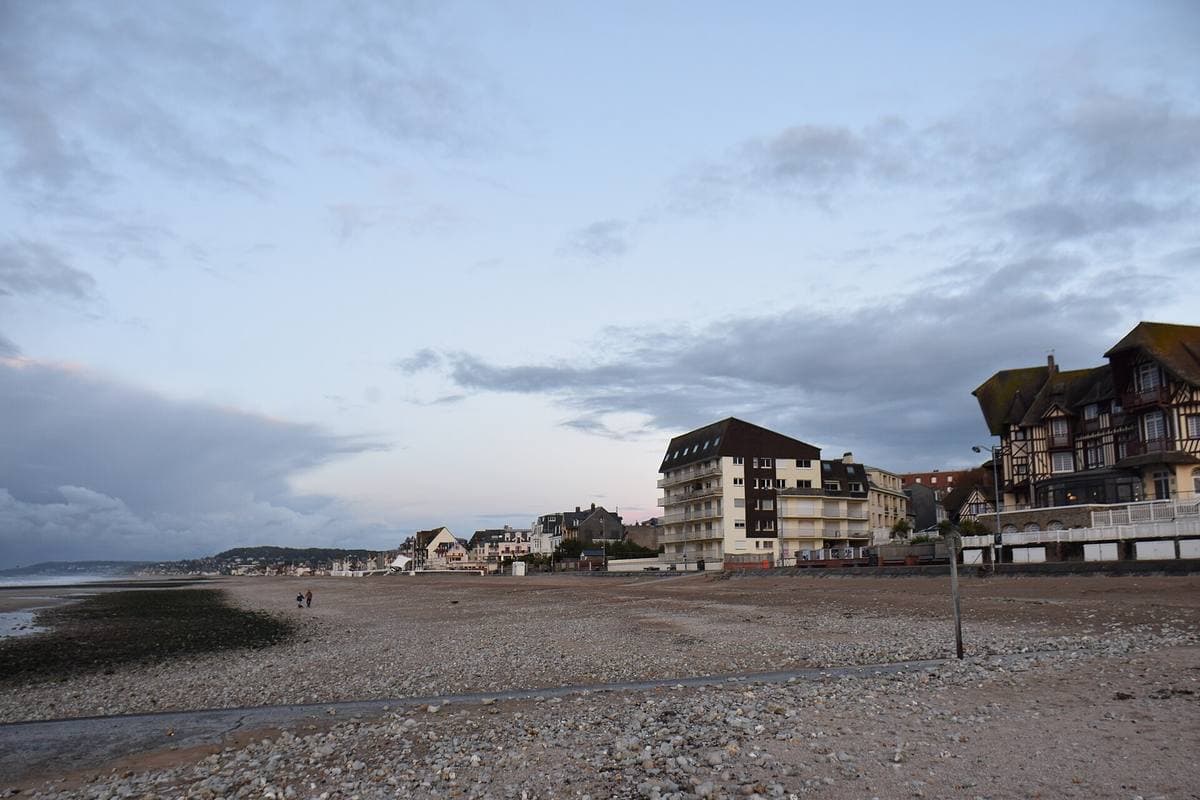
The beach at Villers-sur-Mer in September 2023. René Hourdry · CC014 · The beach at Villers-sur-Mer
Fourteen frames, from the credits to the sea. Press Run.
Nothing frozen yet. The frame under the gate is the one that stops.
Rue de Navarin, 1942–1948
Antoine was François.
Truffaut said he made the film from his own childhood, and he grew up in the same quarter, on rue de Navarin. Turn the cards over.
Showing Antoine Doinel, 1959.
The cinemas
Antoine and René bunk off to the Astor on the boulevard Montmartre, then cross to the Cinéac.
Where we read it
Antoine and René bunk off to the Astor on the boulevard Montmartre, then cross to the Cinéac.
In June 1959, in the magazine Arts, Truffaut denied the film was about him; his family had been hurt by it. He kept saying, later, how bad his years on rue de Navarin had been.
Where we read it
Truffaut drew on his runaways, his detention at the Villejuif observation centre and his friend Robert Lachenay; on 3 June 1959 in Arts he denied the film was autobiographical, but later held to what he said about rue de Navarin between 1943 and 1948.
After his grandmother died in 1942, Truffaut went back to his parents, first on rue de Clignancourt and then on rue de Navarin, where a plaque now marks the building.
The flat was tiny. He slept on a folding bed in the hall.
He said he drew the film from his own childhood: his running away, and his time in the observation centre for minors at Villejuif.
The Hôtel Amour is on the same street, at number 8.
A private home, marked by a plaque on the front. It is named here and kept off the map; look from the street.
Where we read itRue Frochot in 2021, the public street beside the gated avenue. Chabe01 · CC BY-SA 4.0
Avenue Frochot, Paris 9e
René’s street
The outside of René’s home was filmed on avenue Frochot; the rooms inside were Claude Vermorel’s flat on rue Pierre-Fontaine.
Avenue Frochot is a private road.
A private, gated lane: named here and kept off the map. The public street beside it is rue Frochot.
Where we read it
Hôtel Amour
Hôtel Amour, rue de Navarin
Paris 9e · 28 rooms · book on the hotel’s site
Twenty-eight rooms, a café, a bar and a restaurant with a garden veranda at 8 rue de Navarin, the street where Truffaut grew up, a stone’s throw from place Pigalle. The rooms have no television; single rooms are 9 square metres.
Rue de Vaugirard · place Gustave-Toudouze · the boulevards
School, home, and the cinema at ten.
Aimé Millet’s 1850 bas-relief at 85 rue de Vaugirard. Siren-Com · CC BY-SA 3.0
85 rue de Vaugirard, Paris 6e
The school
The outside of Antoine’s school is 85 rue de Vaugirard; the classroom interiors were shot elsewhere.
The building housed the École technique de photographie et de cinématographie, only the second film school ever. The film’s credits thank it.
Aimé Millet’s bas-relief is still over the windows, and the building looks as it does in the film.
A working building near the Luxembourg gardens. Look from the pavement and keep the door clear.
Where we read itPlace Gustave-Toudouze in 2021: café tables under the trees. Chabe01 · CC BY-SA 4.0
Place Gustave-Toudouze, Saint-Georges, Paris 9e
Place Gustave-Toudouze
The outside of the Doinels’ home was filmed on place Gustave-Toudouze, where rue Henry-Monnier meets rue Clauzel; more shots were made a few metres away, at rue Henry-Monnier and rue Notre-Dame-de-Lorette.
The square is now mostly café seating. The bench from the film is still there, opposite the restaurants, and the road behind has been pedestrianised.
The flat’s interiors were shot on rue Marcadet, in the 18th.
Truffaut went to nursery school round the corner at 12 rue Clauzel, while he lived with his grandmother on rue Henry-Monnier.
A small public square ringed with café tables. Antoine’s door is a home: look from the square.
Where we read itBoulevard Montmartre in September 2023. Florian Pépellin · CC BY-SA 4.0
12 boulevard Montmartre, Paris 9e
The Astor cinema
On their first day bunking off, Antoine and René go to the Astor cinema at 12 boulevard Montmartre.
They cross to the Cinéac at 5 boulevard des Italiens, then come back, making the cars slow down on the boulevard between the passage des Panoramas and the passage Jouffroy.
The Astor opened on 31 December 1947 and closed in 1970. The 9th arrondissement’s town hall took over the hall: it is now the Salle Rossini.
Truffaut remembered two cinemas facing each other on these boulevards, the New-York and the Cinéac-Italiens, both opening at ten in the morning to audiences of schoolchildren. The first to open took everyone, because truants were in a hurry to hide.
The cinema closed in 1970; its hall is now the Salle Rossini of the 9th arrondissement’s town hall. Walk the boulevard between the passage des Panoramas and the passage Jouffroy.
Where we read it
The Sainte-Trinité church above its square in July 2026. Mbzt · CC BY 4.0
Place d’Estienne-d’Orves, Paris 9e
The Trinité fountains
After a night on the streets, Antoine washes his face in the fountains in front of the Sainte-Trinité church. In the film the water has frozen.
The fountains are exactly as they were. The church began a restoration in 2021.
Théodore Ballu built the church between 1861 and 1867; its bell tower rises to 65 metres.
A public square below the church, by Trinité – d’Estienne d’Orves métro.
Where we read it
Boulevard de Clichy · the funfair
The Rotor.
On his first day off school Antoine rides the Rotor, an upright drum first shown at the Oktoberfest in 1949: at full speed the floor drops away and the riders stay stuck to the wall. Truffaut is in there with him, as an extra. Spin it up.
Where we read it
Antoine rides a Rotor at a funfair on the boulevard de Clichy; Truffaut appears as an extra in the Rotor scene, with Philippe de Broca.
The Rotor was patented by Ernst Hoffmeister in 1948 and first shown at the Oktoberfest in 1949; at full speed its floor retracts and the riders stay stuck to the wall.
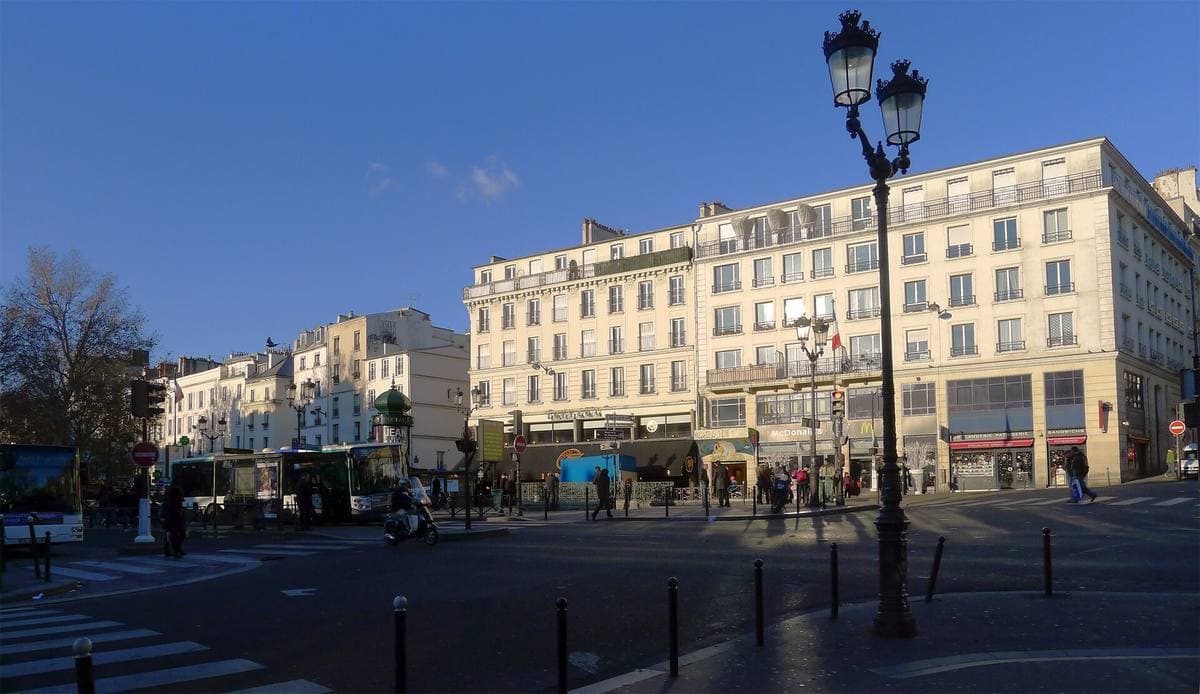
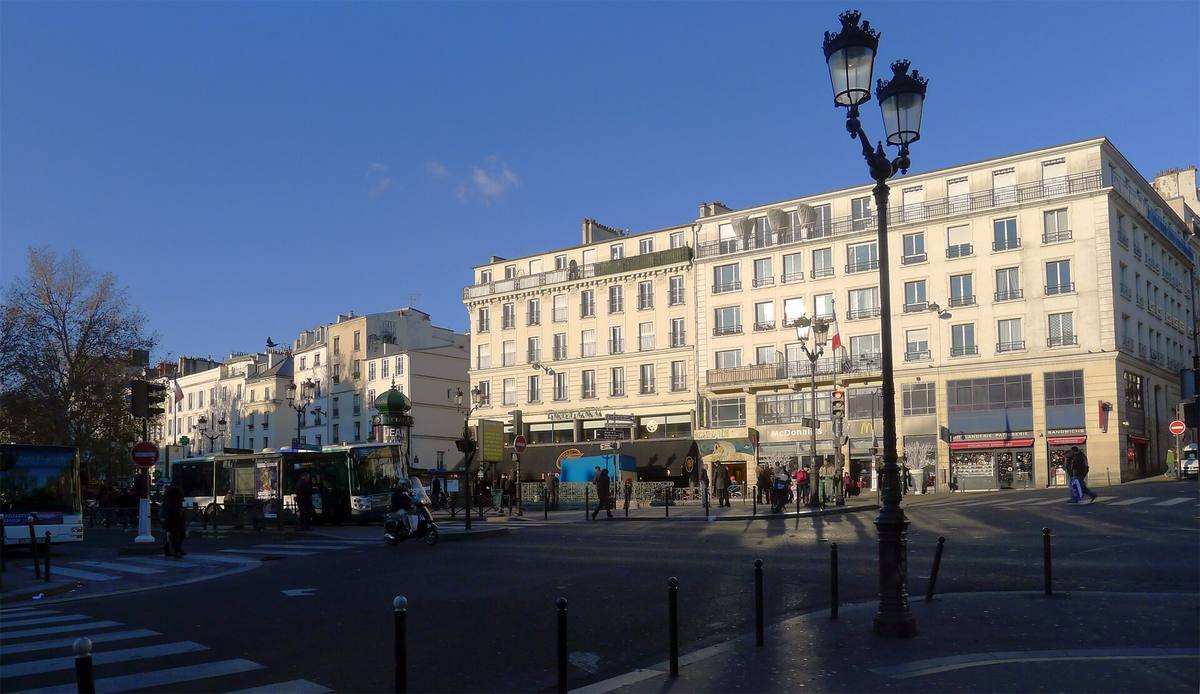
Place Pigalle and the boulevard de Clichy in 2012. Mbzt · CC BY 3.0
Place Pigalle, Paris 9e
Place Pigalle and the boulevard de Clichy
Antoine takes a ride on the Rotor at a funfair on the boulevard de Clichy.
Truffaut is an extra in the Rotor scene, with Philippe de Broca, his assistant director.
Near the end, the police van taking Antoine away passes the boulevard de Clichy at rue André-Antoine and the Ritz cinema.
The City of Paris guide lists place Pigalle among the film’s addresses.
A public square and the tree-lined middle of the boulevard; busy late into the night.
Where we read it
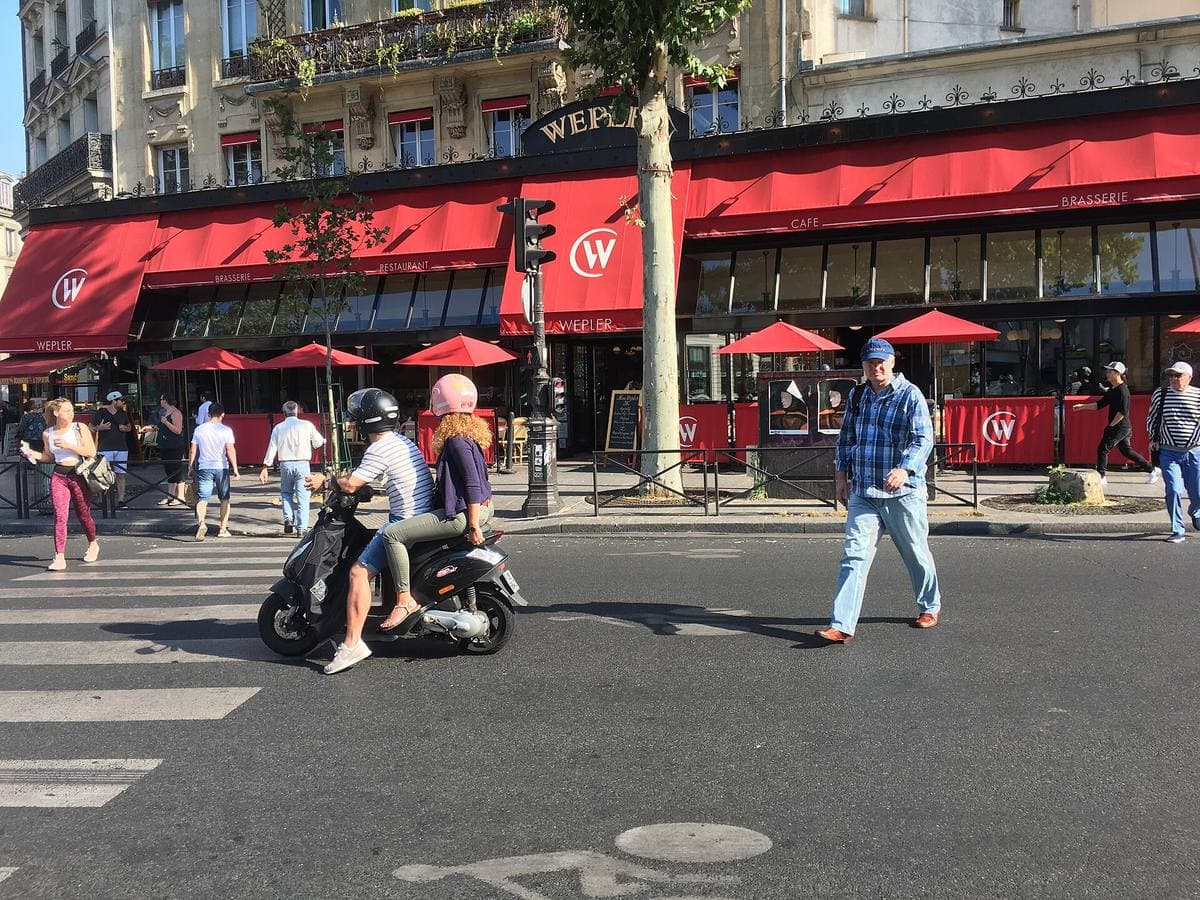
The Brasserie Wepler on place de Clichy in 2018. Langladure · CC BY-SA 4.0
Place de Clichy, Paris 8e, 9e, 17e and 18e
Place de Clichy
Antoine sees his mother kissing another man at the métro entrance on place de Clichy.
Walking east, the boys pass the Brasserie Wepler at 14 place de Clichy.
Robert Lachenay, Truffaut’s friend from school, remembered about 25 cinemas between place Clichy and Barbès.
A busy public square where four arrondissements meet; the Brasserie Wepler is on the north side at number 14.
Where we read it
The Gaumont-Palace on its 1931 façade, from a postcard made before 1934. A. L. · Public domain
1 rue Caulaincourt, Paris 18e
The Gaumont-Palace
The front of the Gaumont-Palace appears when the family go out for an evening at the pictures.
It opened as the Hippodrome de Montmartre, built from 1898 to 1900, became the Gaumont-Palace in 1911, was rebuilt in 1931 and was demolished in 1973, soon after it closed.
At its biggest the hall held 6,000 people; its owners called it the largest cinema in the world.
A Mercure hotel and a Castorama store stand where it was.
The cinema was pulled down in 1973. A Mercure hotel and a Castorama store stand on the site, at the foot of rue Caulaincourt.
Where we read it
Where rue Lepic and rue Puget meet the boulevard de Clichy, May 2026. Shlumble · CC BY 4.0
3 rue Lepic, Paris 18e
Rue Lepic
Out all night, Antoine steals a bottle of milk from a grocer’s at 3 rue Lepic.
He walks down rue Lepic toward place Blanche, then down rue Puget, where the empty bottle goes into the drain.
A public street climbing from place Blanche into Montmartre; rue Puget runs off it to the boulevard.
Where we read it
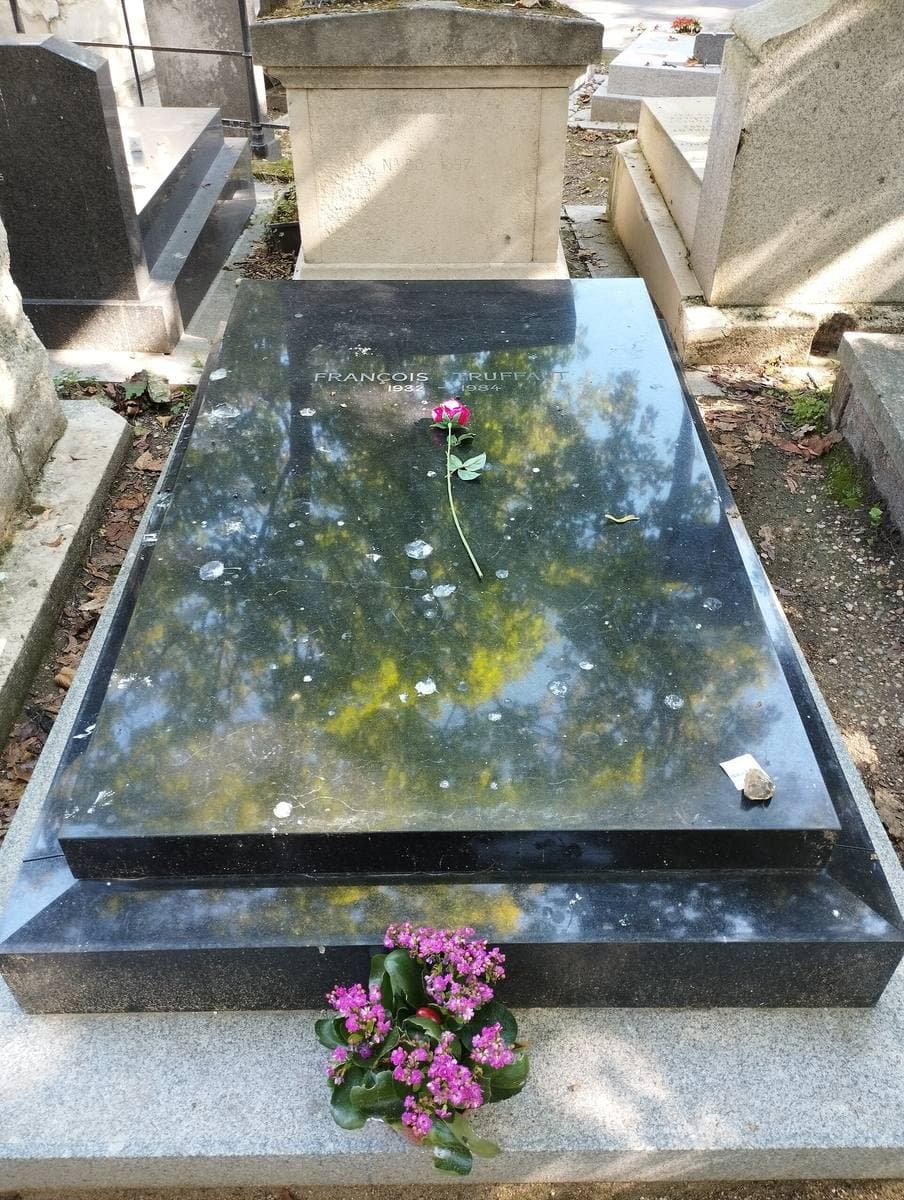
François Truffaut’s grave in the Montmartre cemetery, 2018. ManoSolo13241324 · CC BY-SA 4.0
Avenue Rachel, under rue Caulaincourt, Paris 18e
The Montmartre cemetery stairs
On his second run from home, Antoine takes the stairs from rue Caulaincourt down to avenue Rachel, beside the cemetery.
The cemetery opened on 1 January 1825 in an old gypsum quarry; its only entrance is on avenue Rachel, under rue Caulaincourt.
Truffaut died in 1984, aged 52, and is buried here. For years people left métro tickets on his grave, for his film The Last Metro.
A public cemetery. Its only entrance is on avenue Rachel, under the rue Caulaincourt bridge.
Where we read it
Viator · Ad / affiliate
Montmartre and Pigalle on foot
Paris 18e and 9e
Live marketplace results for walking tours of Montmartre and Pigalle. None is built round this film; check each route for place Pigalle, rue Lepic and the cemetery.
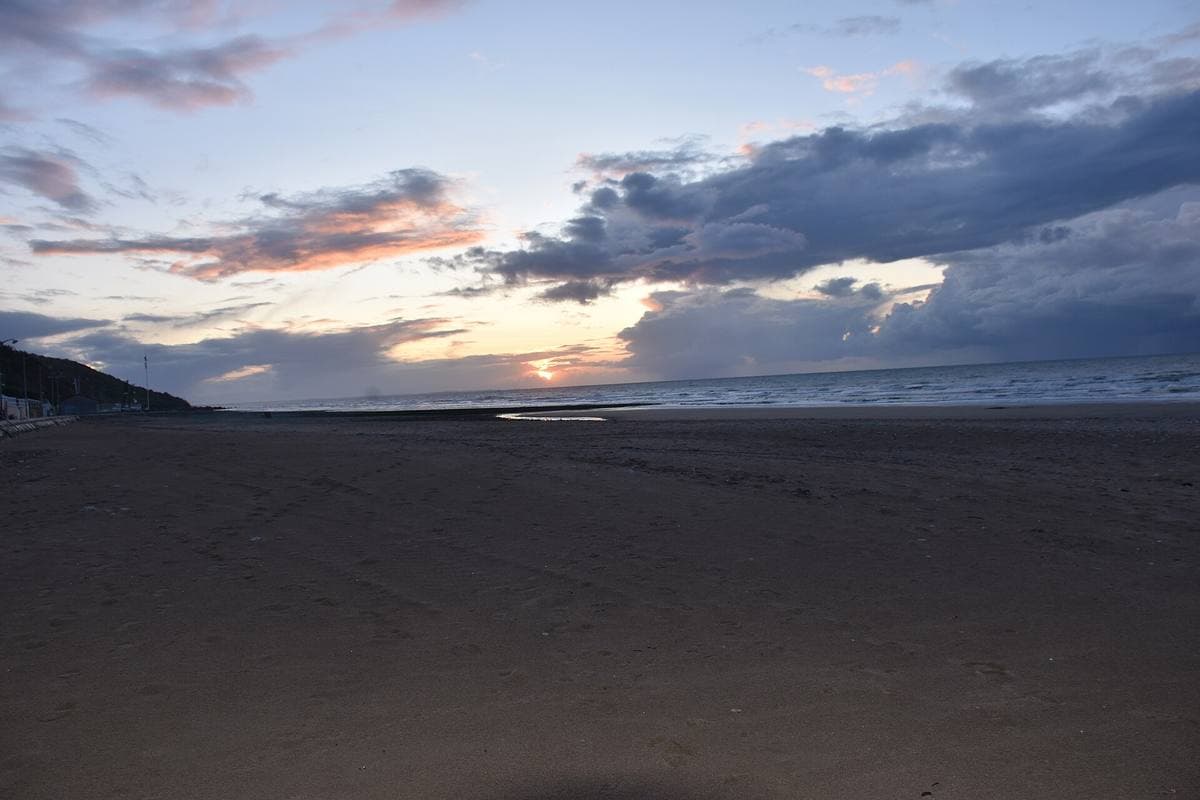
Dusk over the sea at Villers-sur-Mer, September 2023. René Hourdry · CC0
The tide is out. The beach is empty.
The promenade at Villers-sur-Mer running toward the Vaches Noires cliffs, 2024. GFreihalter · CC BY-SA 4.0
The people
Who made it.
Jean-Pierre Léaud photographed by Studio Harcourt in 1959, the year The 400 Blows came out. Studio Harcourt · Public domainJean-Pierre LéaudAntoine Doinel · 1959
Jean-Pierre Léaud plays Antoine, with Albert Rémy and Claire Maurier as his parents and Patrick Auffray as René. Henri Decae shot it in black-and-white DyaliScope; Jean Constantin wrote the music. Jeanne Moreau and Jean-Claude Brialy pass through, and Jacques Demy plays a policeman. Truffaut dedicated the film to André Bazin, his mentor, who died the day after shooting began.
10 Nov 1958Shooting starts, entirely on real locations
5 Jan 1959Shooting ends
4 May 1959First shown at Cannes; best director
4,166,149Cinema tickets sold in France
Where we read it
Cast and crew, the DyaliScope format, the brief appearances of Jeanne Moreau and Jean-Claude Brialy, the dedication to André Bazin, shooting from 10 November 1958 to 5 January 1959 entirely on real locations, the Cannes screening of 4 May 1959, the prize for direction, and 4,166,149 admissions in France.
13 places you can visit, in Paris and at Villers-sur-Mer. René’s lane and Truffaut’s family home are private: named here, not on the map.
Pins mark public places; private homes are named but not pinned.
General reference · Public access · Coordinate precision: site · Not an exact scene or camera position; not a visitor route. A small public square ringed with café tables. Antoine’s door is a home: look from the square.
General reference · Public access · Coordinate precision: building · Not an exact scene or camera position; not a visitor route. The cinema closed in 1970; its hall is now the Salle Rossini of the 9th arrondissement’s town hall. Walk the boulevard between the passage des Panoramas and the passage Jouffroy.
General reference · Public access · Coordinate precision: site · Not an exact scene or camera position; not a visitor route. A public square below the church, by Trinité – d’Estienne d’Orves métro.
1Place Gustave-Toudouze in 2021: café tables under the trees. Chabe01 · CC BY-SA 4.0
Place Gustave-Toudouze, Saint-Georges, Paris 9e
Place Gustave-Toudouze
The outside of the Doinels’ home was filmed on place Gustave-Toudouze, where rue Henry-Monnier meets rue Clauzel; more shots were made a few metres away, at rue Henry-Monnier and rue Notre-Dame-de-Lorette.
A small public square ringed with café tables. Antoine’s door is a home: look from the square.
Where we read it
2Boulevard Montmartre in September 2023. Florian Pépellin · CC BY-SA 4.0
12 boulevard Montmartre, Paris 9e
The Astor cinema
On their first day bunking off, Antoine and René go to the Astor cinema at 12 boulevard Montmartre.
The cinema closed in 1970; its hall is now the Salle Rossini of the 9th arrondissement’s town hall. Walk the boulevard between the passage des Panoramas and the passage Jouffroy.
Where we read it
3The Sainte-Trinité church above its square in July 2026. Mbzt · CC BY 4.0
Place d’Estienne-d’Orves, Paris 9e
The Trinité fountains
After a night on the streets, Antoine washes his face in the fountains in front of the Sainte-Trinité church. In the film the water has frozen.
A public square below the church, by Trinité – d’Estienne d’Orves métro.
Where we read it
Stay
Sleep on his street.
A hotel on rue de Navarin, where Truffaut grew up.
Hôtel Amour
Hôtel Amour, rue de Navarin
Paris 9e · 28 rooms · book on the hotel’s site
Twenty-eight rooms, a café, a bar and a restaurant with a garden veranda at 8 rue de Navarin, the street where Truffaut grew up, a stone’s throw from place Pigalle. The rooms have no television; single rooms are 9 square metres.
Walking tours of Montmartre and Pigalle, and day trips to the Normandy coast.
Viator · Ad / affiliate
Montmartre and Pigalle on foot
Paris 18e and 9e
Live marketplace results for walking tours of Montmartre and Pigalle. None is built round this film; check each route for place Pigalle, rue Lepic and the cemetery.
Dates, prices, rooms and stock change: confirm with the provider before you travel or buy. A stay or tour is described as a filming location only where the card says so.
The register
Every place and moment behind this page, with sources.
15 of 15 places · 15 of 15 Moments
Place Gustave-Toudouze
Place Gustave-Toudouze, Saint-Georges, Paris 9e
Home
Antoine and René walk back from school to Antoine’s building on the square.
The Astor cinema
12 boulevard Montmartre, Paris 9e
Bunking off
Antoine and René bunk off to the Astor cinema on the boulevard Montmartre.
The Trinité fountains
Place d’Estienne-d’Orves, Paris 9e
The fountain
He washes his face in the frozen fountains of the Trinité.
René’s street
Avenue Frochot, Paris 9e
At René’s
Antoine hides out at his friend René’s home.
Truffaut’s own street
Rue de Navarin, Paris 9e
Rue de Navarin
Truffaut grew up on rue de Navarin in the 1940s, the years he drew on for the film.
Place de Clichy
Place de Clichy, Paris 8e, 9e, 17e and 18e
Place de Clichy
Antoine sees his mother kissing another man at the métro entrance.
Place Pigalle and the boulevard de Clichy
Place Pigalle, Paris 9e
The Rotor
Antoine rides the Rotor at a funfair on the boulevard de Clichy.
The Gaumont-Palace
1 rue Caulaincourt, Paris 18e
A night at the pictures
The family go out to the Gaumont-Palace for the evening.
Rue Lepic
3 rue Lepic, Paris 18e
The milk
At dawn Antoine steals a bottle of milk on rue Lepic.
The Montmartre cemetery stairs
Avenue Rachel, under rue Caulaincourt, Paris 18e
The stairs
Antoine takes the stairs down from rue Caulaincourt beside the cemetery.
Place d’Iéna
Place d’Iéna, Paris 16e
Washington, then the tower
Washington’s statue passes on place d’Iéna, then the top of the tower appears.
The Champ de Mars
Champ de Mars, Paris 7e
The credits
The credits travel through west Paris toward the Eiffel Tower and end on the Champ de Mars.
The typewriter arcade
52 avenue des Champs-Élysées, Paris 8e
The typewriter
Antoine steals a typewriter from his stepfather’s office in an arcade on the Champs-Élysées.
The school
85 rue de Vaugirard, Paris 6e
School
The school door on rue de Vaugirard, where Antoine’s class comes out.
The beach at Villers-sur-Mer
Villers-sur-Mer, Calvados
The sea
Antoine runs from the centre to the sea, and the film freezes on his face.