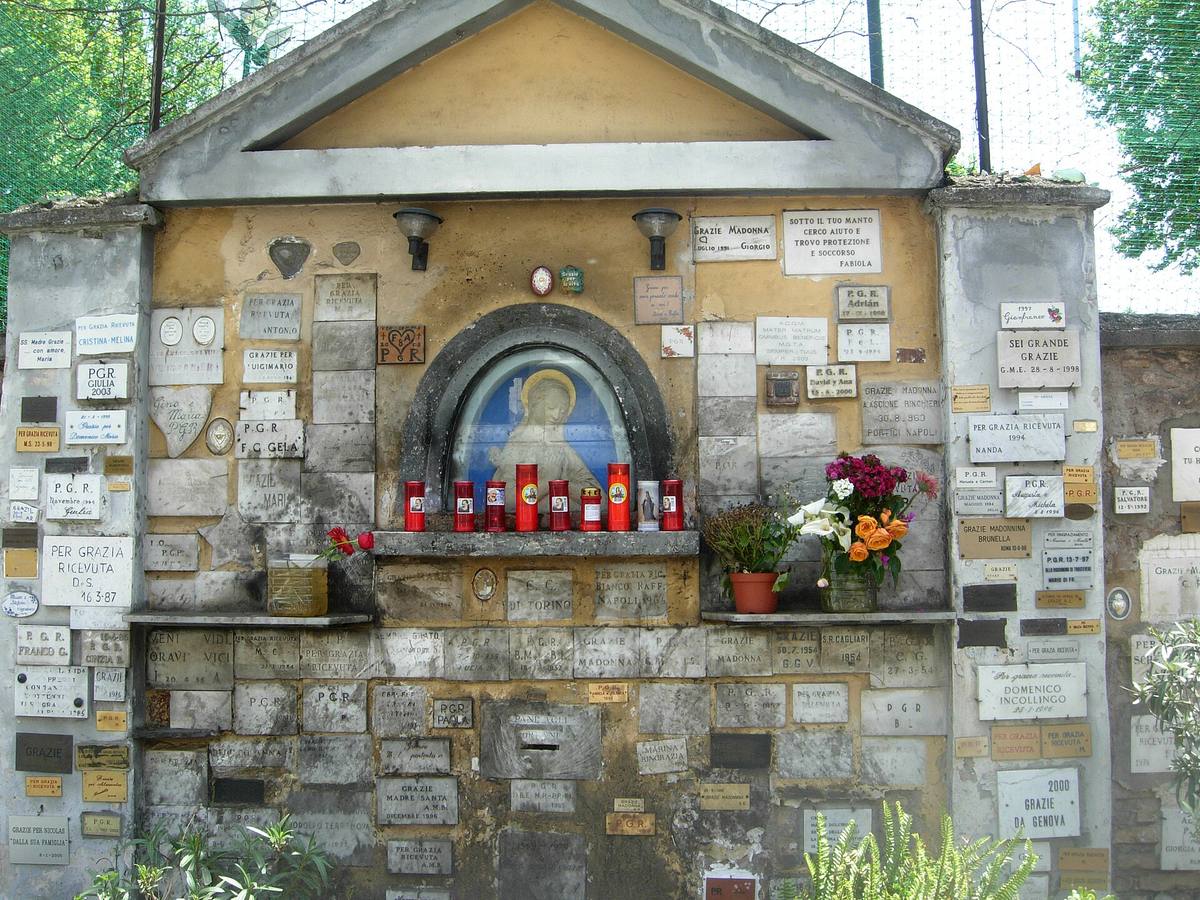
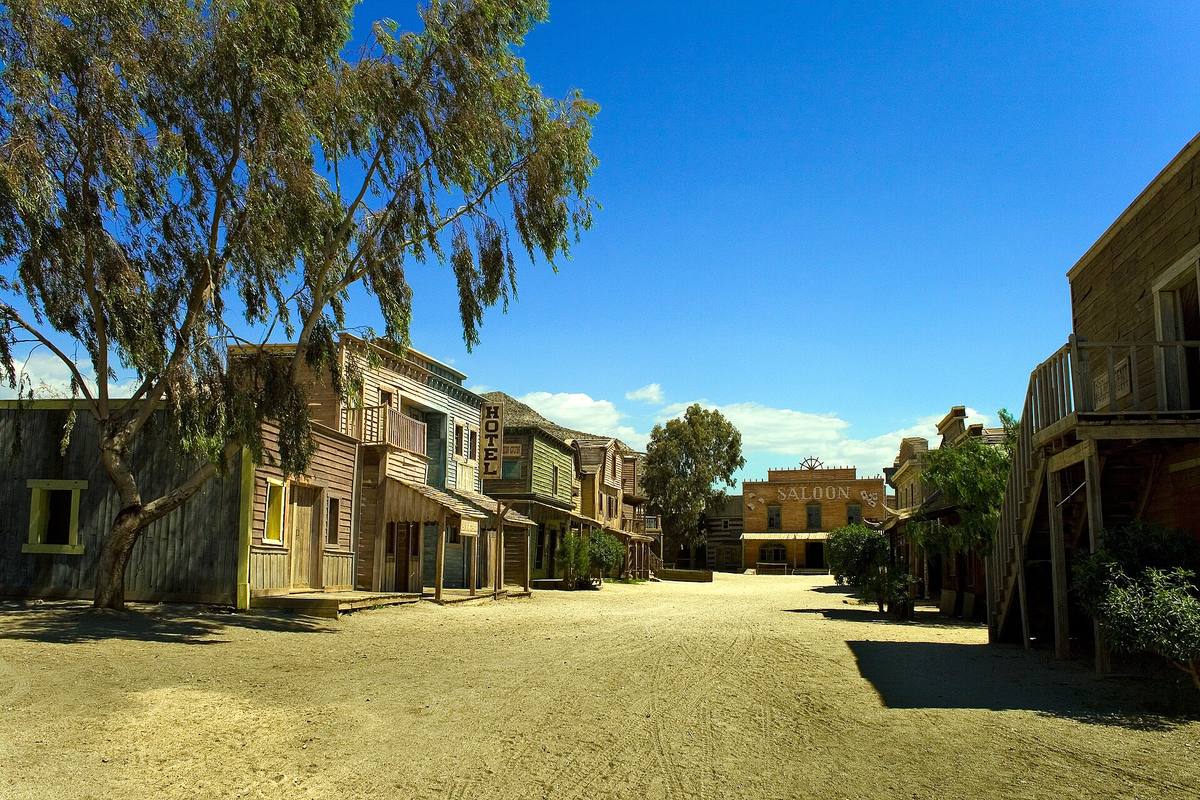
Take 1 · Trastevere · Robot8A · CC BY-SA 4.0Take 2 · Morricone at the microphone, 1970s · Roberto Masotti · CC0Take 3 · Tabernas · Pablo · CC BY 2.0
X
Trastevere · Via Tiburtina · Almería · Parioli · 1928 to 1985
Ennio Morricone
Nails. Stones. Cement.
RCA, 1960: a song about a kicked can.
Trastevere · 10 November 1928
Same class, one r.
Morricone was born in Rome on 10 November 1928, in Trastevere. He took up the trumpet very young, in a working family that taught him to work hard.
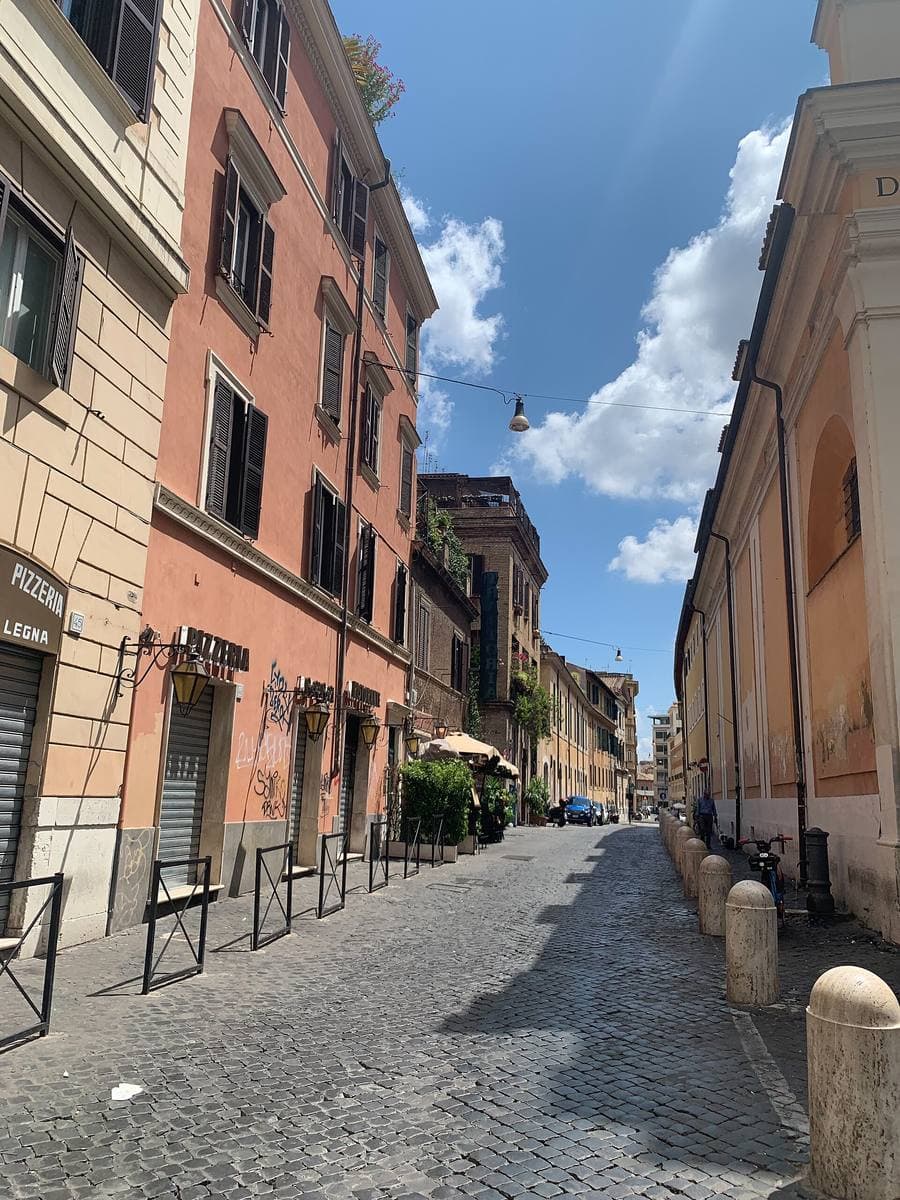
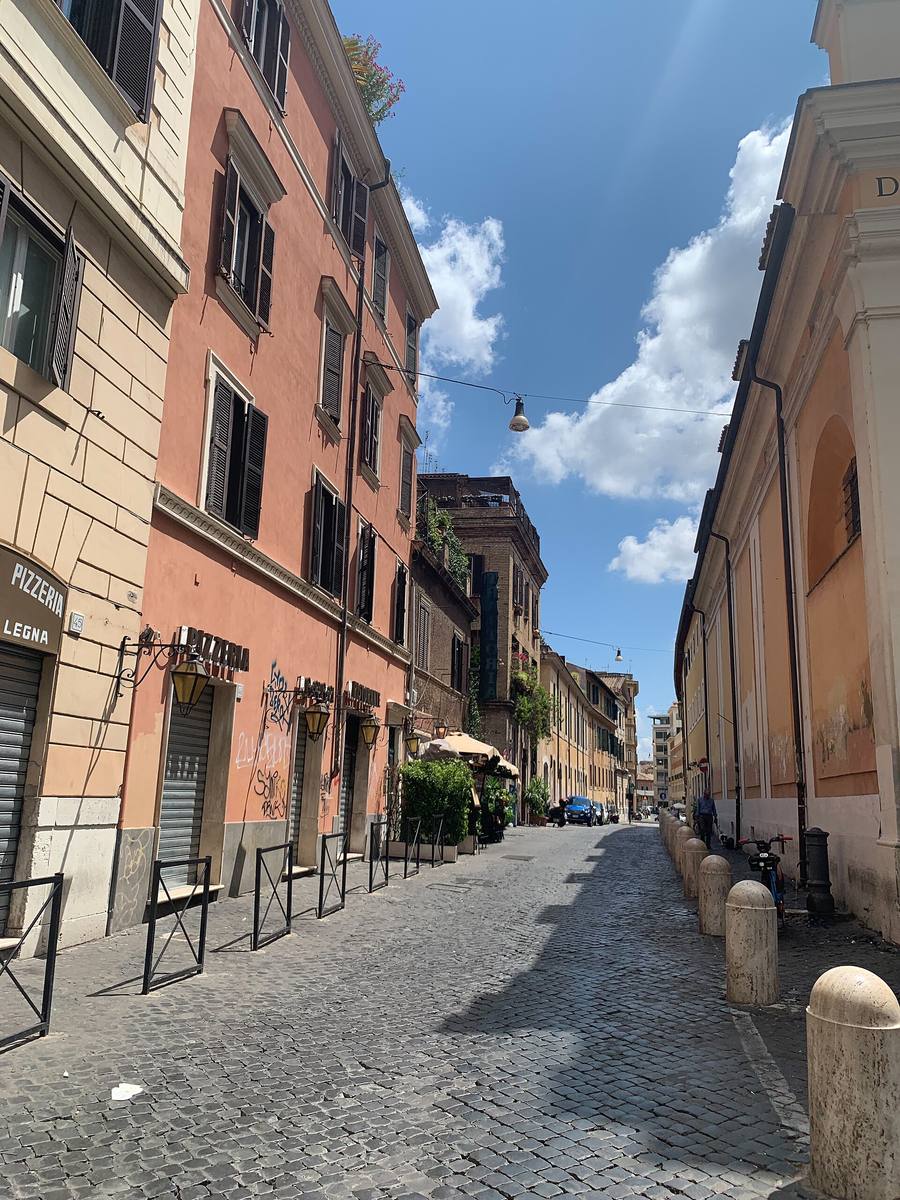
Via delle Fratte di Trastevere in 2023: the street, in the district where Morricone was born. Robot8A · CC BY-SA 4.0
Class photograph · 1937 · third year
Leone S.Moricone
Leone stands top left, written as Leone S.; Morricone top right, thinner, ears sticking out, written Moricone with a single r.
Two boys in the top row, one name short of a letter.
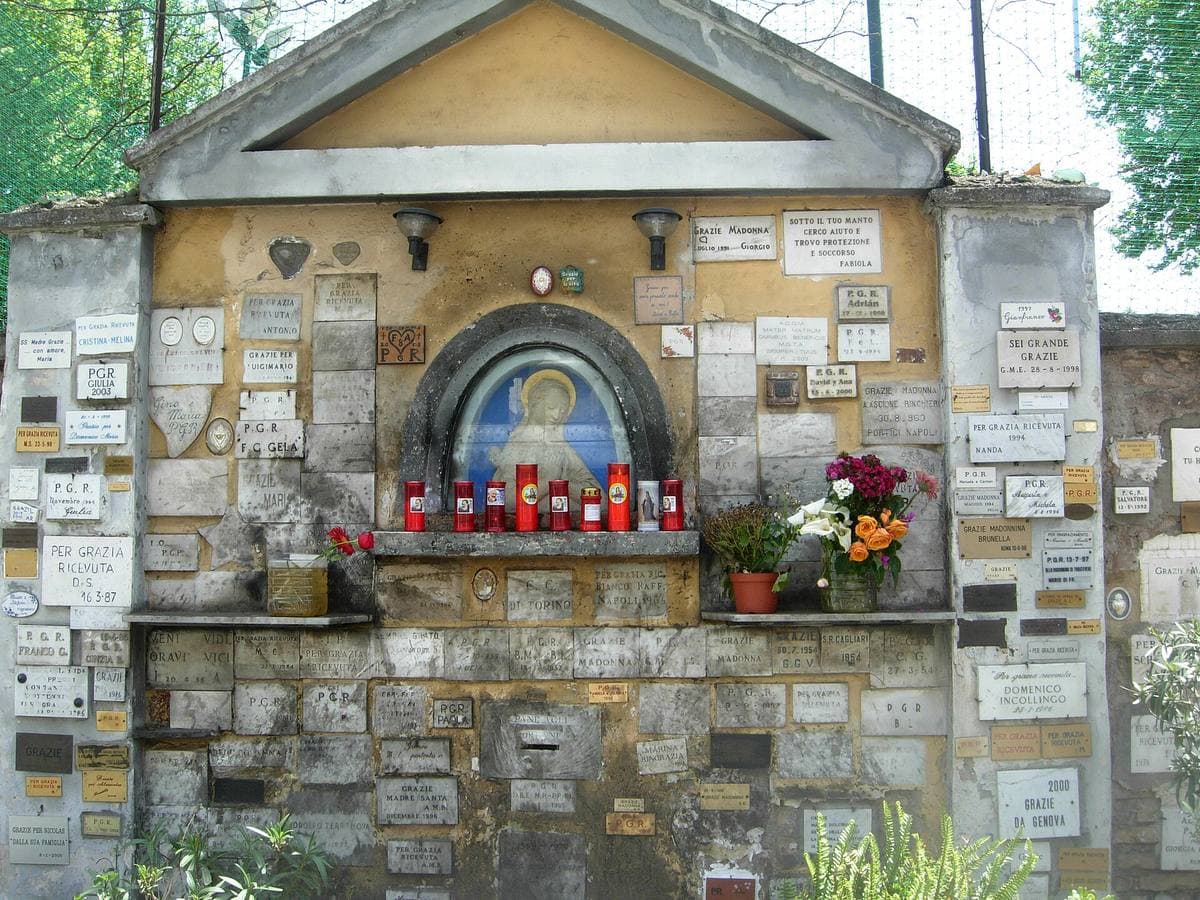
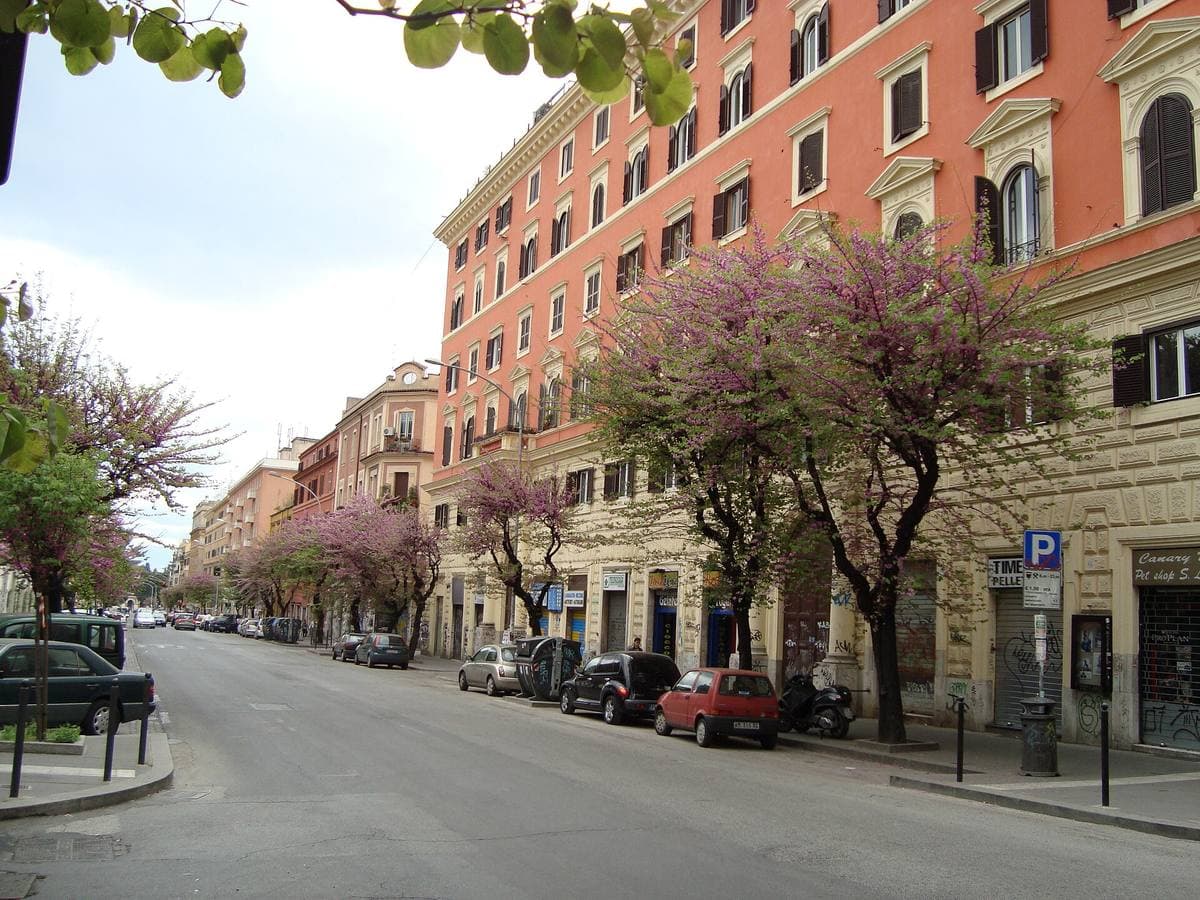
The Madonna degli Orfani shrine on Viale Trastevere, 2009: the avenue, not the school. Acediscovery · CC BY 4.0
Viale di Trastevere, Rome
Viale Trastevere
A class photograph from 1937 shows Morricone and Sergio Leone in the third year of primary school together. In Morricone’s telling, Leone asked whether he was the Morricone who used to go with him to Viale Trastevere.
The tram avenue through Trastevere. The school is not named on any page we checked, so walk the avenue rather than look for a door.
Sources
The night after he died in July 2020, a mural of him by the street artist Harry Greb appeared on Via delle Fratte di Trastevere: a halo over his head, an Oscar in his hand.
Via dei Greci 18 · 1946–1954
Three diplomas.
1946TrumpetUmberto Semproni
1952InstrumentationA. d’Elli
1954CompositionGoffredo Petrassi
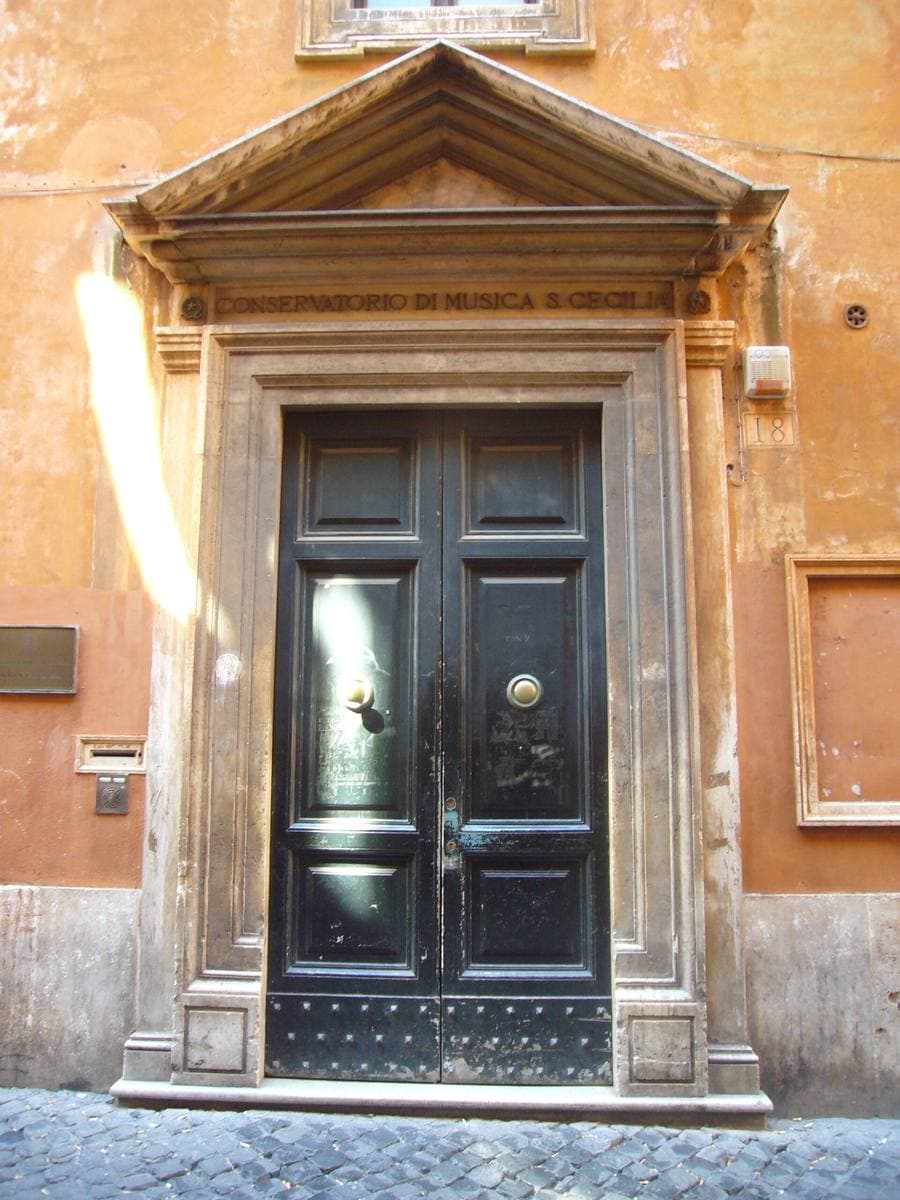
The door of the Conservatorio di Santa Cecilia on Via dei Greci, 2011. Lalupa · CC BY-SA 3.0
Conservatorio di Santa Cecilia
Via dei Greci 18, Rome
He studied at the Santa Cecilia conservatory: trumpet under Umberto Semproni (diploma 1946), instrumentation under A. d’Elli (1952) and composition under Goffredo Petrassi (1954).
Its roots go back to a congregation of Roman musicians placed under Saint Cecilia in 1565.
The Sala Accademica, commissioned in 1881, was about 795 square metres and 14 metres high, then the largest concert hall in Rome.
A working conservatory. Concerts are held in its Sala Accademica; see the conservatory’s own listings.
Sources
VRetreats
Donna Camilla Savelli
Trastevere, Rome
A hotel in a Baroque former convent at Via Garibaldi 27, Trastevere, with a garden for breakfast and terraces over the rooftops: a short walk from Via delle Fratte and Viale Trastevere.
Gianni Meccia’s Il barattolo was a song about a man kicking a can that rolled and rolled. RCA had no money for more players, so the arranger went looking for the sound. Try each surface, in his order.
Via Tiburtina in the Tiburtino quarter, 2009: the road out of Rome, not the studio, which is gone. LPLT · CC BY-SA 3.0
Via Tiburtina, on the eastern edge of Rome: the studios are gone
RCA Italiana, Via Tiburtina
From the end of the 1950s to the mid-1960s Morricone also wrote for the record company RCA.
RCA Italiana was founded in Rome in 1951. Its recording complex on Via Tiburtina was opened in June 1962, and Morricone is among the artists who recorded there.
The studios were dismantled. Named here, never mapped; the photograph shows Via Tiburtina in the city, not the site.
Sources
A Fistful of Dollars · 1964
Who is Dan Savio?
1964: the classmates from Viale Trastevere make a western. Its credits hid the Italians behind American names.
Five American names. Turn them over.
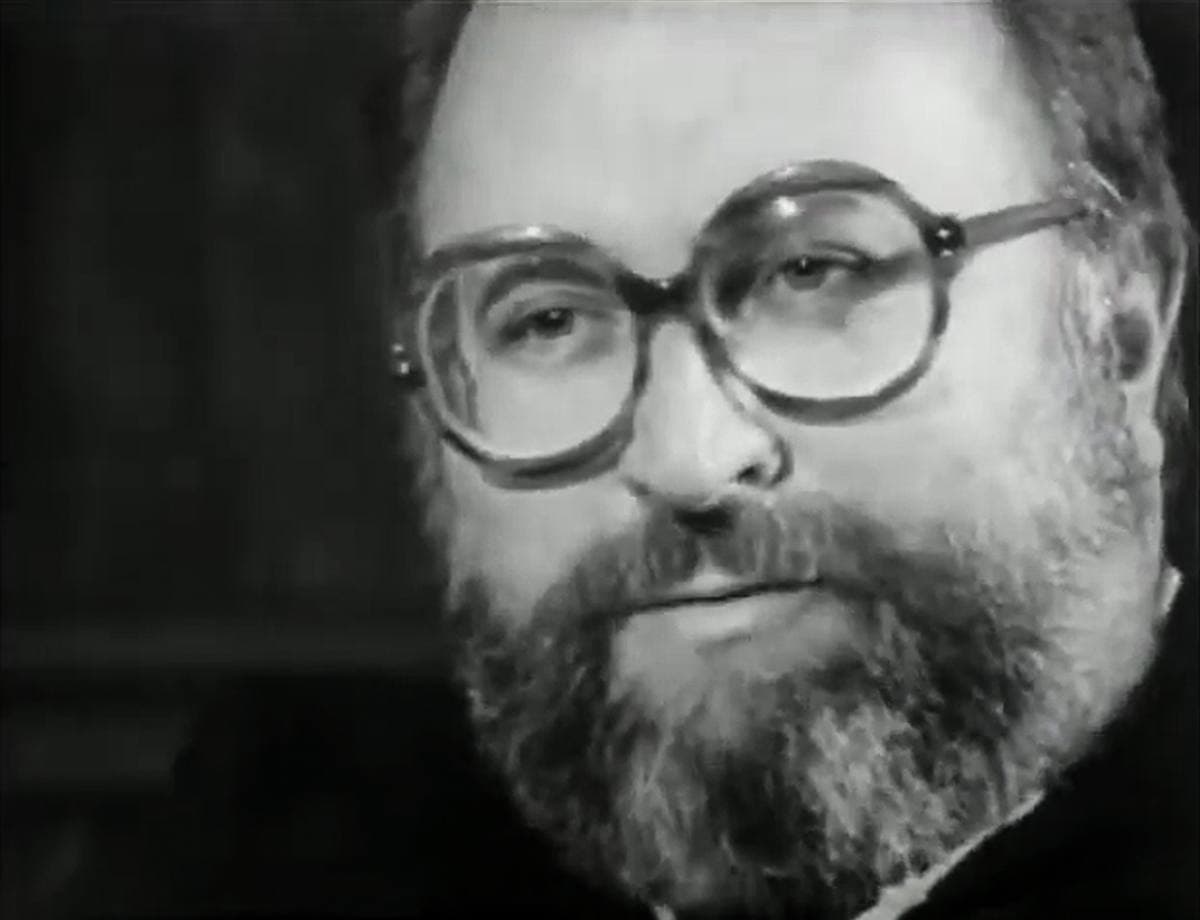
Sergio Leone interviewed by RAI, 1975. RAI · Public domainThe credits
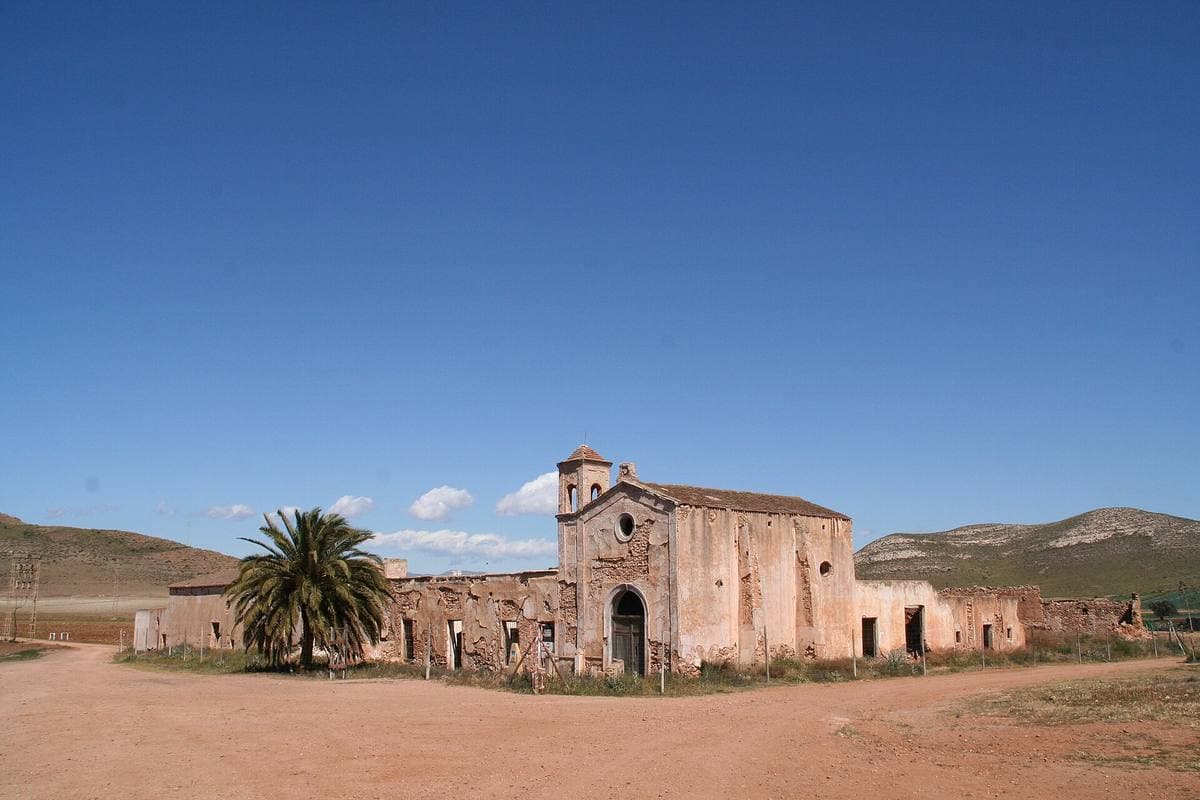
Five places in Almería tied to the westerns Leone made with Morricone, and one back in Rome.
Cortijo El Sotillo at the entrance to San José, 2024. Eduardo Milla · CC BY-SA 4.0
1964 · Entrance to San José, Níjar, Almería
Cortijo El Sotillo
It was the main Almería location of A Fistful of Dollars: the opening, where the stranger reaches a well.
It is now a four-star hotel. The house is unaltered, but buildings have gone up round it since 1964.
Now a four-star hotel at the edge of San José. The farmhouse is unchanged; the land around it has been built on.
Sources
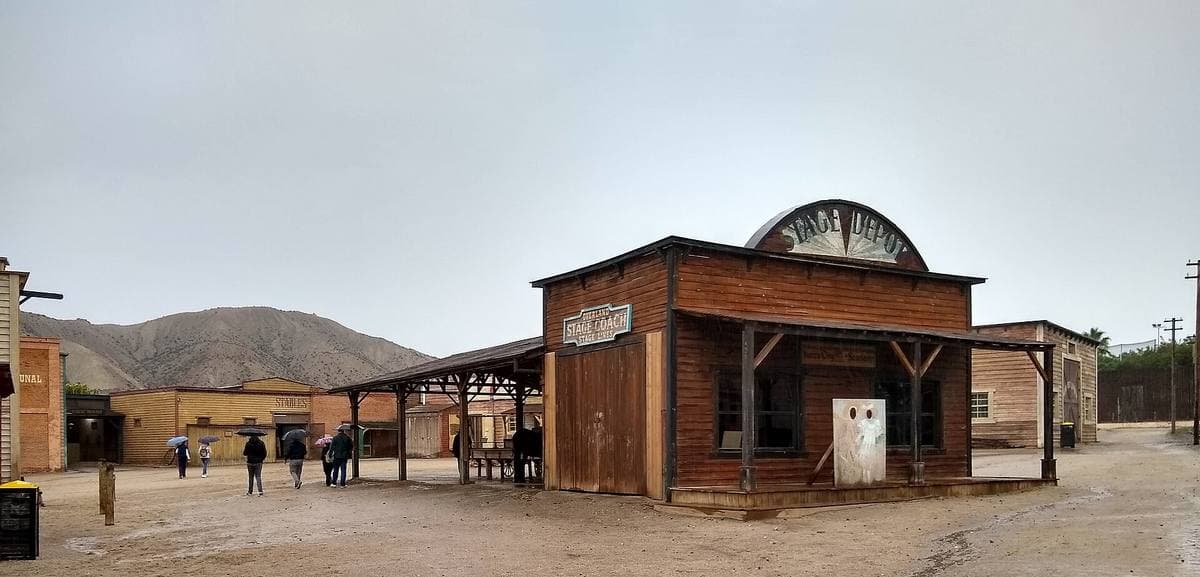
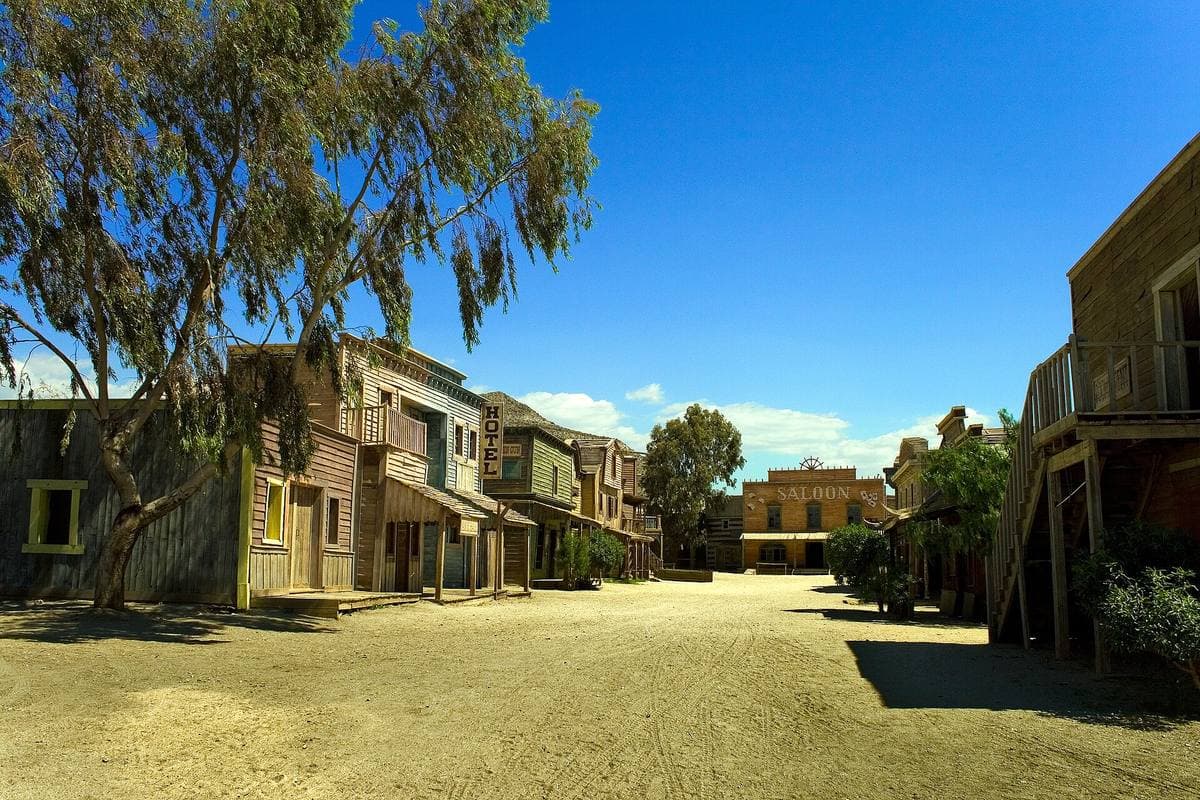
The western street at Oasys MiniHollywood, 2022. CarlosVdeHabsburgo · CC BY-SA 4.0
1965 · N-340a, Tabernas, Almería
Oasys MiniHollywood
Leone had this village built in the Tabernas desert in 1965 for For a Few Dollars More. It was first called Poblado El Fraile, after its owner, Alfredo Fraile.
Since the early 1980s it has been a tourist park, one of three film villages left in Tabernas.
A western theme park. Adults €32 at the gate or €28 non-refundable online; children 4–12 €22.
Sources
MiniHollywood Oasys
Oasys MiniHollywood
Tabernas, Almería
The village Leone had built in 1965 for For a Few Dollars More, now a western park with a stunt show in the square. Adults €32 at the gate (€28 non-refundable online), children 4–12 €22.
Andalusia’s tourist board says this western town was built when Leone came looking for sets on these plains, and that it is still used for films and adverts.
Besides the western street it has a Mexican quarter with a church and a square.
A working film set and park outside Tabernas, with a western street and a Mexican quarter. Check the show times before you go.
Sources
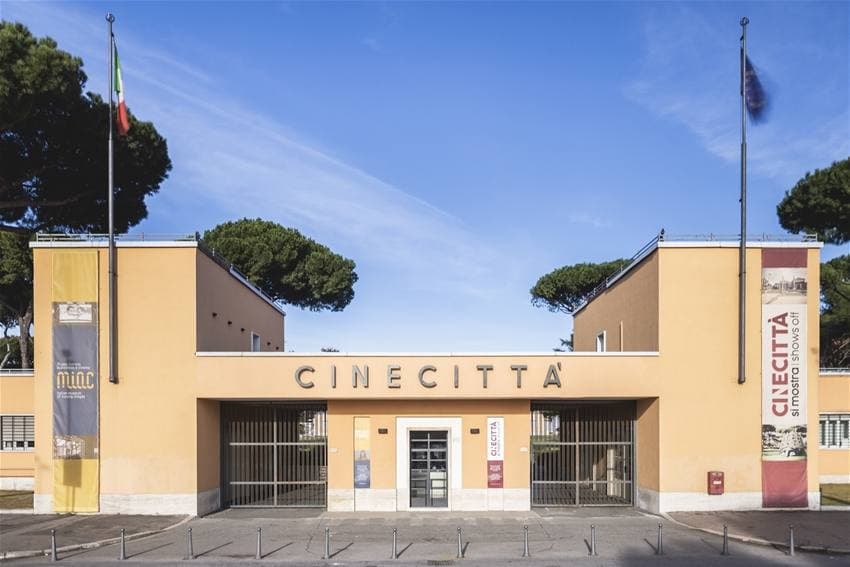
The historic gate of Cinecittà on Via Tuscolana, 2021. Andrea Martella · CC BY-SA 4.0
1966 · Via Tuscolana 1055, Rome
Back in Rome: Cinecittà
The Good, the Bad and the Ugly was made partly at Cinecittà and partly on location. Morricone wrote its score.
Its main theme became a hit in 1968, and the soundtrack stayed in the album charts for more than a year.
Cinecittà si Mostra and the MIAC museum are open every day except Tuesday, 10:00–18:00 (last tickets 16:30). €10 each, or €15 together.
Sources
Cinecittà
Cinecittà si Mostra and MIAC
Via Tuscolana, Rome
Exhibitions and standing sets inside the studios on Via Tuscolana, with the national museum of cinema next door. Open daily except Tuesday, 10:00–18:00 (last tickets 16:30). €10 each, €15 for both.
Gruppo di Improvvisazione Nuova Consonanza · from 1965
Six players, one break.
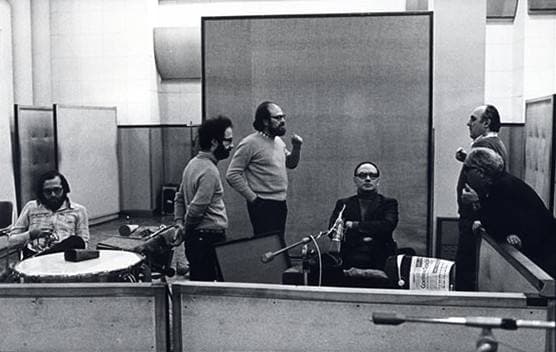
From 1965 to the mid-1980s he played trumpet and flute in Nuova Consonanza, the avant-garde group Franco Evangelisti formed and invited him into; he sat on its board from 1983 to 1985. Here they are between takes in the 1970s.
Morricone (seated at the microphone, in dark glasses) with the Gruppo di Improvvisazione Nuova Consonanza in a recording break, 1970s. Left to right: Giancarlo Schiaffini, Antonello Neri, Giovanni Piazza, Ennio Morricone, Egisto Macchi, Franco Evangelisti. Roberto Masotti · CC0
In the order the caption names them
Ennio Morricone, seated at the microphone in dark glasses.
Piazza Euclide 34 · 1970
A studio under a church.
The studios began in 1970 under the Basilica del Sacro Cuore Immacolato di Maria, as Ortophonic, founded by four composers: Armando Trovajoli, Ennio Morricone, Luis Bacalov and Piero Piccioni.
Ortophonic · 1970
Armando Trovajoli
Ennio Morricone
Luis Bacalov
Piero Piccioni
Studio A was built to hold large orchestras.
Below the floor of the church: room for a full orchestra.
The studio became Studi Forum in 1979, Forum Music Village in 1996 and Forum Studios in 2020.
Its own history lists Morricone’s Once Upon a Time in America and Cinema Paradiso among the scores made there.
A working studio, not open to visitors. The basilica above it is a parish church on Piazza Euclide.
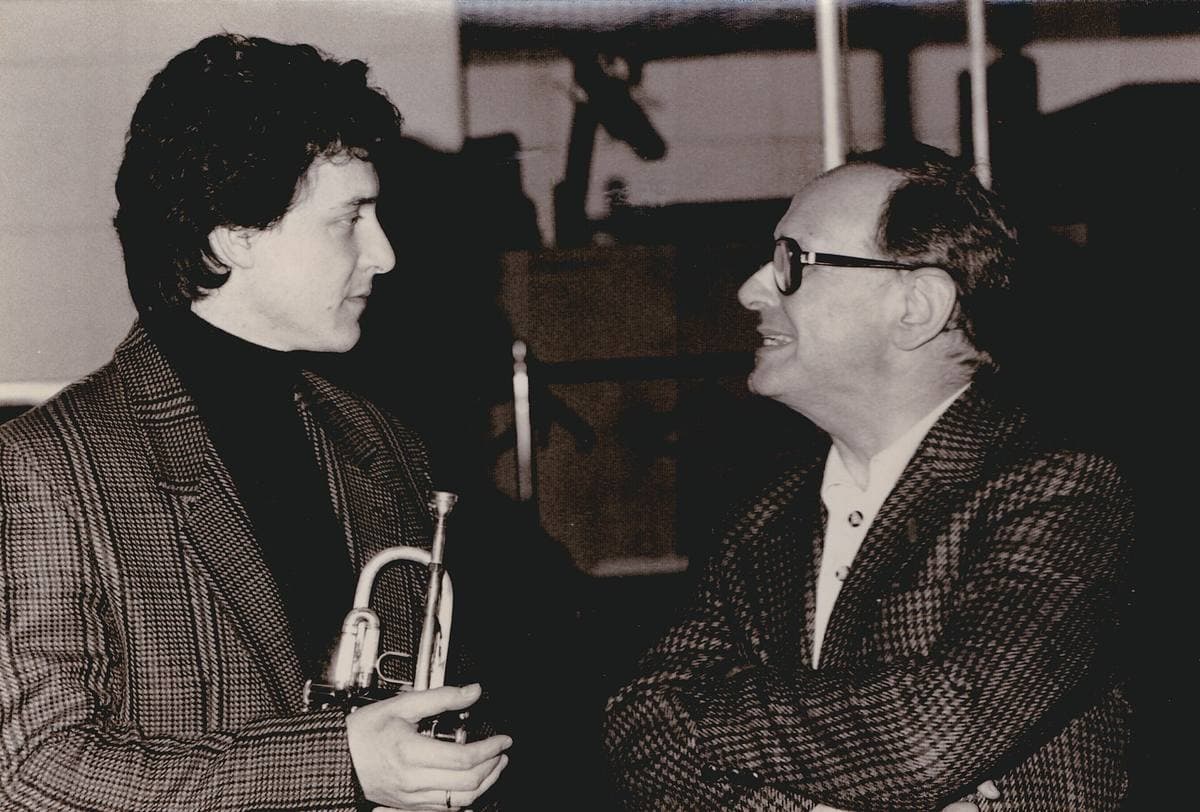
SourcesMorricone with the trumpeter Mauro Maur at a recording, 17 January 1990: a little after the years this page covers. Silvio64 · Public domain
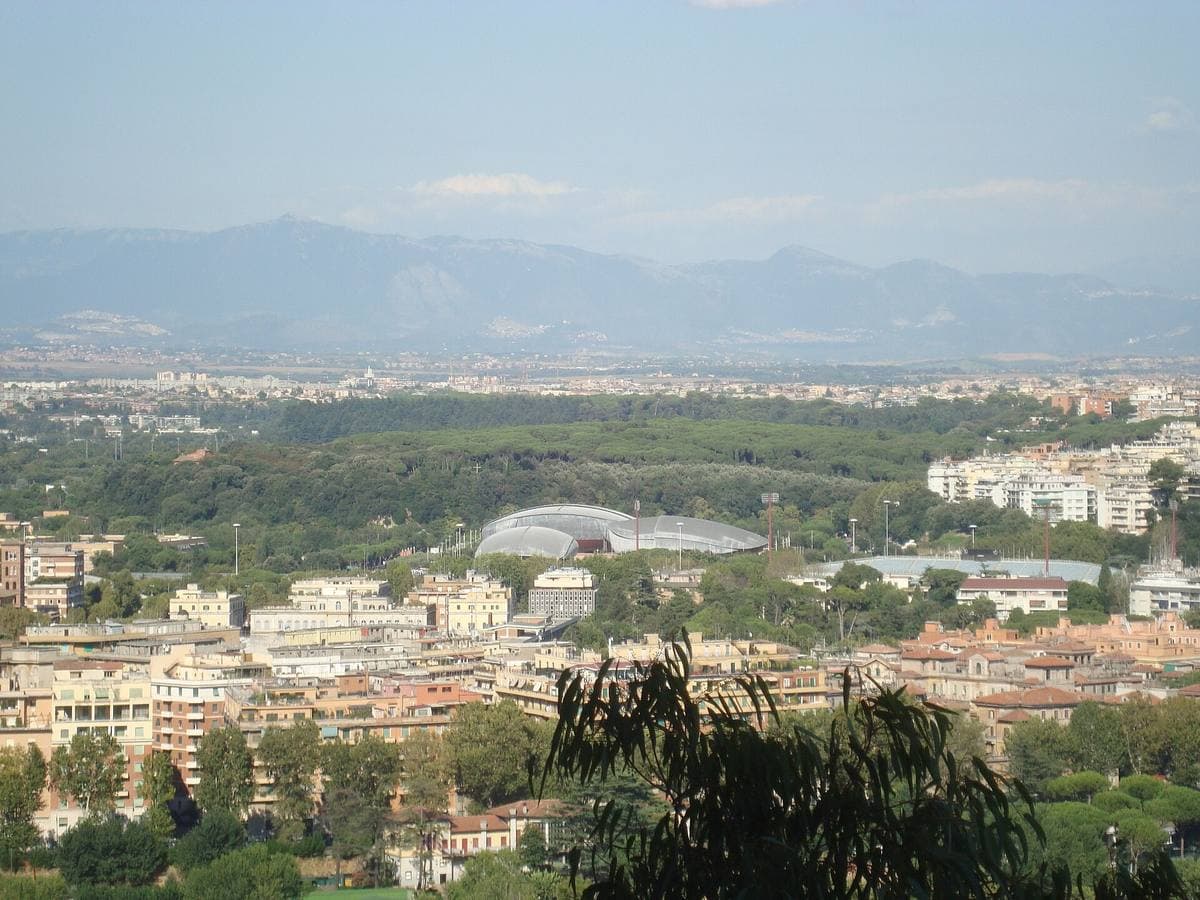
The Auditorium's three domed halls among the trees of Flaminio and Parioli, 2010. LPLT · CC BY-SA 3.0
Viale Pietro de Coubertin 30, Rome · 6 July 2021
Auditorium Parco della Musica Ennio Morricone
Renzo Piano designed it, and it opened in 2002. Its halls are named for Santa Cecilia, Goffredo Petrassi, his teacher, and Giuseppe Sinopoli.
On 6 July 2021, a year after his death, Rome renamed it after him and unveiled a plaque.
It is the home of the Accademia Nazionale di Santa Cecilia, whose orchestra and chorus he conducted there on 7 October 2016.
Guided tours by booking: €15, Saturdays at 11:30 in Italian and 12:30 in English. Book by noon on the Thursday before.
Sources
Fondazione Musica per Roma
Auditorium guided tour
Flaminio, Rome
A guided walk through the Auditorium Parco della Musica Ennio Morricone: architecture, acoustics and halls. €15 (over-65s €12, under-26s €7). Saturdays 11:30 in Italian, 12:30 in English; book by noon the Thursday before.
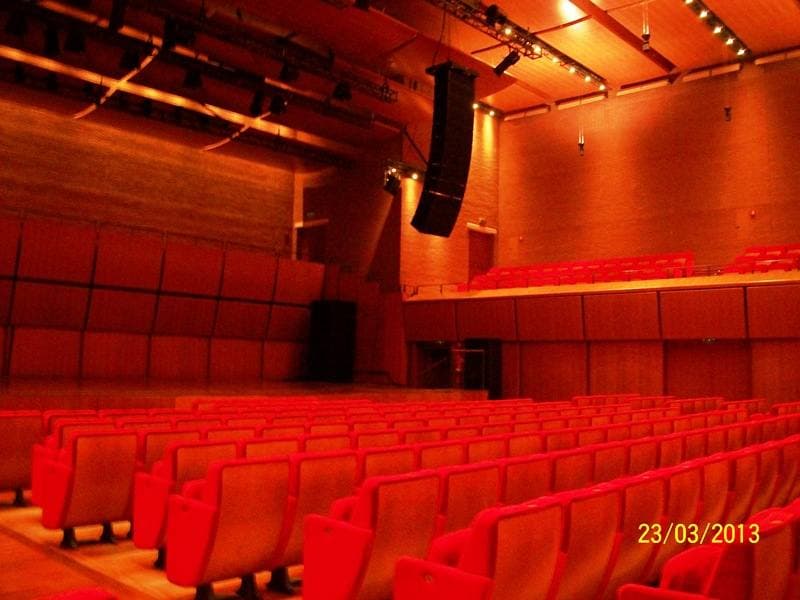
A hall inside the Auditorium Parco della Musica, 2013. Mac9 · CC BY-SA 3.0
A hall named for Petrassi, his teacher, inside a building named for him.
Visit
Where it is now
11 places you can visit, 6 of them in Rome. The RCA studio on Via Tiburtina is gone: named, never mapped.
Pins mark public places; private homes are named but not pinned.
General reference · Public access · Coordinate precision: area · Not an exact scene or camera position; not a visitor route. Walk Via delle Fratte di Trastevere, a few minutes from Piazza di Santa Maria in Trastevere. No house is marked as his.
General reference · Public access · Coordinate precision: area · Not an exact scene or camera position; not a visitor route. The tram avenue through Trastevere. The school is not named on any page we checked, so walk the avenue rather than look for a door.
General reference · Public access · Coordinate precision: site · Not an exact scene or camera position; not a visitor route. A working conservatory. Concerts are held in its Sala Accademica; see the conservatory’s own listings.
1Via delle Fratte di Trastevere in 2023: the street, in the district where Morricone was born. Robot8A · CC BY-SA 4.0
Via delle Fratte di Trastevere, Rome
Trastevere
Morricone was born in Rome on 10 November 1928, in Trastevere.
Walk Via delle Fratte di Trastevere, a few minutes from Piazza di Santa Maria in Trastevere. No house is marked as his.
Sources
2The Madonna degli Orfani shrine on Viale Trastevere, 2009: the avenue, not the school. Acediscovery · CC BY 4.0
Viale di Trastevere, Rome
Viale Trastevere
A class photograph from 1937 shows Morricone and Sergio Leone in the third year of primary school together.
The tram avenue through Trastevere. The school is not named on any page we checked, so walk the avenue rather than look for a door.
Sources
3The door of the Conservatorio di Santa Cecilia on Via dei Greci, 2011. Lalupa · CC BY-SA 3.0
Via dei Greci 18, Rome
Conservatorio di Santa Cecilia
He studied at the Santa Cecilia conservatory: trumpet under Umberto Semproni (diploma 1946), instrumentation under A. d’Elli (1952) and composition under Goffredo Petrassi (1954).
A working conservatory. Concerts are held in its Sala Accademica; see the conservatory’s own listings.
Sources
Stay
A room in Trastevere.
A former convent on Via Garibaldi, a short walk from the streets where he grew up.
VRetreats
Donna Camilla Savelli
Trastevere, Rome
A hotel in a Baroque former convent at Via Garibaldi 27, Trastevere, with a garden for breakfast and terraces over the rooftops: a short walk from Via delle Fratte and Viale Trastevere.
The Auditorium tour, Cinecittà, Leone’s village at Tabernas, and marketplace walks in Trastevere and the desert.
Fondazione Musica per Roma
Auditorium guided tour
Flaminio, Rome
A guided walk through the Auditorium Parco della Musica Ennio Morricone: architecture, acoustics and halls. €15 (over-65s €12, under-26s €7). Saturdays 11:30 in Italian, 12:30 in English; book by noon the Thursday before.
Exhibitions and standing sets inside the studios on Via Tuscolana, with the national museum of cinema next door. Open daily except Tuesday, 10:00–18:00 (last tickets 16:30). €10 each, €15 for both.
The village Leone had built in 1965 for For a Few Dollars More, now a western park with a stunt show in the square. Adults €32 at the gate (€28 non-refundable online), children 4–12 €22.
Dates, prices, rooms and stock change: confirm with the provider before you travel or buy. A stay or tour is described as a filming location only where the card says so.
The sources
Every place and moment behind this page, with sources.
12 of 12 places · 14 of 14 Moments
Trastevere
Via delle Fratte di Trastevere, Rome
Born in Trastevere
Ennio Morricone is born in Trastevere.
Viale Trastevere
Viale di Trastevere, Rome
Third year
Morricone and Sergio Leone are photographed in the same primary class.
Met again
Leone and Morricone meet again, almost by chance.
Conservatorio di Santa Cecilia
Via dei Greci 18, Rome
Three diplomas
Trumpet, instrumentation, then composition under Petrassi.
RCA Italiana, Via Tiburtina
Via Tiburtina, on the eastern edge of Rome: the studios are gone
Il barattolo
A can thrown on a cement floor becomes part of an RCA arrangement.
Via Tiburtina
RCA Italiana opens its studio complex on Via Tiburtina.
Forum Studios
Piazza Euclide 34, Parioli, under the Basilica del Sacro Cuore Immacolato di Maria
Under the basilica
Four composers found Ortophonic beneath a church in Parioli.
Once Upon a Time in America
The studio lists Morricone’s score for Leone’s last film among its own.
Auditorium Parco della Musica Ennio Morricone
Viale Pietro de Coubertin 30, Rome
His name on the door
Rome renames the Auditorium after him.
Cinecittà
Via Tuscolana 1055, Rome
Partly in Rome
The Good, the Bad and the Ugly is made partly at Cinecittà.
Cortijo El Sotillo
Entrance to San José, Níjar, Almería
A stranger at a well
The opening of A Fistful of Dollars, with music credited to Dan Savio.
Oasys MiniHollywood
N-340a, Tabernas, Almería
A village in the desert
Leone has a western village built for For a Few Dollars More.
The Tabernas desert
Paraje Natural del Desierto de Tabernas
The raised plain
For a Few Dollars More opens on the Llano del Duque.
Fort Bravo
About 2 km from Tabernas
Cortijo del Fraile
Between Los Albaricoques and Rodalquilar, Níjar
Indio’s hideout
The farmhouse becomes Indio’s base, then a monastery.