Skip to content

Shibuya, Tokyo · the 1990s

Shibuya-kei渋谷系

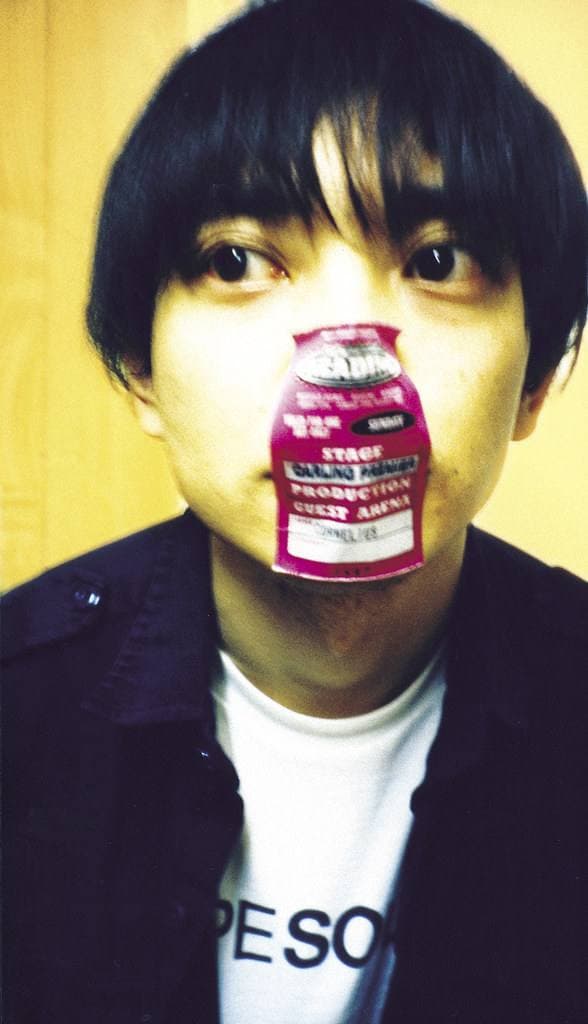
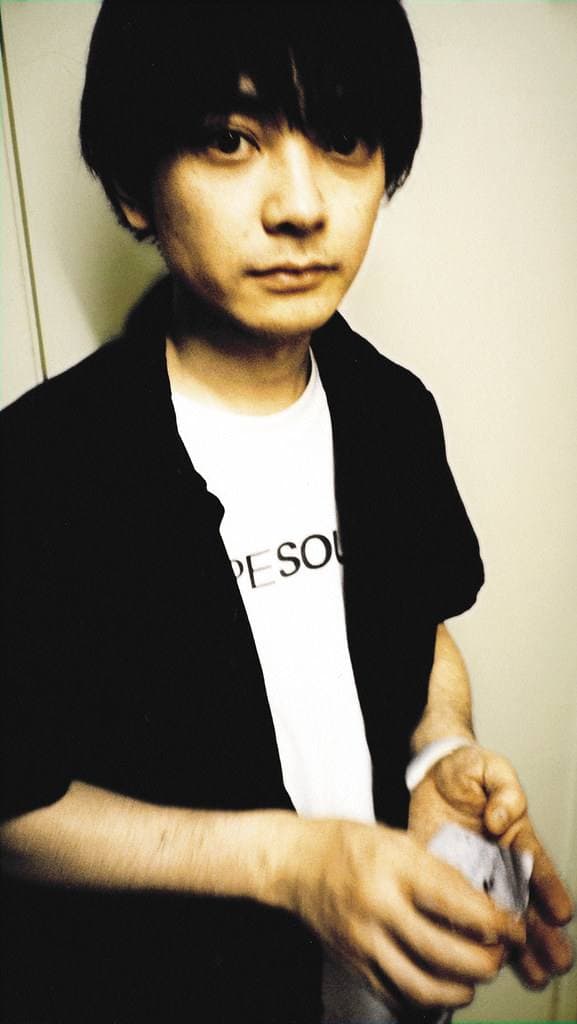
Keigo Oyamada with a bowl haircut and a festival backstage pass stuck over his mouth, in a white T-shirt and dark jacket
Keigo Oyamada, Cornelius, backstage at the Reading Festival in 1999, a pass stuck over his mouth. Lee Basford · CC BY 2.0
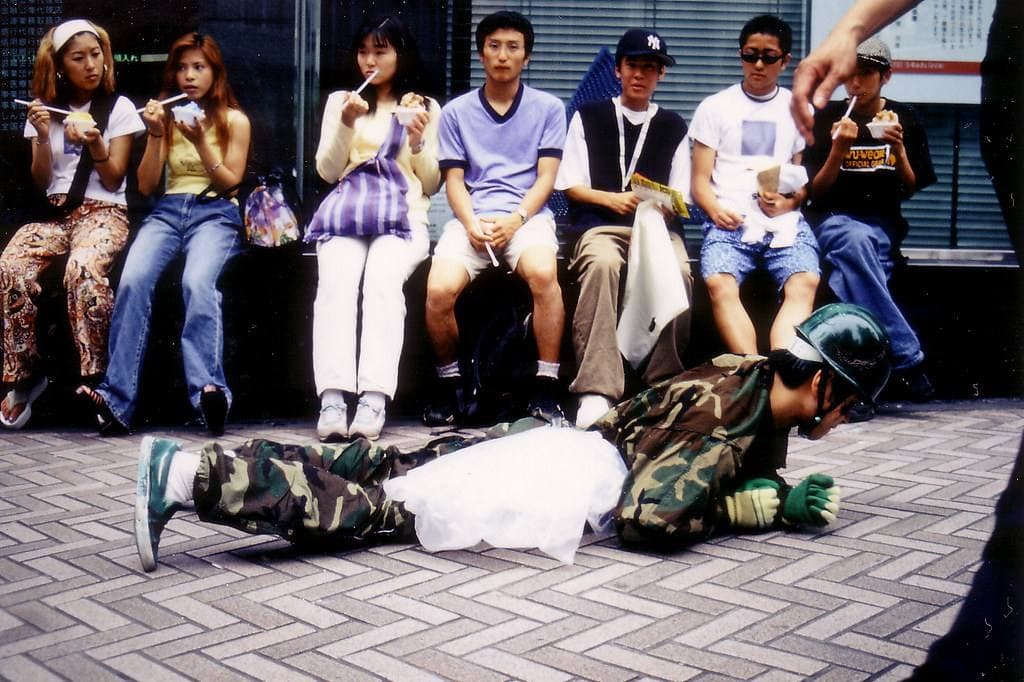
Teenagers in 1990s street clothes sitting in a row against a shop front while a young man in camouflage crawls along the paving
Shibuya, 1998: a pavement and a row of teenagers. ratsbeyfus · CC BY-SA 2.0
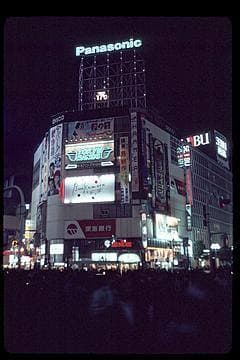
Shibuya crossing at night in 1992, neon signs and traffic lights over the road
The crossing by Hachikō at night, October 1992. sodai gomi · CC BY 2.0
Keigo Oyamada sitting against a wall backstage, in a black shirt over a white T-shirt, looking at the camera
Cornelius backstage at Reading, 1999, two years after Fantasma. Lee Basford · CC BY 2.0
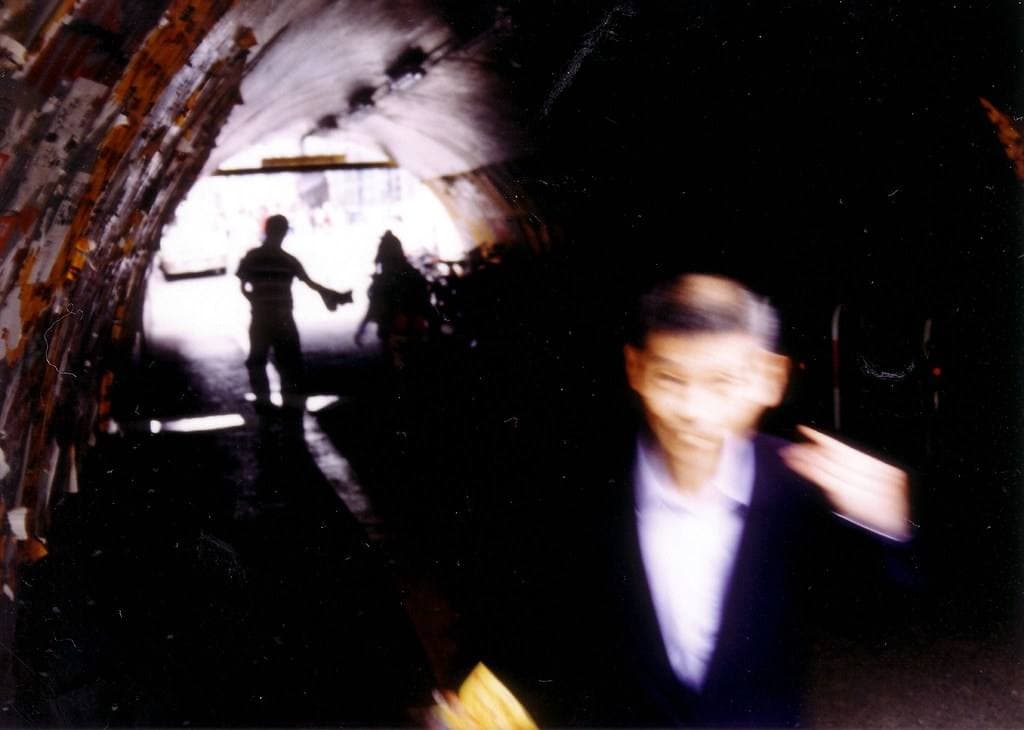
A man in a suit hurrying through a dark arched tunnel, figures silhouetted against the light at the far end
A pedestrian tunnel in Shibuya, 1998. ratsbeyfus · CC BY-SA 2.0

Tap a strip to pull it up.

Photographs: Lee Basford (1999, CC BY 2.0), ratsbeyfus (1998, CC BY-SA 2.0), sodai gomi (1992, CC BY 2.0). Credits in full under each photograph below.

HMV and Tower · the 1990s

Named at the counter.

The music press first used the name Shibuya-kei for young musicians the mainstream ignored but who sold unusually well at Shibuya’s import shops, HMV and Tower Records.

Where the name came from

Turn the card: 1990, Inside 109. HMV opens its first Japanese shop inside the 109 building.

The cylindrical tower of the Shibuya 109 building at a road fork
Shibuya 109 on its corner of Dōgenzaka, 2019. Kakidai · CC BY-SA 4.0

1990

Shibuya 109

Dōgenzaka, at the fork in front of Shibuya Station

The 109 building went up in 1979, the pioneer of Tokyo’s fashion buildings, and pulled Shibuya’s crowds away from Kōen-dōri.

HMV, the British music chain, opened its first shop in Japan inside 109 in 1990.

A working fashion building, open to all. The HMV shop moved out long ago.
Sources

From 109 to Center-gai is about 100 m in a straight line: HMV moved a short walk, not across town.

Udagawachō · 5 strips

The Udagawachō rack.

The tall strip pack, tanzaku, was made only in Japan: record shops took it up so the small 8cm singles would not be lost behind the stock on the shelf. The format began on 21 February 1988 with 68 titles on one day.

The strip single
Inokashira-dori seen from above at Shibuya Station, traffic and buildings climbing away up the road
Inokashira-dōri running up from Shibuya Station towards Udagawachō, 2015. そらみみ (Soramimi) · CC BY-SA 4.0
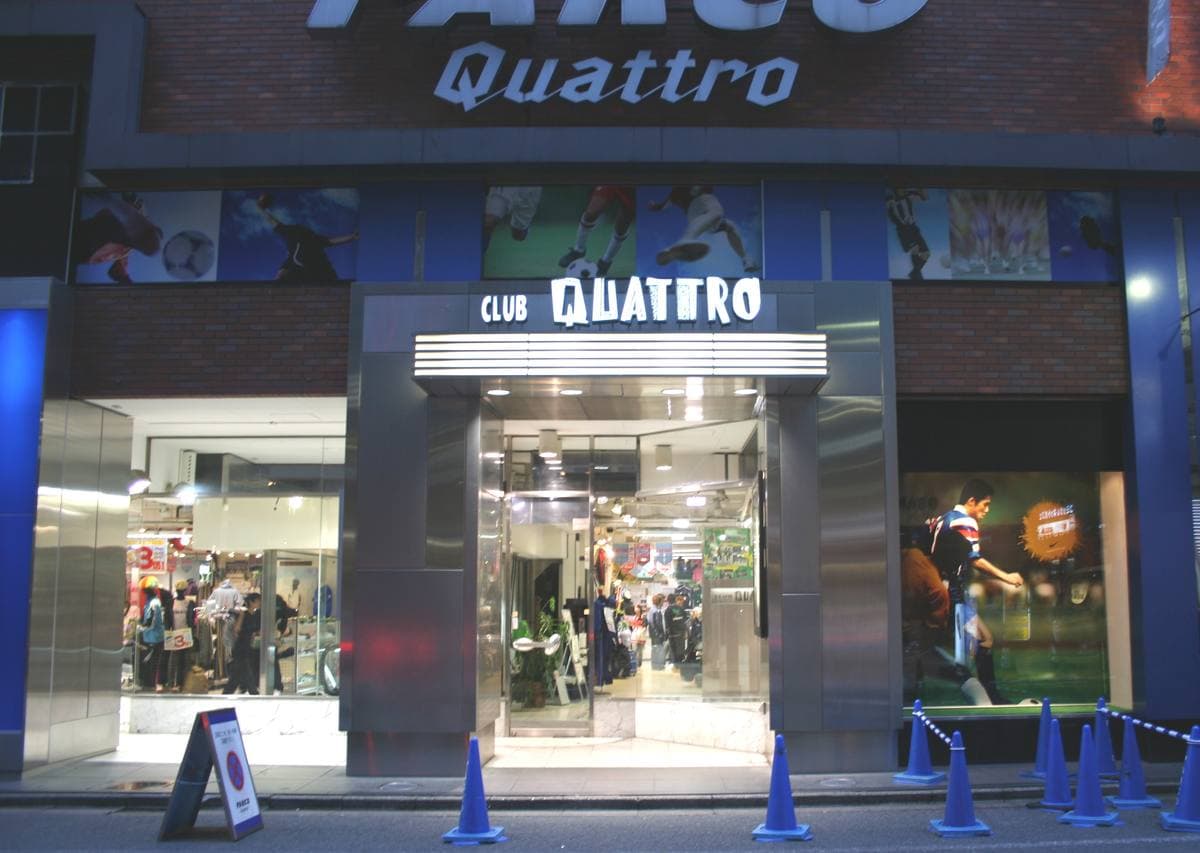
The Quattro building in Shibuya with the Club Quattro sign
The Quattro building on Udagawachō, 2005. Goki · CC BY-SA 2.5
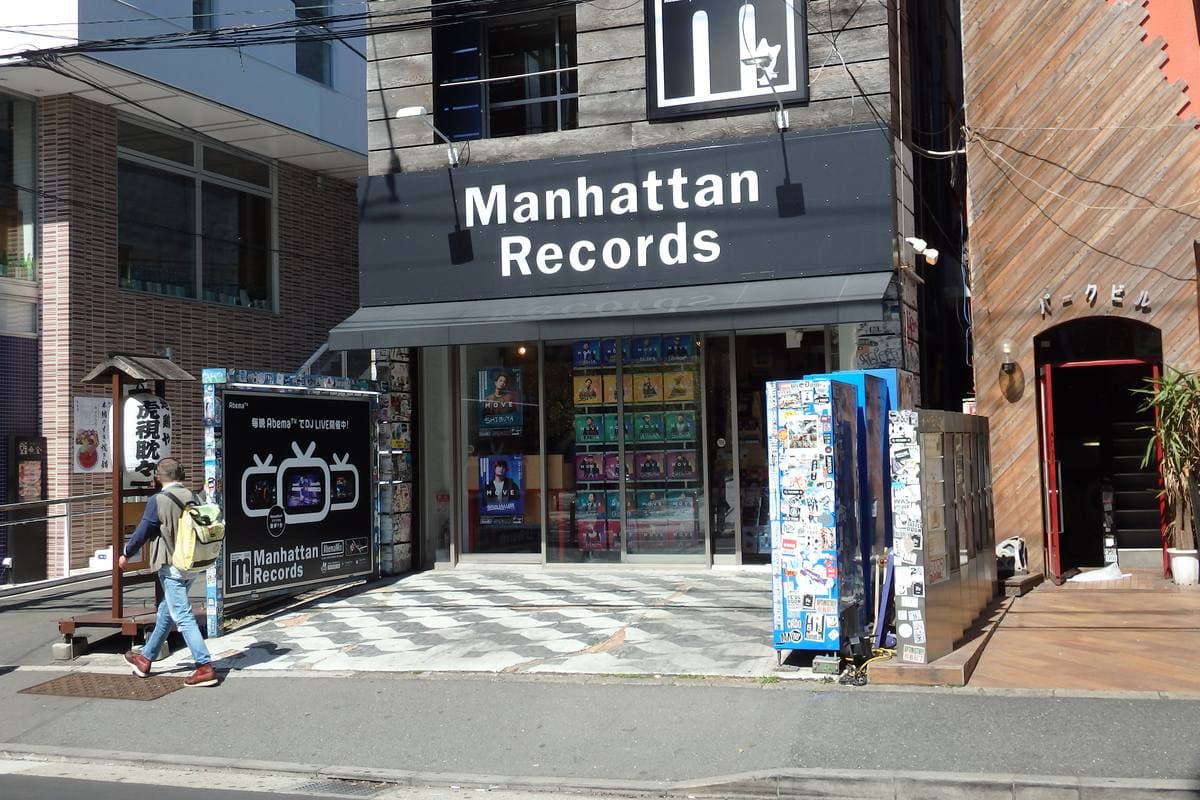
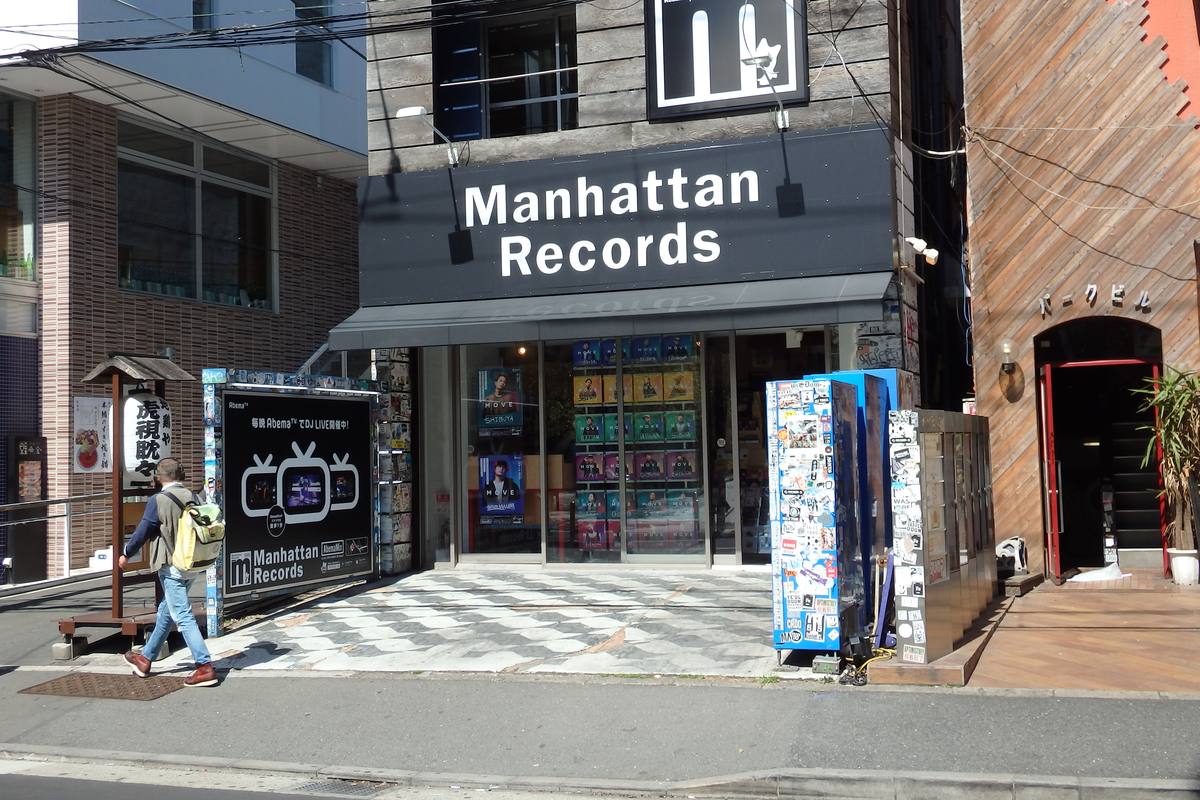
The Manhattan Records shop front in Udagawachō
Manhattan Records on Udagawachō, 2019. Mike Steele · CC BY 2.0
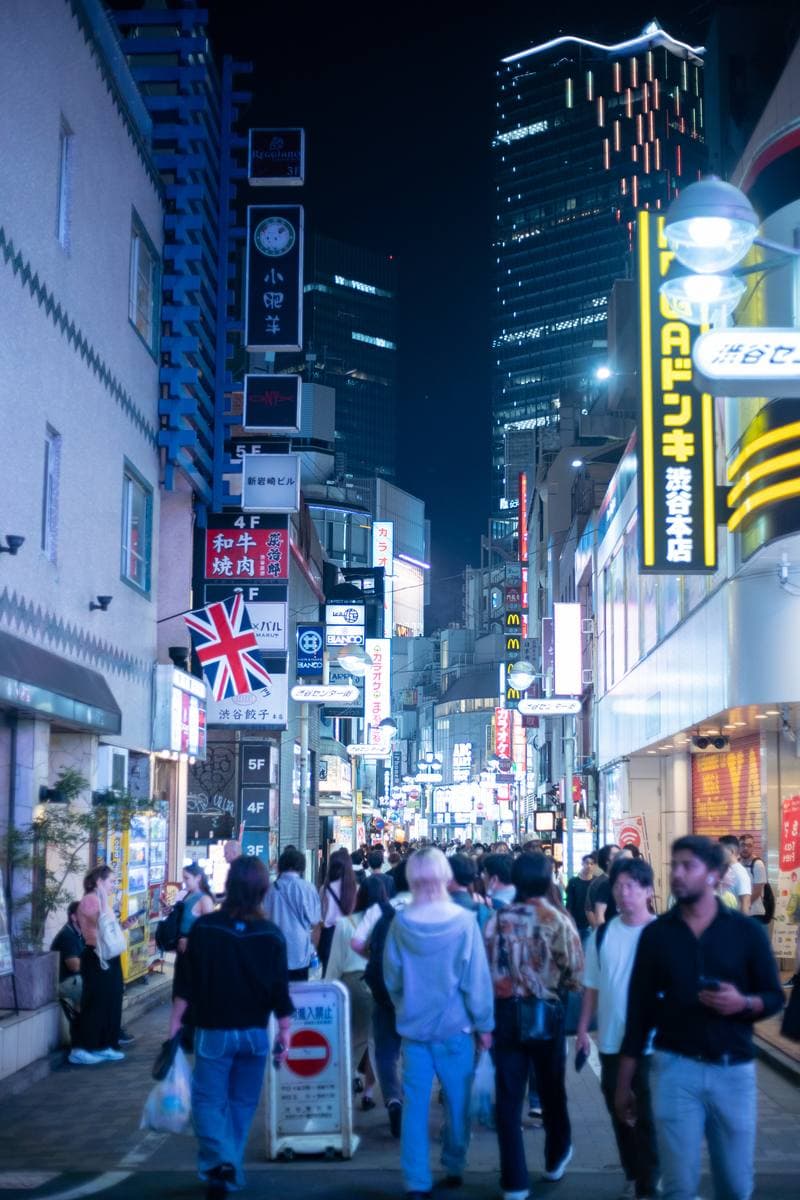
Center-gai at night, crowds walking under lit signs
Center-gai at night, 2023, a few steps from the BEAM building. Dick Thomas Johnson · CC BY 2.0
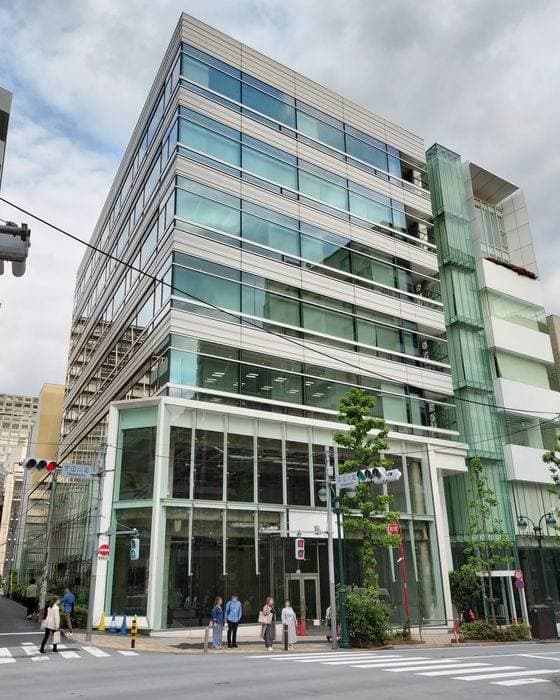
A glass office building on a street corner at the Udagawacho crossing
The Udagawachō crossing on Kōen-dōri, 2023, a short walk from the HMV record shop. 鋸香具師 · CC BY-SA 4.0

Nothing pulled yet. Tap a strip.

Club Quattro opened four months after the first strip singles went on sale. Its strip is the one that folds.

Pastiche and bricolage

Paste up the imports.

The acts shared no one sound, more a way of working: mixing, matching and lifting from other people’s records. Paste up to three onto the square.

Nothing pasted yet.

Labels called the result Japanese yogaku: Western music made by Japanese artists.

The imports
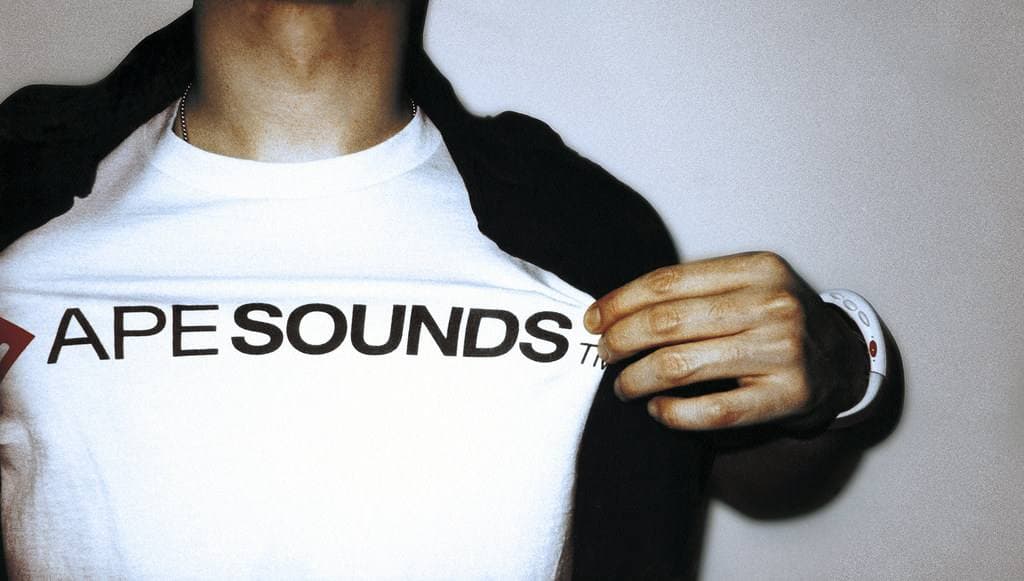
A man opening a dark jacket to show a white T-shirt printed Ape Sounds, a festival wristband on his wrist
Reading, 1999: an Ape Sounds T-shirt. Lee Basford · CC BY 2.0

1 September 1993

The Sun Is My Enemy

Keigo Oyamada’s first single as Cornelius reached only No. 15, but it is a key track of the scene: a bossa nova beat under the British 1980s guitar pop Japanese fans called neo-acoustic, with threads of jazz, funk and soul.

By then he had been running his own label, Trattoria, for about a year.

The single

Counting the rack.

2 of the 5 shops here that sold records in the 1990s are still trading where they stood.

  1. Tower Records ShibuyaOpen
  2. Manhattan RecordsOpen
  3. RECOfan Shibuya BEAMClosed 2020
  4. Shibuya 109Moved 1998
  5. Center-gaiClosed 2010

The acts

Three names.

No free photograph of Pizzicato Five or Flipper’s Guitar from their years exists, so they appear here as type.

Pizzicato Five

Keitarō Takanami and Yasuharu Konishi were students here and met through a club called Better Days. Pizzicato Five made its debut in 1985 with the two of them as its original members.

Maki Nomiya, the third singer, arrived in 1990. Bossa Nova 2001, co-produced by Keigo Oyamada in 1993, went into the Top Ten, and in 1994 Matador introduced the band abroad with two samplers.

Pizzicato Five
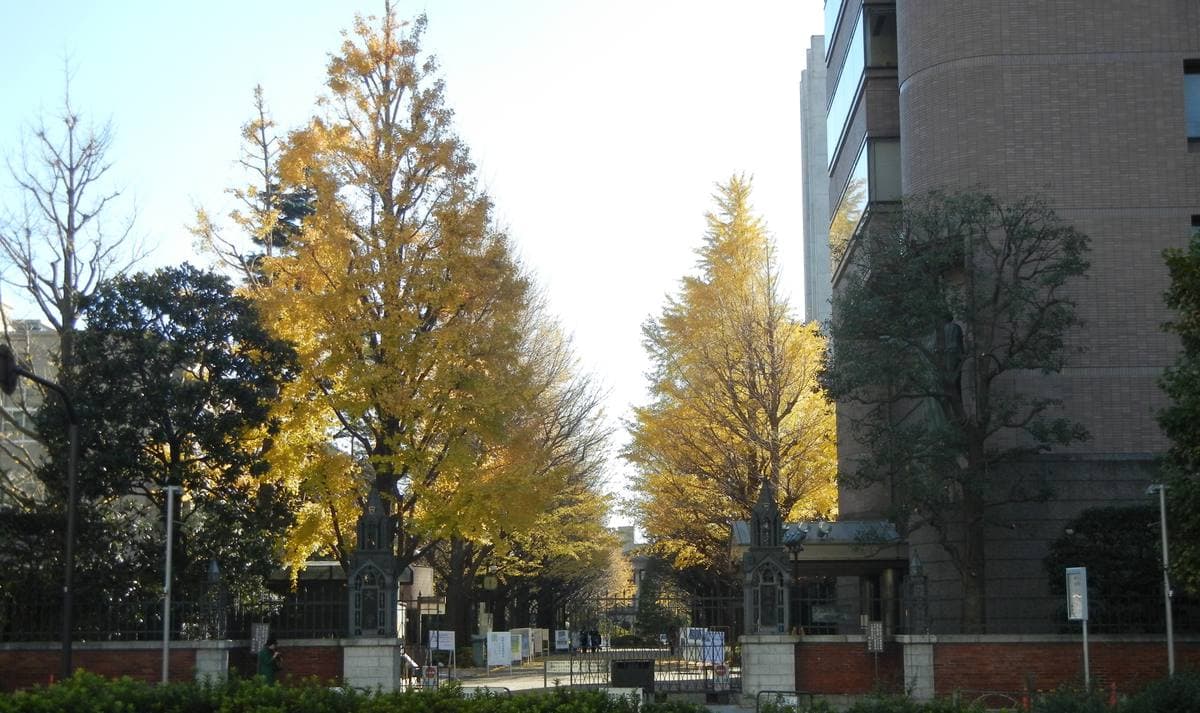
The main gate of Aoyama Gakuin University with trees and a campus building behind
The main gate of Aoyama Gakuin’s Aoyama campus, 2011. ペン太 · CC BY 2.5

Before 1985 · Aoyama

Aoyama Gakuin University

Aoyama campus, on Aoyama-dōri, Shibuya

Keitarō Takanami and Yasuharu Konishi were students here and met through a club called Better Days.

A working university. See the main gate from the street; the campus is not open as an attraction.

Sources
Teenagers in 1990s street clothes sitting in a row against a shop front while a young man in camouflage crawls along the paving
Shibuya, 1998: a pavement and a row of teenagers. ratsbeyfus · CC BY-SA 2.0

1992 to 1998

Up the hill.

From the crossing up Kōen-dōri to Tower is about 270 m in a straight line; Yoyogi Park is about 1,190 m further on.

  1. Shibuya crossing at night in 1992, neon signs and traffic lights over the road
    The crossing by Hachikō at night, October 1992. sodai gomi · CC BY 2.0

    Now

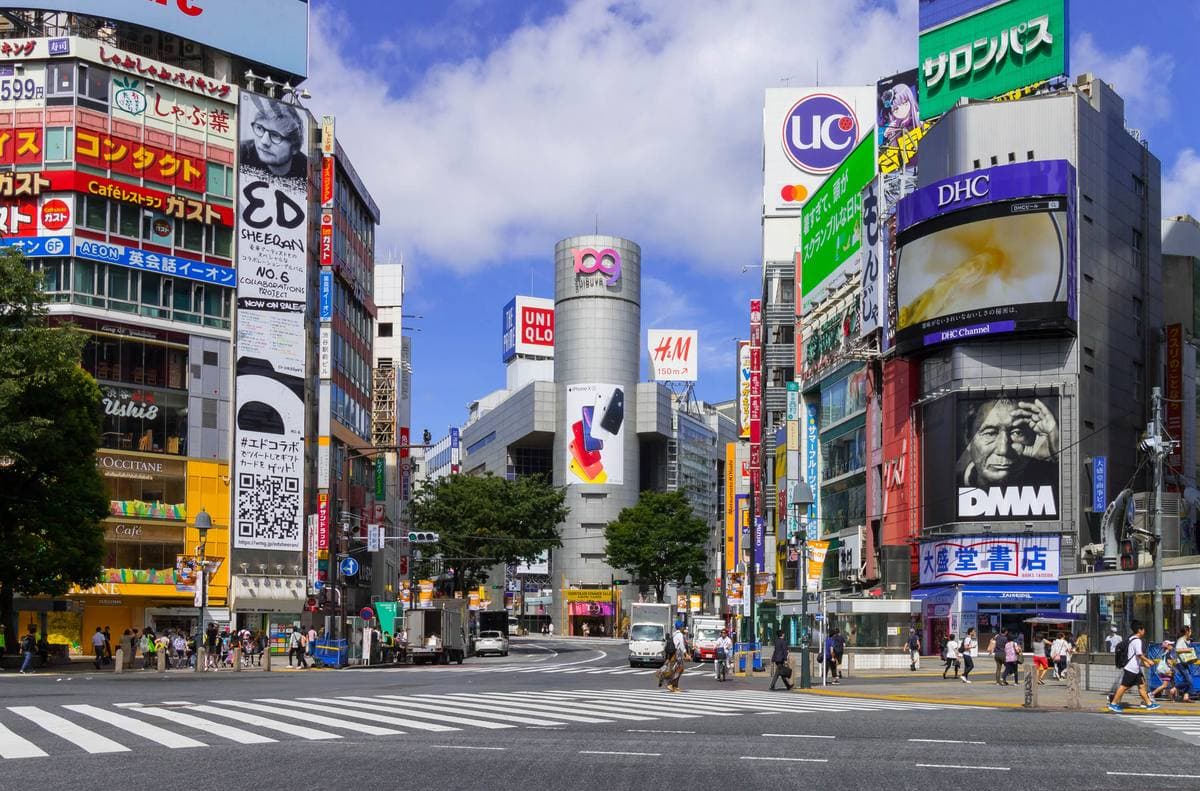
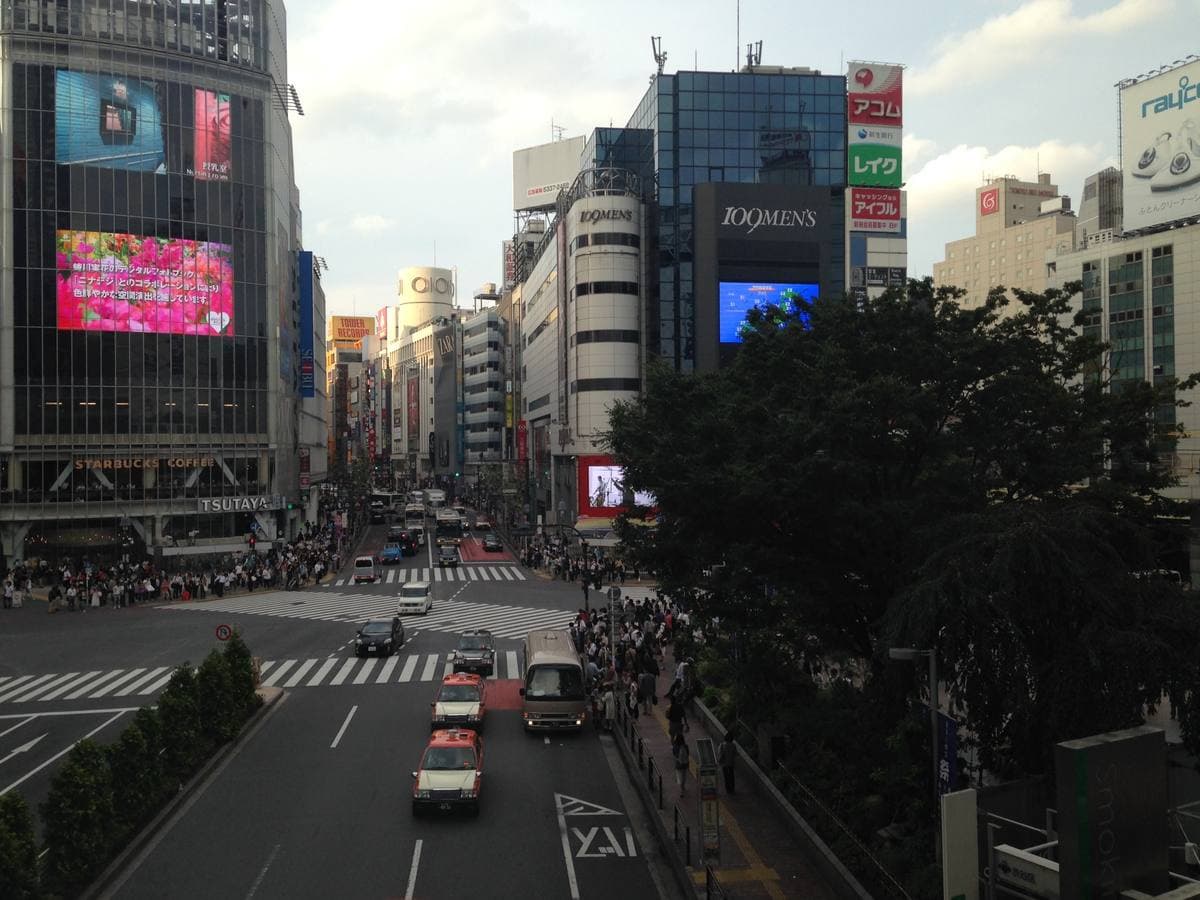
    Shibuya Scramble Crossing

    Dōgenzaka-shita, in front of Shibuya Station

    Upwards of 1,000 people cross this many-cornered junction at a time, from every side, without colliding.

    The Starbucks directly overlooking the crossing gives the view from above.

    Free and public, in front of the station. For the view from above, the Starbucks overlooks it.

    Sources
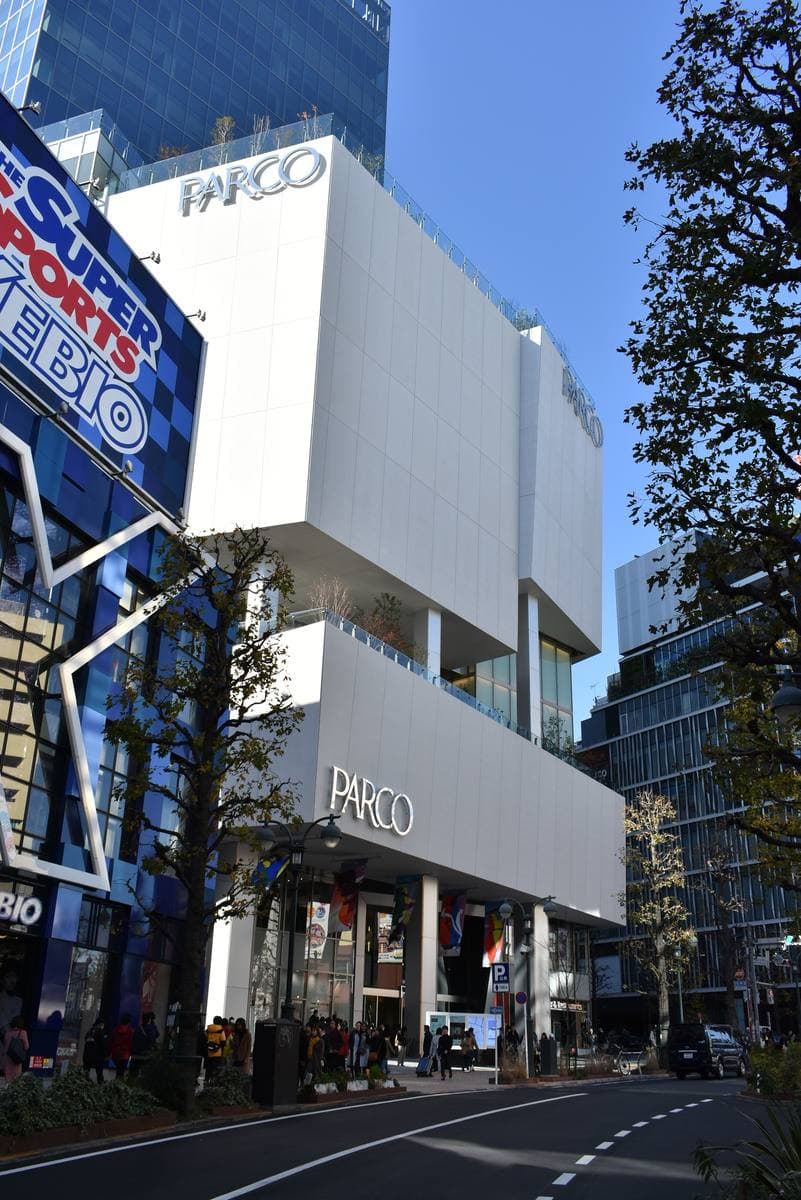
  2. The new Shibuya PARCO building on a corner of Kōen-dōri
    The rebuilt Shibuya PARCO, December 2019. 江戸村のとくぞう · CC BY-SA 4.0

    November 2019

    Shibuya PARCO

    Udagawachō, on Kōen-dōri

    Shibuya PARCO opened in June 1973; PART3 followed in September 1981.

    It closed for rebuilding in 2016 and reopened in November 2019.

    A working shopping building on Kōen-dōri, open to all.

    Sources
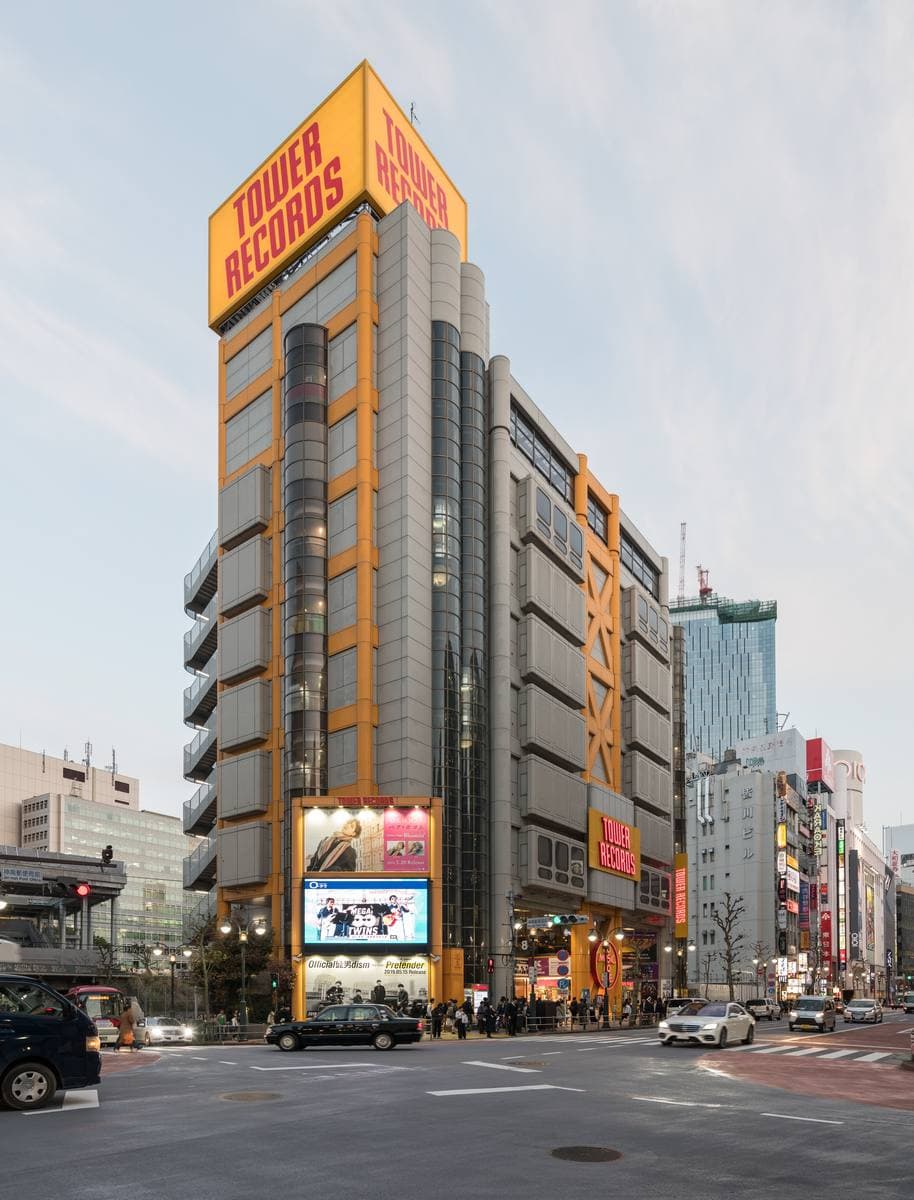
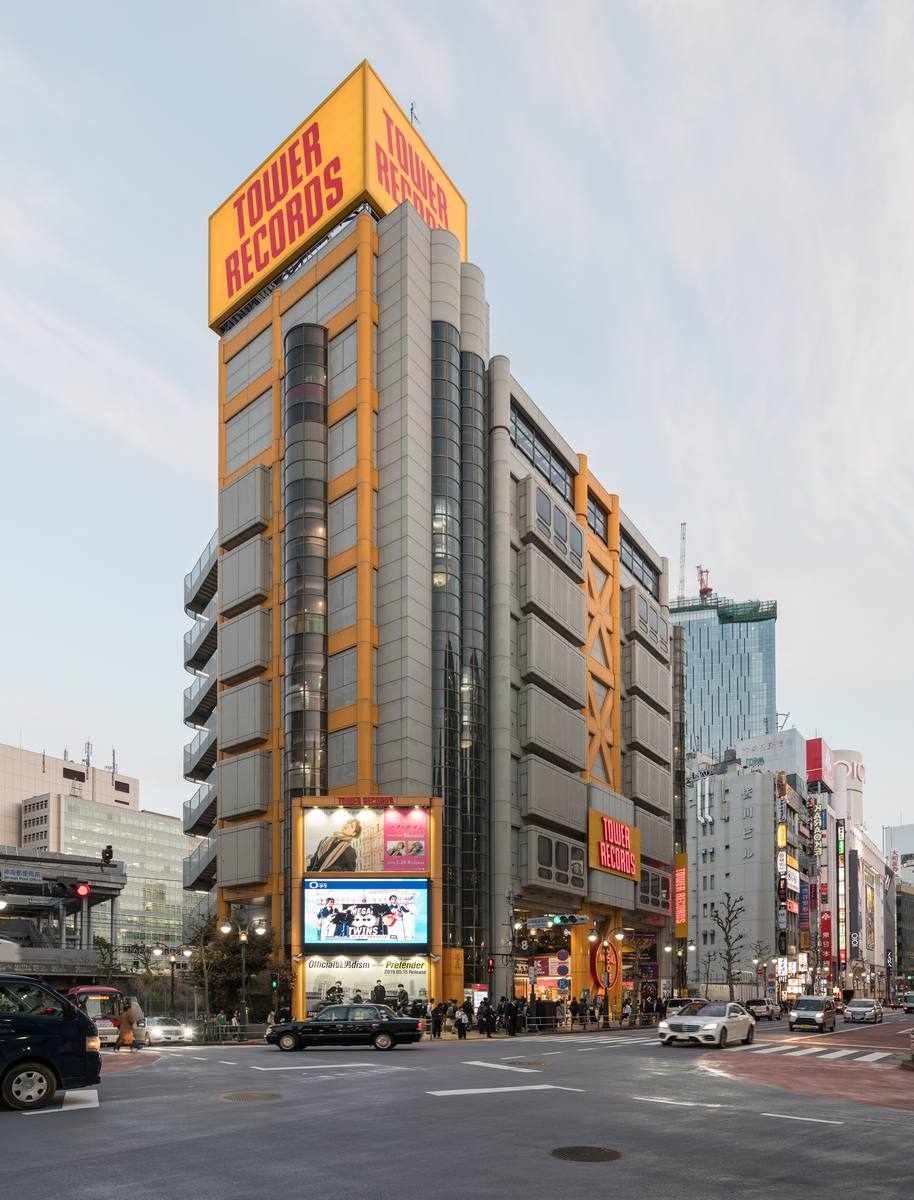
  3. The tall Tower Records Shibuya building with its yellow and red sign
    Tower Records Shibuya in Jinnan, 2019. DXR · CC BY-SA 4.0

    March 1995

    Tower Records Shibuya

    1-22-14 Jinnan, on Kōen-dōri

    The music press first used the name Shibuya-kei for young musicians the mainstream ignored but who sold unusually well at Shibuya’s import shops, HMV and Tower Records.

    Tower moved its Shibuya shop from Udagawachō to Jinnan in March 1995: about 1,500 tsubo of floor and some 700,000 discs, one of the biggest record shops in the world.

    The store now gives about 1,550 tsubo and about 800,000 items. Tower Vinyl Shibuya has been on the sixth floor since 2021.

    Open 11am to 10pm. About five minutes from the Hachikō exit: cross the crossing and walk up Kōen-dōri.

    Sources
    Tower Records Japan

    Tower Records Shibuya

    Jinnan, Shibuya

    The 1995 megastore on Kōen-dōri, still trading: about 800,000 items, with Tower Vinyl Shibuya on the sixth floor. Open 11am to 10pm.

    Plan a visit
    sequence hotels

    sequence MIYASHITA PARK

    Jingūmae, Shibuya

    A hotel on top of MIYASHITA PARK, a few minutes’ walk from Tower Records and the crossing. Check-in from 5pm, check-out by 2pm; bunk, double, twin and suite rooms, and a rooftop bar on the 18th floor.

    See rooms
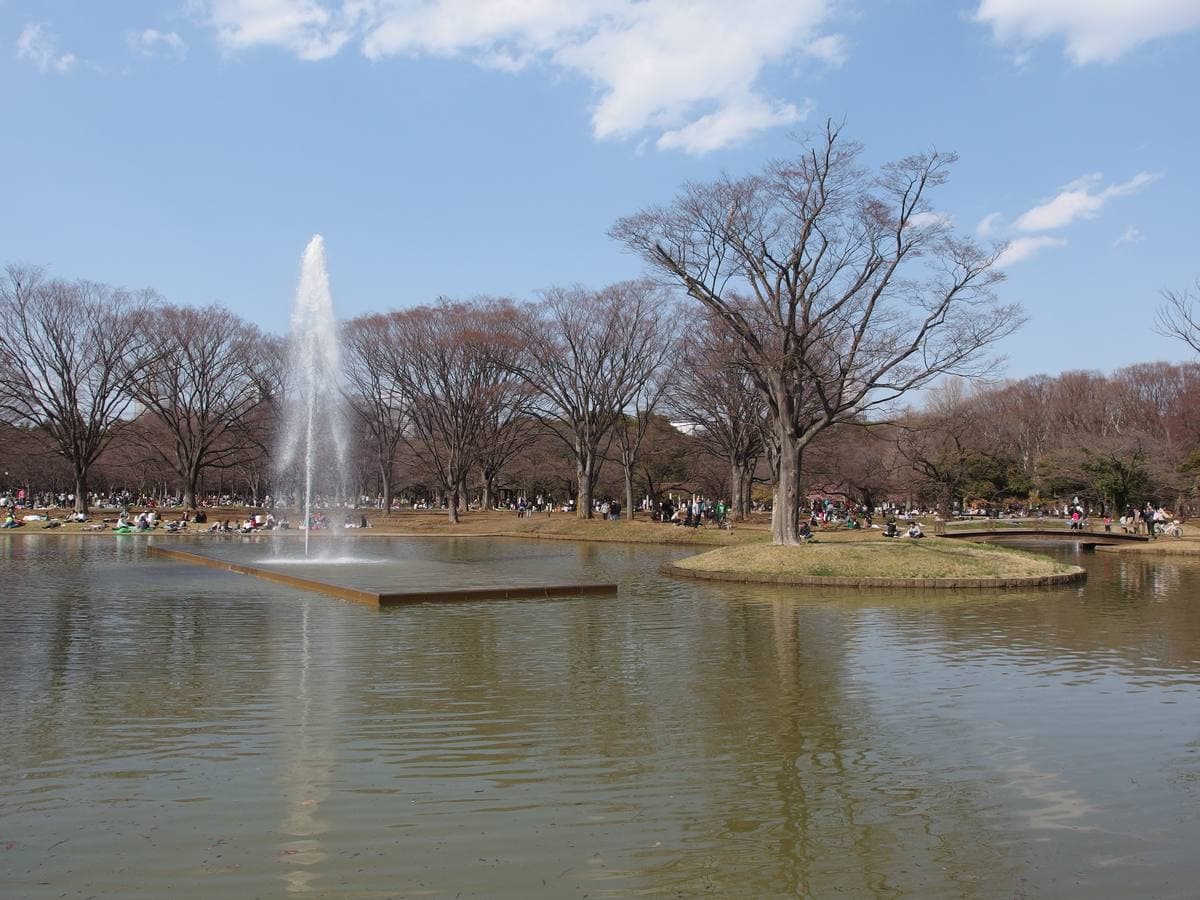
  4. Lawns and trees in Yoyogi Park with people walking
    Yoyogi Park, 2014. Guilhem Vellut · CC BY 2.0
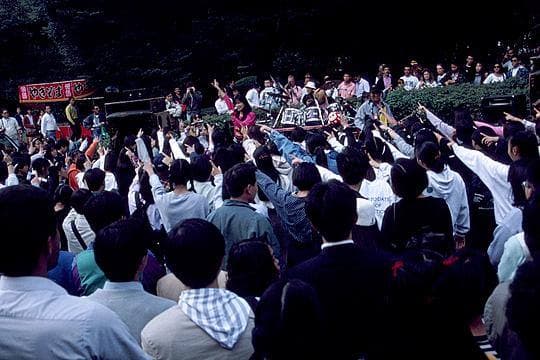
    A crowd gathered round a band playing in the street beside Yoyogi Park
    A street band and its crowd beside Yoyogi Park, October 1992. sodai gomi · CC BY 2.0

    Now

    Yoyogi Park

    Yoyogi-Kamizonochō and Jinnan, Shibuya

    Punk rockers, martial arts clubs and cosplayers still gather here.

    After the war the ground was US military housing, Washington Heights; it was rebuilt for the 1964 Olympics.

    Open every day with no closing time; about three minutes from Yoyogi-kōen Station on the Chiyoda Line.

    Sources
A man in a suit hurrying through a dark arched tunnel, figures silhouetted against the light at the far end
A pedestrian tunnel in Shibuya, 1998. ratsbeyfus · CC BY-SA 2.0

Visit

Where it is now

12 places you can visit, all but Aoyama Gakuin within a short walk of Shibuya Station. RECOfan’s floor in the BEAM building is gone; the building stands.

Pins mark public places; private homes are named but not pinned.

  • General reference · Public access · Coordinate precision: area · Not an exact scene or camera position; not a visitor route. Public streets up the hill north-west of Shibuya Station. Each shop keeps its own hours.

  • General reference · Public access · Coordinate precision: building · Not an exact scene or camera position; not a visitor route. Open to everyone; about ten minutes on foot from Shibuya Station.

  • General reference · Public access · Coordinate precision: building · Not an exact scene or camera position; not a visitor route. The BEAM building still stands at the Udagawachō end of the shopping streets; the record floor has gone.

  • General reference · Public access · Coordinate precision: building · Not an exact scene or camera position; not a visitor route. Open 11am to 9pm. New CDs are sold at HMV&BOOKS SHIBUYA nearby.

  • General reference · Public access · Coordinate precision: building · Not an exact scene or camera position; not a visitor route. A working live house. Tickets are sold per show through the club’s own site.

  1. Inokashira-dori seen from above at Shibuya Station, traffic and buildings climbing away up the road
    Inokashira-dōri running up from Shibuya Station towards Udagawachō, 2015. そらみみ (Soramimi) · CC BY-SA 4.0

    Udagawachō, Shibuya, Tokyo 150-0042

    Udagawachō

    In 1981 Tower Records opened its second shop in Japan, and its first in Tokyo, here in Udagawachō.

    Public streets up the hill north-west of Shibuya Station. Each shop keeps its own hours.

    Sources
  2. The Manhattan Records shop front in Udagawachō
    Manhattan Records on Udagawachō, 2019. Mike Steele · CC BY 2.0

    Kibune Building, 10-1 Udagawachō, Shibuya

    Manhattan Records

    Manhattan Records opened in 1980 in a small flat behind Shibuya Police Station and moved to its present site in Udagawachō around 1993.

    Open to everyone; about ten minutes on foot from Shibuya Station.

    Sources
  3. Center-gai at night, crowds walking under lit signs
    Center-gai at night, 2023, a few steps from the BEAM building. Dick Thomas Johnson · CC BY 2.0

    Fourth floor, Shibuya BEAM, Udagawachō: the shop is gone

    RECOfan Shibuya BEAM

    RECOfan opened on the fourth floor of the BEAM building in 1994: a windowless floor of about 300,000 records and as many CDs, mostly used.

    The BEAM building still stands at the Udagawachō end of the shopping streets; the record floor has gone.

    Sources
  4. A glass office building on a street corner at the Udagawacho crossing
    The Udagawachō crossing on Kōen-dōri, 2023, a short walk from the HMV record shop. 鋸香具師 · CC BY-SA 4.0

    Ground floor, NOA Shibuya, 36-2 Udagawachō

    HMV record shop Shibuya

    HMV runs this record shop in Udagawachō, a district once hailed as the mecca of records.

    Open 11am to 9pm. New CDs are sold at HMV&BOOKS SHIBUYA nearby.

    Sources
  5. The Quattro building in Shibuya with the Club Quattro sign
    The Quattro building on Udagawachō, 2005. Goki · CC BY-SA 2.5

    Fourth floor, 32-13 Udagawachō, Shibuya

    Shibuya Club Quattro

    PARCO opened Shibuya Club Quattro in Udagawachō on 28 June 1988, the first of its Club Quattro live houses.

    A working live house. Tickets are sold per show through the club’s own site.

    Sources

Stay

A room above the park.

sequence MIYASHITA PARK, a few minutes from Tower Records and the crossing.

sequence hotels

sequence MIYASHITA PARK

Jingūmae, Shibuya

A hotel on top of MIYASHITA PARK, a few minutes’ walk from Tower Records and the crossing. Check-in from 5pm, check-out by 2pm; bunk, double, twin and suite rooms, and a rooftop bar on the 18th floor.

See rooms

Go there

The shops still trading.

Tower Records, the Udagawachō record shops, and Shibuya walks on the marketplace.

Tower Records Japan

Tower Records Shibuya

Jinnan, Shibuya

The 1995 megastore on Kōen-dōri, still trading: about 800,000 items, with Tower Vinyl Shibuya on the sixth floor. Open 11am to 10pm.

Plan a visit
GLTJP

Record shops of Udagawachō

Udagawachō, Shibuya

Start at the HMV record shop in Udagawachō, about 80,000 records over two floors, open 11am to 9pm, then walk on to Manhattan Records.

Shop details
Viator · Ad / affiliate

Shibuya walking tours

Shibuya, Tokyo

Live marketplace results for guided walks round Shibuya. Check each itinerary for Center-gai and Udagawachō.

Live marketplace results · itineraries change

Compare tours

What’s on

Cornelius in London.

Cornelius plays the Barbican Centre on 19 June 2027.

Checking current event dates…

Take it home

Four records and a book.

Flipper’s Guitar, Pizzicato Five and Cornelius from 1990 to 1997, and W. David Marx’s Ametora. No original posters for this scene are in our store.

eBay · Ad / affiliate

Camera Talk

Flipper’s Guitar · CD, Polystar PSCR-1008, 1990

From 1990, one of the three studio albums the duo made between 1989 and 1991.

Live marketplace search · listings and condition change

Find a copy
eBay · Ad / affiliate

Bossa Nova 2001

Pizzicato Five · CD, Triad COCA-10837, 1993

Co-produced by Keigo Oyamada; it went into the Top Ten.

Live marketplace search · listings and condition change

Find a copy
eBay · Ad / affiliate

Made in USA

Pizzicato Five · 12-inch, Matador OLE 099-1, 1994

One of the two 1994 Matador samplers that introduced the band abroad.

Live marketplace search · listings and condition change

Find a copy
eBay · Ad / affiliate

Fantasma

Cornelius · CD, Polystar / Trattoria PSCR-9107, 1997

The 1997 album on his own Trattoria label.

Live marketplace search · listings and condition change

Find a copy
Bookshop.org UK · Ad / affiliate

Ametora

W. David Marx

How Japan took up American style, by W. David Marx, who wrote the Japan Times’s 2006 piece on Shibuya-kei.

Find the book

Dates, prices, rooms and stock change: confirm with the provider before you travel or buy. A stay or tour is described as a filming location only where the card says so.

The sources

Every place and moment behind this page, with sources.

12 of 12 places · 11 of 11 Moments

  • Udagawachō

    Udagawachō, Shibuya, Tokyo 150-0042

    • Tower comes to Udagawachō

      Tower Records opens its first Tokyo shop in Udagawachō.

  • Manhattan Records

    Kibune Building, 10-1 Udagawachō, Shibuya

    • Up the hill

      Manhattan Records moves to Udagawachō.

  • RECOfan Shibuya BEAM

    Fourth floor, Shibuya BEAM, Udagawachō: the shop is gone

    • Fourth floor

      RECOfan opens in the BEAM building.

    • Doors padlocked

      RECOfan Shibuya BEAM closes for the last time.

  • HMV record shop Shibuya

    Ground floor, NOA Shibuya, 36-2 Udagawachō

    • Shibuya Club Quattro

      Fourth floor, 32-13 Udagawachō, Shibuya

      • Club Quattro opens

        PARCO opens Shibuya Club Quattro.

    • Shibuya 109

      Dōgenzaka, at the fork in front of Shibuya Station

      • HMV inside 109

        HMV opens its first Japanese shop inside the 109 building.

    • Center-gai

      Center-gai, Udagawachō, across from the crossing

      • Center-gai

        HMV Shibuya moves from 109 to Center-gai.

      • Last day

        HMV Shibuya closes.

    • Shibuya Scramble Crossing

      Dōgenzaka-shita, in front of Shibuya Station

      • Tower Records Shibuya

        1-22-14 Jinnan, on Kōen-dōri

        • The megastore

          Tower Records moves to Jinnan, one of the biggest record shops in the world.

      • Shibuya PARCO

        Udagawachō, on Kōen-dōri

        • PARCO again

          Shibuya PARCO reopens after rebuilding.

      • Yoyogi Park

        Yoyogi-Kamizonochō and Jinnan, Shibuya

        • Aoyama Gakuin University

          Aoyama campus, on Aoyama-dōri, Shibuya

          • Better Days

            Takanami and Konishi meet as students at Aoyama Gakuin.

        Privacy