The old couple’s fifteen-hour train ride is never shown. Ozu cuts to still shots with nobody in them instead. Every one is a place you can stand in.
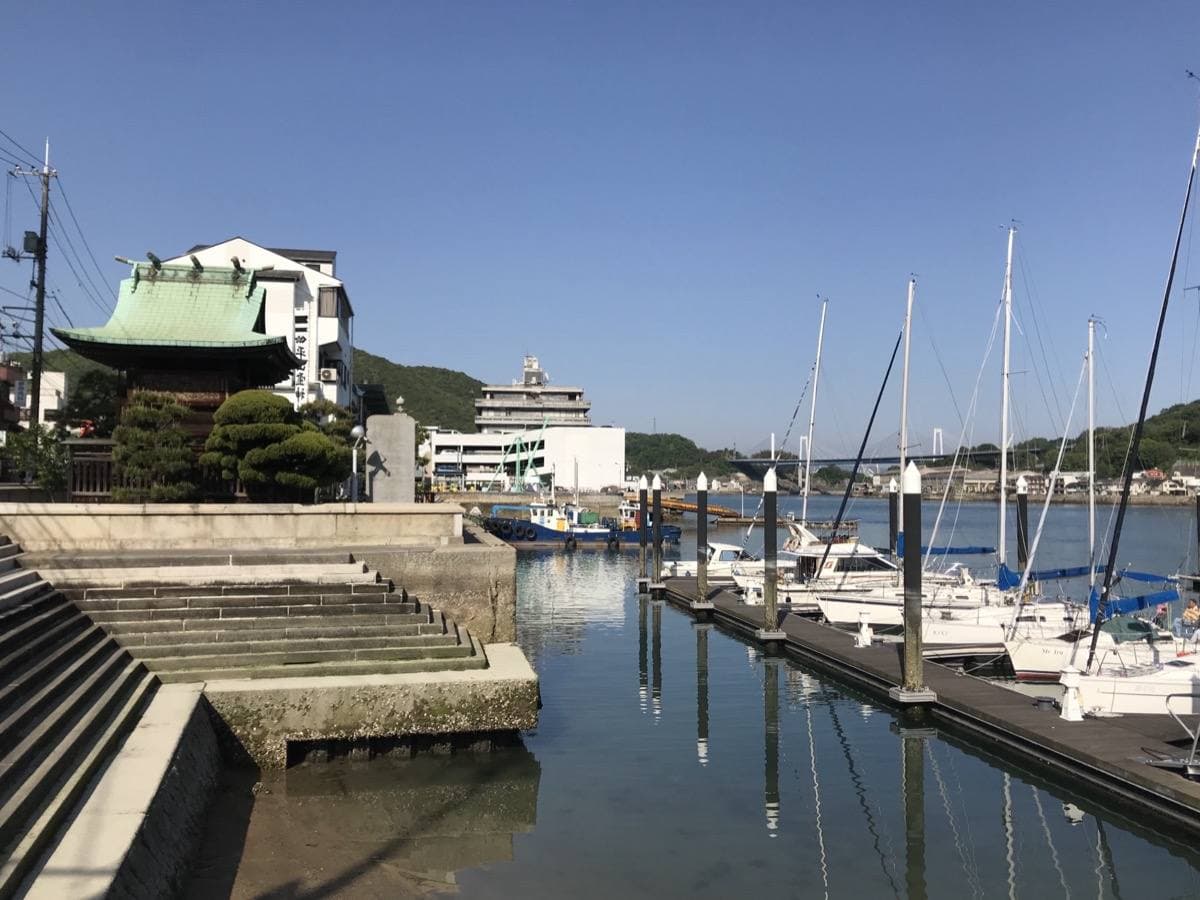
Sumiyoshi Shrine and the Central Pier on the Onomichi waterfront, 2018. そらみみ · CC BY-SA 4.0
Black to Onomichi, shot 1 of 3 (2:12): The great stone lantern of Sumiyoshi Shrine. All the cuts
東京物語
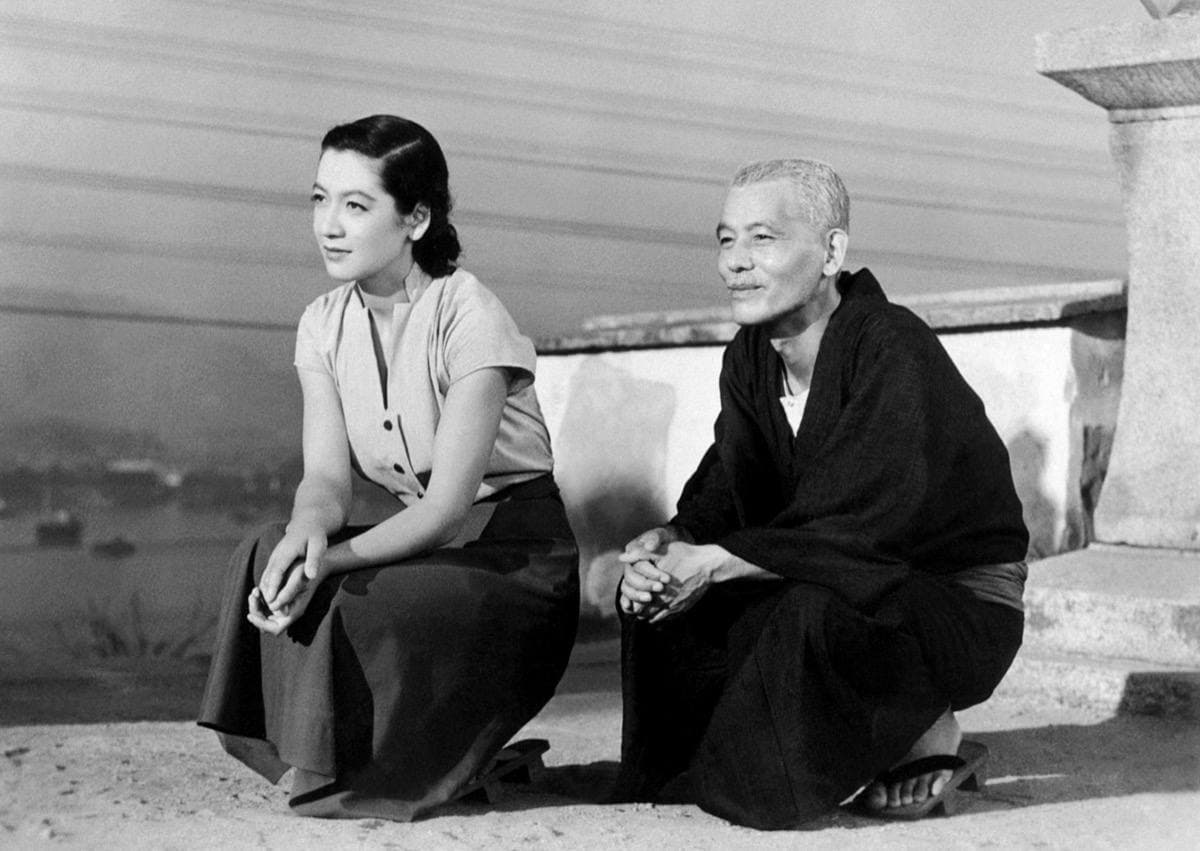
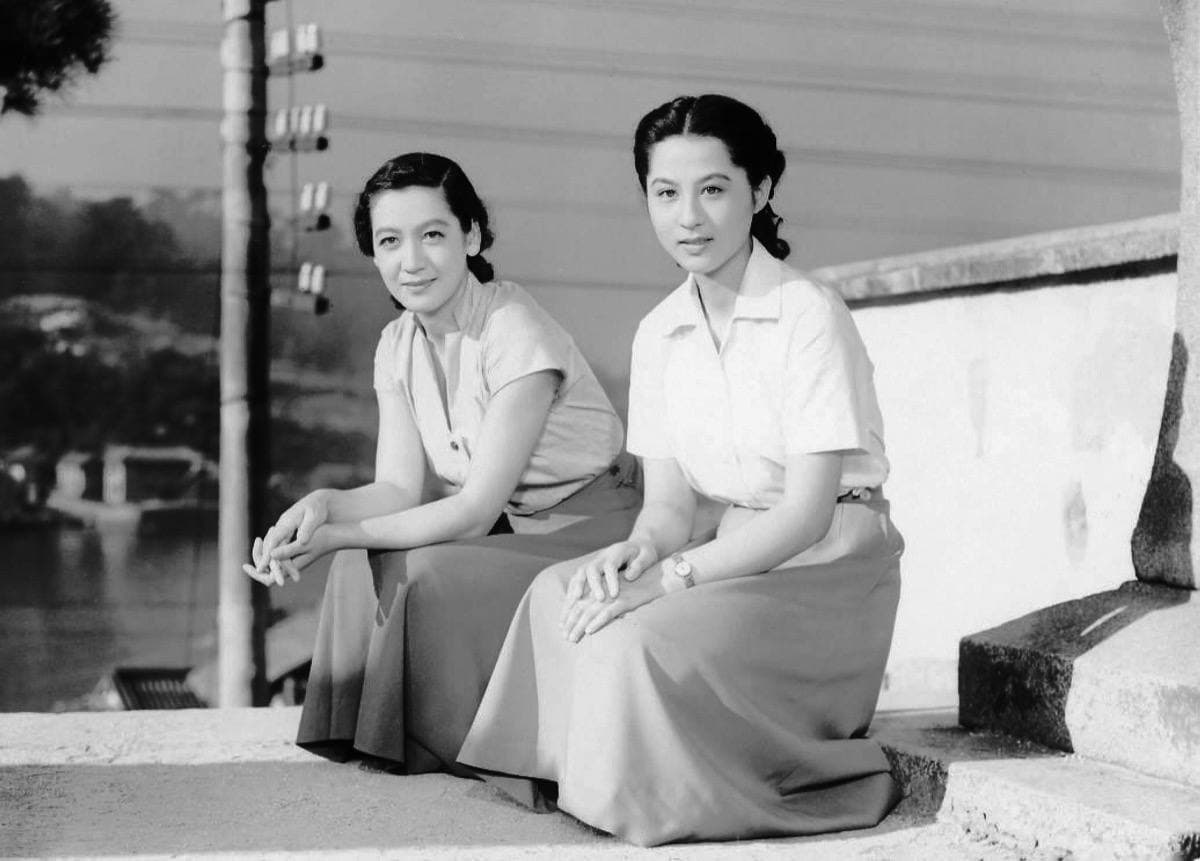
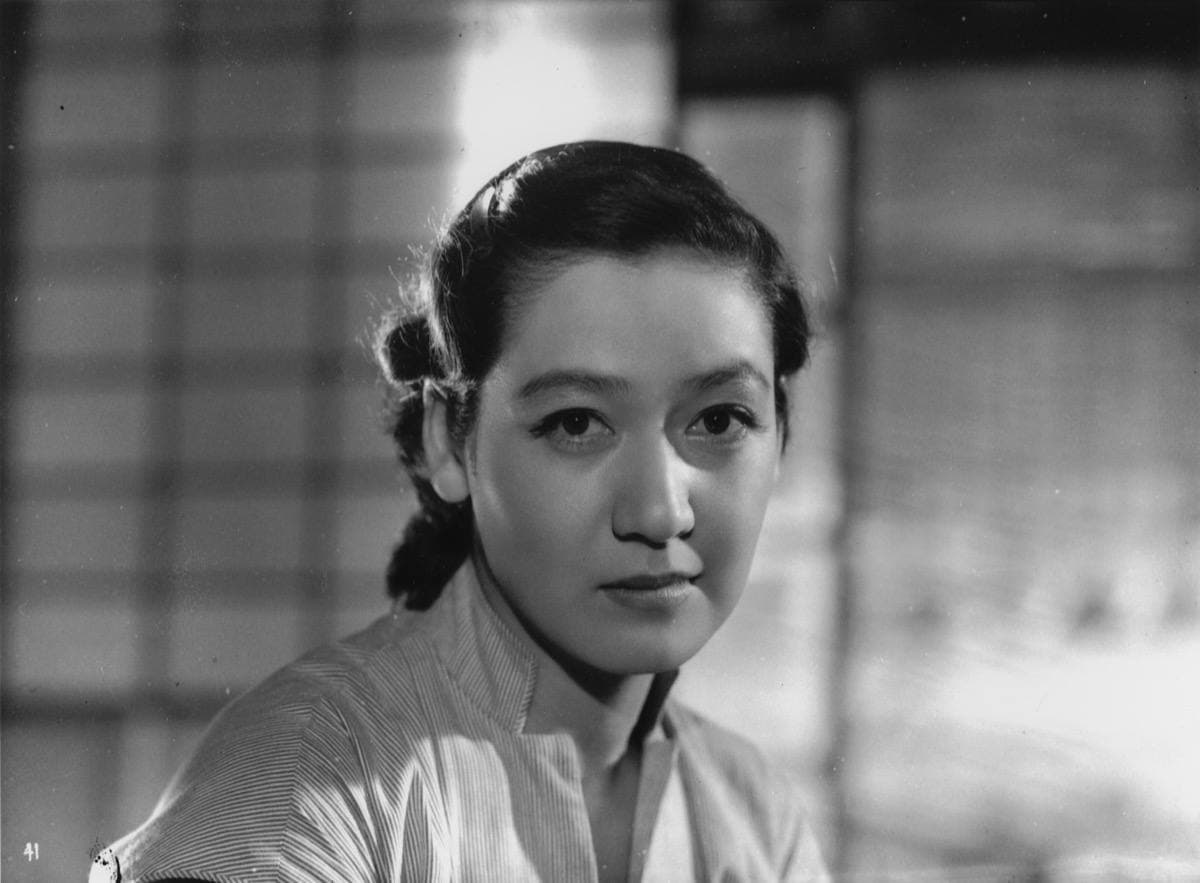
Setsuko Hara and Chishū Ryū at Jōdo-ji, Onomichi: a Shochiku still from Tokyo Story, 1953. Shochiku · Public domainSetsuko Hara · Chishū RyūNoriko and Shūkichi, Jōdo-ji, 1953Yasujirō Ozu beside his camera in the 1950s. Unknown author · Public domainYasujirō Ozuat his camera
Between places · no one in frame
The empty shots.
The film never shows the train. Each time the story moves, Ozu holds on a few still shots with nobody in them: a lantern, a railway line, chimneys, a castle. Pick a move and cut through them the way the film does.
Sumiyoshi Shrine and the Central Pier on the Onomichi waterfront, 2018. そらみみ · CC BY-SA 4.02:121/3
Five views of Onomichi on a summer morning, the camera coming up the hill towards the house.
Black to Onomichi, shot 1 of 3 (2:12): The great stone lantern of Sumiyoshi Shrine.
2-10-12 Tsuchidō, Onomichi waterfront
Sumiyoshi Shrine
The shrine’s great stone night lantern is the film’s first shot, the first of five views of Onomichi before anyone speaks.
A small shrine on the waterfront beside the Central Pier, a short walk east of the station along the channel.
Where we read it
Where we read it
The film never shows the train journeys to and from Tokyo.
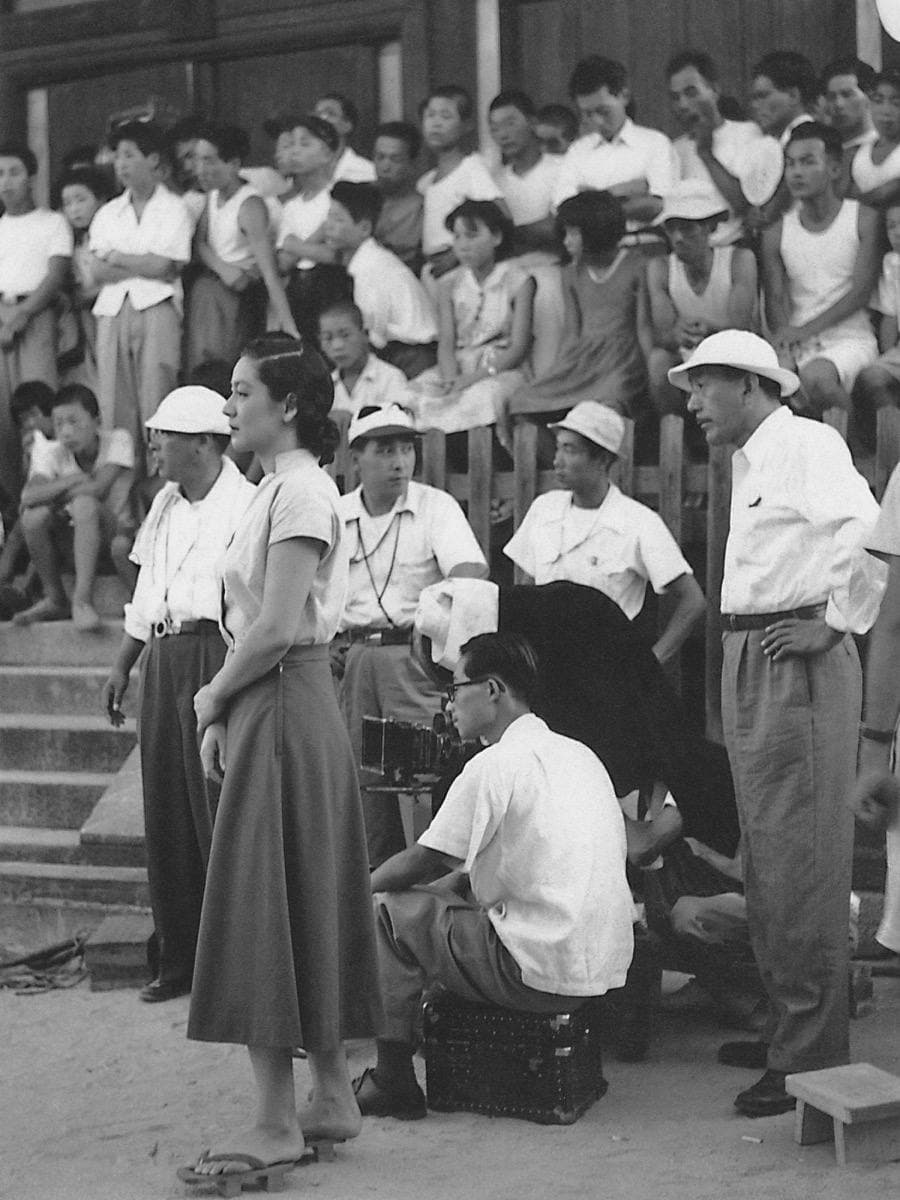
Setsuko Hara (left, foreground) and Yasujirō Ozu (far right) filming at Jōdo-ji, August 1953, with Onomichi watching from the steps. Unknown author · Public domain
Onomichi · 12–19 August 1953
The temple at dawn.
Jōdo-ji
The precinct is the one place in Onomichi where Ozu filmed his actors: Shūkichi watches the dawn and Noriko comes to find him. Every Onomichi interior was a set.
A photograph of Ozu filming Setsuko Hara here is dated 16 August 1953. About 2,000 people are said to have come to watch a 3 a.m. shoot.
The two stone lanterns at either edge of the frame have since been moved, a bell tower now stands where they were, and the low wall behind the actors has gone.
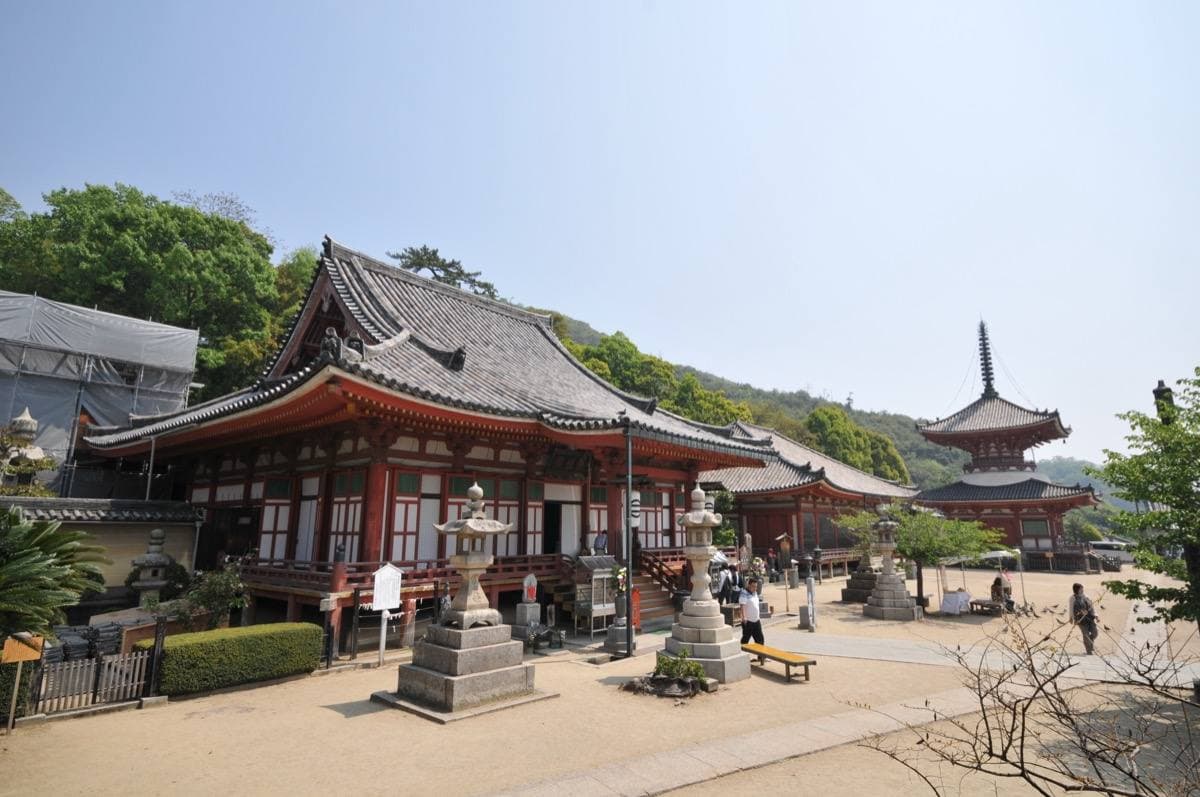
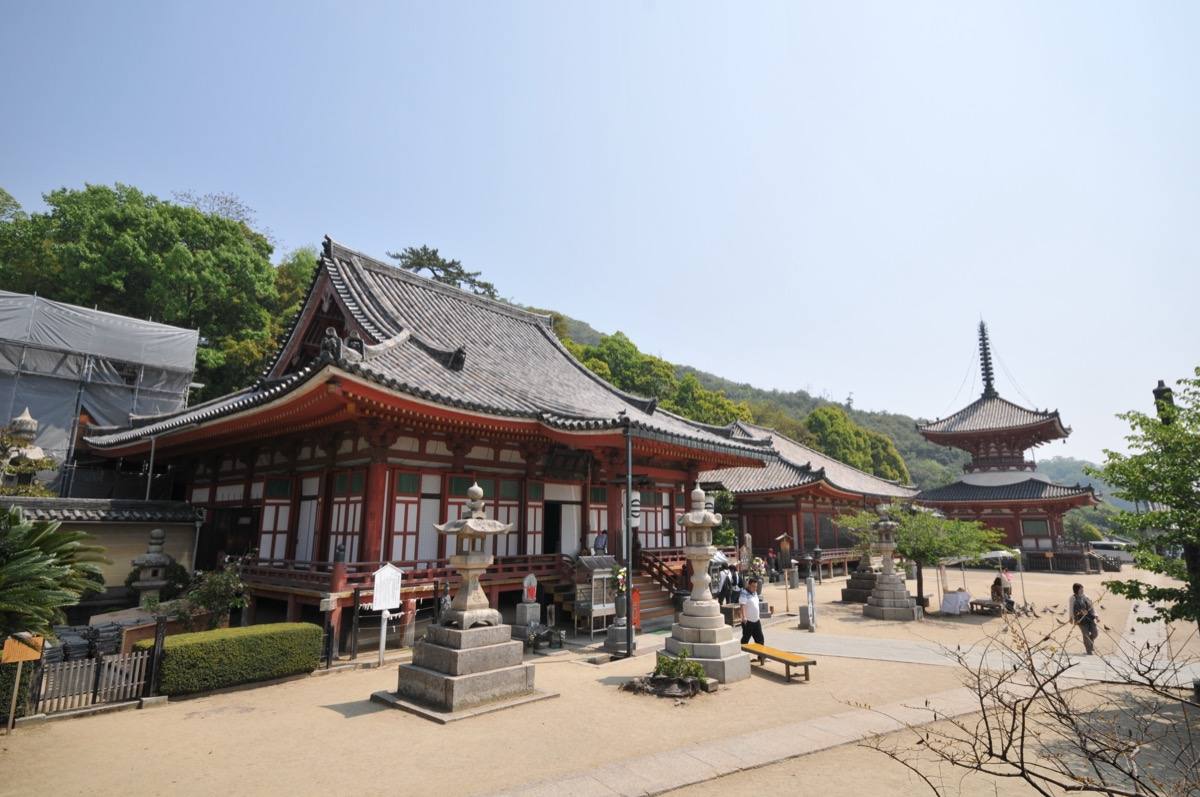
Its main hall and treasure pagoda are both National Treasures; the pagoda is the one Shūkichi sees from his garden.
A working temple on the hillside east of the town centre, about 25 minutes’ walk from Onomichi station. The precinct looks over the railway to the sea.
Where we read it
Sumiyoshi Shrine and the Central Pier on the Onomichi waterfront, 2018. そらみみ · CC BY-SA 4.0
Sumiyoshi Shrine
The shrine’s great stone night lantern is the film’s first shot, the first of five views of Onomichi before anyone speaks.
Ozu returns to almost the same angle at dawn after Tomi dies, in a run of shots that starts on the Central Pier.
The lantern stands about five metres tall. The shrine moved here from Jōdo-ji’s grounds in 1741 and guards the harbour.
A small shrine on the waterfront beside the Central Pier, a short walk east of the station along the channel.
Where we read it
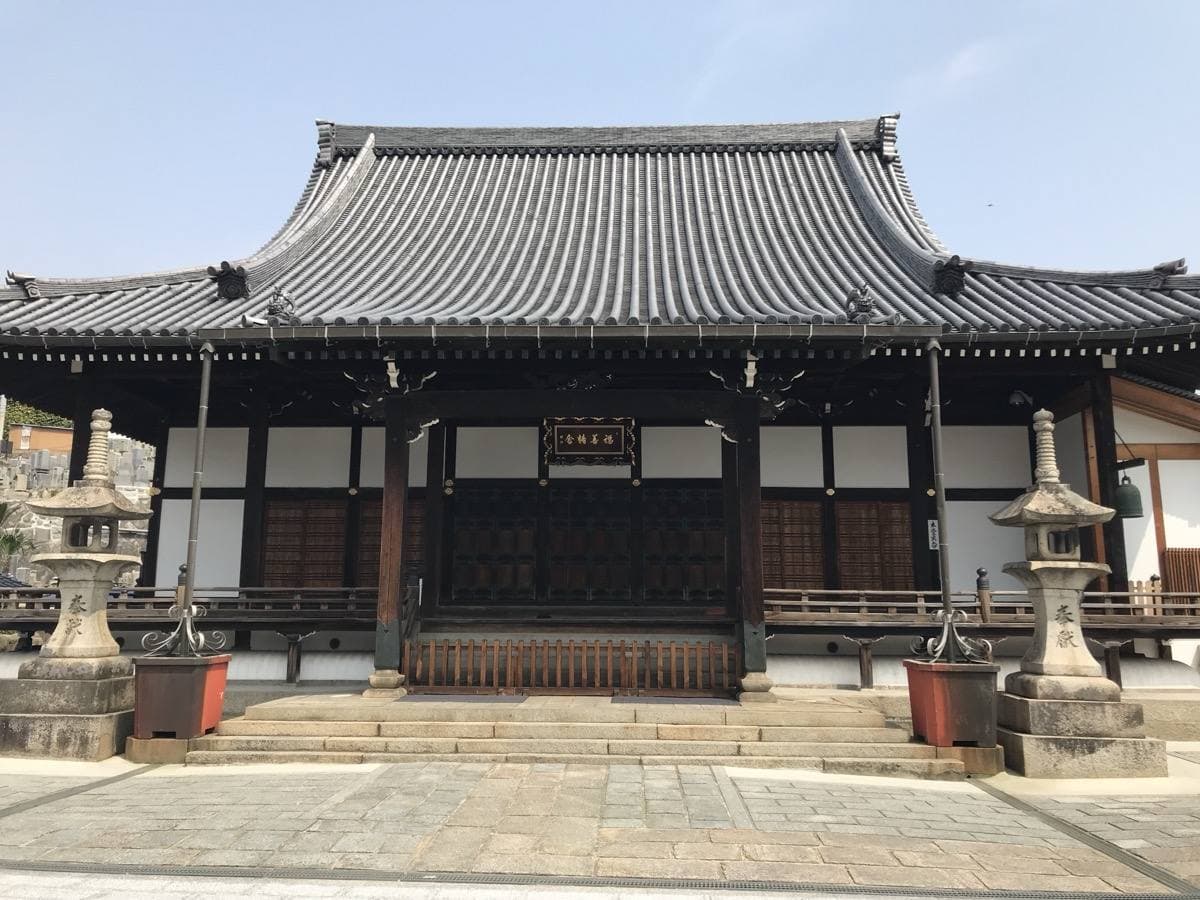
The funeralThe main hall of Fukuzen-ji, Onomichi, 2019. Arisen · CC BY-SA 4.0
1-9-1 Nagae, Onomichi
Fukuzen-ji
Tomi’s funeral is held at this temple. The ceremony was a set, but five cuts of the graveyard and the hall were filmed here on 17 August 1953.
It was founded in 1573.
Ozu walked the town on foot during the scouting, visiting Jōdo-ji and Fukuzen-ji.
A working temple up the slope north of the waterfront. Visit quietly; the graveyard is in use.
Where we read it
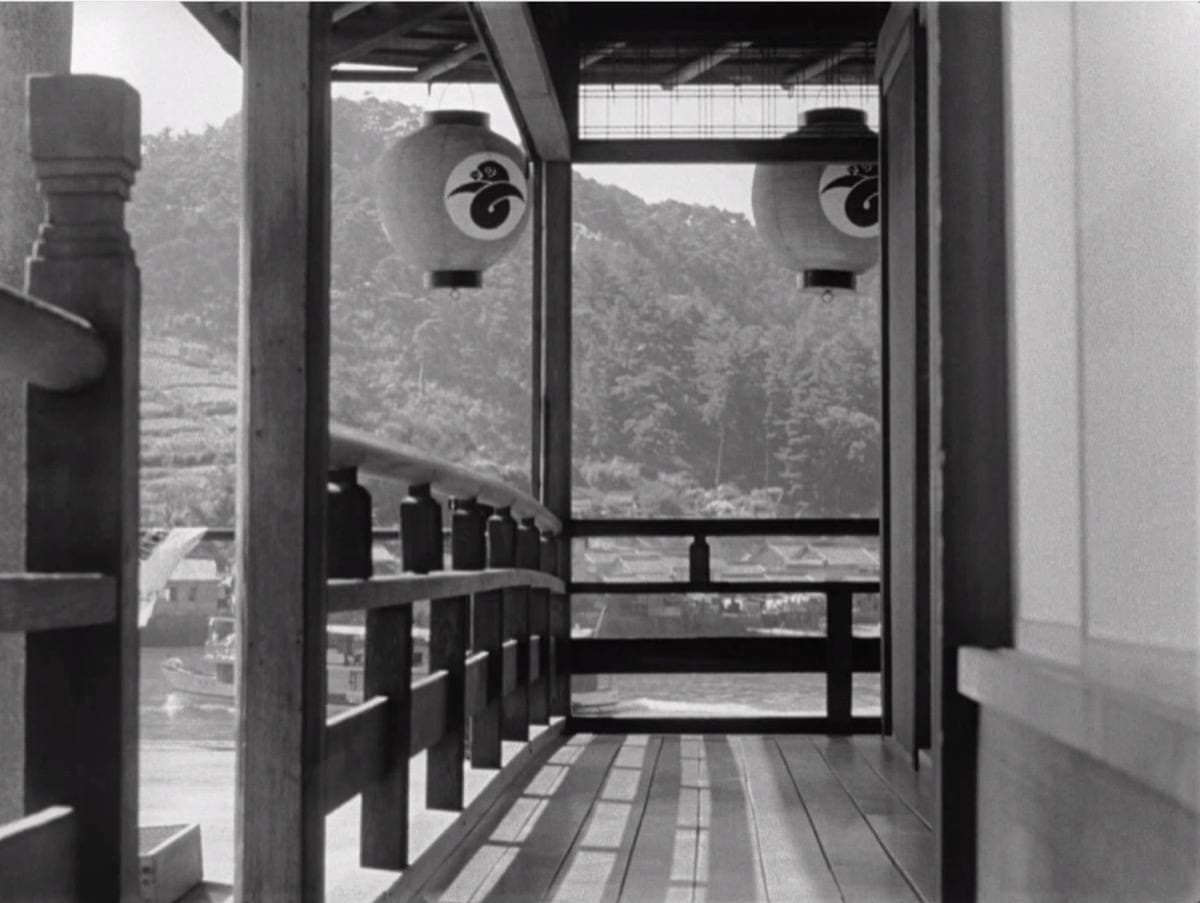
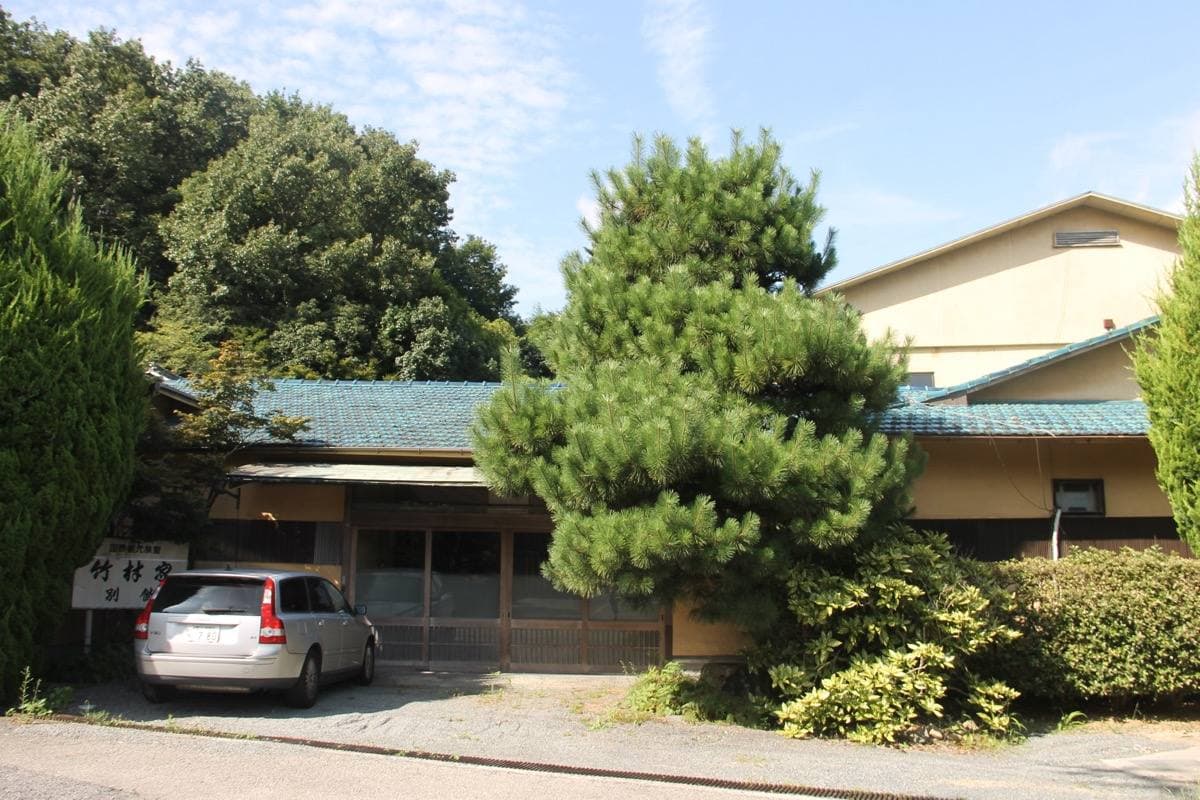
Where the crew sleptTakemuraya’s veranda and lanterns in Tokyo Story, 1953. Shochiku · Public domain
Kubo 3-chōme, Onomichi
Takemuraya
Ozu, his crew and Ryū, Hara and Kagawa stayed here during the shoot. The owner was a cousin of the screenwriter Yanai Takao, one reason Onomichi was chosen.
The owners coached the cast in Onomichi dialect; Chieko Higashiyama’s accent is said to have ended up just like the landlady’s.
A drinking companion says “At Takemuraya?” and laughs: a line said to be Ozu’s thank-you. Exterior cuts of the inn follow the funeral.
It opened in 1902 as Onomichi’s first Western restaurant and was rebuilt as an inn in 1920. Its main house, gate and wall were registered in 2004.
A working ryōtei inn on the channel, open to diners and guests by reservation. The street front, gate and wall are listed.
Where we read it
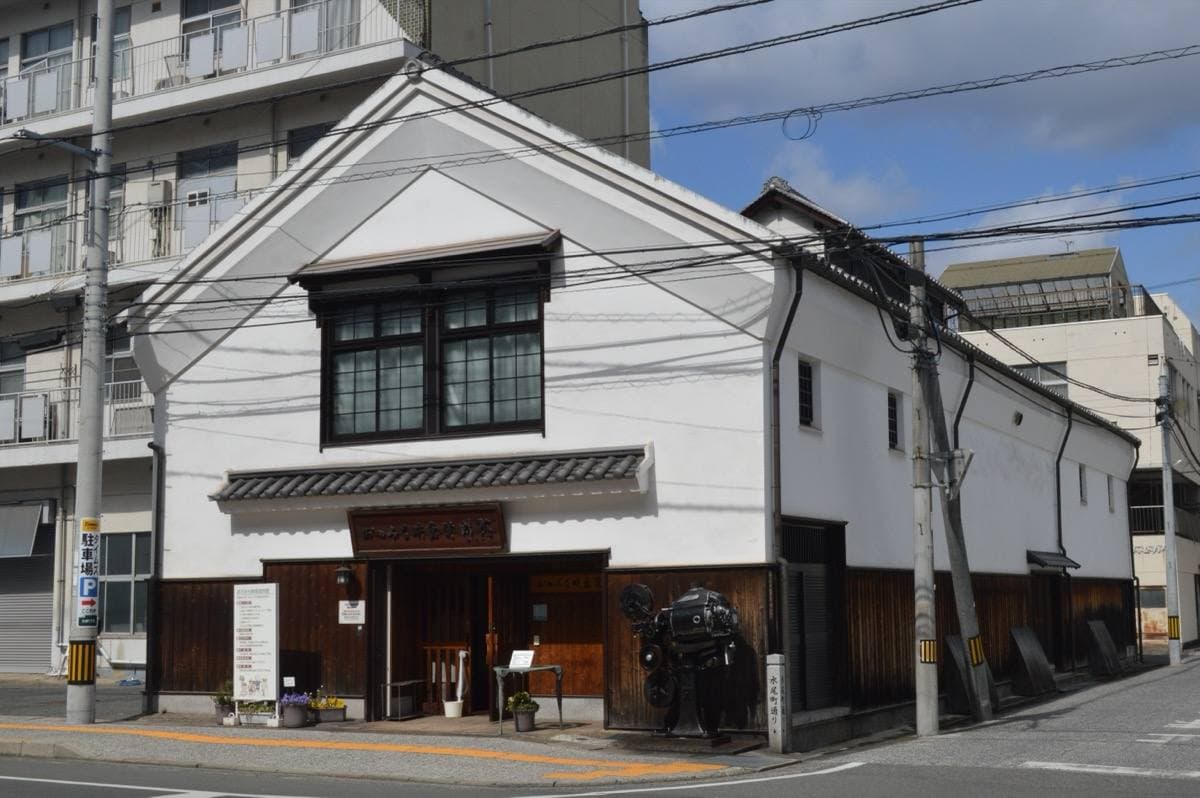
The film museumThe Onomichi Film Museum in a Meiji-era warehouse, 2024. Asturio Cantabrio · CC BY-SA 4.0
1-14-10 Kubo, Onomichi
Onomichi Film Museum
The city opened it on 22 April 2000 in one of the Meiji-era warehouses that lined the shore.
Its displays lean heavily on Tokyo Story and on Kaneto Shindō’s The Naked Island.
The City of Onomichi lists it on its own Ozu map alongside Jōdo-ji, Fukuzen-ji, Takemuraya and the Sumiyoshi lantern.
Open 10:00 to 18:00 (last entry 17:30), closed Tuesdays. Adults ¥520; junior-high age and under free. About 15 minutes’ walk from the station.
Where we read it
ONOMICHI U2
Hotel Cycle, Onomichi U2
Onomichi · Standard twin from ¥19,800
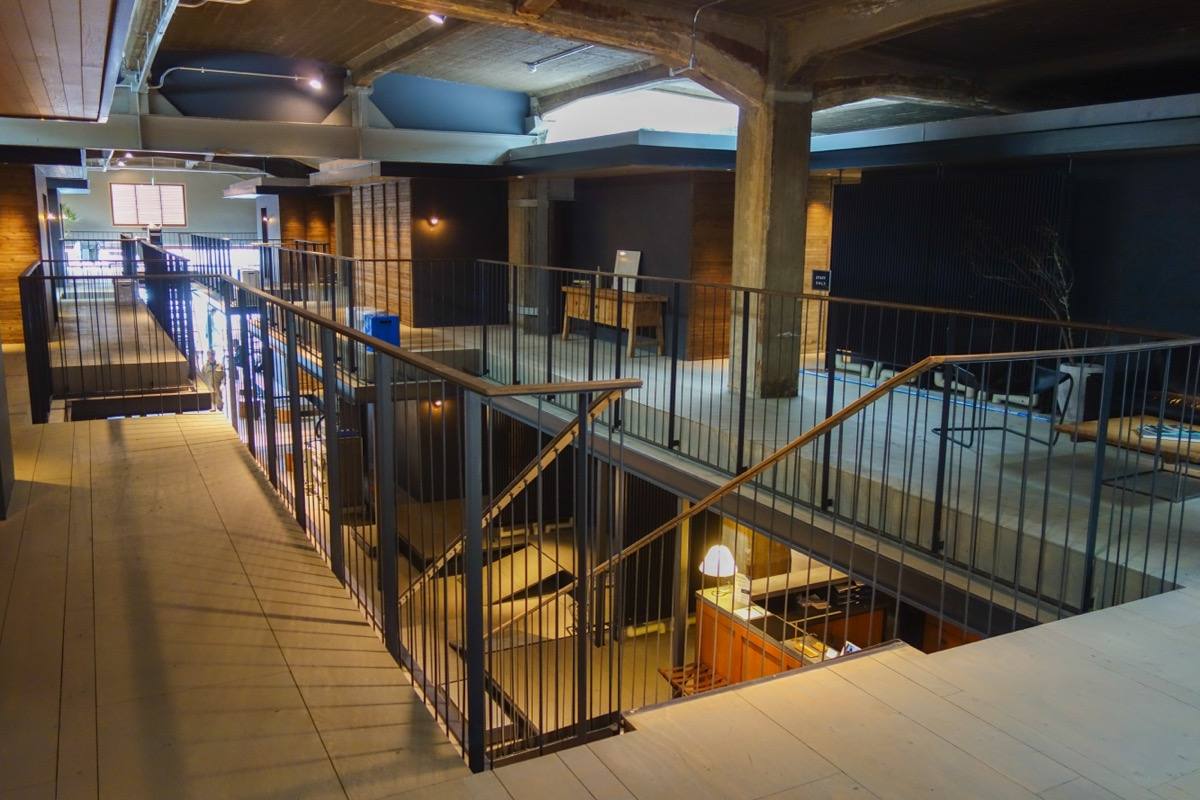
A hotel inside a converted shipping warehouse on the Onomichi channel, a walk along the water from the Sumiyoshi lantern. Twin rooms for two from ¥19,800; check-in 15:00.
The children have no time. Kōichi’s clinic is out by the river, Shige’s salon is busy, and it is Noriko, their son’s widow, who shows them the city. Four places, in the order the couple see them.
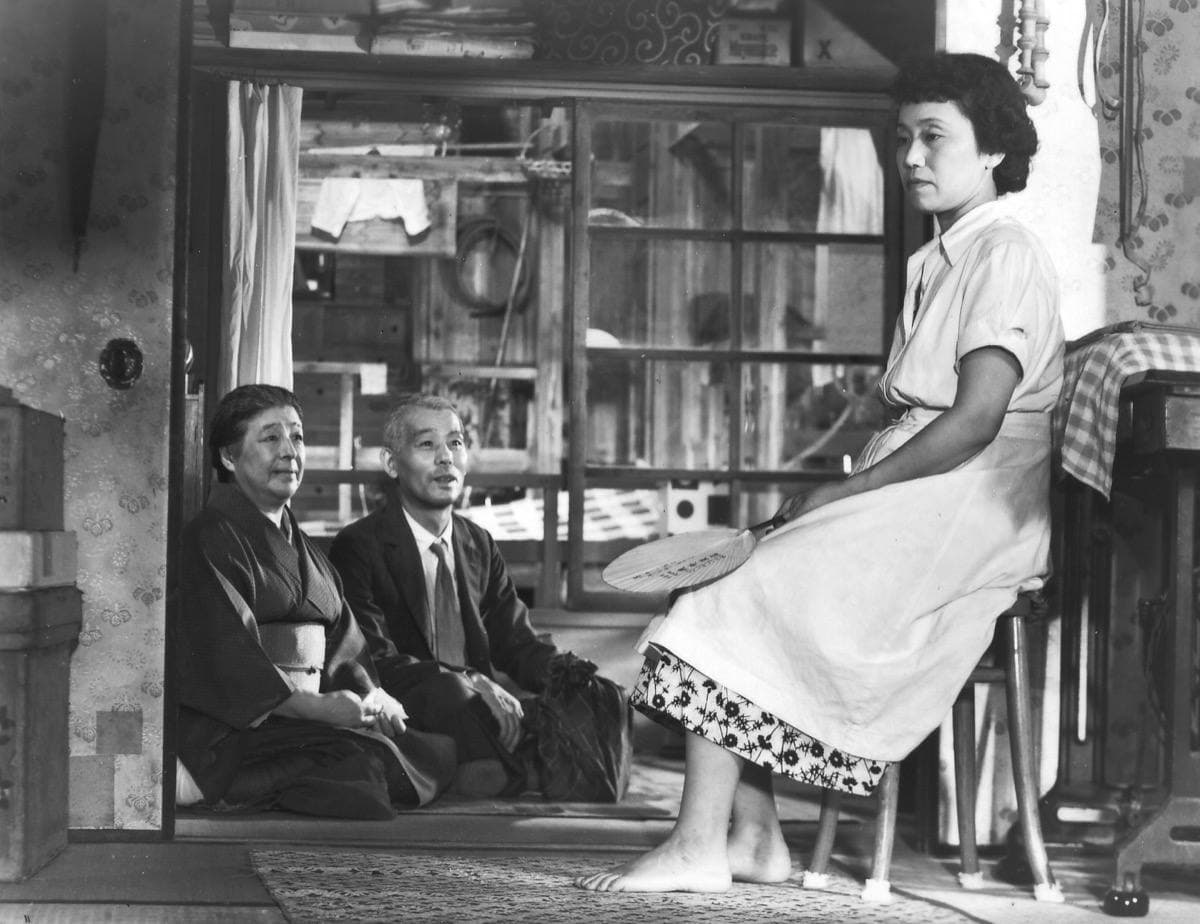
Chieko Higashiyama, Chishū Ryū and Haruko Sugimura: a Shochiku still from Tokyo Story, 1953. Shochiku · Public domain
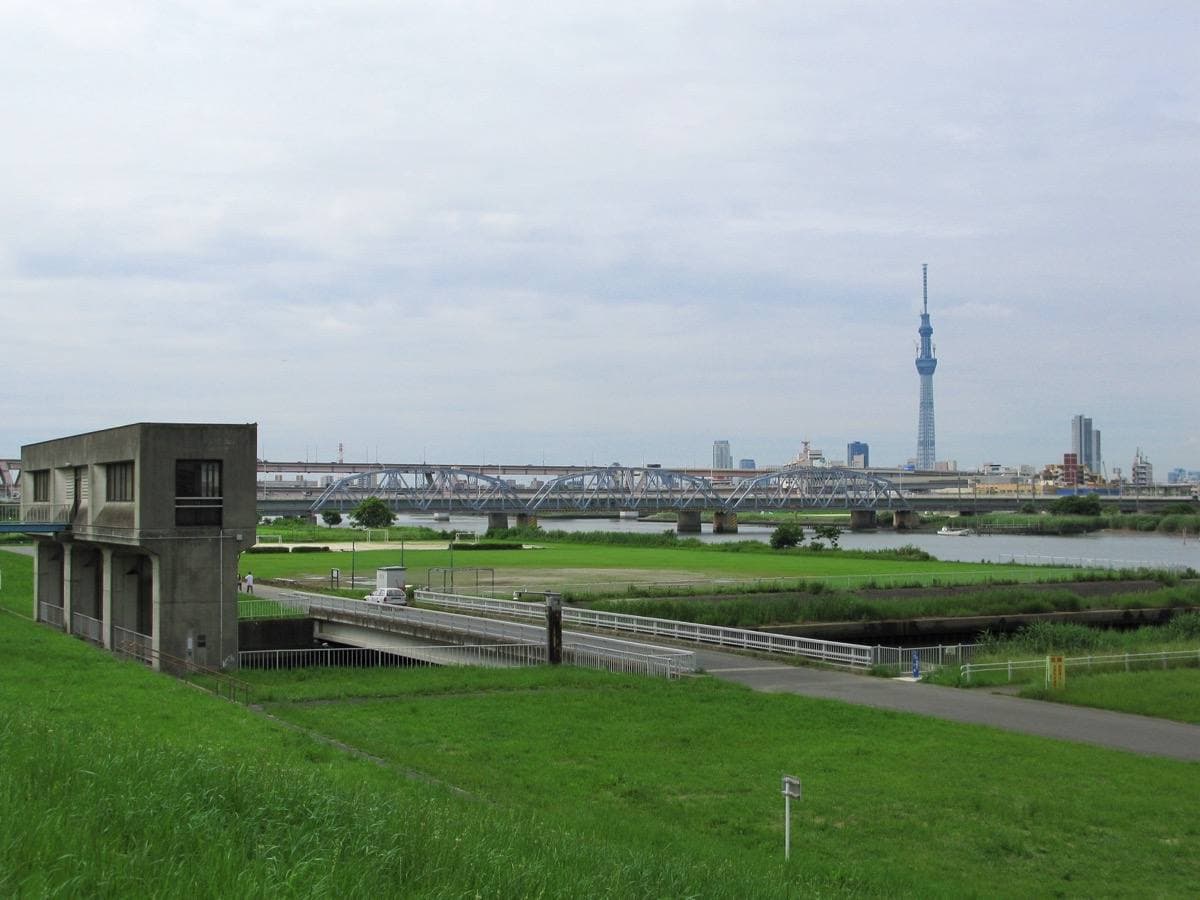
1The Arakawa embankment by the Keisei line bridge, 2011. 京浜にけ · CC BY-SA 3.0
The edge
Horikiri station and the Arakawa bank
Tokyo begins on the city’s edge: the Senju power station chimneys, Horikiri station’s platform and the Arakawa bank, before Kōichi’s clinic.
Tomi sits on the embankment near the Keisei line bridge while her grandson plays alone. From the clinic’s upstairs window, Shūkichi and Fumiko watch them.
The station opened on 1 April 1902. Its platforms and gates have been rebuilt; the bank is now concrete and railed.
The four chimneys, about 84 metres tall, were called the ghost chimneys because their number seemed to change as you moved. They came down in 1964.
A local stop on the Tōbu Skytree Line. Climb from the up-line exit onto the Arakawa embankment and walk south towards the Keisei railway bridge.
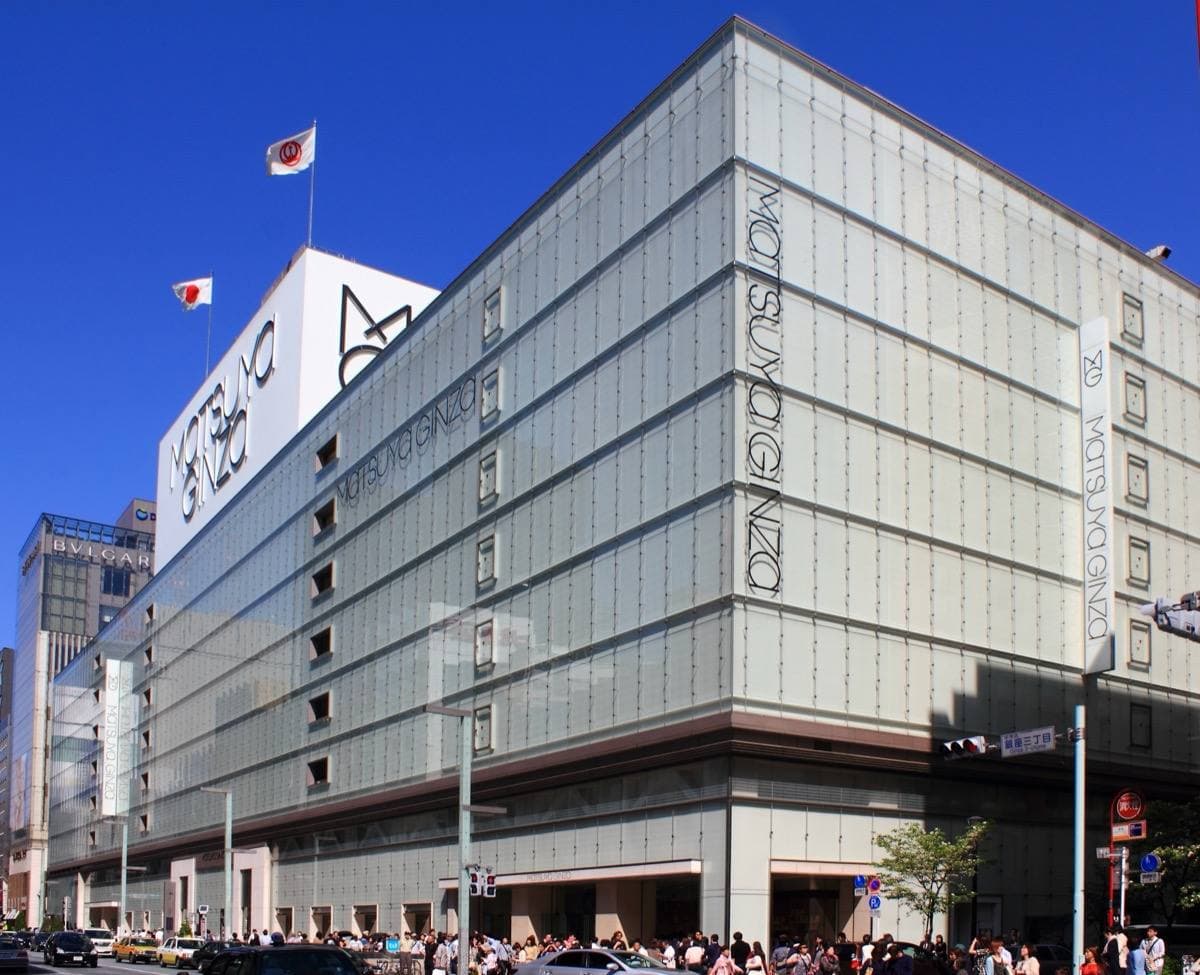
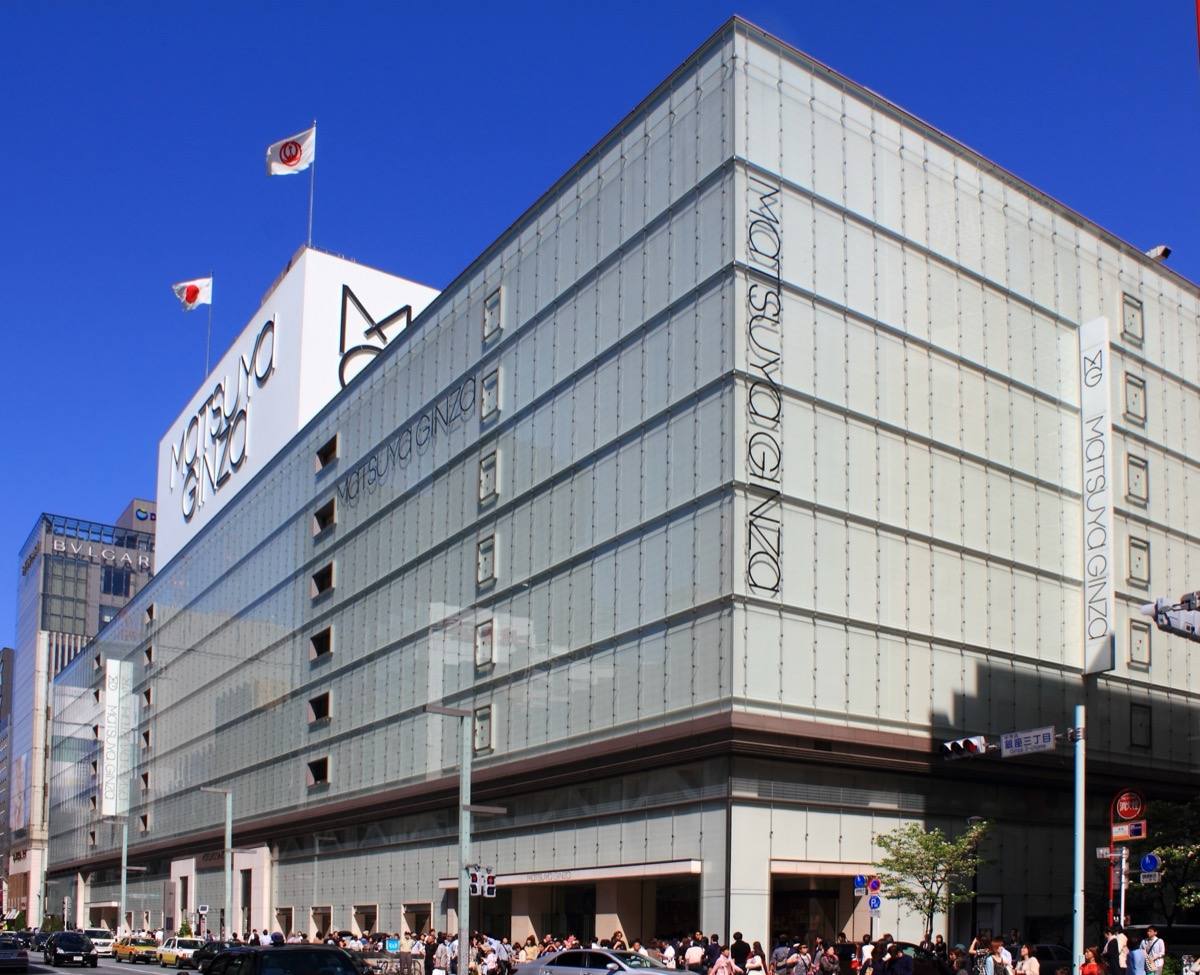
Noriko takes her in-laws on a sightseeing bus past the Imperial Palace towards Ginza, then up to look out from Matsuya.
Ozu filmed on the store’s rooftop observation tower and its side stairs, where Ryū, Higashiyama and Hara stand at the landing.
The store opened on 1 May 1925. After the war it was requisitioned as a PX for the Allies.
A working department store on Chūō-dōri in Ginza.
Where we read it
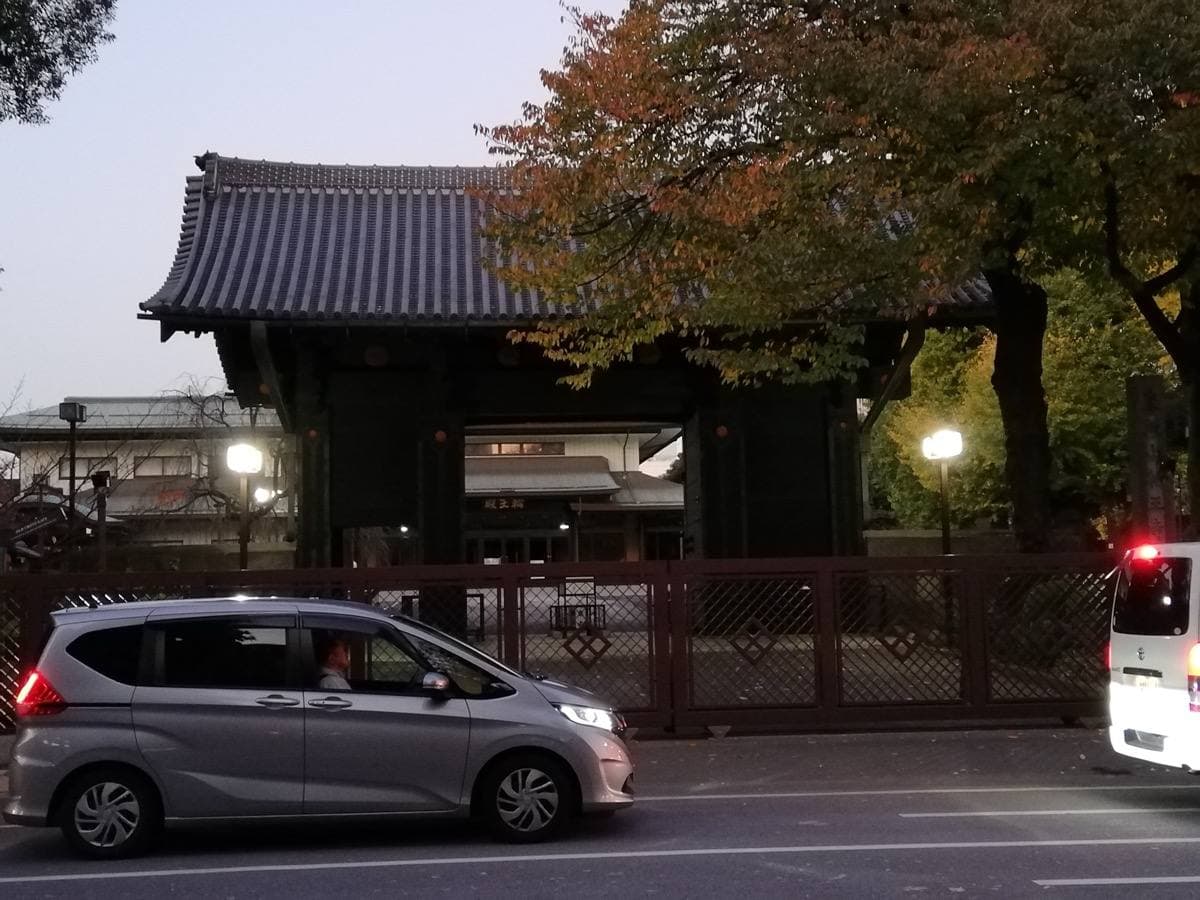
3Kan’ei-ji’s former main gate in Ueno Park, 2021. 先従隗始 · CC0
Nowhere to sleep
Ueno Park, Kan’ei-ji’s old gate
With nowhere to sleep, the couple spend an afternoon in Ueno Park before splitting up for the night.
The scene was shot at Kan’ei-ji’s former main gate and near the Saigō Takamori statue, which stays out of frame.
The gate, called the Black Gate, is an Important Cultural Property from the Kan’ei era. It first stood where the museum’s main gate is now.
Public park. The gate stands at Rinnō-ji, east of the Tokyo National Museum; the Saigō statue is at the park’s south end.
Where we read it
4The Yaesu side of Tokyo Station, 2021. MaedaAkihiko · CC BY-SA 4.0
The night train
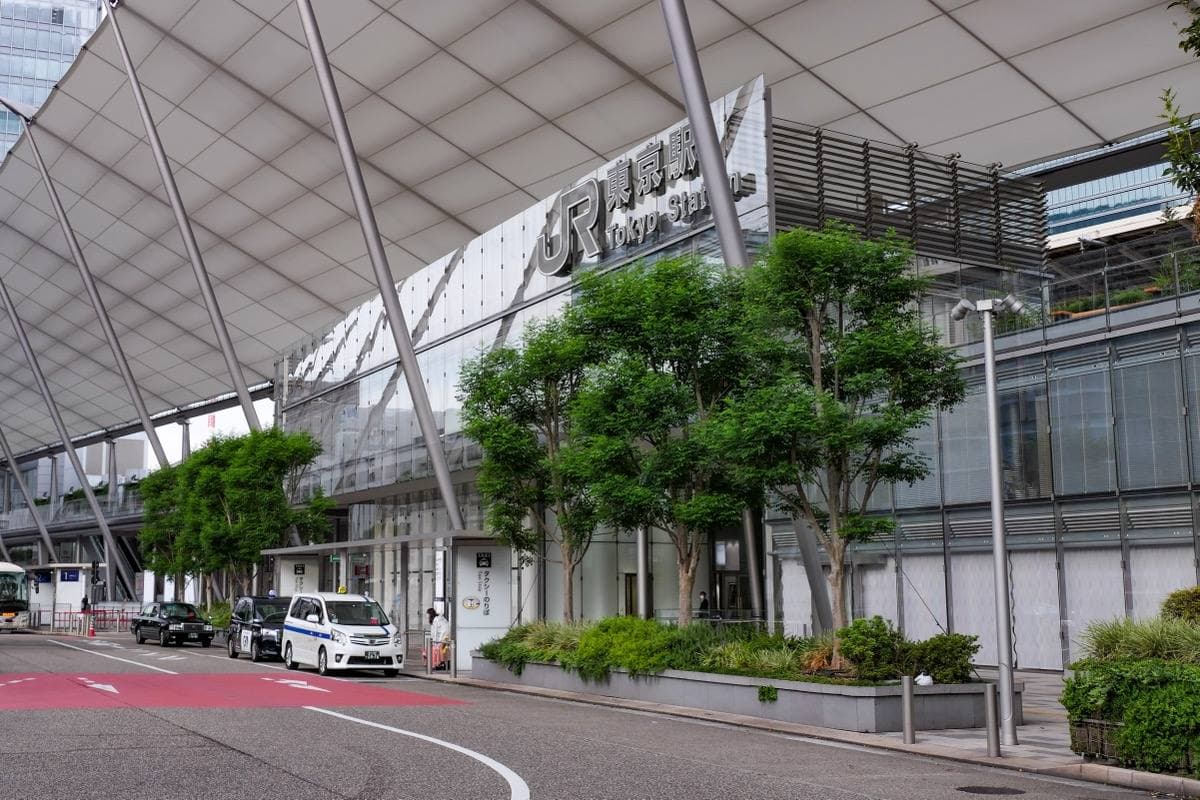
Tokyo Station, Yaesu side
The children see their parents off at night under the departure board on the Yaesu side.
Apart from a passenger carriage, the station waiting area was the only interior not built at Ōfuna.
Open all day. The Yaesu side faces east; the old waiting rooms are long gone.
Where we read it
Viator · Ad / affiliate
Tokyo by sightseeing bus
Tokyo
Live marketplace results for bus tours of central Tokyo, the way Noriko shows her in-laws the city. Check each route for the Imperial Palace and Ginza.
Kyōko teaches at the former Tsutsuyu Elementary School. Ozu filmed its roadside wooden building; it has since been replaced and the school rebuilt further back.
The shooting script had children sketching on a hill above the sea. Onomichi had no suitable hill, so Kyōko watches Noriko’s train from the classroom window instead.
She checks her watch, goes to the window, and the train comes along the line below the houses.
The wooden school seen in the film has gone. Walk the lane below Jōdo-ji; the Sanyō line still runs along the foot of the hill.
Where we read it
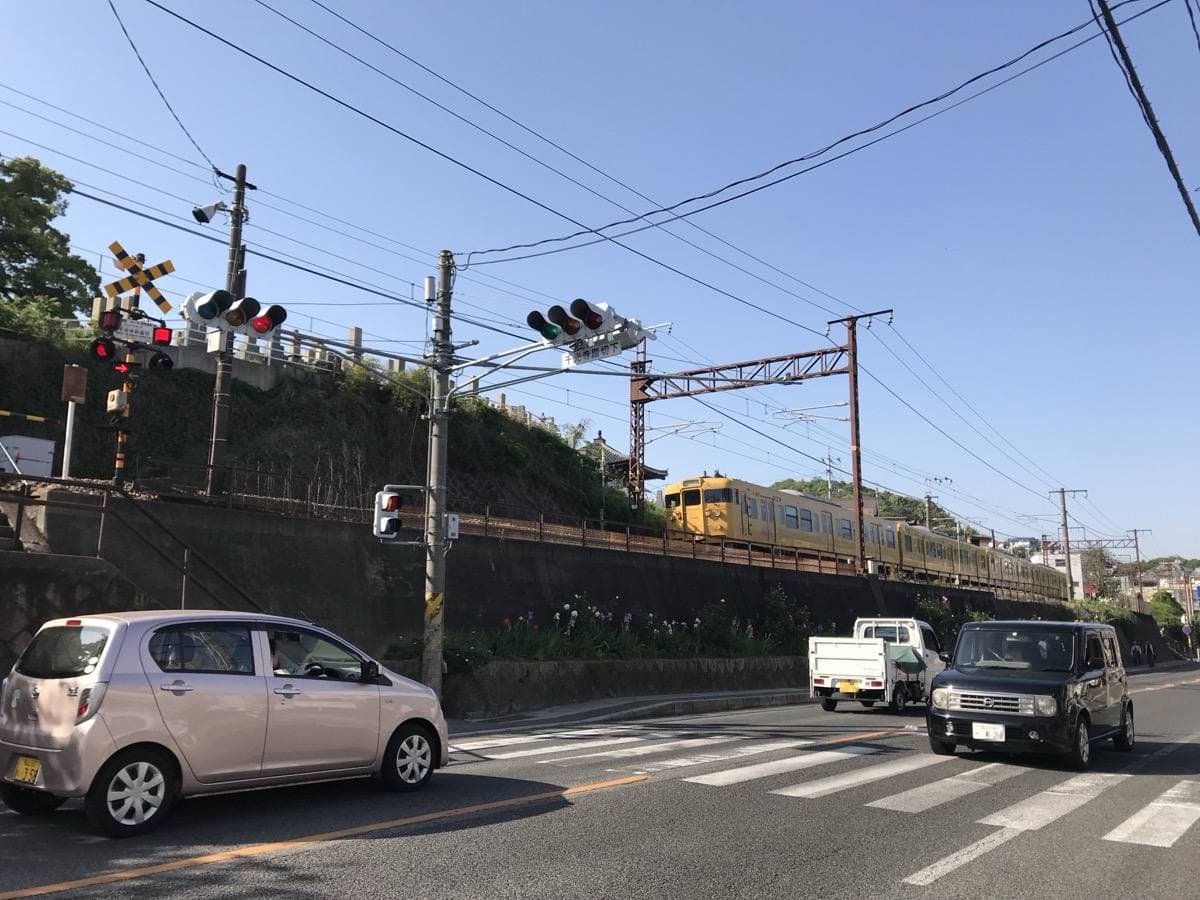
A Sanyō line train through Onomichi at the Senkōji crossing, west of where the old school stood, 2018. そらみみ · CC BY-SA 4.0
Kyōko checks her watch. The line below the houses is empty.
Setsuko Hara and Kyōko Kagawa on the Onomichi waterfront: a Shochiku still from Tokyo Story, 1953. Shochiku · Public domain
Shizuoka · Osaka
A weekend cut short.
Kōichi and Shige send their parents to the spa at Atami. The inn is noisy, they cannot sleep, and they come back early. On the way home Tomi is taken ill on the train.
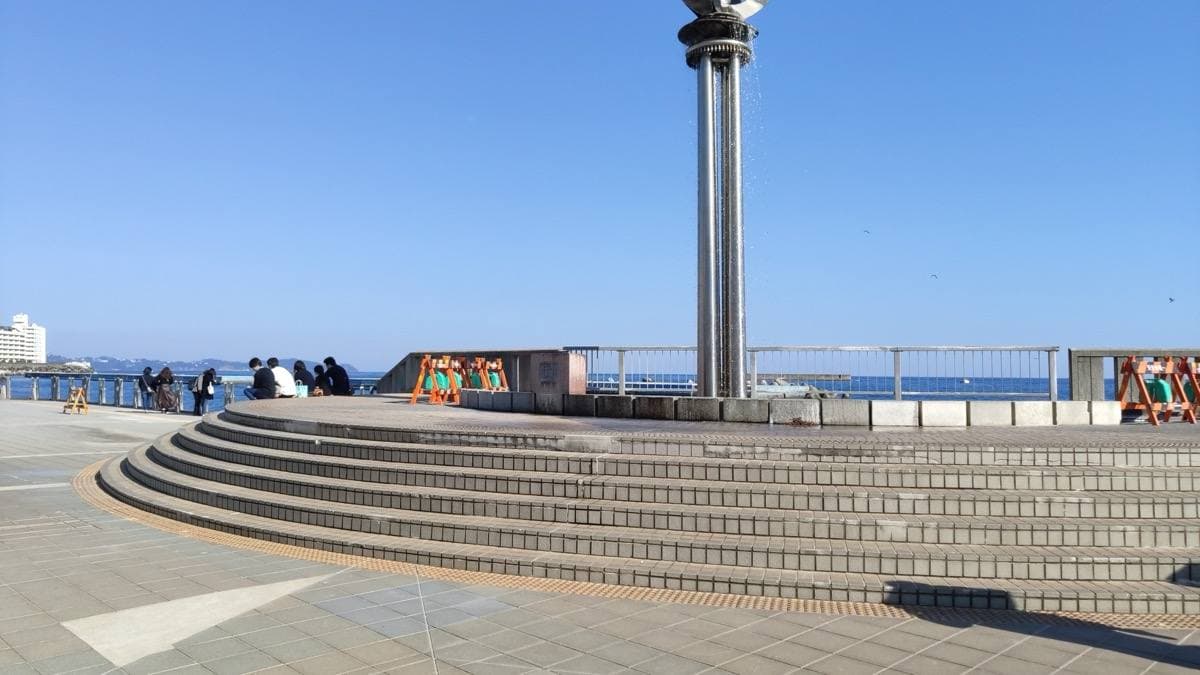
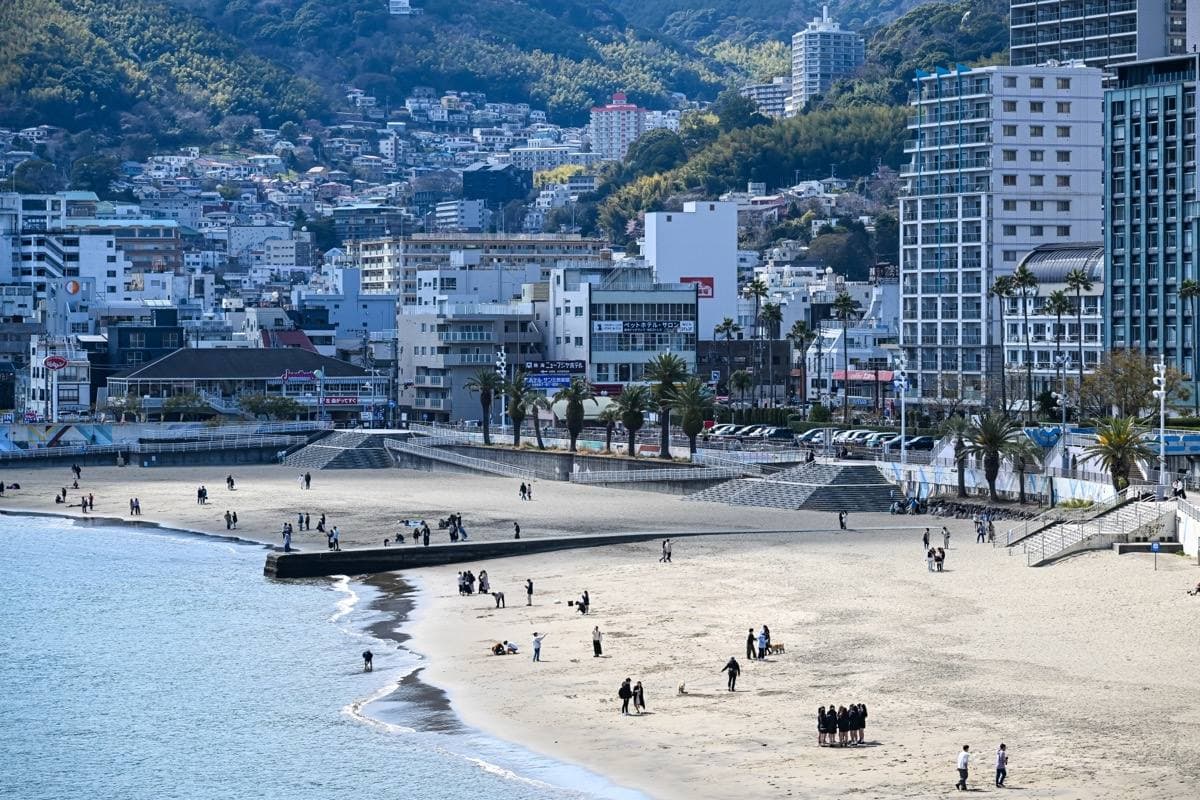
The Moon Terrace on Atami’s waterfront, 2020, where the old seawall ran. Drivephotographer · CC0Atami Sun Beach and the town on the hill, 2024. m-louis .® · CC BY-SA 2.0
Shinsui Park, Nagisa-chō, Atami
Atami seawall, now the Moon Terrace
The couple sit side by side on the seawall, decide to go home, and Tomi stumbles as she gets up. The view from their inn was filmed too.
The seawall has gone; the waterfront is now the Moon Terrace, a stepped park by the sea.
The Atami scenes were first planned for Hibiya Park in Tokyo; the writers moved them to Atami on 2 March 1953.
Sun Beach, beside the terrace, is a man-made beach completed in 1986.
A public waterfront park on the sea, just south of Atami Sun Beach.
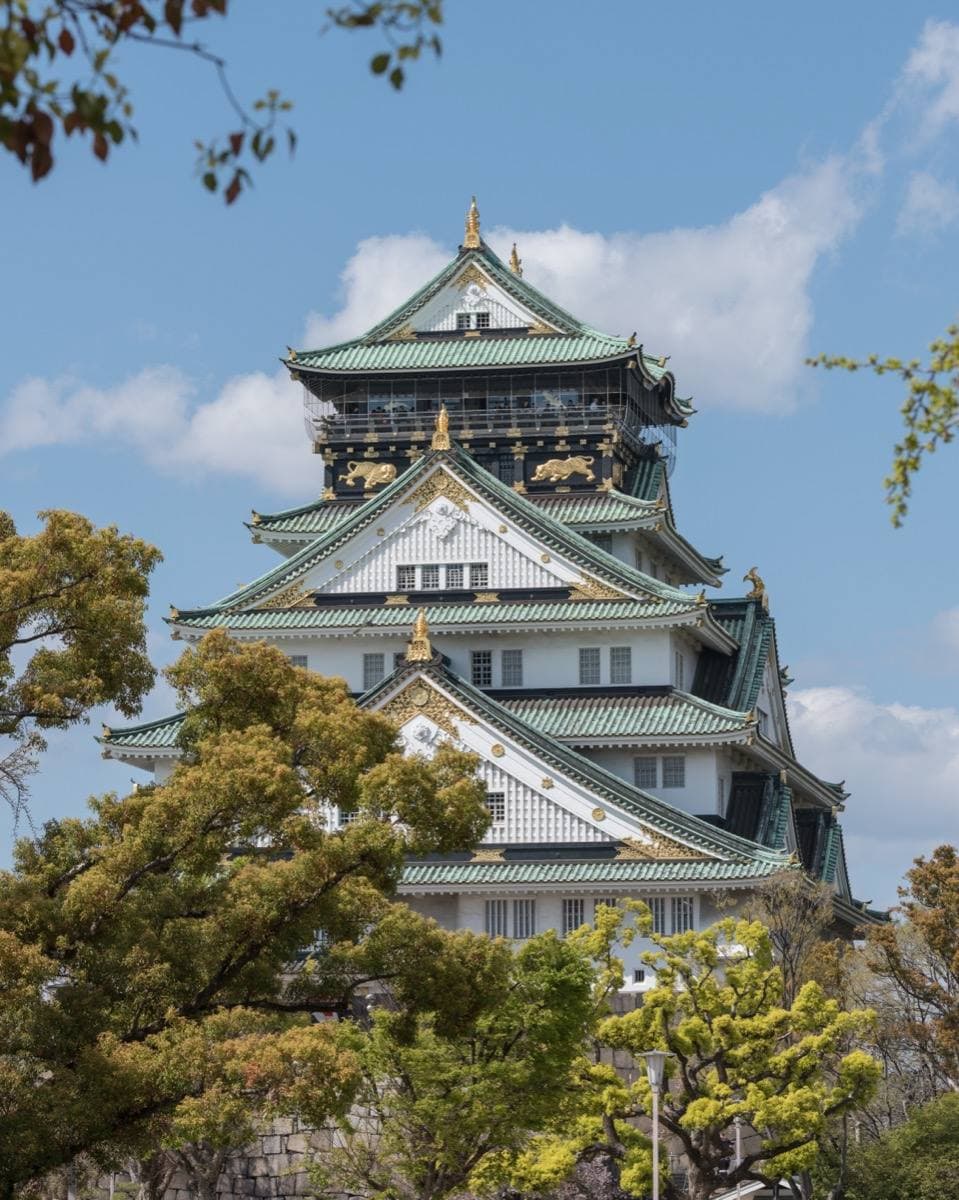
Where we read itThe main tower of Osaka Castle from the south, 2019. DXR · CC BY-SA 4.0
1-1 Osakajō, Chūō, Osaka
Osaka Castle
Tomi is taken ill on the way home and the couple break the journey in Osaka, where their son Keizō lives. The castle keep opens that section.
The concrete keep was built in 1931 and restored in 1997; inside it is a museum.
The castle park is public; the keep houses a museum.
Where we read it
The people
Who made it.
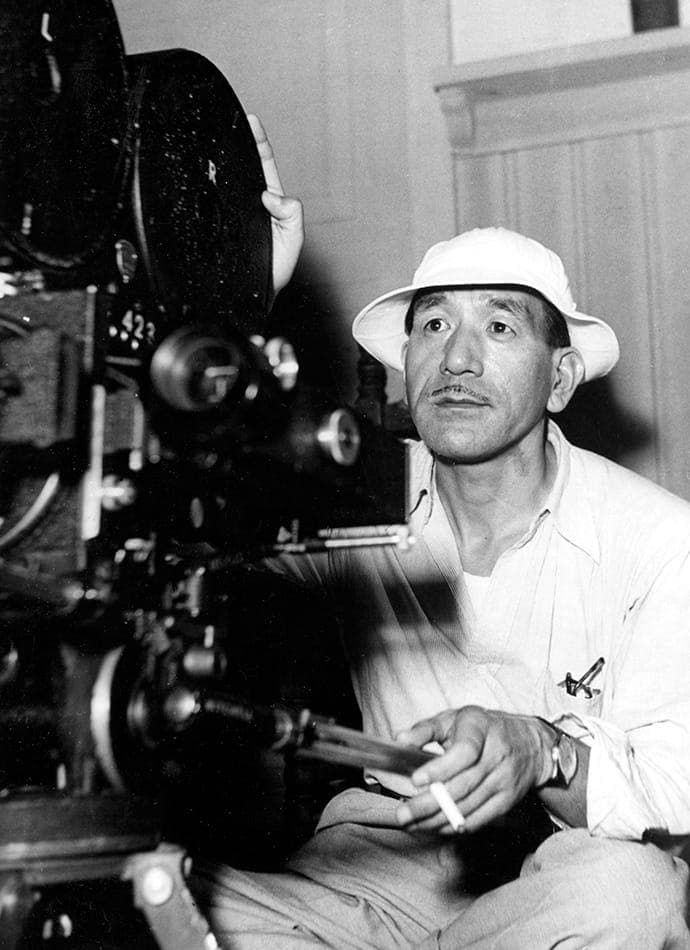
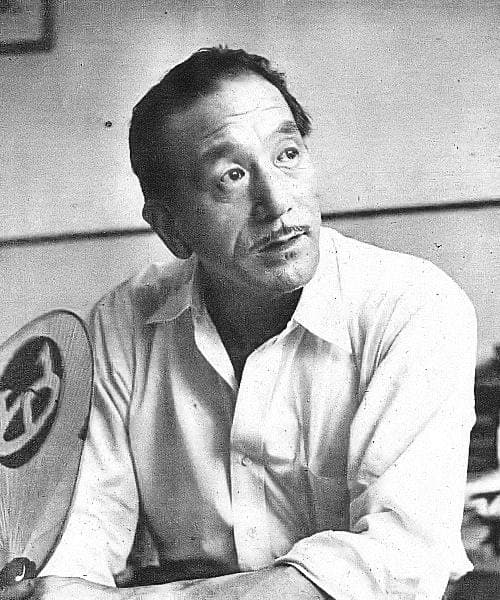
Yasujirō Ozu beside his camera in the 1950s. Unknown author · Public domainYasujirō OzuDirector · 1950s
Yasujirō Ozu in August 1951, two years before Tokyo Story. Unknown author · Public domainYasujirō OzuAugust 1951
Setsuko Hara as Noriko, a Shochiku still from Tokyo Story, 1953. Shochiku · Public domainSetsuko HaraNoriko · 1953
Yasujirō Ozu directed it and wrote it with Kōgo Noda. Chishū Ryū and Chieko Higashiyama play Shūkichi and Tomi; Setsuko Hara is Noriko; Haruko Sugimura is Shige, a part that won her the Mainichi Film Award; So Yamamura is Kōichi and Kyōko Kagawa is Kyōko. Noda suggested the story from Leo McCarey’s Make Way for Tomorrow (1937), which Ozu had not seen.
~15 hoursOnomichi to Tokyo by train in 1953
12–19 AugThe Onomichi location shoot, 1953
3 Nov 1953Released in Japan
1stDirectors’ poll, Sight and Sound, 2012
Where we read it
Cast, writers, the Mainichi award, Make Way for Tomorrow, the release on 3 November 1953 and the 2012 directors’ poll.
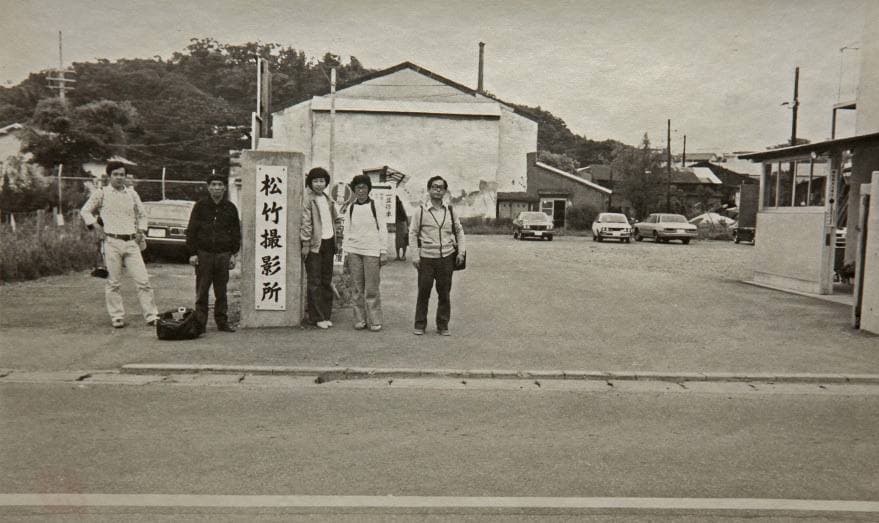
BuiltThe gate of the Shochiku Ofuna studio in 1981. Shōichirō Suzuki · CC BY 4.0
Ōfuna 6-chōme, Kamakura
Shochiku Ōfuna Studio site
Every interior except the Tokyo Station waiting area was built and shot here; set work began on 25 July 1953.
Noriko’s train compartment was a real carriage borrowed from the repair yard at Ōfuna station.
The studio ran from 1936 to 2000. Kamakura Women’s University took over part of the land.
The studio has gone and the site is a university campus. The 1936 founding stone stands by the Sunaoshi River.
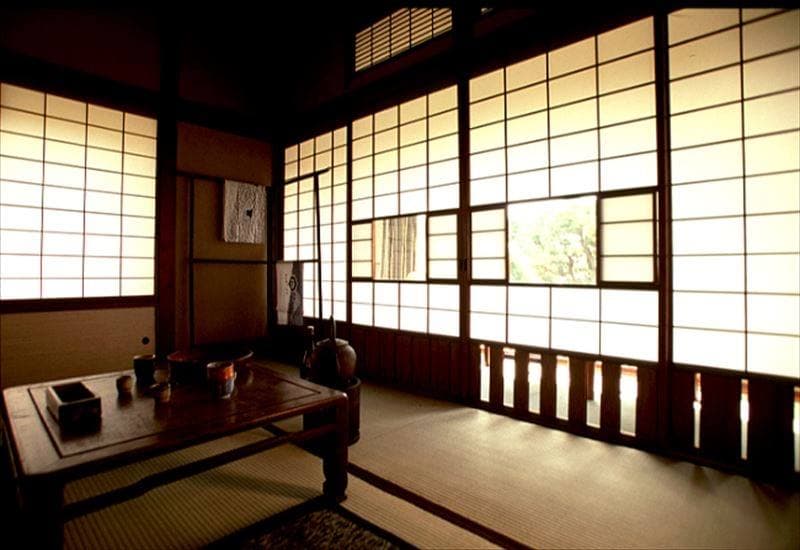
Where we read itWrittenRoom 2 at Chigasakikan, Ozu’s workroom, 2018. 茅ヶ崎の宙 · CC BY-SA 4.0
Nakakaigan 3-chōme, Chigasaki
Chigasakikan
Ozu and Kōgo Noda wrote Tokyo Story here in the spring of 1953.
Ozu first stayed in 1937 and from 1941 used Room 2 as his study. Oil stains from his cooking are said to mark its ceiling.
Founded in 1899, it became Chigasaki’s first registered cultural property in 2009.
An inn on a rise above the Shōnan shore. Contact it directly before visiting or staying.
Where we read it
Go there.
Where it is now
13 places you can visit, from Onomichi to Chigasaki. Kyōko’s school has gone; it is named here and kept off the map.
Pins mark public places; private homes are named but not pinned.
General reference · Public access · Coordinate precision: building · Not an exact scene or camera position; not a visitor route. A working temple on the hillside east of the town centre, about 25 minutes’ walk from Onomichi station. The precinct looks over the railway to the sea.
General reference · Public access · Coordinate precision: building · Not an exact scene or camera position; not a visitor route. A small shrine on the waterfront beside the Central Pier, a short walk east of the station along the channel.
General reference · Public access · Coordinate precision: building · Not an exact scene or camera position; not a visitor route. A working temple up the slope north of the waterfront. Visit quietly; the graveyard is in use.
General reference · Public access · Coordinate precision: building · Not an exact scene or camera position; not a visitor route. A working ryōtei inn on the channel, open to diners and guests by reservation. The street front, gate and wall are listed.
General reference · Public access · Coordinate precision: building · Not an exact scene or camera position; not a visitor route. Open 10:00 to 18:00 (last entry 17:30), closed Tuesdays. Adults ¥520; junior-high age and under free. About 15 minutes’ walk from the station.
1Jōdo-ji’s precinct in 2008: the main hall, with the treasure pagoda to the right. Reggaeman · CC BY-SA 3.0
20-28 Higashikubo-machi, Onomichi
Jōdo-ji
The precinct is the one place in Onomichi where Ozu filmed his actors: Shūkichi watches the dawn and Noriko comes to find him. Every Onomichi interior was a set.
A working temple on the hillside east of the town centre, about 25 minutes’ walk from Onomichi station. The precinct looks over the railway to the sea.
Where we read it
2Sumiyoshi Shrine and the Central Pier on the Onomichi waterfront, 2018. そらみみ · CC BY-SA 4.0
2-10-12 Tsuchidō, Onomichi waterfront
Sumiyoshi Shrine
The shrine’s great stone night lantern is the film’s first shot, the first of five views of Onomichi before anyone speaks.
A small shrine on the waterfront beside the Central Pier, a short walk east of the station along the channel.
Where we read it
3The main hall of Fukuzen-ji, Onomichi, 2019. Arisen · CC BY-SA 4.0
1-9-1 Nagae, Onomichi
Fukuzen-ji
Tomi’s funeral is held at this temple. The ceremony was a set, but five cuts of the graveyard and the hall were filmed here on 17 August 1953.
A working temple up the slope north of the waterfront. Visit quietly; the graveyard is in use.
Where we read it
4Takemuraya’s annex in Onomichi, 2020. Psjk2106 · CC BY-SA 4.0
Kubo 3-chōme, Onomichi
Takemuraya
Ozu, his crew and Ryū, Hara and Kagawa stayed here during the shoot. The owner was a cousin of the screenwriter Yanai Takao, one reason Onomichi was chosen.
A working ryōtei inn on the channel, open to diners and guests by reservation. The street front, gate and wall are listed.
Where we read it
5The Onomichi Film Museum in a Meiji-era warehouse, 2024. Asturio Cantabrio · CC BY-SA 4.0
1-14-10 Kubo, Onomichi
Onomichi Film Museum
The city opened it on 22 April 2000 in one of the Meiji-era warehouses that lined the shore.
Open 10:00 to 18:00 (last entry 17:30), closed Tuesdays. Adults ¥520; junior-high age and under free. About 15 minutes’ walk from the station.
Where we read it
Stay
By the channel.
A converted warehouse on the Onomichi waterfront, a walk from the lantern.
ONOMICHI U2
Hotel Cycle, Onomichi U2
Onomichi · Standard twin from ¥19,800
A hotel inside a converted shipping warehouse on the Onomichi channel, a walk along the water from the Sumiyoshi lantern. Twin rooms for two from ¥19,800; check-in 15:00.
Walking tours of Onomichi’s temples and sightseeing buses through central Tokyo.
Viator · Ad / affiliate
Onomichi on foot
Onomichi
Live marketplace results for walking tours of Onomichi’s temples and slopes. None is built round this film; check each route for Jōdo-ji and the waterfront.
Live marketplace results for bus tours of central Tokyo, the way Noriko shows her in-laws the city. Check each route for the Imperial Palace and Ginza.
Dates, prices, rooms and stock change: confirm with the provider before you travel or buy. A stay or tour is described as a filming location only where the card says so.
The reel
Every place and moment behind this page, with sources.
14 of 14 places · 14 of 14 Moments
Jōdo-ji
20-28 Higashikubo-machi, Onomichi
Dawn
After Tomi dies, Shūkichi watches the sunrise in the temple grounds and Noriko comes to find him.
Sumiyoshi Shrine
2-10-12 Tsuchidō, Onomichi waterfront
The first shot
The film opens on the Sumiyoshi lantern, then the waterfront, a freight train below Jōdo-ji and the cliff, before anyone speaks.
Fukuzen-ji
1-9-1 Nagae, Onomichi
The funeral
The family gather for Tomi’s funeral at the temple.
Kyōko’s school
Former Tsutsuyu Elementary School, Higashikubo-machi, Onomichi
The window
Kyōko checks her watch in class and watches Noriko’s train go by.
Takemuraya
Kubo 3-chōme, Onomichi
Where the crew slept
Ozu’s crew and three of his actors stayed at the inn through the Onomichi shoot.
Onomichi Film Museum
1-14-10 Kubo, Onomichi
Horikiri station and the Arakawa bank
Horikiri station, Senju-Akebonochō and Yanagihara 1-chōme, Adachi
The edge of Tokyo
Chimneys, a suburban platform and the Arakawa bank announce Kōichi’s clinic on the city’s edge.
On the bank
Tomi sits on the embankment while her grandson plays alone.
Ueno Park, Kan’ei-ji’s old gate
Rinnō-ji, Ueno Park, Taitō
Nowhere to sleep
Turned out for the evening, the couple spend the afternoon in Ueno Park.
Matsuya Ginza
Ginza 3-chōme, Chūō
The view from Matsuya
Noriko takes her in-laws on the sightseeing bus and up to the department store roof.
Tokyo Station, Yaesu side
Yaesu, Chiyoda
The night train
The children see their parents off under the departure board.
Atami seawall, now the Moon Terrace
Shinsui Park, Nagisa-chō, Atami
The seawall
At Atami the couple sit on the seawall and decide to go home early.
Osaka Castle
1-1 Osakajō, Chūō, Osaka
Osaka
Tomi falls ill on the train and they stop in Osaka with Keizō.
Shochiku Ōfuna Studio site
Ōfuna 6-chōme, Kamakura
The sets
The family’s houses, the clinic and the salon were all built on the Ōfuna stages.