Records Frankie Knuckles played at the Warehouse were sold from a bin marked Warehouse Music.
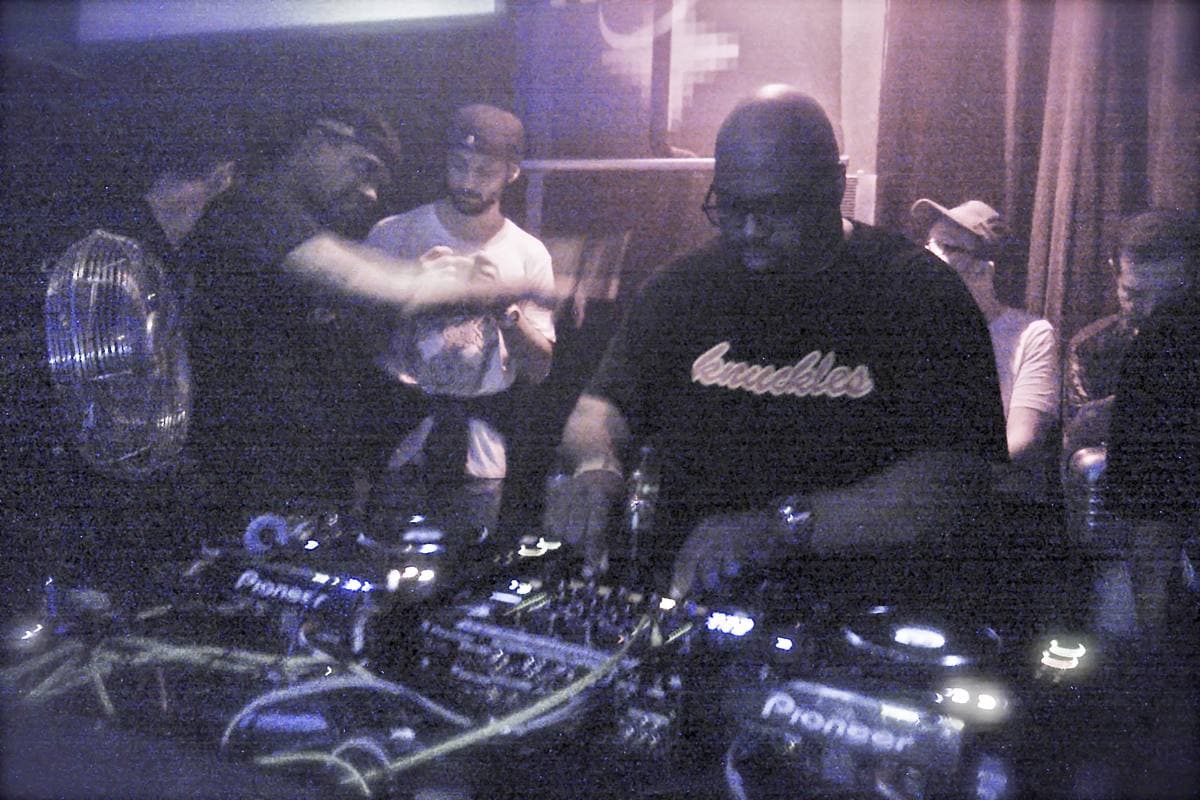
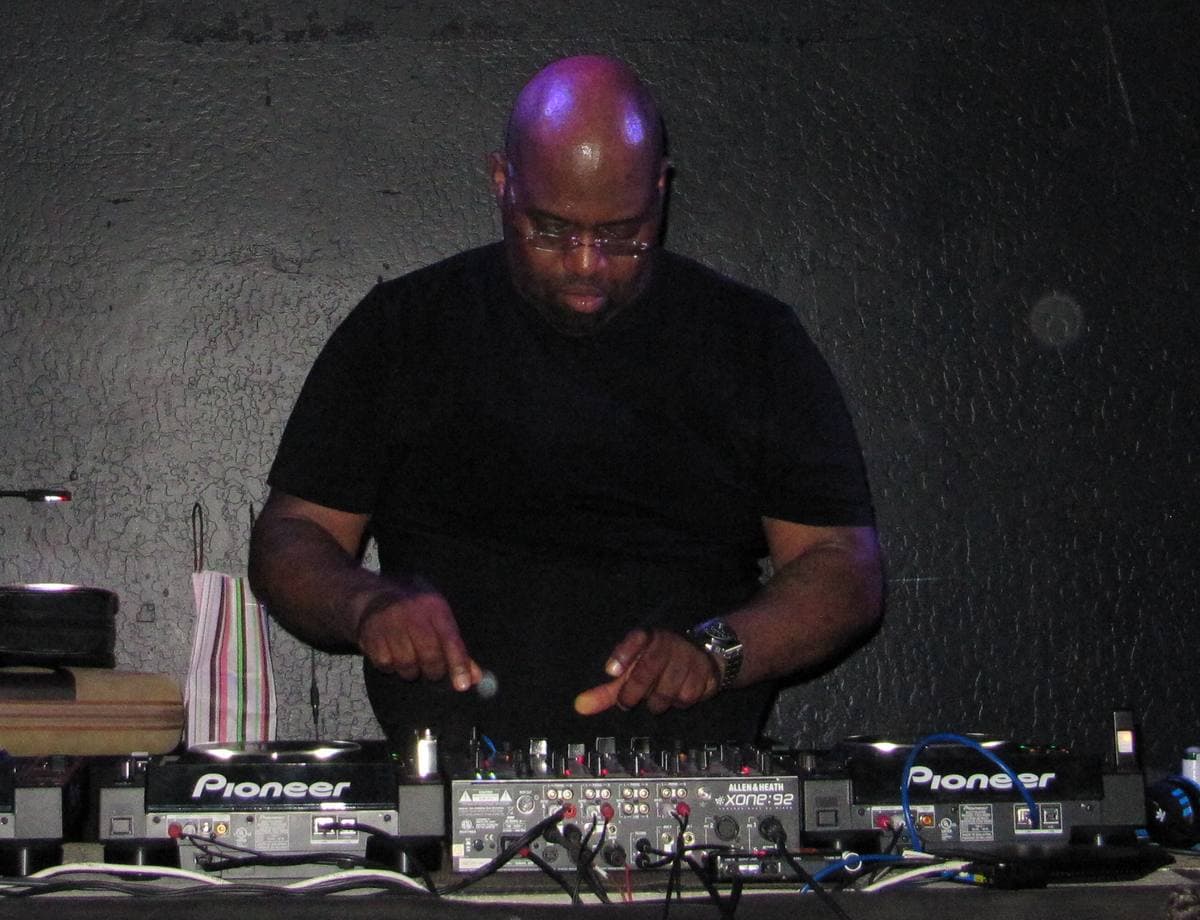
Frankie Knuckles at the decks in Amsterdam during ADE, October 2012: no free photograph of him from the Warehouse years has turned up. deepstereo · CC BY 2.0
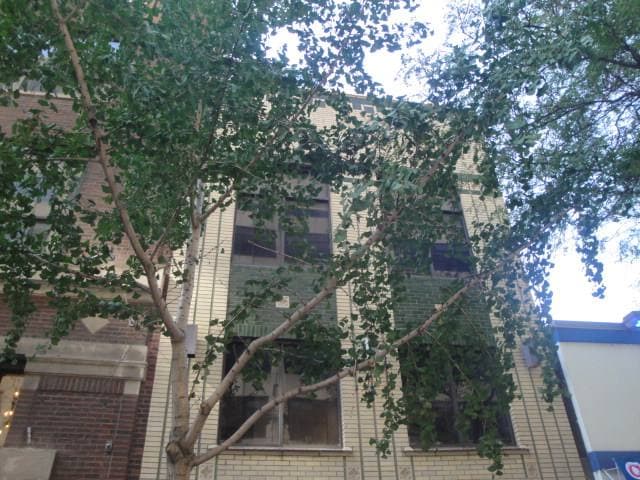
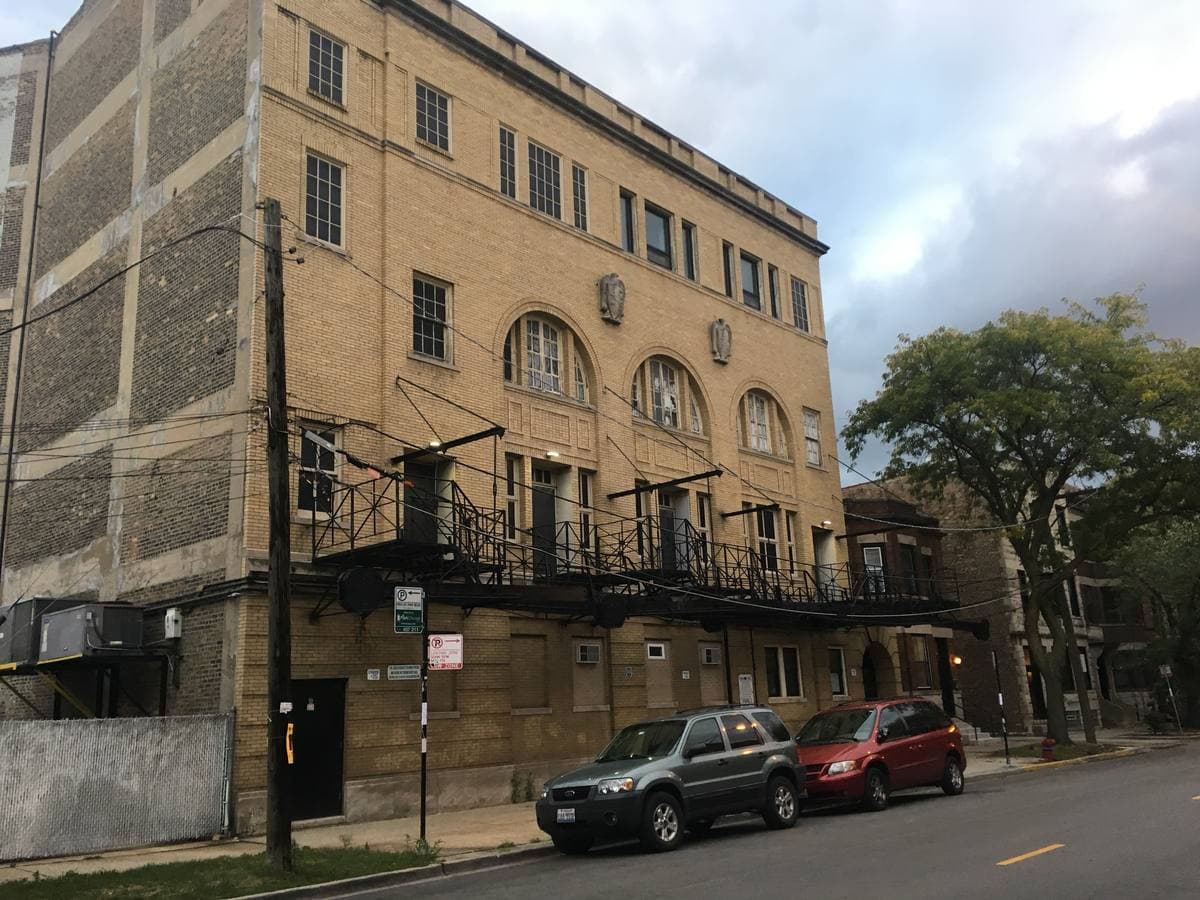
206 South Jefferson Street in October 2024, behind a street tree: the Warehouse building, a Chicago landmark since 2023. Te-tukk · CC BY-SA 4.0
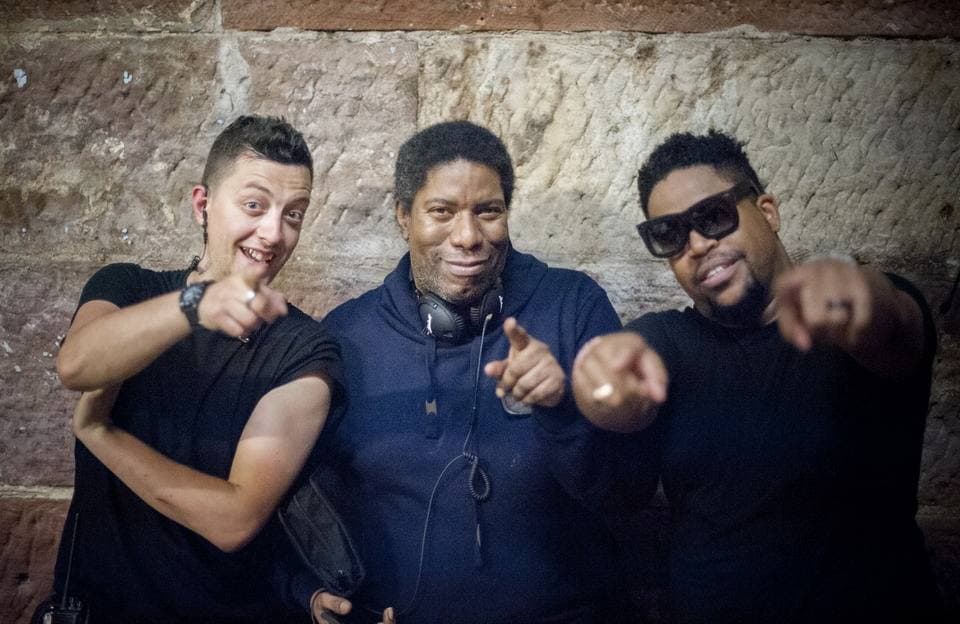
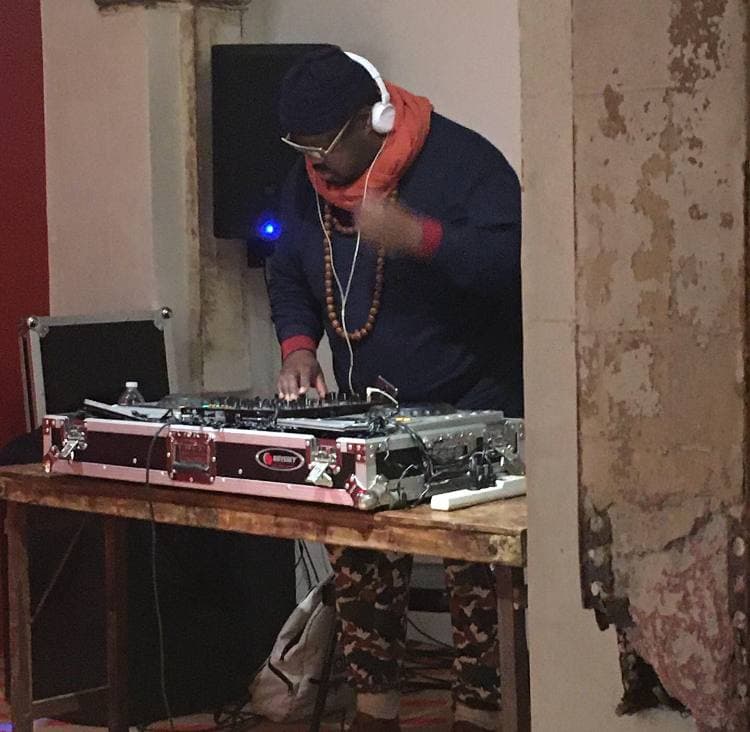
Marshall Jefferson (centre, navy hoodie and headphones) at The Arches, Glasgow, in 2013, with Felix Da Housecat on the right. No free photograph of him from the 1980s has turned up. TheArches · CC BY 2.0
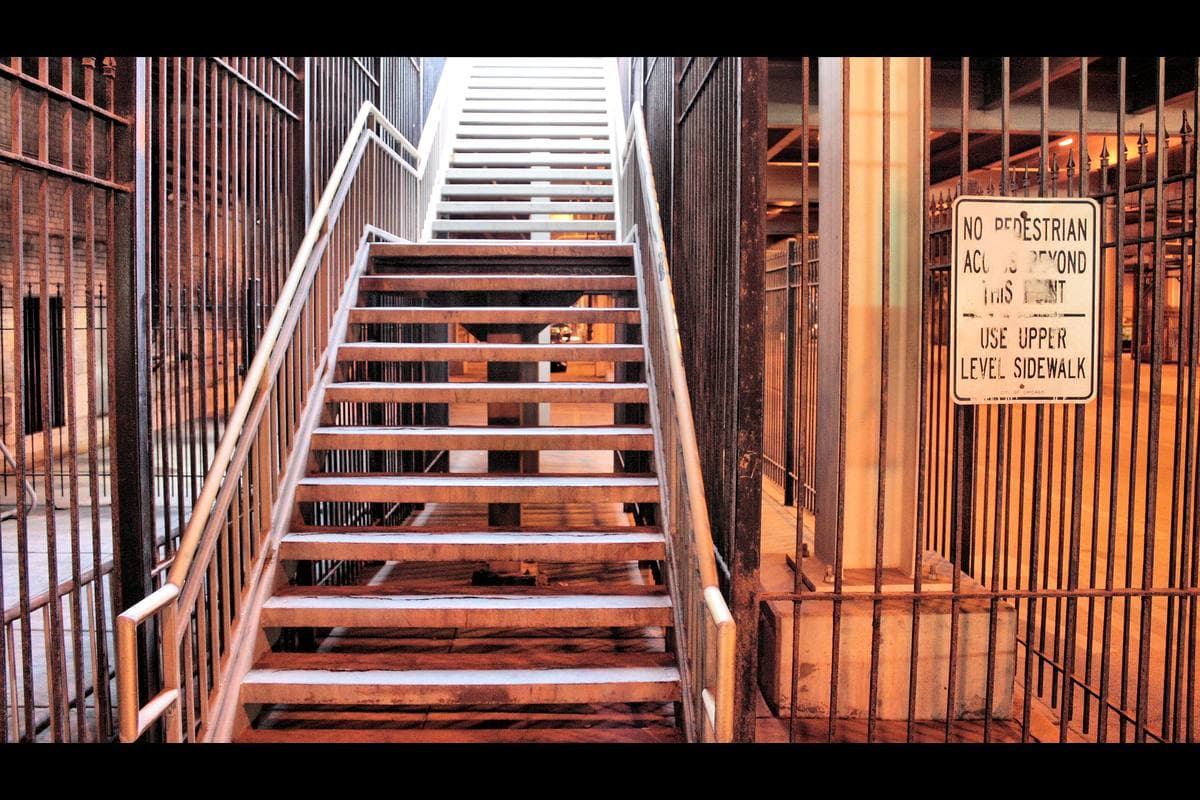
A stairway down to Lower Michigan Avenue at Wacker Drive, 2012: the level of the street where the Music Box had its door. Phil Roeder · CC BY 2.0
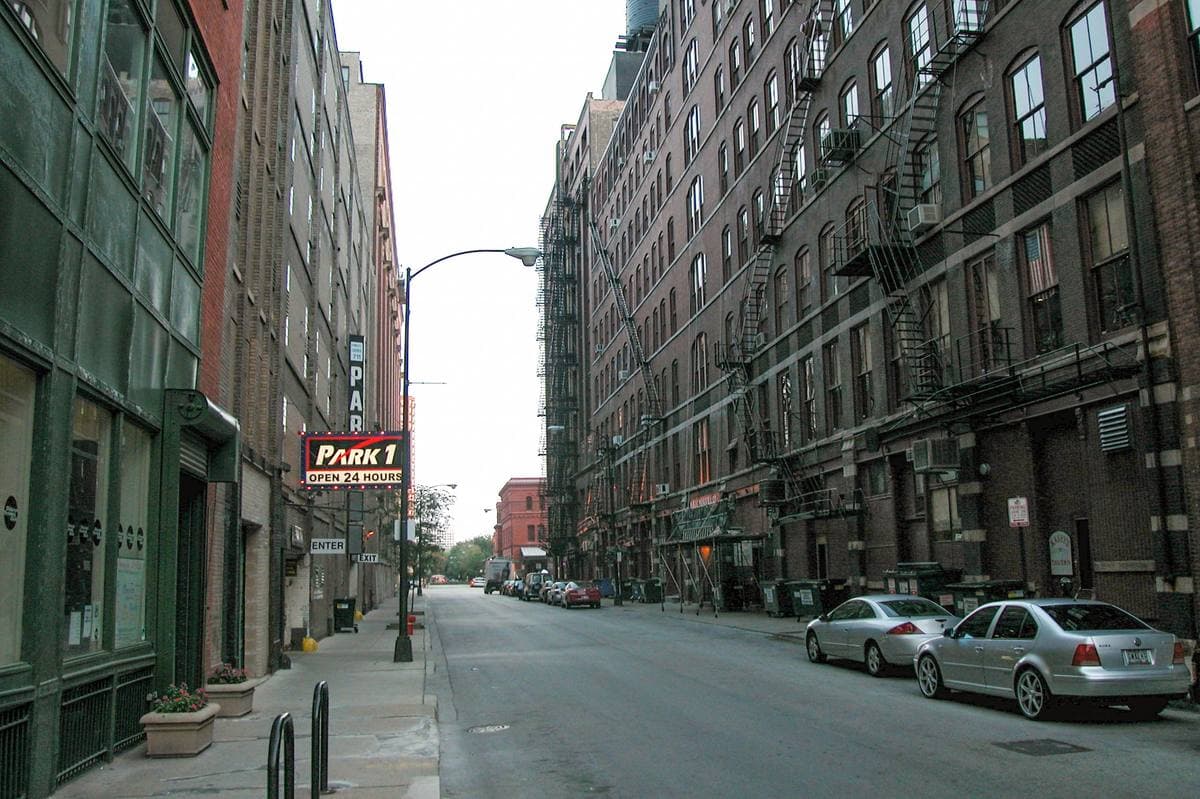
Looking south down Plymouth Court in Printer’s Row, 2002, by the garage at number 711. David Wilson · CC BY 2.0
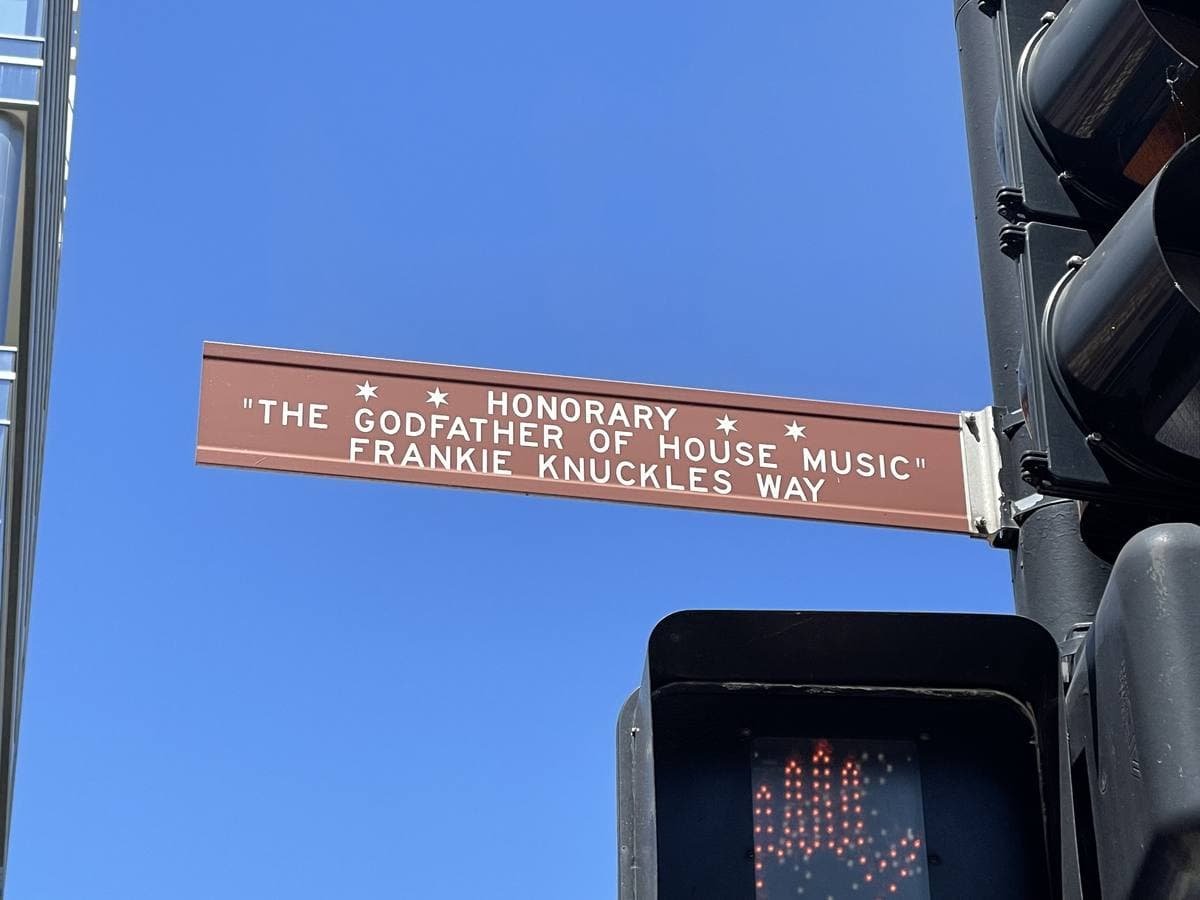
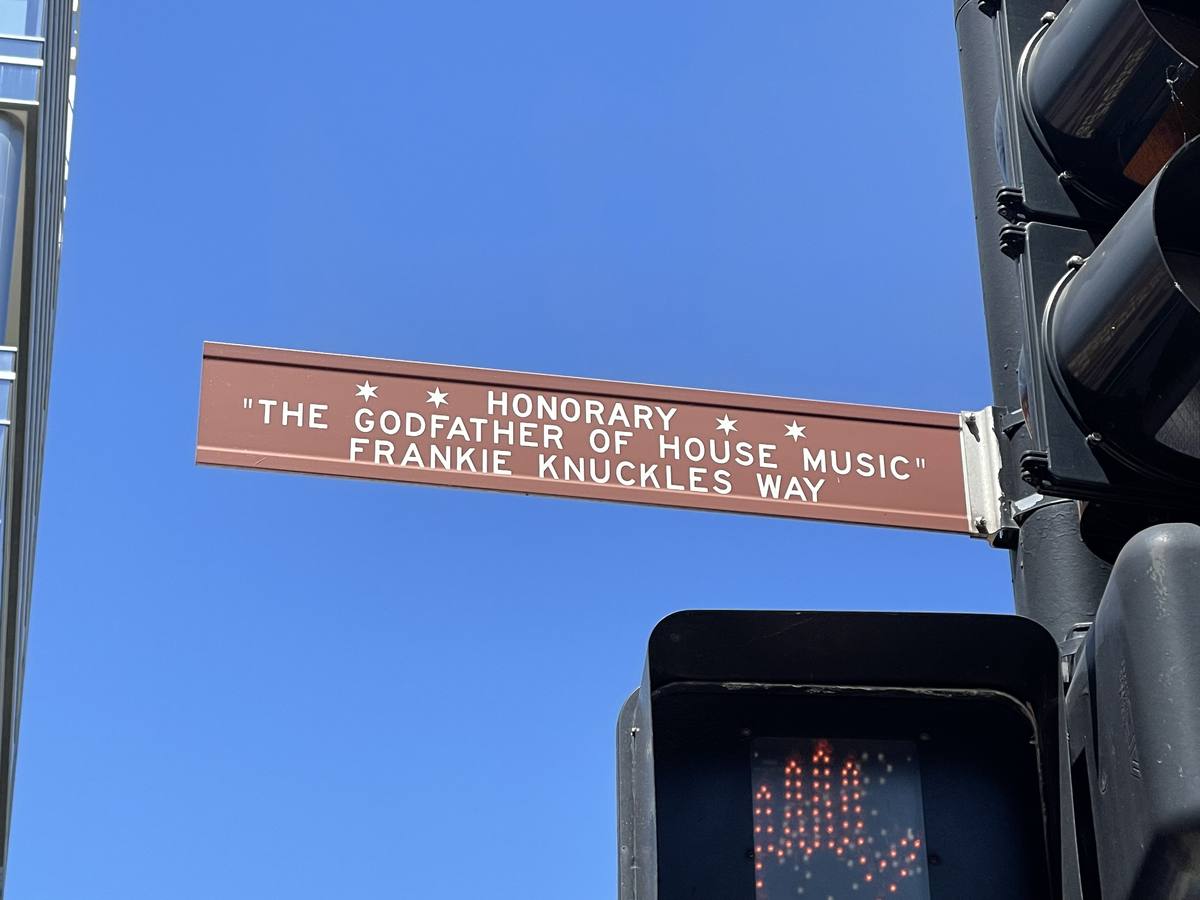
The honorary street sign on Jefferson Street, June 2022. Missvain · CC BY 4.0
Lift a sleeve out of the bin.
206
206 South Jefferson · 1977 to 1982
Saturday night, Sunday afternoon.
Open
Saturday night
Close
Sunday afternoon
Nights a week
One
The Warehouse, a three-storey building, opened as a club in 1977, conceived as Chicago’s answer to the New York club scene, and closed in 1982.
Owner Robert Williams brought Frankie Knuckles from New York to play it; Larry Levan had turned the residency down.
It opened one day a week, Saturday night through to Sunday afternoon. Knuckles remembered a crowd that was mostly Black and mostly gay, aged about 18 to 35, for whom it was church.
The City Council made it a Chicago landmark on 21 June 2023, protecting the front and roofline. The building now holds law offices.
Law offices now. See the landmark front from Jefferson Street; the building is not open to visitors.
Sources
About 1980–81
Knuckles starts re-editing records on reel-to-reel when the disco labels stop sending uptempo dance records. He told Frank Broughton the edits were new to the crowd because they had never heard them before.
206 South Jefferson Street in October 2024, behind a street tree: the Warehouse building, a Chicago landmark since 2023. Te-tukk · CC BY-SA 4.0Frankie Knuckles playing at The Mighty, San Francisco, February 2012. HaeB · CC BY-SA 4.0
The honorary street sign on Jefferson Street, June 2022. Missvain · CC BY 4.0
South Jefferson Street between Monroe and Van Buren, West Loop
Frankie Knuckles Way
In 2004 this stretch of Jefferson Street became honorary “The Godfather of House Music” Frankie Knuckles Way.
The city declared 25 August 2004 Frankie Knuckles Day. The Illinois House says the push was led by the then State Senator Barack Obama.
Knuckles won the 1997 Grammy for Remixer of the Year and died on 31 March 2014.
A public street. The honorary signs hang at the crossings on Jefferson between Monroe and Van Buren.
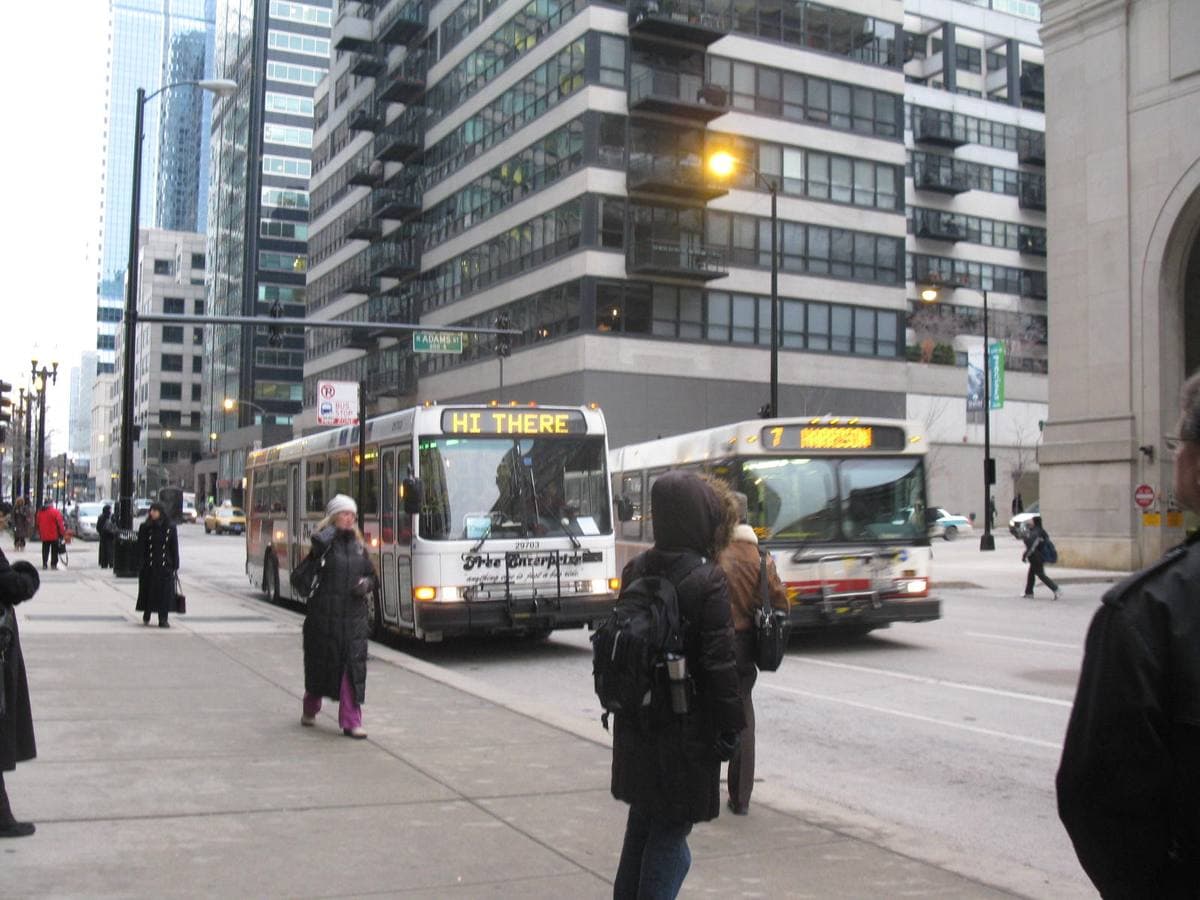
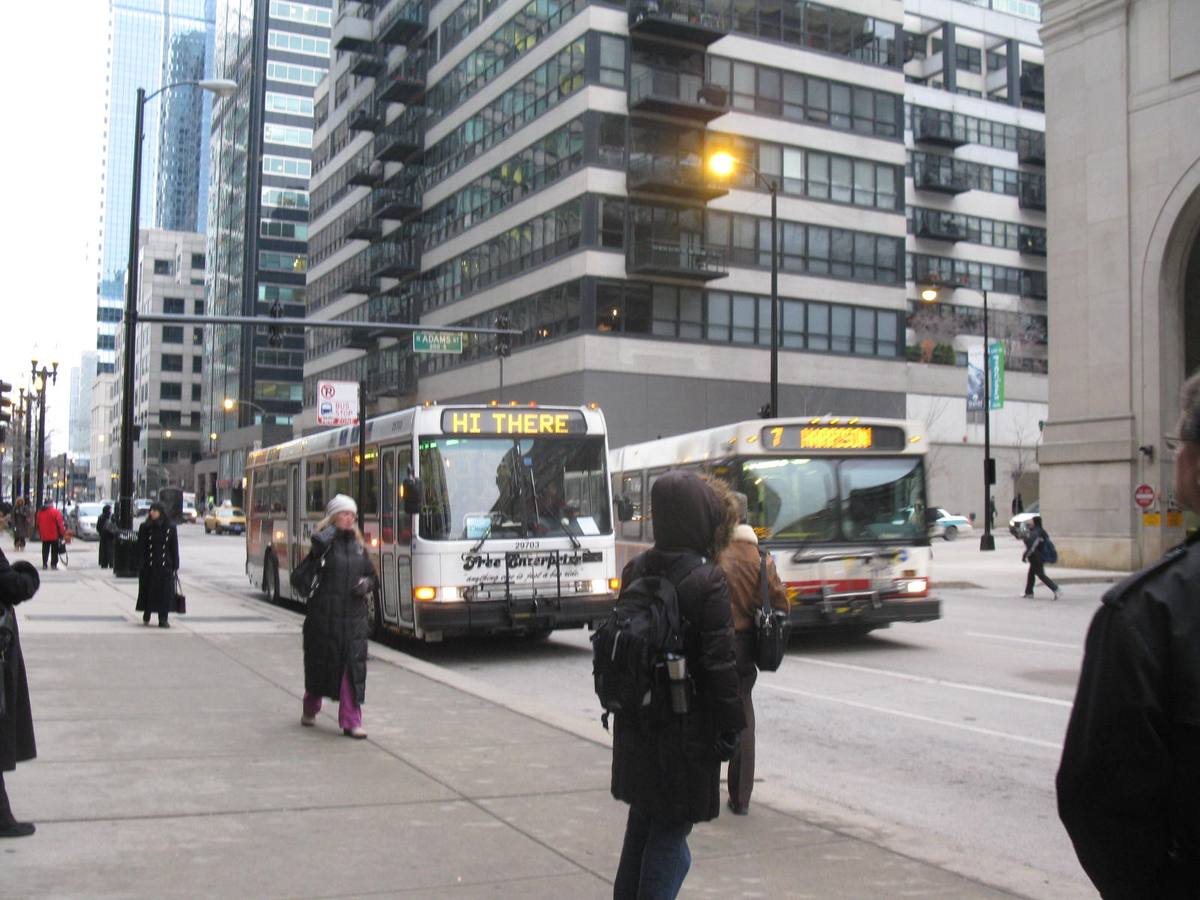
SourcesAdams Street at Clinton Street in 2011, a block from 555 West Adams: the street, not the old club. David Wilson · CC BY 2.0
555 West Adams Street, West Loop
The Bowery
Choose Chicago lists the Bowery, at 555 West Adams, as another former club where Knuckles played, near the Warehouse.
No club here now. The address is a block east of the Warehouse; the photograph shows the street, not the club.
Sources
The Hoxton
The Hoxton, Chicago
West Loop, Chicago
182 rooms at Lake and Green in the Fulton Market District, a short walk north of the Warehouse, with a rooftop pool. Booking direct gives early check-in and late check-out at no charge, and free cancellation until 2pm the day before.
Looking south down Plymouth Court in Printer’s Row, 2002, by the garage at number 711. David Wilson · CC BY 2.0
711 South Plymouth Court, Printer’s Row
Importes Etc.
Paul Weisberg ran a record pool from his father’s garage at 711 South Plymouth Court from early 1979; in March 1981 an unused loading dock there became the shop.
It had a “Warehouse Music” section for the records Knuckles played. By one account Dick Guenther first cut the sign to “House Music”; Chip E. says he did.
Frank Sells bought all 1,000 copies of Jesse Saunders’s On and On for the shop when it was pressed at the start of 1984.
Importes closed in 1991 after ten years. Derrick Carter worked there in its early days.
The shop is long gone. Walk down Plymouth Court in Printer’s Row from Polk Street.
Sources
ATrax
Side A: Trax
Larry Sherman co-founded Trax in 1984 with Vince Lawrence and Jesse Saunders, whose On and On, written with Lawrence the year before, is widely called the first house record.
Trax worked out of Precision Records Labs, so a record could go from studio to lathe and be tried by a DJ that same night.
Sherman pressed on cheap vinyl recycled from disco-era stock. Benji Espinoza says he pressed a record for 30 cents and sold it on for three dollars.
Marshall Jefferson says he paid Sherman $1,500 to press 1,000 copies of Move Your Body.
Marshall Jefferson (centre, navy hoodie and headphones) at The Arches, Glasgow, in 2013, with Felix Da Housecat on the right. No free photograph of him from the 1980s has turned up. TheArches · CC BY 2.0
Marshall Jefferson · Move Your Body
The tune came to him at his job at the Post Office. He recorded the piano, bass and drums at home, and three friends from work, Curtis McClain, Rudy Forbes and Thomas Carr, wrote the verse and backing vocals in the studio.
Larry Sherman first told him it was not house music, because of the piano. It was pressed 13 months later.
In 1984 Williams took over a space beneath downtown’s double-decked streets. There was no sign, only an orange 326 sprayed by the door. Ron Hardy sped records up, played bare beats and breaks, added reverb and train and spaceship effects, and ran songs backwards on his reel-to-reel.
×0
Move Your Body is on the deck. Press Again.
326
Marshall Jefferson, on cassette · the story counts 6 plays
A stairway down to Lower Michigan Avenue at Wacker Drive, 2012: the level of the street where the Music Box had its door. Phil Roeder · CC BY 2.0
326 North Lower Michigan Avenue, under the Loop
The Music Box at 326
In 1984 Williams took over a space beneath downtown’s double-decked streets. There was no sign, only an orange 326 sprayed by the door.
Ron Hardy sped records up, played bare beats and breaks, added reverb and train and spaceship effects, and ran songs backwards on his reel-to-reel.
Spanky of Phuture says Hardy played Acid Tracks at least four times on its first night here, and the fourth time the crowd lost their minds.
A city ordinance in January 1987 cut the hours of juice bars like this one, and the club was shut.
Lower Michigan Avenue is a working service road under the street. Look from the stairs at Wacker Drive; there is no club to go into.
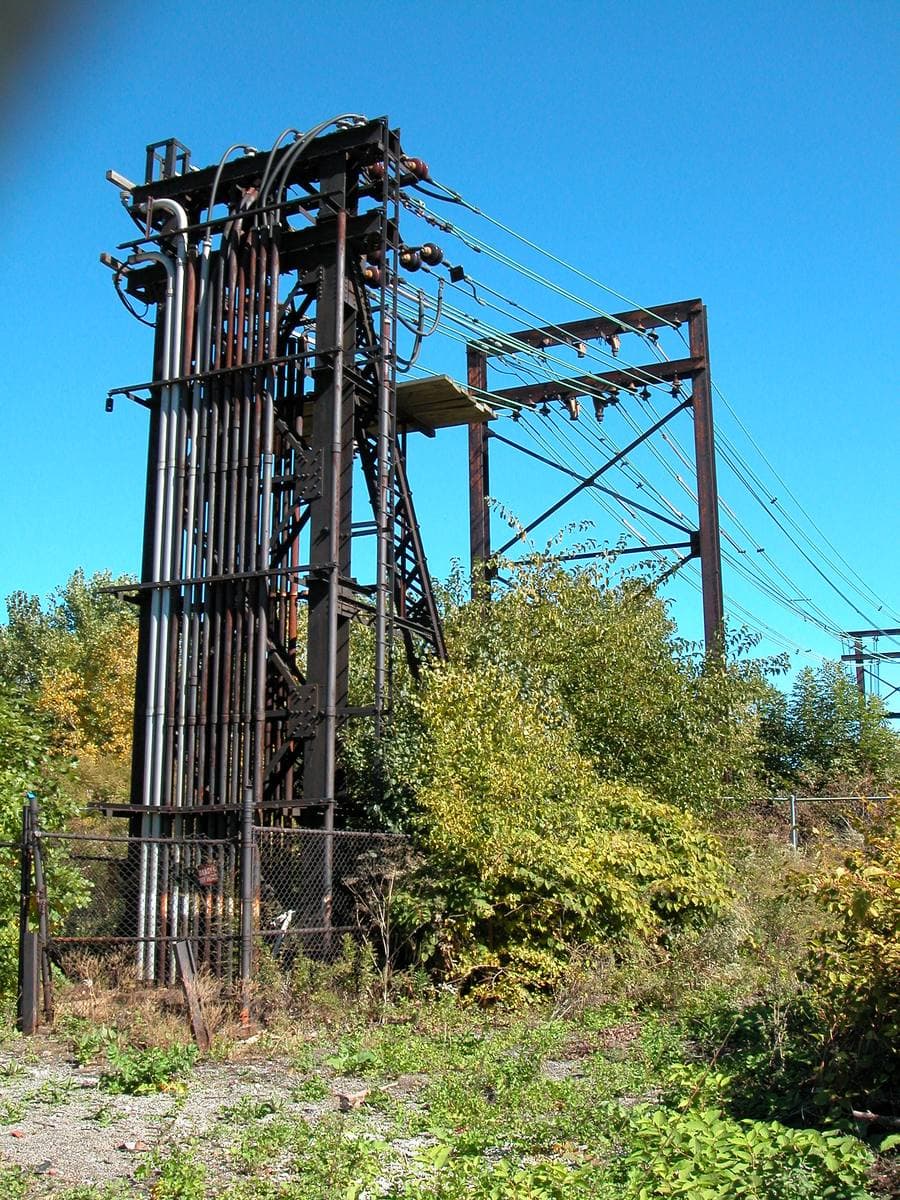
SourcesOld rail structures by 16th Street in 2004, a block from 1632 South Indiana: the neighbourhood, not the building. David Wilson · CC BY 2.0
1632 South Indiana Avenue, South Loop
The first Music Box
Knuckles left the Warehouse to found the Power Plant in November 1982, and Robert Williams lost his lease.
Williams opened the Music Box here in February 1983, in a former industrial building, with Ron Hardy playing. It lasted about a year before the building was condemned.
Williams changed the spelling to Muzic Box early on, after mix-ups with the Music Box Theatre.
The address only. The photograph shows the rail-side neighbourhood a block away, not the building.
Sources
No free photograph of Ron Hardy exists; he is here in what people remember of his nights.
1977 to 1990 · 7 addresses
The party moves.
When a lease went, a building was condemned or the law changed, the night found another door. 4 of the 12 places in this World are gone.
1977–1982: The Warehouse, 206 South Jefferson.
206 South Jefferson Street in October 2024, behind a street tree: the Warehouse building, a Chicago landmark since 2023. Te-tukk · CC BY-SA 4.0
206 South Jefferson Street, West Loop, Chicago
The Warehouse
The Warehouse, a three-storey building, opened as a club in 1977, conceived as Chicago’s answer to the New York club scene, and closed in 1982.
Owner Robert Williams brought Frankie Knuckles from New York to play it; Larry Levan had turned the residency down.
It opened one day a week, Saturday night through to Sunday afternoon. Knuckles remembered a crowd that was mostly Black and mostly gay, aged about 18 to 35, for whom it was church.
The City Council made it a Chicago landmark on 21 June 2023, protecting the front and roofline. The building now holds law offices.
Law offices now. See the landmark front from Jefferson Street; the building is not open to visitors.
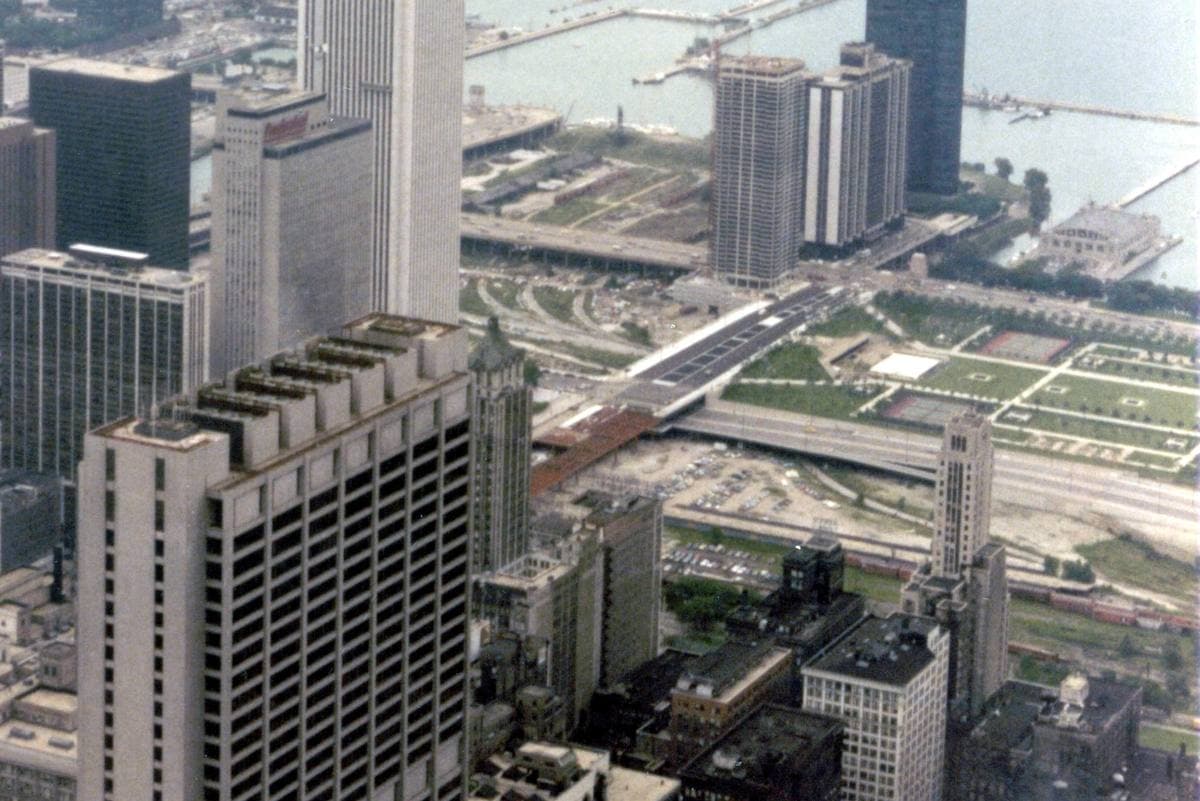
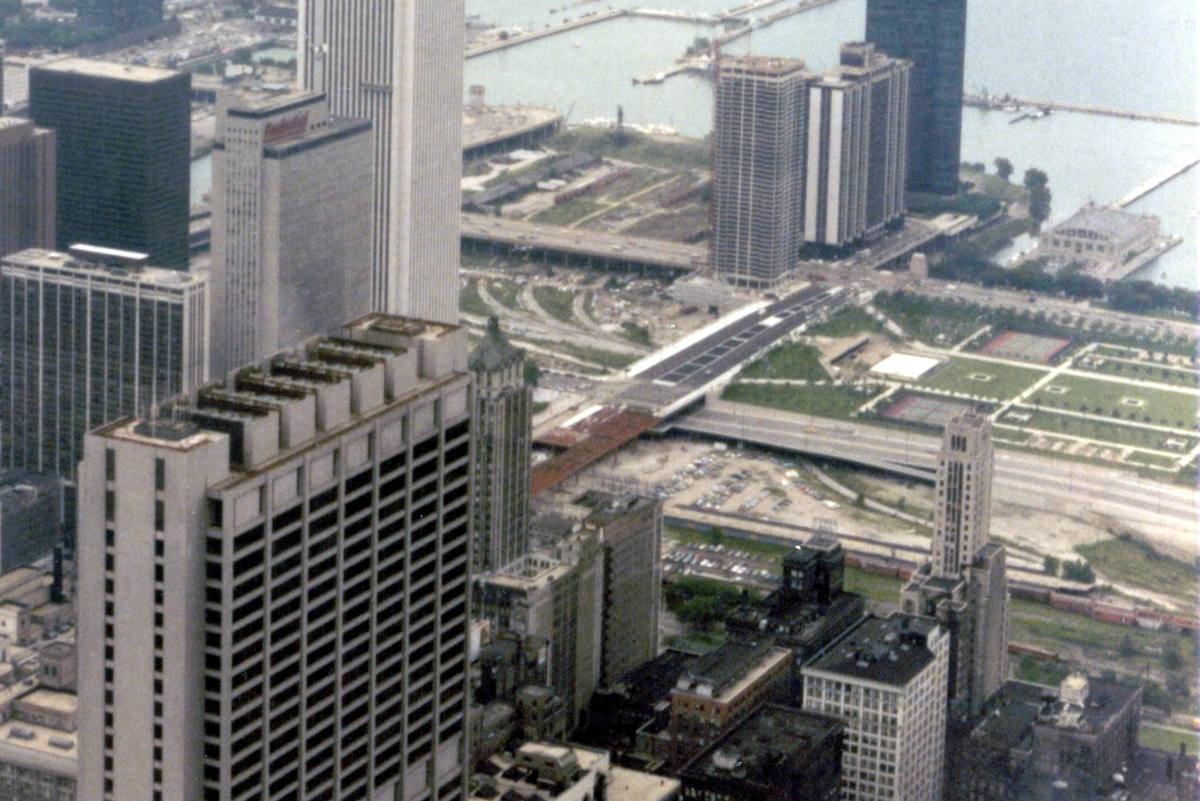
Grant Park from the Sears Tower in August 1981, with the lakefront and the rail yards that later became Millennium Park. Ruhrfisch · CC BY-SA 4.0
Grant Park from the Sears Tower in August 1981, with the lakefront and the rail yards that later became Millennium Park. Ruhrfisch · CC BY-SA 4.0
Columbus Drive at Balbo Drive, Grant Park
Hot Mix 5 Way
An honorary Hot Mix 5 sign went up at Columbus Drive and Balbo in 2007.
The Hot Mix 5 made their name with mixes on WBMX-FM, often setting local Trax releases beside rock records. Farley “Jackmaster” Funk was one of the five.
A public crossing on the edge of Grant Park.
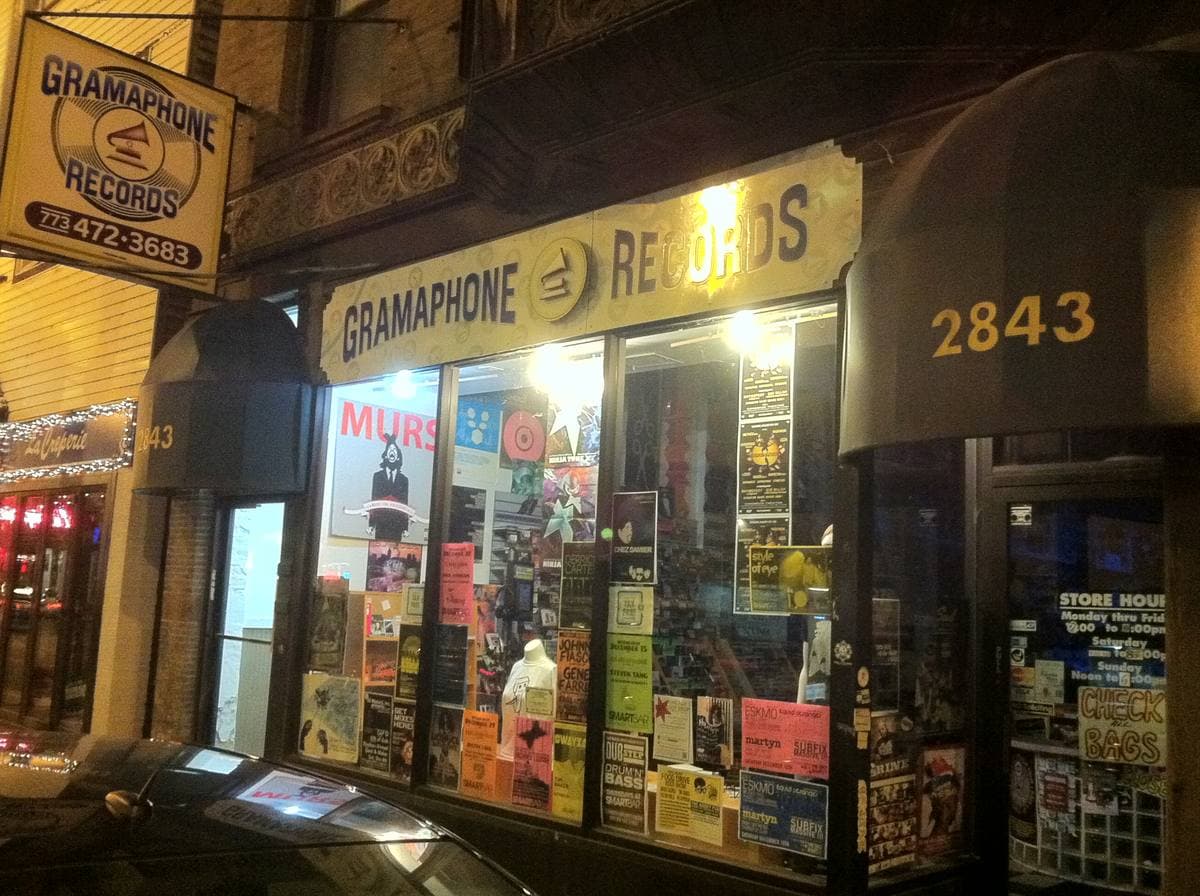
SourcesGramaphone Records at 2843 North Clark, lit up at night in 2010. t3xt · CC0
2843 North Clark Street, Lakeview
Gramaphone Records
Established in 1969, Gramaphone is a Chicago record shop focused on electronic music.
It opens Thursday to Sunday, noon to 6pm.
Open Thursday to Sunday, 12–6pm; closed Monday to Wednesday.
SourcesThe Metro building at 3730 North Clark, from the side street in 2017. Smartbar is down one flight of stairs. Eric Fischer · CC BY 2.0
3730 North Clark Street, Wrigleyville
Smartbar
Smartbar is a basement club at 3730 North Clark, reached by one flight of stairs, and is celebrating 40 years.
Its Sunday party Queen! lists Derrick Carter and Michael Serafini week after week; Hallo-Queen! on 1 November 2026 adds Chip E. and DJ Minx.
Down one flight of stairs, with a box office shared with Metro. Doors are usually 10pm; see the listings.
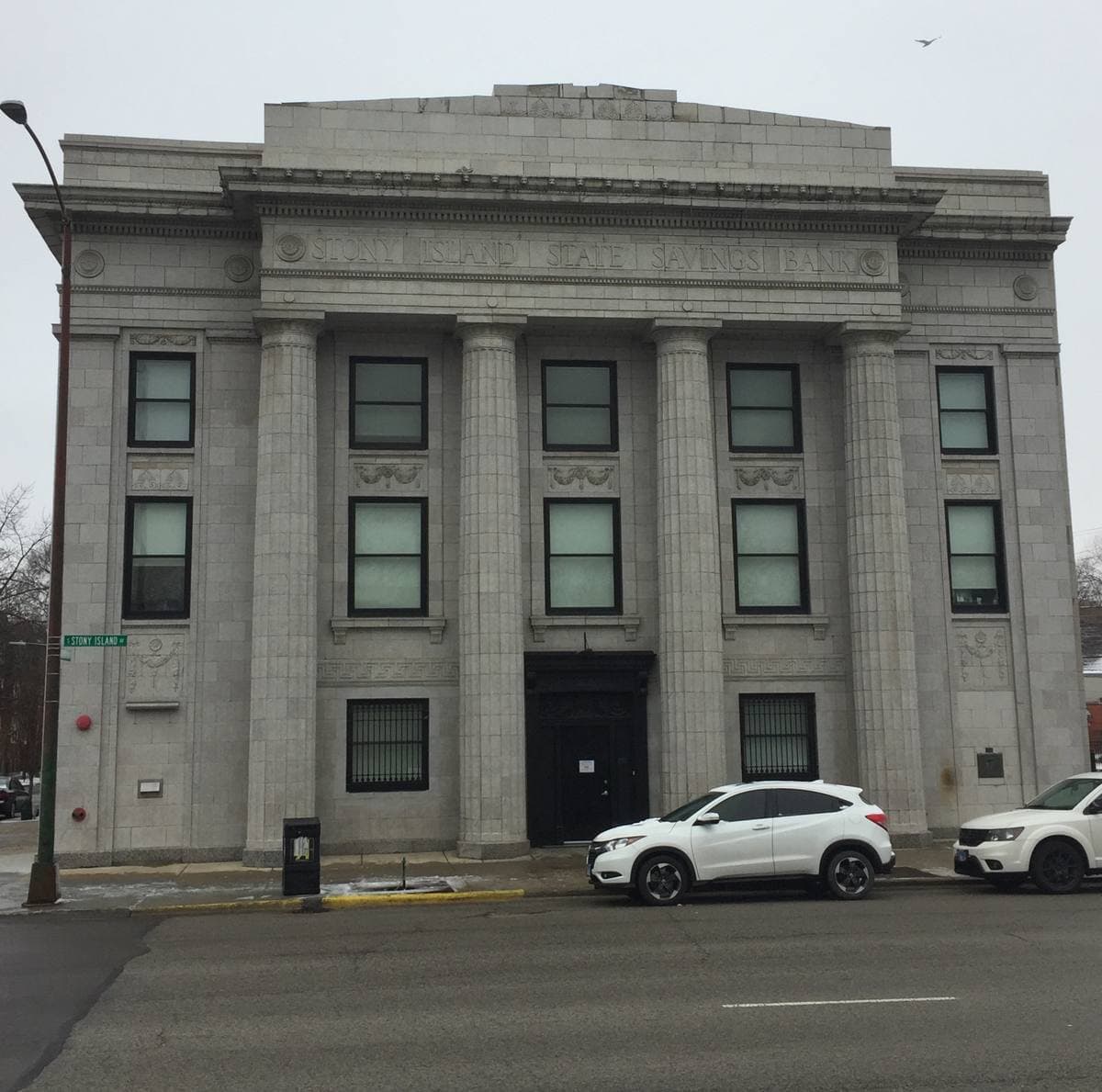
SourcesThe Stony Island Arts Bank, 6760 South Stony Island Avenue, January 2020. Nick Number · CC BY 4.0
6760 South Stony Island Avenue, South Shore
Stony Island Arts Bank
The Arts Bank holds Frankie Knuckles’s own record collection, nearly 5,000 records.
It was a savings and loan, built in 1923 to a design by William Gibbons Uffendell.
Rebuild Foundation lists it at 6760 South Stony Island Avenue and posts its opening on its visit page.
Rebuild Foundation runs the building and changes its opening as shows are installed. Check its visit page before you go.
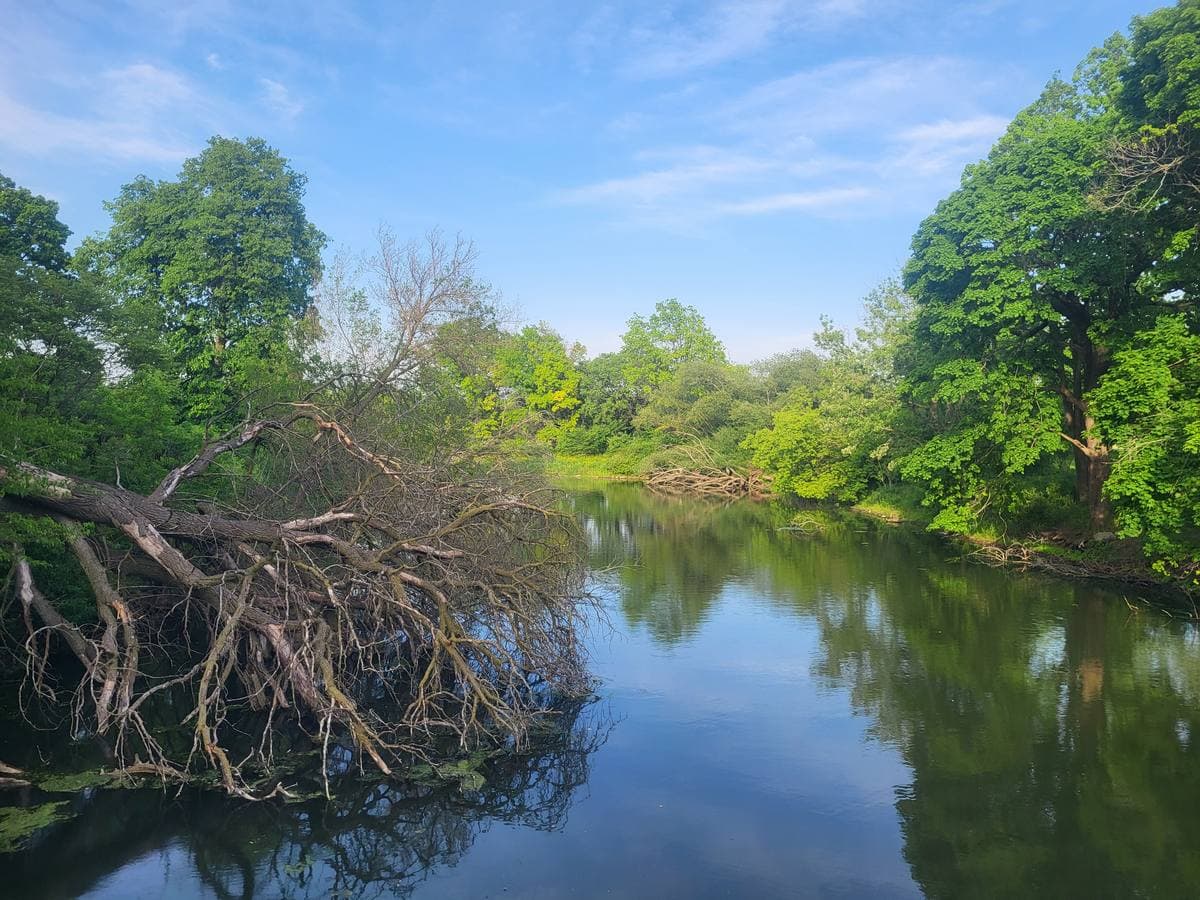
SourcesDJ Duane Powell playing vinyl at the Stony Island Arts Bank, January 2020. Amyc29 · CC BY-SA 4.0A lagoon in Jackson Park, May 2024. JulDer Wiki · CC BY 4.0
Jackson Park, Woodlawn and South Shore
Jackson Park
The Chosen Few Picnic & Festival in Jackson Park is billed as the world’s longest-running event dedicated to house music; the 2025 picnic was on 12 July.
A public lakefront park, a few minutes’ walk from the Arts Bank.
Sources
The records Knuckles played in a room on Jefferson Street now sit in a bank on Stony Island Avenue.
Visit
Where it is now
12 places you can visit across Chicago. Several clubs are gone: their pins mark the address, and the photographs show the street.
Pins mark public places; private homes are named but not pinned.
General reference · Restricted access · Coordinate precision: site · Not an exact scene or camera position; not a visitor route. Law offices now. See the landmark front from Jefferson Street; the building is not open to visitors.
General reference · Public access · Coordinate precision: site · Not an exact scene or camera position; not a visitor route. A public street. The honorary signs hang at the crossings on Jefferson between Monroe and Van Buren.
General reference · Public access · Coordinate precision: site · Not an exact scene or camera position; not a visitor route. No club here now. The address is a block east of the Warehouse; the photograph shows the street, not the club.
1206 South Jefferson Street in October 2024, behind a street tree: the Warehouse building, a Chicago landmark since 2023. Te-tukk · CC BY-SA 4.0
206 South Jefferson Street, West Loop, Chicago
The Warehouse
The Warehouse, a three-storey building, opened as a club in 1977, conceived as Chicago’s answer to the New York club scene, and closed in 1982.
Law offices now. See the landmark front from Jefferson Street; the building is not open to visitors.
Sources
2The honorary street sign on Jefferson Street, June 2022. Missvain · CC BY 4.0
South Jefferson Street between Monroe and Van Buren, West Loop
Frankie Knuckles Way
In 2004 this stretch of Jefferson Street became honorary “The Godfather of House Music” Frankie Knuckles Way.
A public street. The honorary signs hang at the crossings on Jefferson between Monroe and Van Buren.
Sources
3Adams Street at Clinton Street in 2011, a block from 555 West Adams: the street, not the old club. David Wilson · CC BY 2.0
555 West Adams Street, West Loop
The Bowery
Choose Chicago lists the Bowery, at 555 West Adams, as another former club where Knuckles played, near the Warehouse.
No club here now. The address is a block east of the Warehouse; the photograph shows the street, not the club.
Sources
Stay
A room in the West Loop.
The Hoxton, a short walk from the Warehouse.
The Hoxton
The Hoxton, Chicago
West Loop, Chicago
182 rooms at Lake and Green in the Fulton Market District, a short walk north of the Warehouse, with a rooftop pool. Booking direct gives early check-in and late check-out at no charge, and free cancellation until 2pm the day before.
Dates, prices, rooms and stock change: confirm with the provider before you travel or buy. A stay or tour is described as a filming location only where the card says so.
The sources
Every place and moment behind this page, with sources.
12 of 12 places · 16 of 16 Moments
The Warehouse
206 South Jefferson Street, West Loop, Chicago
Saturday night
The Warehouse opens, with Frankie Knuckles brought in from New York.
Edits on reel-to-reel
Knuckles starts re-editing records on reel-to-reel when the disco labels stop sending uptempo dance records.
A landmark
The City Council makes the Warehouse a Chicago landmark.
Frankie Knuckles Way
South Jefferson Street between Monroe and Van Buren, West Loop
Frankie Knuckles Day
Jefferson Street is named Frankie Knuckles Way.
The Bowery
555 West Adams Street, West Loop
Importes Etc.
711 South Plymouth Court, Printer’s Row
Warehouse Music, cut short
Importes Etc. shortens its Warehouse Music section to House Music.
On and On
Importes buys all 1,000 copies of Jesse Saunders’s On and On.
The first Music Box
1632 South Indiana Avenue, South Loop
The Music Box opens
Robert Williams opens the Music Box on South Indiana Avenue with Ron Hardy.
The Music Box at 326
326 North Lower Michigan Avenue, under the Loop
326, sprayed in orange
The Music Box moves underneath Michigan Avenue.
Acid Tracks, four times
Hardy plays Phuture’s Acid Tracks at least four times in one night.
Juice bar hours
A city ordinance cuts juice bar hours and the Music Box is shut.
The last Music Box
2210 South Michigan Avenue, Motor Row
The last stand
The Music Box plays on at the former Power House on South Michigan.
Hot Mix 5 Way
Columbus Drive at Balbo Drive, Grant Park
Hot Mix 5 Way
An honorary sign for the WBMX mixers goes up at Columbus and Balbo.
Gramaphone Records
2843 North Clark Street, Lakeview
Since 1969
Gramaphone sells electronic music on North Clark.
Smartbar
3730 North Clark Street, Wrigleyville
Queen! on Sundays
Queen! runs on Sundays at Smartbar, with Derrick Carter and Michael Serafini.
Stony Island Arts Bank
6760 South Stony Island Avenue, South Shore
His records
Knuckles’s own collection, nearly 5,000 records, is held at the Arts Bank.
Jackson Park
Jackson Park, Woodlawn and South Shore
The Chosen Few
The Chosen Few Picnic & Festival fills Jackson Park.