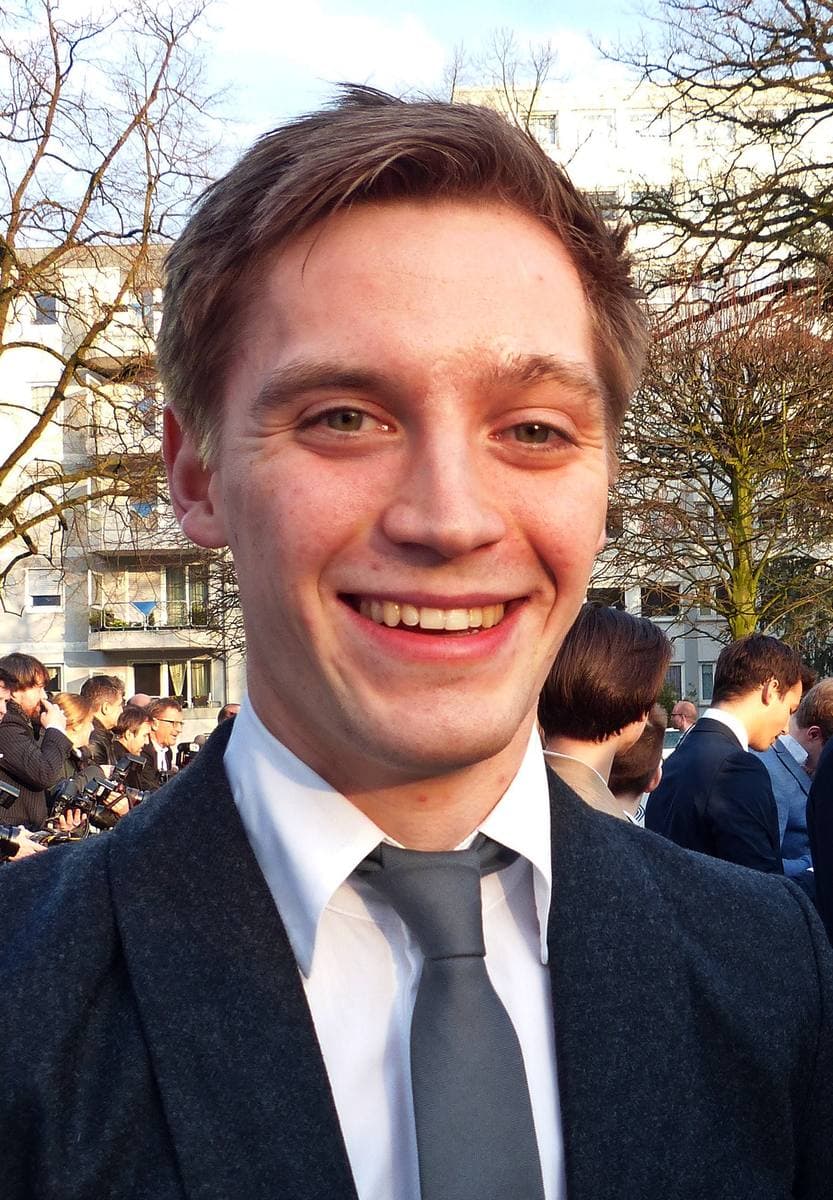
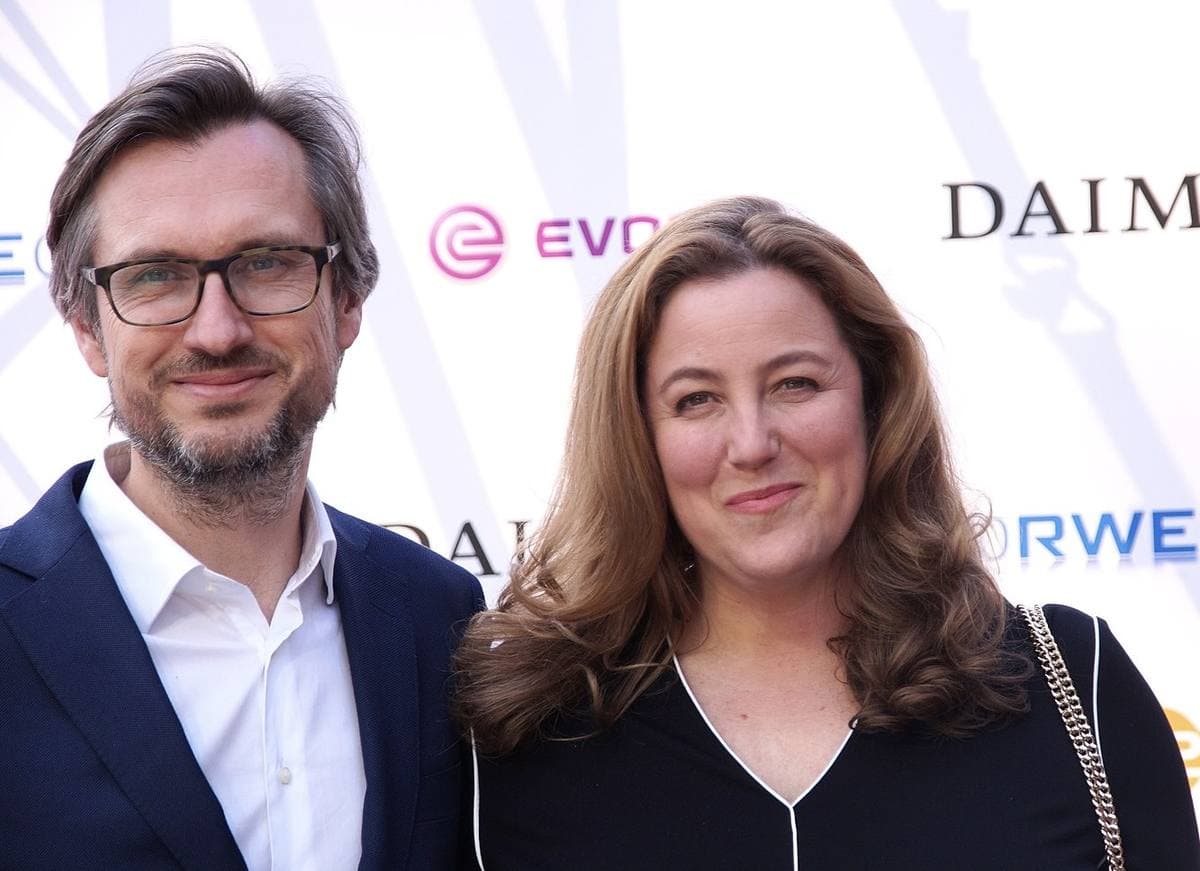
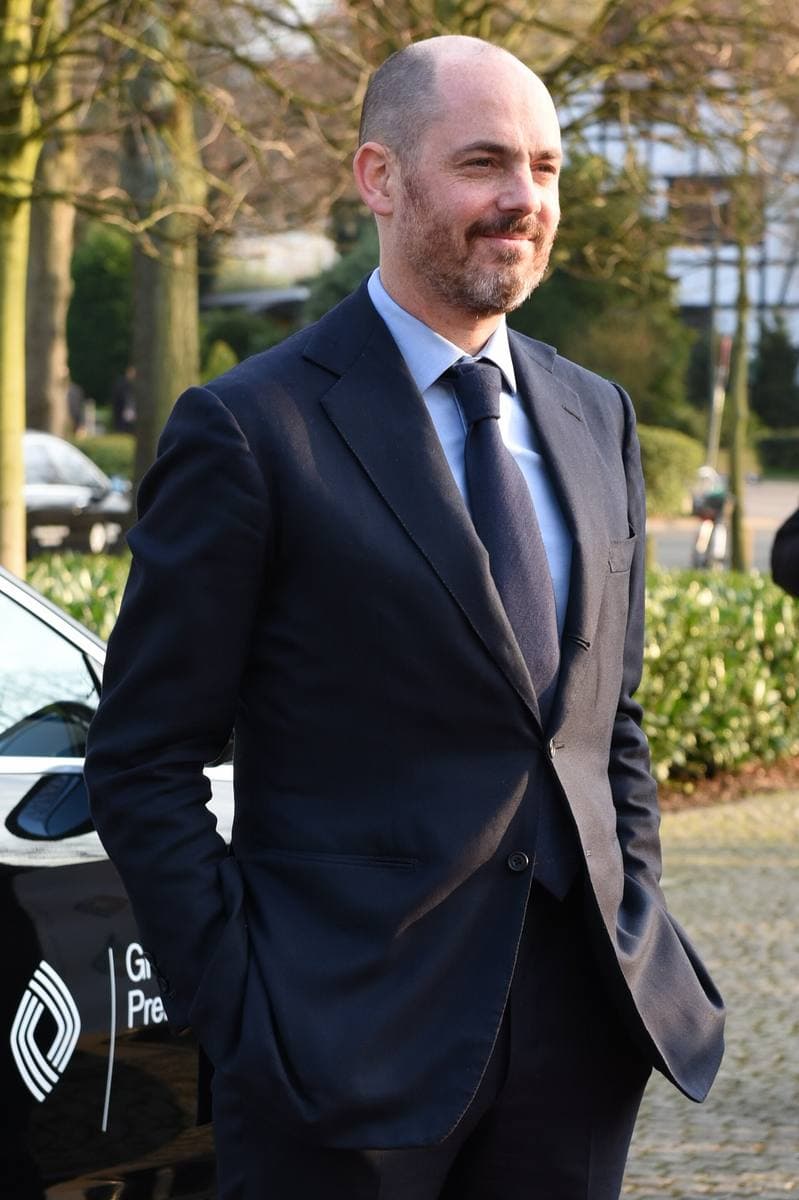
Jonas Nay at the Grimme Prize in Marl on 8 April 2016, where Deutschland 83 won. 9EkieraM1 · CC BY-SA 3.0Jonas NayMartin Rauch
Leutnant · 1983
Deutschland 83
Name
STAMM, Moritz
Posting
Aide to General Edel
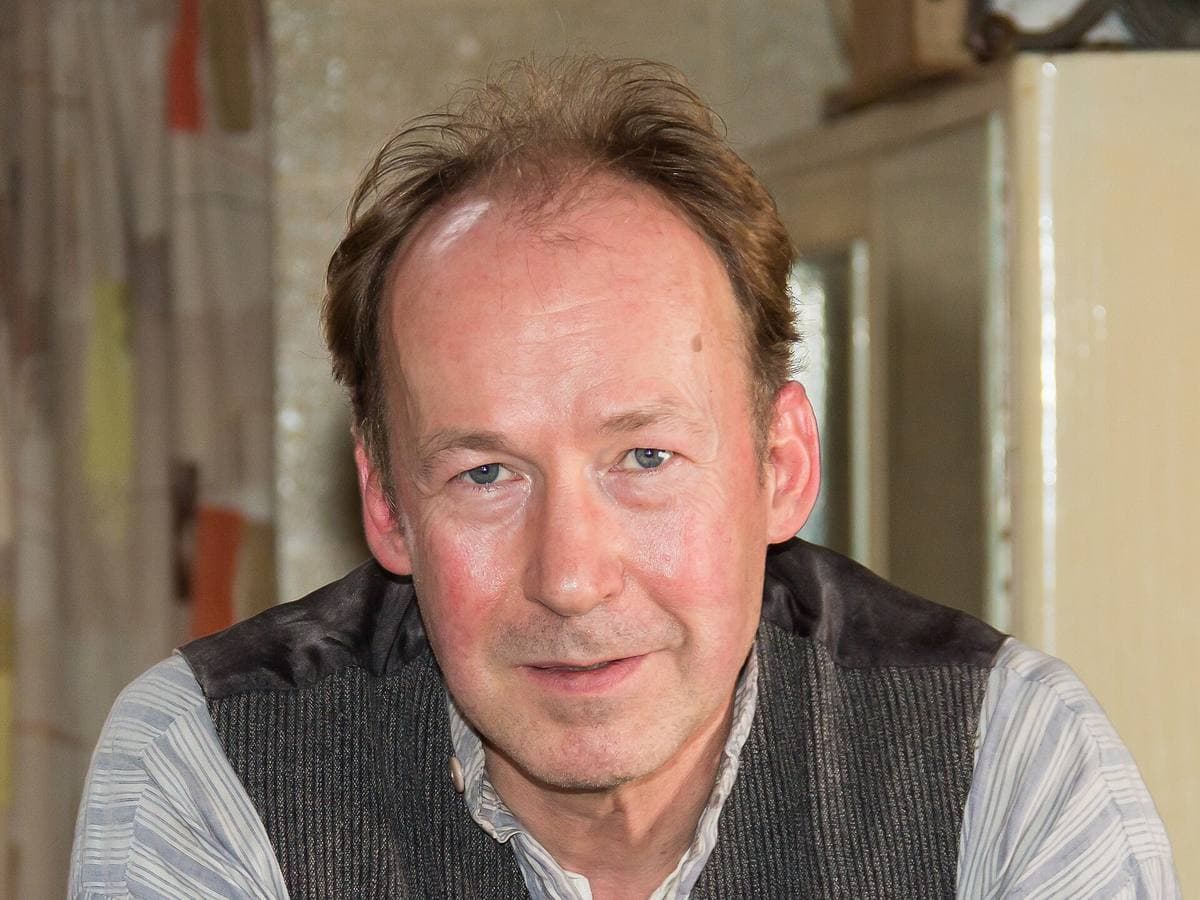
Ulrich Noethen on the set of another drama in October 2015, a month before Deutschland 83 reached German television. Raimond Spekking · CC BY-SA 4.0
Generalmajor Wolfgang EdelUlrich Noethen
The West German side. One face, two names.
Photos: Jonas Nay at the Grimme Prize in Marl on 8 April 2016, 9EkieraM1, CC BY-SA 3.0 · Ulrich Noethen on the set of another drama in October 2015, Raimond Spekking, CC BY-SA 4.0
Bonn to Berlin, by the wind
Let them go.
In June 1982 Nena’s guitarist watched balloons go up at a Rolling Stones concert in West Berlin and wondered what would happen if they drifted over the Wall. The song came out in 1983; its producer, Reinhold Heil, went on to score Deutschland 83. Let a balloon go from the Hofgarten in Bonn and the wind takes it east, as far as the next real place.
BonnBerlinThe border
Thirteen balloons on strings in the Hofgarten. Let one go.
Where we read it
Carlo Karges saw balloons released at a June 1982 Rolling Stones concert in West Berlin and wondered what would happen if they floated over the Wall; the German single came out in March 1983, produced by Reinhold Heil and Manfred Praeker.
Each balloon lands at the mapped longitude of a place in this World; distances are worked out from the map. The border line is drawn roughly where the inner-German border crossed the line from Bonn to Berlin.
General Edel’s world. A month after 1.3 million people protested across West Germany, the Bundestag voted the new missiles in.
286for:225against22 November 1983 · one abstention
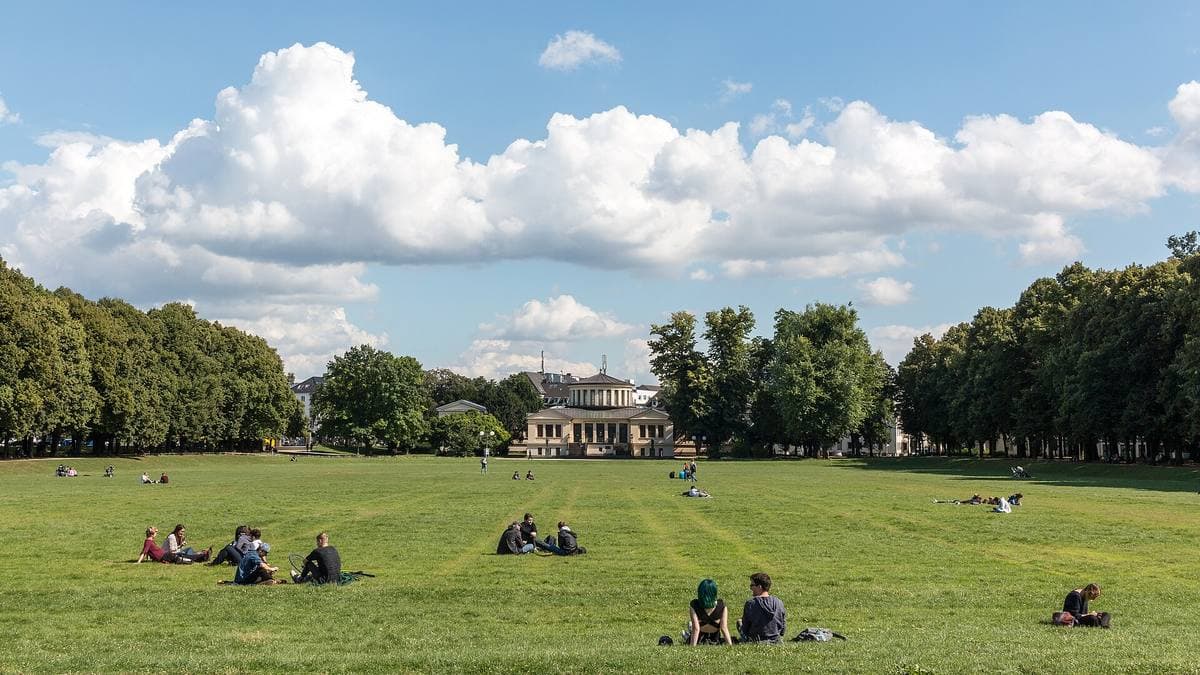
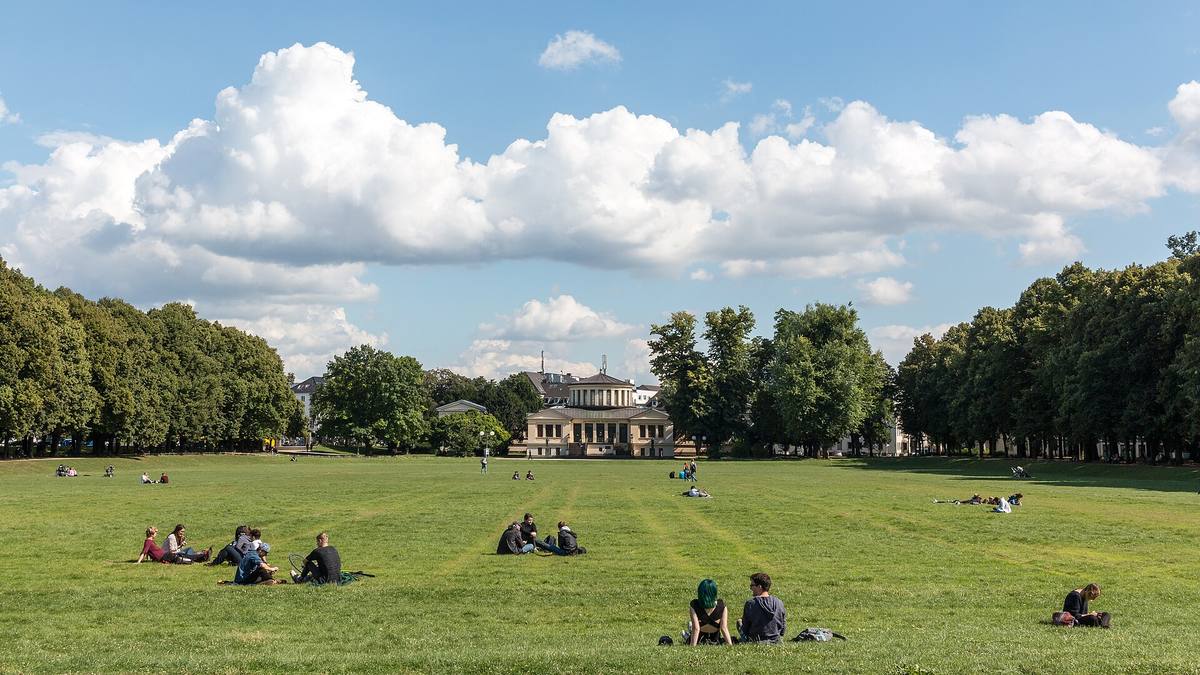
The Hofgarten in Bonn in August 2016, with the Akademisches Kunstmuseum beyond. Dietmar Rabich · CC BY-SA 4.0
Hofgarten, Adenauerallee, Bonn
The Hofgarten
On 22 October 1983 Willy Brandt spoke in the Hofgarten against the new missiles, telling the crowd Germany needed fewer weapons of mass destruction, not more.
That day about 150,000 people made a human chain round the government quarter, and another chain ran from Stuttgart to Neu-Ulm.
Across West Germany 1.3 million people turned out on 22 October 1983. Two years earlier, on 10 October 1981, about 350,000 had filled the Hofgarten.
A public lawn in front of the university, open all day. The Akademisches Kunstmuseum stands at its far end.
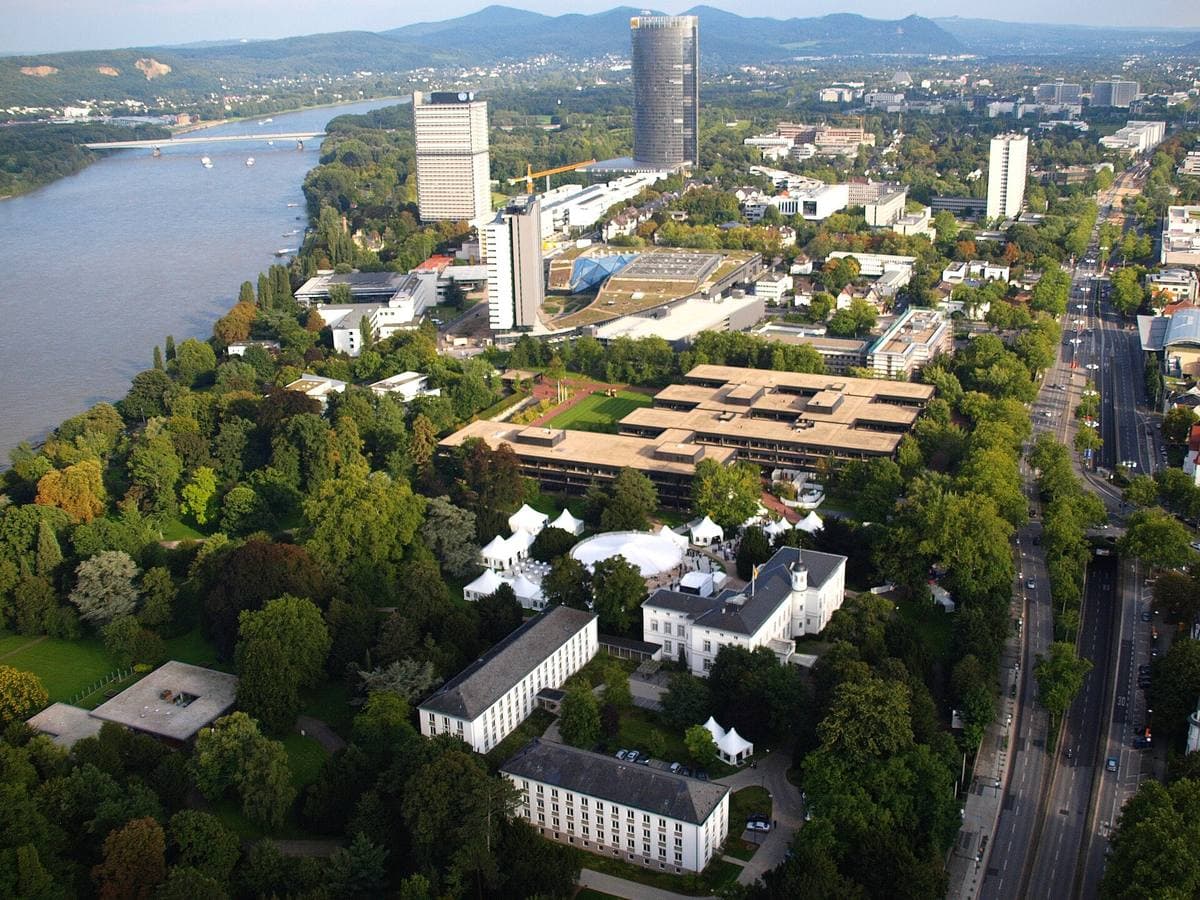
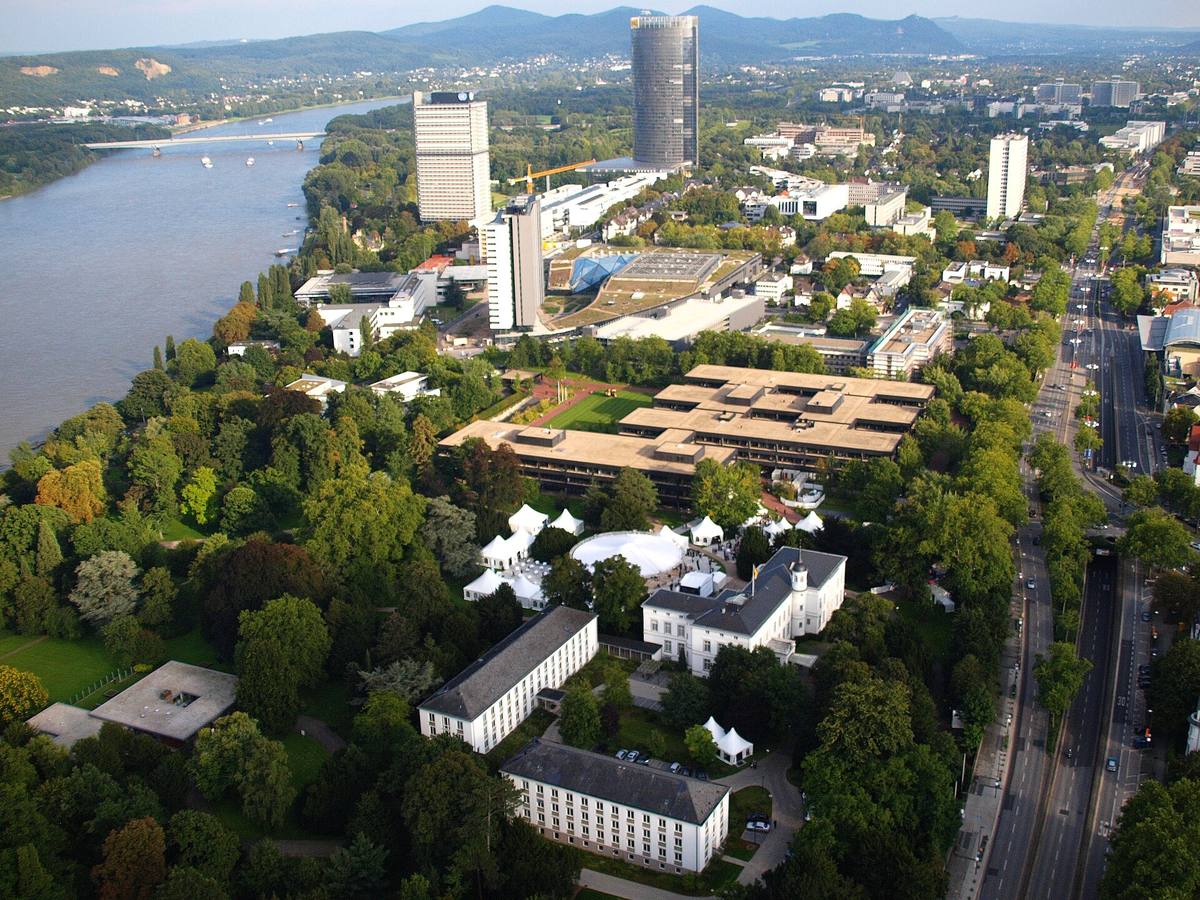
Where we read itBonn’s government quarter on the Rhine from the air in September 2010. Wolkenkratzer · CC BY-SA 3.0
Platz der Vereinten Nationen, Bonn
The Bundeshaus
The Bundestag and the Bundesrat sat here from 1949 to 1999. The main building was finished in 1933 as a teachers’ college.
On 22 November 1983 the Bundestag voted 286 to 225, with one abstention, to let the new American missiles be stationed in West Germany.
All 108 Pershing II were in place in Baden-Württemberg by 1986, 36 of them on the Mutlanger Heide.
The chamber is now part of the World Conference Center Bonn; the Haus der Geschichte offers visits to the former parliament.
Now the World Conference Center Bonn. The Haus der Geschichte runs bookable tours of the former parliament; outside, walk the Rhine side of the government quarter.
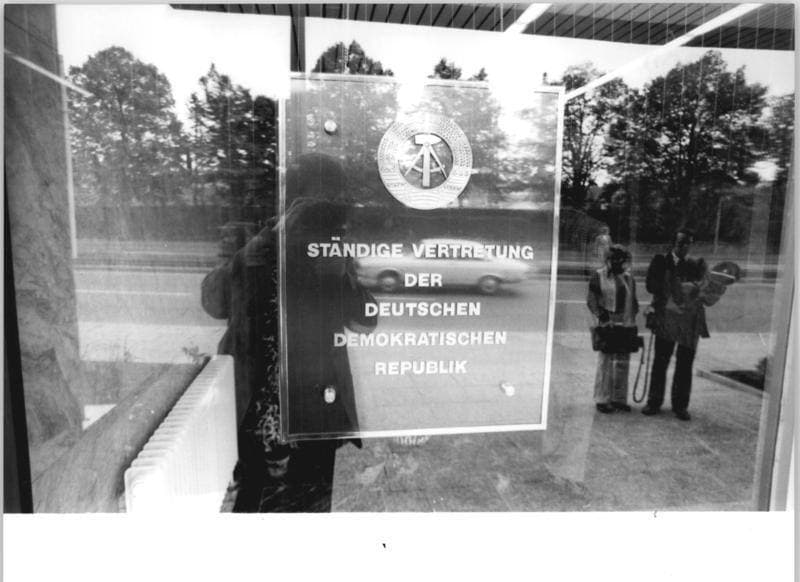
In the series Lenora Rauch, Martin’s aunt and handler, is a cultural attaché at East Germany’s Permanent Mission in Bonn.
East and West Germany opened permanent missions, not embassies, on 2 May 1974; the GDR’s was at Godesberger Allee 18.
The mission worked here from 1974 to 1990. From 1991 the state offices of Saxony and Mecklenburg-Western Pomerania used the building.
An office building on a main road; look at it from the pavement.
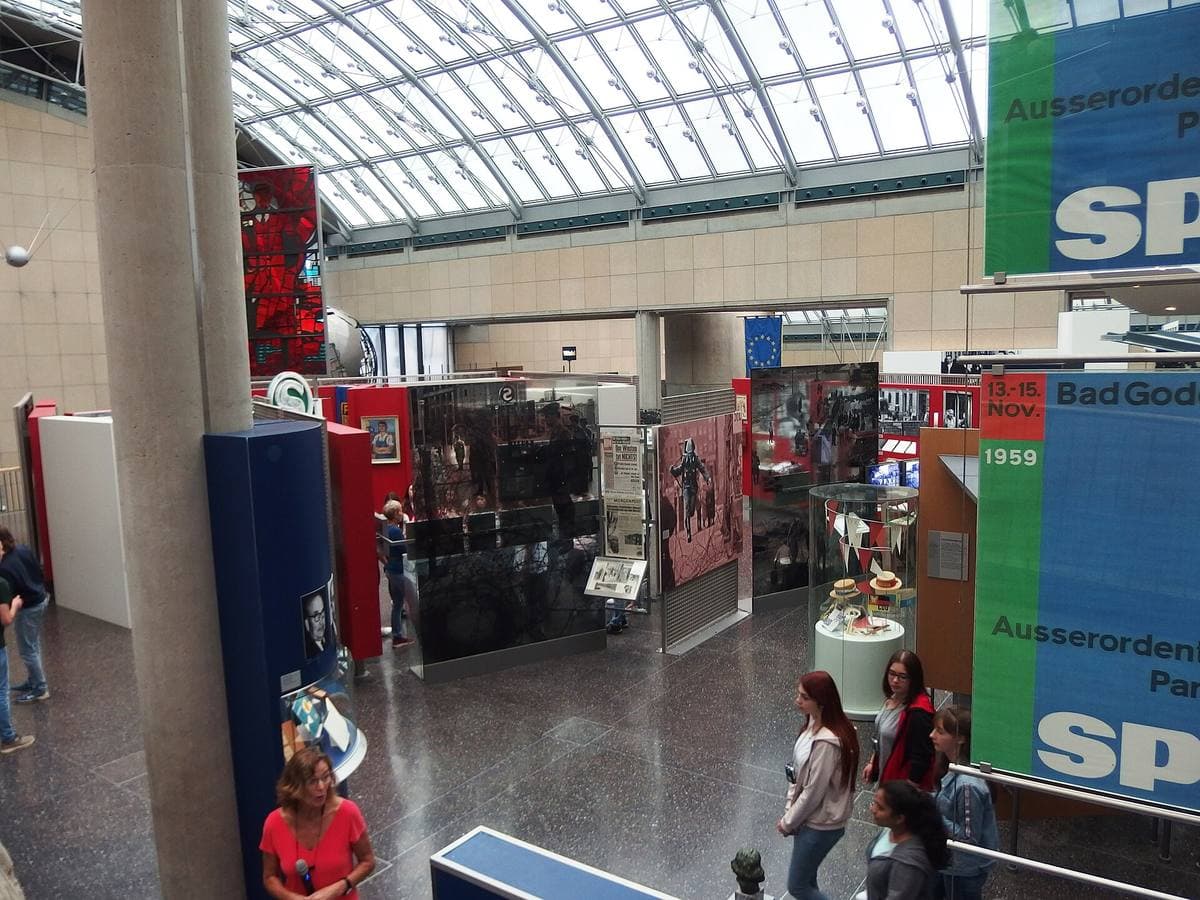
Where we read itThe atrium of the Haus der Geschichte in Bonn in September 2019. Palickap · CC BY-SA 4.0
Willy-Brandt-Allee 14, Bonn
Haus der Geschichte
The museum of the Federal Republic’s history: its permanent exhibition follows Germany from 1945, Bonn years and all. Entry is free.
The city’s Weg der Demokratie links 65 sites of the old capital on foot, with five suggested routes and guided tours.
Free. Tuesday to Friday 9am–6pm, weekends 10am–6pm. On the Museumsmeile, Willy-Brandt-Allee.
Where we read it
Steigenberger
Steigenberger Icon Grandhotel & Spa Petersberg
Königswinter, near Bonn
The old guest house of the Federal Republic, on a hill above the Rhine at Königswinter, looking across to Bonn. The government rented it for state guests from 1955 and bought it in 1978; Leonid Brezhnev stayed in 1973.
Every episode is named after a NATO exercise from 1983. The last one nearly went wrong.
Quantum JumpEpisode 1 · 17 June 2015
Brave GuyEpisode 2 · 24 June 2015
Atlantic LionEpisode 3 · 1 July 2015
Northern WeddingEpisode 4 · 8 July 2015
Cold FireEpisode 5 · 15 July 2015
Brandy StationEpisode 6 · 22 July 2015
Bold GuardEpisode 7 · 29 July 2015
Able ArcherEpisode 8 · 5 August 2015
A five-day command-post exercise, 7 to 11 November 1983, run from NATO’s headquarters at Casteau in Belgium.
On paper it climbed from a conventional war to a simulated nuclear attack, with new coded messages, radio silences and heads of government taking part.
Where we read it
Anna Winger: every episode title is a 1983 NATO exercise; US air dates on SundanceTV.
Joerg and Anna Winger, who created the series, at the Grimme Prize in April 2016. 9EkieraM1 · CC BY-SA 3.0
Joerg Winger, who created the series with Anna Winger, did his service as a radio signaller in West Germany, listening to the Russian troops in the East. Now and then, Anna Winger says, they greeted him by name.
Where we read it
Anna Winger on her husband’s service as a radio signaller listening to Russian troops in East Germany, who sometimes greeted him by name.
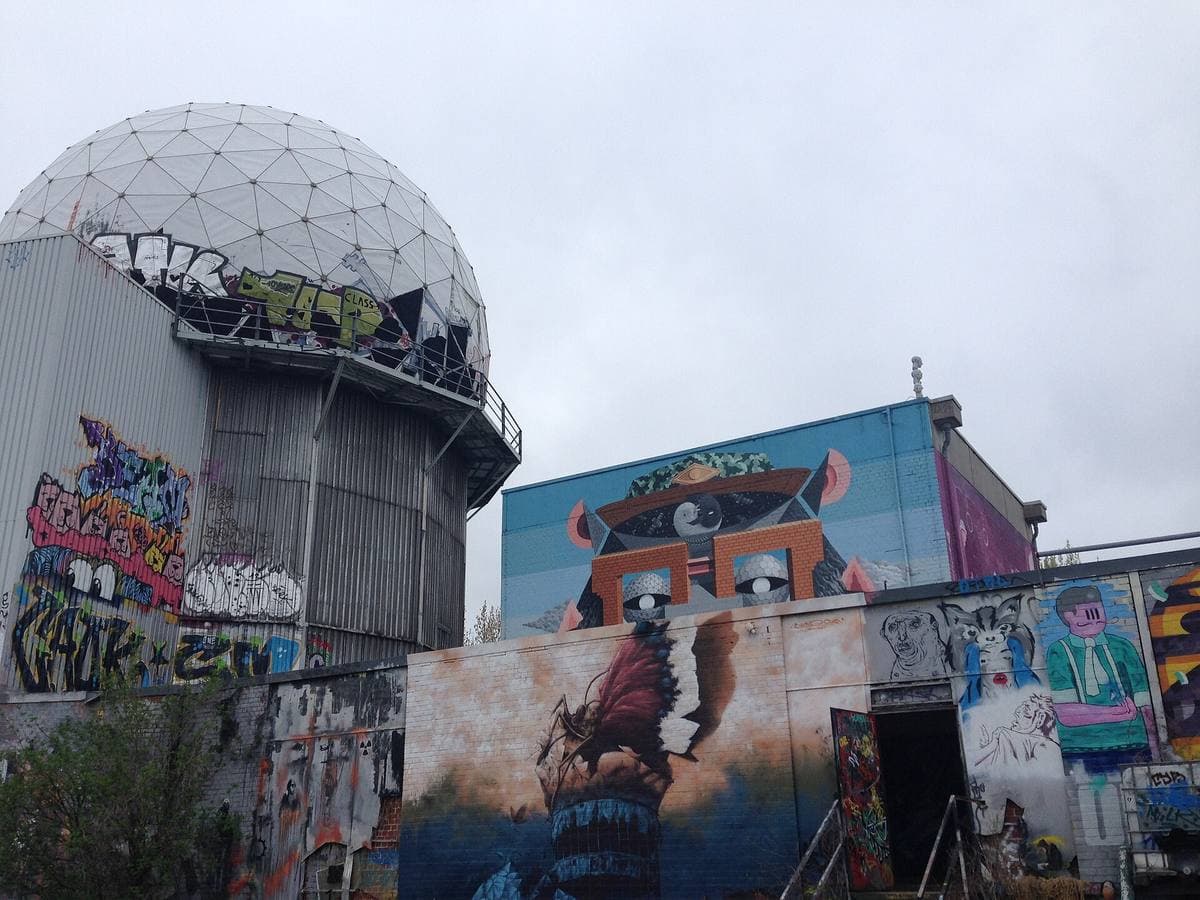
The domes of the old listening station on Teufelsberg in April 2017. Sarahmirk · CC BY-SA 4.0
Teufelsseechaussee 10, Grunewald
Teufelsberg: where the West listened
The hill is made of rubble, about 75 million cubic metres of it, and rises to 120 metres above sea level.
Allied listening units began working here in July 1961, and the NSA started its permanent station in October 1963. It ran until East Germany fell.
The site is privately run. Adults pay €12; it can close at short notice for weather or filming.
Daily from 11am; closing time follows the month (7pm in October, 4.30pm in November). Adults €12. Public tours in German and English, Friday to Sunday.
Where we read it
Shot in Berlin, 25 August to 9 December 2014
Bonn was Berlin.
The series is set in Bonn and East Berlin, but every scene was shot in and around Berlin. Anna Winger wanted the city itself, not Budapest or Prague dressed up as it. Turn each card from the story to the set.
Where we read it
Set in Berlin and Bonn, shot entirely in Berlin; Anna Winger on shooting Berlin rather than the usual Budapest or Prague.
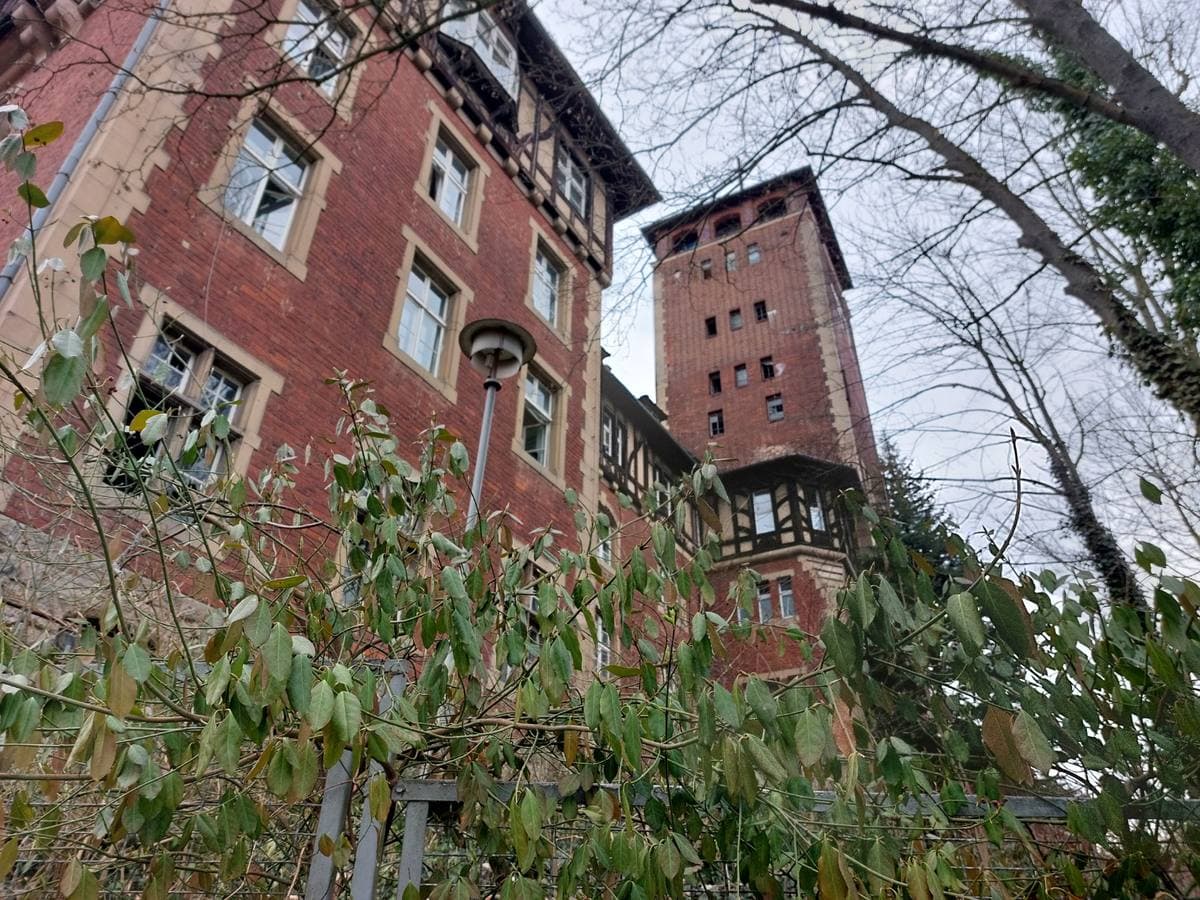
The old Landtag on the Brauhausberg, Potsdam, behind its fence in March 2025. Brataffe · CC BY 4.0
A Bundeswehr barracks near Bonn, where Moritz Stamm reports for duty.
The Kreml on the Brauhausberg
For the Deutschland series the old Landtag building on the Brauhausberg stands in for a barracks in Bonn.
Franz Schwechten built it as a war college in 1899–1902. In GDR days it housed the SED’s Potsdam leadership, and locals called it the Kreml.
Brandenburg’s parliament met here from 1991 until 2013–14. A fire in August 2023 destroyed the old plenary hall.
The site is fenced off. Look at it from the street, Am Havelblick.
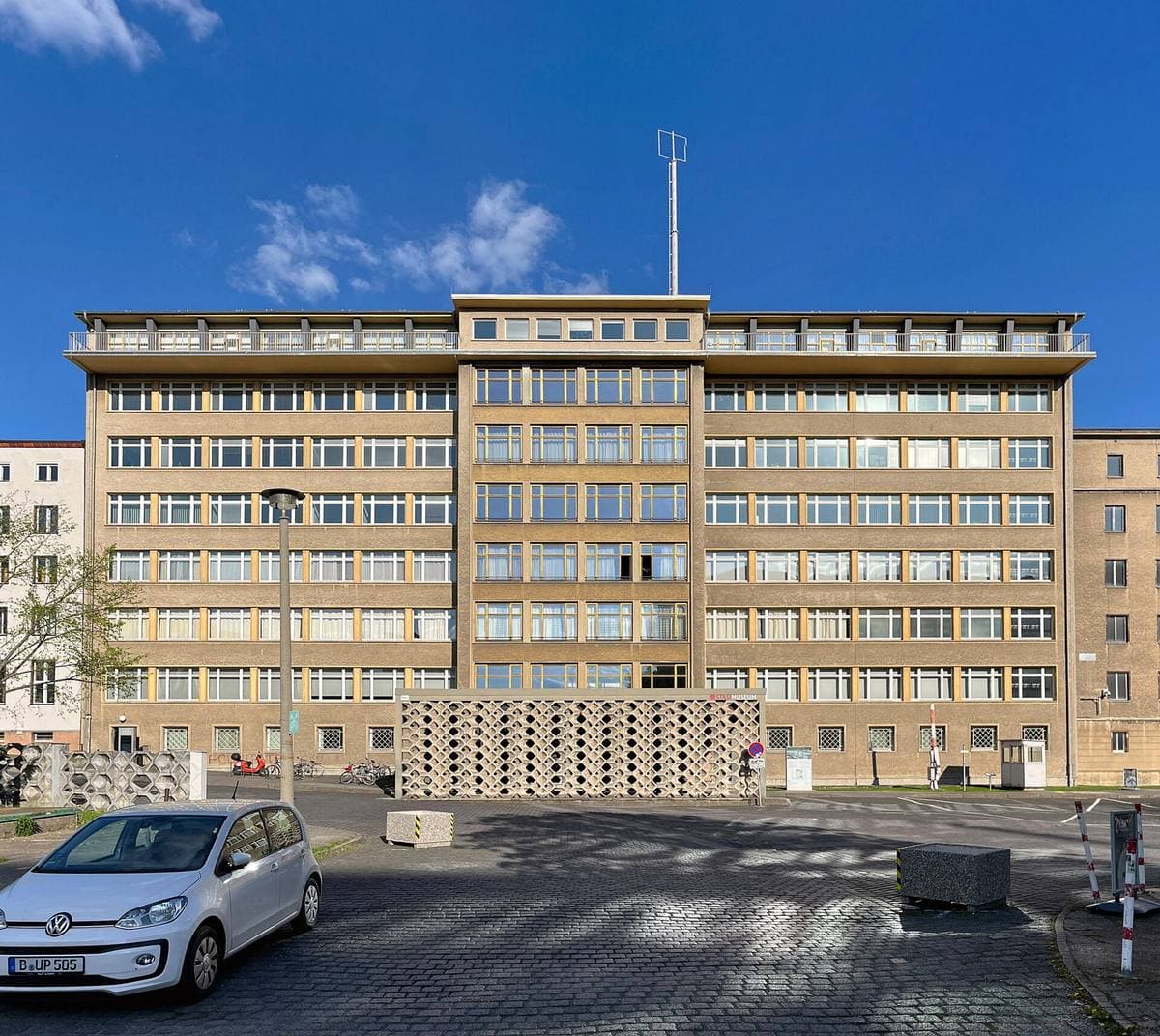
Where we read itHaus 1 on Ruschestraße, now the Stasi Museum, in April 2026. Gunnar Klack · CC BY-SA 4.0
The Ministry for State Security in East Berlin.
Stasi Museum, Haus 1
The production filmed at the Stasi Museum, on the site of the real headquarters of the Ministry for State Security.
Haus 1 was built in 1960–61 for Erich Mielke, minister from 1957 to November 1989. His office rooms are kept as part of the exhibition.
Monday to Friday 10am–6pm, weekends and holidays 11am–6pm. Public tours in English at 3pm, Monday to Saturday. U5 to Magdalenenstraße, exit Ruschestraße.
Where we read itMauerstraße 29 in April 2026, with its bridge over Französische Straße. GodeNehler · CC BY-SA 4.0
The offices and rooms of the series, on both sides.
The ministry on Mauerstraße
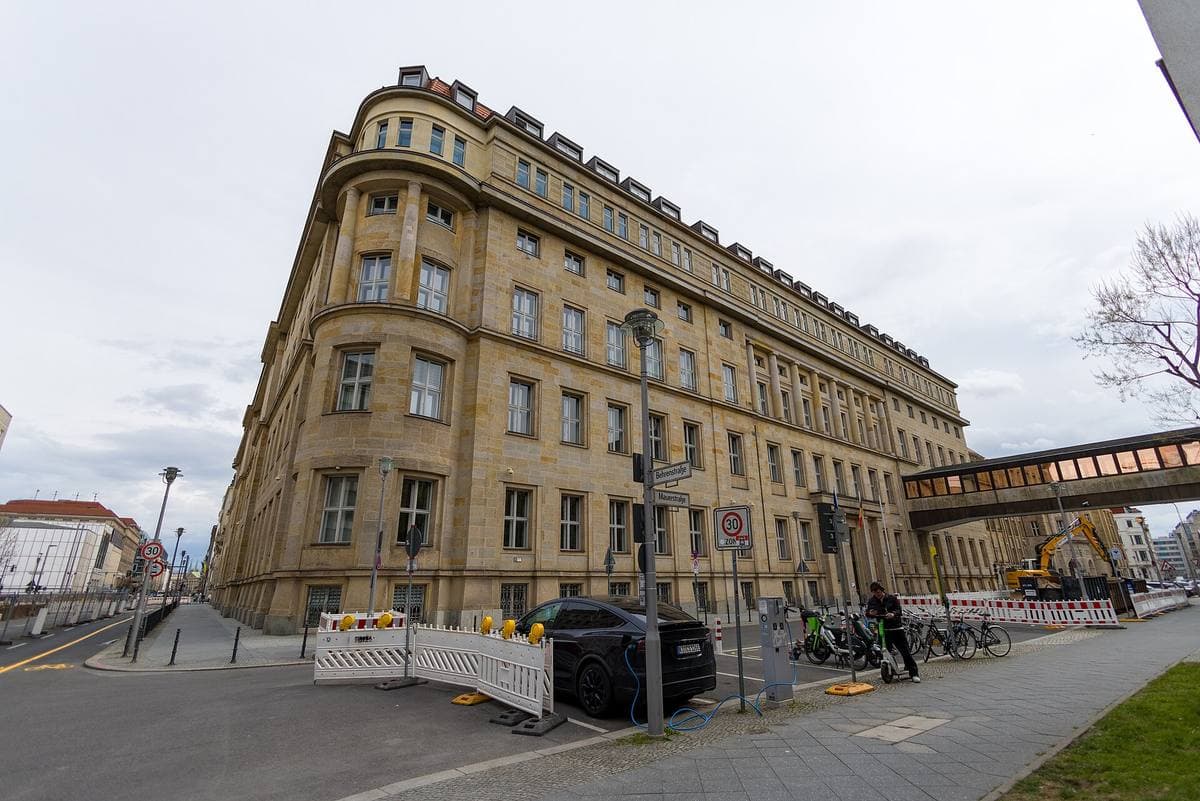
The series was set in Berlin and Bonn but shot entirely in Berlin; the former GDR Ministry of the Interior on Mauerstraße served as an improvised studio.
In 1960 the East German interior ministry’s address was Mauerstraße 29/32.
The house’s history goes back to 1870. Since the end of 2022 Mauerstraße 29 has been the Berlin seat of the Federal Ministry of Health.
A federal ministry, not open to visitors. See it from Mauerstraße.
Where we read it
West Berlin, 1983
The island.
West Berlin sat inside East Germany, ringed by the border. The Americans flew in through Tempelhof and watched films at the Outpost; everyone else crossed at a station hall, past a wall or over a bridge.
Where we read it
The river at Glienicke was the border between West Berlin and East Germany. Tempelhof as the American military gateway; the Outpost cinema.
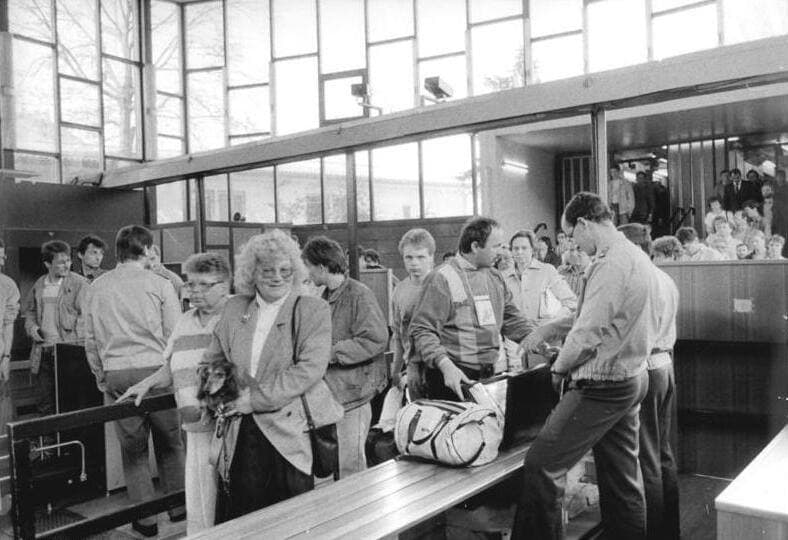
From 1962 to 1989 this was the crossing at Friedrichstraße station, used only by travellers going west. The name, Palace of Tears, came from the partings outside.
The Haus der Geschichte opened it as a museum on 15 September 2011. Entry is free.
Free. Tuesday to Friday 9am–6pm, weekends 10am–6pm. Next to Friedrichstraße station.
Where we read it
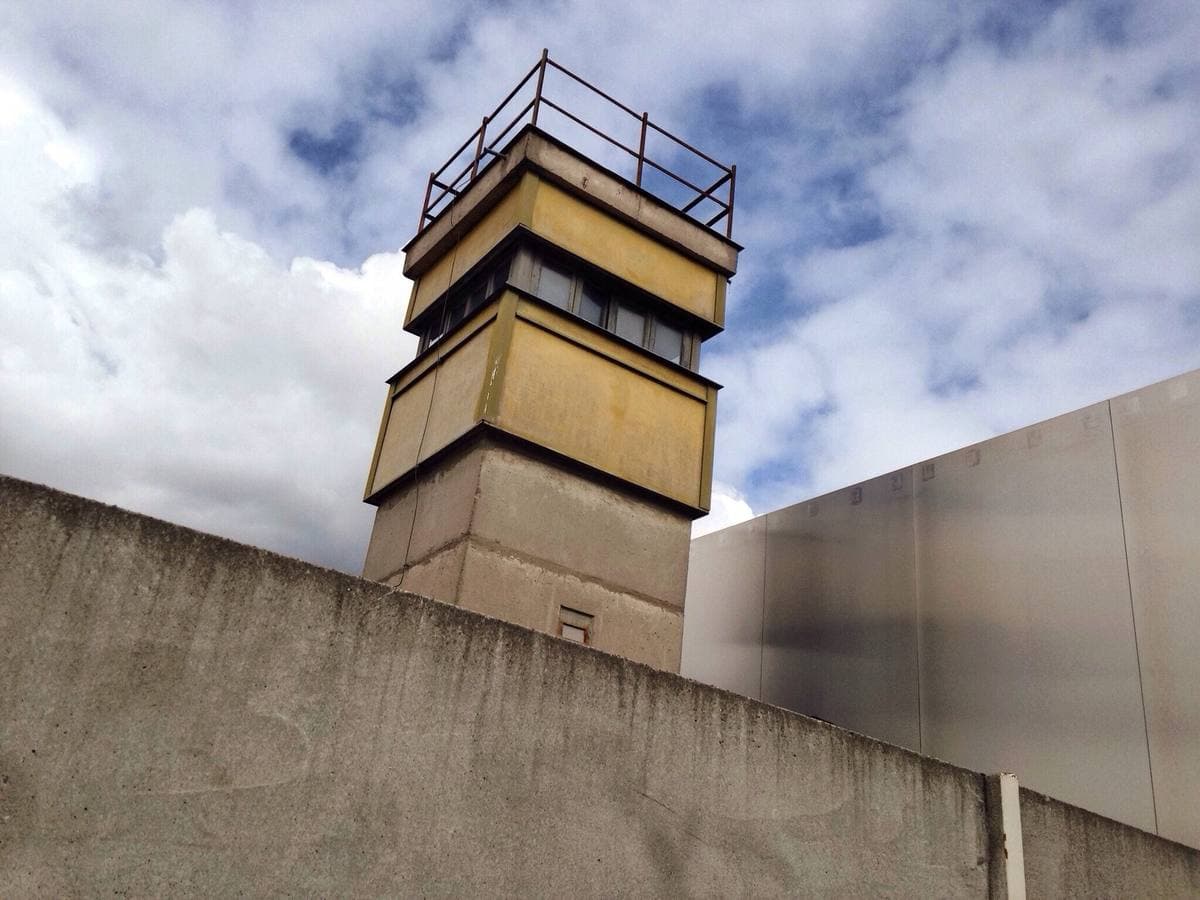
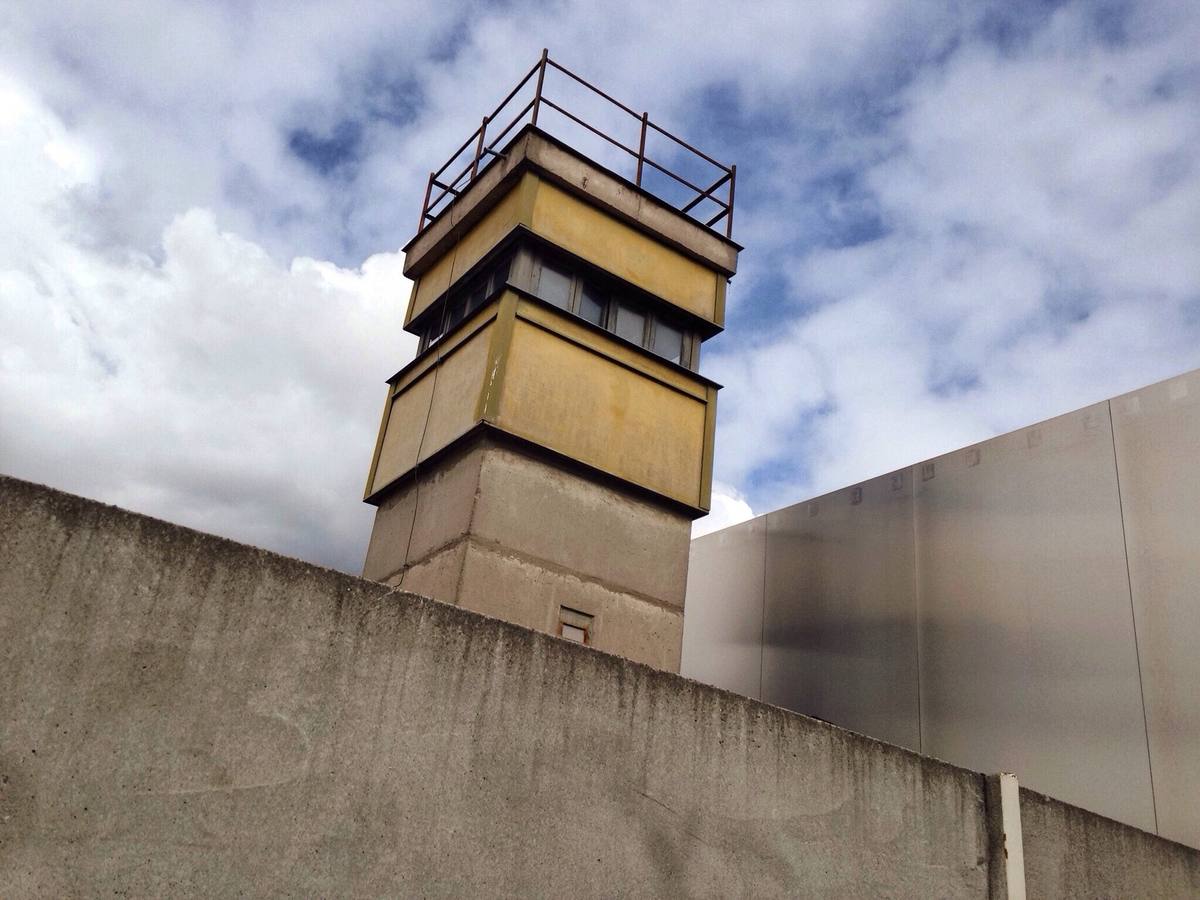
02The watchtower and wall at the Bernauer Straße memorial in June 2017. Brian Dooley · Public domain
The strip · Bernauer Straße 119, Mitte
Berlin Wall Memorial
The outdoor exhibition runs for 1.4 kilometres along Bernauer Straße. Every exhibition here is free.
The documentation centre at number 111 has an observation tower; the last ascent is at 5.45pm.
Free. The outdoor exhibition is open daily 8am–10pm; the visitor centre at Bernauer Straße 119, Tuesday to Sunday 10am–6pm.
Where we read it
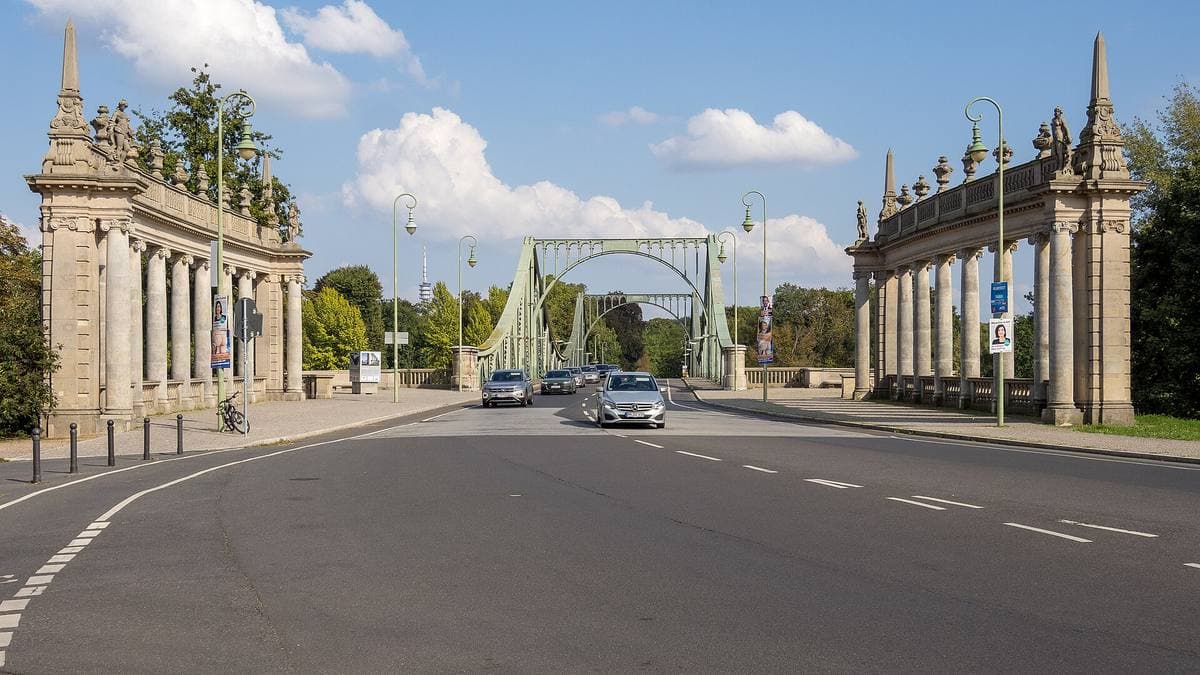
03Glienicke Bridge from the Potsdam side in September 2025. JoachimKohler-HB · CC BY-SA 4.0
The swap · Königstraße, between Wannsee and Potsdam
Glienicke Bridge
The river here was the border between West Berlin and East Germany, so the bridge was used to swap captured spies.
On 12 June 1985 twenty-three American agents were exchanged here for Marian Zacharski and three other Eastern agents; Rudolf Abel and Gary Powers had crossed in 1962.
It opened to people on foot on the evening of 10 November 1989, the day after the Wall opened.
Open to walkers, cyclists and traffic, between Wannsee and Potsdam.
Where we read it
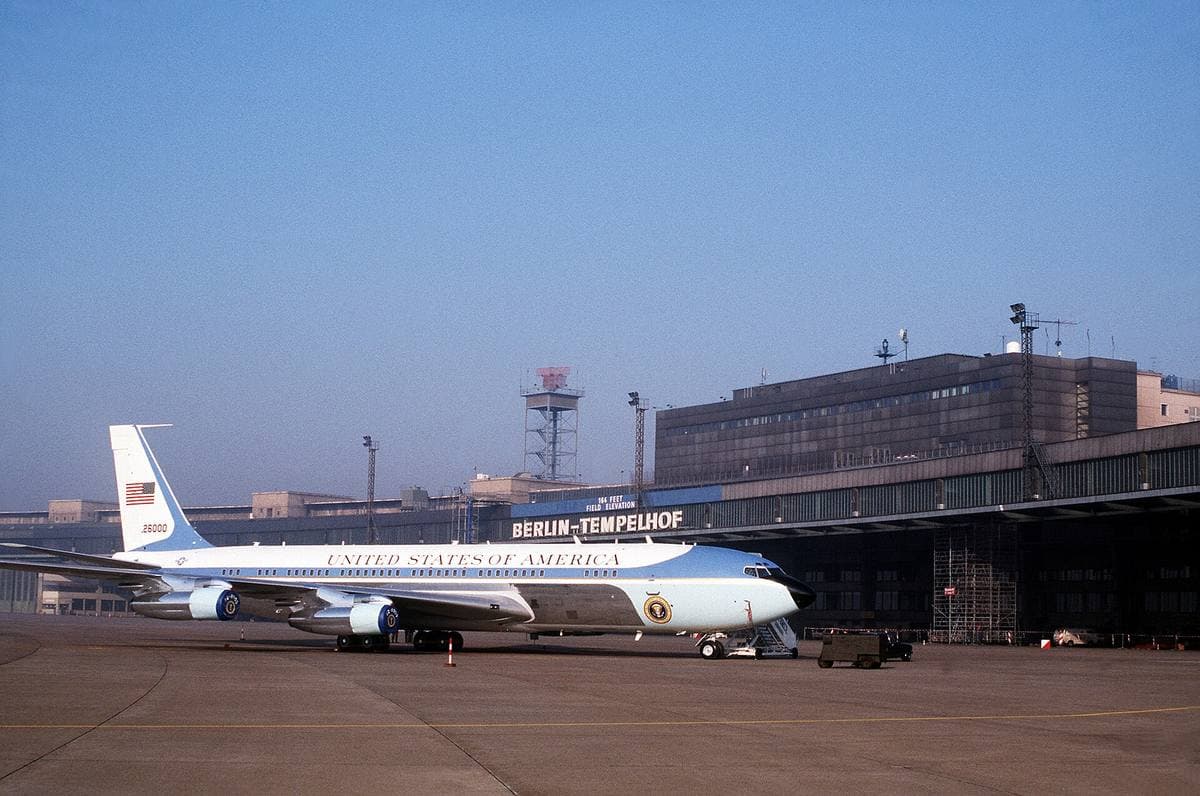
Air Force One on the ramp at Tempelhof in June 1987, under the terminal canopy. United States Navy · Public domain
Platz der Luftbrücke 5, Tempelhof
Tempelhof Airport
Throughout the Cold War Tempelhof was the main terminal for American military transport into West Berlin. The US Air Force base group left in June 1993.
Its terminal runs in a quadrant 1.2 kilometres long. The airport closed on 30 October 2008, and the field became Tempelhofer Feld.
Two-hour tours of the building run daily except Tuesday from the CHECK-IN visitor centre, left of the main entrance. The field is a public park.
Where we read it
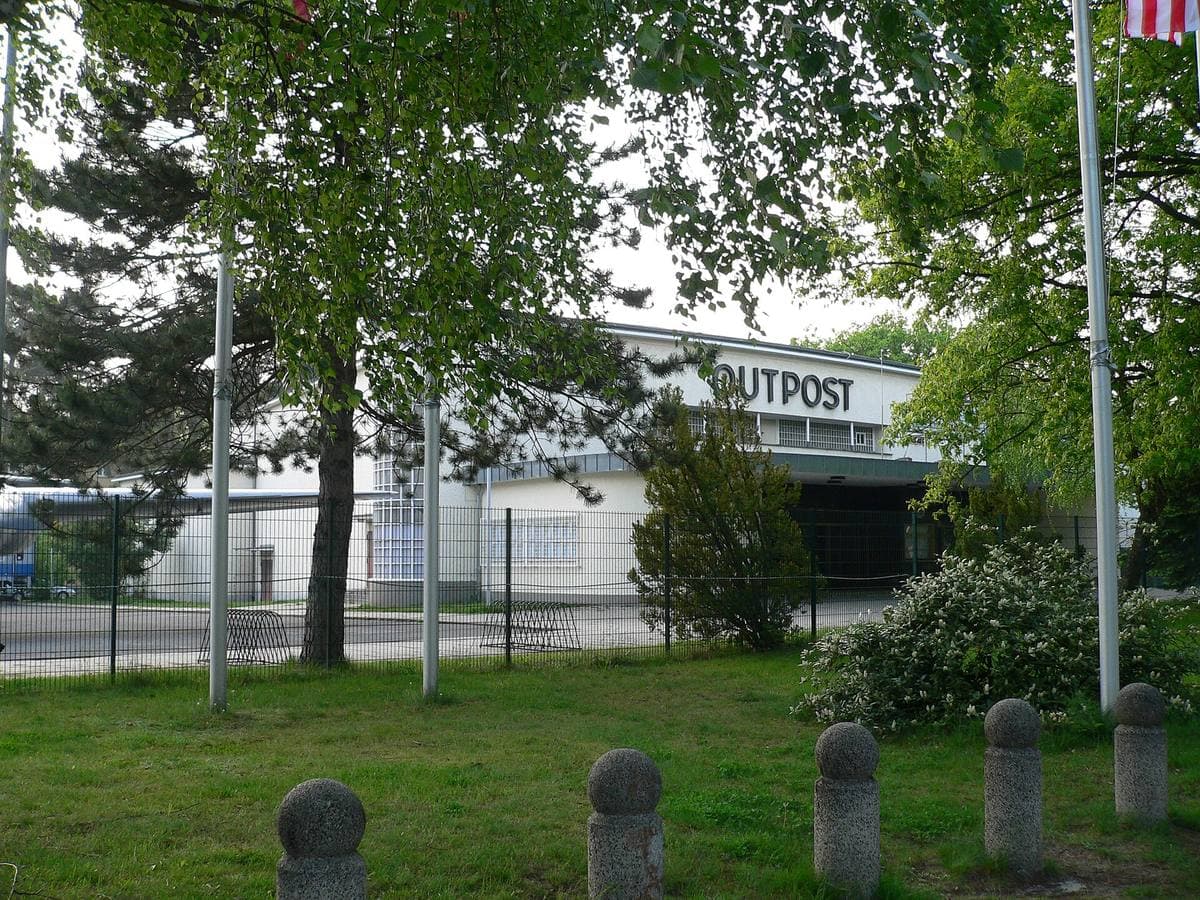
The Outpost, the US forces’ cinema on Clayallee, now part of the Allied Museum, in May 2010. Fridolin freudenfett (Peter Kuley) · CC BY-SA 3.0
Clayallee 135, Dahlem
Allied Museum
The museum is in the Outpost, the American soldiers’ cinema, and the old Nicholson Library. Helmut Kohl opened it in 1998.
Outside stand the last guardhouse from Checkpoint Charlie and a restored stretch of the Operation Gold tunnel, dug in the 1950s to tap Soviet lines.
It tells the story of the Western Allies in Berlin from 1945 to their departure in 1994. Entry is free.
Free. Tuesday to Sunday 10am–6pm; the large outdoor objects 11am–5pm.
Where we read it
Viator · Ad / affiliate
Cold War Berlin on foot
Berlin
Live marketplace results for Cold War and Berlin Wall walking tours. None is built round the series; check each route for Friedrichstraße, Bernauer Straße and Checkpoint Charlie.
Jonas Nay at the Grimme Prize in Marl on 8 April 2016, where Deutschland 83 won. 9EkieraM1 · CC BY-SA 3.0Jonas NayMartin Rauch · Marl, April 2016
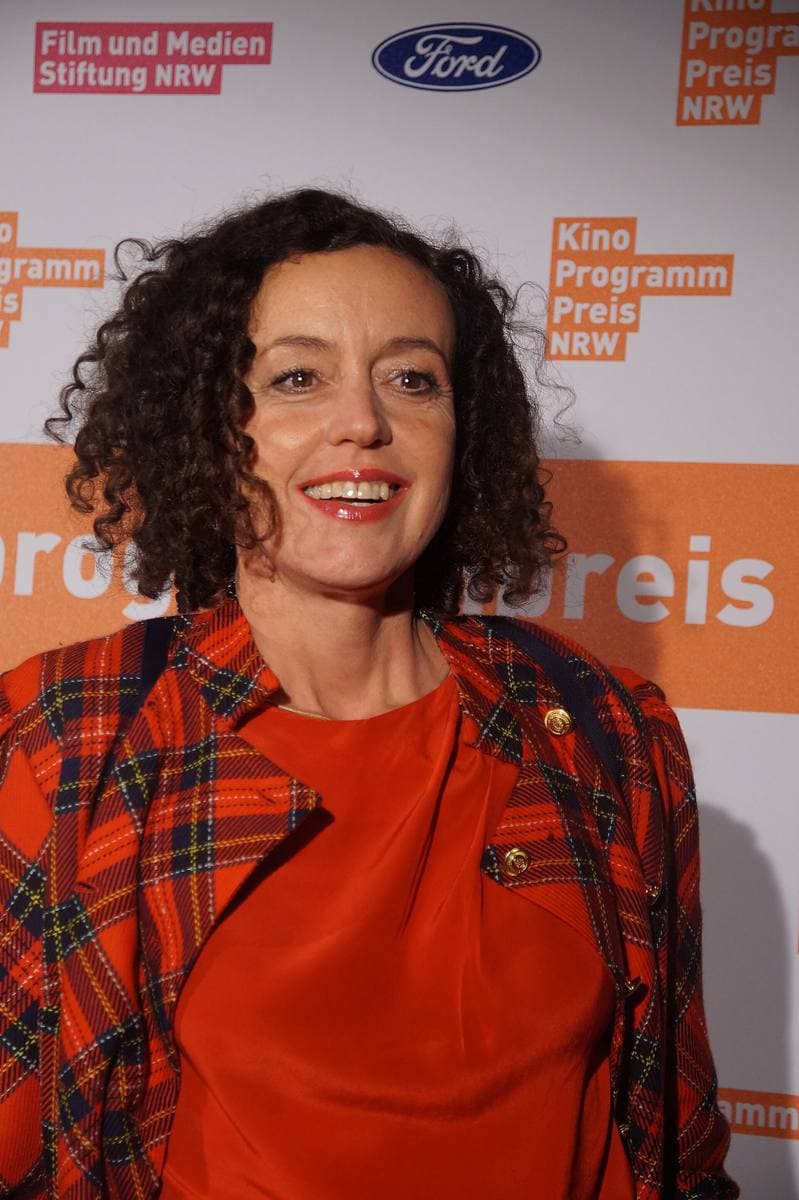
Maria Schrader in Cologne in November 2016, the year after the series aired. 9EkieraM1 · CC BY-SA 3.0Maria SchraderLenora Rauch · Cologne, 2016
Ulrich Noethen on the set of another drama in October 2015, a month before Deutschland 83 reached German television. Raimond Spekking · CC BY-SA 4.0Ulrich NoethenGeneral Wolfgang Edel · 2015
Joerg and Anna Winger, who created the series, at the Grimme Prize in April 2016. 9EkieraM1 · CC BY-SA 3.0Anna and Joerg WingerCreators · Marl, April 2016
Edward Berger, who directed most of the episodes, at the Grimme Prize in April 2016. Krd · CC BY-SA 3.0Edward BergerDirector · Marl, April 2016
UFA Fiction made it for RTL. Around Jonas Nay are Sonja Gerhardt as Annett, Ludwig Trepte as Alex Edel, Sylvester Groth as Walter Schweppenstette and Carina Wiese as Ingrid Rauch. Edward Berger and Samira Radsi directed; Reinhold Heil wrote the score.
1983Every episode title a NATO exercise from that year
Cross over.
Where it is now
13 places you can visit in Bonn, Berlin and Potsdam. Two are closed buildings you see from the street: the ministry on Mauerstraße and the Kreml on the Brauhausberg.
Pins mark public places; private homes are named but not pinned.
General reference · Public access · Coordinate precision: site · Not an exact scene or camera position; not a visitor route. A public lawn in front of the university, open all day. The Akademisches Kunstmuseum stands at its far end.
General reference · Restricted access · Coordinate precision: site · Not an exact scene or camera position; not a visitor route. Now the World Conference Center Bonn. The Haus der Geschichte runs bookable tours of the former parliament; outside, walk the Rhine side of the government quarter.
General reference · Public access · Coordinate precision: building · Not an exact scene or camera position; not a visitor route. An office building on a main road; look at it from the pavement.
General reference · Public access · Coordinate precision: building · Not an exact scene or camera position; not a visitor route. Free. Tuesday to Friday 9am–6pm, weekends 10am–6pm. On the Museumsmeile, Willy-Brandt-Allee.
1The Hofgarten in Bonn in August 2016, with the Akademisches Kunstmuseum beyond. Dietmar Rabich · CC BY-SA 4.0
Hofgarten, Adenauerallee, Bonn
The Hofgarten
On 22 October 1983 Willy Brandt spoke in the Hofgarten against the new missiles, telling the crowd Germany needed fewer weapons of mass destruction, not more.
A public lawn in front of the university, open all day. The Akademisches Kunstmuseum stands at its far end.
Where we read it
2Bonn’s government quarter on the Rhine from the air in September 2010. Wolkenkratzer · CC BY-SA 3.0
Platz der Vereinten Nationen, Bonn
The Bundeshaus
The Bundestag and the Bundesrat sat here from 1949 to 1999. The main building was finished in 1933 as a teachers’ college.
Now the World Conference Center Bonn. The Haus der Geschichte runs bookable tours of the former parliament; outside, walk the Rhine side of the government quarter.
Where we read it
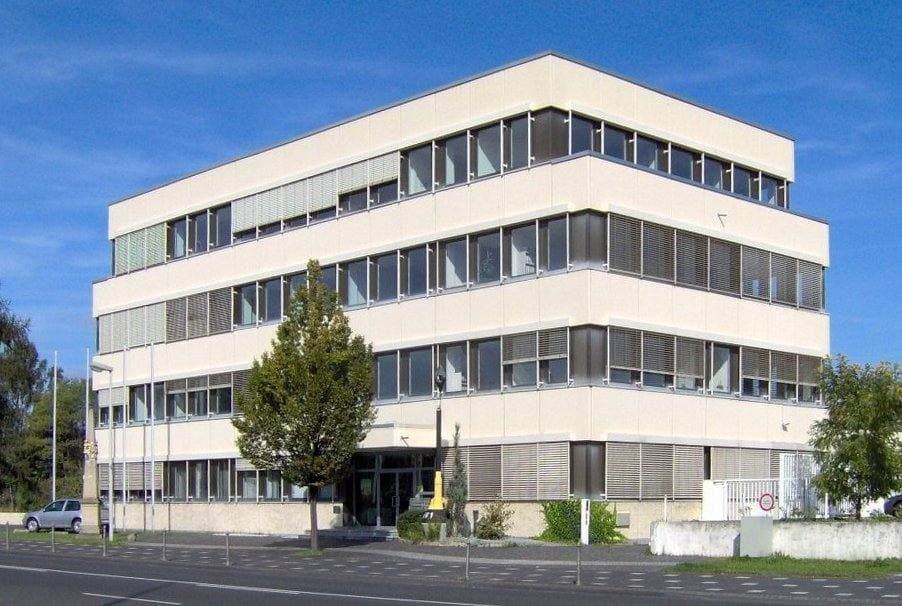
3Godesberger Allee 18, the GDR’s Permanent Mission in Bonn, in October 2006. Jotquadrat · CC BY-SA 2.0 DE
Godesberger Allee 18, Plittersdorf, Bonn
The GDR’s Permanent Mission
In the series Lenora Rauch, Martin’s aunt and handler, is a cultural attaché at East Germany’s Permanent Mission in Bonn.
An office building on a main road; look at it from the pavement.
Where we read it
4The atrium of the Haus der Geschichte in Bonn in September 2019. Palickap · CC BY-SA 4.0
Willy-Brandt-Allee 14, Bonn
Haus der Geschichte
The museum of the Federal Republic’s history: its permanent exhibition follows Germany from 1945, Bonn years and all. Entry is free.
Free. Tuesday to Friday 9am–6pm, weekends 10am–6pm. On the Museumsmeile, Willy-Brandt-Allee.
Where we read it
Stay
The guest house.
The old federal guest house on the Petersberg, above the Rhine.
Steigenberger
Steigenberger Icon Grandhotel & Spa Petersberg
Königswinter, near Bonn
The old guest house of the Federal Republic, on a hill above the Rhine at Königswinter, looking across to Bonn. The government rented it for state guests from 1955 and bought it in 1978; Leonid Brezhnev stayed in 1973.
Cold War walks in Berlin and tours of the old capital.
Viator · Ad / affiliate
Cold War Berlin on foot
Berlin
Live marketplace results for Cold War and Berlin Wall walking tours. None is built round the series; check each route for Friedrichstraße, Bernauer Straße and Checkpoint Charlie.
The Stasi Museum’s English tour and the Teufelsberg tours.
Checking current event dates…
Take it home
The records.
The series’ songs on CD, and the 1983 single its composer produced.
eBay · Ad / affiliate
Deutschland 83: Die Musik aus der TV-Serie
Various artists · CD, Polystar, 2015
The series’ songs on one CD, released in Germany on 27 November 2015, the day after the first RTL episode: 21 tracks, from New Order to Peter Schilling and Nena, with two pieces of the series’ own music.
Live marketplace search · listings and condition change
Dates, prices, rooms and stock change: confirm with the provider before you travel or buy. A stay or tour is described as a filming location only where the card says so.
The file
Every place and moment behind this page, with sources.
13 of 13 places · 11 of 11 Moments
The Hofgarten
Hofgarten, Adenauerallee, Bonn
The Hofgarten rally
Willy Brandt speaks against the new missiles to the peace rally in the Hofgarten.
The Bundeshaus
Platz der Vereinten Nationen, Bonn
The vote
The Bundestag votes 286 to 225 to station the missiles.
The GDR’s Permanent Mission
Godesberger Allee 18, Plittersdorf, Bonn
Lenora’s cover
Lenora Rauch, Martin’s handler, works as cultural attaché at the East German mission in Bonn.
Haus der Geschichte
Willy-Brandt-Allee 14, Bonn
Stasi Museum, Haus 1
Ruschestraße 103, Haus 1, Lichtenberg
Headquarters
Scenes at the Stasi headquarters are filmed in the real one.
The ministry on Mauerstraße
Mauerstraße 29, Mitte
The studio
The series’ interiors are shot in the former GDR interior ministry, used as a studio.
Tränenpalast
Reichstagufer 17, Mitte
Going west
Westbound travellers are checked through the hall at Friedrichstraße station.
Berlin Wall Memorial
Bernauer Straße 119, Mitte
Teufelsberg
Teufelsseechaussee 10, Grunewald
Listening east
American and British listeners on the rubble hill work the airwaves of the East.
Tempelhof Airport
Platz der Luftbrücke 5, Tempelhof
The American gateway
American military transport flies in and out of West Berlin through Tempelhof.
Allied Museum
Clayallee 135, Dahlem
The soldiers’ cinema
The Outpost shows films to the American garrison in Dahlem.
Glienicke Bridge
Königstraße, between Wannsee and Potsdam
The swap
Twenty-three American agents cross the bridge in exchange for four Eastern agents.
The Kreml on the Brauhausberg
Am Havelblick 8, Potsdam
The barracks near Bonn
Potsdam’s old Landtag building plays a Bundeswehr barracks in Bonn.