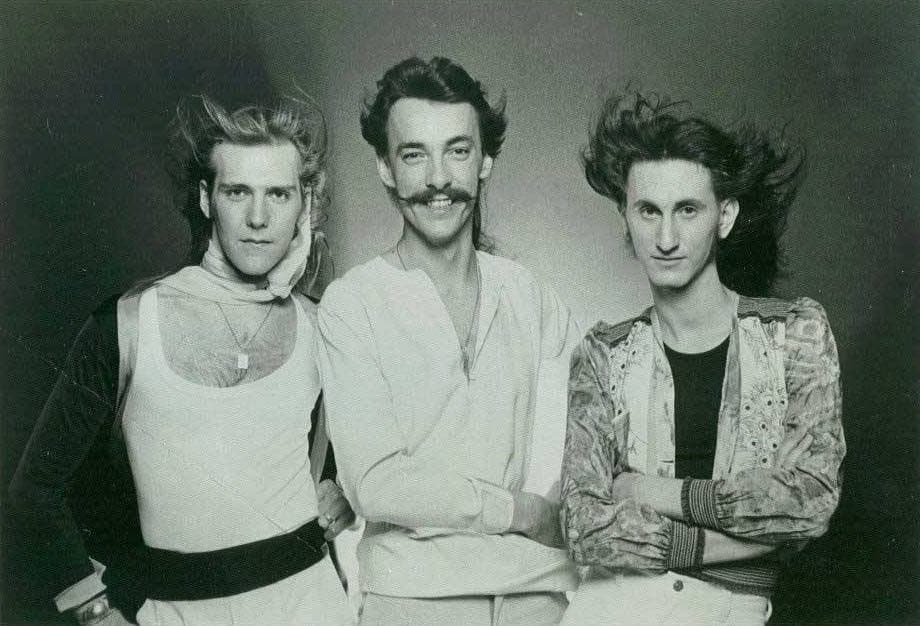
1976, the year of 2112: Alex Lifeson, Neil Peart and Geddy Lee. Mercury Records · Public domain
Willowdale, Toronto · August 1968 to now
Rush
Before he joined Rush, Neil Peart ran the Ball Toss at Lakeside Park. Ten tins on this counter, one for each of their places. Step up and throw, further down.
Willowdale, North York · 1968
Twenty-five dollars in a church basement. A name found days before.
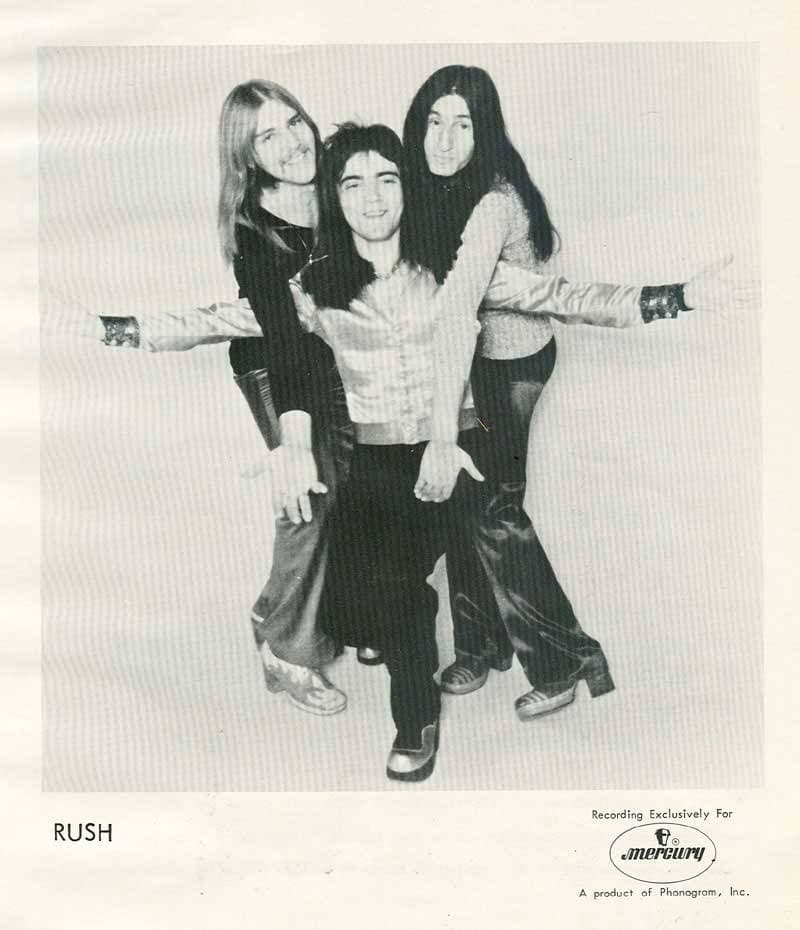
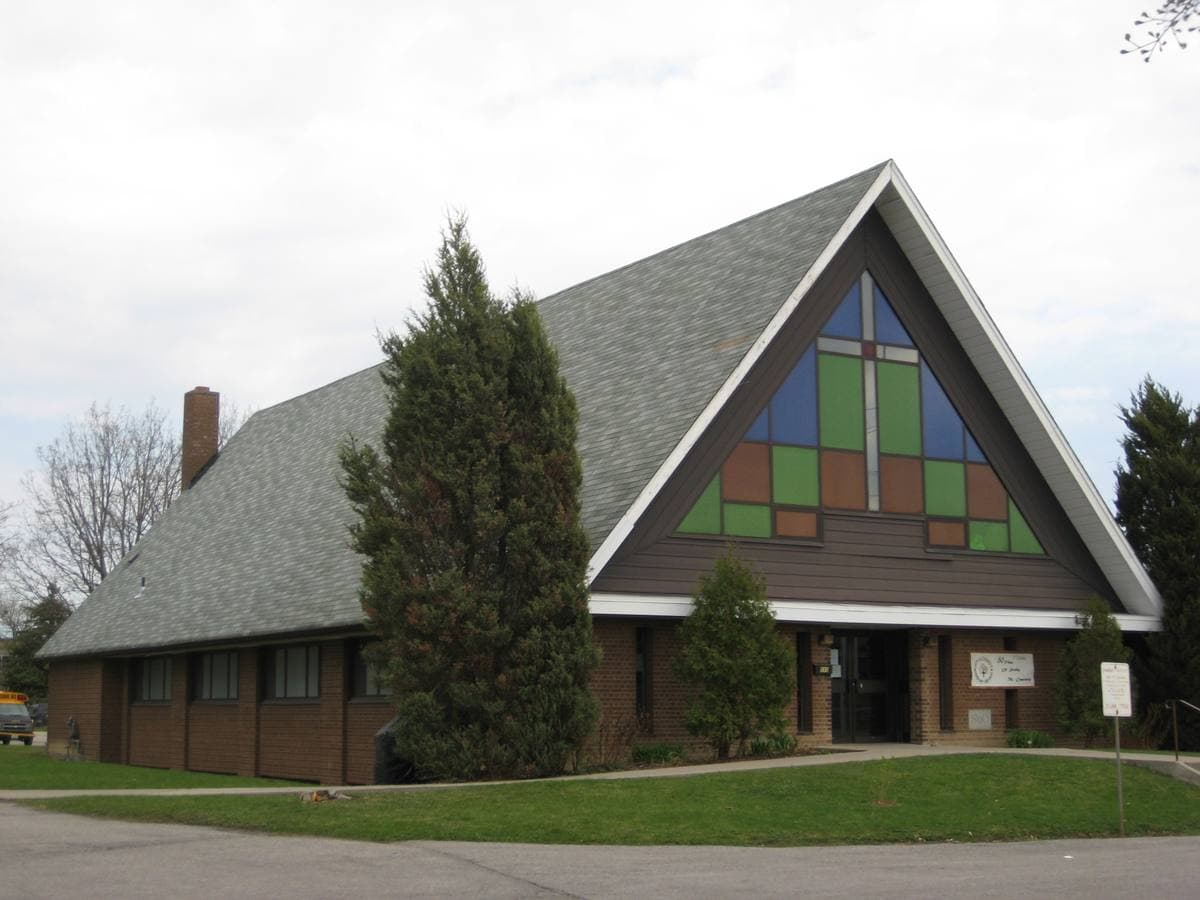
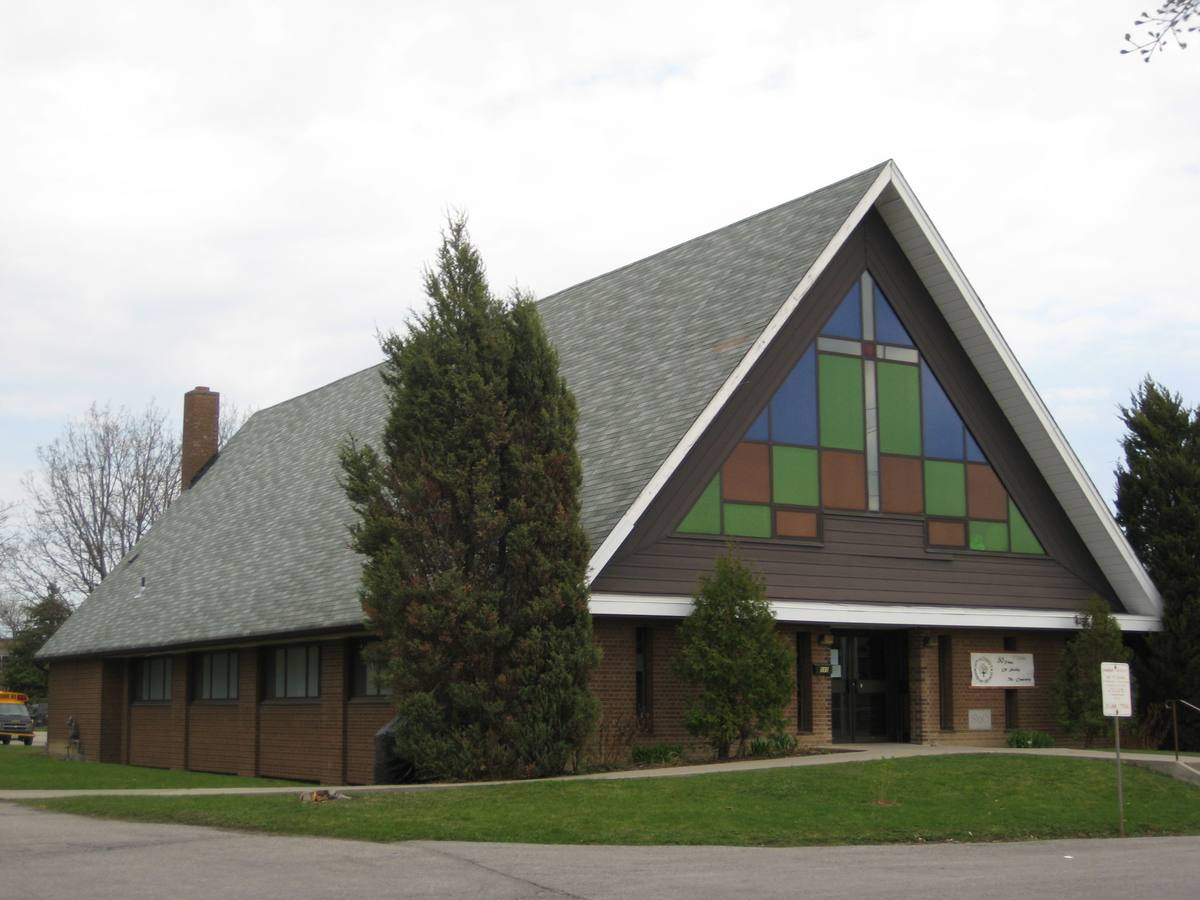
Rush in a Mercury Records publicity photograph for their first album, July 1974, with the original drummer John Rutsey. Mercury Records · Public domain1974St. Theodore of Canterbury Anglican Church, Cactus Avenue, Willowdale, in 2010. The Coff-In was in its basement. SimonP · CC BY-SA 3.0
The Coff-In, St. Theodore of Canterbury · 111 Cactus Avenue, Willowdale, North York
Rush was formed in August 1968 in Willowdale, a neighbourhood of Toronto, by Alex Lifeson, John Rutsey and Jeff Jones.
Their first paid show was at the Coff-In, a youth coffee house in the basement of this church, in September 1968. They were paid $25.
The band had no name until shortly before; John Rutsey’s brother Bill suggested Rush.
A working Anglican church on a quiet residential street. The Coff-In was in the basement; photograph the outside, and check the parish before you go in.
Behind the counter
A second show followed on 13 September, with Geddy Lee on bass in place of Jeff Jones.
Lee Lifeson Art Park · 223 Gladys Allison Place, North York
Alex Lifeson and Geddy Lee first met as students at Fisherville.
Willowdale, their home neighbourhood, is named in The Necromancer, on Caress of Steel.
Willowdale Park was redesigned in 2015 as a park themed on sound and music, with an outdoor stage, and renamed after Lee and Lifeson.
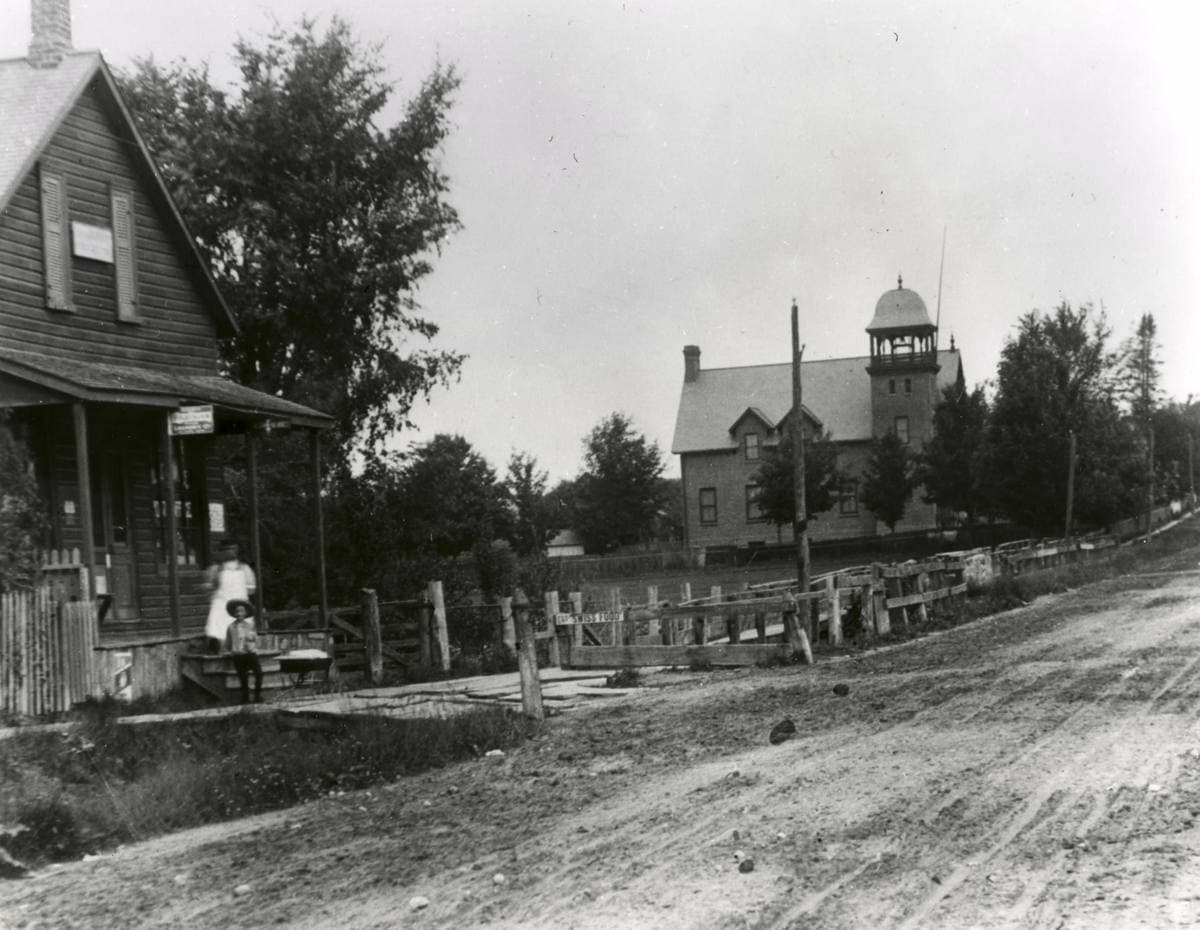
A public park with an outdoor stage, open daily. The photograph is old Willowdale on Yonge Street in 1897, a short walk east.
Behind the counter
Toronto Sound to Massey Hall · 1976
The record the label didn’t want. Three nights at home.
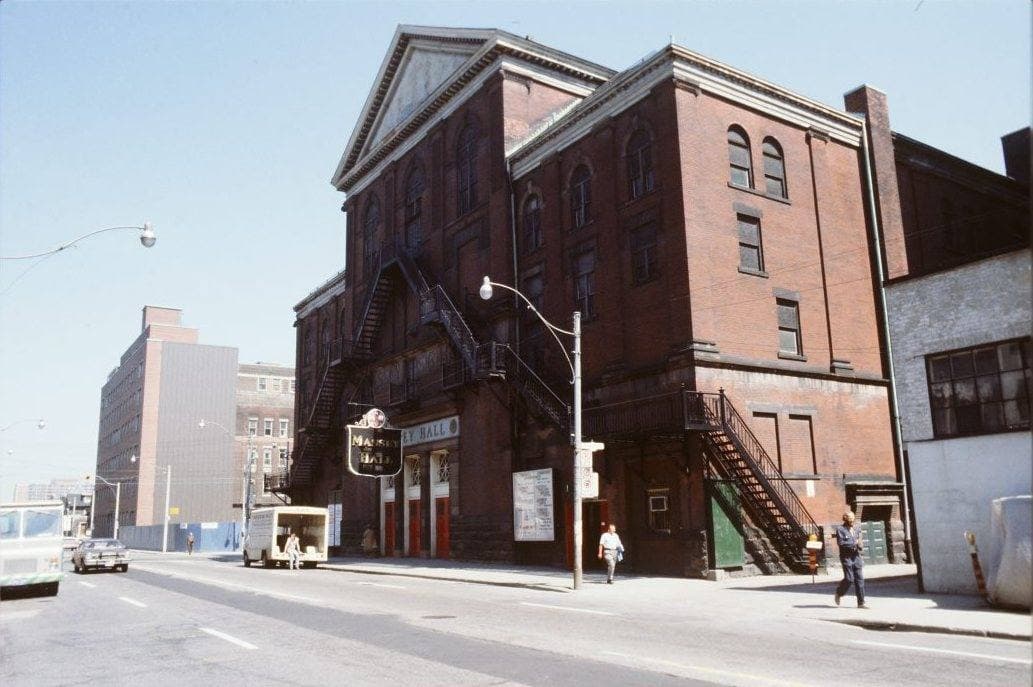
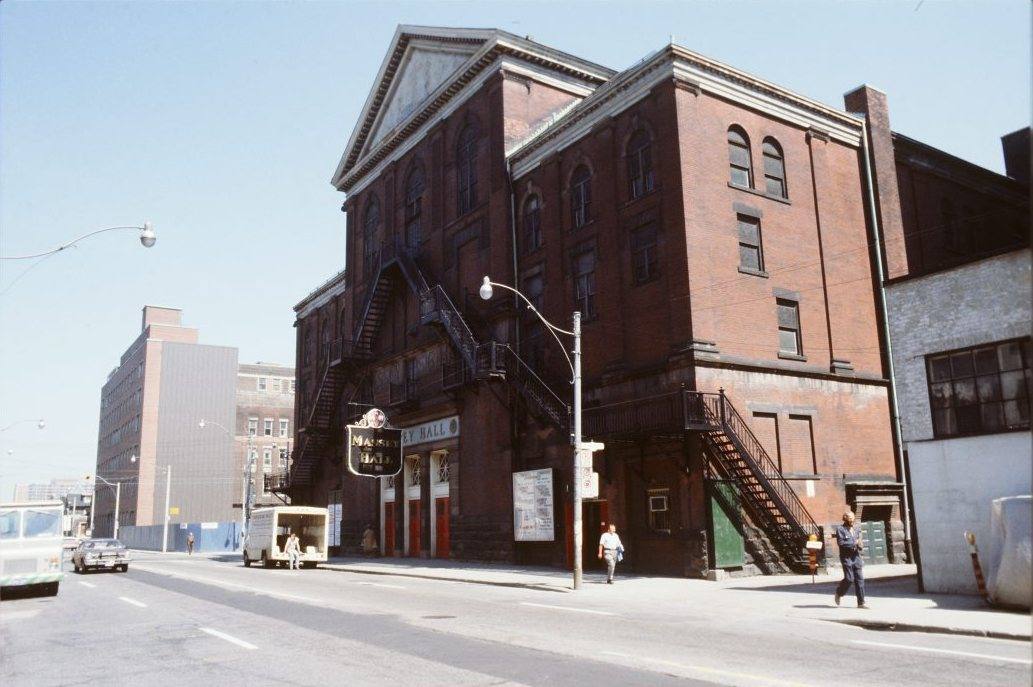
Massey Hall on Shuter Street about 1979, three years after Rush recorded All the World’s a Stage there. City of Toronto Planning and Development. City of Toronto Planning and Development Department · CC BY 2.0
20 minutes
7 sections
3 nights
2112 was recorded and mixed at Toronto Sound Studios with Terry Brown, and released in April 1976.
Their label did not want another concept album. The band made one anyway, and it became their first major commercial success.
Its title piece runs about 20 minutes, in seven sections.
The 2112 tour ended with three nights here in June 1976, recorded for the live album All the World’s a Stage.
A working concert hall at Victoria and Shuter Streets; see its listings for shows.
Behind the counter
Massey Hall
Shows at Massey Hall
178 Victoria Street, Toronto · See the listings
The hall where the 2112 tour ended and All the World’s a Stage was recorded, still a working concert hall.
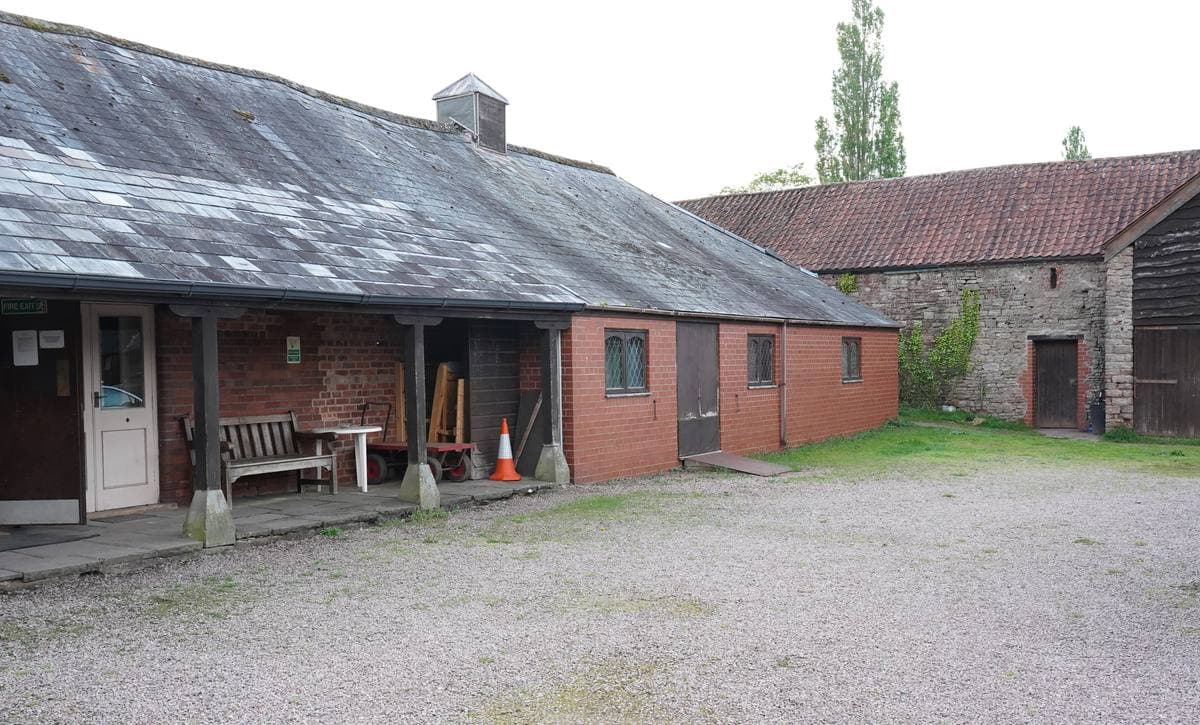
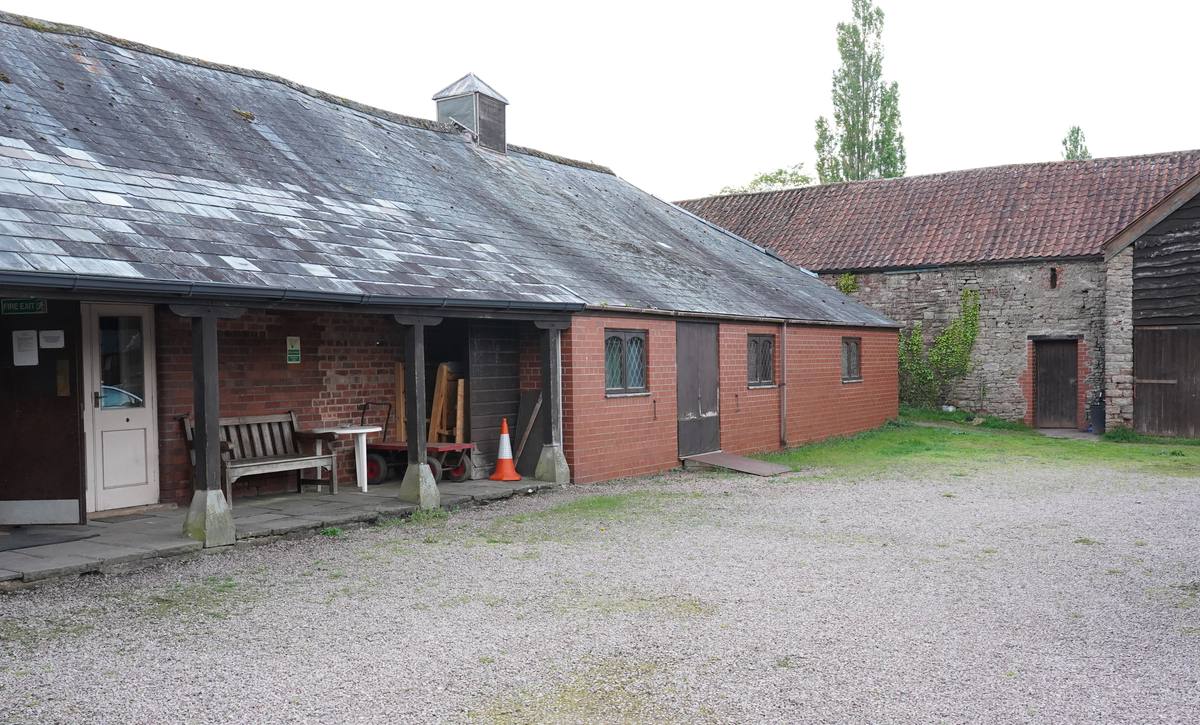
The courtyard at Rockfield Studios near Monmouth, which Rush used while making A Farewell to Kings. Photographed on a studio tour in 2024. Steve Knight from Halstead, United Kingdom · CC BY 2.0
Rockfield Studios · Rockfield Road, near Monmouth
In 1965 Rockfield was recognised as the first residential recording studio in the world.
A Farewell to Kings was recorded here in June 1977, in about three weeks.
The birdsong on the title track and on Xanadu was recorded outdoors near the studio.
The album was mixed at Advision in London over about two weeks, and released in September 1977.
A working residential studio on a farm outside Monmouth, with no drop-in visits; its rooms can be booked through Rockfield Leisure. The courtyard was photographed on a tour in 2024.
Behind the counter
Rockfield Music Group
Rockfield Leisure
Rockfield, near Monmouth, Wales
Rooms at the farm studio where A Farewell to Kings was made in 1977; you don’t need to be in a band to stay.
Ten tins, Toronto at the foot and the road at the top. Pick one.
Neil Peart was born in Hamilton in 1952 and grew up in Port Dalhousie, now part of St. Catharines. As a teenager he worked at Lakeside Park, running the Bubble Game and the Ball Toss.
He wrote about the park in Lakeside Park, on Caress of Steel. He joined Rush on 29 July 1974, two weeks before their first American tour.
Behind the counter
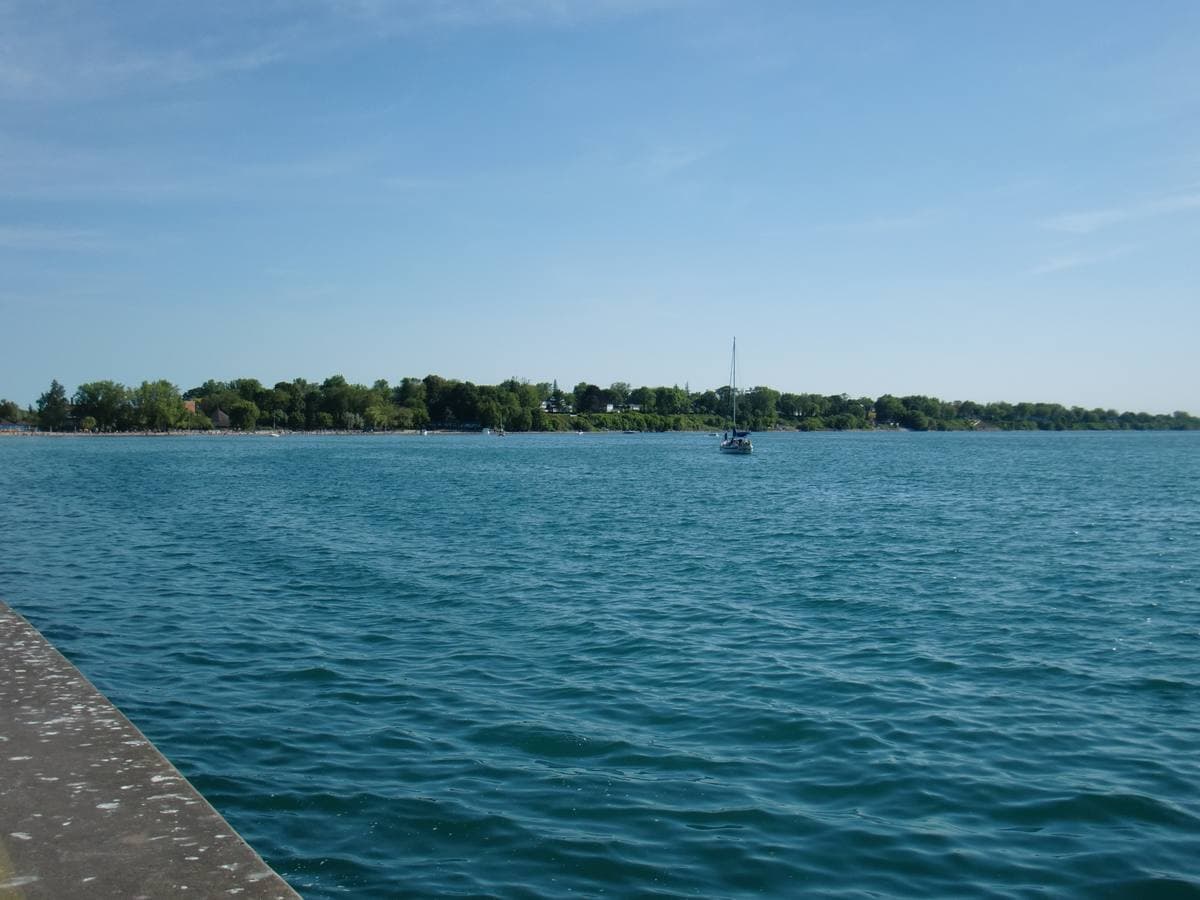
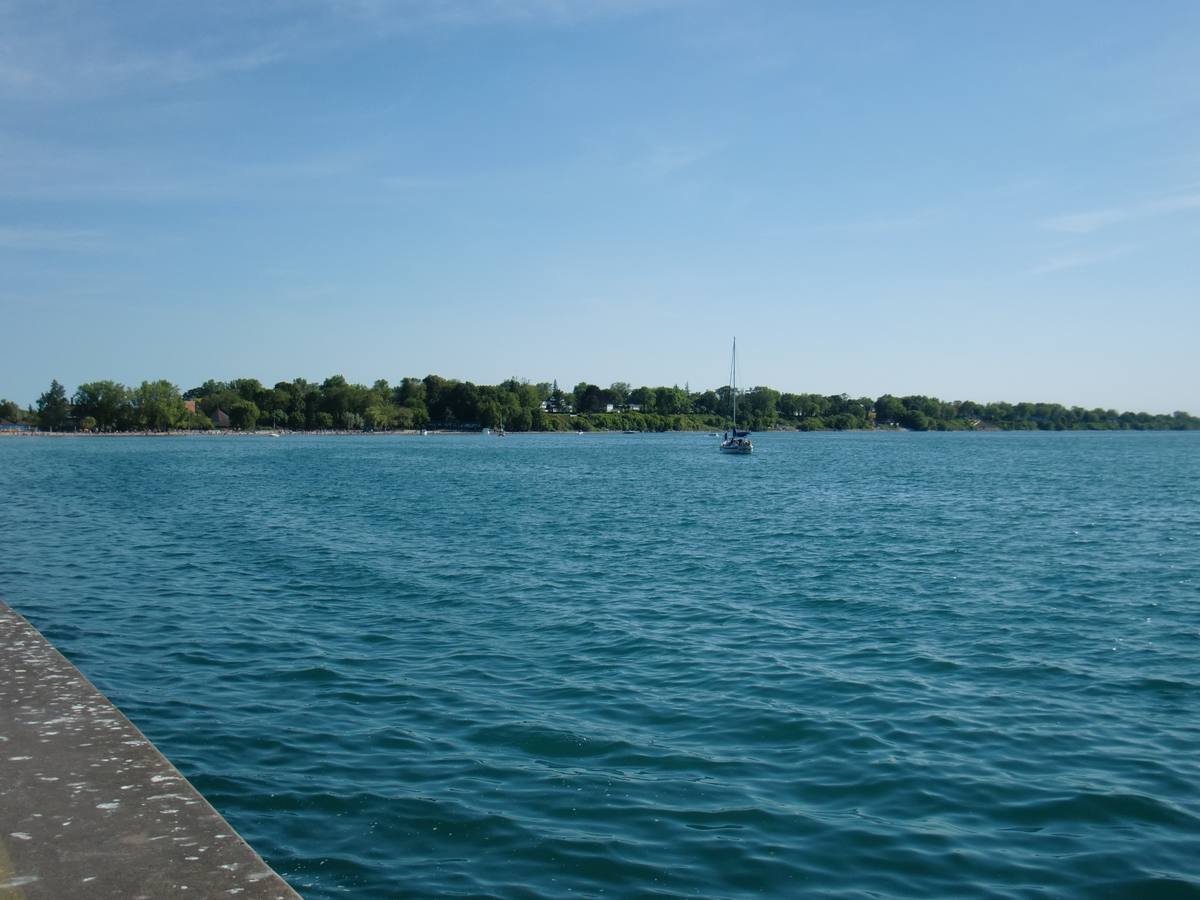
Lakeside Park, Port Dalhousie, seen from the pier in 2010. Eric Marshall · CC BY 3.0
Lakeside Park, Port Dalhousie · 1 Lakeport Road, St. Catharines
He died of a brain cancer, glioblastoma, on 7 January 2020. That year St. Catharines named the park’s pavilion after him.
A public park and beach on Lake Ontario, just over 100 km from Toronto by the QEW or GO Transit.
Behind the counter
Queen’s Park, Toronto · Moving Pictures, 1981
Three arches. Nobody planned it.
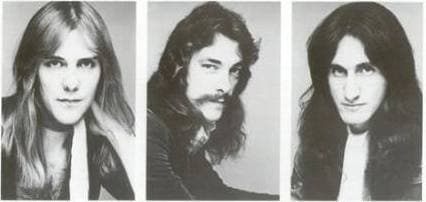
Alex Lifeson, Neil Peart and Geddy Lee in a Mercury Records press sheet, 1977. Mercury · Public domain
Alex Lifeson, Neil Peart and Geddy Lee in a Mercury Records press sheet, 1977. Mercury · Public domain
Alex Lifeson, Neil Peart and Geddy Lee in a Mercury Records press sheet, 1977. Mercury · Public domain
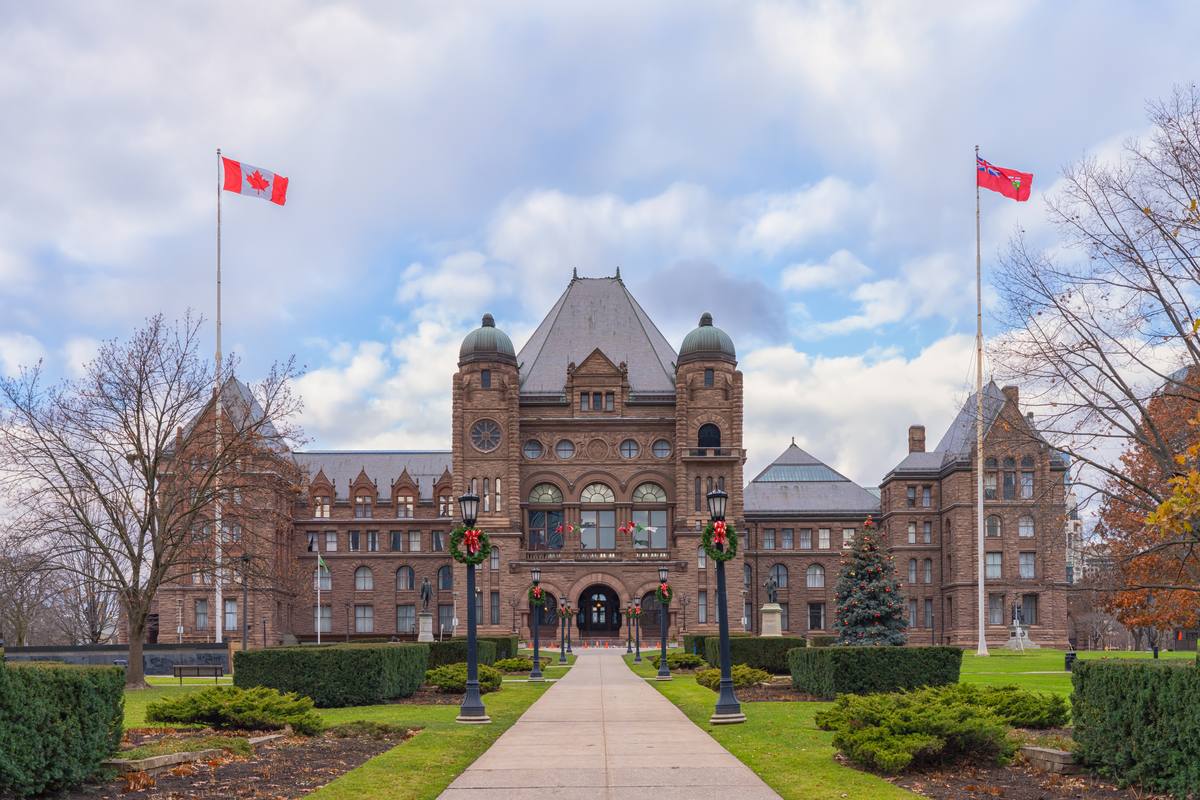
Three arches on the front of the Legislature. Light one.
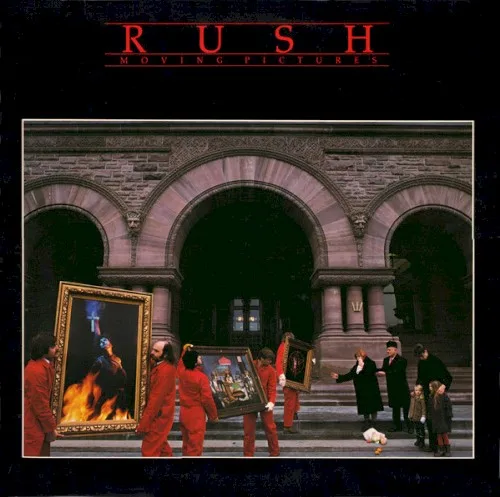
The Legislative Building was built from 1886 to 1893. Its front is on the cover of Moving Pictures, released in 1981. Hugh Syme, the band’s art director, had wanted somewhere grand in Europe; on the budget they had, he used the Legislature, a nod to their home town.
The sleeve plays on its title three ways: movers moving pictures, people moved by them, and on the back a film crew making a moving picture of it all.
Behind the counter
Legislative Assembly of Ontario
Free tours of the Legislature
111 Wellesley Street West, Toronto · Free · daily
The building on the front of Moving Pictures. Building tours leave every half hour; outdoor tours of the grounds at 10.30am and 2.30pm.
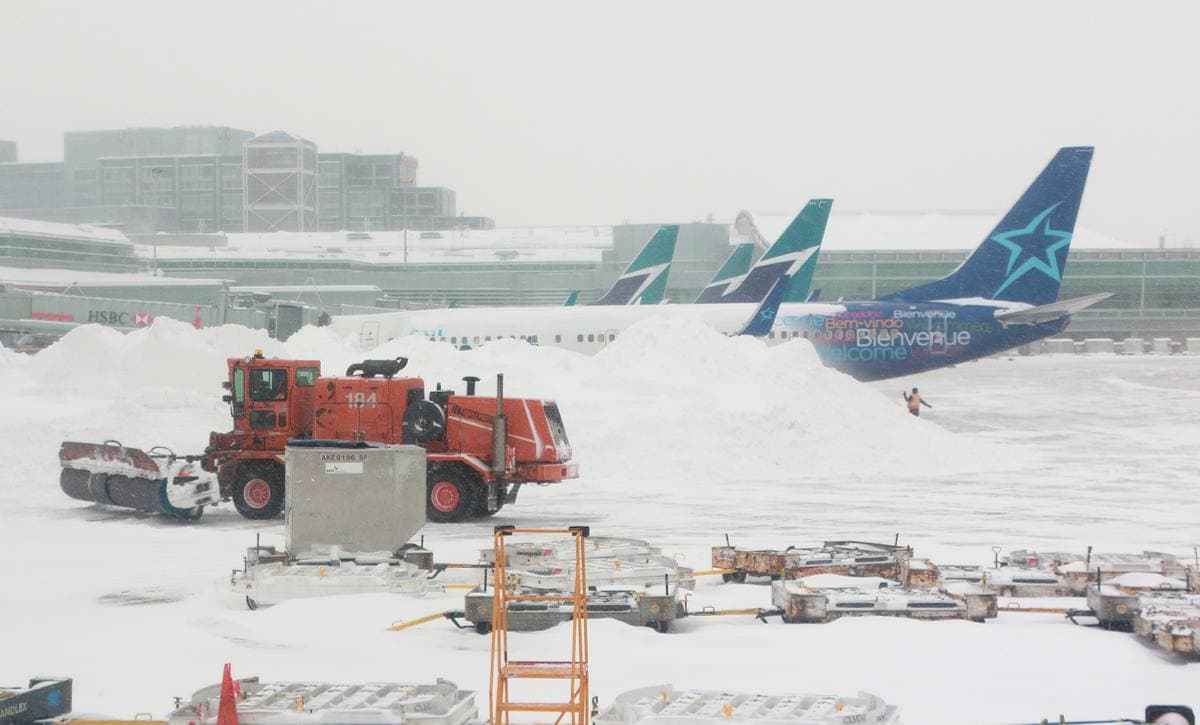
Toronto Pearson International Airport, airport code YYZ, in the winter of 2015. ImagePerson · CC BY 4.0
YYZ · Toronto Pearson International Airport
YYZ is the airport code of Toronto Pearson, and the title of the instrumental on Moving Pictures.
A navigation beacon at the airport sends its identifier, YYZ, in Morse code. The band first heard the rhythm as Alex Lifeson flew them into the airport. The piece opens by spelling Y-Y-Z in Morse, in 10/8 time.
It was nominated for a Grammy for best rock instrumental in 1982, and lost to The Police’s Behind My Camel.
Look for the large YYZ sign in Terminal 1 international arrivals.
Behind the counter
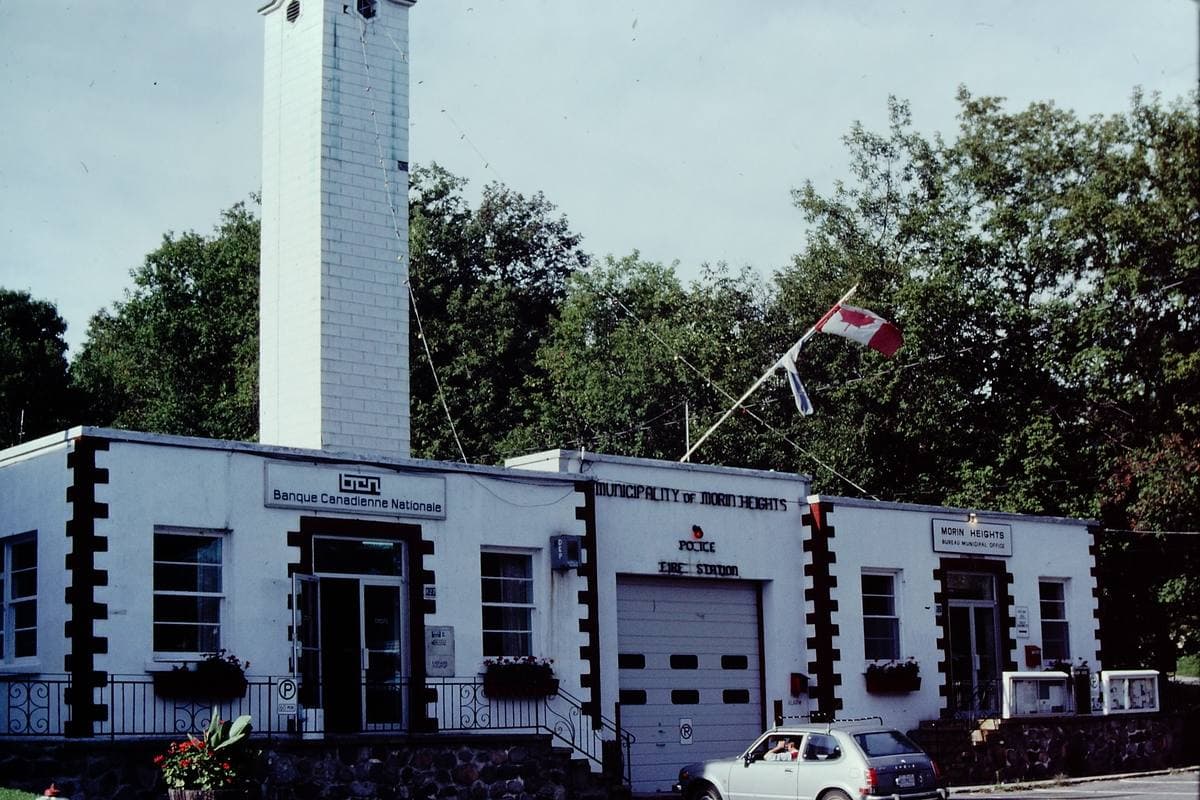
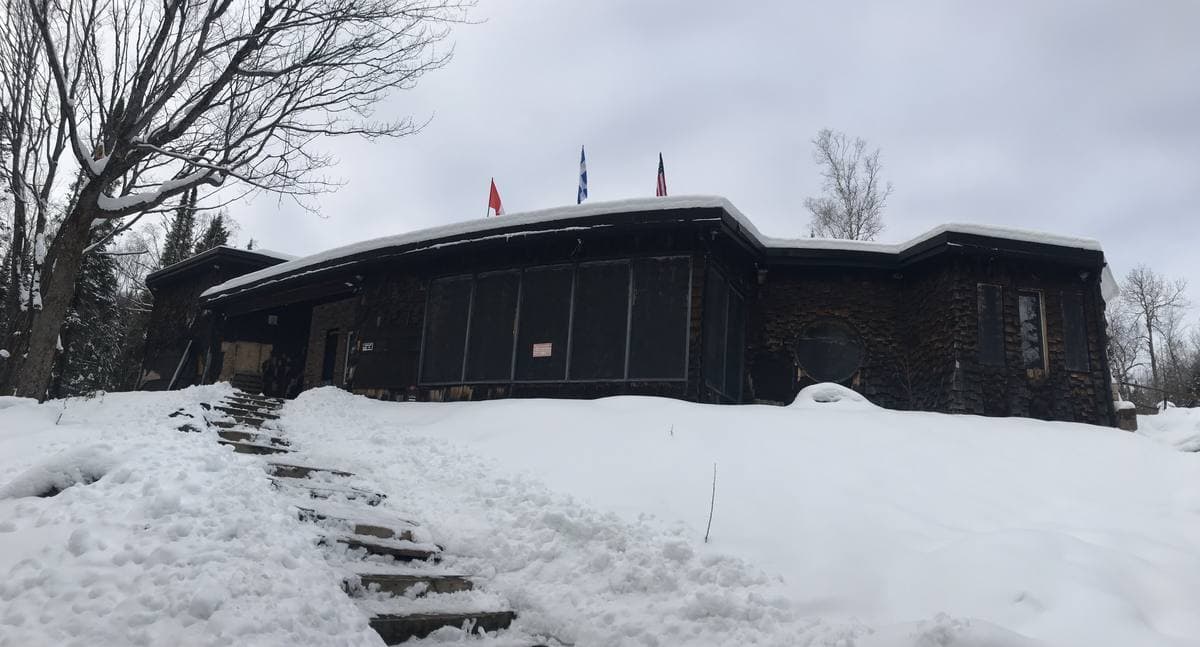
Morin-Heights village, about 1979: the municipal office, fire hall and police station. Harold Don Allen · CC BY-SA 4.0Le Studio, Morin-Heights, in December 2018, after the 2017 fire. It was demolished in 2020. MarceloNunesMtl · CC BY-SA 4.0
Le Studio (site) · Morin-Heights, in the Laurentians, Quebec
André Perry built Le Studio in 1972 with Yaël Brandeis and Nick Blagona, on a lake he owned near Morin-Heights, in the Laurentian Mountains.
Moving Pictures was recorded and mixed here from October to November 1980, produced by Rush and Terry Brown.
Rush made seven studio albums here between 1979 and 1993, and filmed the videos for Tom Sawyer, Limelight and Vital Signs here.
The studio closed in March 2003. A fire in August 2017 badly damaged the empty building, and what was left was demolished in October 2020.
The cleared site is private land and is not mapped here. The photographs are the village about 1979, and the studio in 2018, after the fire.
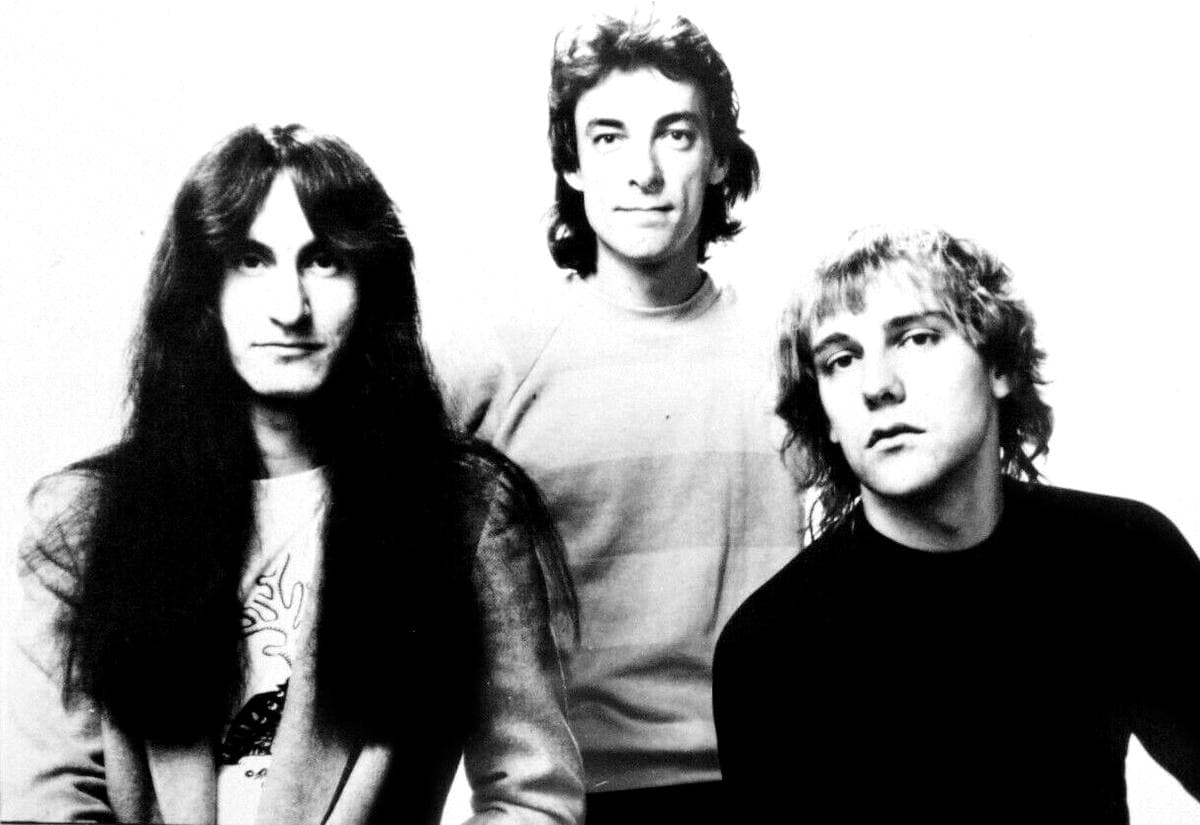
Behind the counterRush in a PolyGram publicity photograph, about 1981, the time of Moving Pictures. PolyGram · Public domain
Quebec to Telegraph Creek, and on · 1998–99
The healing road.
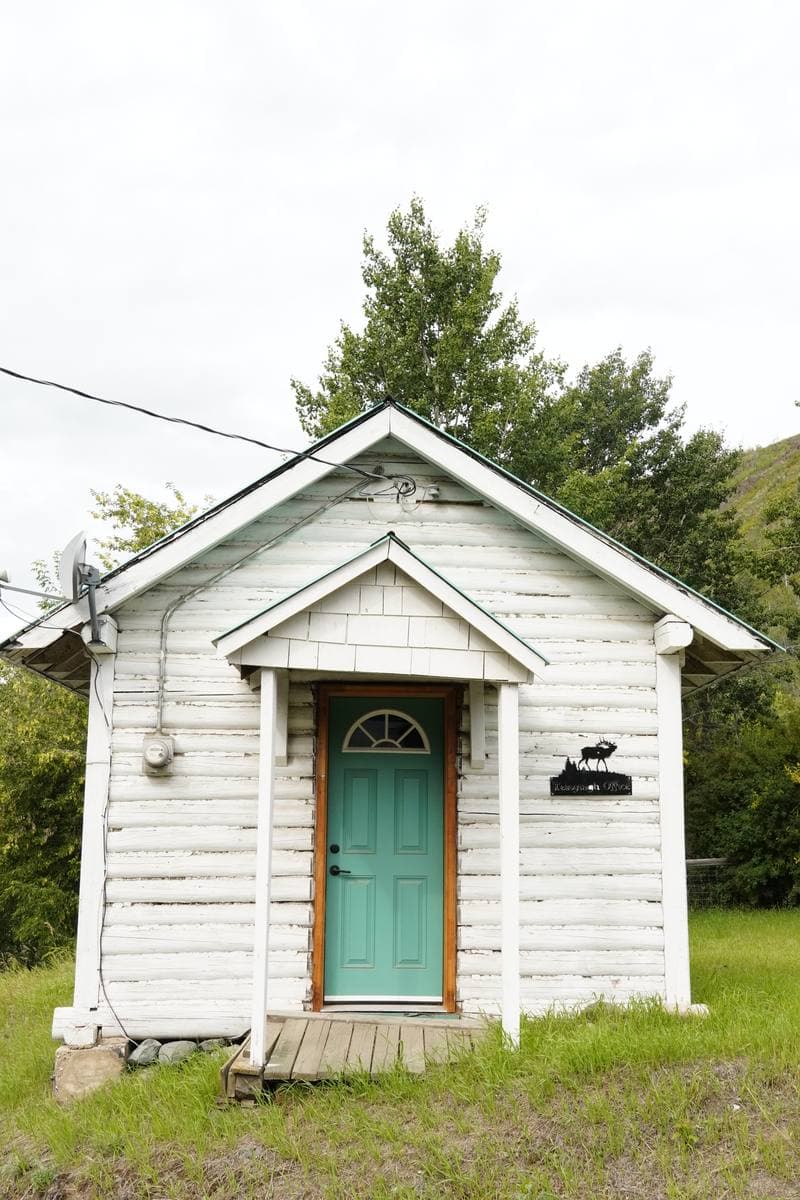
The former telegraph office at Telegraph Creek, British Columbia, in 2023. Egaowakaii · CC BY 4.0
Within ten months Neil Peart lost his daughter Selena, 19, in a car crash on 10 August 1997, and his wife, Jacqueline Taylor, to cancer on 20 June 1998.
He then rode about 55,000 miles by motorcycle across much of North America, down through Mexico to Belize, and back.
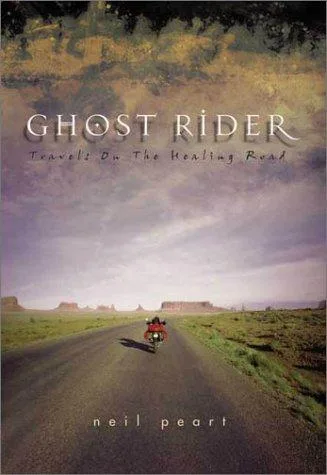
His book of the journey, Ghost Rider: Travels on the Healing Road, opens with the ride from his home in Quebec, bound for Telegraph Creek.
Telegraph Creek is the only permanent settlement on the Stikine River; a telegraph line of 1866 gave it its name.
Early in 2001 he told the band he was ready to return. The next album was Vapor Trails, in 2002.
A small community at the end of about 113 km of mostly gravel road from Dease Lake, with steep grades and no guardrails. Check the road before you set out.
Behind the counter
King Street West, Toronto · 27 May 1999
A star on King Street. Still on the road.
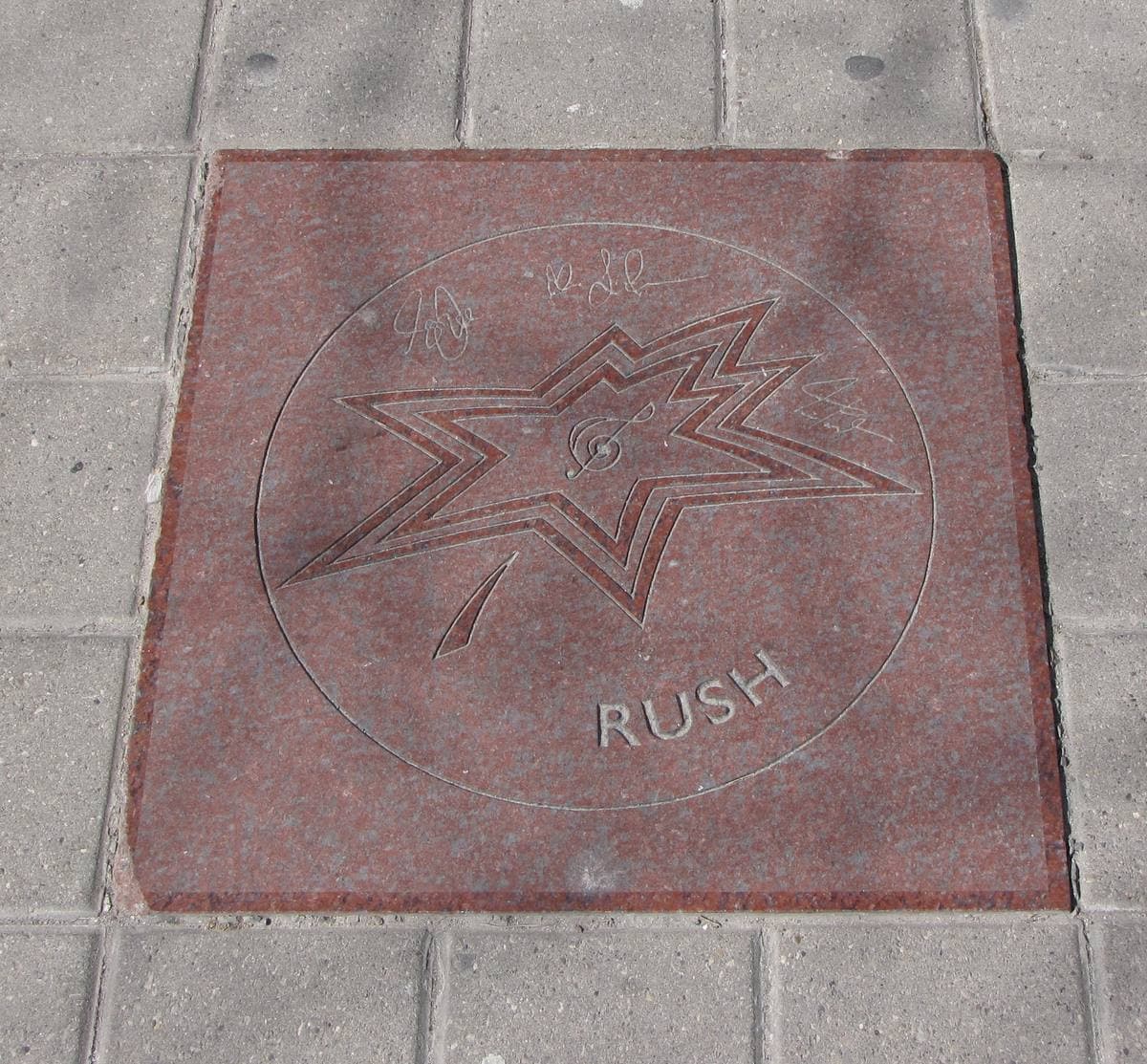
Rush’s star on Canada’s Walk of Fame, King Street West, in 2009, signed by Geddy Lee, Alex Lifeson and Neil Peart. Tabercil · CC BY-SA 3.0
1999 Canada’s Walk of Fame
2013 Rock and Roll Hall of Fame
2026 Fifty Something
Rush were inducted into Canada’s Walk of Fame on 27 May 1999, at a ceremony outside Roy Thomson Hall. Their star is on King Street West near Simcoe Street.
They were inducted into the Rock and Roll Hall of Fame in Cleveland on 18 April 2013.
In October 2025 Geddy Lee and Alex Lifeson announced Fifty Something, a tour with Anika Nilles on drums. It grew from 12 dates to 58.
Set in the pavement of King Street West near Simcoe Street, by Roy Thomson Hall: there any hour.
Behind the counter
Where it is now
9 places you can visit, in Toronto, Port Dalhousie, British Columbia and Wales. Le Studio’s cleared site in Morin-Heights is private land, so it is named but not on the map; Rockfield is a working studio, seen from the road.
Pins mark public places; private homes are named but not pinned.
Building reference · Public access · Not an exact scene or camera position; not a visitor route. A working Anglican church on a quiet residential street. The Coff-In was in the basement; photograph the outside, and check the parish before you go in.
Site reference · Public access · Not an exact scene or camera position; not a visitor route. A public park with an outdoor stage, open daily. The photograph is old Willowdale on Yonge Street in 1897, a short walk east.
1St. Theodore of Canterbury Anglican Church, Cactus Avenue, Willowdale, in 2010. The Coff-In was in its basement. SimonP · CC BY-SA 3.0
111 Cactus Avenue, Willowdale, North York
The Coff-In, St. Theodore of Canterbury
Rush was formed in August 1968 in Willowdale, a neighbourhood of Toronto, by Alex Lifeson, John Rutsey and Jeff Jones.
A working Anglican church on a quiet residential street. The Coff-In was in the basement; photograph the outside, and check the parish before you go in.
1 Lakeport Road, St. Catharines · Public park · free
Neil Peart’s boyhood park in Port Dalhousie, with the pavilion St. Catharines named after him in 2020. Just over 100 km from Toronto by the QEW or GO Transit.
Dates, prices, rooms and stock change: confirm with the provider before you travel or buy. A stay or tour is described as a filming location only where the card says so.
Behind the counter
Every place and moment behind this page, with sources.
10 of 10 places · 13 of 13 Moments
The Coff-In, St. Theodore of Canterbury
111 Cactus Avenue, Willowdale, North York
Twenty-five dollars
In a church-basement coffee house, a band just named Rush plays its first paid show, for $25.
Geddy Lee on bass
For the second show, Geddy Lee replaces Jeff Jones on bass.
Lee Lifeson Art Park
223 Gladys Allison Place, North York
A park with their names
Willowdale Park reopens as a sound and music park with an outdoor stage, named after Lee and Lifeson.
Massey Hall
178 Victoria Street, Toronto
All the World’s a Stage
The 2112 tour ends with three nights at Massey Hall, recorded for a live album.
Rockfield Studios
Rockfield Road, near Monmouth
Birds outside Rockfield
Three weeks in Wales for A Farewell to Kings, with birdsong recorded outside.
Toronto Pearson International Airport
6301 Silver Dart Drive, Mississauga
The beacon
Flying in to Pearson, they hear the airport beacon tapping out YYZ in Morse; it becomes the opening of an instrumental.
Ontario Legislative Building, Queen’s Park
111 Wellesley Street West, Toronto
Three arches
Hugh Syme shoots the Moving Pictures sleeve in front of the Legislature, and only later counts three arches for three players.
Le Studio (site)
Morin-Heights, in the Laurentians, Quebec
Moving Pictures at Le Studio
Moving Pictures is recorded and mixed at Le Studio in Morin-Heights.
The studio burns, empty
Closed since 2003, Le Studio is badly damaged by fire; the rest is demolished three years later.
Telegraph Creek
Telegraph Creek, on the Stikine River, British Columbia
The healing road
After losing his daughter and his wife, Neil Peart leaves his home in Quebec by motorcycle, bound first for Telegraph Creek.
Lakeside Park, Port Dalhousie
1 Lakeport Road, St. Catharines
The Ball Toss
As a teenager, Neil Peart runs the Bubble Game and the Ball Toss at Lakeside Park.
The Neil Peart Pavilion
St. Catharines names the Lakeside Park pavilion after him.
Rush’s star, Canada’s Walk of Fame
King Street West near Simcoe Street, outside Roy Thomson Hall, Toronto
A star on King Street
Rush are inducted into Canada’s Walk of Fame outside Roy Thomson Hall.