Skip to content
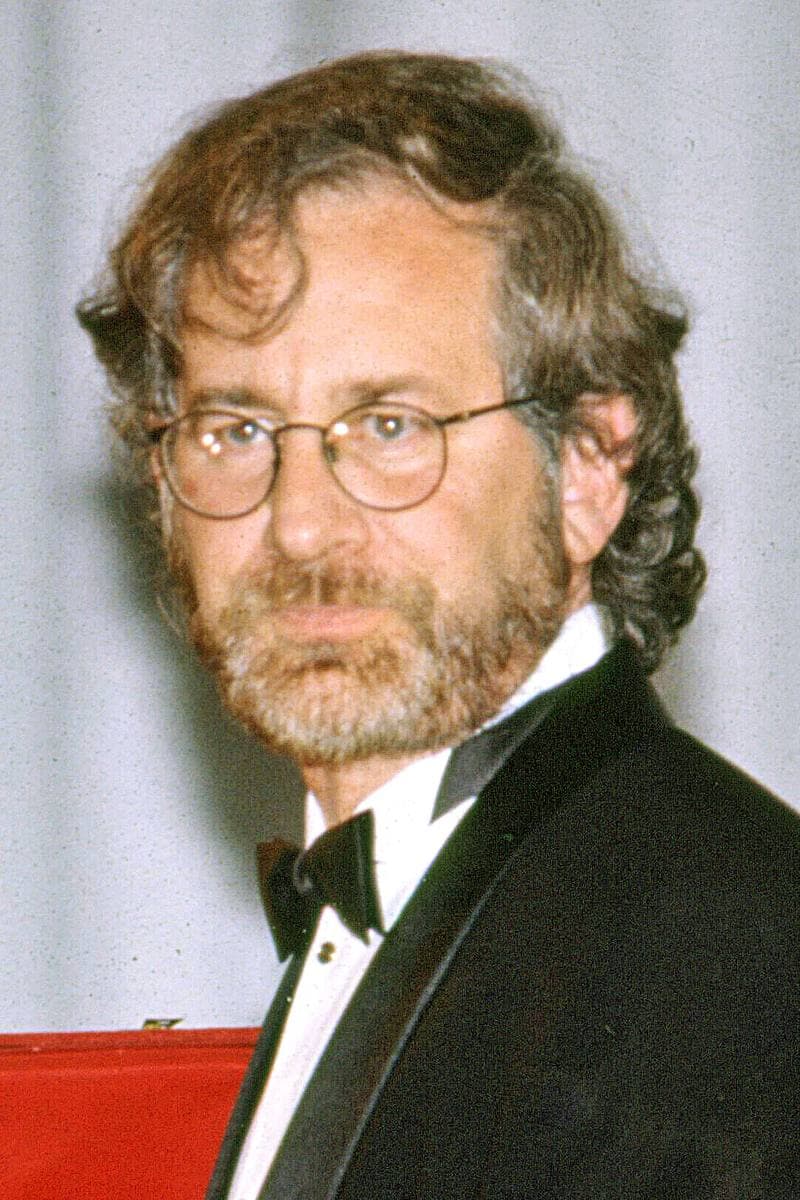
  • Steven Spielberg in glasses and a bow tie, bearded, looking to one side
    Steven Spielberg in Venice on 7 September 1993, during the year he made the film. GianAngelo Pistoia · CC BY-SA 3.0
    Steven SpielbergDirector · 1993
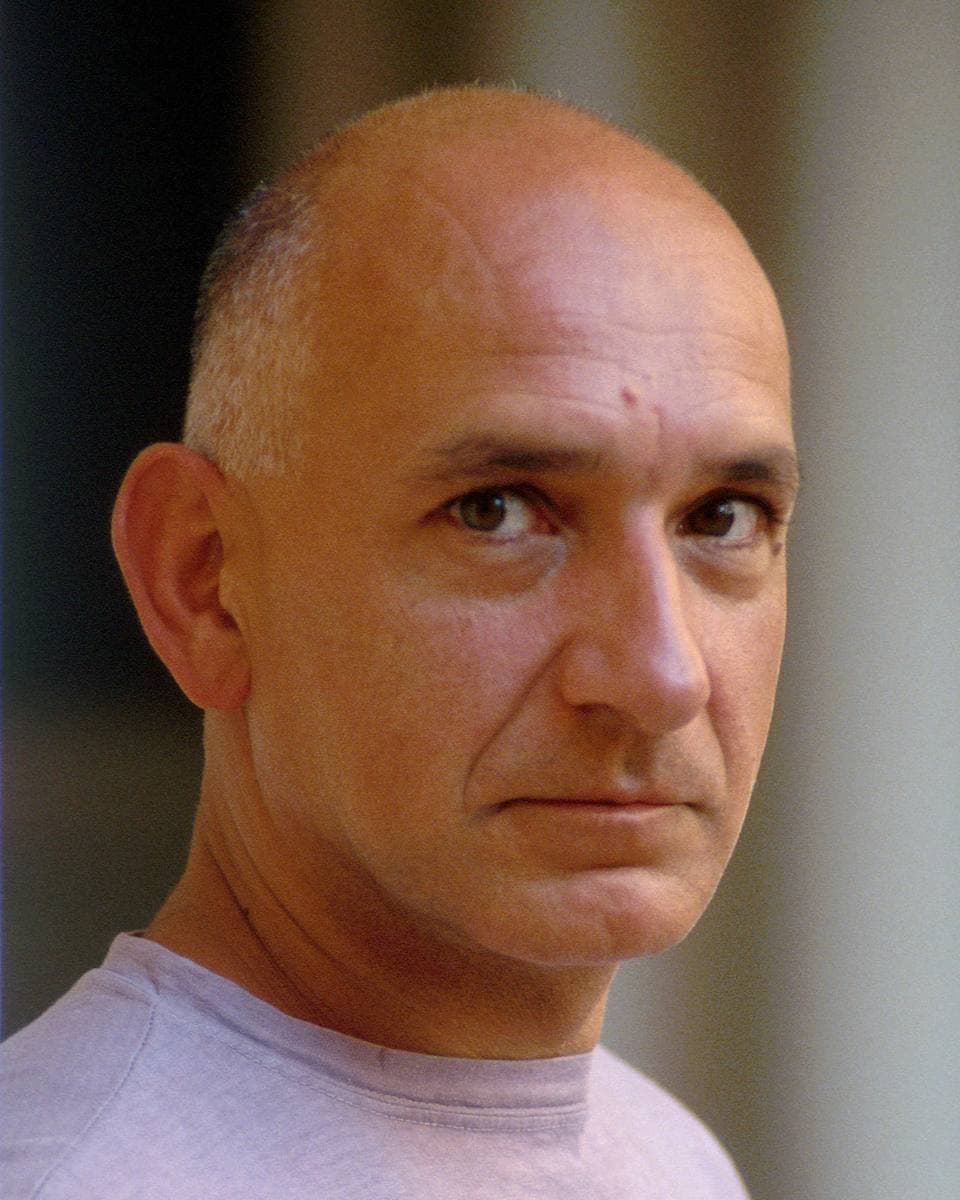
  • Ben Kingsley, bald, looking straight at the camera
    Ben Kingsley at the Venice Film Festival in 1990, three years before the film. Gorup de Besanez · CC BY-SA 3.0
    Ben KingsleyItzhak Stern · 1990
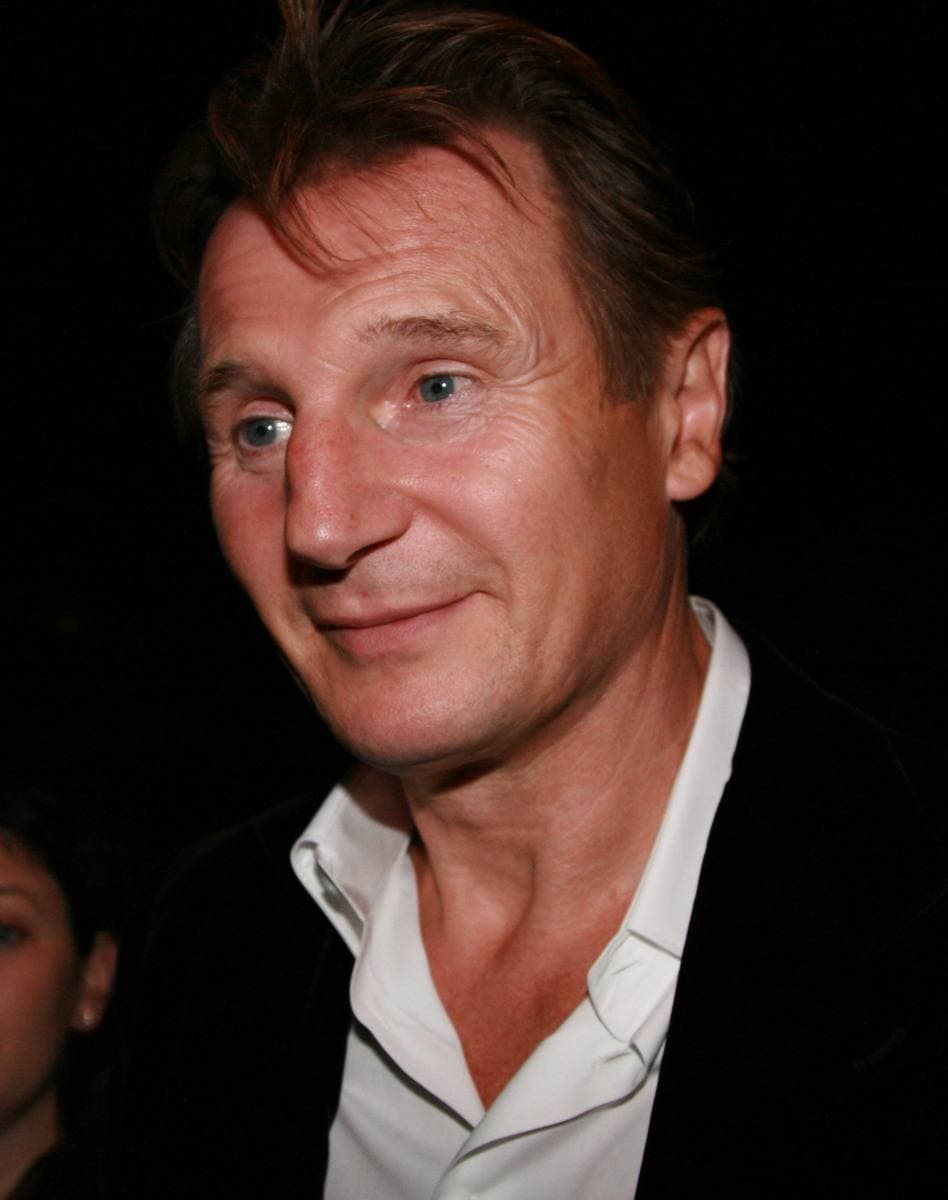
  • Liam Neeson in a dark jacket, looking to one side
    Liam Neeson in Toronto in 2008, fifteen years after the film (no free photograph from 1993 was found). Karen Seto · CC BY 2.0
    Liam NeesonOskar Schindler · 2008
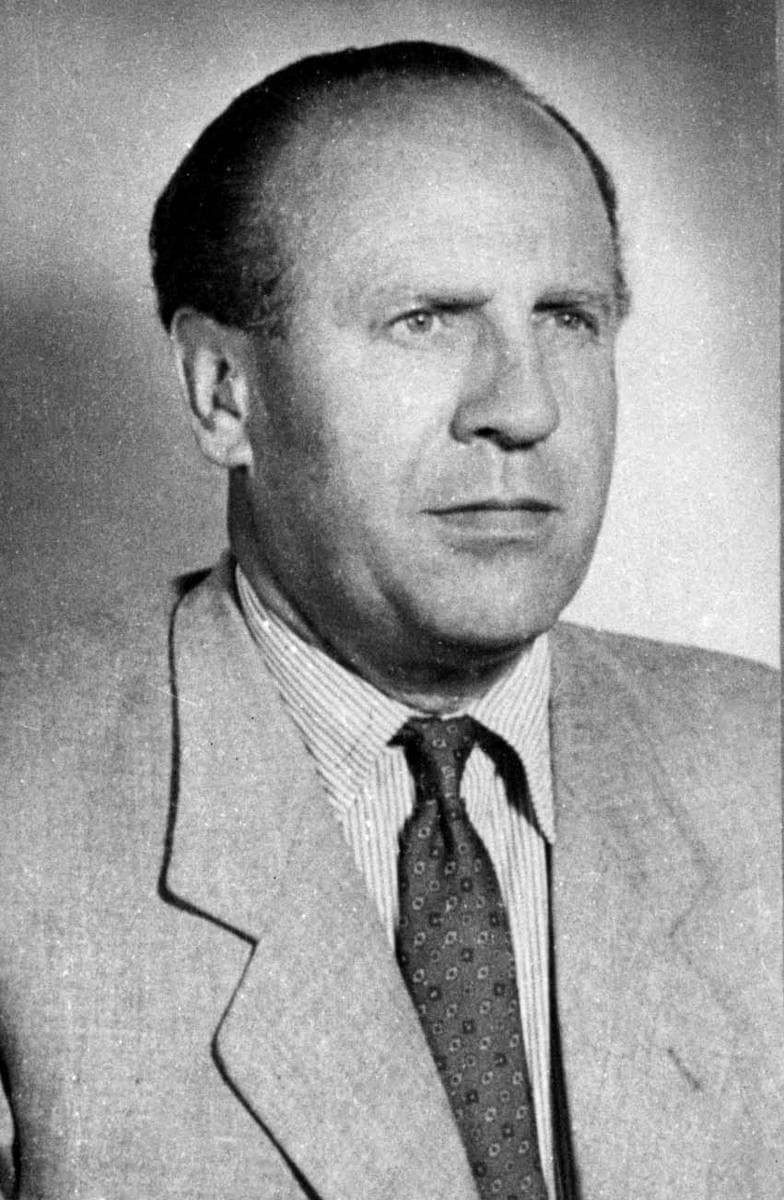
  • A black-and-white portrait of a man in a suit and tie
    Oskar Schindler in Argentina after the war. Unknown photographer (Yad Vashem collection) · Public domain
    Oskar Schindler1908–1974
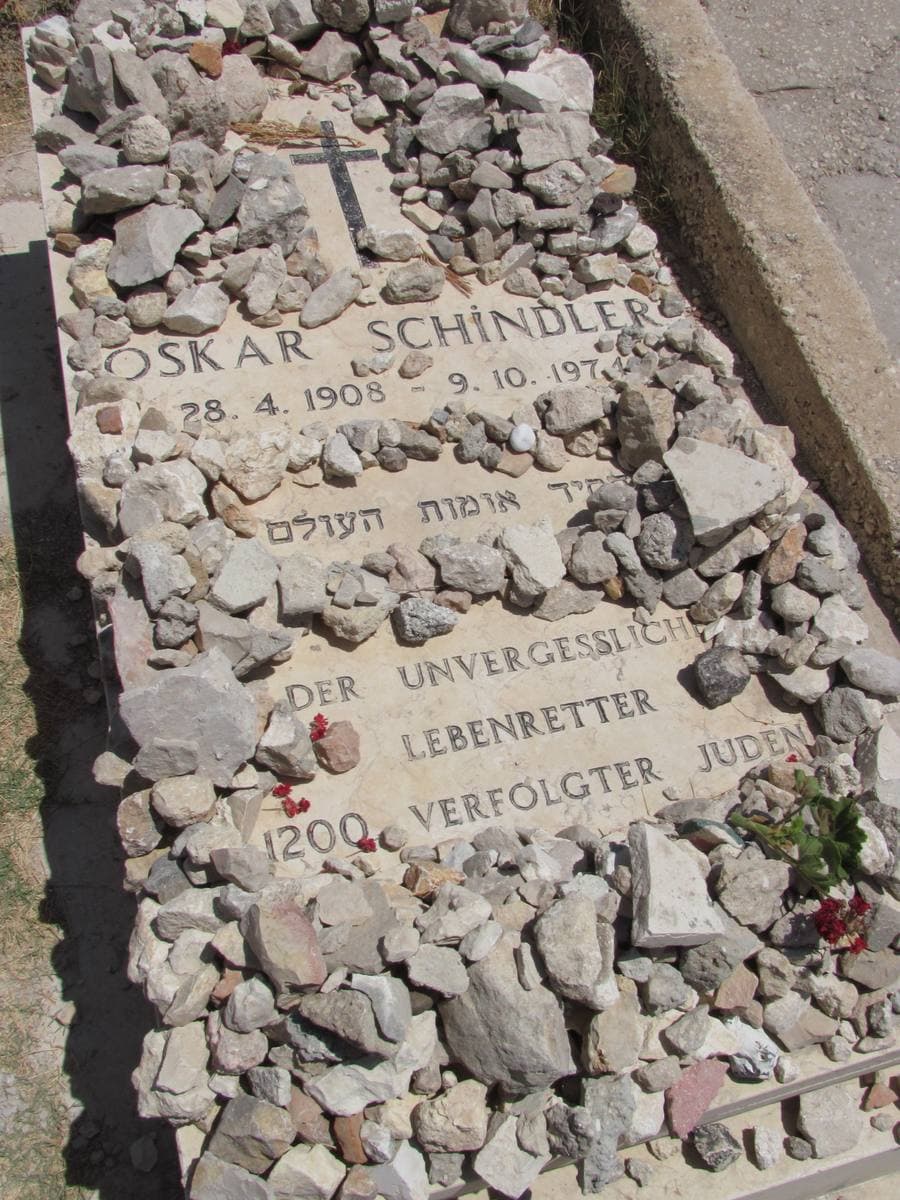
  • A pale stone grave slab seen from above, heaped with small stones
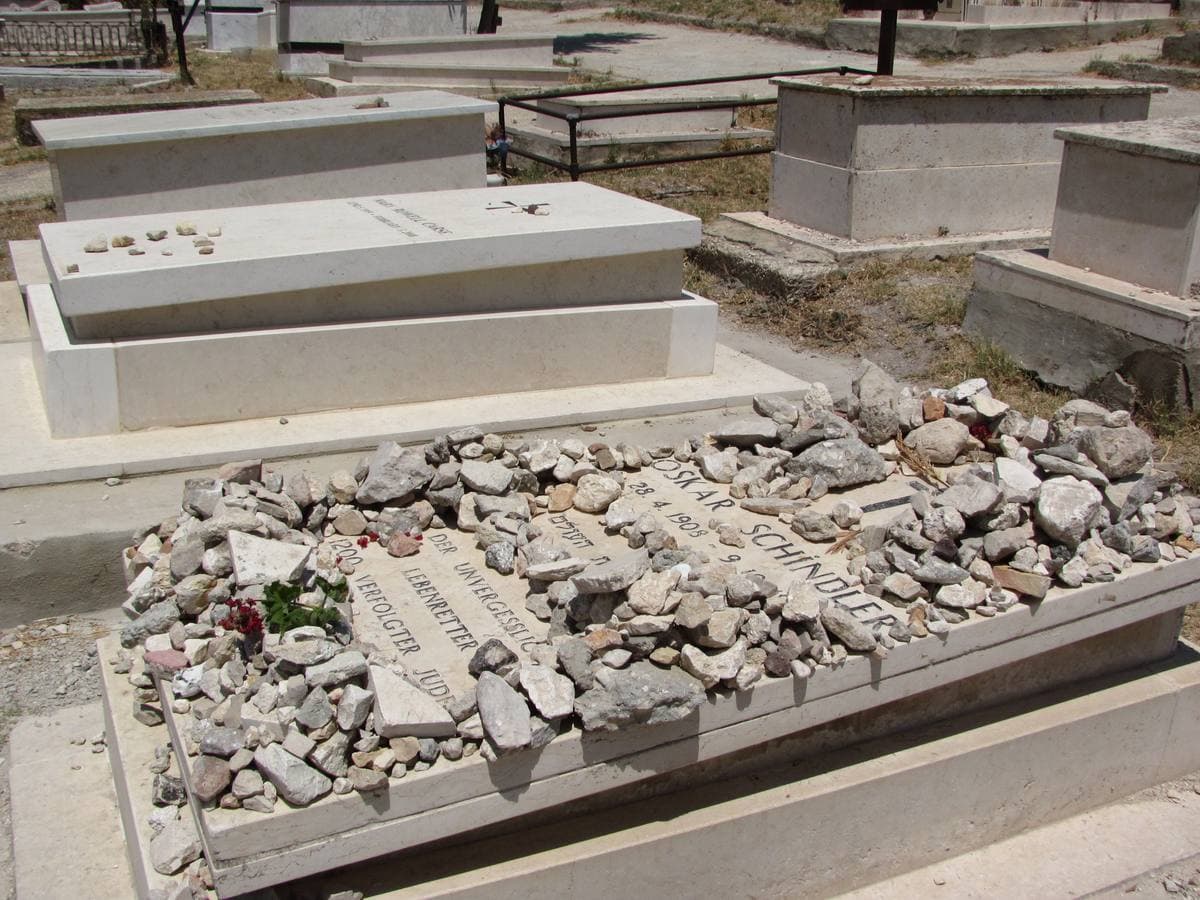
    Oskar Schindler’s grave on Mount Zion in 2010, covered with visitors’ stones. Yoninah · CC BY-SA 3.0
    The graveMount Zion · 2010

Visitors’ stones on the slab. Place one of your own.

Where we read it

Kazimierz and Podgórze · two banks of the Vistula

The ghetto was across the river.

Location scouts chose Szeroka instead of the real ghetto square, Plac Zgody in Podgórze, where glass-fronted buildings, a bus stop and early-1990s signs were in the way.

KAZIMIERZPODGÓRZEWisłaSzeroka StreetJózefa 12

Kazimierz, on the north bank: the film shot its ghetto streets here, among houses that had changed little since the war.

Drawn from the places’ map positions; the river line is approximate.

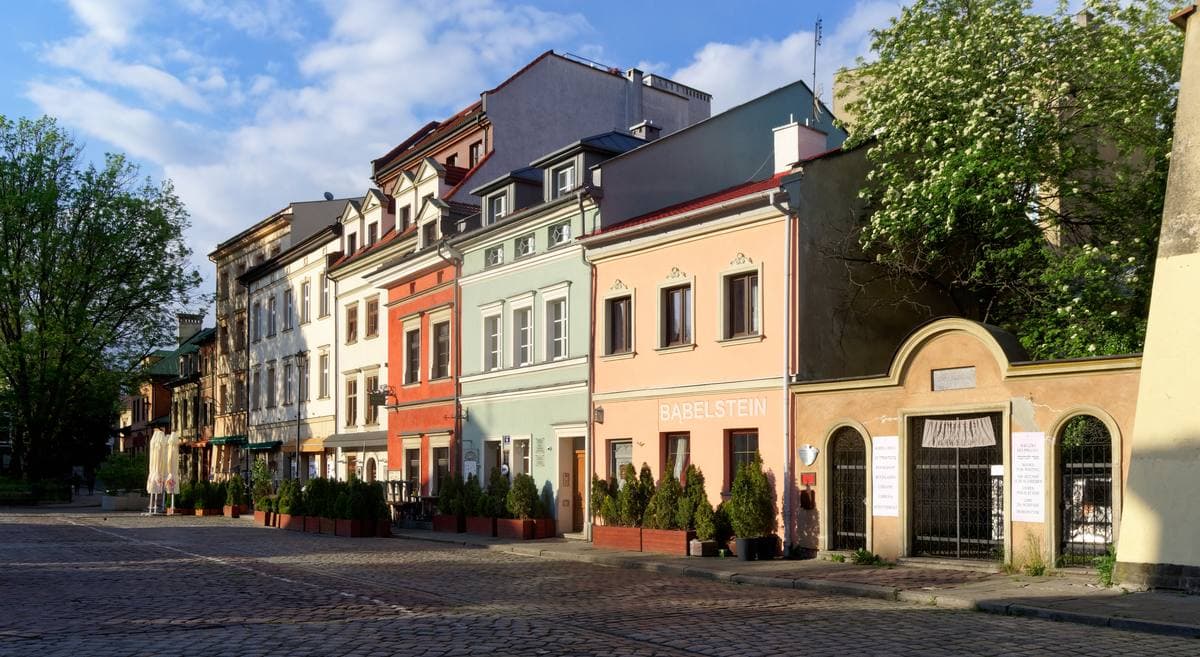
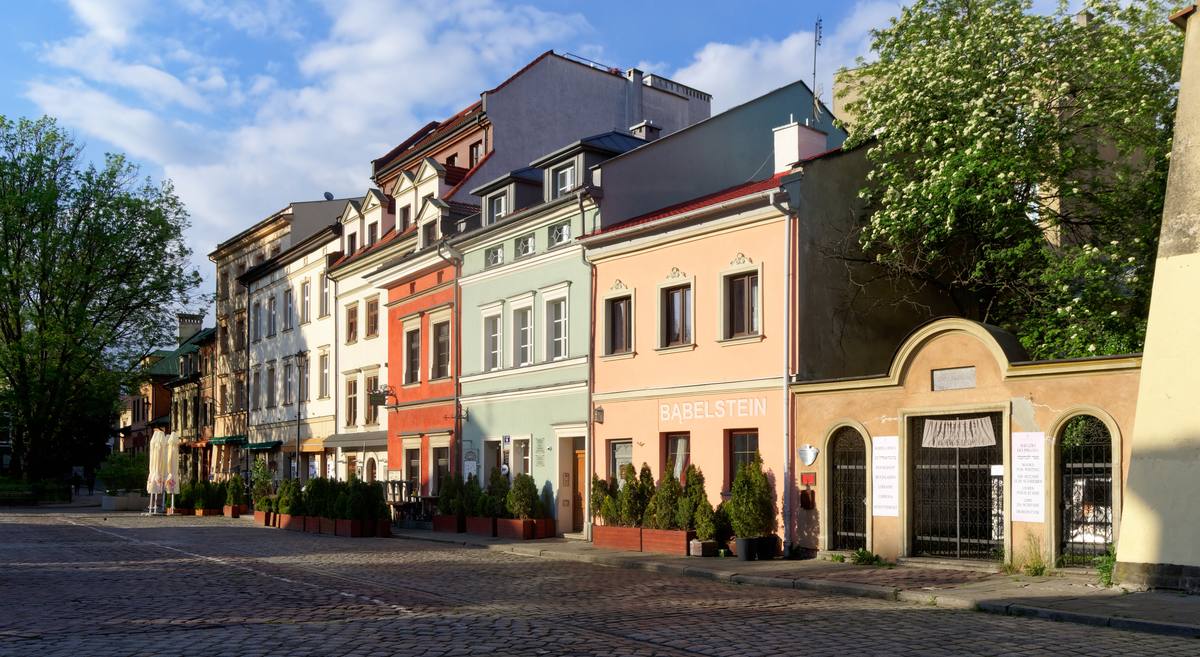
A wide cobbled street of low old houses under a blue sky
Szeroka Street, Kazimierz, in May 2020. Jakub Hałun · CC BY-SA 4.0

ul. Szeroka, Kazimierz, Kraków

Szeroka Street

The buildings on Szeroka have changed very little since the war. Spielberg, his family and the crew often ate at the Ariel restaurant here.

In the Middle Ages this was the centre of the village of Bawół, joined to Kazimierz in 1340. The Old Synagogue stands at number 24, the Remuh Synagogue and cemetery at number 40.

A memorial stone in the small green at the north end remembers the 65,000 Jewish citizens of Kraków and its surroundings murdered by the Germans.

A public street, open at all hours. The synagogues keep their own hours.

Where we read it
Klezmer-Hois

Klezmer-Hois

Szeroka, Kazimierz, Kraków

A small hotel, café, restaurant and bookshop on Szeroka, in the building of the old mikveh, about 100 metres from the Remuh Synagogue. Klezmer concerts in the evenings.

See the hotel
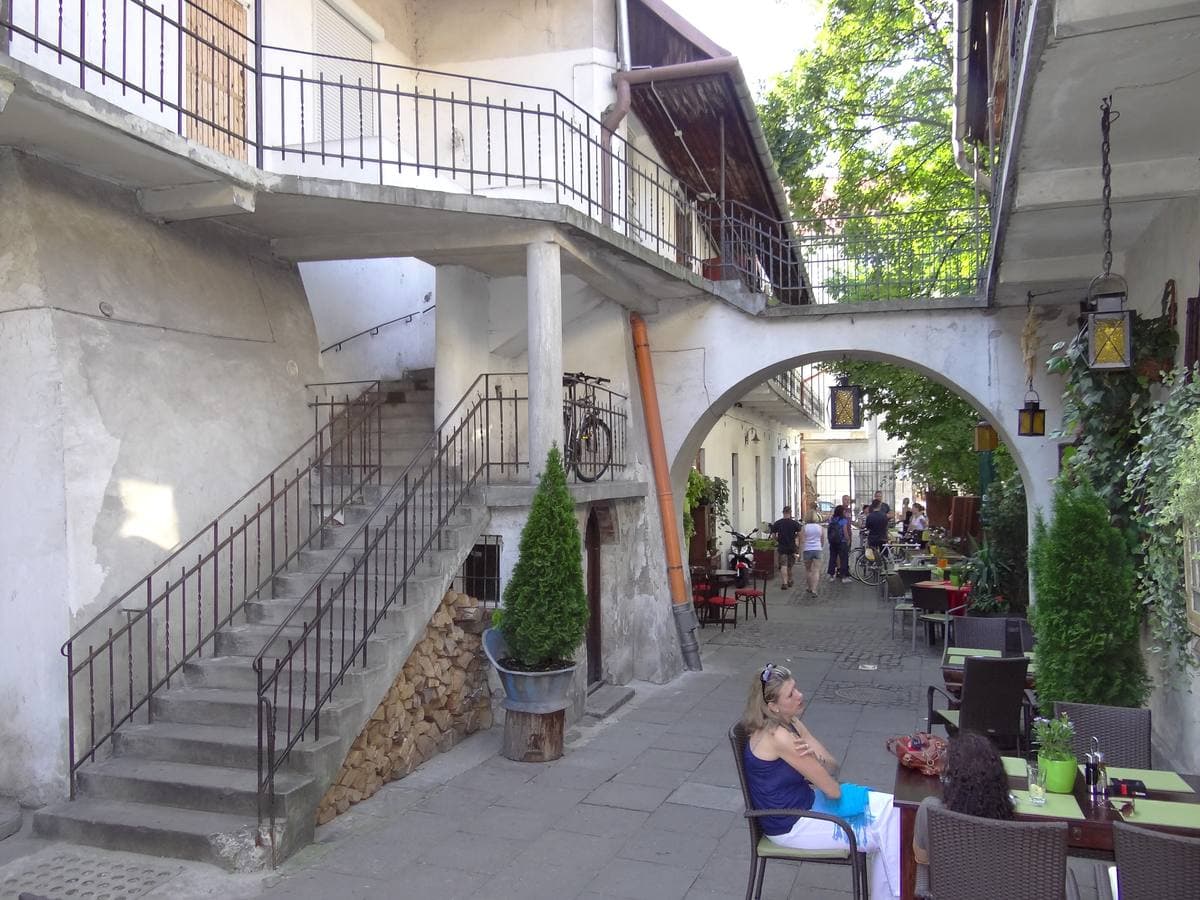
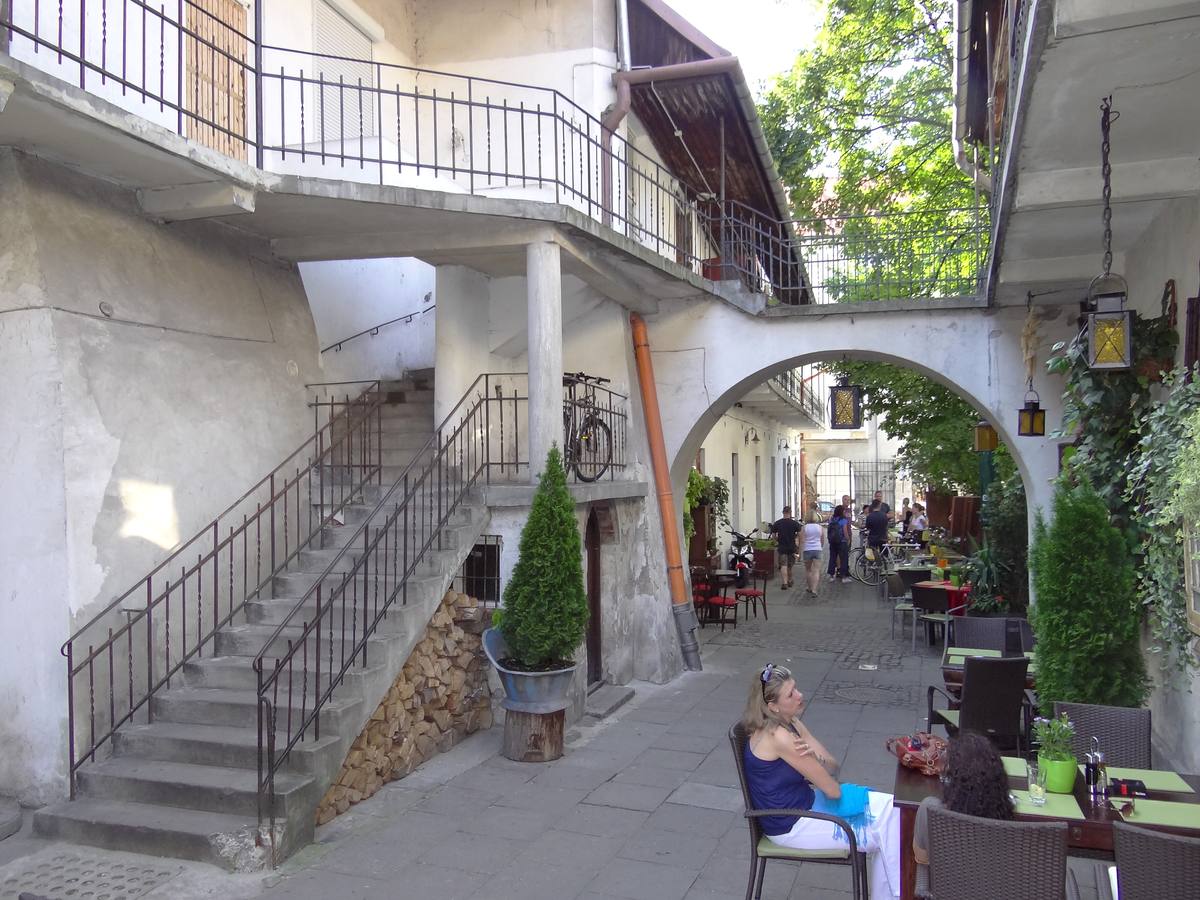
A narrow courtyard with an outside staircase, iron balconies and café tables
The passage at Józefa 12, Kazimierz, in 2013: the outside stairs and galleries. Adam Jones · CC BY-SA 2.0

ul. Józefa 12, Kazimierz, Kraków

Józefa 12, Schindler’s Passage

Families being cleared from a tenement, their belongings thrown over the balconies: the scene was filmed here, in the courtyard now called Schindler’s Passage.

The staircase where a woman hides in the film is at street level in the same building, a little changed since 1993.

A passage between homes, with cafés. Walk through quietly; people live here.

Where we read it

Podgórze · Plac Bohaterów Getta, once Plac Zgody

Seventy chairs.

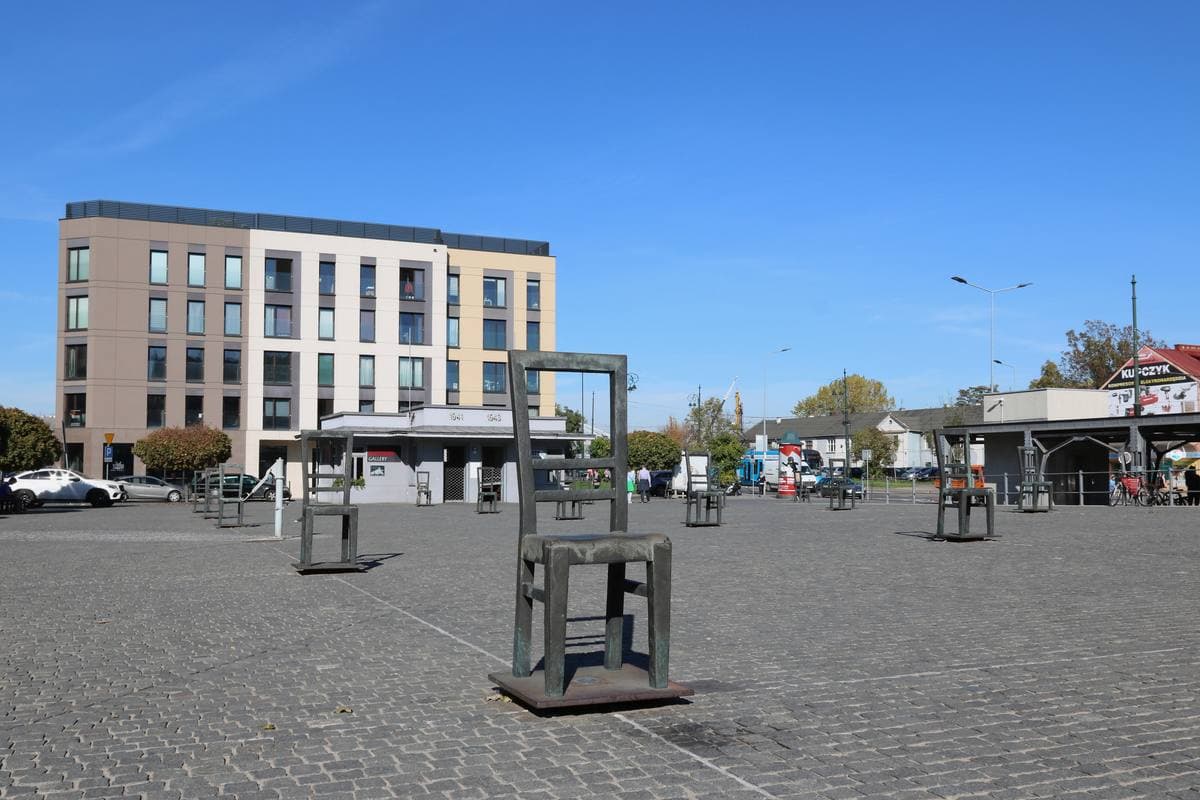
Called Plac Zgody from 1917 to 1948, the square lay inside the ghetto from 1941 to 1943. Jews were gathered here before deportation. Since the square was rebuilt in 2005, a memorial of 70 chairs has stood here, by Piotr Lewicki and Kazimierz Łatak.

The architects took the idea from Tadeusz Pankiewicz’s book about his pharmacy, which describes furniture carried out into the square after the last people of the ghetto had been taken away.

Where we read it
Large bronze chairs standing apart on an open paved square
The chairs on Plac Bohaterów Getta, Podgórze, in 2019. Ingo Mehling · CC BY-SA 4.0

Plac Bohaterów Getta, Podgórze, Kraków

Plac Bohaterów Getta

An open square on the tram lines, free at all hours.

Where we read it
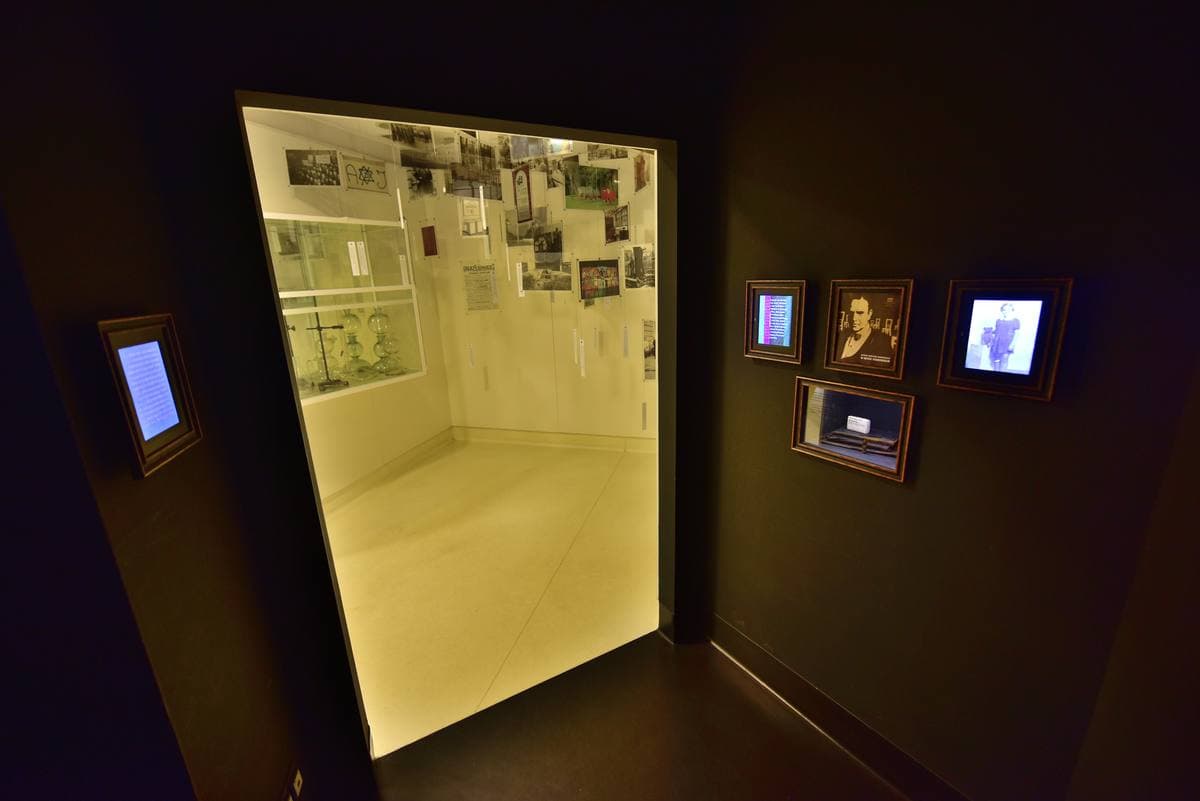
A dark exhibition room with a lit glass case of photographs
Inside the Eagle Pharmacy museum, Plac Bohaterów Getta, in 2019. Adrian Grycuk · CC BY-SA 3.0 PL

Plac Bohaterów Getta 18, Podgórze, Kraków

Eagle Pharmacy

Tadeusz Pankiewicz’s pharmacy was the only one inside the ghetto, and he was the only Pole allowed to stay and work there.

He and his staff carried messages and food in and out, and kept valuables for people being deported. In March 1943 he gave parents medicine to help their hidden children sleep.

Yad Vashem named him Righteous Among the Nations on 10 February 1983.

Wednesday to Sunday, 9am to 5pm; closed Monday and Tuesday. Tickets 22 zł; free on Wednesdays.

Where we read it
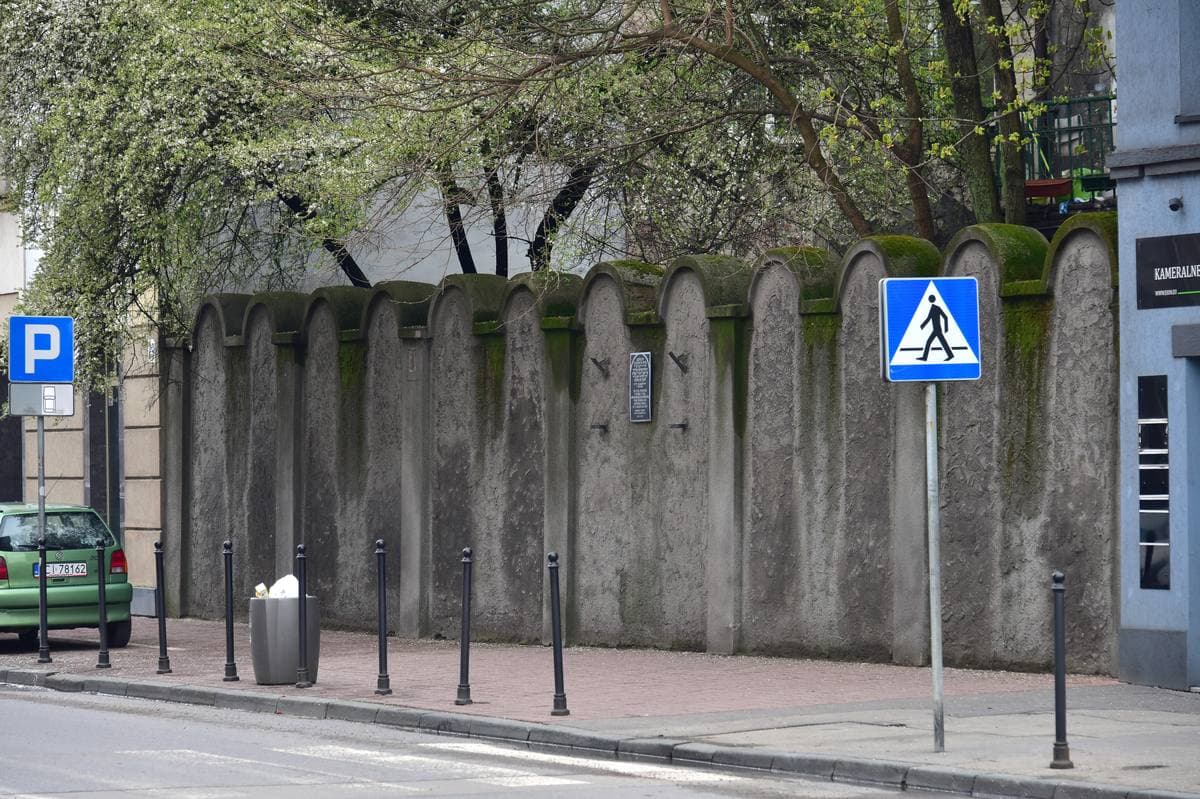
A long grey wall with arched tops beside a pavement
The surviving stretch of ghetto wall on Lwowska Street, Podgórze, in 2019. Adrian Grycuk · CC BY-SA 3.0 PL

ul. Lwowska 25–29, Podgórze, Kraków

The ghetto wall, Lwowska Street

Two stretches of the ghetto wall survive: one on Lwowska Street, with a plaque, and one on Limanowskiego Street.

The ghetto was set up in March 1941 and cleared on 13 and 14 March 1943.

On the pavement, free at all hours. The plaque is on the wall.

Where we read it

Zabłocie · ul. Lipowa 4

The real factory.

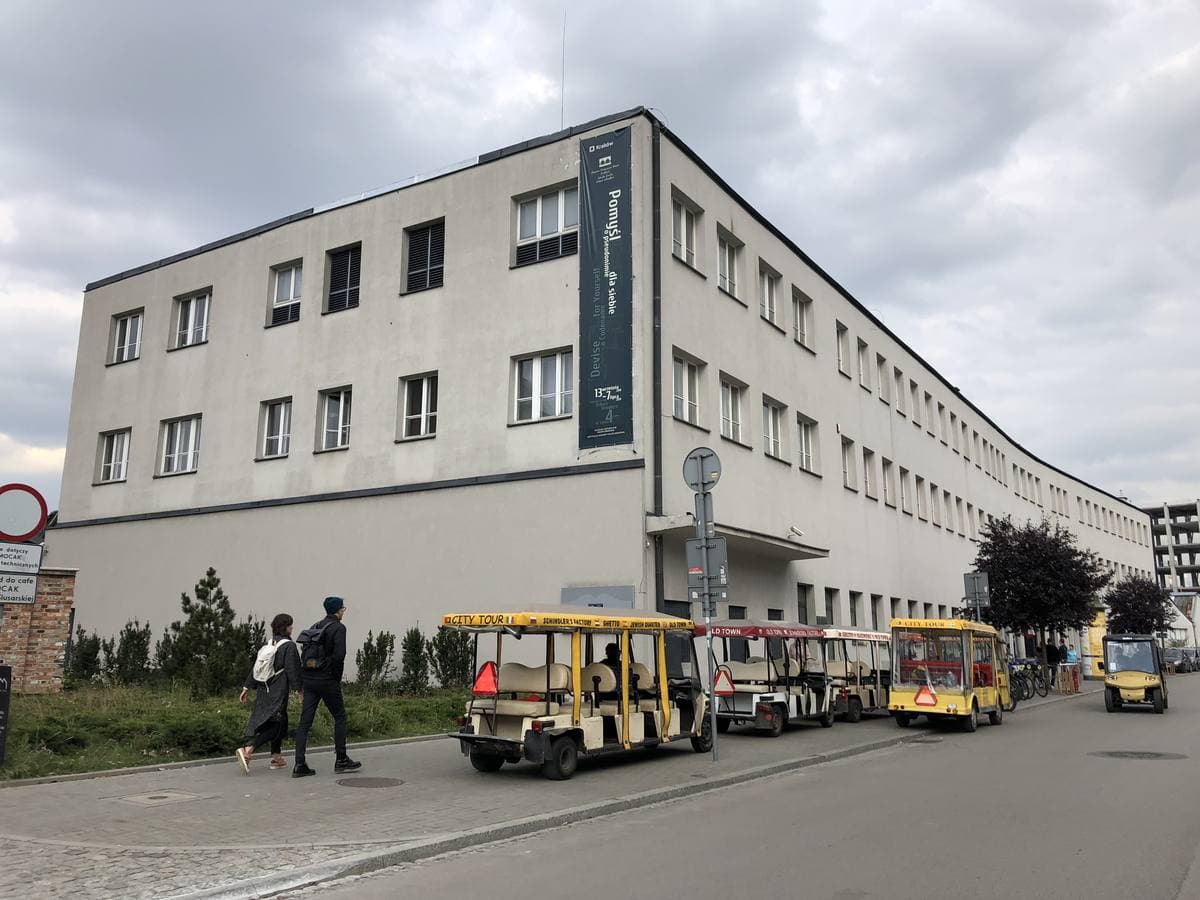
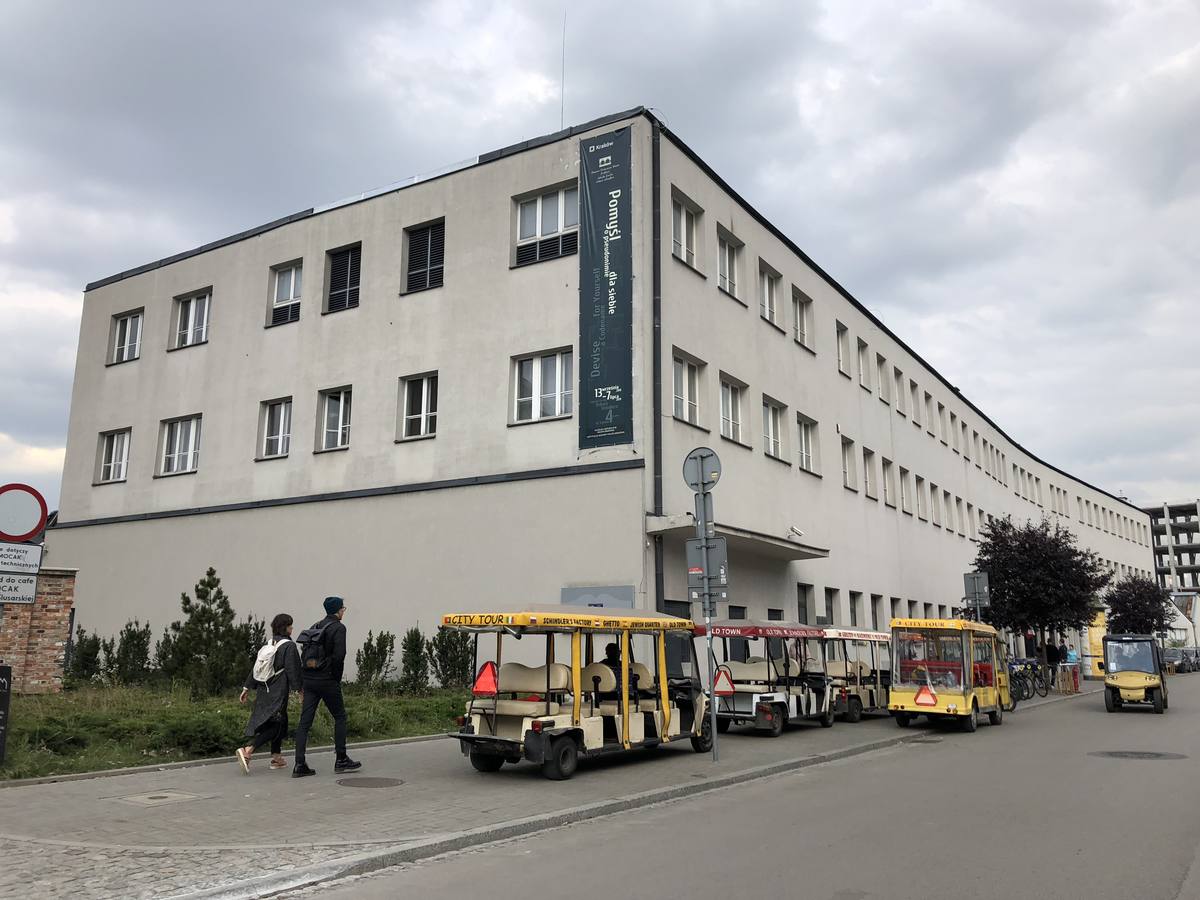
A long pale three-storey building with a banner by its entrance
The former factory office building at Lipowa 4, now the museum, in 2018. Bjoertvedt · CC BY-SA 4.0
  • 7Jewish workers among about 250, three months after Schindler took the factory on.
  • 370Jews from the ghetto among almost 800 workers by the end of 1942.
  • 1,100people on the list for Brünnlitz in 1944: 800 men and 300 women.
Where we read it

The film used the real factory for its outside shots and the scenes on its stairs; the factory floor was filmed at a similar works in Olkusz.

In November 1939 Schindler took over a bankrupt enamel works here, founded by three Jewish businessmen, and in January 1940 renamed it Deutsche Emailwarenfabrik.

The office building at Lipowa 4 is now a branch of the Museum of Kraków, with the exhibition Kraków under Nazi Occupation 1939–1945.

Tuesday to Sunday 9am to 8pm, Monday 10am to 3pm (free, no advance booking); closed the first Tuesday of each month. Tickets 60 zł; timed tickets online.

Where we read it
Viator · Ad / affiliate

Schindler’s Factory and Podgórze

Podgórze, Kraków

Live marketplace results for guided visits to the factory museum and the old ghetto. Check that the museum ticket is included and the time is fixed.

Live marketplace results · itineraries change

Compare tours
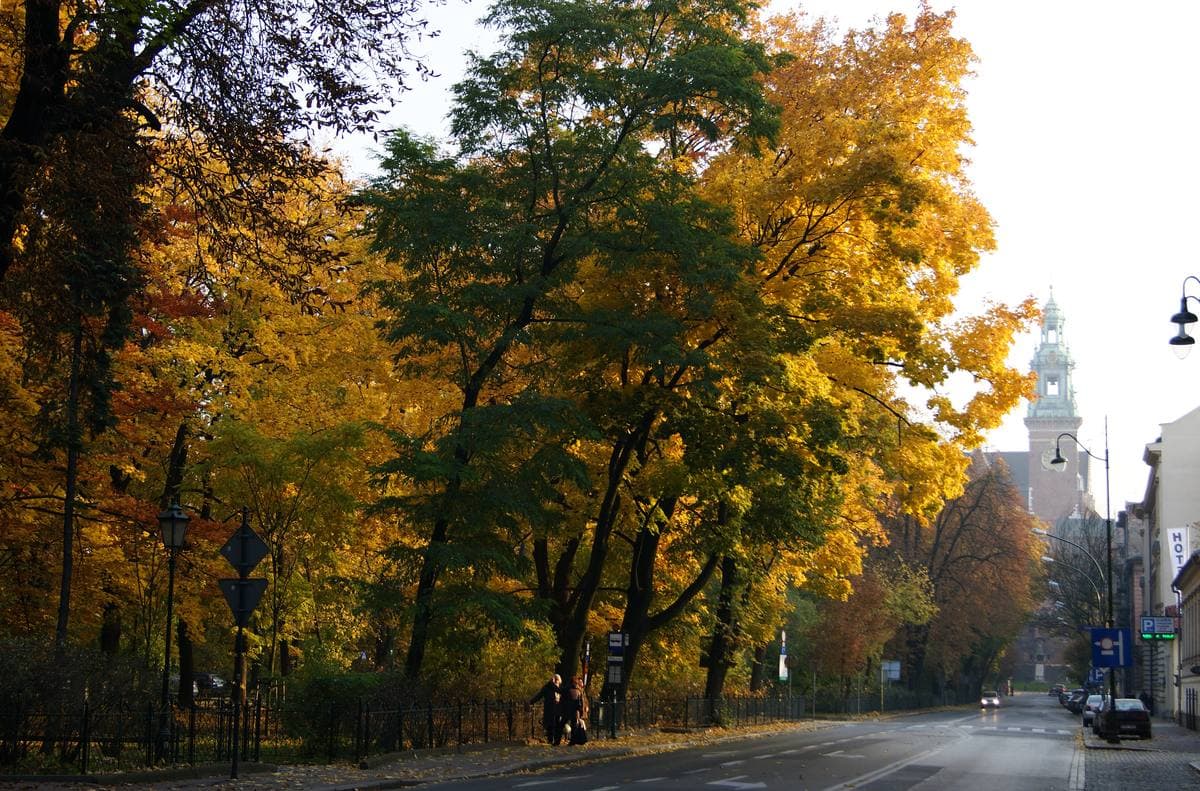
A tree-lined city street in autumn with tall old houses on one side
Straszewskiego Street, looking south beside the Planty, in 2011. The street, not the house. Zygmunt Put · CC BY-SA 4.0

ul. Straszewskiego, Old Town, Kraków · not on the map

His own street

Schindler really did live on Straszewskiego Street, on the third floor of number 7. The Nussbaum family had lived there before the ghetto.

In the film the front of the building is seen as Schindler leaves it, with the clock tower of Wawel behind.

A private home. See the street from the Planty; the house is not open.

Where we read it

Płaszów · the camp, and the camp the film built

A candle at Płaszów.

The film is in black and white, but it opens and closes on candles, in colour.

Where we read it
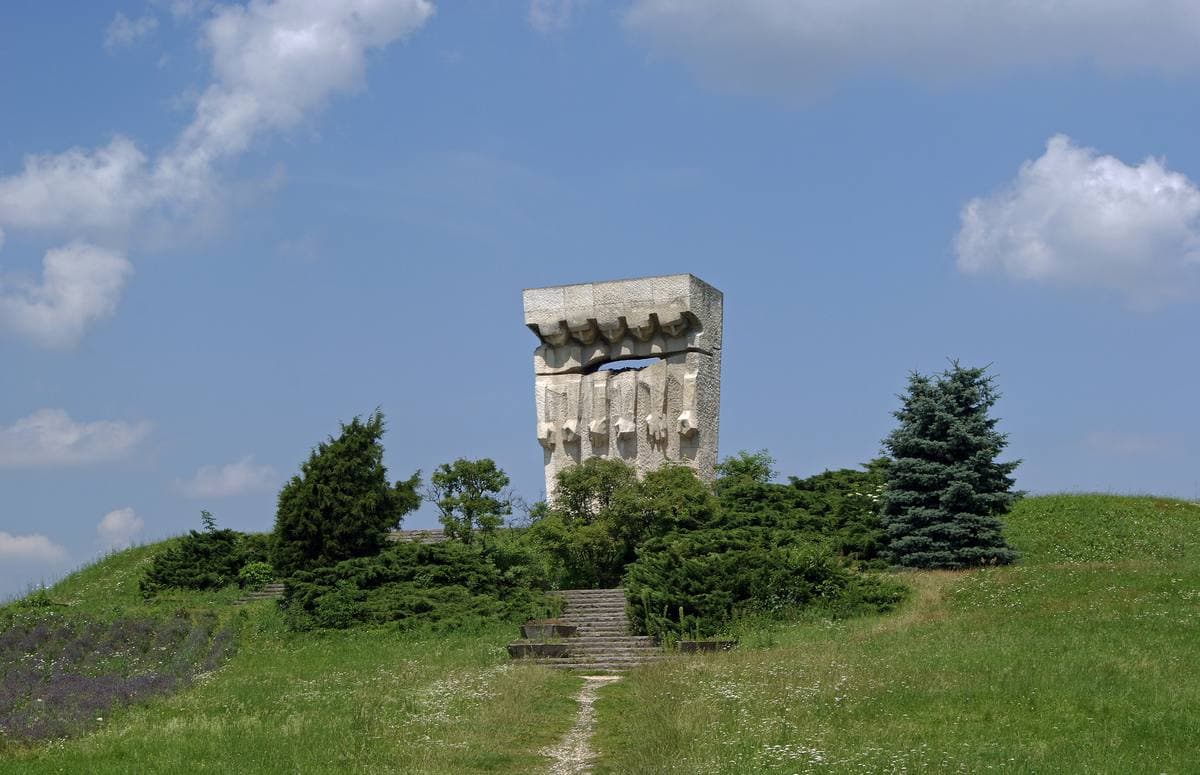
A stone monument of bowed figures on a grassy rise against the sky
The 1964 Monument to the Victims of Fascism on the Płaszów camp site, in 2013. Zygmunt Put · CC BY-SA 4.0

Between Jerozolimska and Kamieńskiego streets, Płaszów, Kraków

Płaszów memorial site

The camp at Płaszów held its first prisoners from the Kraków ghetto in October 1942 and ran until January 1945.

In wartime the camp covered 80 hectares. Today 37 hectares are protected, and the KL Plaszow Museum looks after the site.

The grounds opened to visitors on 15 March 2024, with an open-air exhibition at 40 points where remains survive.

The Monument to the Victims of Fascism, by the architect Witold Cęckiewicz, was put up in 1964.

An open, hilly memorial landscape with steep paths. Please remember that the whole site is a cemetery.

Where we read it
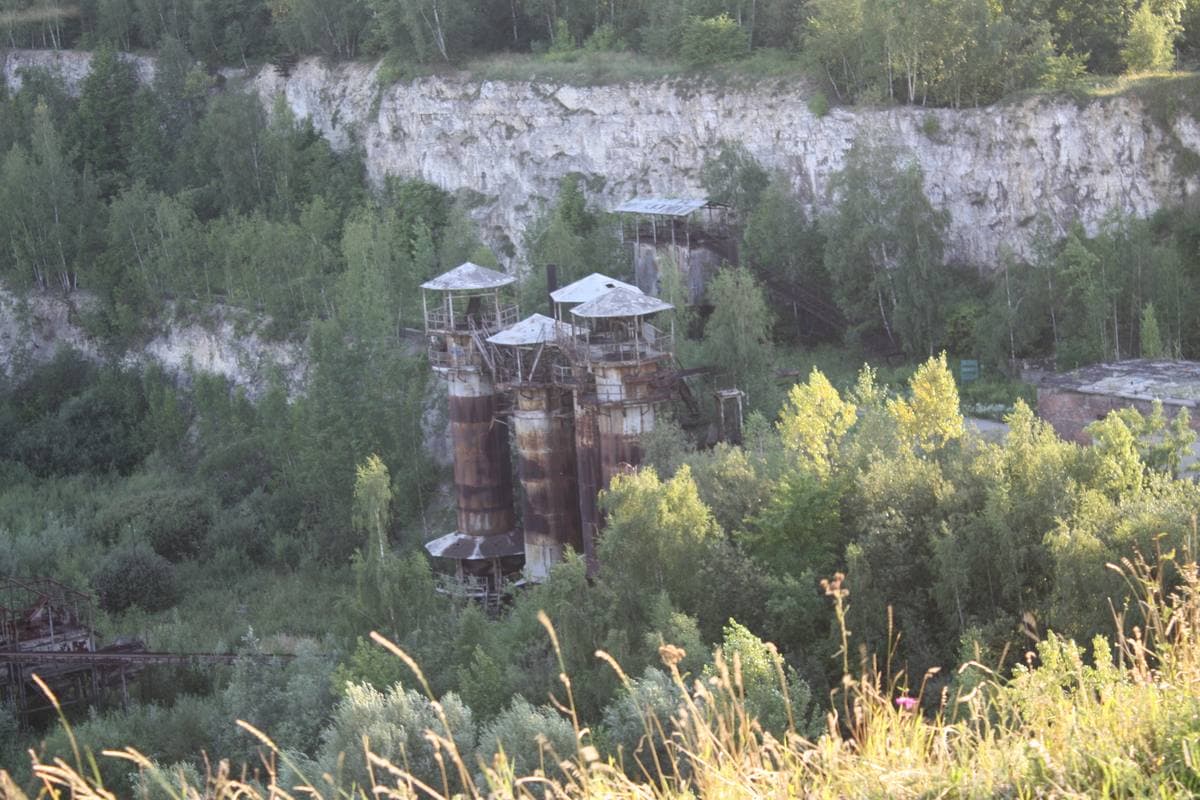
An overgrown quarry floor below a pale rock face, with old rusted towers
The Liban quarry in 2008, where the film’s camp was built. Lars K Jensen · CC BY 2.0

The Liban quarry, below Krakus Mound · not on the map

The camp in the quarry

The film did not rebuild the camp on the real ground. It built a smaller version in the Liban quarry nearby, because new high-rise flats could be seen from the real site.

The quarry’s rusted towers still stand, and pieces of the set, among them a road of imitation gravestones, lie in the undergrowth. Getting in is difficult, and it is not a memorial.

Where we read it
Where we read it

Brzezinka, near Oświęcim · 56 km west of Płaszów

Auschwitz-Birkenau Memorial

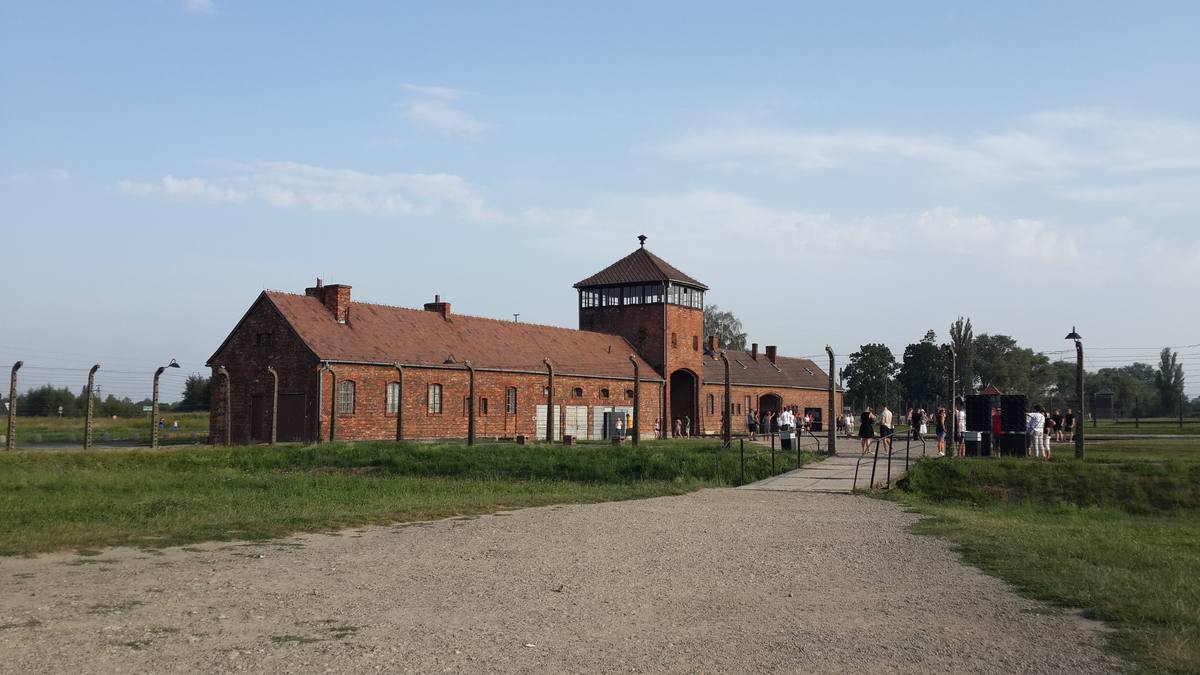
The film was not made inside the death camp. The crew built a replica of part of it just outside the entrance to Birkenau.

The Memorial refused permission to film inside, so the real railway entrance is seen from outside in the later scenes.

Entry to the Memorial is free, but entry cards are only available online, booked in advance.

In October visitors may enter from 7.30am to 5pm. Allow at least 90 minutes for each of the two sites, Auschwitz I and Birkenau.

Entry is free but must be booked online in advance; no entry cards are sold at the gate. Guided tours cost extra.

Where we read it

Autumn 1944

The 300 women on Schindler’s list were sent to Auschwitz instead of Brünnlitz. He sent his secretary to bargain for them, and they were released. Yad Vashem records it as the only time so large a group was allowed to leave the camp alive while its gas chambers were still in use.

Where we read it
Viator · Ad / affiliate

Auschwitz-Birkenau Memorial from Kraków

Oświęcim

Live marketplace results for transport and guided visits from Kraków. Entry cards must be booked with the Memorial in advance; check what each tour includes.

Live marketplace results · itineraries change

Compare tours
A long low brick gatehouse with a central tower under a pale sky
The gatehouse of Auschwitz II-Birkenau in 2017. Yair Haklai · CC BY-SA 4.0

Brünnlitz · Brněnec · 1944–1945

Read a name.

The list for Brünnlitz held about 1,100 names. These are some of the people in Schindler’s story, one at a time.

    No names read yet.

    Where we read it
    An iron gate between old factory buildings
    The gate of the former Brünnlitz factory at Brněnec in July 2025. Palickap · CC BY-SA 4.0

    Nádražní 166, Brněnec, Czech Republic

    Museum of Survivors, Brněnec

    In late 1944 Schindler won permission to move production to a factory he and his wife had set up at Brünnlitz, now Brněnec.

    The Museum of Survivors opened in the former factory on the weekend of 10 May 2025. It is run by the Arks Foundation.

    It shows the story of Oskar and Emilie Schindler and of the Löw-Beer family, with survivors’ testimony.

    Not open every day; the museum works mostly with schools. Check before you travel.

    Where we read it

    Jerusalem · Mount Zion and the Mount of Remembrance

    Back to the stone.

    A stone grave slab heaped with pebbles among other pale tombs
    The grave in the Catholic cemetery on Mount Zion, in 2010. Yoninah · CC BY-SA 3.0

    Catholic cemetery, Mount Zion, Jerusalem

    Oskar Schindler’s grave

    Schindler lies in the Catholic cemetery on the southern slope of Mount Zion, an easy walk from Zion Gate.

    The grave is on the lower of the cemetery’s two levels, down a flight of circular steps.

    He died in Hildesheim on 9 October 1974. The people he had saved brought him to Jerusalem to be buried.

    The Hebrew on the stone reads Righteous Among the Nations. The German calls him the unforgettable rescuer of 1,200 persecuted Jews.

    Visitors leave small stones on the grave: a Jewish custom that many others follow.

    Usually open 8am to noon; closed on Sundays.

    Where we read it
    A shaded path among trees with stone plaques at their feet
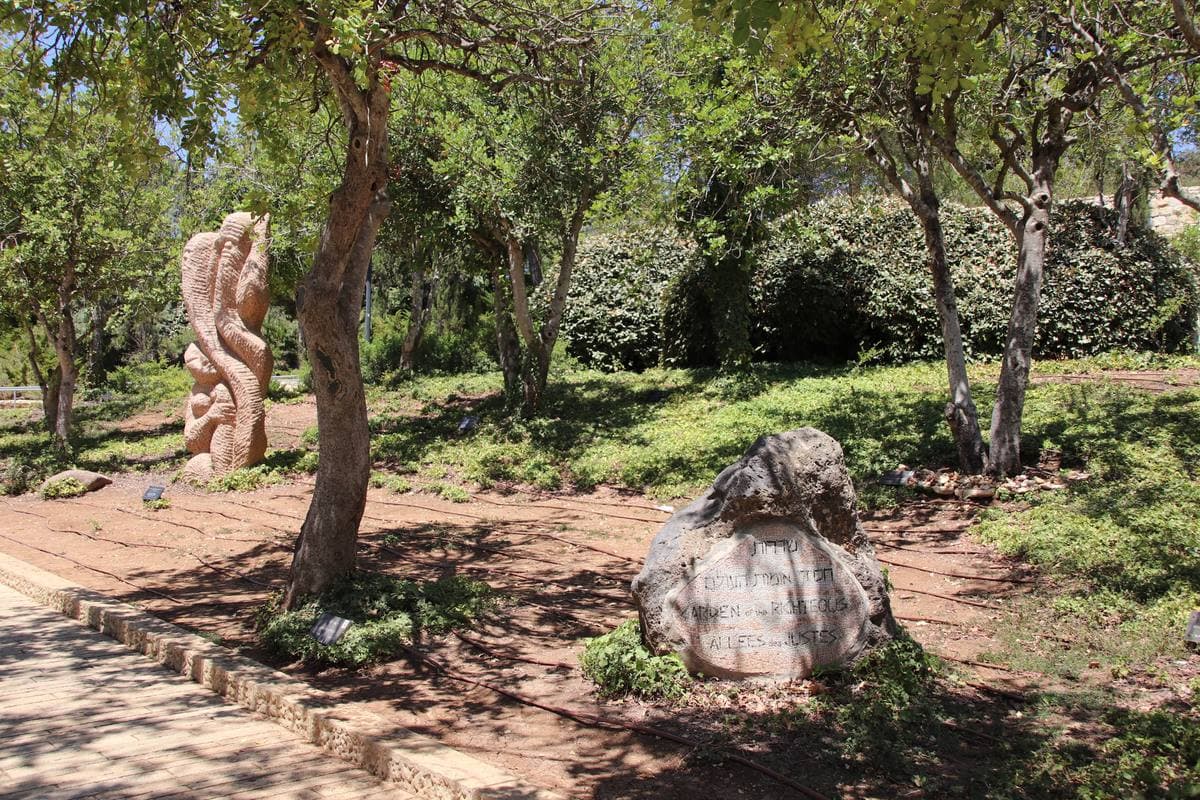
    The Avenue of the Righteous Among the Nations at Yad Vashem, in 2018. Gary Todd · CC0

    Mount of Remembrance, Jerusalem

    Yad Vashem

    A tree was planted for Schindler in the Avenue of the Righteous in 1962.

    On 24 June 1993 Yad Vashem recognised Oskar and Emilie Schindler as Righteous Among the Nations.

    The 45-acre campus holds museums, memorials and gardens, among them the Avenue of the Righteous Among the Nations and the Hall of Names. Entry is free, booked in advance.

    Free; every visit must be booked in advance. Sunday and Wednesday 9am to 4pm, Monday and Thursday 9am to 7pm, Tuesday 9am to 2pm, Friday 9am to 1pm; closed Saturdays and Jewish holidays.

    Where we read it

    The people

    Who made it, and who it is about.

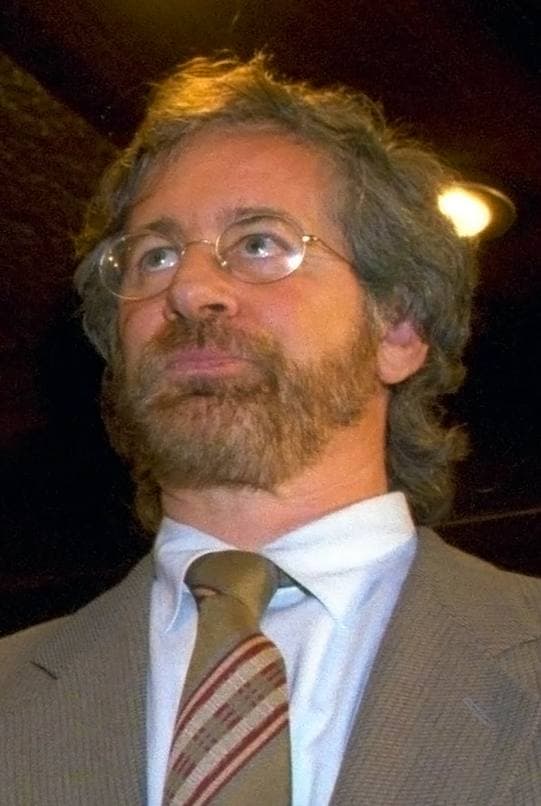
    • Steven Spielberg, bearded, in a suit and tie, looking up
      Steven Spielberg at the Israeli premiere of Schindler’s List, 3 March 1994. Government Press Office (Israel) · CC BY-SA 3.0
      Steven SpielbergDirector
    • Liam Neeson in a dark jacket, looking to one side
      Liam Neeson in Toronto in 2008, fifteen years after the film (no free photograph from 1993 was found). Karen Seto · CC BY 2.0
      Liam NeesonOskar Schindler
    • Ben Kingsley, bald, looking straight at the camera
      Ben Kingsley at the Venice Film Festival in 1990, three years before the film. Gorup de Besanez · CC BY-SA 3.0
      Ben KingsleyItzhak Stern
    • A black-and-white portrait of a man in a suit and tie
      Oskar Schindler in Argentina after the war. Unknown photographer (Yad Vashem collection) · Public domain
      Oskar SchindlerHimself, 1908–1974
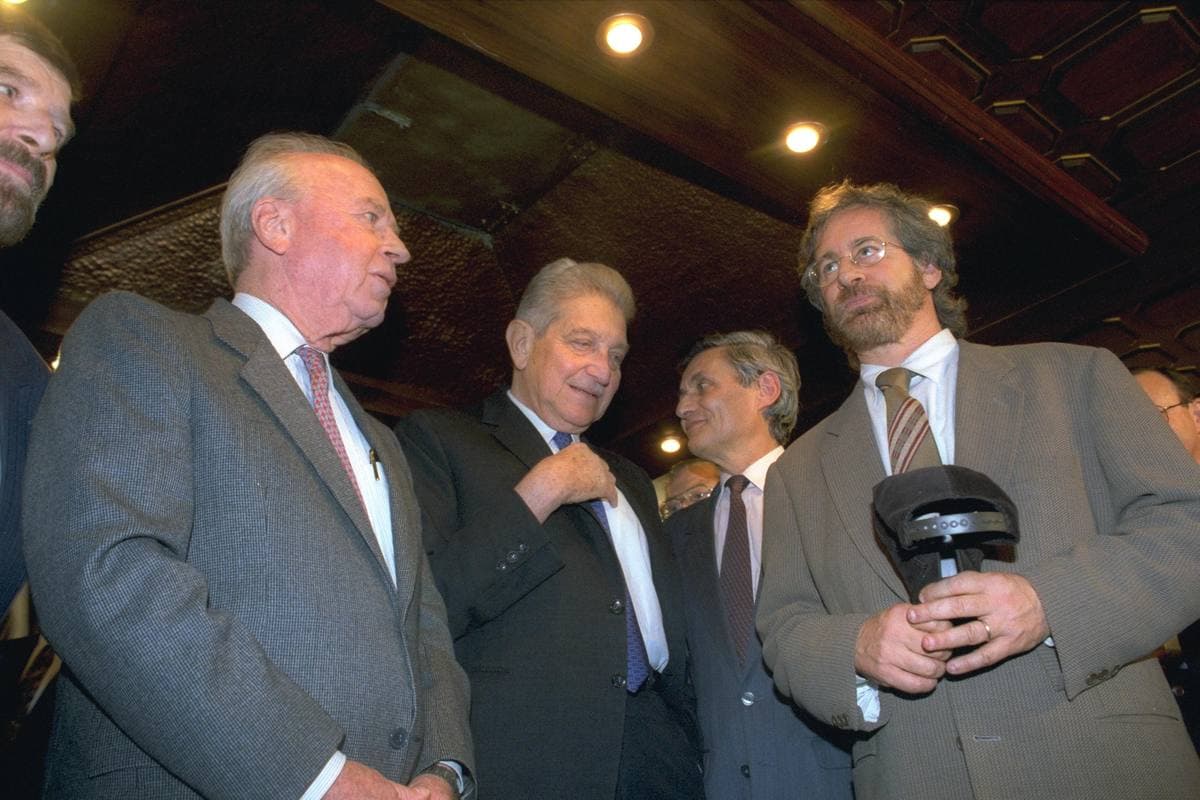
    Three men in suits talking in a crowded foyer
    President Ezer Weizman (centre) and Prime Minister Yitzhak Rabin (left) with Steven Spielberg at the Israeli premiere, March 1994. Government Press Office (Israel) · CC BY-SA 3.0
    1. 1 Mar 1993Filming begins in Kraków
    2. 72 daysThe length of the shoot
    3. 30 Nov 1993Premiere in Washington, DC
    4. 7Academy Awards, Best Picture and Best Director among them
    5. 2004Chosen for the National Film Registry

    Spielberg took no salary for the film. Afterwards he founded the Survivors of the Shoah Visual History Foundation, which records survivors’ testimony. John Williams wrote the score; Itzhak Perlman plays its theme.

    Where we read it
    • Principal photography from 1 March 1993 in Kraków, shot over 72 days; premiere 30 November 1993 in Washington, DC; seven Academy Awards including Best Picture and Best Director; National Film Registry, 2004.

    • Spielberg took no salary and founded the Survivors of the Shoah Visual History Foundation; score by John Williams with Itzhak Perlman on violin; Neeson as Schindler, Kingsley as Itzhak Stern.

    Go, quietly.

    Where it is now

    11 places you can visit, from Kazimierz to Mount Zion. Straszewskiego 7, where Schindler lived, is a private home and is not on the map; nor is the Liban quarry.

    Pins mark public places; private homes are named but not pinned.

    • General reference · Public access · Coordinate precision: site · Not an exact scene or camera position; not a visitor route. A public street, open at all hours. The synagogues keep their own hours.

    • General reference · Public access · Coordinate precision: building · Not an exact scene or camera position; not a visitor route. A passage between homes, with cafés. Walk through quietly; people live here.

    1. A wide cobbled street of low old houses under a blue sky
      Szeroka Street, Kazimierz, in May 2020. Jakub Hałun · CC BY-SA 4.0

      ul. Szeroka, Kazimierz, Kraków

      Szeroka Street

      Location scouts chose Szeroka instead of the real ghetto square, Plac Zgody in Podgórze, where glass-fronted buildings, a bus stop and early-1990s signs were in the way.

      A public street, open at all hours. The synagogues keep their own hours.

      Where we read it
    2. A narrow courtyard with an outside staircase, iron balconies and café tables
      The passage at Józefa 12, Kazimierz, in 2013: the outside stairs and galleries. Adam Jones · CC BY-SA 2.0

      ul. Józefa 12, Kazimierz, Kraków

      Józefa 12, Schindler’s Passage

      Families being cleared from a tenement, their belongings thrown over the balconies: the scene was filmed here, in the courtyard now called Schindler’s Passage.

      A passage between homes, with cafés. Walk through quietly; people live here.

      Where we read it

    Stay

    A room on Szeroka.

    A small hotel in the old mikveh, on the street that played Plac Zgody.

    Klezmer-Hois

    Klezmer-Hois

    Szeroka, Kazimierz, Kraków

    A small hotel, café, restaurant and bookshop on Szeroka, in the building of the old mikveh, about 100 metres from the Remuh Synagogue. Klezmer concerts in the evenings.

    See the hotel
    Go there

    Kraków and the Memorial.

    Tours of the factory and Podgórze, of Kazimierz, and to Auschwitz-Birkenau.

    Viator · Ad / affiliate

    Schindler’s Factory and Podgórze

    Podgórze, Kraków

    Live marketplace results for guided visits to the factory museum and the old ghetto. Check that the museum ticket is included and the time is fixed.

    Live marketplace results · itineraries change

    Compare tours
    Viator · Ad / affiliate

    Kazimierz, the Jewish quarter

    Kazimierz, Kraków

    Live marketplace results for walks through Kazimierz and its synagogues. Some follow the film’s streets; check each itinerary.

    Live marketplace results · itineraries change

    Compare tours
    Viator · Ad / affiliate

    Auschwitz-Birkenau Memorial from Kraków

    Oświęcim

    Live marketplace results for transport and guided visits from Kraków. Entry cards must be booked with the Memorial in advance; check what each tour includes.

    Live marketplace results · itineraries change

    Compare tours

    What’s on

    Nothing dated yet.

    Commemorations and festivals will appear here when they are announced.

    No current dated events are listed. Check providers for the latest programme.

    Take it home

    The book, the list, the score.

    Thomas Keneally’s novel, Mietek Pemper’s memoir and John Williams’s soundtrack.

    Bookshop.org UK · Ad / affiliate

    Schindler’s List

    Thomas Keneally · Simon & Schuster, 1993

    The novel the film was made from, first published in 1982 as Schindler’s Ark.

    Find the book
    Bookshop.org UK · Ad / affiliate

    The Road to Rescue: The Untold Story of Schindler’s List

    Mietek Pemper · Other Press, 2008

    The memoir of the man who compiled and typed the list.

    Find the book
    eBay · Ad / affiliate

    Schindler’s List: Original Motion Picture Soundtrack

    John Williams, with Itzhak Perlman · CD, MCA, 1993

    John Williams’s Academy Award-winning score, with Itzhak Perlman on violin; the original 1993 US CD.

    Live marketplace search · listings and condition change

    Find a copy

    Dates, prices, rooms and stock change: confirm with the provider before you travel or buy. A stay or tour is described as a filming location only where the card says so.

    The record

    Every place and moment behind this page, with sources.

    12 of 12 places · 17 of 17 Moments

    • Szeroka Street

      ul. Szeroka, Kazimierz, Kraków

      • Plac Zgody on Szeroka

        Szeroka plays Plac Zgody, the ghetto square across the river.

    • Józefa 12, Schindler’s Passage

      ul. Józefa 12, Kazimierz, Kraków

      • The eviction

        Families are cleared from a tenement and their belongings thrown from the balconies.

    • Straszewskiego Street

      ul. Straszewskiego, Old Town, Kraków

      • Schindler’s flat

        The film shows the house where Schindler really lived.

    • Plac Bohaterów Getta

      Plac Bohaterów Getta, Podgórze, Kraków

      • The square

        The people of the ghetto are gathered on Plac Zgody before deportation.

    • Eagle Pharmacy

      Plac Bohaterów Getta 18, Podgórze, Kraków

      • The pharmacist

        Tadeusz Pankiewicz keeps his pharmacy open inside the ghetto and helps the people around him.

    • The ghetto wall, Lwowska Street

      ul. Lwowska 25–29, Podgórze, Kraków

      • The ghetto cleared

        The ghetto is cleared on 13 and 14 March 1943. In the film this takes about fifteen minutes.

    • Oskar Schindler’s Enamel Factory

      ul. Lipowa 4, Zabłocie, Kraków

      • The factory

        The real factory is used for the outside shots and the scenes on its stairs.

      • The workforce

        From seven Jewish workers to 370 Jews from the ghetto by the end of 1942.

    • Płaszów memorial site

      Between Jerozolimska and Kamieńskiego streets, Płaszów, Kraków

      • The camp in the quarry

        The film’s camp is built in the nearby Liban quarry, because new flats could be seen from the real site.

      • Płaszów

        When the ghetto is cleared, the people left in it are moved to the camp at Płaszów.

    • Auschwitz-Birkenau Memorial

      Brzezinka, near Oświęcim

      • Outside the gate

        The crew films outside Birkenau, not inside it.

      • The women

        The 300 women on Schindler’s list are sent to Auschwitz instead of Brünnlitz, and are released.

    • Museum of Survivors, Brněnec

      Nádražní 166, Brněnec, Czech Republic

      • Brünnlitz

        Schindler moves production and his workers to Brünnlitz.

    • Oskar Schindler’s grave

      Catholic cemetery, Mount Zion, Jerusalem

      • The stones

        In the last scene, 128 survivors and the actors who played them place stones on the grave.

      • The burial

        The people he saved bring Schindler to Jerusalem to be buried.

    • Yad Vashem

      Mount of Remembrance, Jerusalem

      • The tree

        A tree is planted for Schindler in the Avenue of the Righteous.

      • Righteous

        Oskar and Emilie Schindler are recognised as Righteous Among the Nations.

    Privacy