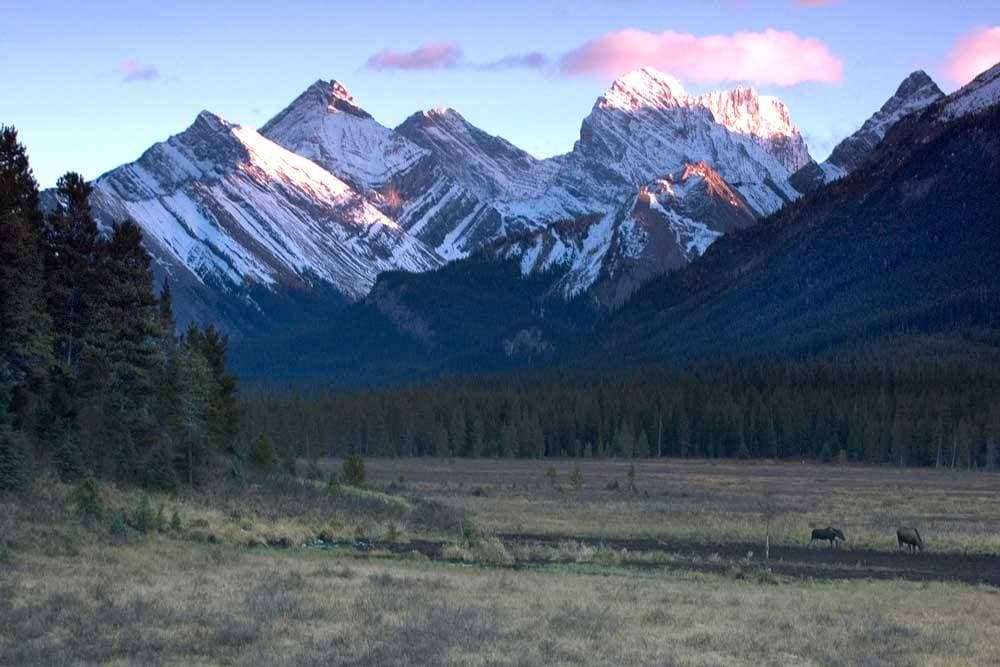
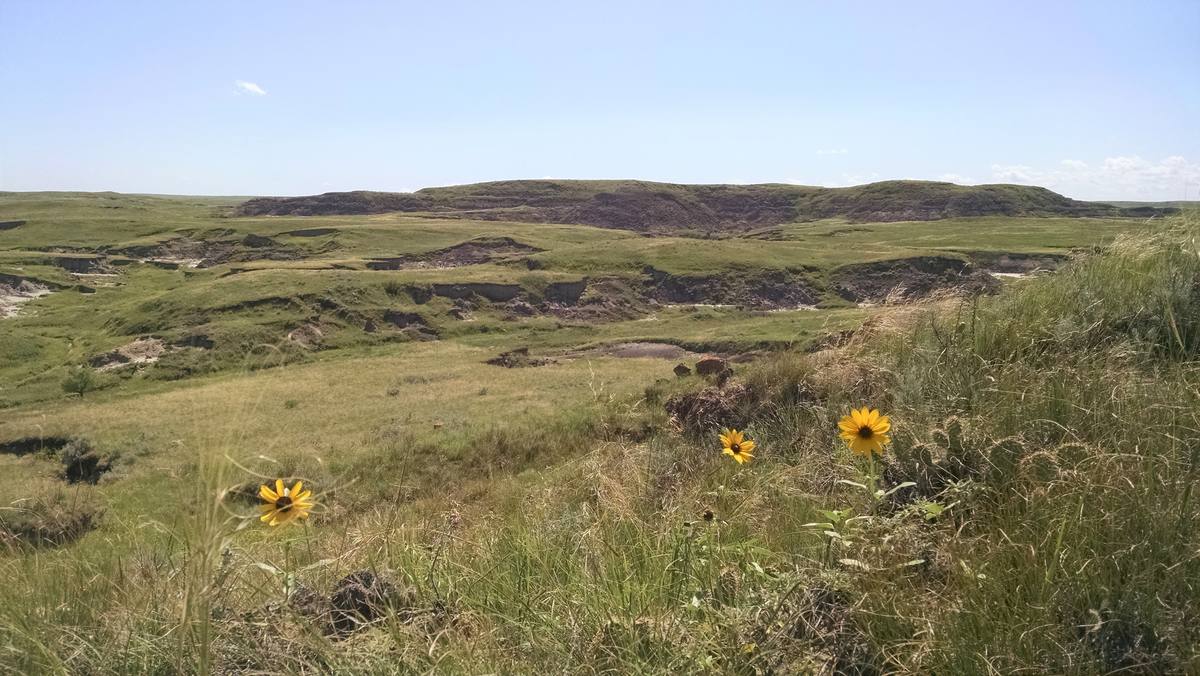
Fortress Mountain in Kananaskis Country. Cropped to remove a caption on the original. skille · CC BY 3.051° N · Fortress Mountain, Alberta
Alejandro G. Iñárritu · 2015 · shot by natural light, October 2014 to August 2015
The Revenant
Winter is lit in the north: Alberta, where the shoot began in October 2014.
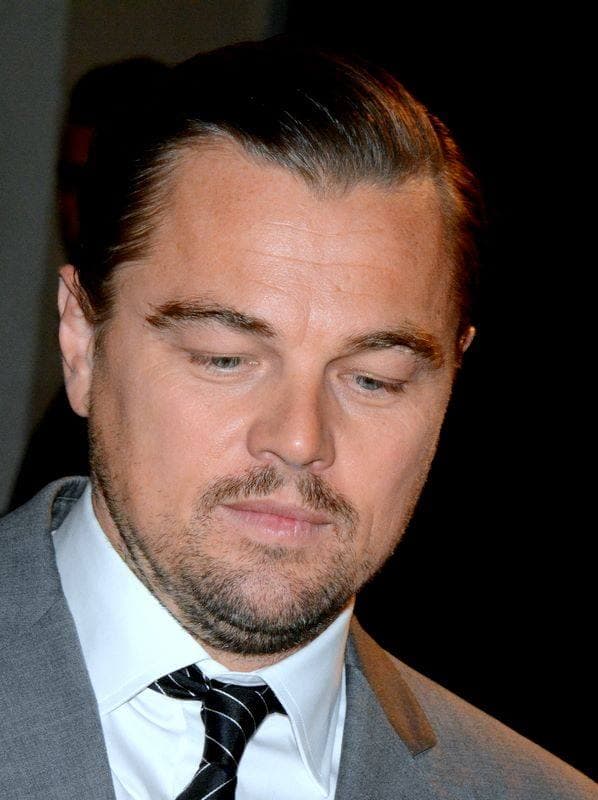
Leonardo DiCaprio at the French premiere of The Revenant, Le Grand Rex, Paris, 18 January 2016. Georges Biard · CC BY-SA 3.0Leonardo DiCaprioHugh Glass · Jan 2016
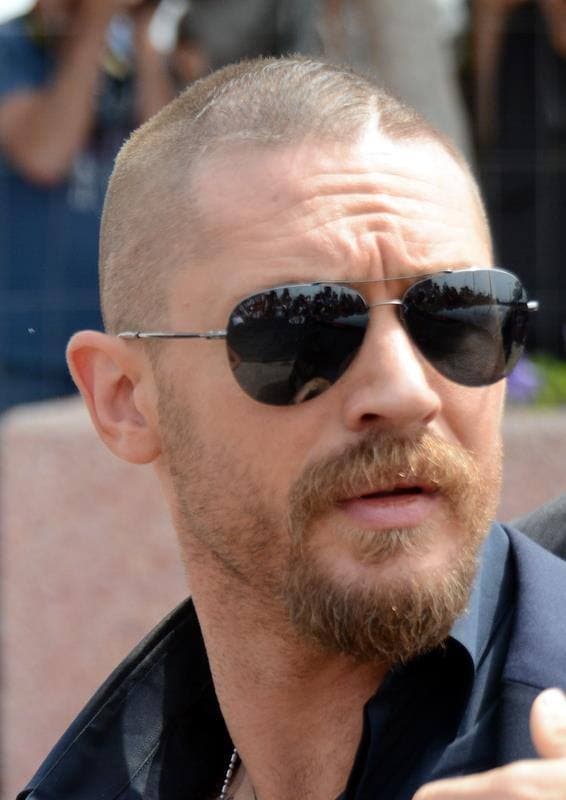
Tom Hardy at Cannes in May 2015, while The Revenant was still shooting. Georges Biard · CC BY-SA 3.0Tom HardyFitzgerald · May 2015
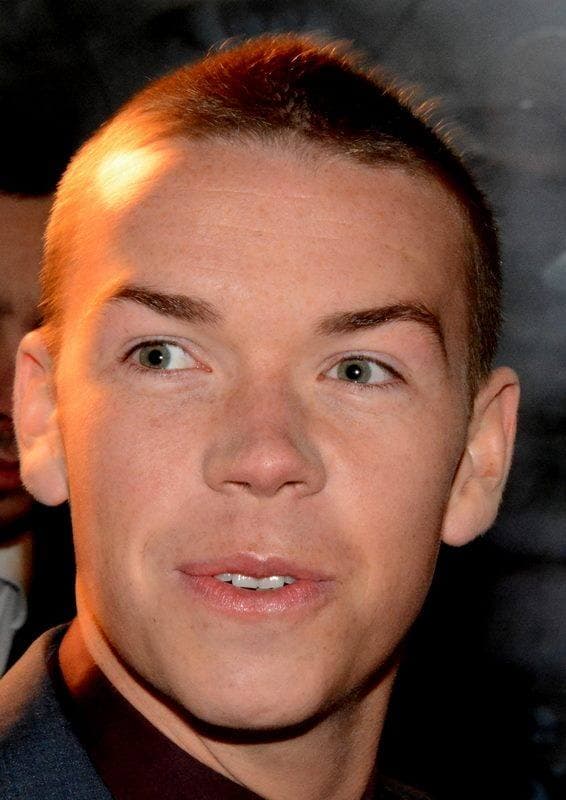
Will Poulter at the French premiere of The Revenant, Le Grand Rex, Paris, 18 January 2016. Georges Biard · CC BY-SA 3.0Will PoulterBridger · Jan 2016
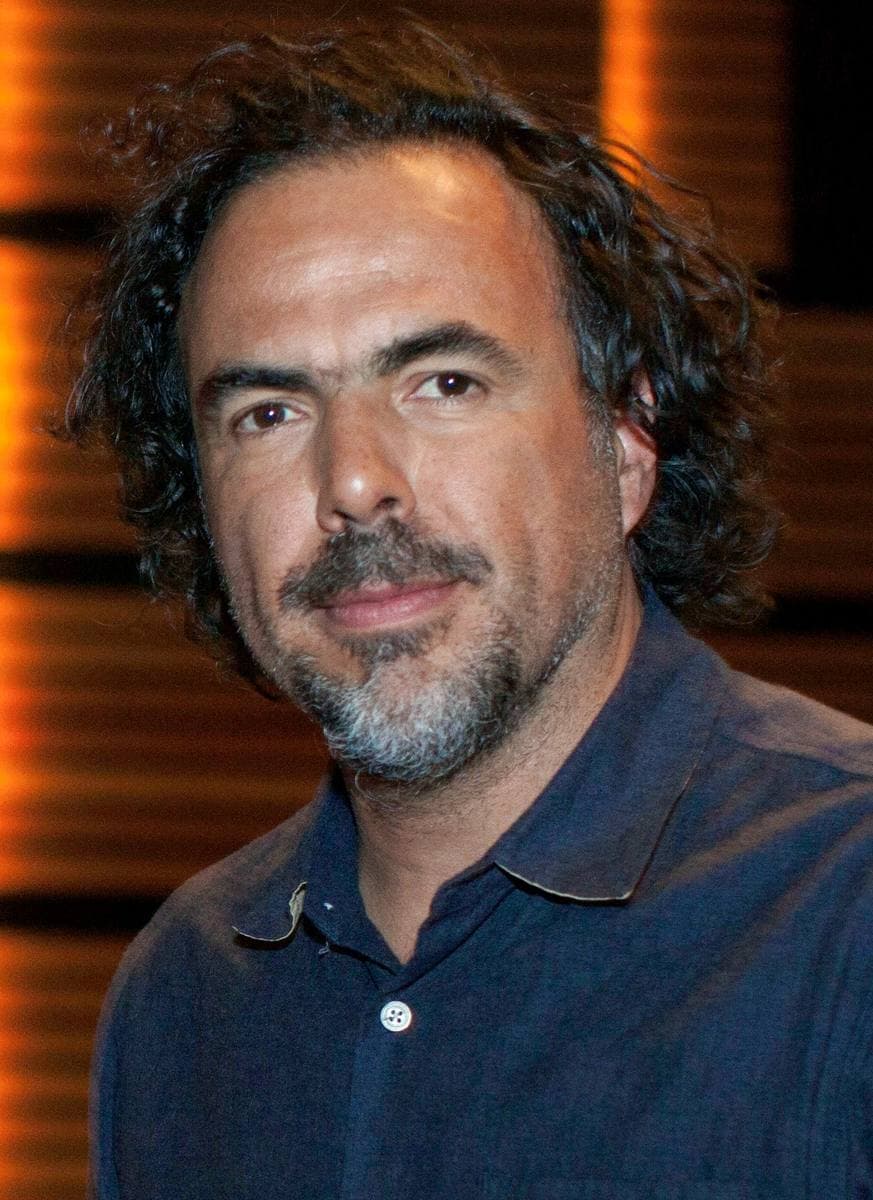
Alejandro G. Iñárritu in Los Angeles in April 2014, six months before the shoot began. Bart Michiels · CC BY-SA 3.0Alejandro G. IñárrituDirector · Apr 2014
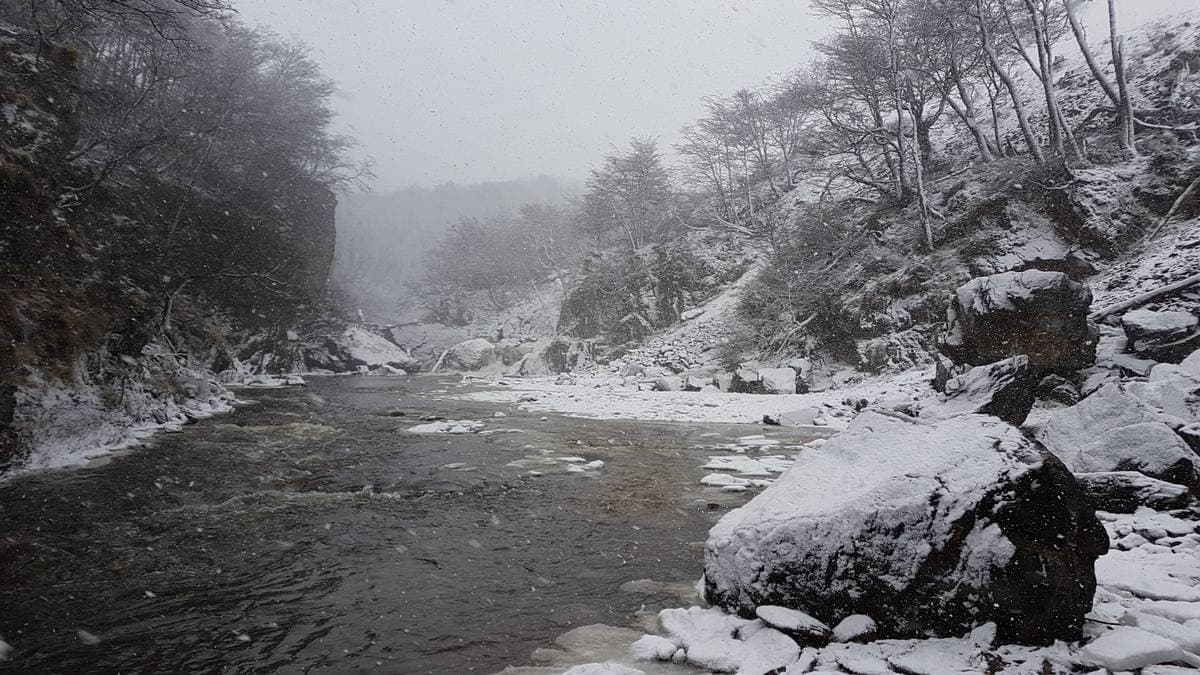
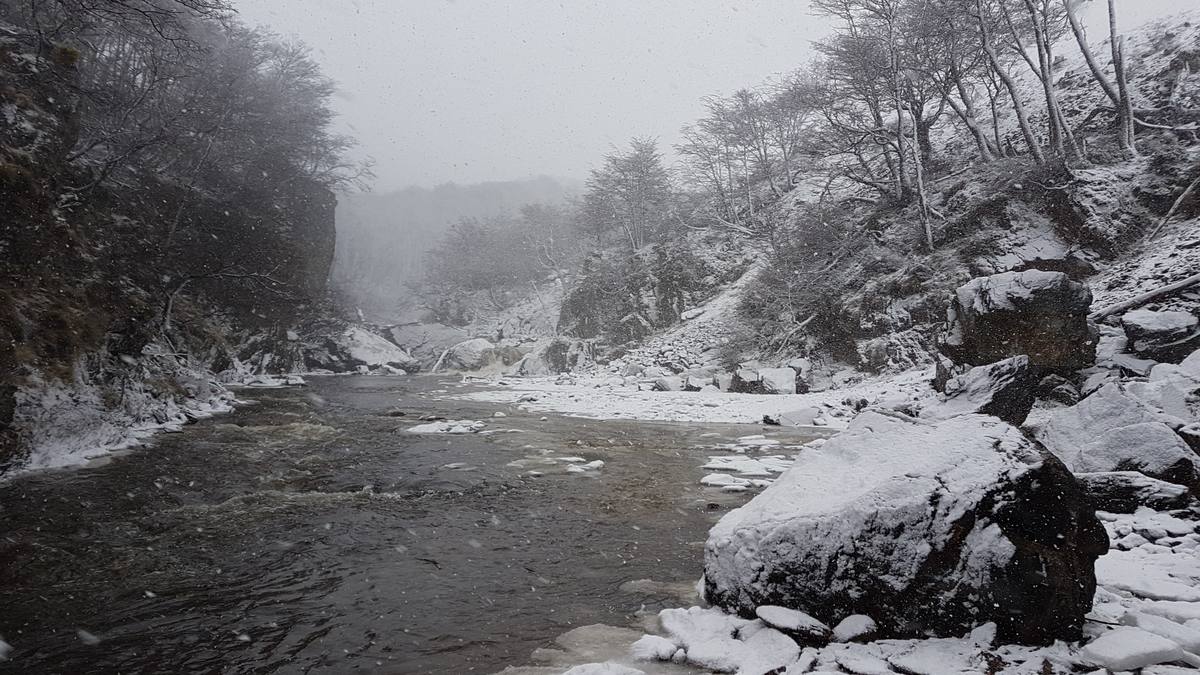
The Olivia River in winter, 29 July 2017: the same time of year the production came to Ushuaia in 2015. Morgoth969 · CC BY-SA 4.055° S · the Olivia River, Tierra del Fuego
October 2014 to August 2015
The orrery.
Iñárritu shot The Revenant in story order, from autumn into winter, using only natural light and firelight, so the snow had to be there when the story got to it. Turn the Earth through the shoot. The tilt of its axis carries winter from the north to the south, and the real places open as the season reaches them.
Where we read it
Shot in story order from autumn into winter; natural light and period firelight only; a warm Canadian winter sent the unit to Argentina for snow.
Not to scale. The Sun sits in the middle, the axis keeps its 23.4° lean, and the pale half of the Earth is the one in winter. The two dots are Alberta, at 51° N, and Ushuaia, at 55° S. The ring marks August, when the real Hugh Glass was attacked in 1823.
October 2014Winter is in the north
October 2014. Winter is in the north. Opens: Mînî Thnî (Morley).
Shooting begins in Alberta in autumn. The film is shot in story order, and the story opens with the attack filmed at Morley.
Where we read it
Shooting begins in Alberta in autumn. The film is shot in story order, and the story opens with the attack filmed at Morley.
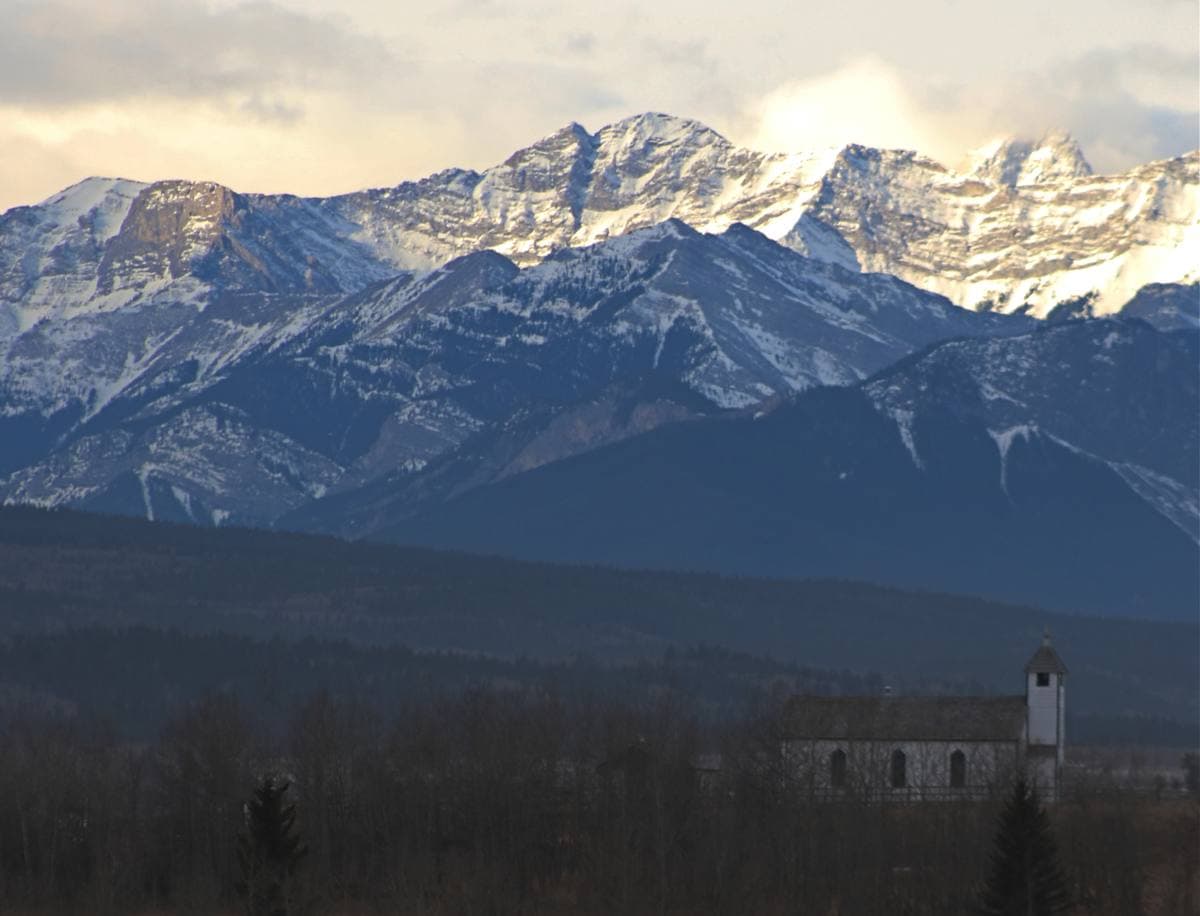
Skogan Peak above the McDougall church at Mînî Thnî (Morley), on the road west into the Rockies, March 2016. davebloggs007 · CC BY 2.5Mînî Thnî (Morley)Mînî Thnî, Stoney Nakoda Nation, between the Trans-Canada Highway and the Bow River, Alberta
Stop ledger · 1 places open
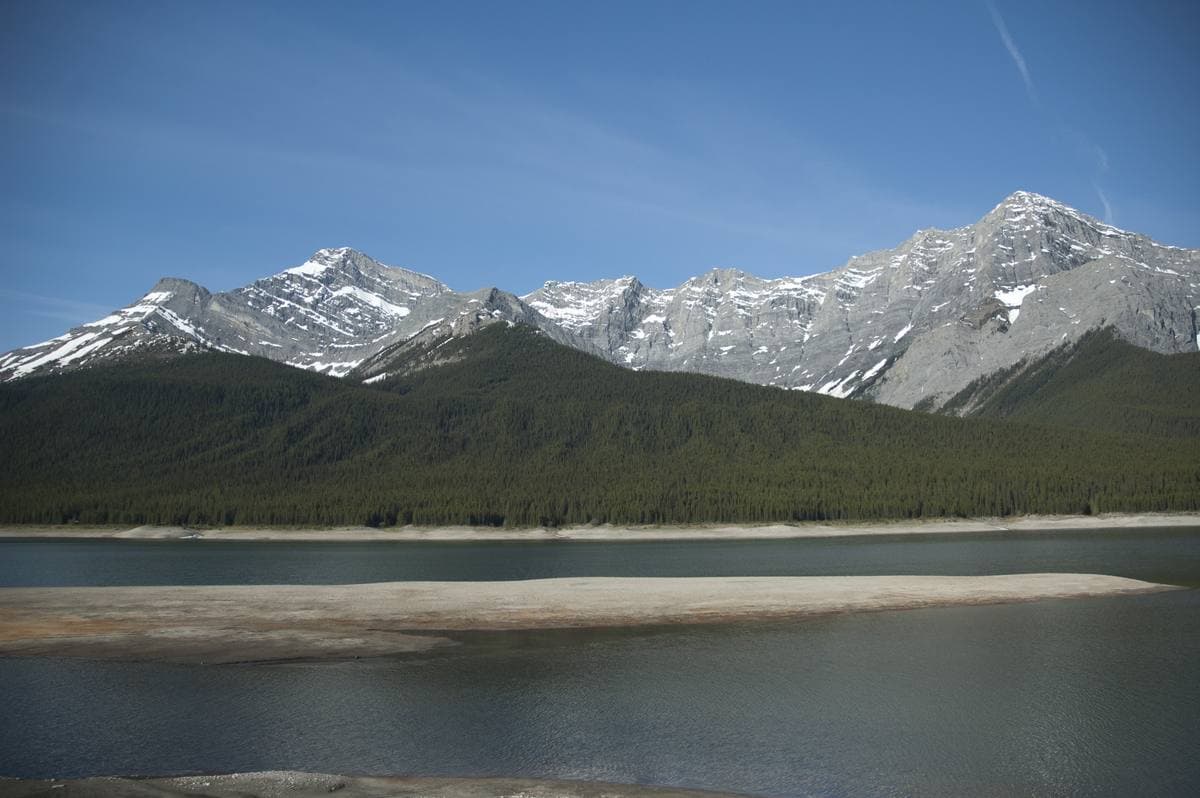
Spray Lakes from the Driftwood picnic area, June 2017. Brenda Takabe · CC BY-SA 4.0
Kananaskis, the Bow Valley, the badlands
Alberta.
About nine-tenths of the film was shot in Alberta, much of it in Kananaskis Country west of Calgary. Rivers ran too low for the shots, and temperatures in the Rockies often fell to −40°C.
Where we read it
About 10 per cent in British Columbia, the rest in Alberta.
Skogan Peak above the McDougall church at Mînî Thnî (Morley), on the road west into the Rockies, March 2016. davebloggs007 · CC BY 2.5
Reserve land
Mînî Thnî, Stoney Nakoda Nation, between the Trans-Canada Highway and the Bow River, Alberta
Mînî Thnî (Morley)
The attack that opens the film was filmed in Morley, on Stoney Nation land west of Calgary.
Mînî Thnî, Stoney for “cold water”, was called Morley until the Stoney Nakoda First Nations renamed it in August 2024.
The settlement lies between the Trans-Canada Highway and the Bow River, upstream from Ghost Lake.
Stoney Nakoda reserve land, not a film set: see it from Highway 1A or the Trans-Canada on the way into the Rockies, and ask the Nation before going further. The pin marks the settlement.
Where we read itSpray Valley Provincial Park at dusk, looking south-west from near Mount Engadine Lodge, September 2006. Chuck Szmurlo · CC BY 2.5
The fort
Spray Valley Provincial Park, Kananaskis Country, south of Canmore, Alberta
Spray Valley Provincial Park
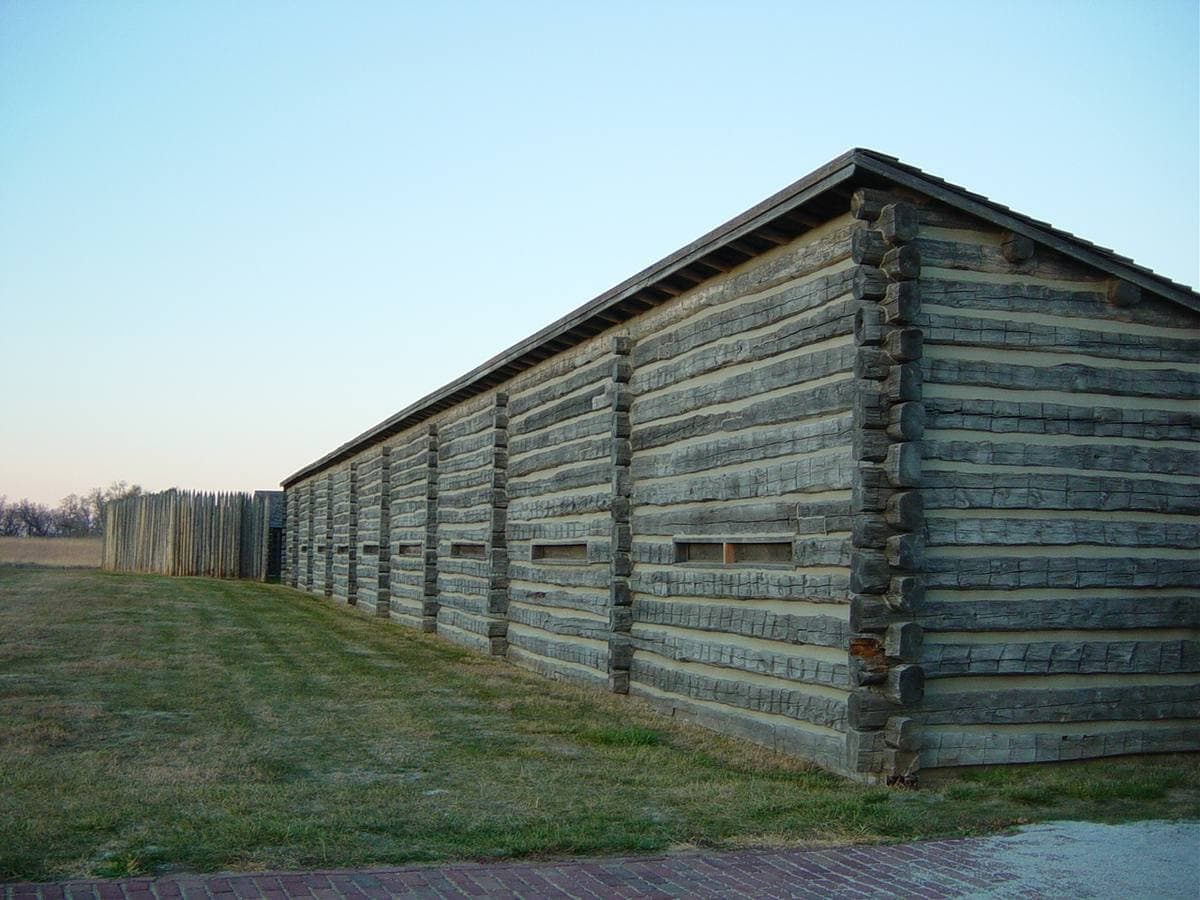
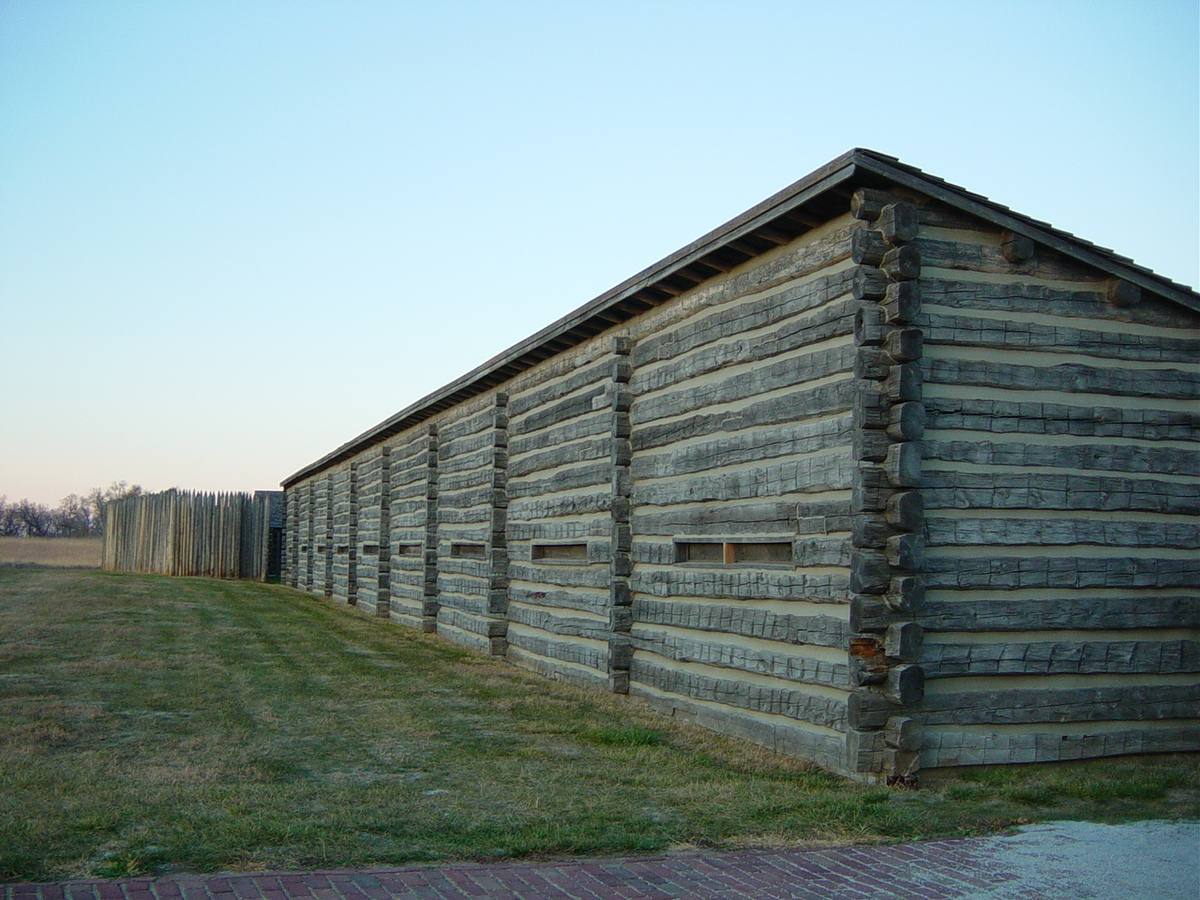
The film’s frontier fort, Fort Kiowa, was built in Spray Valley Provincial Park near Canmore, out of old lumber.
Inverse puts the main fort set and a tipi village on Spray Forks Road in the Bow Valley.
The park covers 255 square kilometres of Kananaskis Country and borders Banff National Park. It was established in December 2000.
A provincial park reached on Highway 742, the Smith-Dorrien road, from Canmore. The fort was a set and is gone; the valley is open to hike and camp.
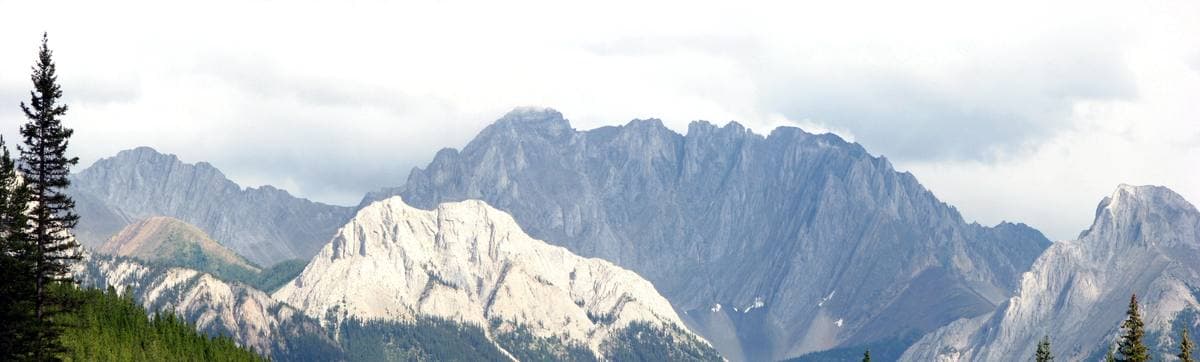
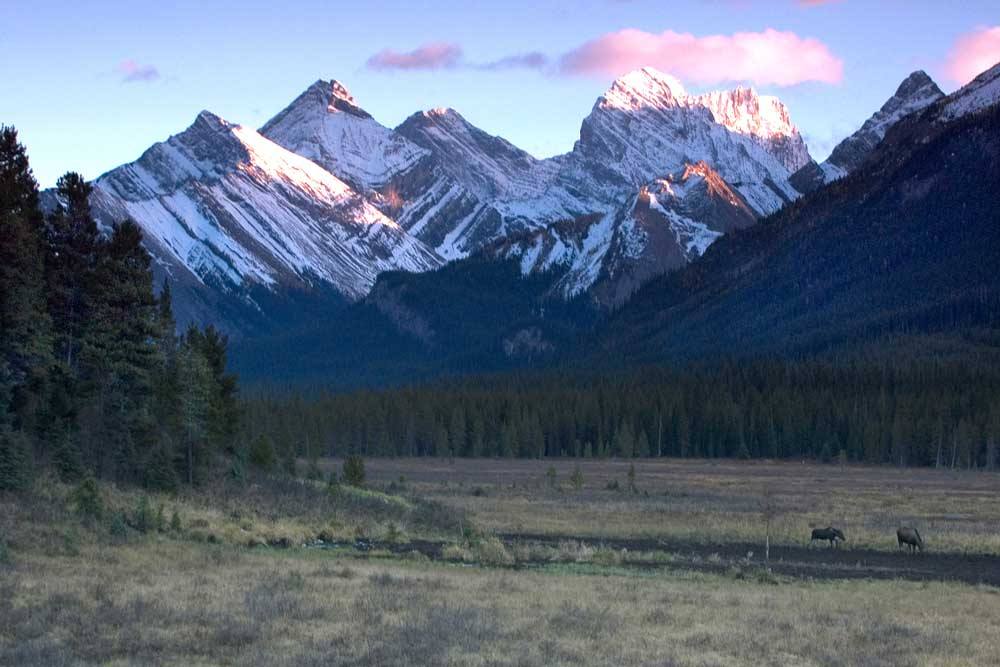
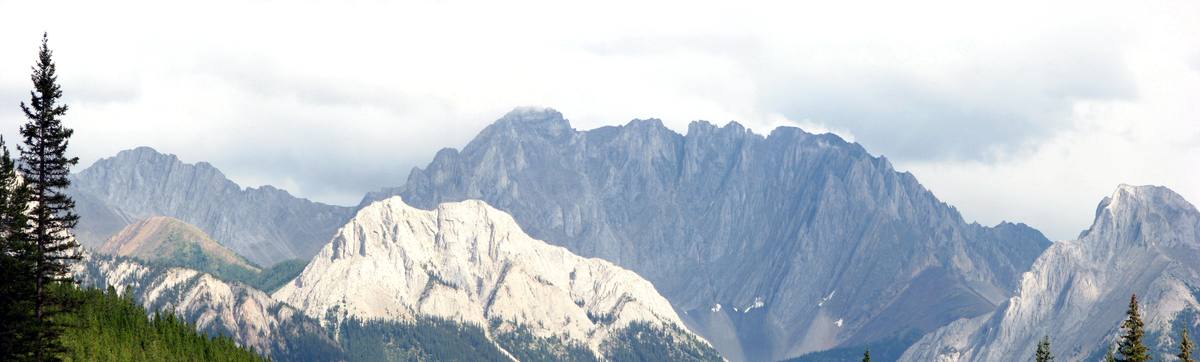
Where we read itFortress Mountain in Kananaskis Country. Cropped to remove a caption on the original. skille · CC BY 3.0
A real avalanche
Fortress Mountain, Kananaskis Country, about 115 km west of Calgary, Alberta
Fortress Mountain
A crane was hauled nearly 2,500 metres up Fortress Mountain to film a real avalanche, set off with explosives dropped from planes.
The ski area opened in 1967 as Snowridge and closed in the mid-2000s. Its top is at 2,500 metres.
The mountain is also in Inception, Brokeback Mountain and Jumanji: The Next Level. University of Saskatchewan hydrologists use it to study snow.
A closed ski hill on a Crown lease: the access road is closed to the public and avalanche control is active. Hikers and cat-skiing guests get up; see it from Highway 40 otherwise.
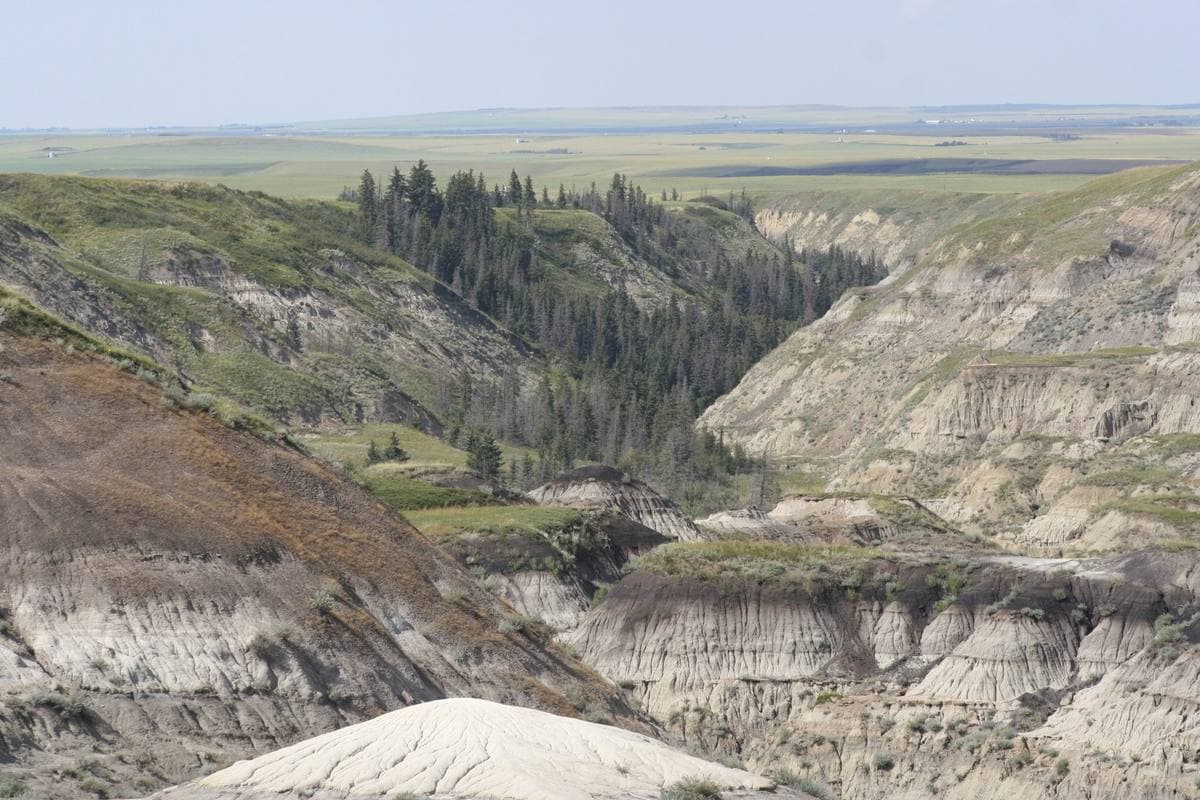
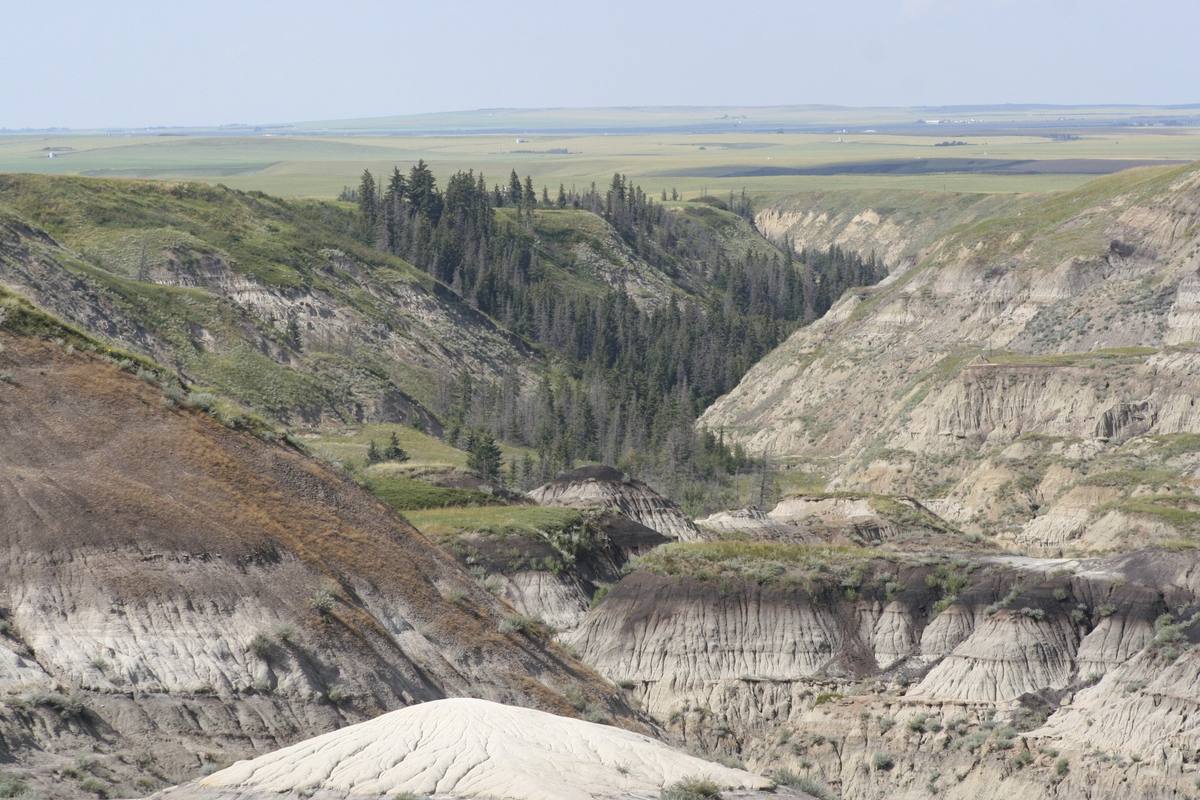
Where we read itHorseshoe Canyon, west of Drumheller, August 2010. davebloggs007 · CC BY 2.0
The meteor
Horseshoe Canyon, Highway 9, about 17 km west of Drumheller, Alberta
Horseshoe Canyon
The production shot in the badlands near Drumheller, north-east of Calgary: the scene where Fitzgerald sees a meteor.
Horseshoe Canyon is on Daily Hive’s list of the film’s Alberta locations.
The canyon is badlands cut into the prairie, about 17 km west of Drumheller on Highway 9. It gives its name to the Horseshoe Canyon Formation.
A free roadside viewpoint on Highway 9; trails lead down into the canyon. Drumheller’s Royal Tyrrell Museum is the next stop.
Where we read it
Mount Engadine Lodge
Mount Engadine Lodge
Kananaskis Country, Alberta · Rates for two, all meals included · Dinner in the Mountains from $105 a person, 1 Nov – 15 Dec
A backcountry lodge with rooms, cabins and glamping tents on the Smith-Dorrien road, 38 km south of Canmore, at the edge of the valley where the film’s fort stood. Meals are included.
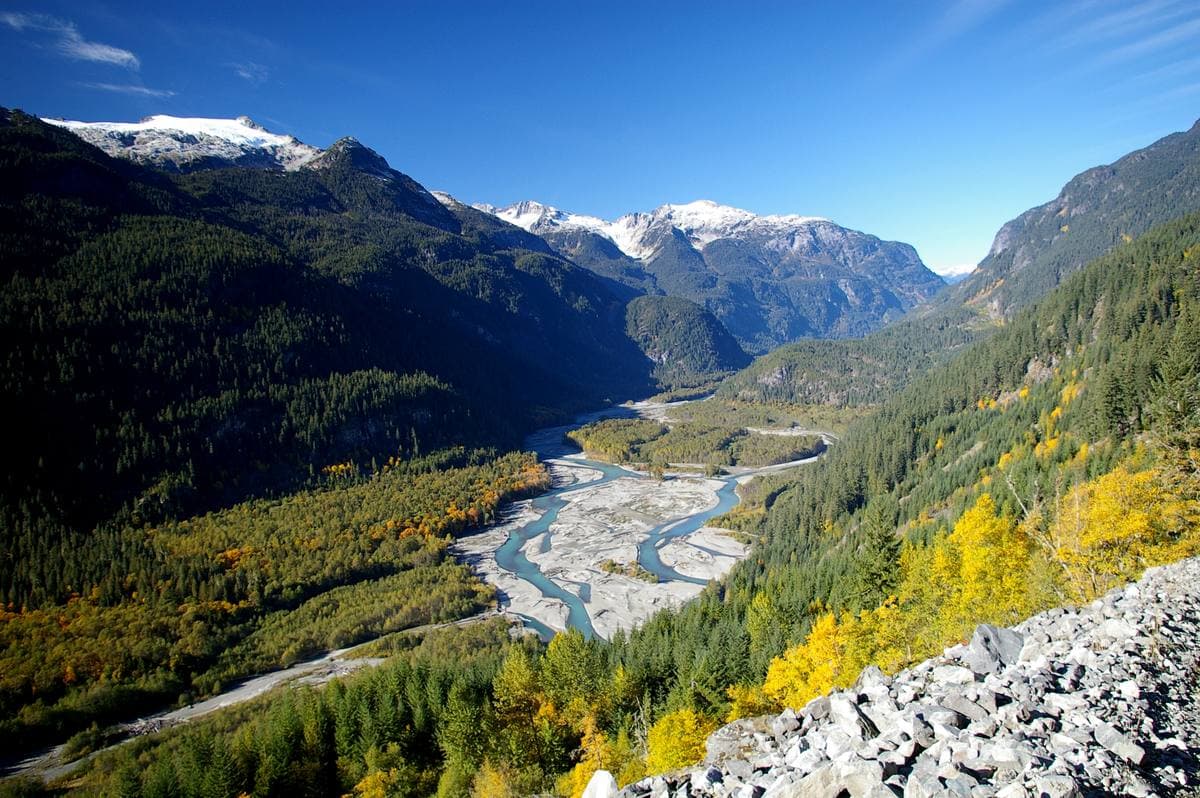
Two scenes left Alberta. The bear scene was made over three days in old-growth timber on the Squamish River, with a stuntman in a blue suit and the animal added afterwards. The waterfall is Kootenai Falls, across the border in Montana.
The upper Squamish River valley in October 2006. Tim Gage · CC BY-SA 2.0
Named, not pinned
Upper Squamish Valley, along the Squamish River, north of Squamish, British Columbia
The upper Squamish Valley
The bear scene was filmed over three days in a small stand of first-growth timber on the Squamish River known as the Derringer Forest.
No real bear was used: the stuntman Glenn Ennis played it in a blue-screen suit, and the bear was added later.
Only about 10 per cent of the film was shot in British Columbia; the rest was Alberta.
The Squamish River runs about 80 km from the Pemberton Icefield to Howe Sound at the town of Squamish.
The Derringer Forest has no public position, so it is named and not pinned. The Squamish Valley Road follows the river north from Squamish.
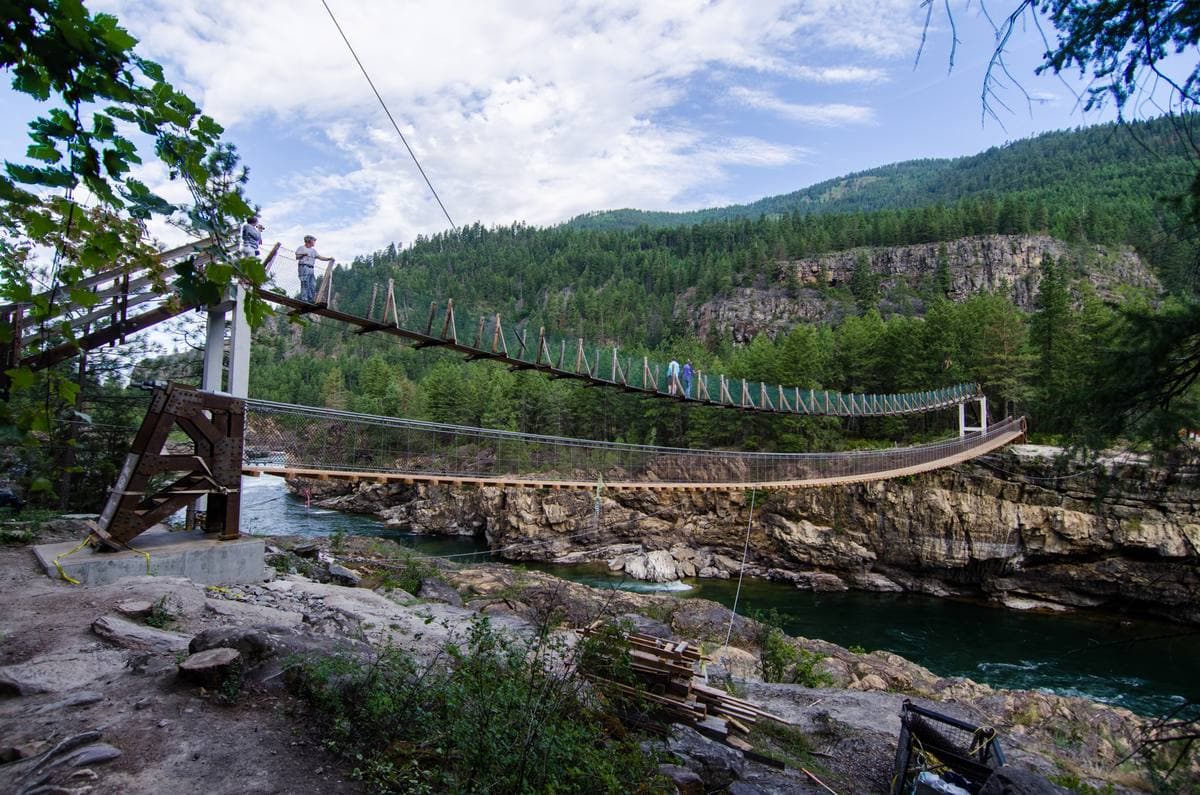
Where we read itThe swinging bridge below Kootenai Falls, July 2019. Jeff Hitchcock · CC BY 2.0
Open to walk
Kootenai Falls, US Route 2, between Libby and Troy, Lincoln County, Montana
Kootenai Falls
The waterfall scene was filmed at Kootenai Falls, near Libby, Montana.
At about 17 metres it is the largest undammed waterfall in Montana. The Kootenai people hold it sacred.
The swinging bridge downstream was first built by the Civilian Conservation Corps in the 1930s; it was rebuilt in 2019.
A foot trail runs from the roadside car park on US Route 2 to the falls and the swinging bridge below them.
Where we read it
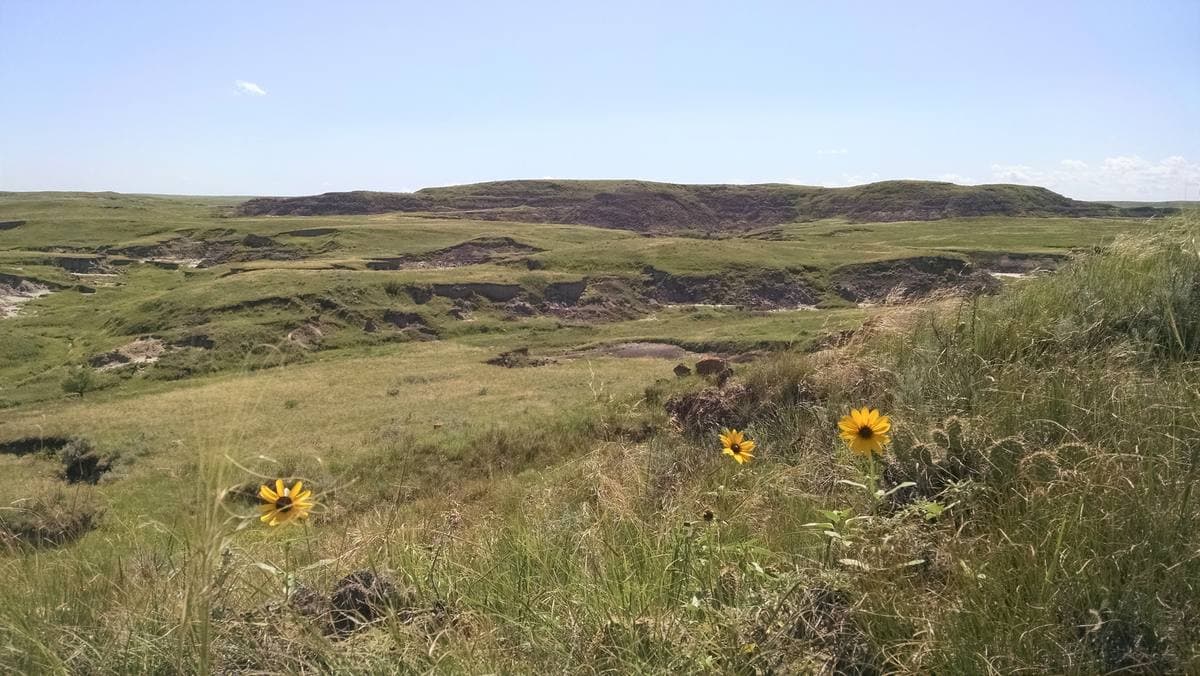
The Grand River National Grassland, Perkins County, South Dakota, in June 2018: the country of the real Hugh Glass. US Forest Service photo by Cory Enger. Cory Enger, US Forest Service · Public domain
The Grand River · August 1823
Summer, not winter.
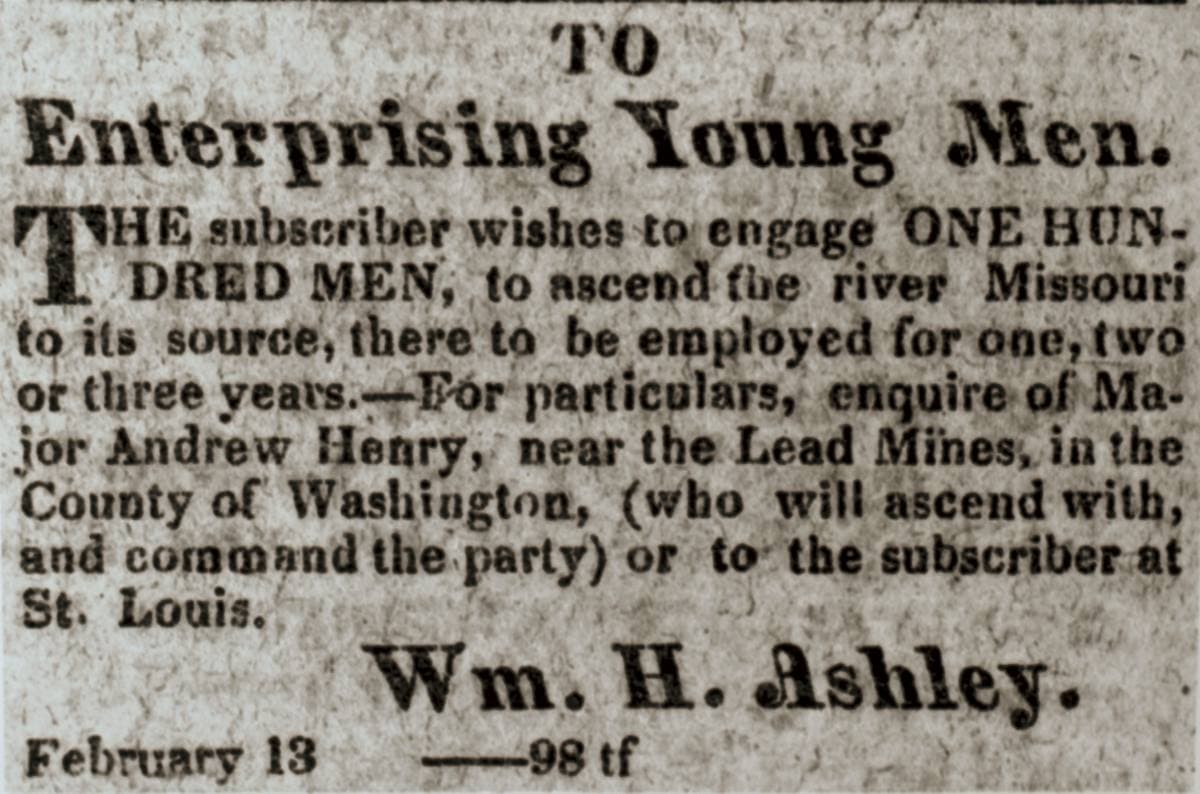
The real Hugh Glass answered William Ashley’s 1822 call for a hundred men to go up the Missouri. In August 1823, near the forks of the Grand River in what is now South Dakota, he was attacked by a grizzly and left for dead. It was summer, on open plains. The snow and the mountains are the film’s.
Where we read it
Ashley’s 1822 advertisement for 100 men to ascend the Missouri; the attack near the forks of the Grand River.
William H. Ashley’s advertisement “To Enterprising Young Men” in the Missouri Republican, 27 March 1822. Missouri Republican · Public domainThe Grand River National Grassland, Perkins County, South Dakota, in June 2018: the country of the real Hugh Glass. US Forest Service photo by Cory Enger. Cory Enger, US Forest Service · Public domain
Near the forks
Shadehill Recreation Area, Shadehill Reservoir, Perkins County, South Dakota
Shadehill and the Grand River
The real Hugh Glass was attacked by a grizzly near the forks of the Grand River, close to present-day Shadehill Reservoir, in August 1823.
The real journey was not in winter and not among high mountains: the film’s terrain does not match the story.
The reservoir was made by a dam the Bureau of Reclamation finished in 1951.
A monument to Glass was set up on ranch land in 1923 and later moved for the reservoir; it was rededicated at the 2023 Hugh Glass Rendezvous.
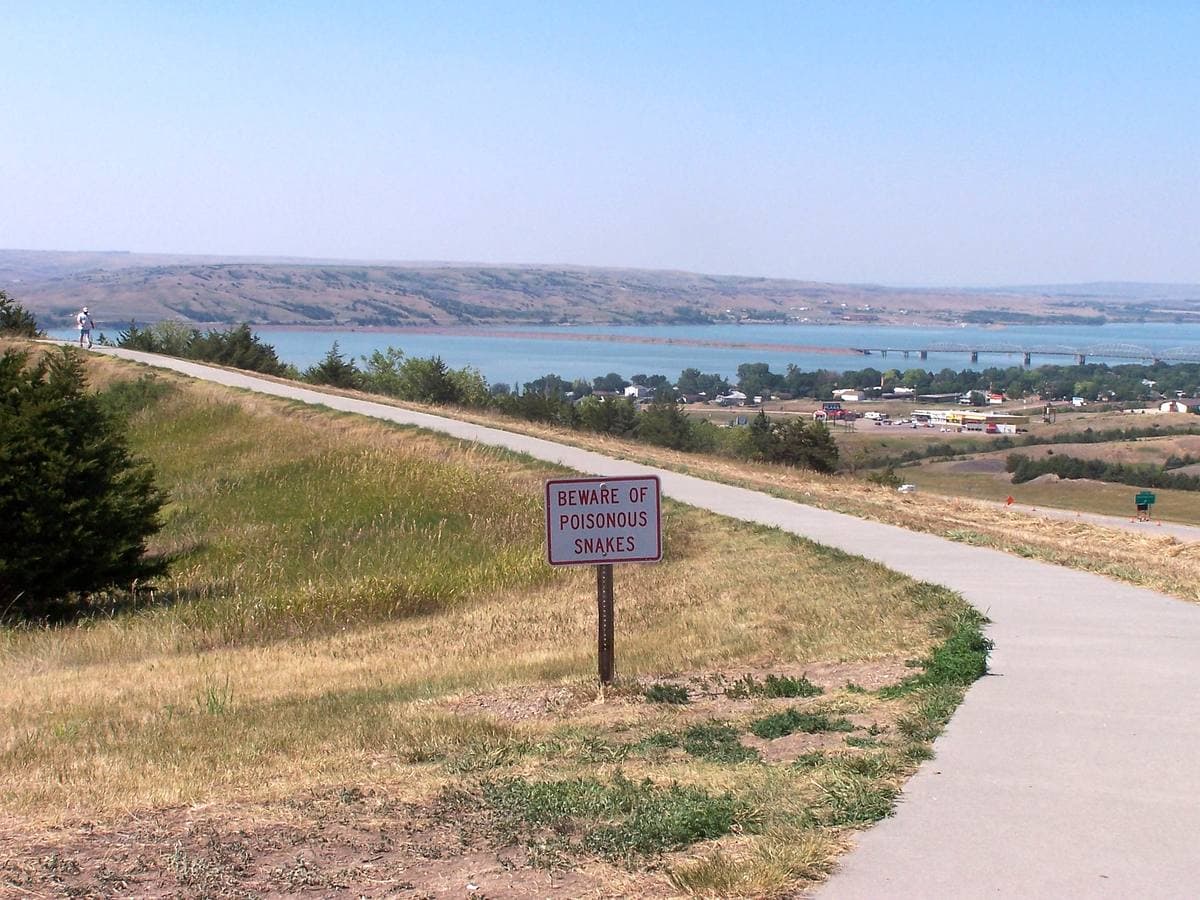
A state recreation area on the reservoir south of Lemmon, with camping, swimming and boating. The free Hugh Glass Lakeside Use Area is named for him. The photograph is the Grand River National Grassland nearby.
Where we read it
South Dakota Game, Fish and Parks
Shadehill Recreation Area
Perkins County, South Dakota · Hugh Glass Lakeside Use Area: free
Camping on Shadehill Reservoir, near where the real Hugh Glass was attacked in 1823. The Hugh Glass Lakeside Use Area is a free campground and picnic site named for him.
Glass got to Fort Kiowa on the Missouri, more than 200 miles away, in about six weeks: crawling south to the Cheyenne River, then floating down it on a raft he built. He lived mostly on berries and roots.
Where we read it
More than 200 miles to Fort Kiowa; crawling to the Cheyenne River and rafting; about six weeks; berries and roots.
The Missouri River at Chamberlain, South Dakota, July 2006. Fort Kiowa stood on this river between Chamberlain and the Big Bend. Anne Swoboda from Griffith, IN, USA · CC BY-SA 2.0
Under the lake
The Missouri River between Chamberlain and the Big Bend, South Dakota
Fort Kiowa
After the attack, Glass went more than 200 miles to Fort Kiowa on the Missouri, crawling south to the Cheyenne River and floating down it on a raft he built. It took about six weeks.
The trading post was built in 1822 and measured 140 by 140 feet. Its site is now under Lake Francis Case.
The site is under Lake Francis Case, so it is named and not pinned. The photograph is the Missouri at Chamberlain.
Where we read itThe reconstructed west rampart at Fort Atkinson State Historical Park, Nebraska. MONGO (Commons user) · Public domain
Rebuilt
Fort Atkinson State Historical Park, just east of Fort Calhoun, Nebraska
Fort Atkinson
Fitzgerald had joined the army and was at Fort Atkinson when Glass found him. Glass spared him, and the captain made Fitzgerald give back Glass’s rifle.
Built in 1819 and abandoned in 1827, it was the first US Army post west of the Missouri; Nebraska calls it the state’s first town.
The state rebuilt the fort in the 1980s and 1990s: a school, a store, blacksmith and tinsmith shops among the buildings.
A rebuilt fort in a state historical park. The grounds open at 8am; the visitor centre is seasonal and charges $2 for adults. A Nebraska park permit is needed.
Where we read it
Two endings
Glass found the younger man who had left him at the mouth of the Bighorn and forgave him. He found Fitzgerald in the army at Fort Atkinson, spared him, and the captain made Fitzgerald give back Glass’s rifle. Nobody was killed.
Where we read it
Glass found the younger man who had left him at the mouth of the Bighorn and forgave him. He found Fitzgerald in the army at Fort Atkinson, spared him, and the captain made Fitzgerald give back Glass’s rifle. Nobody was killed.
The Olivia River in winter, 29 July 2017: the same time of year the production came to Ushuaia in 2015. Morgoth969 · CC BY-SA 4.0
Ushuaia · late July 2015
The bottom of the world.
With the Canadian snow gone, the last winter on offer was in the southern hemisphere. The unit moved to Ushuaia, the city that calls itself the southernmost in the world, and finished on the Olivia River, 12,524 km from Fortress Mountain.
Where we read it
The move to Argentina in late July 2015; the Olivia River.
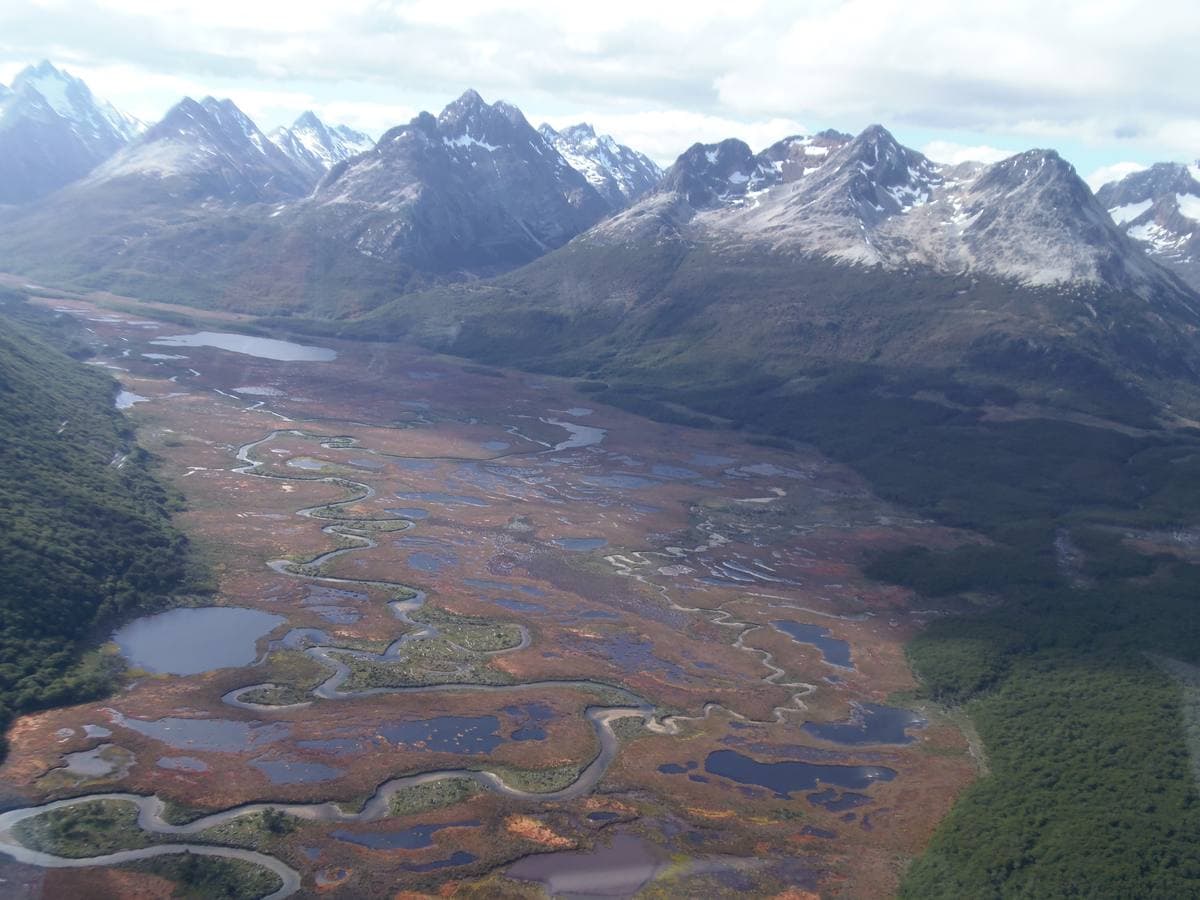
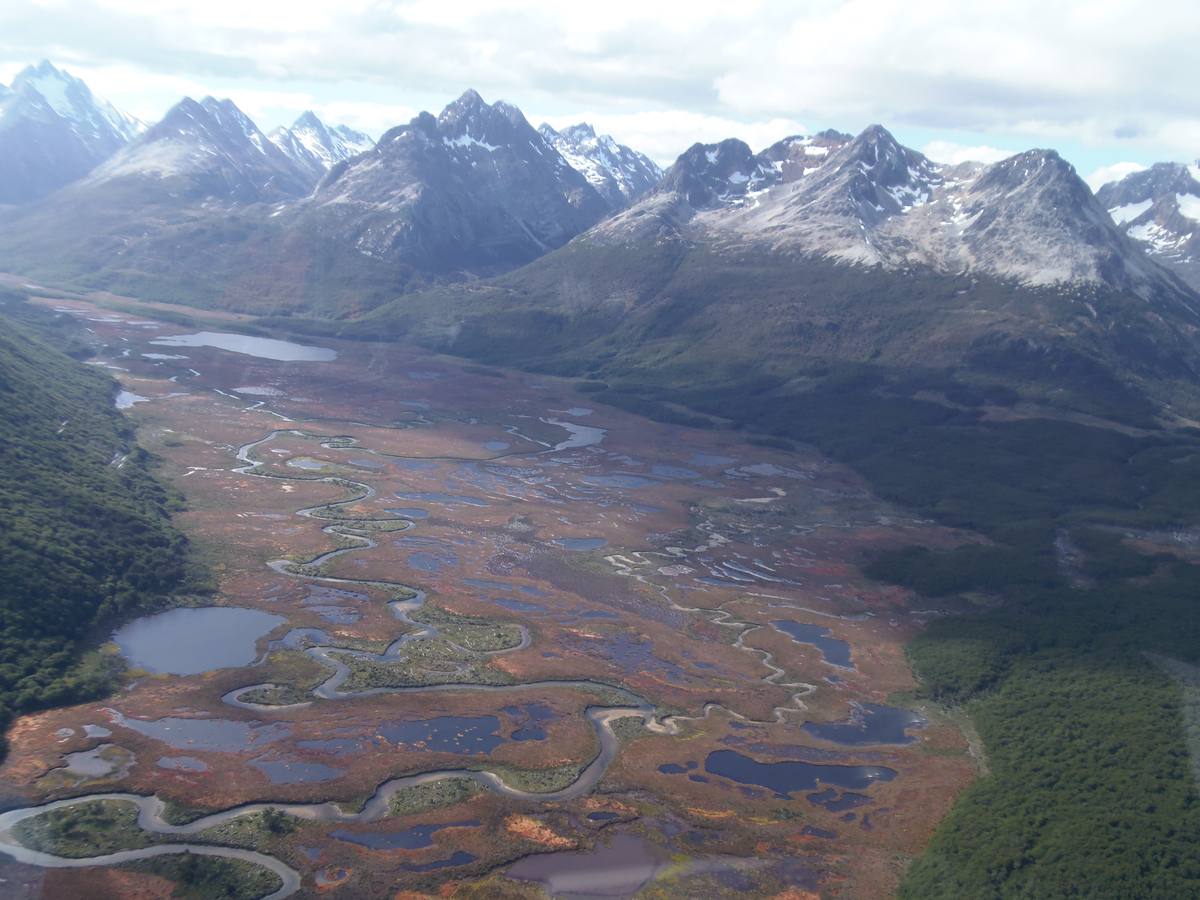
The Olivia River valley from a helicopter, January 2014. Horacio_Fernandez · CC BY 3.0
Winter in July
Río Olivia, east of Ushuaia, Tierra del Fuego, Argentina
The Olivia River
When the snow melted in Canada, the production moved to Argentina in late July 2015 and filmed the final part on the Olivia River, Ushuaia’s most important river.
Argentina’s tourism board says the film was shot on the banks of the Olivia River in Ushuaia.
Accounts of the ending differ: Travel Alberta credits the climactic scene to Kananaskis.
Route 3 follows the Olivia River through the mountains to the Beagle Channel and Ushuaia Bay.
Route 3 follows the river out of Ushuaia through the mountains; the pin marks the river, not a set.
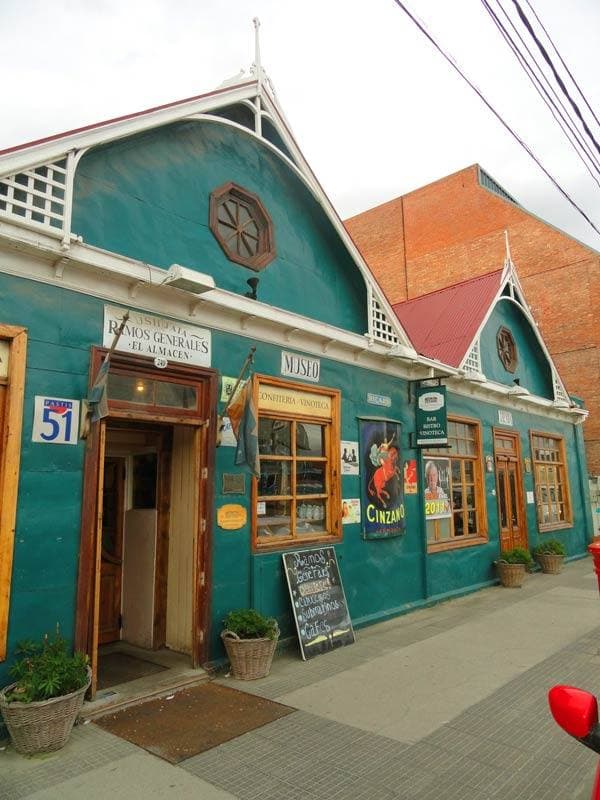
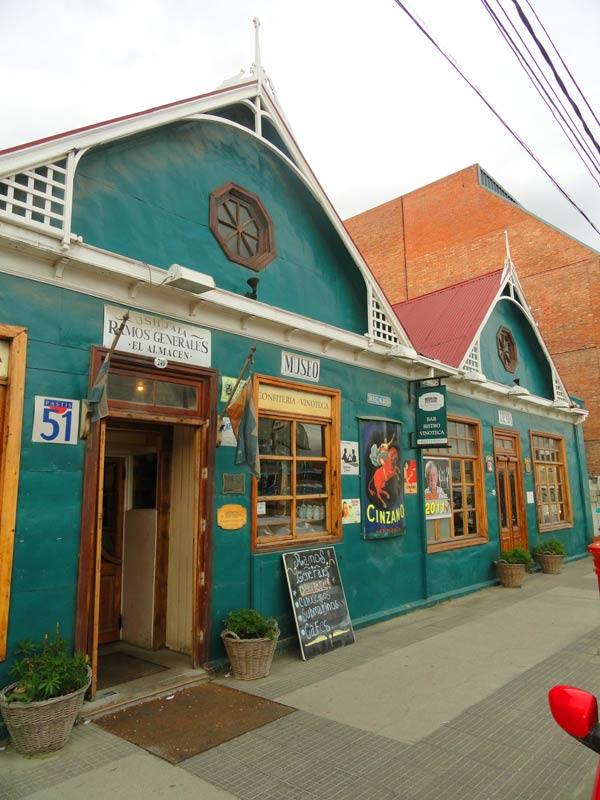
Where we read itEl Almacén de Ramos Generales on Avenida Maipú, Ushuaia, 2011. Tetraktys · CC BY-SA 3.0
Since 1906
Avenida Maipú 749, Ushuaia, Argentina
El Almacén de Ramos Generales
A store and restaurant trading since 1906. Its owner says DiCaprio came in with his parents and they had pumpkin soup.
A general store and restaurant on the waterfront avenue, open to anyone.
Where we read it
Tren del Fin del Mundo
Tren del Fin del Mundo
Ushuaia, Argentina · Tourist class ARS 80,000 adult, Oct 2026 – Mar 2027 · park entry extra
The tourist train on the old prisoners’ railway into Tierra del Fuego National Park, from its station on Avenida Presidente Raúl Ricardo Alfonsín, Ushuaia, three departures a day.
Leonardo DiCaprio at the French premiere of The Revenant, Le Grand Rex, Paris, 18 January 2016. Georges Biard · CC BY-SA 3.0Leonardo DiCaprioHugh Glass · Jan 2016
Tom Hardy at Cannes in May 2015, while The Revenant was still shooting. Georges Biard · CC BY-SA 3.0Tom HardyFitzgerald · May 2015
Will Poulter at the French premiere of The Revenant, Le Grand Rex, Paris, 18 January 2016. Georges Biard · CC BY-SA 3.0Will PoulterBridger · Jan 2016
Alejandro G. Iñárritu in Los Angeles in April 2014, six months before the shoot began. Bart Michiels · CC BY-SA 3.0Alejandro G. IñárrituDirector · Apr 2014
Leonardo DiCaprio is Hugh Glass, Tom Hardy is John Fitzgerald, Will Poulter is Jim Bridger and Domhnall Gleeson is Andrew Henry, with Forrest Goodluck as Hawk and Melaw Nakehk’o as Powaqa. Emmanuel Lubezki shot it. The budget grew from $60 million to $135 million, and the film took $533.6 million worldwide.
On 28 February 2016 the film won three Oscars here from twelve nominations, the most of any film that year.
DiCaprio won Best Actor, his first win after five nominations; Iñárritu won Best Director for the second year running; Lubezki won Best Cinematography for the third year running.
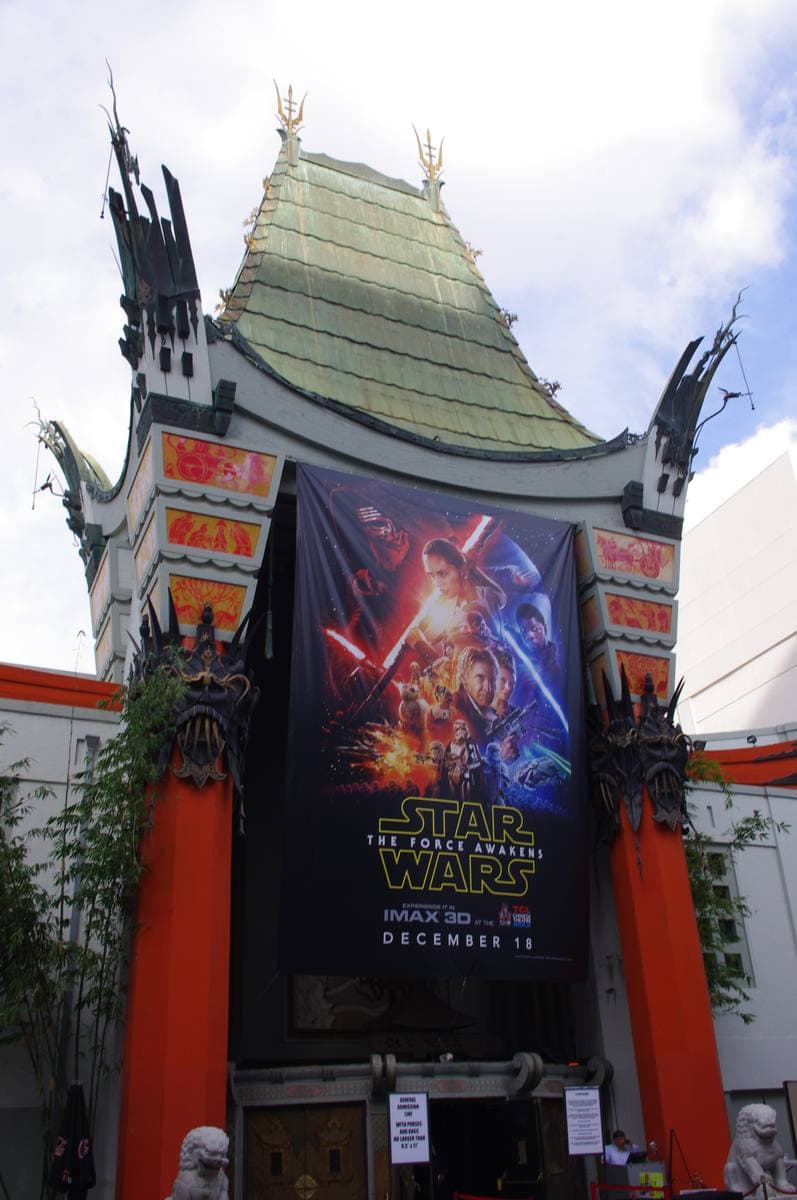
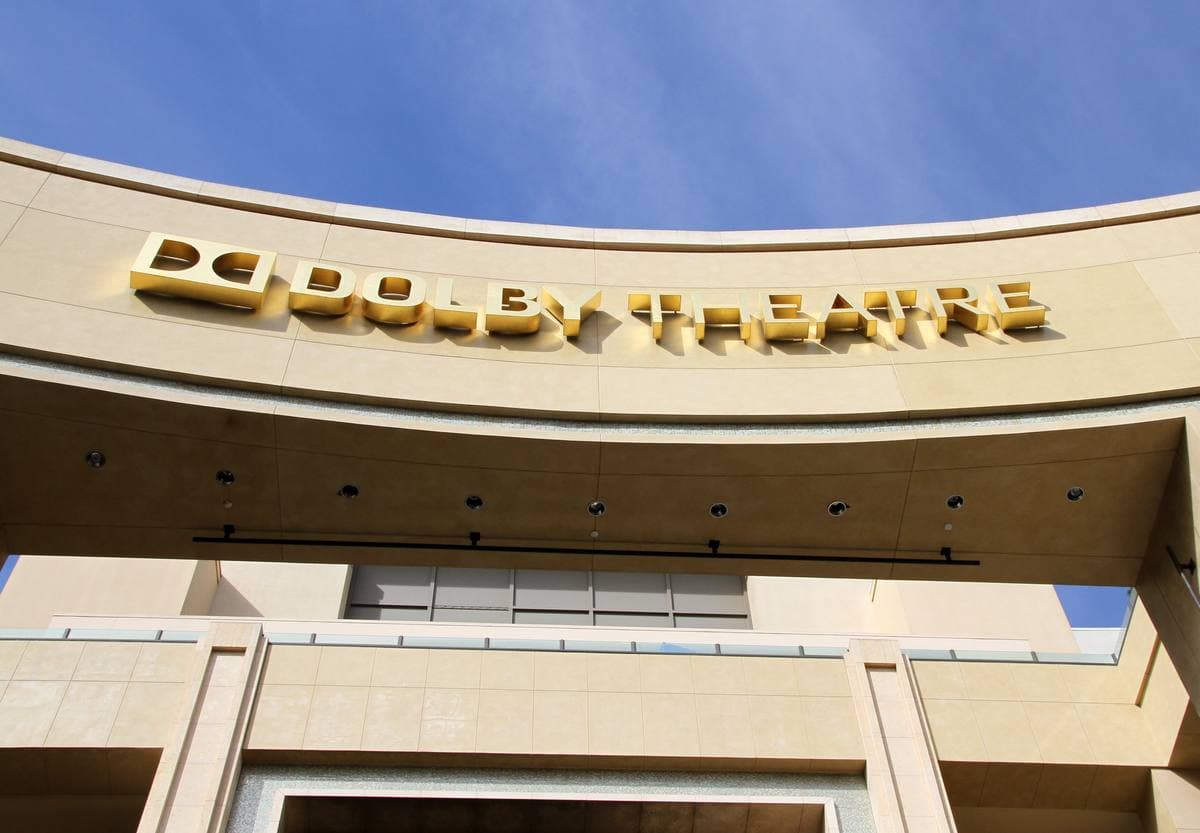
A working theatre two doors from the Chinese; its grand stair is in the Ovation Hollywood centre.
Where we read it
Go there.
Where it is now
11 places on the map: 4 in Alberta, 1 in Montana, 2 in Tierra del Fuego, 2 on the real 1823 trail and 2 in Hollywood. The Squamish forest and Fort Kiowa are named but not pinned.
Pins mark public places; private homes are named but not pinned.
General reference · Restricted access · Coordinate precision: site · Not an exact scene or camera position; not a visitor route. Stoney Nakoda reserve land, not a film set: see it from Highway 1A or the Trans-Canada on the way into the Rockies, and ask the Nation before going further. The pin marks the settlement.
General reference · Public access · Coordinate precision: area · Not an exact scene or camera position; not a visitor route. A provincial park reached on Highway 742, the Smith-Dorrien road, from Canmore. The fort was a set and is gone; the valley is open to hike and camp.
General reference · Restricted access · Coordinate precision: site · Not an exact scene or camera position; not a visitor route. A closed ski hill on a Crown lease: the access road is closed to the public and avalanche control is active. Hikers and cat-skiing guests get up; see it from Highway 40 otherwise.
General reference · Public access · Coordinate precision: site · Not an exact scene or camera position; not a visitor route. A free roadside viewpoint on Highway 9; trails lead down into the canyon. Drumheller’s Royal Tyrrell Museum is the next stop.
1Skogan Peak above the McDougall church at Mînî Thnî (Morley), on the road west into the Rockies, March 2016. davebloggs007 · CC BY 2.5
Mînî Thnî, Stoney Nakoda Nation, between the Trans-Canada Highway and the Bow River, Alberta
Mînî Thnî (Morley)
The attack that opens the film was filmed in Morley, on Stoney Nation land west of Calgary.
Stoney Nakoda reserve land, not a film set: see it from Highway 1A or the Trans-Canada on the way into the Rockies, and ask the Nation before going further. The pin marks the settlement.
Where we read it
2Spray Valley Provincial Park at dusk, looking south-west from near Mount Engadine Lodge, September 2006. Chuck Szmurlo · CC BY 2.5
Spray Valley Provincial Park, Kananaskis Country, south of Canmore, Alberta
Spray Valley Provincial Park
The film’s frontier fort, Fort Kiowa, was built in Spray Valley Provincial Park near Canmore, out of old lumber.
A provincial park reached on Highway 742, the Smith-Dorrien road, from Canmore. The fort was a set and is gone; the valley is open to hike and camp.
Where we read it
3Fortress Mountain in Kananaskis Country. Cropped to remove a caption on the original. skille · CC BY 3.0
Fortress Mountain, Kananaskis Country, about 115 km west of Calgary, Alberta
Fortress Mountain
A crane was hauled nearly 2,500 metres up Fortress Mountain to film a real avalanche, set off with explosives dropped from planes.
A closed ski hill on a Crown lease: the access road is closed to the public and avalanche control is active. Hikers and cat-skiing guests get up; see it from Highway 40 otherwise.
Where we read it
4Horseshoe Canyon, west of Drumheller, August 2010. davebloggs007 · CC BY 2.0
Horseshoe Canyon, Highway 9, about 17 km west of Drumheller, Alberta
Horseshoe Canyon
The production shot in the badlands near Drumheller, north-east of Calgary: the scene where Fitzgerald sees a meteor.
A free roadside viewpoint on Highway 9; trails lead down into the canyon. Drumheller’s Royal Tyrrell Museum is the next stop.
Where we read it
Stay
In the valley, by the reservoir.
A lodge on the road through the Spray Valley, or a campground named for Hugh Glass.
Mount Engadine Lodge
Mount Engadine Lodge
Kananaskis Country, Alberta · Rates for two, all meals included · Dinner in the Mountains from $105 a person, 1 Nov – 15 Dec
A backcountry lodge with rooms, cabins and glamping tents on the Smith-Dorrien road, 38 km south of Canmore, at the edge of the valley where the film’s fort stood. Meals are included.
Perkins County, South Dakota · Hugh Glass Lakeside Use Area: free
Camping on Shadehill Reservoir, near where the real Hugh Glass was attacked in 1823. The Hugh Glass Lakeside Use Area is a free campground and picnic site named for him.
The train out of Ushuaia, lunch on Avenida Maipú, the rebuilt Fort Atkinson and tours of Alberta.
Tren del Fin del Mundo
Tren del Fin del Mundo
Ushuaia, Argentina · Tourist class ARS 80,000 adult, Oct 2026 – Mar 2027 · park entry extra
The tourist train on the old prisoners’ railway into Tierra del Fuego National Park, from its station on Avenida Presidente Raúl Ricardo Alfonsín, Ushuaia, three departures a day.
Dates, prices, rooms and stock change: confirm with the provider before you travel or buy. A stay or tour is described as a filming location only where the card says so.
Search record
Every place and moment behind this page, with sources.
13 of 13 places · 13 of 13 Moments
Mînî Thnî (Morley)
Mînî Thnî, Stoney Nakoda Nation, between the Trans-Canada Highway and the Bow River, Alberta
The opening attack
The attack that opens the film is filmed at Morley, on Stoney Nation land.
Spray Valley Provincial Park
Spray Valley Provincial Park, Kananaskis Country, south of Canmore, Alberta
Fort Kiowa, built
The film’s Fort Kiowa is built from old lumber in Spray Valley Provincial Park.
Fortress Mountain
Fortress Mountain, Kananaskis Country, about 115 km west of Calgary, Alberta
A real avalanche
A real avalanche is set off with explosives and filmed from a crane hauled up Fortress Mountain.
Horseshoe Canyon
Horseshoe Canyon, Highway 9, about 17 km west of Drumheller, Alberta
The meteor
The scene where Fitzgerald sees a meteor is shot in the badlands near Drumheller.
The upper Squamish Valley
Upper Squamish Valley, along the Squamish River, north of Squamish, British Columbia
Three days in the forest
The bear scene takes three days in the Derringer Forest, with a stuntman in a blue suit for the bear.
Kootenai Falls
Kootenai Falls, US Route 2, between Libby and Troy, Lincoln County, Montana
The falls
The waterfall scene is filmed at Kootenai Falls.
The Olivia River
Río Olivia, east of Ushuaia, Tierra del Fuego, Argentina
South for snow
With the snow gone in Canada, the unit moves to Ushuaia and films the final part on the Olivia River.
El Almacén de Ramos Generales
Avenida Maipú 749, Ushuaia, Argentina
Pumpkin soup
DiCaprio and his parents eat pumpkin soup at the Almacén de Ramos Generales.
Shadehill and the Grand River
Shadehill Recreation Area, Shadehill Reservoir, Perkins County, South Dakota
August on the Grand River
The real Hugh Glass is attacked by a grizzly near the forks of the Grand River and left for dead.
Fort Kiowa
The Missouri River between Chamberlain and the Big Bend, South Dakota
Two hundred miles
Glass reaches Fort Kiowa after about six weeks, crawling to the Cheyenne River and rafting down it.
Fort Atkinson
Fort Atkinson State Historical Park, just east of Fort Calhoun, Nebraska
The rifle returned
Glass finds Fitzgerald enlisted at Fort Atkinson, spares him and gets his rifle back.