A California oil story · shot in West Texas, summer 2006
There Will Be Blood
Marfa stood in for Bakersfield. The town was built on a Texas ranch, and the ending was shot in an oil family’s house in Beverly Hills.
Where this comes from
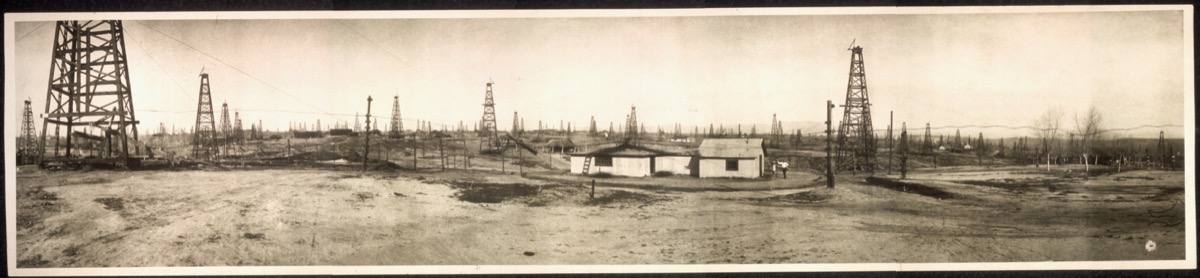
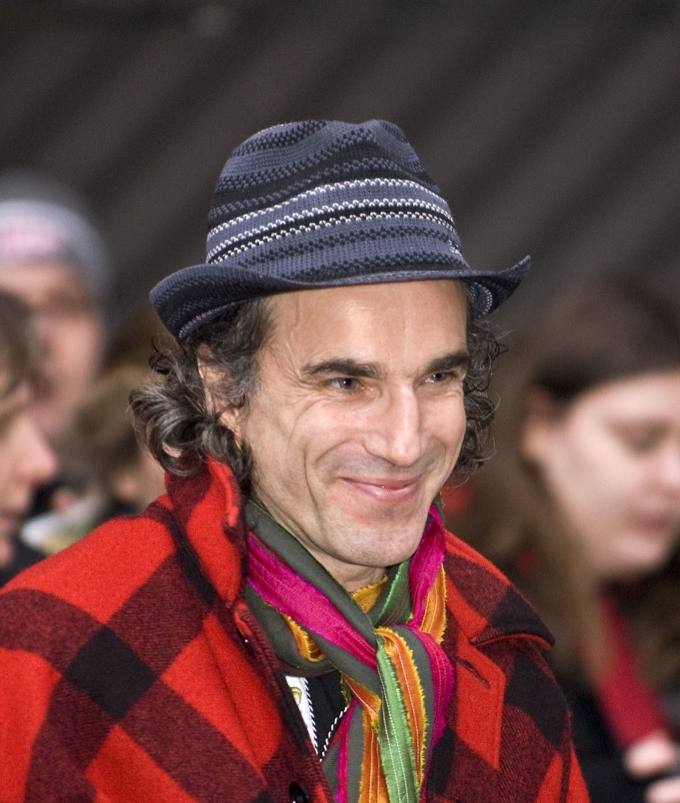
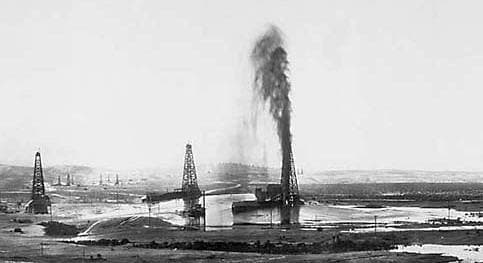
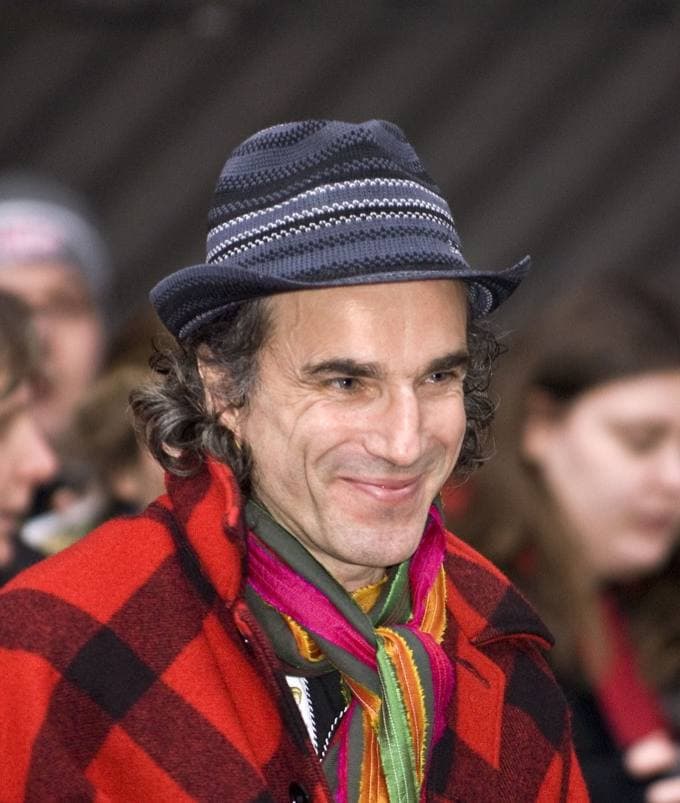
Kern River oil field, about 1910, Library of Congress. Daniel Day-Lewis, who played Daniel Plainview, in Berlin on 8 February 2008, the day of the film’s Berlinale press conference. Siebbi, CC BY 3.0. Paul Dano, same day, Siebbi, CC BY 3.0.
Presidio County, Texas · June to August 2006
Little Boston was a Texas summer.
Paul Thomas Anderson sends the Texas Film Commission photographs of the places he wants for a turn-of-the-century oil story.
Where this comes from
Lease 1 · the town
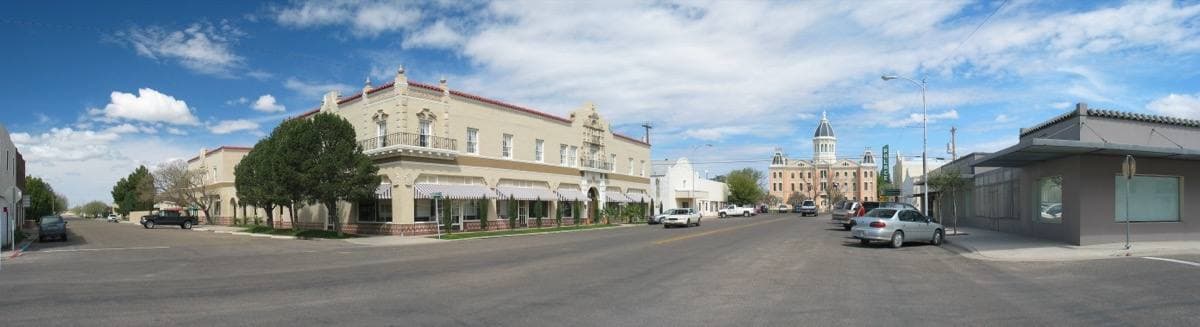
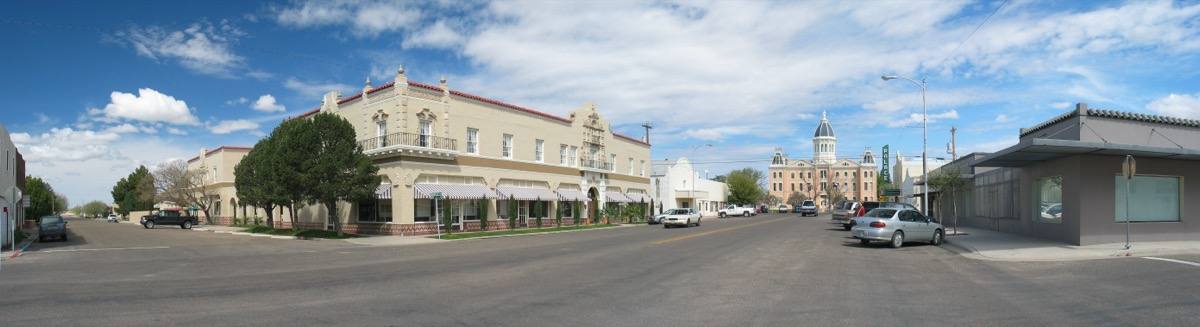
Highland Avenue in Marfa in April 2004, with the Hotel Paisano and the courthouse dome. Daniel Schwen · CC BY-SA 3.0
Marfa
The production filmed in Marfa and Shafter, in West Texas, in summer 2006. The AFI Catalog gives the production dates as 5 June to 25 August 2006, in Marfa and Los Angeles.
Marfa stood in for Bakersfield, California. It was chosen because there are few places in America where you can stand on a hill and see nothing at all in any direction.
Many of the Little Boston scenes were shot in and around Marfa, which had been used for Giant and was used again for No Country for Old Men.
A small high-desert town on U.S. 90. Its streets, galleries and hotels are public; the ranch land round it is not.
Where this comes from
Hotel Saint George
Hotel Saint George, Marfa
Marfa, Texas · 105 S Highland Ave · rates on booking · (432) 729-3700
A 55-room hotel on Highland Avenue in the middle of Marfa, with a bar and a dinner room. The town the production worked from; the ranch is a short drive south.
A church, wooden houses, an 80-foot pine derrick and a water tank by the railroad.
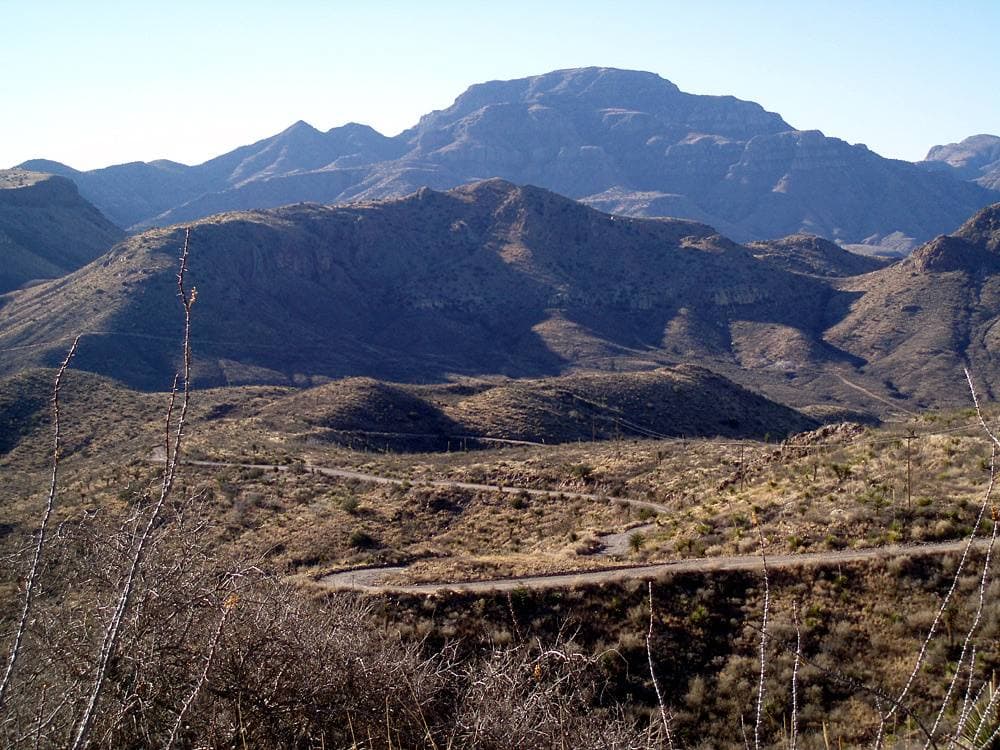
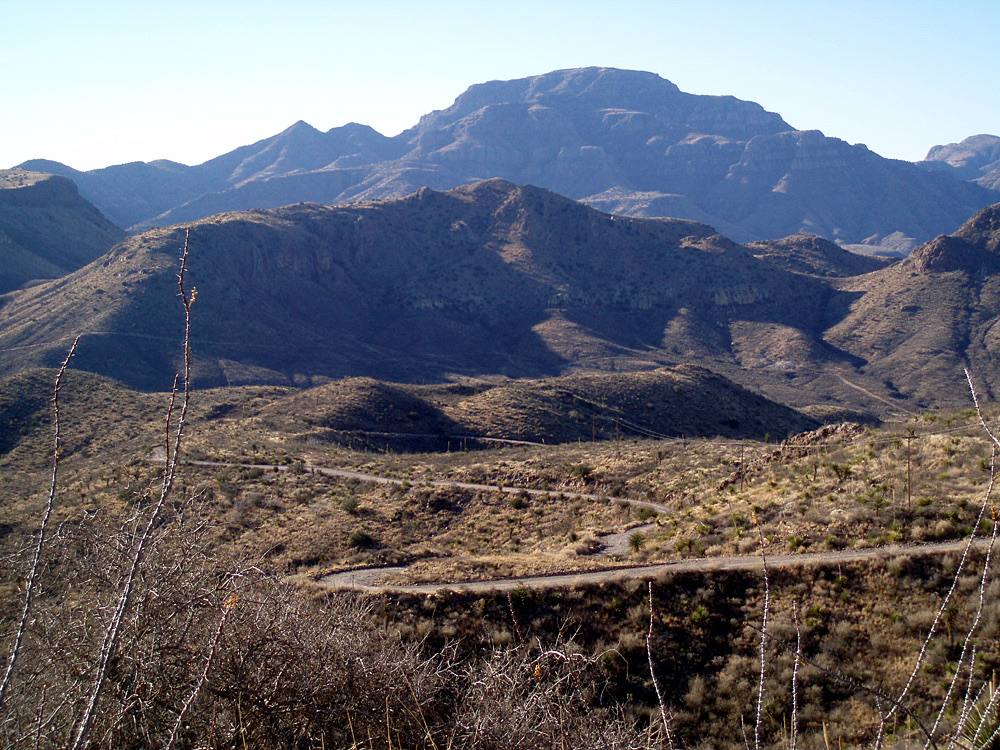
Open ranch country south-west of Marfa, on Pinto Canyon Road in the Chinati Mountains. The film’s ranch is private; this is a public road nearby. jrossz71 · CC BY-SA 3.0
The ranch south of town
Little Boston was built on a ranch of nearly 60,000 acres several miles south of Marfa, beside an old water tank on an unused railroad line.
Jack Fisk built a small town of plain wooden buildings, a church among them, and an oil derrick about 80 feet tall, in pine. The railroad was already on the ranch. From the church you could see the railroad, the oil well and the Sunday family’s ranch house.
The set used ropes, not electric wires, and the interiors of the train depot just west of it were used for key scenes.
The ranch belonged to David Williams, who plays the foreman of one of the oil crews.
Where this comes from
Private ranch land: named here, not mapped. The open country along the public roads south of Marfa gives you the view.
Lease 3 · the mine
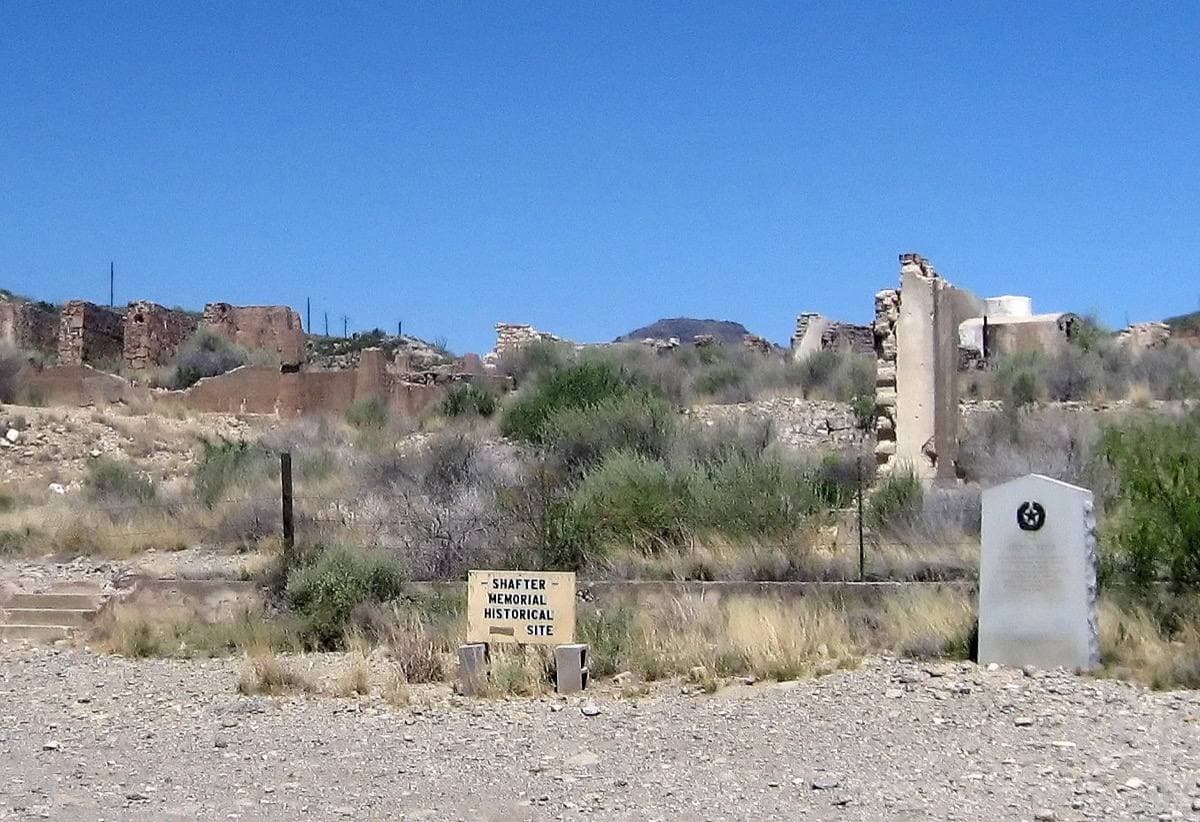
Ruins of the old silver-mining town of Shafter, on U.S. 67 north of Presidio. Jim Evans · CC BY-SA 4.0
Shafter
The opening mine scenes, about 20 minutes with no dialogue, were shot among hand-dug mines from the turn of the century. One shaft was 60 to 70 feet deep.
Daniel Day-Lewis did his own fall backwards into the mine for an overhead shot.
Shafter sits on Cibolo Creek and U.S. 67 at the east end of the Chinati Mountains, about 18 miles north of Presidio. Silver was found here in September 1880. The town reached about 1,500 people in 1943 and fell to twenty by 1949. Mining was suspended indefinitely in 2013.
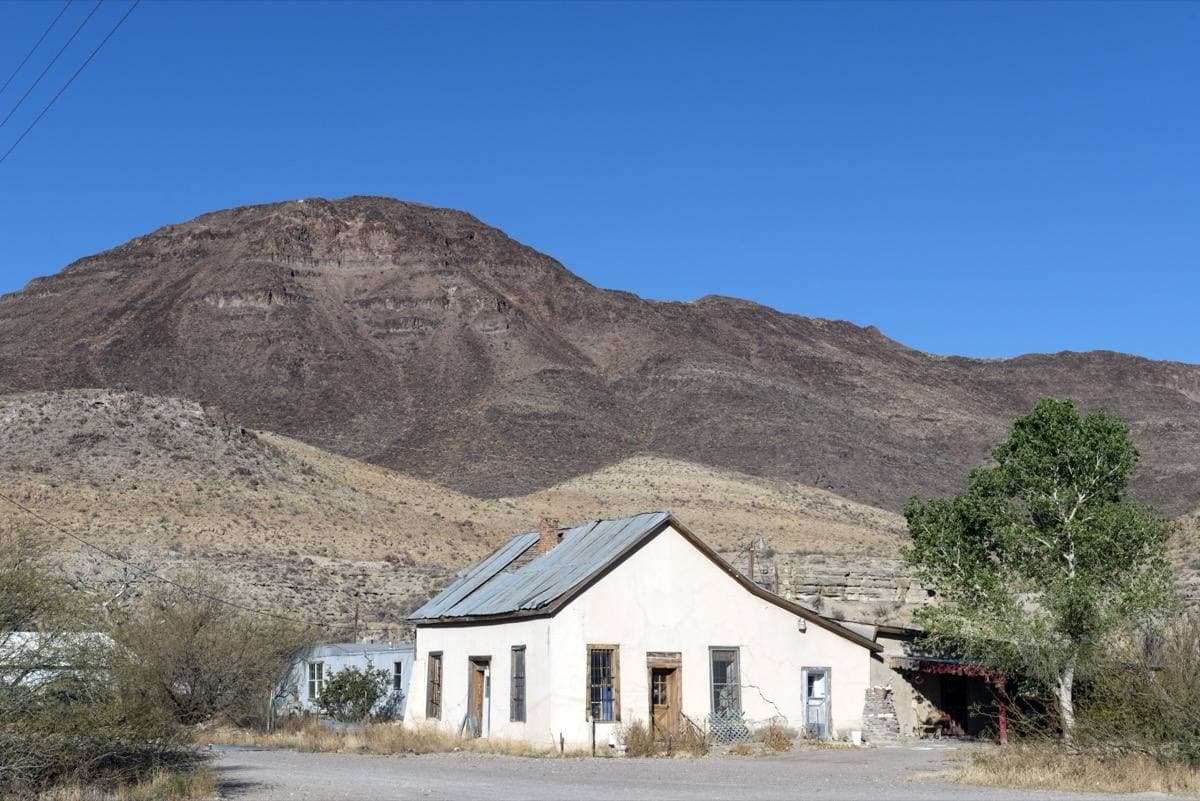
The community church at Shafter, under the Chinati Mountains, 2014. Carol M. Highsmith · Public domain
Drive through on U.S. 67: the ruins, the church and the cemetery are seen from the road. The mine workings are private and dangerous.
Where this comes from
The ranch, summer 2006
The fire was real. Count the cameras.
The 80-foot pine derrick was set alight for real. Tap a number to see how it was filmed.
Six numbers round the derrick.
The derrick fire is real: diesel and gasoline pumped through a jet nozzle, filmed by cameras with operators, a camera in a firebox and another in a crash box. Only the first burst at the top is digital.
Where this comes from
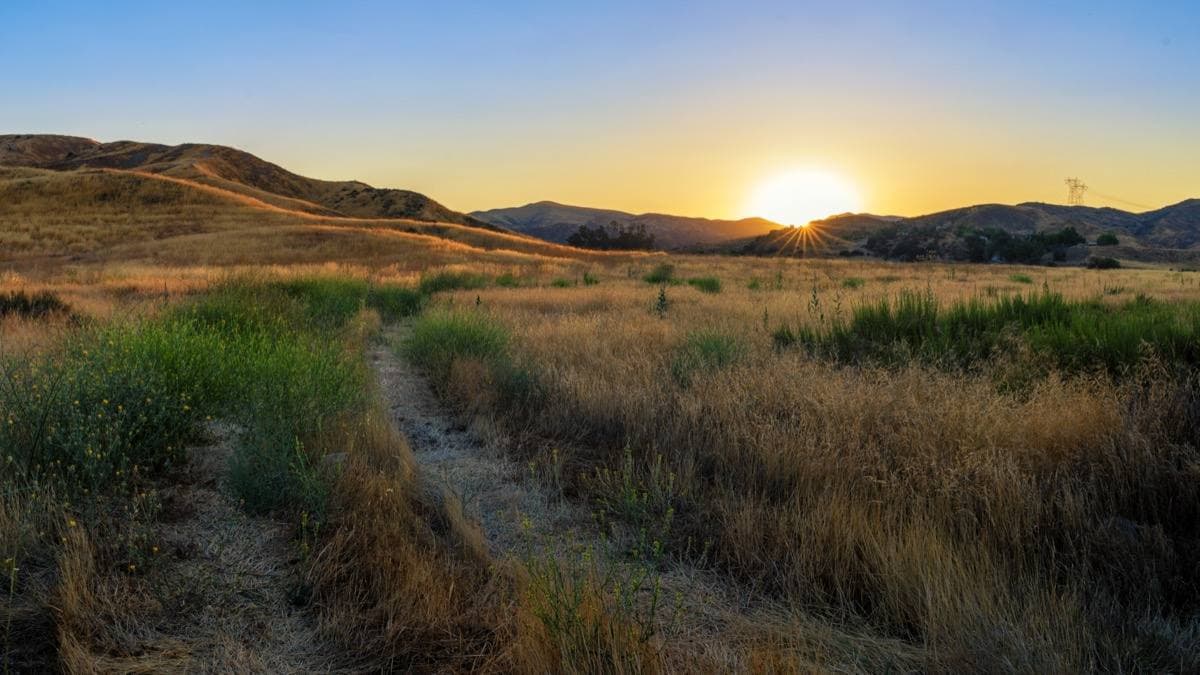
Hills on Vasquez Canyon Road, Santa Clarita, 2017. The film’s California work included the Santa Clarita area; Mystery Mesa itself is private land. Jeff Turner · CC BY 2.0
Mystery Mesa, California
Mystery Mesa was one of the California locations, used for a few sequences. Jack Fisk’s crew built a 40-foot mine set there.
Private land used for filming: named, not mapped. The public roads of the Santa Clarita hills give you the country.
Where this comes from
Drainage
One pool. Two leases.
Anderson told USA Today he took the milkshake speech from a transcript of the 1924 Teapot Dome hearings, in which Senator Albert Fall explained oil drainage with a straw that reaches across the room.
Where this comes from
Draws 0 / 4
One pool, two leases, a fence between them. Your well is on the left.
Nothing drawn yet. Each draw brings up one link in the chain.
Greystone, Beverly Hills
The lanes are real. Bowl one.
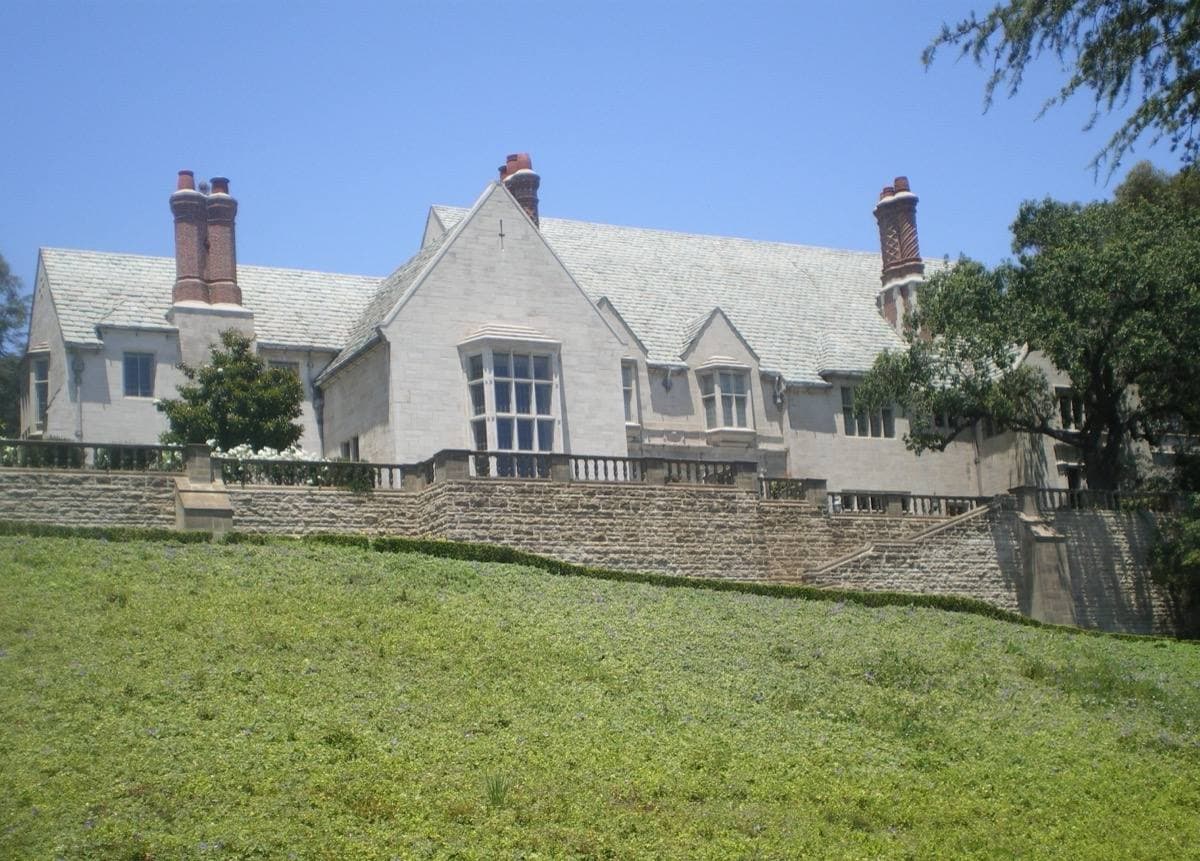
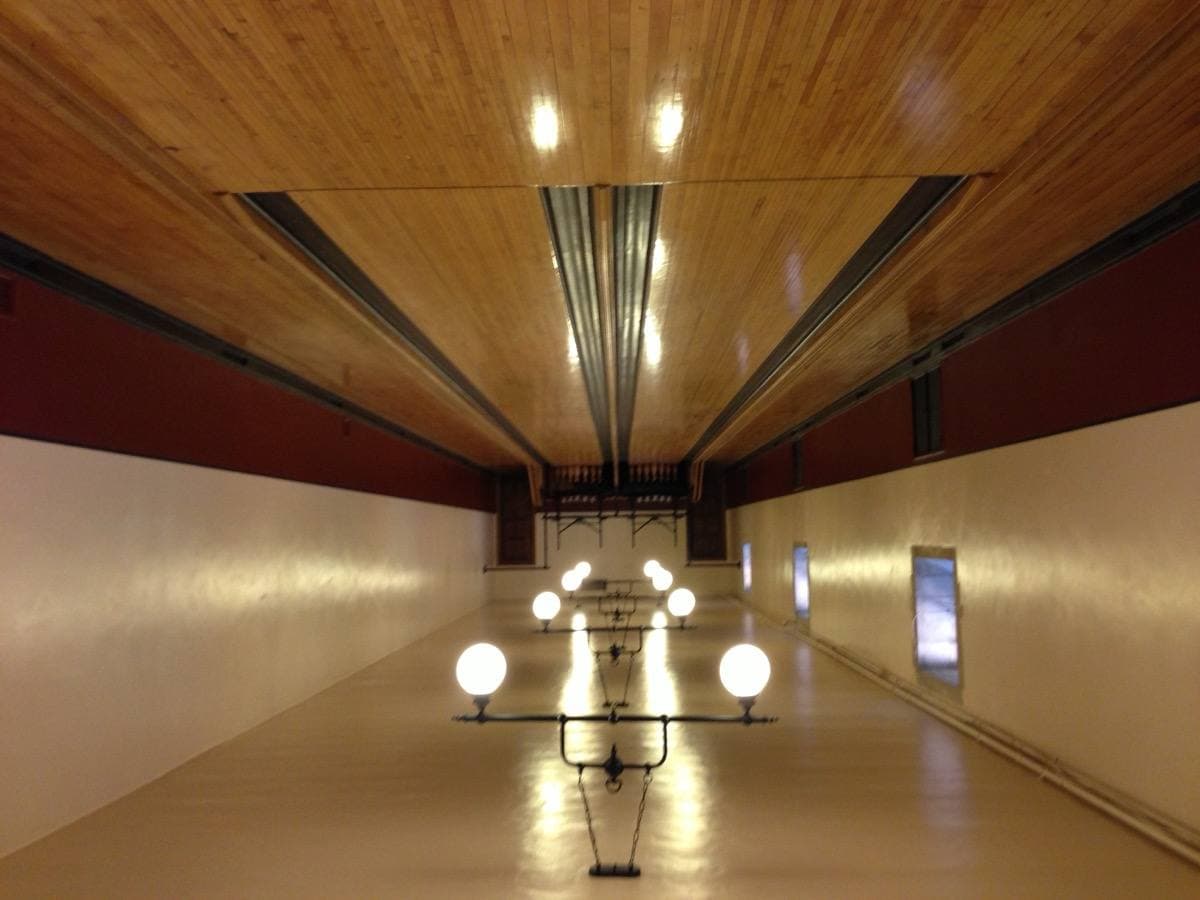
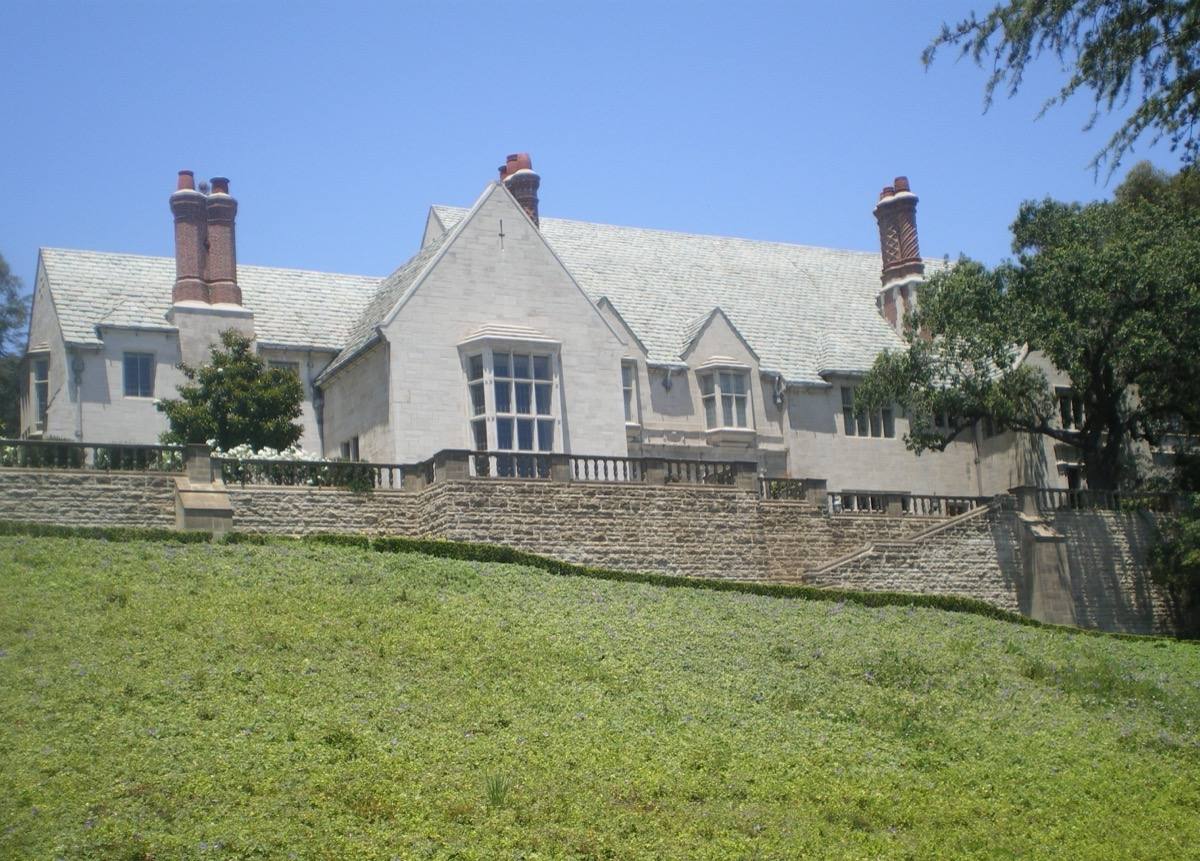
The film ends in a private bowling alley. It is the alley in Greystone, the house finished in 1928 for an oil tycoon’s son, and it opens for tours.
Where this comes from
1The film
2The house
Two lanes. Pick one and bowl.
Greystone Mansion in Beverly Hills, built in 1927–28 for Edward L. Doheny Jr. Los Angeles (Wikimedia Commons user) · CC BY-SA 3.0The two-lane bowling alley in Greystone’s entertainment wing, 2013. Andrew Hitchcock · CC BY 2.0
Greystone was finished in 1928 for Ned Doheny, son of the oil tycoon Edward L. Doheny. Some writers have suggested the Dohenys inspired the father and son in Upton Sinclair’s Oil!, the novel the film is based on.
The grounds are a free city park, open daily 10am–6pm (5pm in winter), closed Thanksgiving and Christmas Day. The house opens only for ticketed tours.
Where this comes from
City of Beverly Hills
Greystone Mansion & Gardens
Beverly Hills · Free · daily 10am–6pm (5pm in winter) · closed Thanksgiving and Christmas Day
The Doheny estate is a city park: walk the grounds and terraces for free. The house, and its bowling alley, open only on ticketed tours.
The Lakeview No. 1 gusher near Maricopa, probably in the summer of 1910. Unknown photographer · Public domain
Kern County, California
The real oil country is still there.
Marfa stood in for Bakersfield. The fields the story is set in run from Bakersfield to Taft and Maricopa, where a gusher blew in on 14 March 1910.
Where this comes from
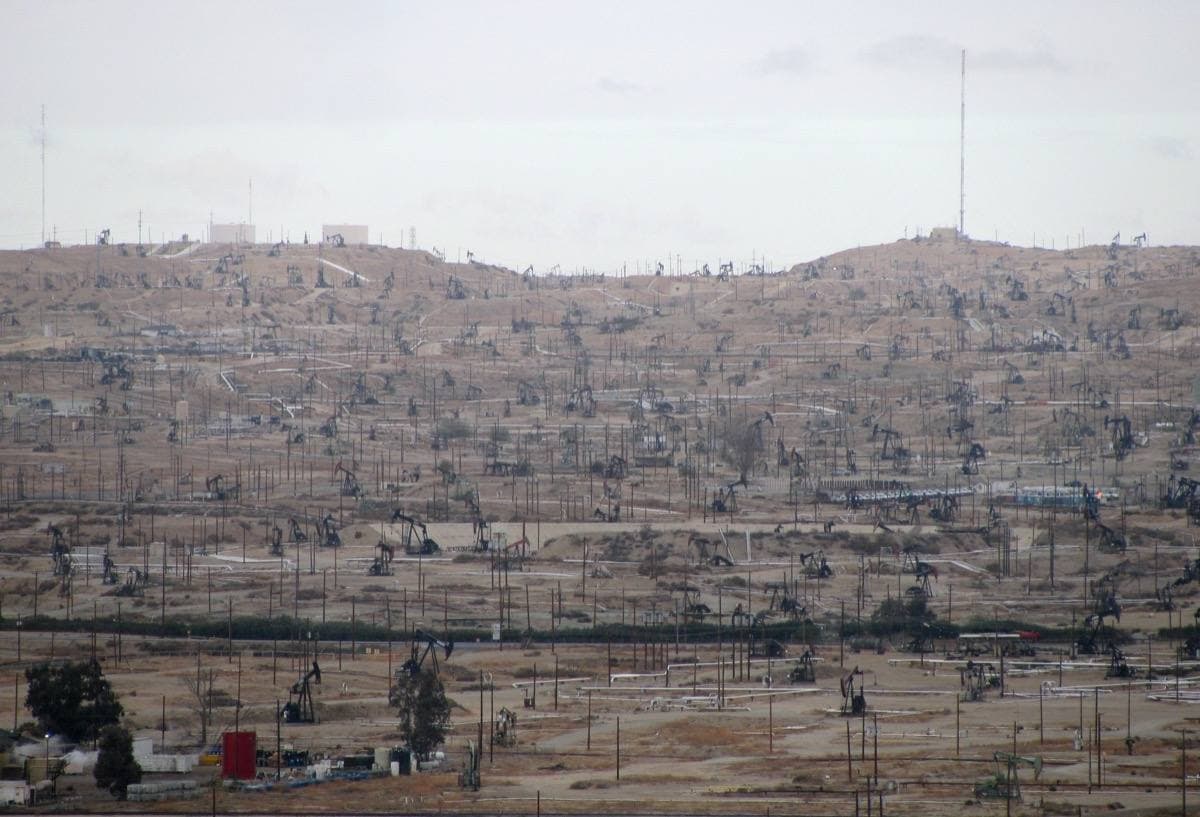
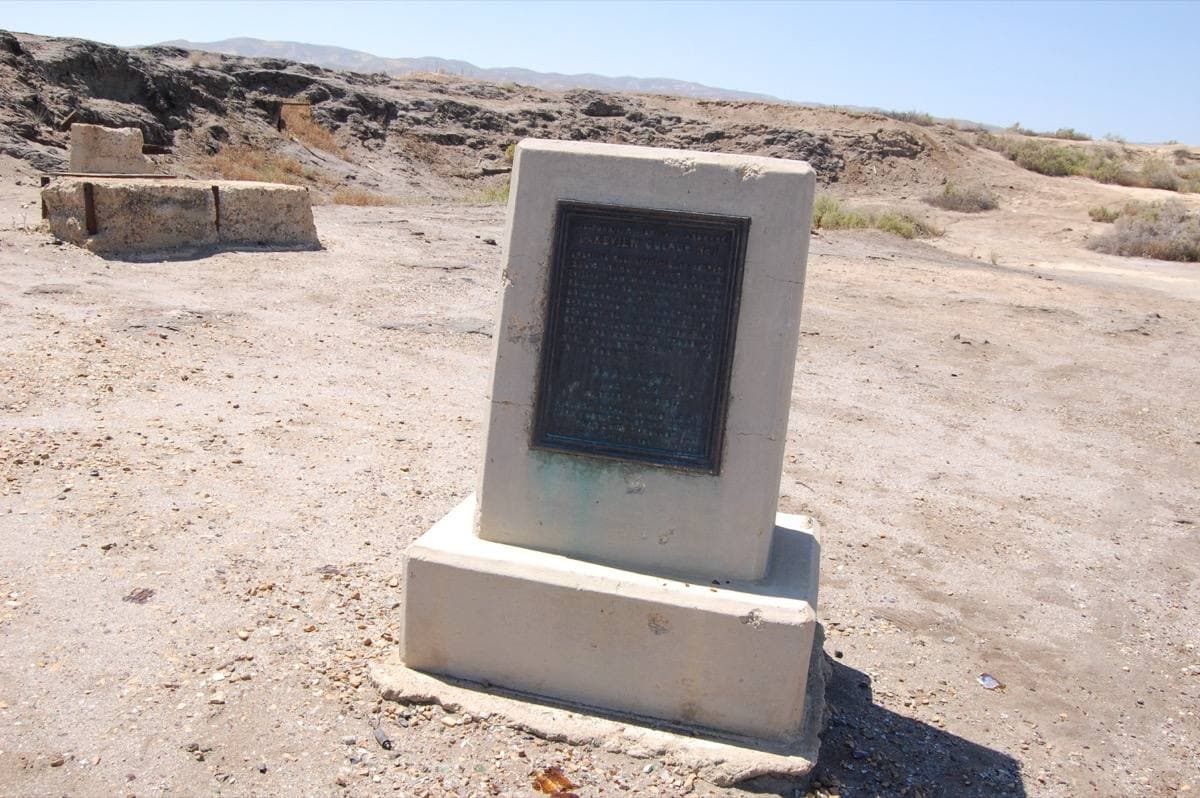
The Kern River oil field from Panorama Park, Bakersfield, 2009. The discovery well is in the field; the plaque is by appointment. Antandrus · CC BY-SA 3.0
Round Mountain Road, about 7 miles north-east of Bakersfield
The Kern River discovery well
Oil is struck at 70 feet near Bakersfield, the start of the Kern River field.
On 1 June 1899 the McWhorter brothers drilled the region’s first commercial well, 400 feet to the north.
On working oil-field land. Call (661) 392-2200 to book a time to see the site and its plaque.
Where this comes fromThe Lakeview Gusher landmark on Petroleum Club Road, north of Maricopa, 2010. Eric Polk · CC BY 3.0
Petroleum Club Road, north of Maricopa
The Lakeview Gusher
The Lakeview gusher blows in near Maricopa and runs out of control at up to 100,000 barrels a day.
It started at about 18,000 barrels a day and rose to an uncontrolled 100,000 barrels a day, which destroyed the derrick.
A roadside landmark on Petroleum Club Road, about 1.5 miles north of Maricopa off Highway 33. Nothing to pay; nothing to climb.
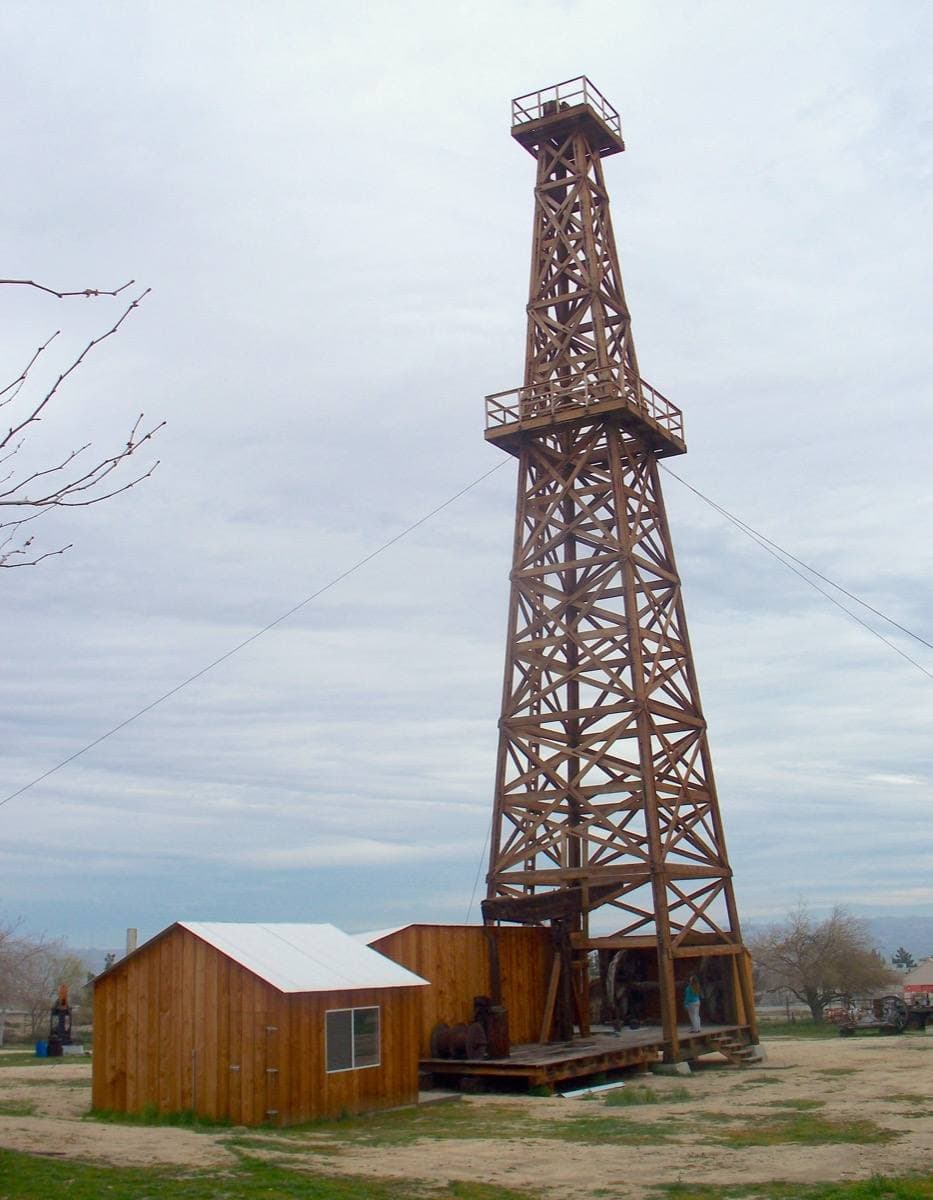
Where this comes fromThe 1917 wooden derrick at the West Kern Oil Museum in Taft. Konrad Summers · CC BY-SA 2.0
1168 Wood Street, Taft
West Kern Oil Museum
At Taft, a wooden derrick still stands over Jameson #17, a well that worked until 2005.
It keeps an old oil company office, shops and equipment, a fire house, a tent house, a shotgun house, a tool house and a library.
Open Fridays and Saturdays, 10am–4pm. Near Highway 33 and Wood Street.
Where this comes from
West Kern Oil Museum
West Kern Oil Museum
Taft, California · Fridays and Saturdays, 10am–4pm
A wooden derrick still standing over its well, with an oil company office, a tent house and a tool house round it, in Taft.
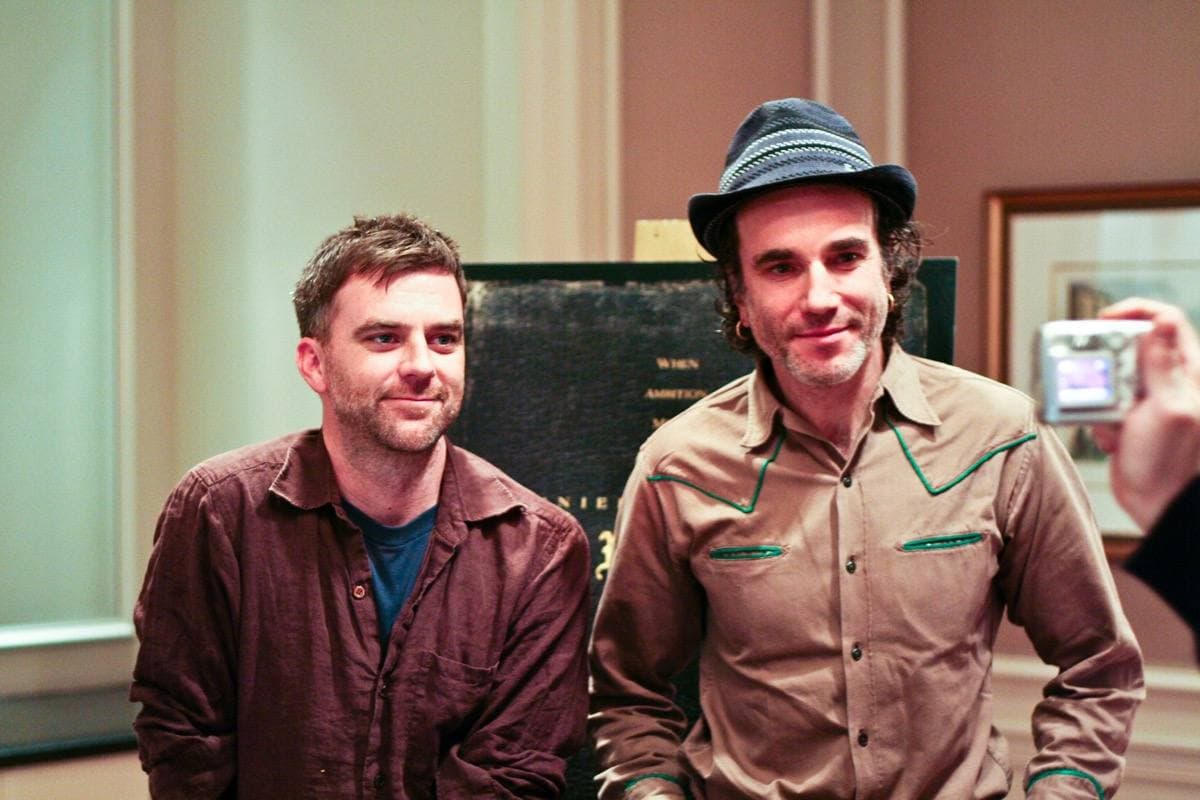
Paul Thomas Anderson and Daniel Day-Lewis in New York, 10 December 2007, two weeks before the film opened. Jürgen Fauth · CC BY-SA 2.0Daniel Day-Lewis, who played Daniel Plainview, in Berlin on 8 February 2008, the day of the film’s Berlinale press conference. Siebbi · CC BY 3.0Paul Dano, who played Paul and Eli Sunday, leaving the film’s Berlinale press conference, 8 February 2008. Siebbi · CC BY 3.0
26 Dec 2007
The film opens in New York and Los Angeles on 26 December 2007.
Where this comes from
Feb 2008
In the Oscar season Paramount Vantage sends critics milkshakes with its promotional fliers.
Where this comes from
Feb 2008
At the Berlinale, Anderson wins the Silver Bear for Best Director and Jonny Greenwood a Silver Bear for the music.
Where this comes from
24 Feb 2008
Daniel Day-Lewis wins Best Actor and Robert Elswit Best Cinematography, from eight nominations.
Where this comes from
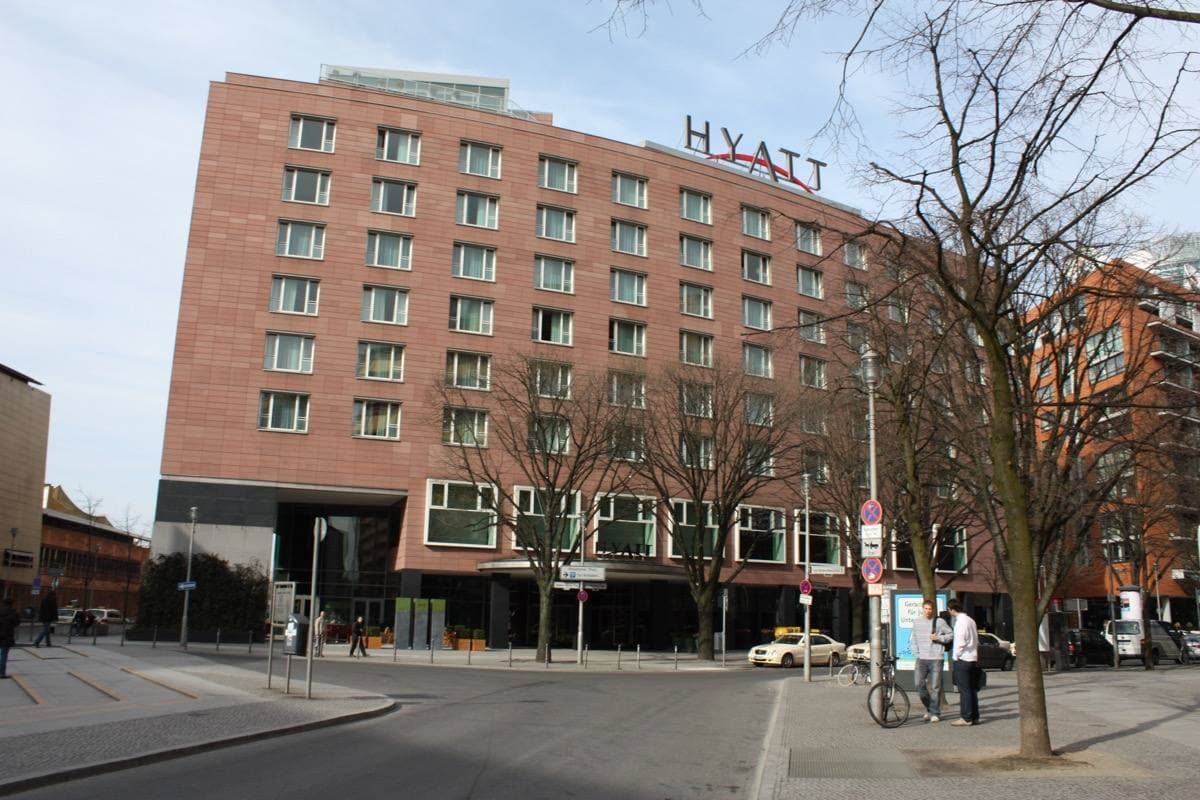
Marlene-Dietrich-Platz by Potsdamer Platz, Berlin, in 2009, with the Grand Hyatt, where the film’s Berlinale press conference was held. Politikaner · CC BY-SA 3.0
Grand Hyatt, Potsdamer Platz
On 8 February 2008 the cast came out of the film’s Berlinale press conference at the Hyatt on Potsdamer Platz.
A hotel on Marlene-Dietrich-Platz, in the middle of the Berlinale’s home ground at Potsdamer Platz.
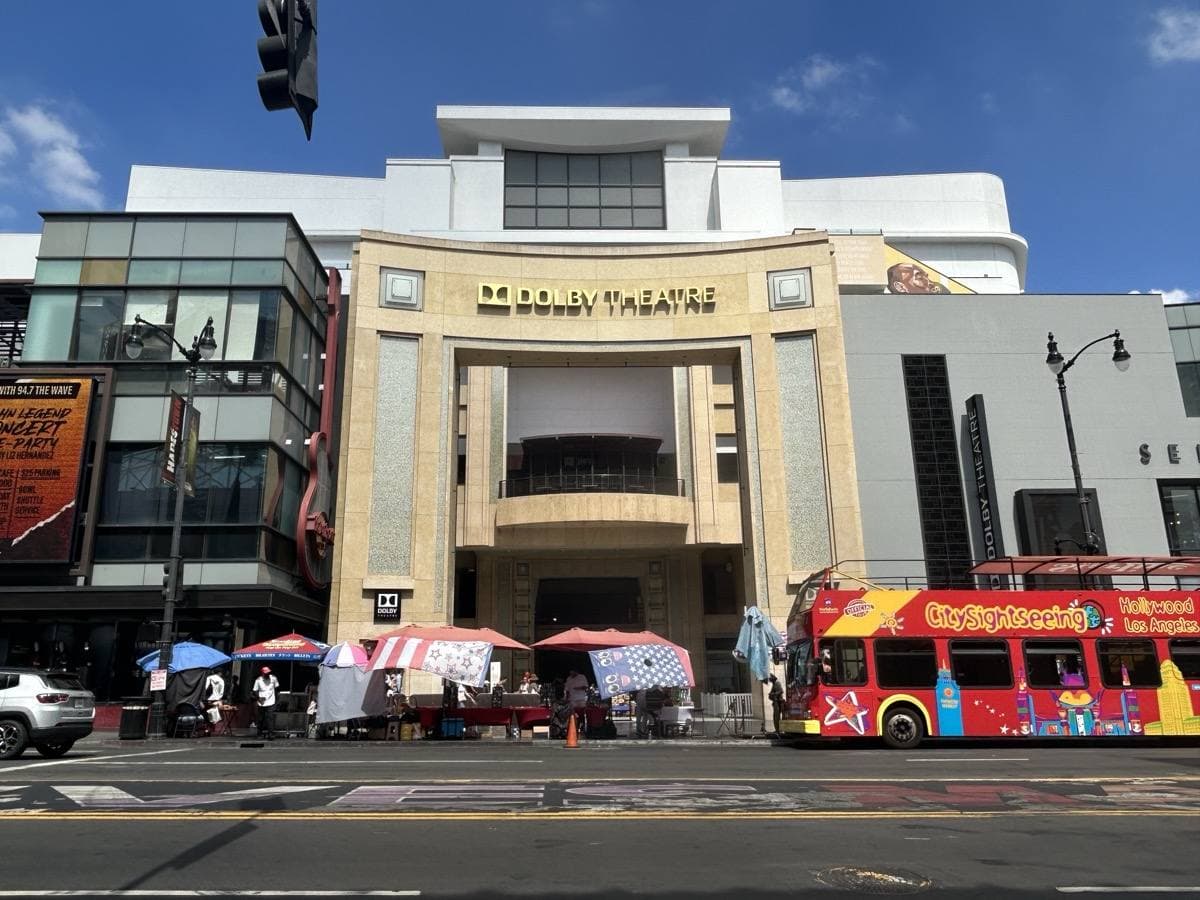
The Dolby Theatre on Hollywood Boulevard, called the Kodak Theatre when the film won two Oscars there in 2008. Busition · CC BY 4.0
The Kodak Theatre (now the Dolby)
The theatre reopened under the Dolby name in 2012.
On Hollywood Boulevard at Highland. The theatre runs guided tours: check its site for days and times.
Off the ranch. Every place, as it is now.
Where it is now
9 places you can visit, from a ghost mining town on U.S. 67 to a bowling alley in Beverly Hills and a wooden derrick in Taft. The ranch where Little Boston stood and Mystery Mesa are private land: named, not mapped.
Pins mark public places; private homes are named but not pinned.
General reference · Public access · Coordinate precision: area · Not an exact scene or camera position; not a visitor route. A small high-desert town on U.S. 90. Its streets, galleries and hotels are public; the ranch land round it is not.
General reference · Public access · Coordinate precision: area · Not an exact scene or camera position; not a visitor route. Drive through on U.S. 67: the ruins, the church and the cemetery are seen from the road. The mine workings are private and dangerous.
1Highland Avenue in Marfa in April 2004, with the Hotel Paisano and the courthouse dome. Daniel Schwen · CC BY-SA 3.0
Marfa, Presidio County, Texas
Marfa
The production filmed in Marfa and Shafter, in West Texas, in summer 2006.
A small high-desert town on U.S. 90. Its streets, galleries and hotels are public; the ranch land round it is not.
Where this comes from
2Ruins of the old silver-mining town of Shafter, on U.S. 67 north of Presidio. Jim Evans · CC BY-SA 4.0
On U.S. 67, about 18 miles north of Presidio
Shafter
The opening mine scenes, about 20 minutes with no dialogue, were shot among hand-dug mines from the turn of the century. One shaft was 60 to 70 feet deep.
Drive through on U.S. 67: the ruins, the church and the cemetery are seen from the road. The mine workings are private and dangerous.
Where this comes from
Stay
A room in Marfa.
A hotel on Highland Avenue, a short drive from the ranch country. The Hotel Paisano is closed for renovation until spring 2027.
Hotel Saint George
Hotel Saint George, Marfa
Marfa, Texas · 105 S Highland Ave · rates on booking · (432) 729-3700
A 55-room hotel on Highland Avenue in the middle of Marfa, with a bar and a dinner room. The town the production worked from; the ranch is a short drive south.
Live marketplace results for guided days round Hollywood Boulevard and Beverly Hills. None is a There Will Be Blood tour as such: check each itinerary.
A Sunday tour inside Greystone on 22 November 2026, and the Berlinale in February 2027.
Checking current event dates…
Take it home
The novel, the oil man, the score.
Sinclair’s Oil!, the life of Edward L. Doheny and Jonny Greenwood’s score. There are no original posters for this film in our store, so we haven’t listed any.
Bookshop.org UK · Ad / affiliate
Oil!
Upton Sinclair
Sinclair’s 1927 novel, the film’s credited source, in Penguin’s 2007 edition.
Dates, prices, rooms and stock change: confirm with the provider before you travel or buy. A stay or tour is described as a filming location only where the card says so.
One wooden derrick still stands at Taft. Go and see it.
Where this comes from
Every place and moment behind this page, with sources.
11 of 11 places · 24 of 24 Moments
Marfa
Marfa, Presidio County, Texas
The search
Paul Thomas Anderson sends the Texas Film Commission photographs of the places he wants for a turn-of-the-century oil story.
A summer in Marfa
The film is shot round Marfa and Shafter, Marfa standing in for Bakersfield, California.
Little Boston, on the ranch
A private ranch several miles south of Marfa
Little Boston
Jack Fisk builds Little Boston on a ranch south of Marfa: a wooden town, a church and an 80-foot pine derrick, by an old water tank on an unused railroad.
The rancher in the film
David Williams, whose ranch it is, plays the foreman of one of the oil crews.
The derrick fire
The derrick fire is real: diesel and gasoline pumped through a jet nozzle, filmed by cameras with operators, a camera in a firebox and another in a crash box. Only the first burst at the top is digital.
Bringing it down
The burn is planned over two days, but the top keeps smouldering, so the collapse is staged that same night: a weak knee is pulled out from under the derrick with cables on a crane.
The next night
The reverse shots are lit by real flame from flame jets the next night, with the crew in flame-resistant suits.
Next door, No Country for Old Men
The Coen brothers are shooting No Country for Old Men round Marfa at the same time. NPR is told that a No Country shot was ruined when one of the oil wells from There Will Be Blood went off in the background.
What was left
Two years on, the church and the Sunday house still stand; the derrick is down to its platform and the other pieces have been burned.
The film, on its own set
The Marfa Film Festival opens by showing the film on the Little Boston set, with the Alamo Drafthouse Rolling Roadshow, to about 350 people.
Shafter
On U.S. 67, about 18 miles north of Presidio
The silver mine
The opening mine scenes, about 20 minutes without dialogue, are shot among hand-dug mines from the turn of the century.
The Kern River discovery well
Round Mountain Road, about 7 miles north-east of Bakersfield
Oil at 70 feet
Oil is struck at 70 feet near Bakersfield, the start of the Kern River field.
Kern County Museum
3801 Chester Avenue, Bakersfield
Bakersfield
Marfa doubles for Bakersfield, the oil town the story is set near.
The Lakeview Gusher
Petroleum Club Road, north of Maricopa
The Lakeview gusher
The Lakeview gusher blows in near Maricopa and runs out of control at up to 100,000 barrels a day.
West Kern Oil Museum
1168 Wood Street, Taft
The last wooden derrick
At Taft, a wooden derrick still stands over Jameson #17, a well that worked until 2005.
Greystone Mansion
905 Loma Vista Drive, Beverly Hills
The bowling alley
The last scenes are shot at Greystone, the Doheny house in Beverly Hills; Jack Fisk restores its bowling alley for them.
The oil man’s son’s house
Greystone was finished in 1928 for Ned Doheny, son of the oil tycoon Edward L. Doheny. Some writers have suggested the Dohenys inspired the father and son in Upton Sinclair’s Oil!, the novel the film is based on.
Drainage
Anderson told USA Today he took the milkshake speech from a transcript of the 1924 Teapot Dome hearings, in which Senator Albert Fall explained oil drainage with a straw that reaches across the room.
The senator
Albert Fall was convicted of taking bribes for oil rights on public lands.
Mystery Mesa
A private filming ranch in Southern California
The mine set
Fisk’s crew builds a 40-foot mine set at Mystery Mesa in California.
The Kodak Theatre (now the Dolby)
6801 Hollywood Boulevard, Hollywood
Opening
The film opens in New York and Los Angeles on 26 December 2007.
Milkshakes for the press
In the Oscar season Paramount Vantage sends critics milkshakes with its promotional fliers.
Two Oscars
Daniel Day-Lewis wins Best Actor and Robert Elswit Best Cinematography, from eight nominations.
Grand Hyatt, Potsdamer Platz
Marlene-Dietrich-Platz 2, Berlin
Two Silver Bears
At the Berlinale, Anderson wins the Silver Bear for Best Director and Jonny Greenwood a Silver Bear for the music.