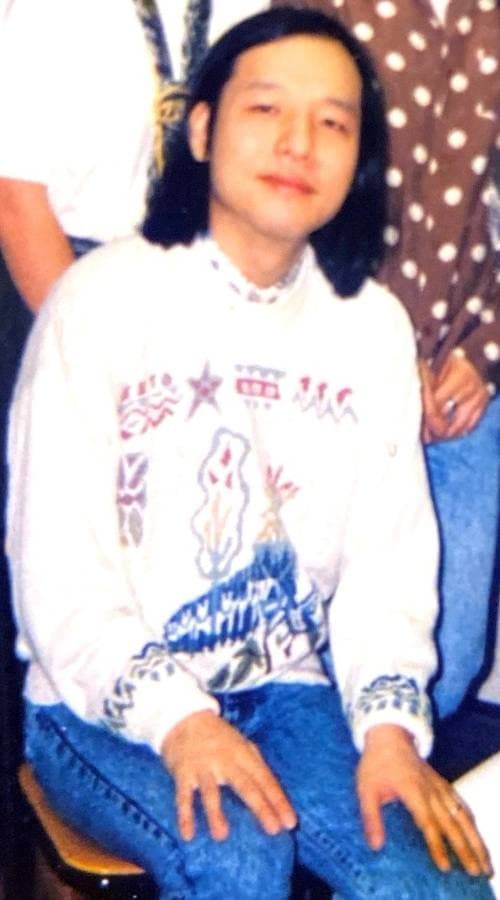
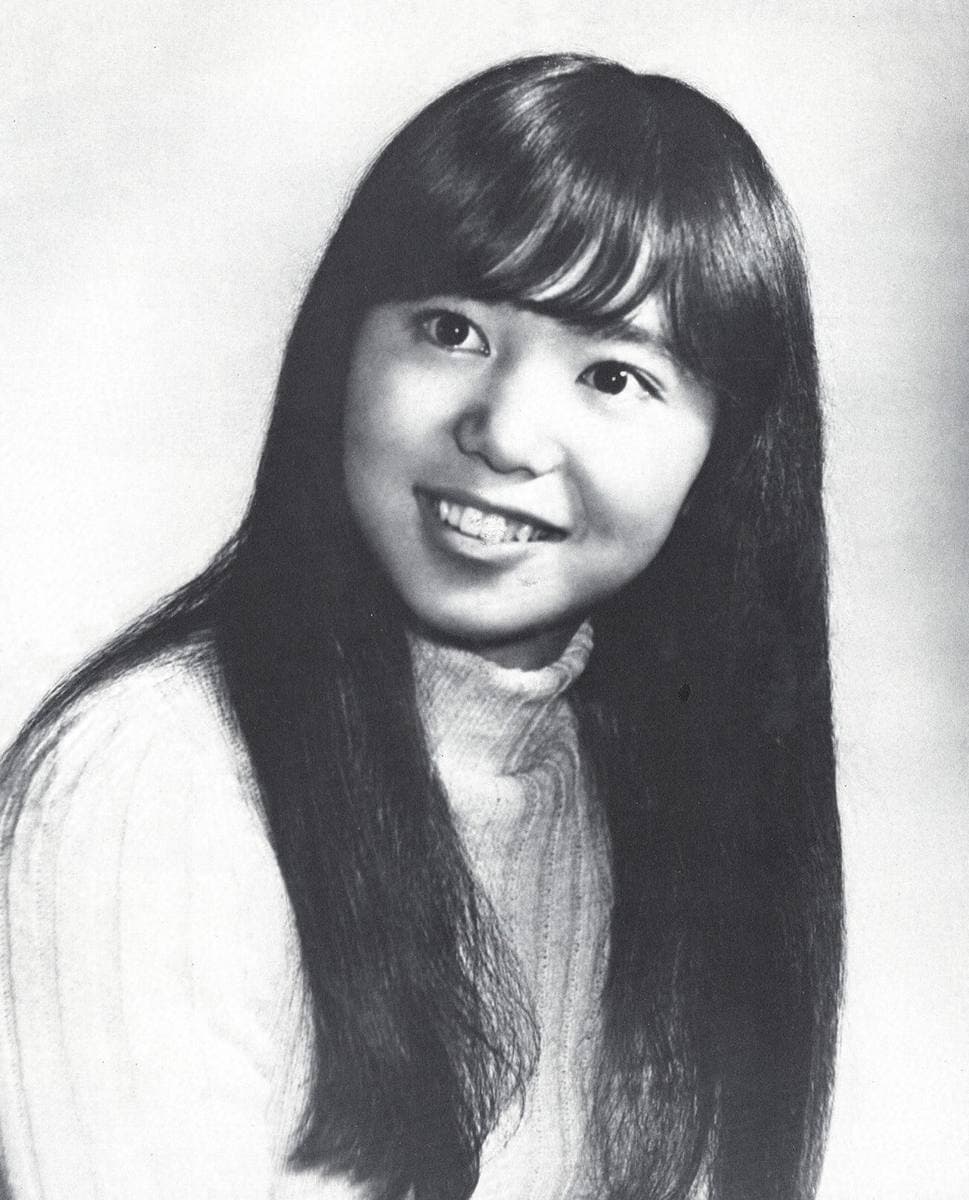
Tatsuro Yamashita in 1988, photographed by the radio host Kamasami Kong. Kamasami Kong · CC BY-SA 2.0Yamashita, 1988Mariya Takeuchi in 1972–73, the year she spent in Rock Falls, Illinois: five years before her first record. Rock Falls High School yearbook, AFS Intercultural Programs · Public domainTakeuchi, 1972–73
Tokyo · 1974 to 1988 · two jacks, one city
Tokyo City Pop
Press hotline to talk down the cords.
Sony Building, Ginza, to Yoyogi · 22 June 1979
The tape tells you where to look.
Sony launched the Walkman outdoors. Magazine writers boarded a bus in Ginza, each holding one, and got off in Yoyogi to a tape that did the talking.
Tape in. Press play.
Bus from GinzaJournalists, headphones onRoller skaterCyclistTandemWalkman T-shirtsPuzzled onlookersTAPE ▼ · TALKING
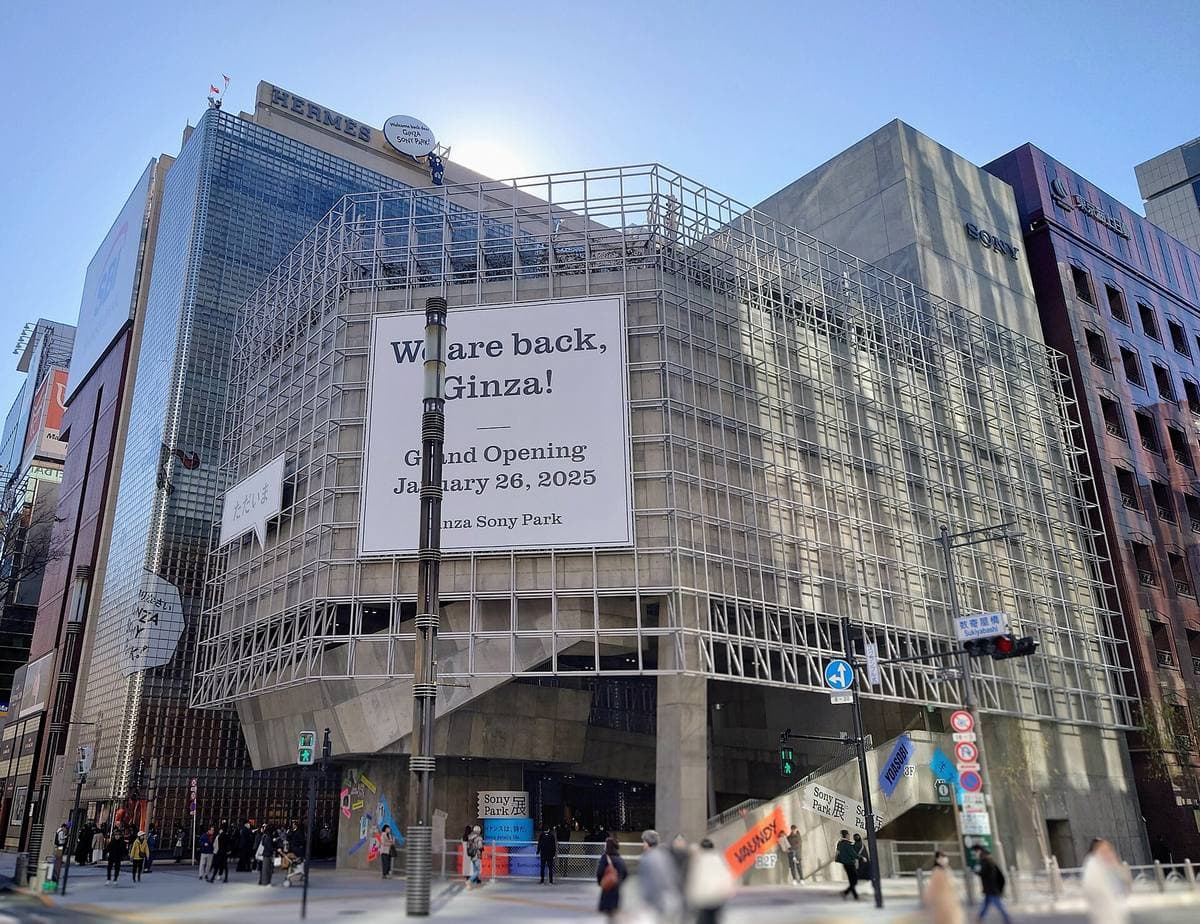
Ginza Sony Park on the same corner, days after it opened in January 2025. Gungun01 · CC0
22 June 1979
Ginza Sony Park
5-3-1 Ginza, Chuo City, Tokyo: the old Sony Building corner
On 22 June 1979 magazine journalists arrived at the Sony Building in Ginza, were put on a bus and each handed a Walkman.
Ginza Sony Park reopened on this corner on 26 January 2025, the last stage of rebuilding the Sony Building.
It was built half the height of a standard Ginza building, with five floors above ground and four below, and no permanent shops.
Open to walk in. Floors hold changing programmes; check Sony Park’s own site for what is on. Ginza station is underneath.
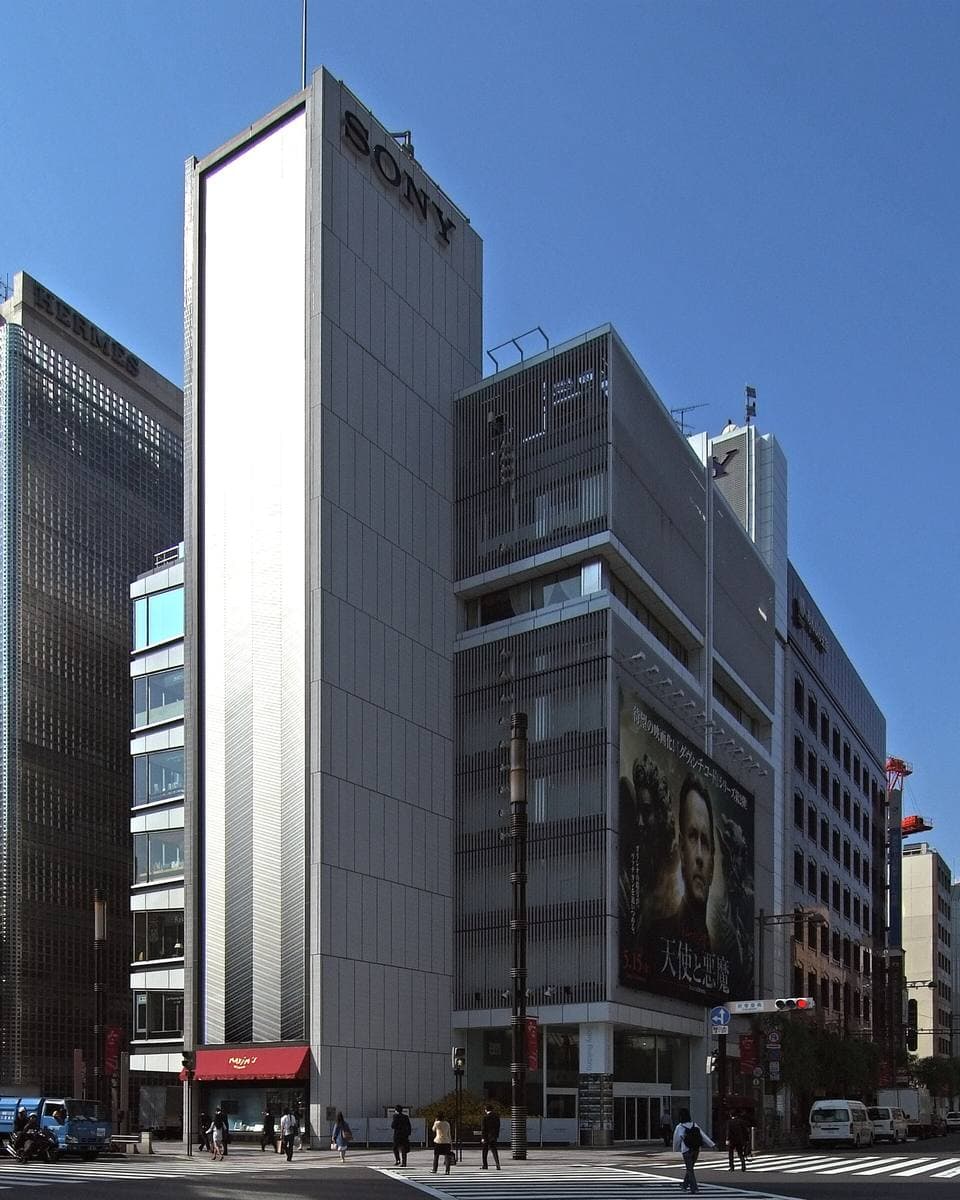
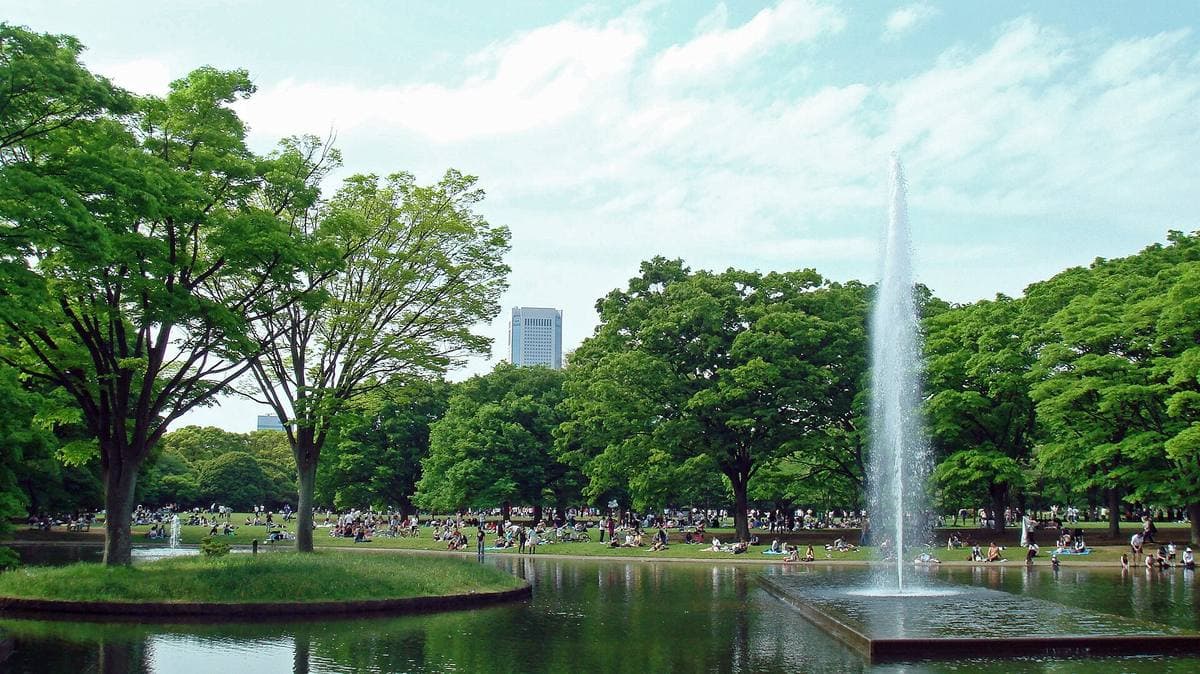
SourcesThe Sony Building at Sukiyabashi, Ginza, in 2009. The journalists’ bus left from here on 22 June 1979. Wiiii · CC BY-SA 3.0Yoyogi Park’s fountain. Shinjiro · CC BY 3.0
22 June 1979
Yoyogi Park
Yoyogi Kamizonocho, Shibuya City, Tokyo
The bus took the journalists to Yoyogi. They put on the headphones and pressed play, and the tape explained the Walkman in stereo.
The tape told them where to look: Sony staff and hired students in Walkman T-shirts roller skated and cycled, and a young man and woman rode past on a tandem.
Onlookers heard nothing at all, and were puzzled.
Free and open at all times. Bicycles can be hired for the park’s cycling path; Yoyogi-koen and Harajuku stations are at its edge.
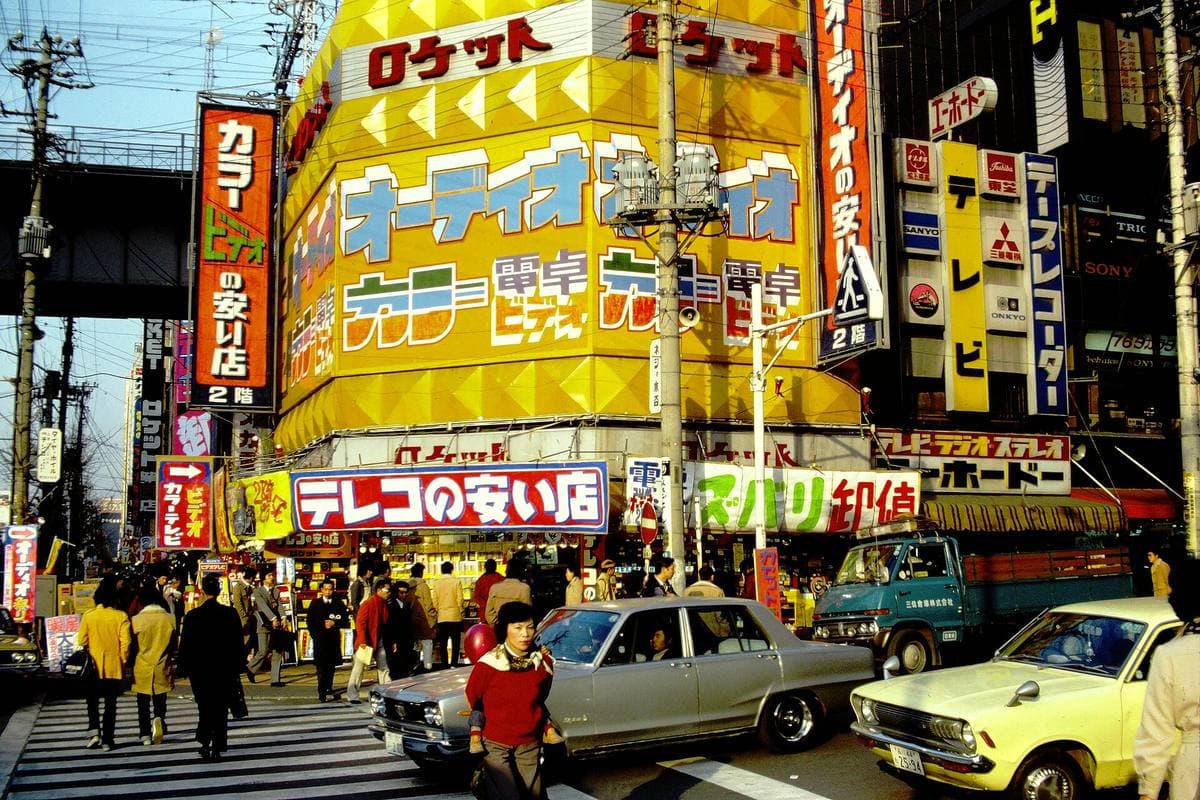
SourcesAkihabara in 1976, three years before an engineer ran round it looking for Walkman batteries. JOHN LLOYD · CC BY 2.0
1978–79
Akihabara
Around Akihabara Station, Chiyoda City, Tokyo
Before the Walkman existed, Sony’s co-founder Masaru Ibuka took a hand-altered Pressman on a trip to America. It needed small special batteries, and an engineer rushed round Akihabara to find two.
Ibuka rang from America: the batteries had run out on the plane, and he could not find more there.
The electronics district round Akihabara Station. Shops open daily; the station is on the JR Yamanote line.
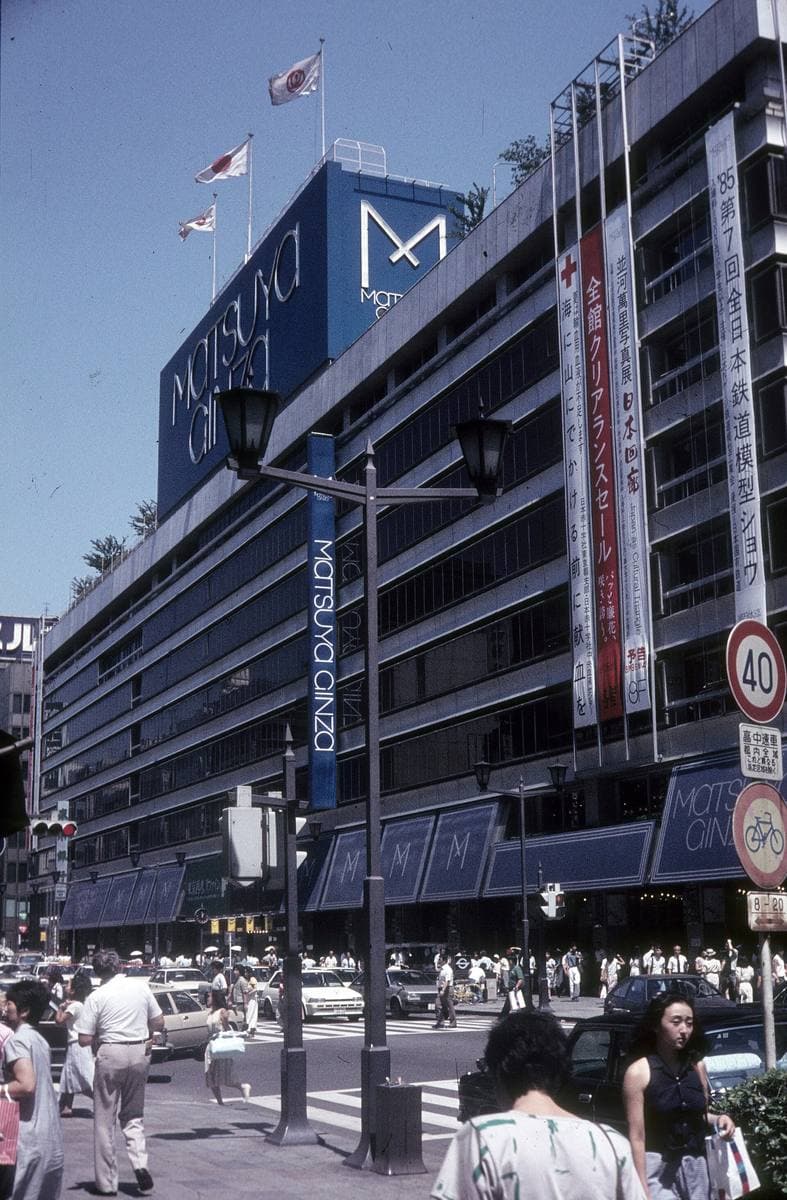
SourcesGinza in 1985: the Matsuya department store, a few minutes from the Sony Building. Fortepan / Ormos Imre Alapítvány · CC BY-SA 3.0
Chuo and Keio lines · 1971 to 1976
West of the city.
Before there was a name for it, the music was played in small rooms out along the train lines. Loft opened them one after another.
Ogikubo Loft · 1974 · Chuo line. Thirty-five tsubo of rock: Sugar Babe with Yamashita, Taeko Ohnuki, Hosono, Sakamoto.
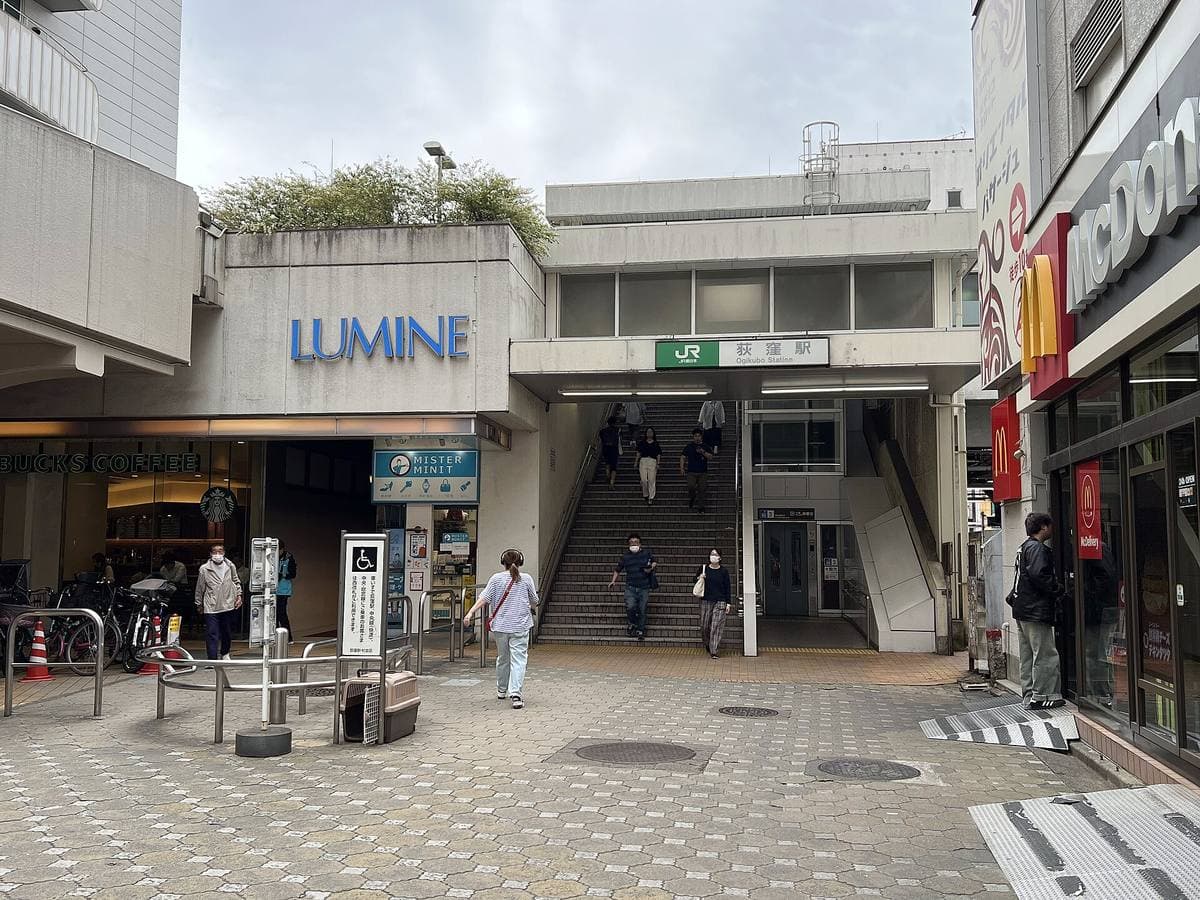
Ogikubo station today. The Loft opened its Ogikubo club near here in November 1974. Asanagi · CC0
November 1974
Ogikubo Loft
By Ogikubo Station, Chuo line, Suginami City, Tokyo: the club is gone
Loft opened a 35-tsubo rock club by Ogikubo station on the Chuo line in November 1974.
Its bill included Sugar Babe with Tatsuro Yamashita, Taeko Ohnuki, Haruomi Hosono and Ryuichi Sakamoto.
Ohnuki left a folk band at 18 or 19; a producer put her with musicians who liked what she liked, and that session group became Sugar Babe.
Sugar Babe released one album, Songs, in 1975, and broke up a few years after forming.
The club is long closed and its address is not recorded in the Loft history; the pin is the station it stood by.
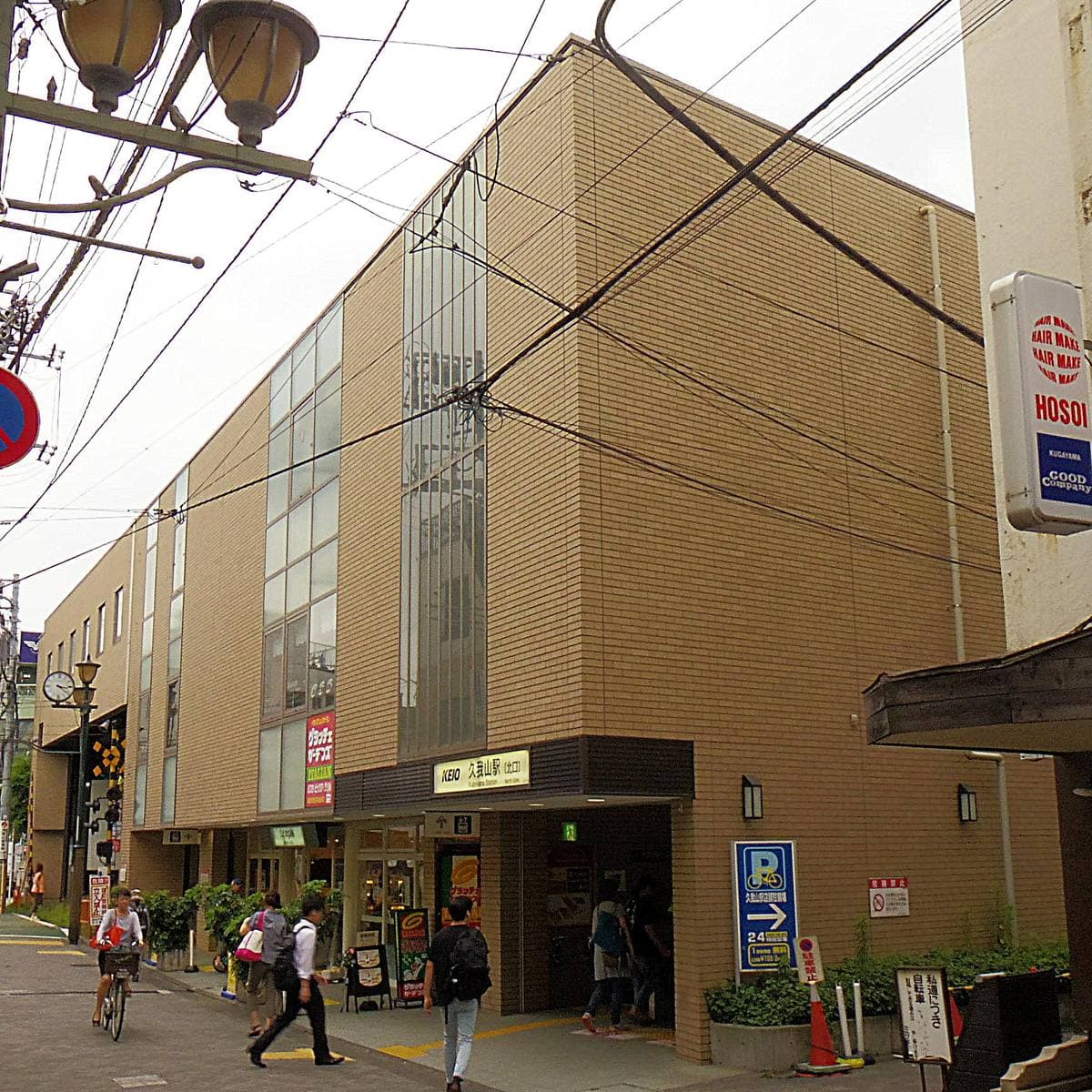
SourcesKugayama station on the Inokashira line. ITA-ATU · CC BY-SA 4.0
Kugayama
Around Kugayama Station, Inokashira line, Suginami City, Tokyo
Taeko Ohnuki was born here in 1953, near the Inokashira line. She remembers fields and rivers.
After the 1964 Olympics, she says, express trains began to run on the line from Kichijoji to Shibuya.
A quiet residential neighbourhood round the station; the Inokashira line runs here from Shibuya and Kichijoji.
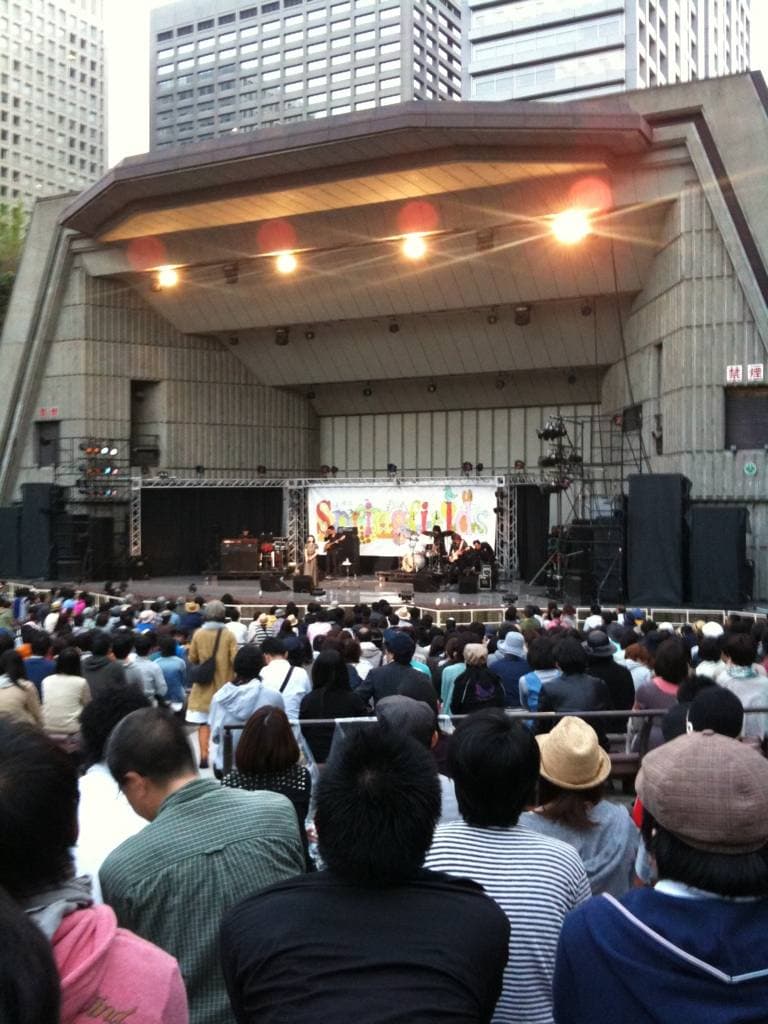
SourcesTaeko Ohnuki and her band, small on the far stage at Hibiya Open-Air Concert Hall in 2010. No free photograph of her from the 1970s or 1980s could be found. hemiolia · CC BY-SA 2.0
Shinjuku and Roppongi · 1976 to 1978
The last train.
Pit Inn’s owner opened a second club in Roppongi in 1977 and found the two districts kept different hours.
Shinjuku, 6pm to 11pm. The last trains are coming.
18:00–23:00
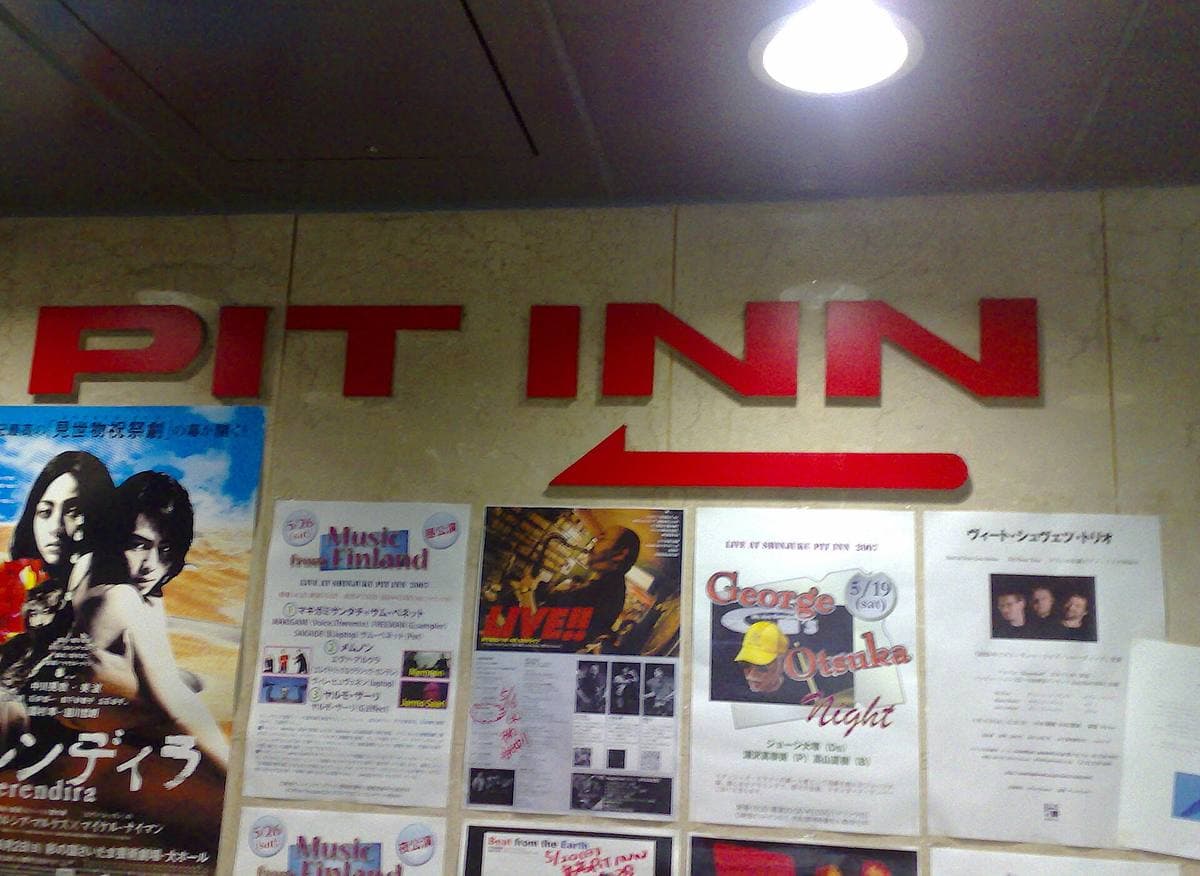
The way down to Shinjuku Pit Inn in 2007. Ville Hyvönen · CC BY-SA 2.0
Shinjuku Pit Inn
Accord Shinjuku B1, 2-12-4 Shinjuku, Shinjuku City, Tokyo
Pit Inn began in Shinjuku and opened Roppongi Pit Inn as its sister club in 1977.
Its owner says a Shinjuku night ran from about six to eleven: people left before the last trains.
Night sets start at 7.30pm, from ¥3,300 including a drink; afternoon sets start at 2pm.
Still a working jazz club, down in the basement. Afternoon sets from 2pm; night sets at 7.30pm, from ¥3,300 with a drink.
SourcesA band on stage at Shinjuku Loft, west exit, in 1985. Mazaza2020 · CC BY-SA 4.0
October 1976
Shinjuku Loft
Tatehana Building B2, 1-12-9 Kabukicho, Shinjuku City, Tokyo (since 1999)
Shinjuku Loft opened by Shinjuku’s west exit in October 1976, a 300-capacity live house, with ten nights of opening shows.
Taeko Ohnuki played the sixth night; Minako Yoshida played the fifth. Tatsuro Yamashita played there too.
In 1977 Loft started a label with Victor to find new artists in its clubs; Mariya Takeuchi was among those who debuted.
In April 1999 the Loft moved to Kabukicho, beside the Koma theatre, with a 500-capacity main stage.
A working live house in Kabukicho; see Loft’s own schedule. Named here, not mapped: no map record places the door.
970 rooms in Kabukicho, the district Shinjuku Loft moved to in 1999; five minutes from Shinjuku station’s east exit. Check-in runs from 2pm until 2am, for whoever missed the last train.
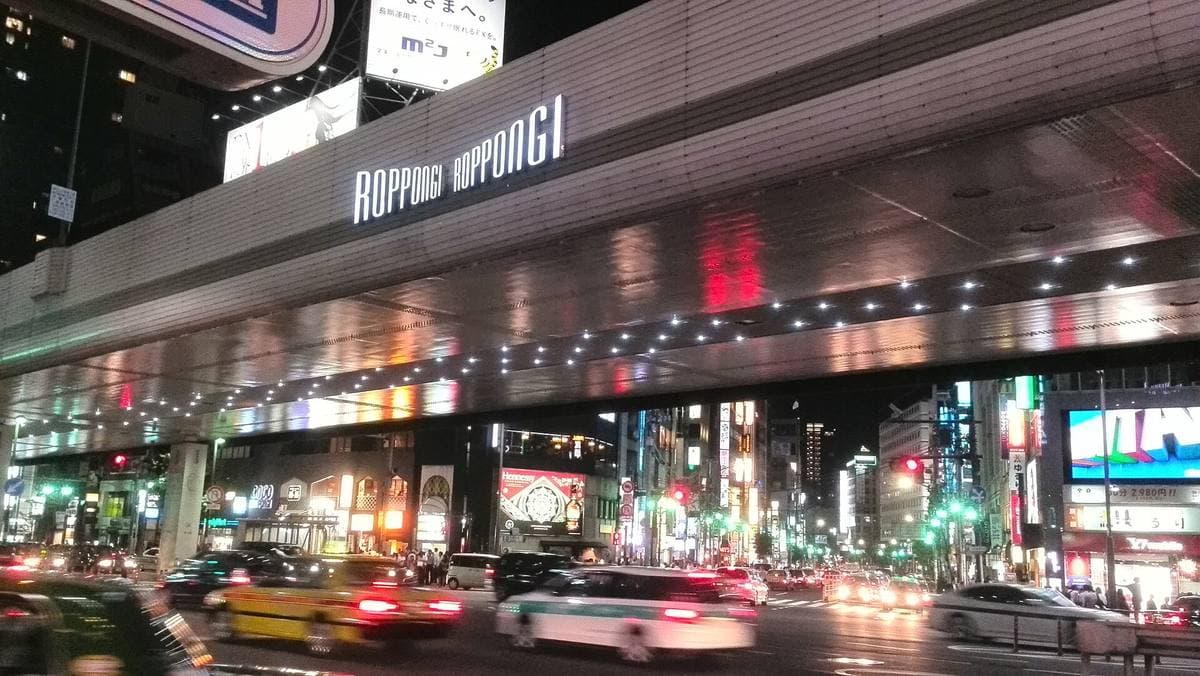
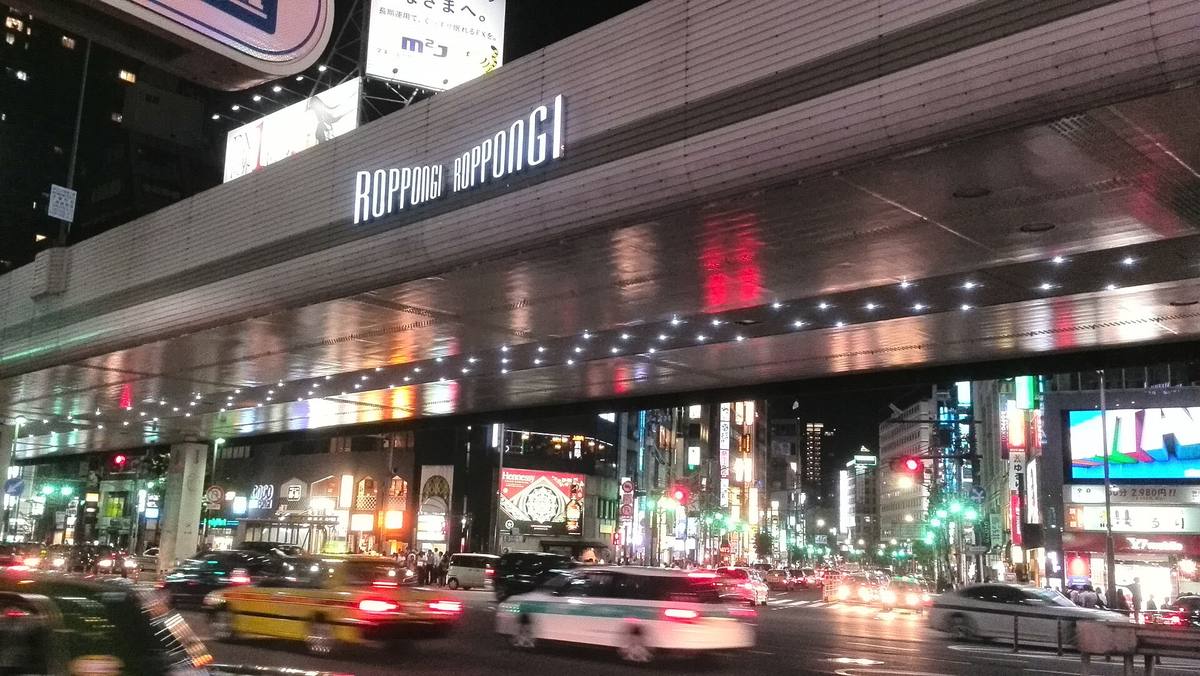
Roppongi crossing at midnight: Gaien-Higashi-dori under the expressway. Grueslayer · CC BY-SA 4.0
August 1977
Roppongi crossing
Roppongi crossing and Gaien-Higashi-dori towards Iikura, Minato City, Tokyo
Roppongi Pit Inn opened in August 1977 on Gaien-Higashi-dori, on the left as you walk from Roppongi station towards Iikura.
Its owner says Roppongi only came alive after Ginza and Akasaka closed: busiest from 11pm to 3am, a crowd who took taxis and never worried about the last train.
Fusion filled it: Yamashita, Minako Yoshida and Ryuichi Sakamoto played there. It closed in 2004, when the building was pulled down for flats.
Yamashita’s live album It’s a Poppin’ Time (1978) was recorded at Roppongi’s Pit Inn.
The crossing is under the Shuto expressway by Roppongi station. Pit Inn stood a short walk down Gaien-Higashi-dori towards Iikura, on the left; the building is gone.
SourcesTatsuro Yamashita in 1988, photographed by the radio host Kamasami Kong. Kamasami Kong · CC BY-SA 2.0
1978
It’s a Poppin’ Time
Yamashita’s live album It’s a Poppin’ Time (1978) was recorded at Roppongi’s Pit Inn.
Sources
Viator · Ad / affiliate
Tokyo night tours
Tokyo
Live marketplace results for evening walks round Shinjuku and Roppongi. Check each itinerary for the streets you want.
She studied English literature at Keio University and joined its music club. In November 1978 she debuted with a single on RCA; Love Songs (1980) was her first number one album.
She married Yamashita in 1982, and came back in 1984 with Variety on Moon Records. Plastic Love, on that album, did modestly in Japan. A YouTube upload in 2017 took it round the world; Warner Music Japan made its first official video in 2019.
Shibuya station brings in the JR lines, the Ginza line, the Tokyu Toyoko line and the Keio Inokashira line.
Free, at any hour, outside Shibuya station’s Hachiko exit.
Sources
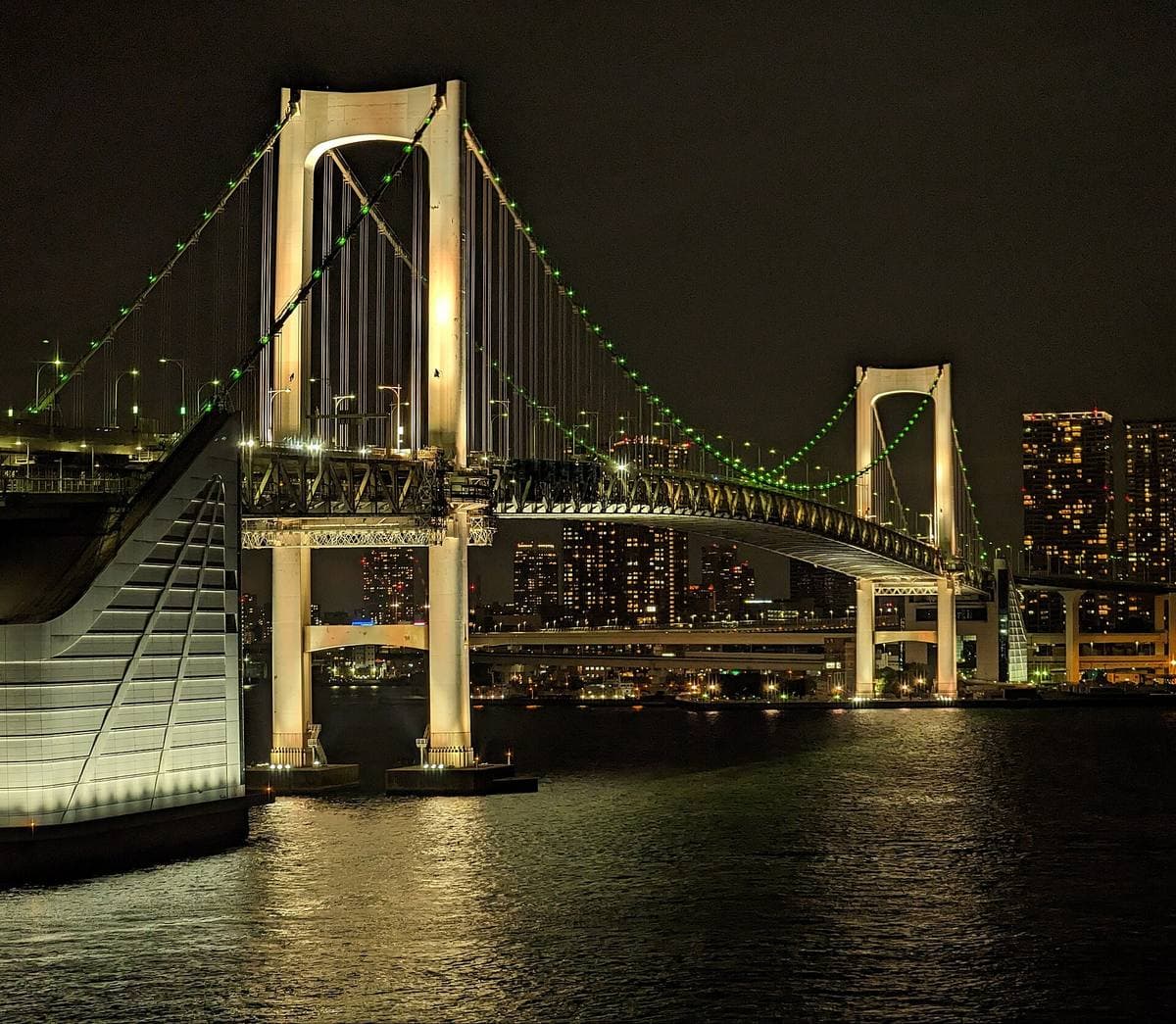
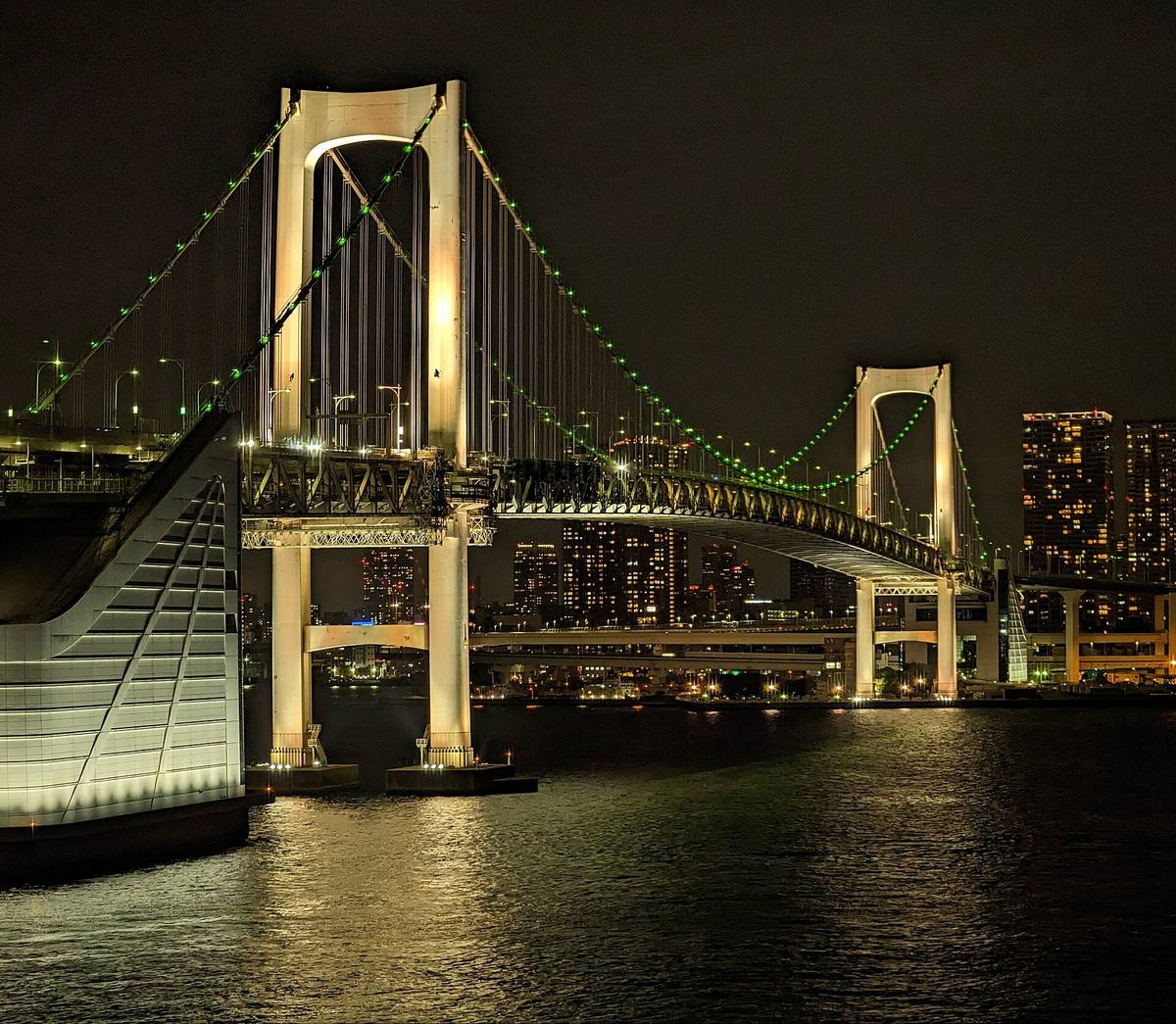
Rainbow Bridge at night from the Odaiba side. Syced · CC0
Tokyo Bay · after dark
A car stereo on the bay.
NO TAPE
The look of the records came from illustrators. Hiroshi Nagai, born in Tokushima in 1947, paints deep skies by laying down blue, then airbrushing white up from the horizon and building sky blue over it: pools, palms, beaches and American cars, sometimes at dusk. He painted the sleeve of Eiichi Ohtaki’s A Long Vacation in 1981.
Rainbow Bridge at night from the Odaiba side. Syced · CC0
15–16 October 2026
Odaiba and Rainbow Bridge
Odaiba Seaside Park, Minato City, Tokyo Bay
Odaiba began as islands the Edo shogunate built in the bay in the 1850s.
Rainbow Bridge links it to the rest of Tokyo and is lit in colour at night; walking it takes about 30 minutes.
Since March 2026 a free fountain show of water, music and light runs in Odaiba Seaside Park after dark.
Yamashita plays SGC Hall Ariake, along the bay, on 15 and 16 October 2026.
Yurikamome line to Odaiba-kaihinkoen, about 30 minutes from Tokyo Station. Walking the bridge takes about 30 minutes; the fountain show is free after dark.
Sources
Viator · Ad / affiliate
Tokyo Bay evening cruises
Tokyo Bay
Live marketplace results for dinner and night cruises on the bay, under Rainbow Bridge.
13 places you can visit in Tokyo and one in Izumo. Shinjuku Loft is named but not mapped: no map record places its door.
Pins mark public places; private homes are named but not pinned.
General reference · Public access · Coordinate precision: building · Not an exact scene or camera position; not a visitor route. Open to walk in. Floors hold changing programmes; check Sony Park’s own site for what is on. Ginza station is underneath.
General reference · Public access · Coordinate precision: area · Not an exact scene or camera position; not a visitor route. The electronics district round Akihabara Station. Shops open daily; the station is on the JR Yamanote line.
General reference · Public access · Coordinate precision: building · Not an exact scene or camera position; not a visitor route. Working station. The Tokaido Shinkansen platforms are inside the ticket gates; the Marunouchi side is open to all.
1Ginza Sony Park on the same corner, days after it opened in January 2025. Gungun01 · CC0
5-3-1 Ginza, Chuo City, Tokyo: the old Sony Building corner
Ginza Sony Park
On 22 June 1979 magazine journalists arrived at the Sony Building in Ginza, were put on a bus and each handed a Walkman.
Open to walk in. Floors hold changing programmes; check Sony Park’s own site for what is on. Ginza station is underneath.
Sources
2Akihabara in 1976, three years before an engineer ran round it looking for Walkman batteries. JOHN LLOYD · CC BY 2.0
Around Akihabara Station, Chiyoda City, Tokyo
Akihabara
Before the Walkman existed, Sony’s co-founder Masaru Ibuka took a hand-altered Pressman on a trip to America. It needed small special batteries, and an engineer rushed round Akihabara to find two.
The electronics district round Akihabara Station. Shops open daily; the station is on the JR Yamanote line.
Sources
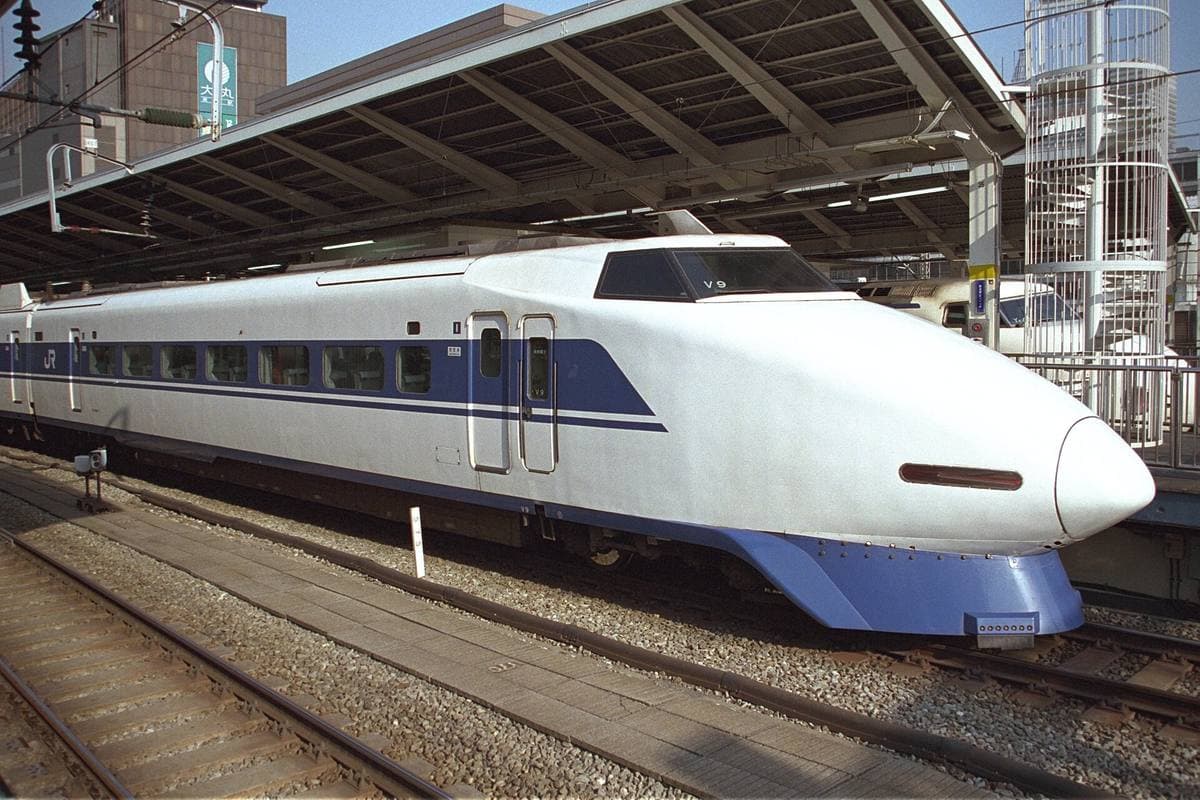
3A 100 series Shinkansen at Tokyo Station in 1997, the model the 1987 advertisement showed. DAJF · CC BY-SA 3.0
Marunouchi, Chiyoda City, Tokyo
Tokyo Station
JR Central’s 1987 Cinderella Express advertisement was about the last train to Shin-Osaka, which left Tokyo Station at exactly 9pm.
Working station. The Tokaido Shinkansen platforms are inside the ticket gates; the Marunouchi side is open to all.
Sources
Stay
A room in Kabukicho.
Hotel Gracery Shinjuku, round the corner from where the Loft is now, with check-in until 2am.
Hotel Gracery Shinjuku
Hotel Gracery Shinjuku
Kabukicho, Shinjuku
970 rooms in Kabukicho, the district Shinjuku Loft moved to in 1999; five minutes from Shinjuku station’s east exit. Check-in runs from 2pm until 2am, for whoever missed the last train.
Dates, prices, rooms and stock change: confirm with the provider before you travel or buy. A stay or tour is described as a filming location only where the card says so.
The sources
Every place and moment behind this page, with sources.
14 of 14 places · 13 of 13 Moments
Ginza Sony Park
5-3-1 Ginza, Chuo City, Tokyo: the old Sony Building corner
The bus from Ginza
Journalists board a bus at the Sony Building, each handed a Walkman.
Yoyogi Park
Yoyogi Kamizonocho, Shibuya City, Tokyo
Press play
In Yoyogi the tape tells the journalists where to look.
Akihabara
Around Akihabara Station, Chiyoda City, Tokyo
Two batteries
An engineer rushes round Akihabara for batteries for Ibuka’s altered Pressman.
Kugayama
Around Kugayama Station, Inokashira line, Suginami City, Tokyo
Ogikubo Loft
By Ogikubo Station, Chuo line, Suginami City, Tokyo: the club is gone
Ogikubo Loft opens
A rock club by Ogikubo station; Sugar Babe and Taeko Ohnuki play there.
Songs
Sugar Babe’s only album.
Shinjuku Pit Inn
Accord Shinjuku B1, 2-12-4 Shinjuku, Shinjuku City, Tokyo
Shinjuku Loft
Tatehana Building B2, 1-12-9 Kabukicho, Shinjuku City, Tokyo (since 1999)
Shinjuku Loft opens
Ten nights of opening shows by the west exit; Ohnuki plays the sixth.
Out of the Loft
Mariya Takeuchi debuts after the Loft label’s search for new artists.
Roppongi crossing
Roppongi crossing and Gaien-Higashi-dori towards Iikura, Minato City, Tokyo
Roppongi Pit Inn
Pit Inn opens its Roppongi sister club.
It’s a Poppin’ Time
Yamashita records a live album at Roppongi’s Pit Inn.
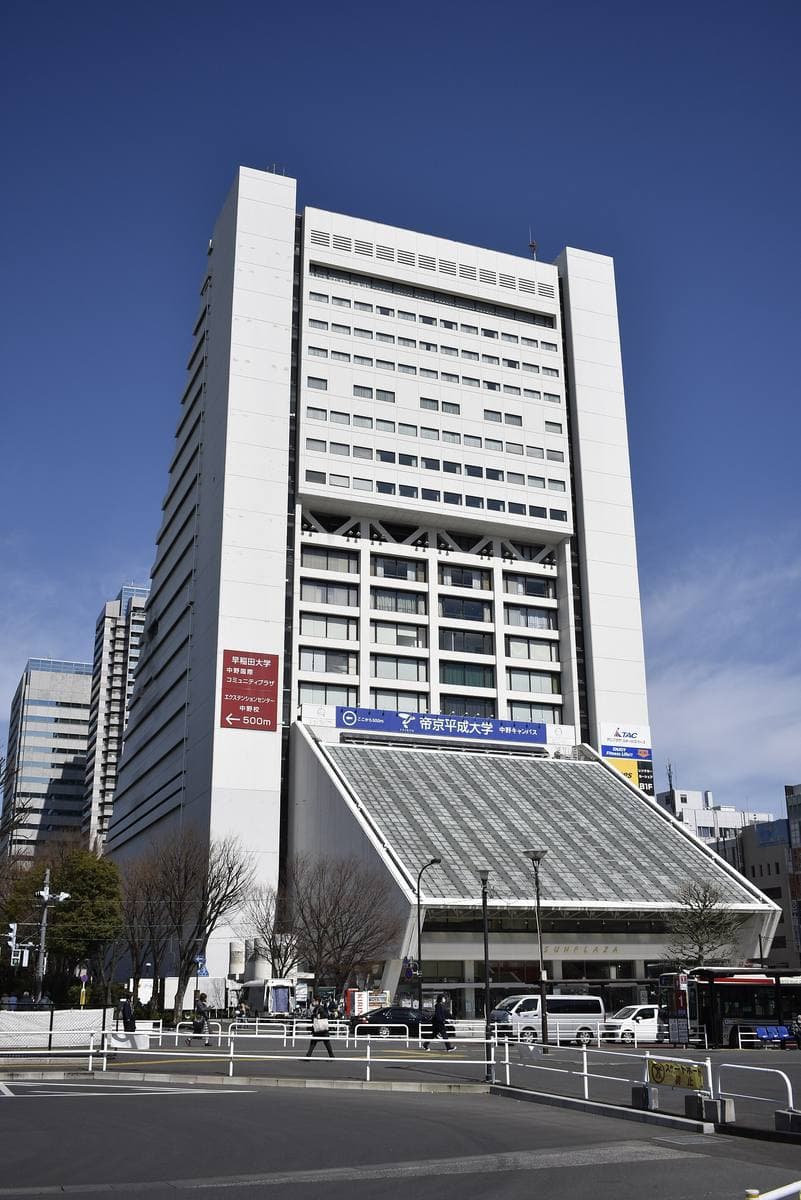
Nakano Sun Plaza site
4-1-1 Nakano, Nakano City, Tokyo: north side of Nakano Station
Home ground
Yamashita plays the last concert at Nakano Sun Plaza.
Tokyo Station
Marunouchi, Chiyoda City, Tokyo
Christmas Eve on the platform
JR Central’s Christmas advertisement takes up Yamashita’s Christmas Eve.