Skip to content

The stages and studios · 1935–1959

Billie Holiday

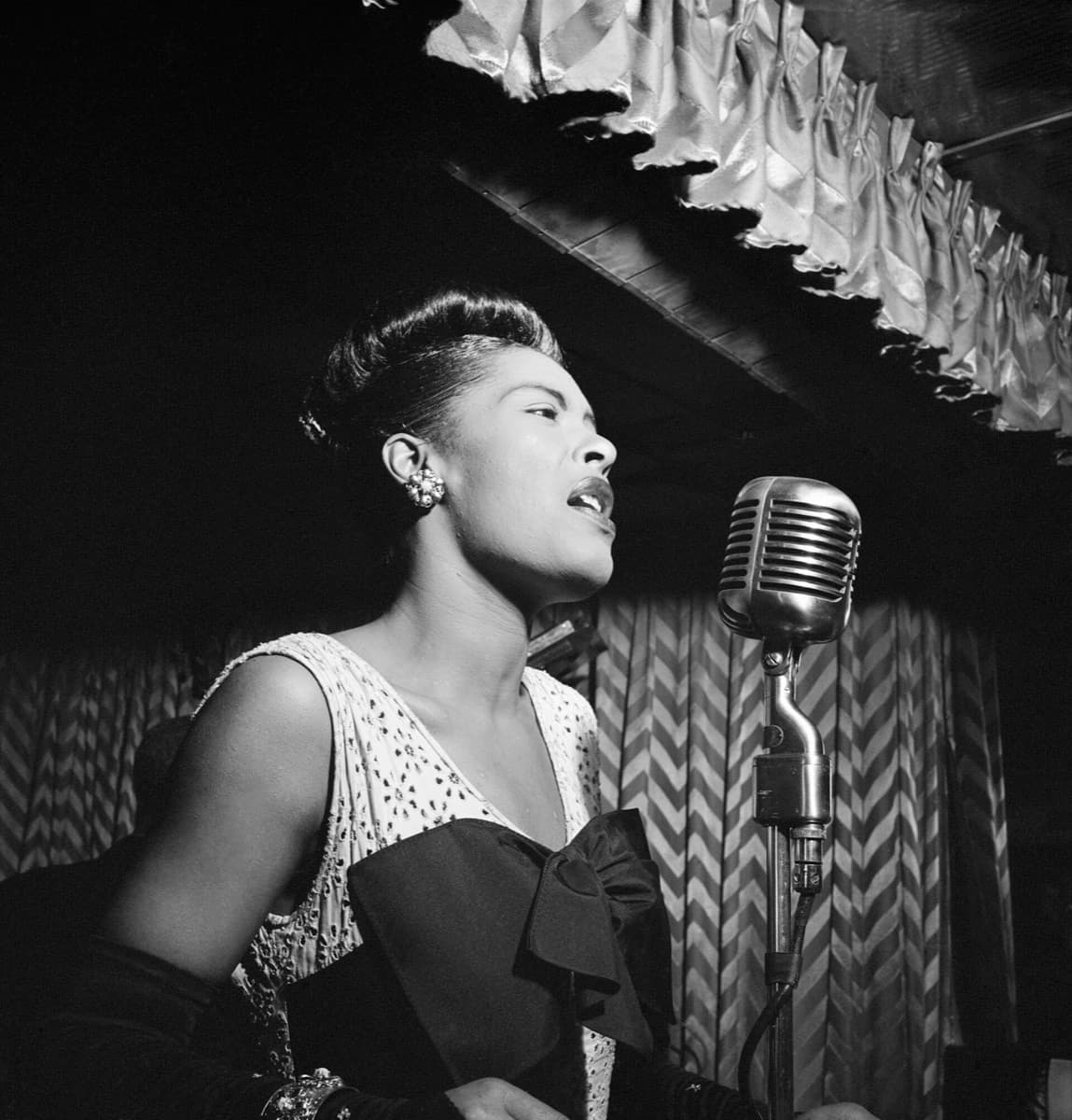
Billie Holiday in a dark dress, looking to one side, in a black-and-white portrait
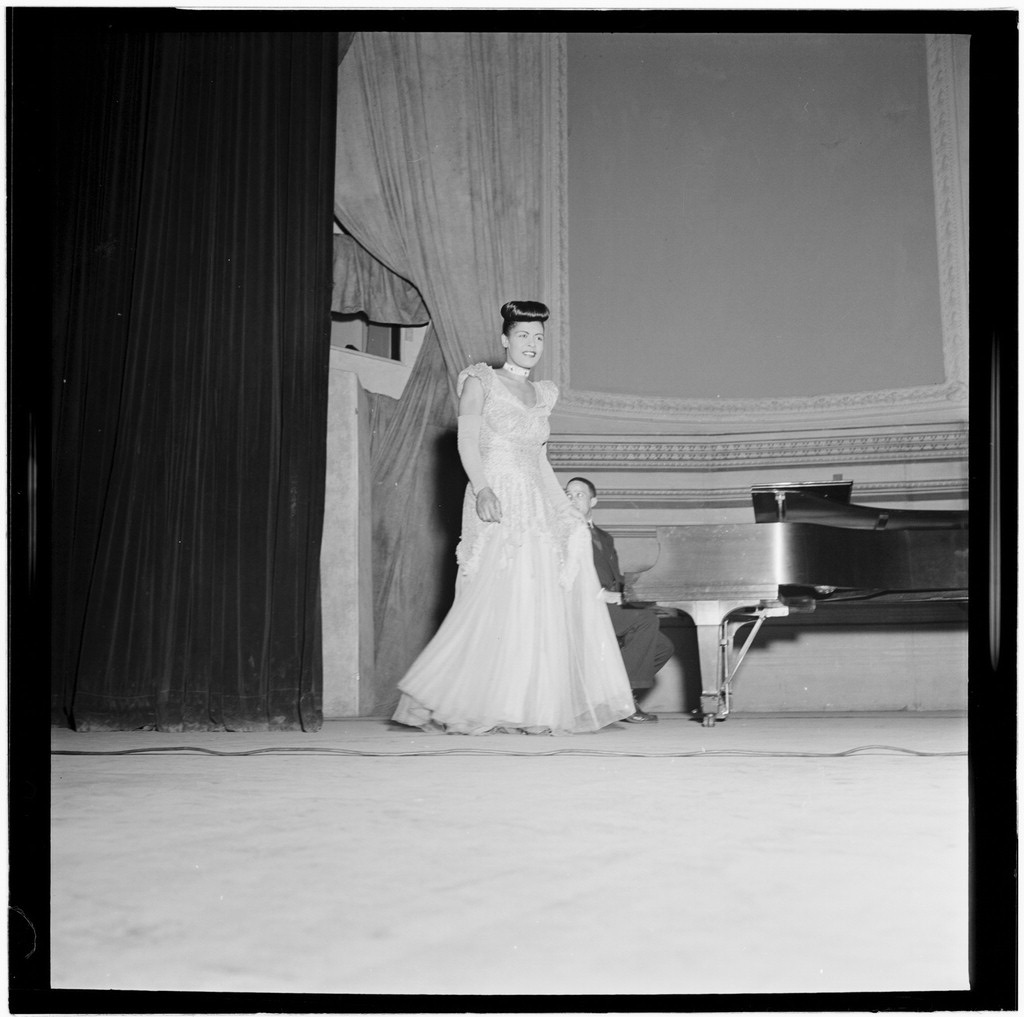
Billie Holiday photographed by William P. Gottlieb, catalogued as Downbeat, New York, about February 1947. William P. Gottlieb · Public domain

Six stages, one running order: Café Society, 52nd Street, Carnegie Hall and the Apollo in New York, then the Royal site and her statue in Baltimore. In the light: Billie Holiday, photographed by William P. Gottlieb about February 1947.

Sources

The running order

Close the set

Add the six stages to tonight’s bill in the order you want them played. Take the bow and the last act is told what closing meant.

Sources

0 of 6 acts on the bill

  1. 1Empty slot
  2. 2Empty slot
  3. 3Empty slot
  4. 4Empty slot
  5. 5Empty slot
  6. 6Empty slot

Six stages wait. Add them in the order you want them played; the last one added closes the set.

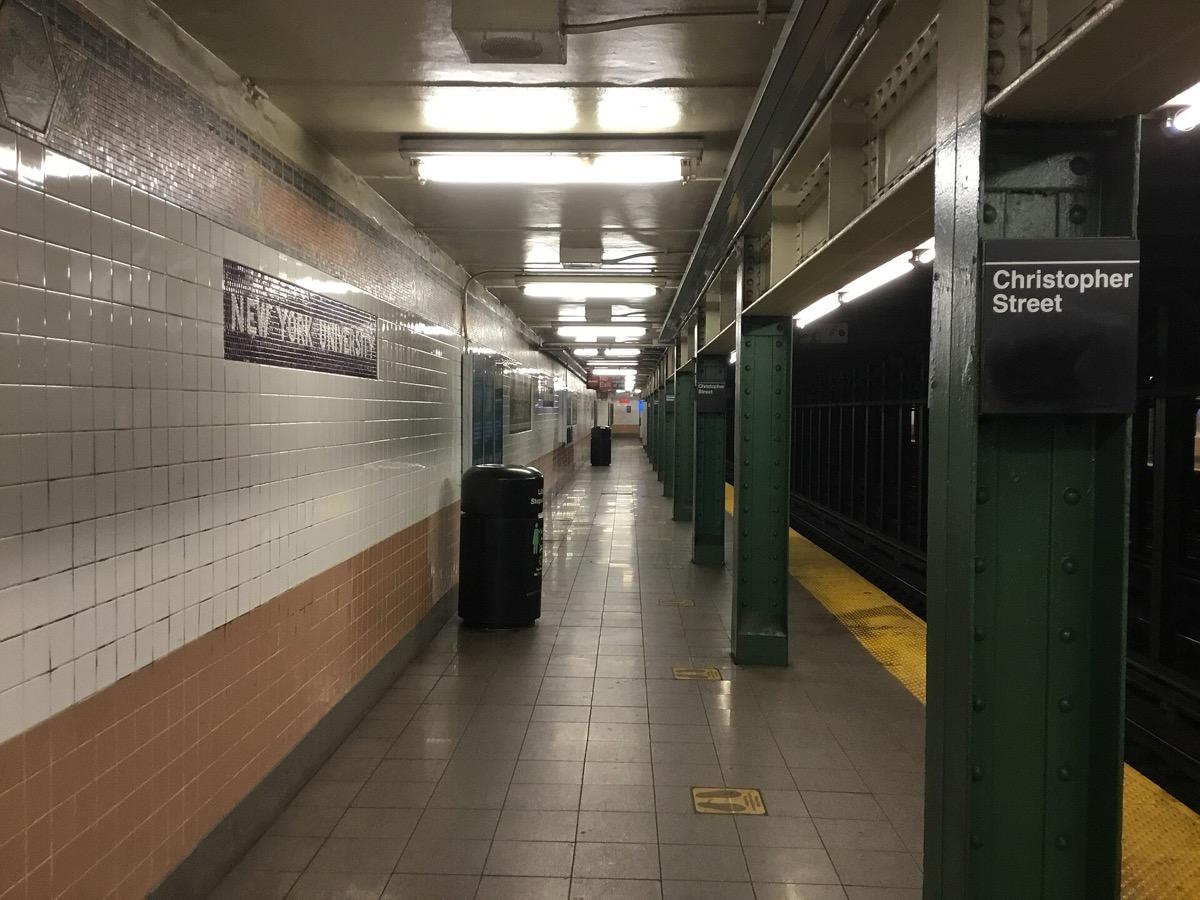
The entrance to a subway station on a Greenwich Village street
The Christopher Street-Sheridan Square subway station, on the square where Cafe Society stood. Kidfly182 · CC BY-SA 4.0

1939

The room goes quiet

For the performance she had waiters silence the room. During the long introduction the lights dimmed, and only a small spotlight was lit as she began.

Holiday’s biography says Josephson, whose integrated club was in Greenwich Village, introduced her to “Strange Fruit”, and that she performed it at the club in 1939.

At Josephson’s insistence she closed her set with the song and left the stage without taking an encore, so the audience was left to think about it. She recorded the song for Milt Gabler’s Commodore label on 20 April 1939.

She said she opened at Café Society as an unknown and left two years later as a star.

The club closed in 1948. Sheridan Square is a public square in Greenwich Village; Wikipedia says the Axis Theatre Company now occupies the site.

Sources

House lights up

Go and find the stages

The Apollo and Carnegie Hall are working halls you can visit. Café Society and the Royal are gone, and their pins mark the square and the avenue, not the buildings. The 52nd Street clubs are mostly gone too; the block is co-named Swing Street. The statue in Baltimore stands on Pennsylvania Avenue.

Sources

Where it is now

6 stages to find in New York and Baltimore.

Pins mark public places; private homes are named but not pinned.

  • Approximate area. The club closed in 1948. Sheridan Square is a public square in Greenwich Village; Wikipedia says the Axis Theatre Company now occupies the site.

  • Approximate area. A public street of banks, shops and offices. The block between Fifth and Sixth Avenues is co-named Swing Street; little of the jazz-club street remains.

  • Exact filming spot not recorded. A working concert hall. The box office and foyer are on Seventh Avenue; inside with a ticket or a tour.

  • Exact filming spot not recorded. A working theatre on 125th Street. The marquee is on the street; inside with a show ticket or a tour.

  1. The entrance to a subway station on a Greenwich Village street
    The Christopher Street-Sheridan Square subway station, on the square where Cafe Society stood. Kidfly182 · CC BY-SA 4.0

    New York · Sheridan Square, Greenwich Village

    Café Society

    Café Society was a New York nightclub open from 1938 to 1948 on Sheridan Square in Greenwich Village, managed by Barney Josephson.

    The club closed in 1948. Sheridan Square is a public square in Greenwich Village; Wikipedia says the Axis Theatre Company now occupies the site.

    Sources
    Explore this place →
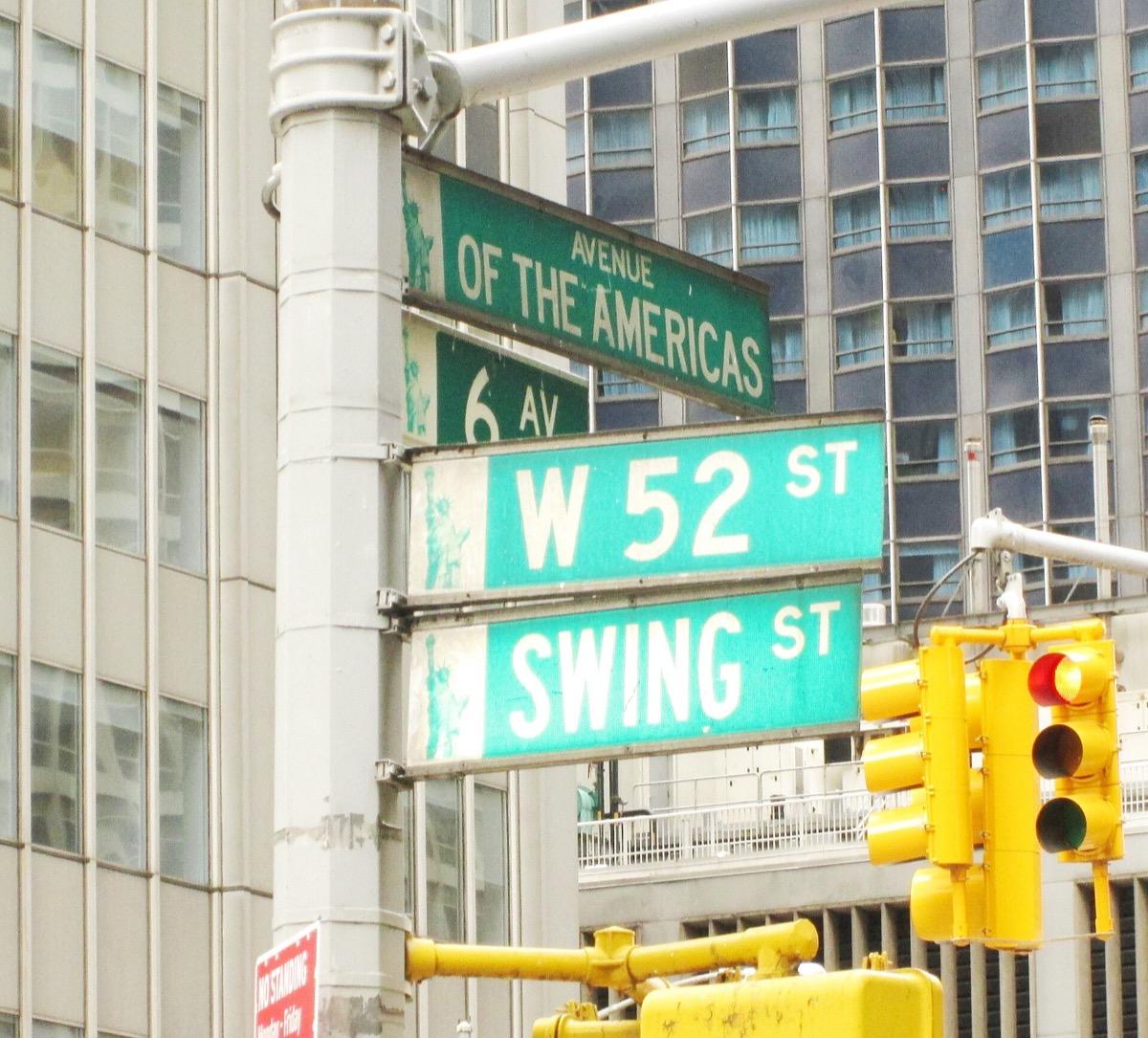
  2. A street sign reading Swing Street on a pole in Midtown Manhattan
    The Swing Street street sign on West 52nd Street, as it is now. Beyond My Ken · CC BY-SA 4.0

    New York · West 52nd Street between Fifth and Sixth Avenues, Midtown

    52nd Street, Swing Street

    After Prohibition ended in 1933, 52nd Street replaced 133rd Street as the Swing Street of the city, and the blocks between Fifth and Seventh Avenues became known for jazz clubs.

    A public street of banks, shops and offices. The block between Fifth and Sixth Avenues is co-named Swing Street; little of the jazz-club street remains.

    Sources
    Explore this place →
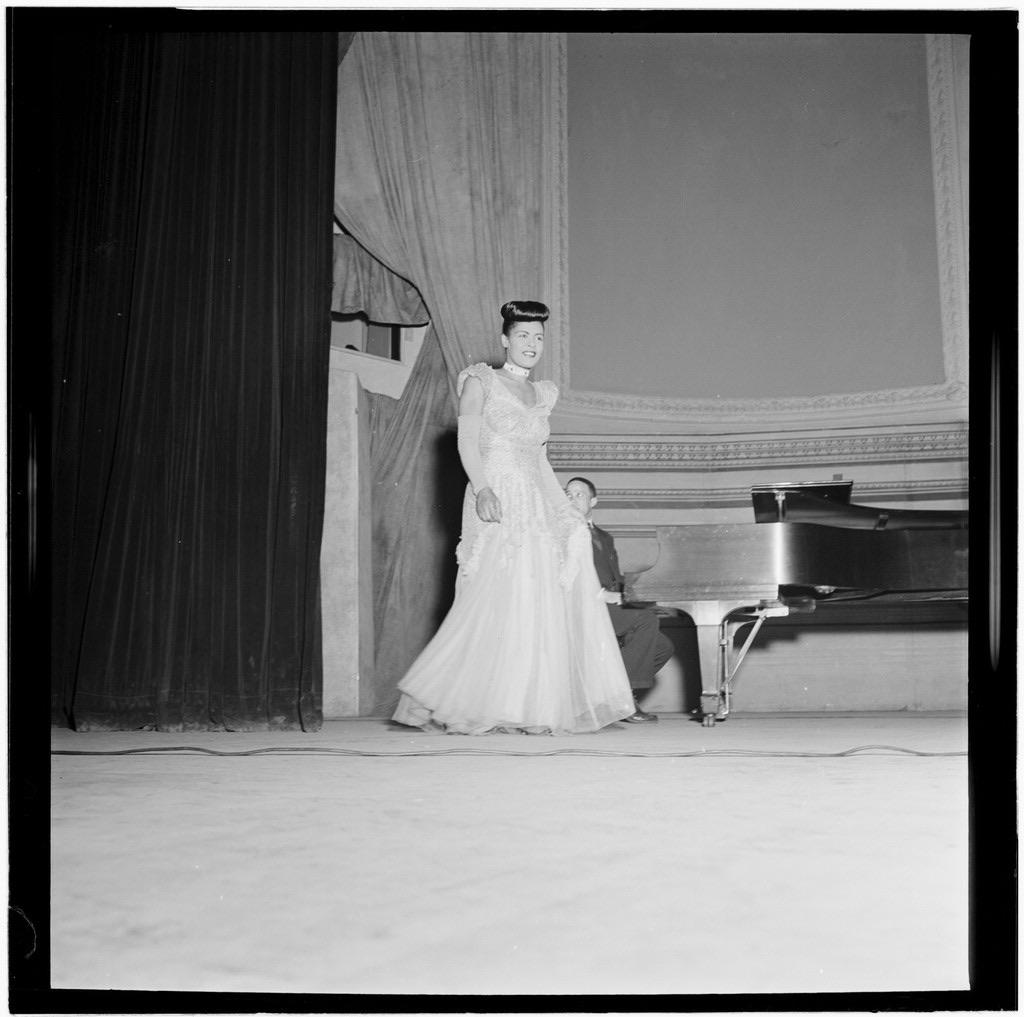
  3. Billie Holiday standing on a stage with a microphone, in black and white
    Billie Holiday photographed by William P. Gottlieb at Carnegie Hall, between 1946 and 1948. William P. Gottlieb · Public domain

    New York · 881 Seventh Avenue, between 56th and 57th Streets, Midtown

    Carnegie Hall

    On 27 March 1948 Holiday played Carnegie Hall to a sold-out crowd.

    A working concert hall. The box office and foyer are on Seventh Avenue; inside with a ticket or a tour.

    Sources
    Explore this place →
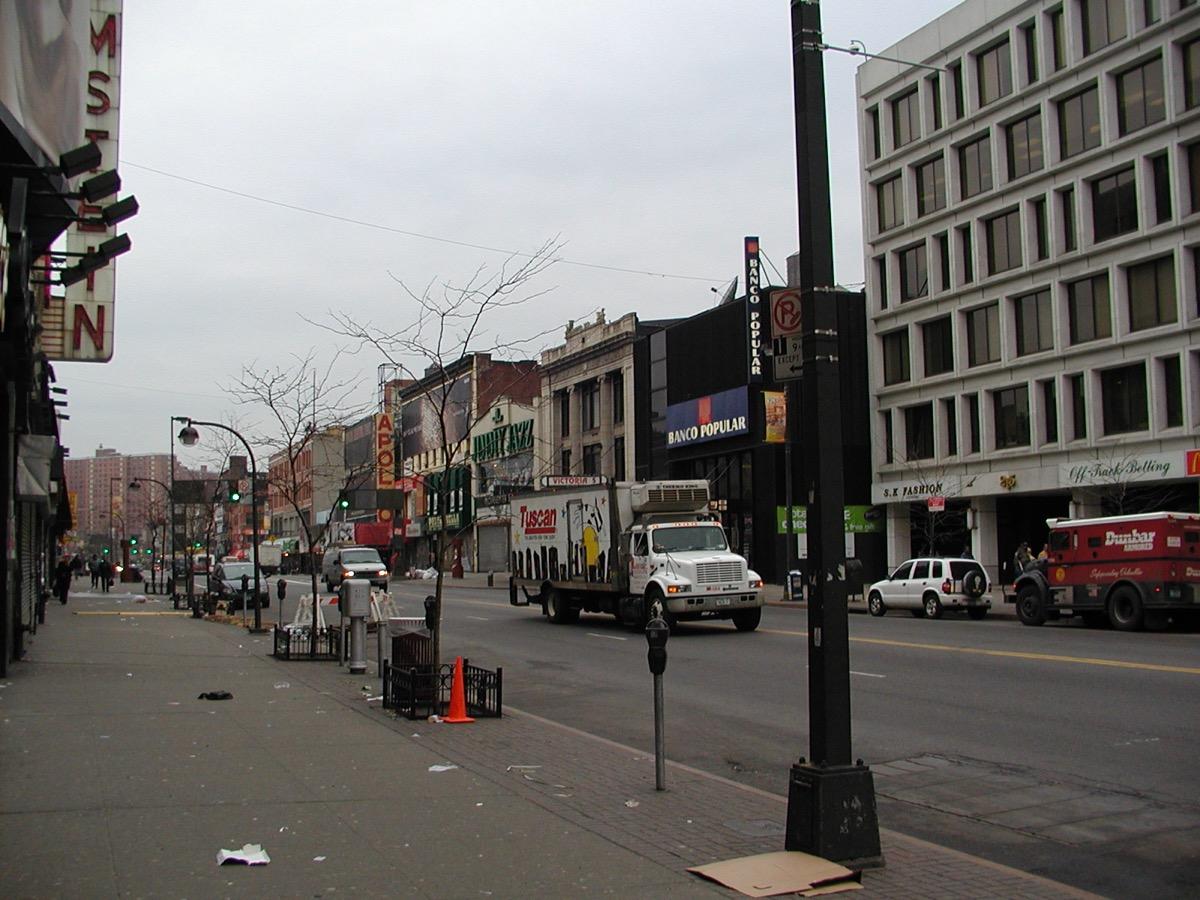
  4. The Apollo Theater's lit vertical sign above West 125th Street
    The Apollo Theater on West 125th Street, Harlem, as it is now. Petri Krohn · CC BY-SA 3.0

    New York · 253 West 125th Street, Harlem

    Apollo Theater

    The Apollo is at 253 West 125th Street in Harlem, with about 1,500 seats across three levels.

    A working theatre on 125th Street. The marquee is on the street; inside with a show ticket or a tour.

    Sources
    Explore this place →

Stay

A room near the stages.

The city’s tourism organisation, for planning a stay near the New York stages.

NYC Tourism + Conventions

Plan a stay in New York City

New York City

The city’s tourism organisation runs this site. Midtown puts Carnegie Hall and Swing Street within a walk. Pictured: Billie Holiday at Carnegie Hall, between 1946 and 1948.

Plan a visit

Dates, prices, rooms and stock change: confirm with the provider before you travel or buy. A stay or tour is described as a filming location only where the card says so.

The archive

Every stage and moment behind this page, with sources.

6 of 6 places · 9 of 9 stories

  • Explore this place →
    • The 1939 performance

      Holiday performs “Strange Fruit” at Café Society in 1939, with the room silenced and the lights dimmed.

    • Closing the set

      At Josephson’s insistence she closes her Café Society set with the song and leaves without an encore.

  • Explore this place →
    • The recording

      Milt Gabler records “Strange Fruit” for Commodore on 20 April 1939; the label had a shop branch at 46 West 52nd Street.

    • Swing Street

      After 1933 the blocks of 52nd Street between Fifth and Seventh Avenues become the city’s jazz street.

    • Lover Man

      Holiday adds “Lover Man” to her shows in 1943 and records it first for Decca in 1944.

  • Carnegie Hall

    881 Seventh Avenue, between 56th and 57th Streets, Midtown

    Explore this place →
    • Comeback night

      On 27 March 1948 Holiday plays a sold-out Carnegie Hall, with 2,700 tickets sold in advance.

  • Explore this place →
    • The Apollo stage

      The Apollo becomes a venue for Black performers from 1934; Billie Holiday is among the stars Wikipedia names there.

  • Explore this place →
    • Home-town stage

      Holiday, a Baltimore native, is a frequent performer at the Royal Theatre.

  • Explore this place →
    • The statue

      Baltimore erects a statue of Holiday in 1985 and completes it in 1993 with additional panels.

1 more place from this productionAlready on the map, each with its source. Not part of the story above.

Map tiles © OpenStreetMap contributors

Places to stay

Stay near these placeswithin easy reach.

We may earn a commission on qualifying hotel bookings. Affiliate disclosure.

Links go to each venue’s or organiser’s own site. Check dates, access and availability there before you go.

Books

Books behind Billie Holidayread it before you go.

Ad / affiliate. These links go to Waterstones. We may earn a commission on qualifying book purchases. How we label links

Once a week

New places near you, once a week.

One story, one place and one thing to do near you. Free, and you can stop any time.

TermsPrivacyCookiesDelete accountAffiliate disclosureLegal