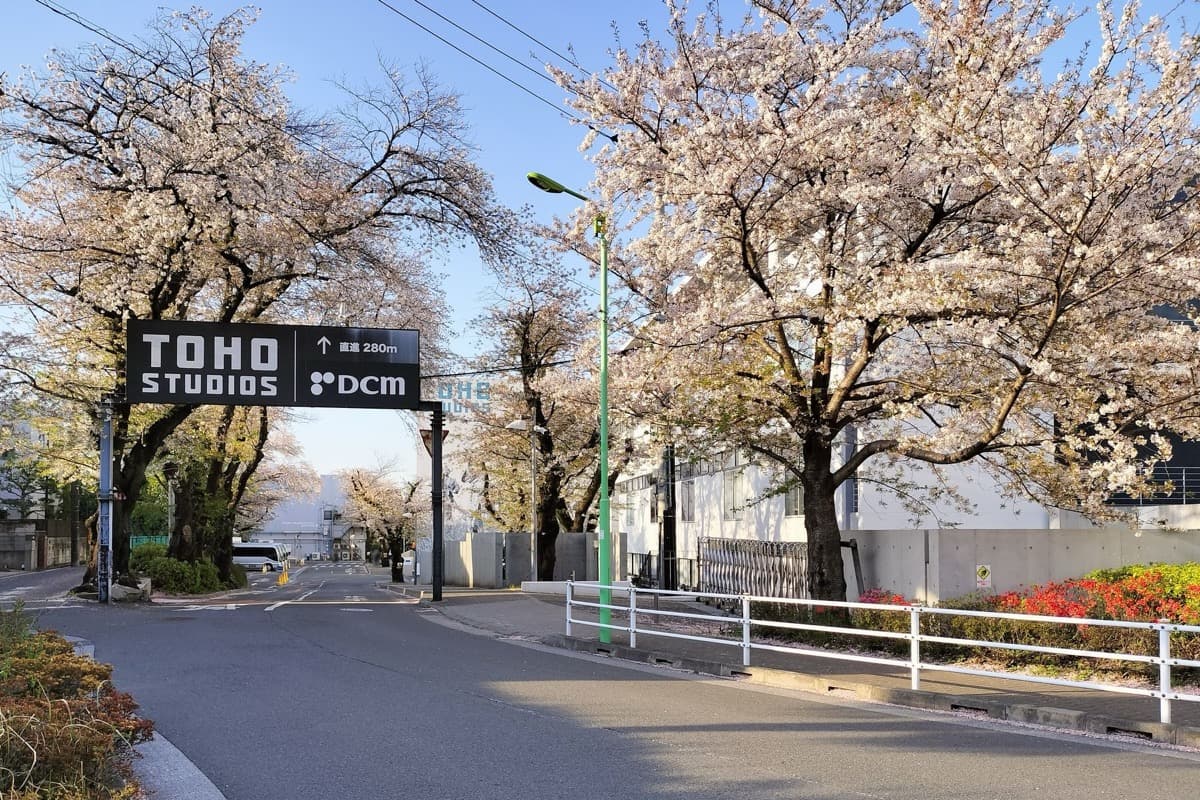
The Toho Studios site in Seijo, Setagaya, April 2024. 鋸香具師 · CC0
Shinagawa, Ginza, the Diet and Kachidoki Bridge were not filmed in the street. They were built as models on Toho’s lot in Seijo and knocked down there. The real places are still standing, and so is the studio sign in the photograph.
Sources
The walk
One monster, four real places
The model monster crosses the city in a few minutes of film. Pick a stop by its minute.
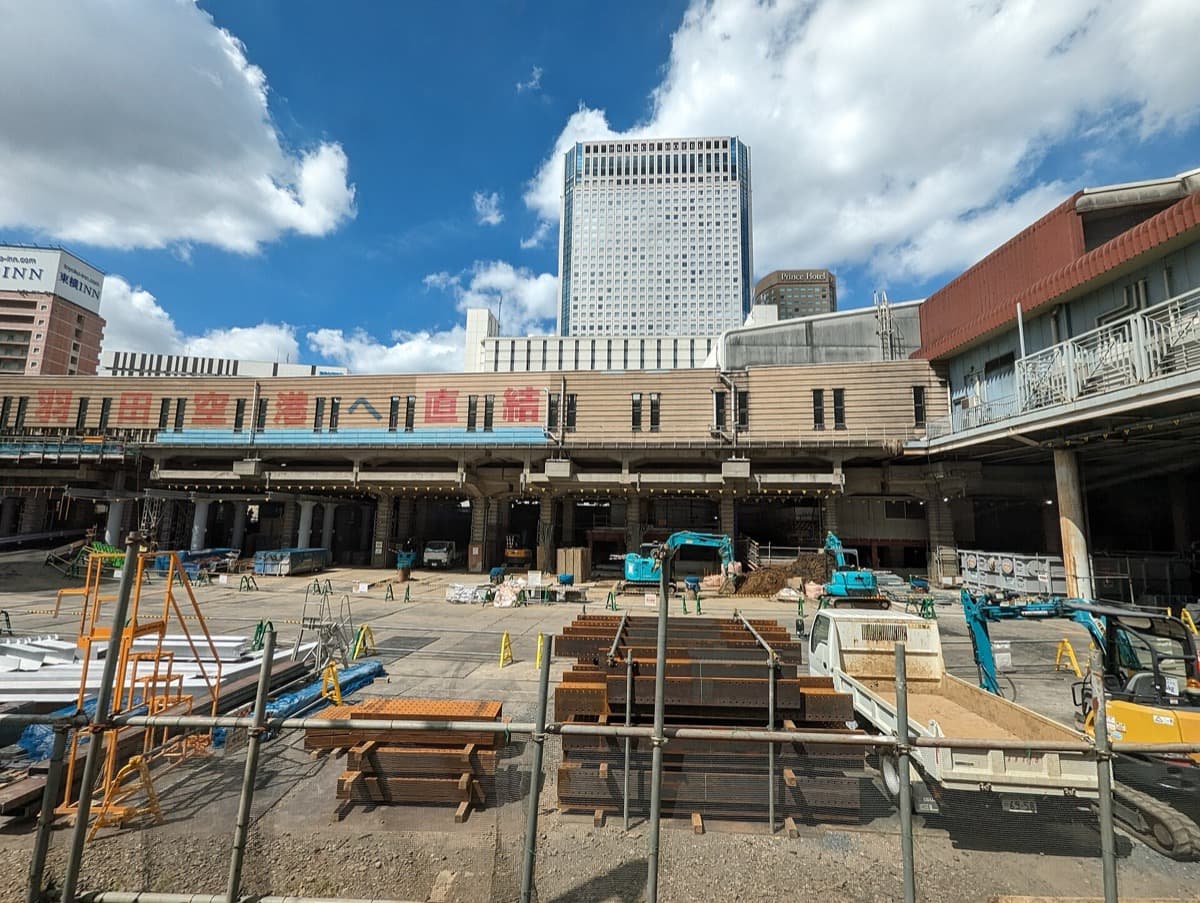
Shinagawa Station on a Saturday morning, September 2023. Syced · CC0
About 43 minutes in
Shinagawa Station
Tokyo Fox says Godzilla “promptly destroys” Shinagawa Station about 43 minutes in. It gives no address.
Wikipedia says that after surfacing from Tokyo Bay, Godzilla attacks Shinagawa.
A working interchange station; walk in with a ticket or look from the street.
Sources
The scale
Set the scale
Wikipedia says Godzilla stands 50 m tall in the film and most miniatures were built at 1:25. The Diet’s central tower is 65.45 m, taller than he is. Set the scale for the Diet model and watch it against the monster, shown at 1:25.
2.62 m Diet tower at 1:25
2.00 m monster at 1:25
At 1:25 the Diet tower stands 2.62 m and the monster 2.00 m. The building looms over him.
The film’s Diet was built at 1:33 so it would look smaller than Godzilla.
Sources
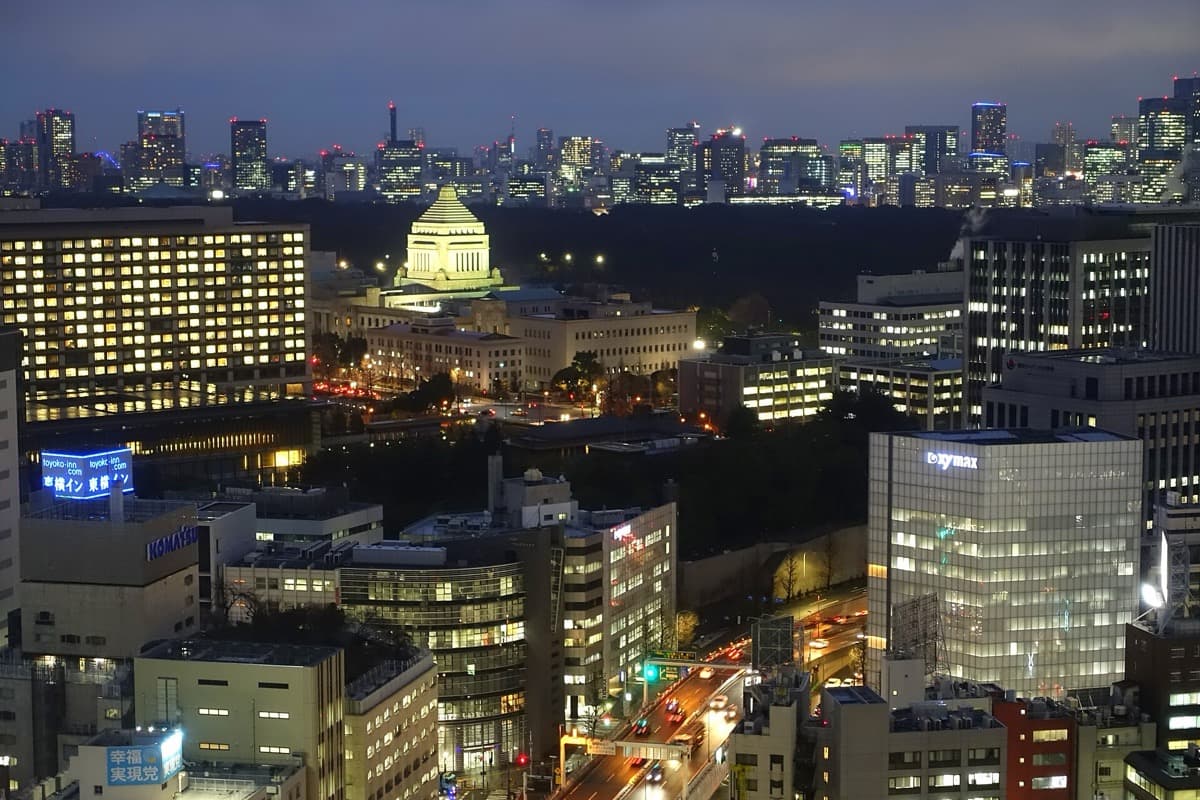
The National Diet Building, Nagatacho, February 2015. Daderot · CC0
Wikipedia says the Diet Building was completed on 7 November 1936, has nine floors and a central tower 65.45 m tall. The film’s miniature of the Diet was built at 1:33 so that it would look smaller than Godzilla, Wikipedia says.
Sources
Wikipedia says most of the film was shot on the Toho lot, and most miniatures were built at 1:25 scale. The Ginza miniature was built by Kintaro Makino’s crew of 30 to 40 carpenters in about a month, Wikipedia says.
Sources
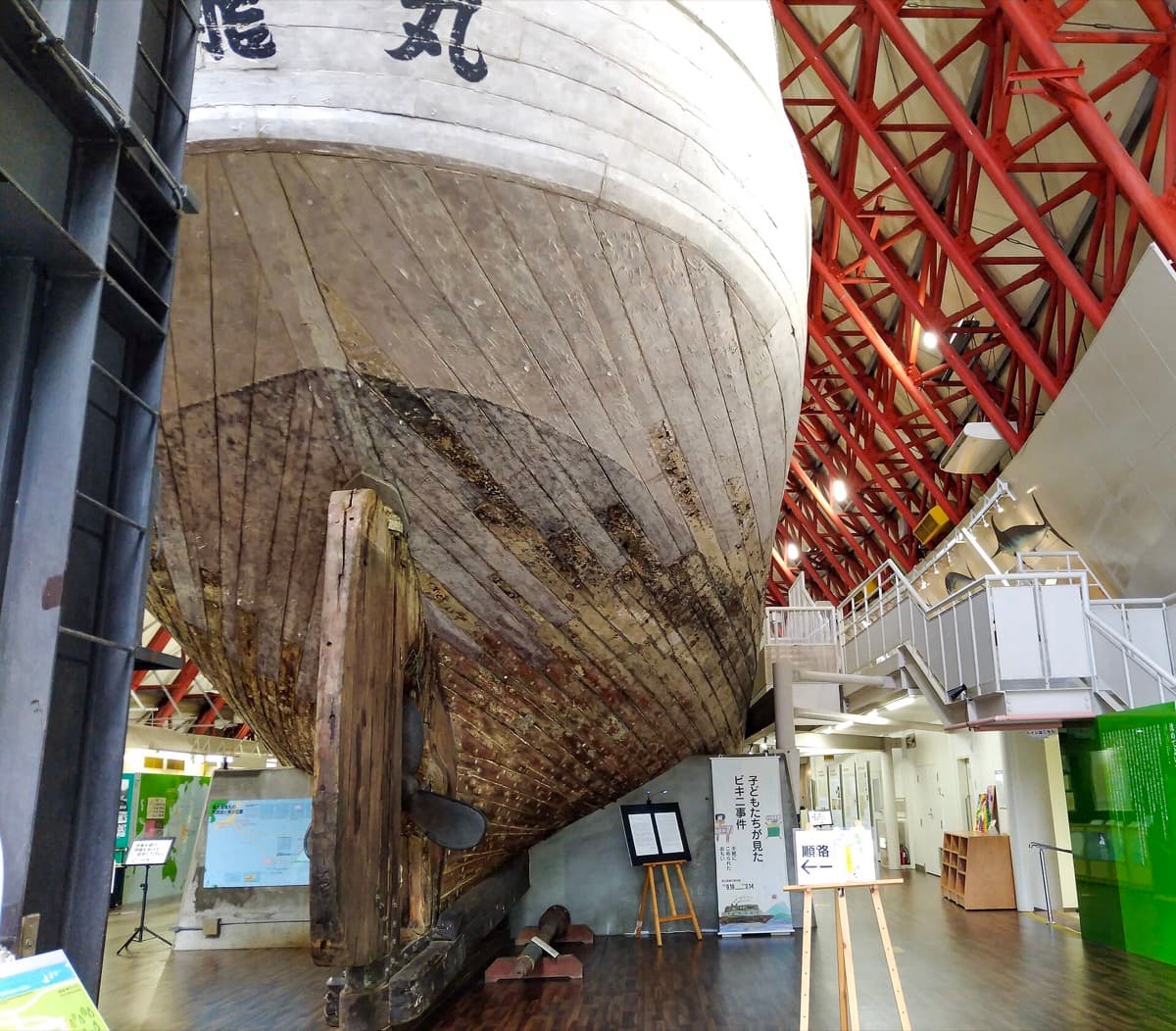
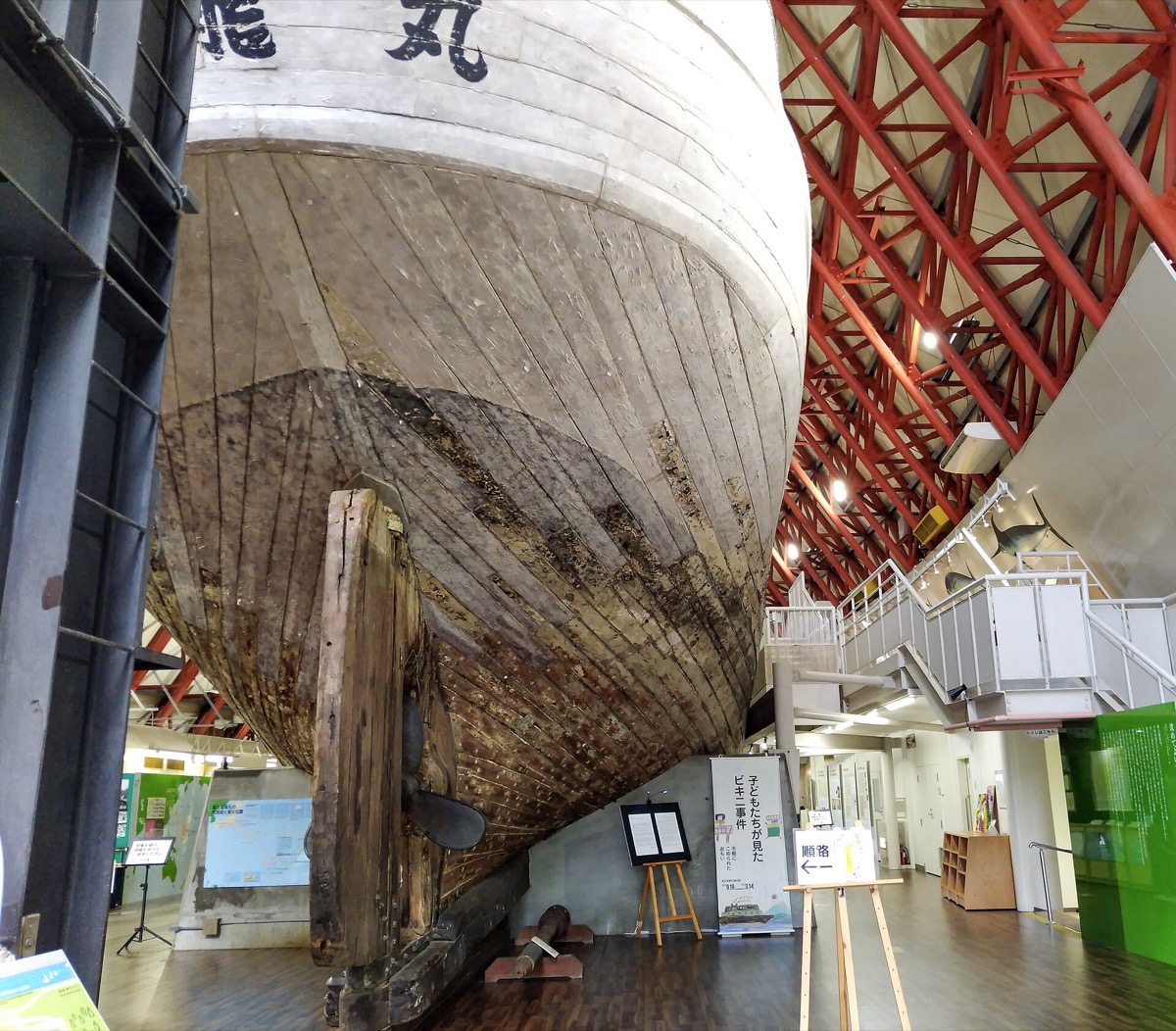
The Daigo Fukuryu Maru Exhibition Hall in Yumenoshima Park, November 2020. KQuhen · CC BY-SA 4.0
Bravo
The ship that is still here
Wikipedia says the tuna boat Daigo Fukuryu Maru was exposed to fallout from the US Castle Bravo test at Bikini Atoll on 1 March 1954, with 23 crew.
Wikipedia says the 1954 Toho film was inspired in part by the event. The hall opened on 10 June 1976 and shows the actual ship, with panels on the radiation damage, the anti-nuclear movement and nuclear testing, the official site says.
Outside are a memorial to Aikichi Kuboyama, the ship’s engine and a tuna memorial.
Open 9:30 to 16:00, closed every Monday (or the next weekday after a Monday holiday); admission is free. It is a short walk from Shin-Kiba Station.
Sources
Tokyo Metropolitan Daigo Fukuryu Maru Exhibition Hall
Daigo Fukuryu Maru Exhibition Hall
Yumenoshima, Tokyo
The boat itself, under a steel roof in Yumenoshima Park. Open 9:30 to 16:00, closed Mondays, admission free.
Wako, the Diet, Shinagawa, Kachidoki Bridge, Godzilla Square and the exhibition hall are open to see. The studio is a working lot, seen from the road. Ijika’s fishing port, where Odo Island was shot, is named by the sources and not pinned.
Sources
Where it is now
8 places to see in Tokyo and Mie, from the Ginza crossing to a shrine in Toba.
Pins mark public places; private homes are named but not pinned.
Building reference · Public access · Not an exact scene or camera position; not a visitor route. A small shrine in the town of Toba. Walk in quietly; the shrine is a place of worship. The fishing port at Ijika, where other Odo Island scenes were shot, is a separate trip along the coast and is not pinned.
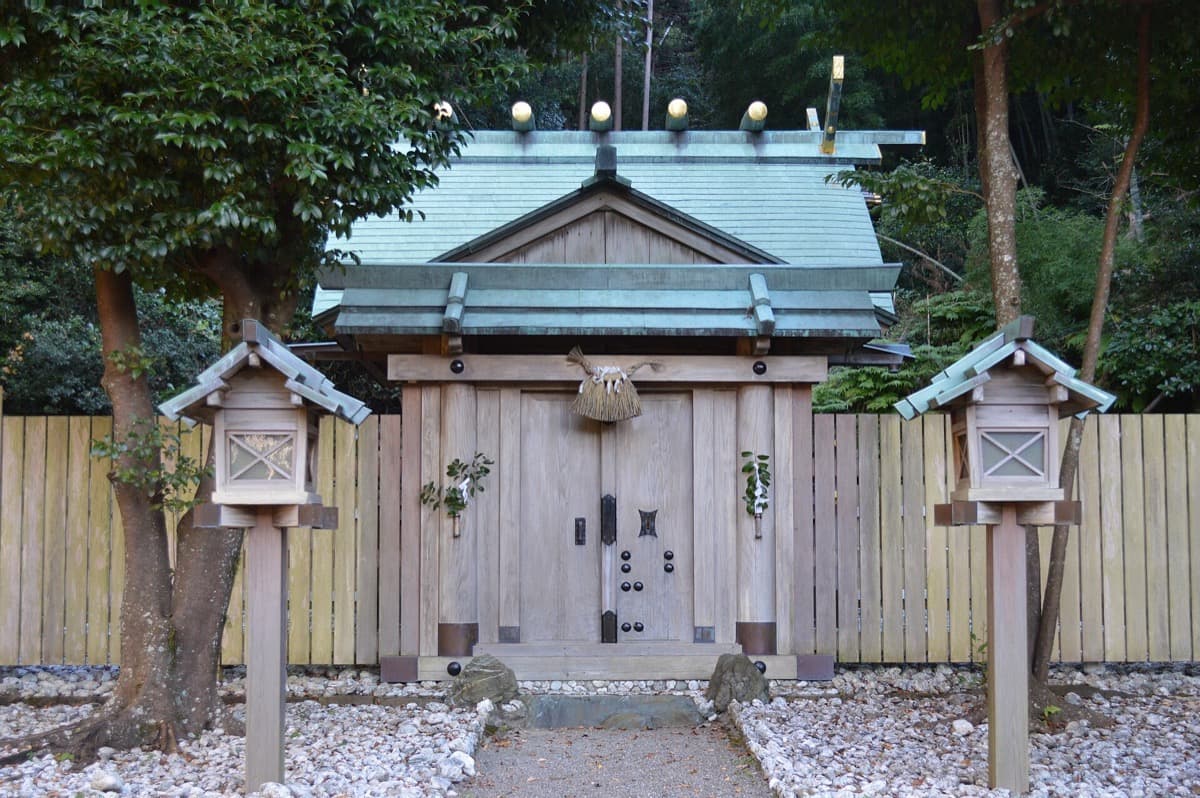
1Kata Shrine in Toba, Mie Prefecture, December 2020. Asturio Cantabrio · CC BY-SA 4.0
Odo Island, Mie · Kata Shrine, Toba, Mie Prefecture
Kata Shrine, Toba
Wikipedia says the Odo Island scenes were shot on location on the Shima Peninsula in Mie Prefecture, with the crew based in Toba. Odo Island itself is fictional.
A small shrine in the town of Toba. Walk in quietly; the shrine is a place of worship. The fishing port at Ijika, where other Odo Island scenes were shot, is a separate trip along the coast and is not pinned.
Sources
Stay
A room in Ginza.
A hotel a short walk from the Wako clock tower.
MUJI HOTEL GINZA
MUJI HOTEL GINZA
Ginza, Tokyo
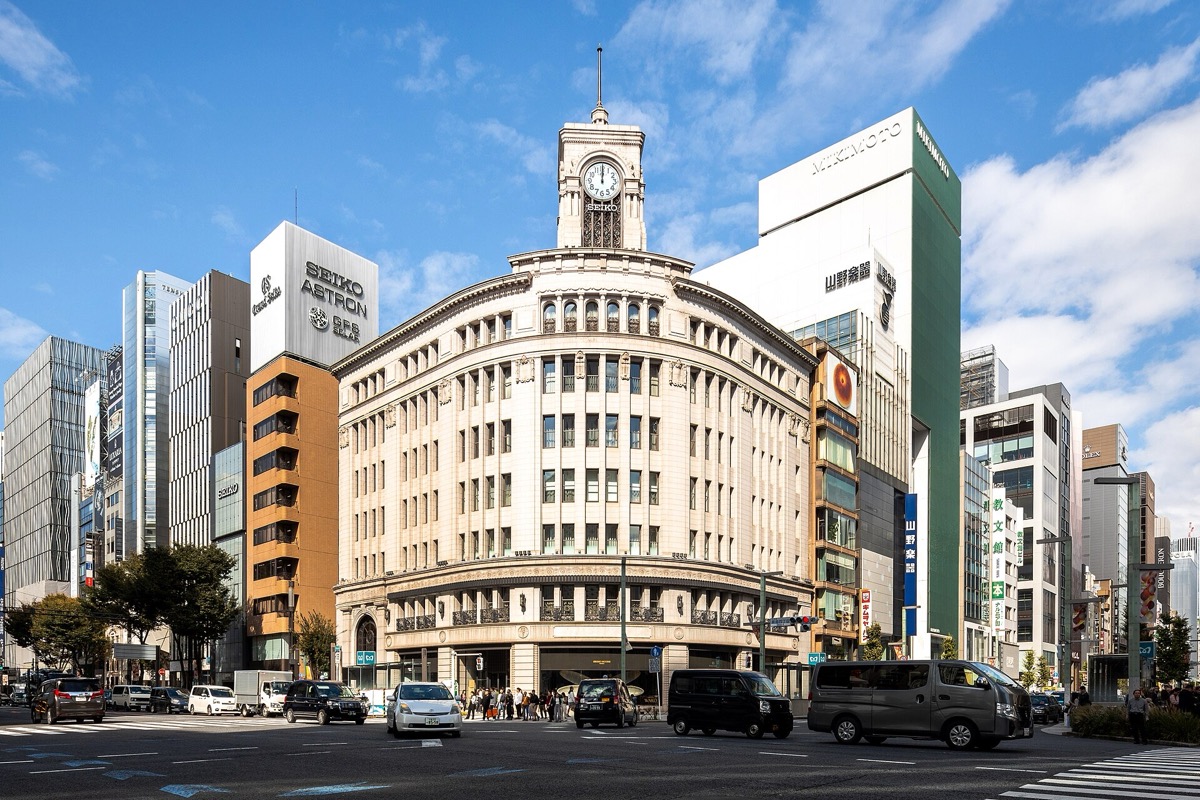
A hotel on Ginza Renga-dori in 3-chome, a short walk from the Wako clock tower at the 4-chome crossing. Pictured: Wako, 2024.
Nothing dated for the 1954 film is listed at these places now.
No current dated events are listed. Check providers for the latest programme.
Dates, prices, rooms and stock change: confirm with the provider before you travel or buy. A stay or tour is described as a filming location only where the card says so.
The archive
Every place and moment behind this page, with sources.
8 of 8 places · 9 of 9 stories
Kata Shrine, Toba
Kata Shrine, Toba, Mie Prefecture
Odo Island
The island village and its festival dance are shot in Toba, Mie, with Ijika’s port and Kata Shrine standing in for a fictional island.
Toho Studios, Seijo
Toho Studios, Seijo, Setagaya, Tokyo
Tokyo in miniature
Ginza and the rest of Tokyo are built as 1:25 models at Toho Studios and knocked down on the lot.
Shinagawa Station
Shinagawa Station, Minato, Tokyo
Landfall
Godzilla comes out of Tokyo Bay and destroys Shinagawa Station, about 43 minutes in.
Wako, Ginza 4-chome
Wako building, Ginza 4-chome, Chuo, Tokyo
The clock
Godzilla rips the clock from the Wako building about 59 minutes in.
The chimes
In June 1954 the real clock begins sounding Westminster-style chimes; the film opens that October.
National Diet Building
National Diet Building, Nagatacho, Chiyoda, Tokyo
The Diet
The Diet is damaged about three minutes after the clock scene, in a model built smaller than Godzilla.
Kachidoki Bridge
Kachidoki Bridge over the Sumida River, Chuo, Tokyo
The bridge
Godzilla destroys Kachidoki Bridge about 63 minutes in, on his way back to the sea.
Daigo Fukuryu Maru Exhibition Hall
Yumenoshima Park, Koto, Tokyo
Bravo
Fallout from the Castle Bravo test reaches the Daigo Fukuryu Maru on 1 March 1954; the film is inspired in part by it.
Godzilla Square, Hibiya
Godzilla Square, Yurakucho, Chiyoda, Tokyo
The monument
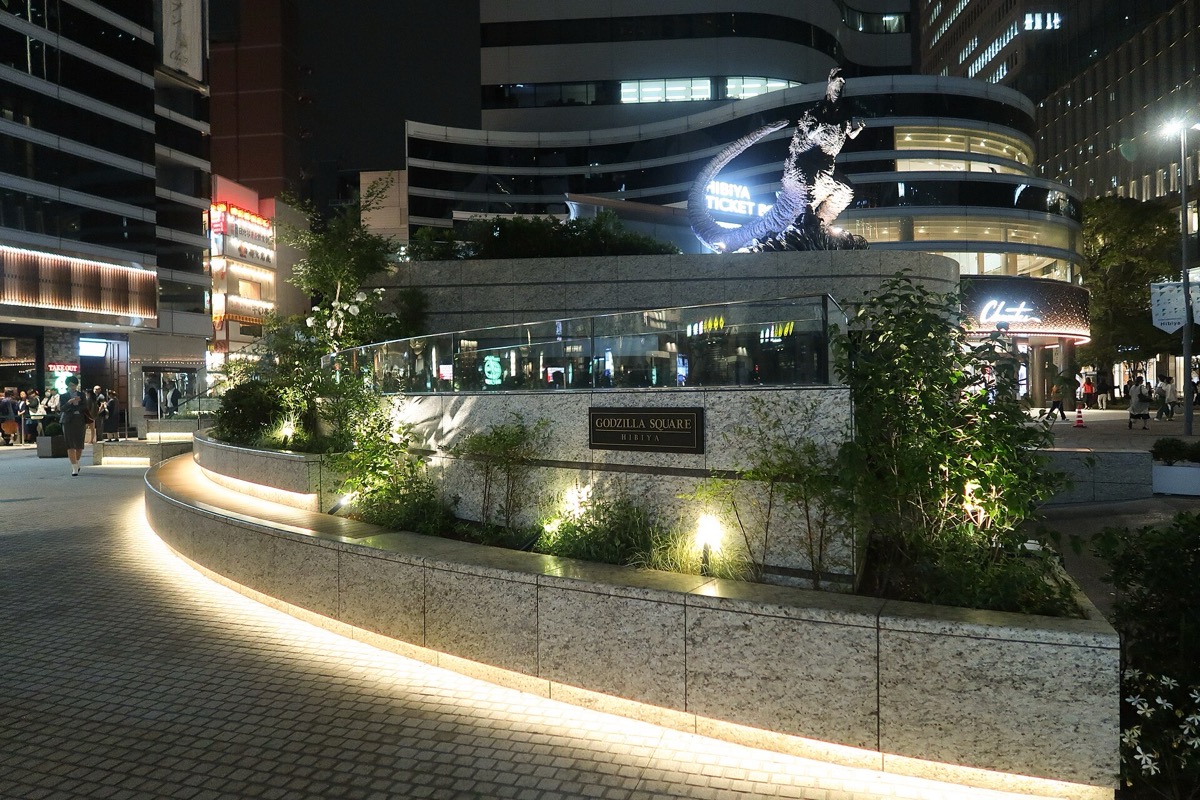
A Godzilla statue stands in the Hibiya and Yurakucho district of Tokyo.