Skip to content
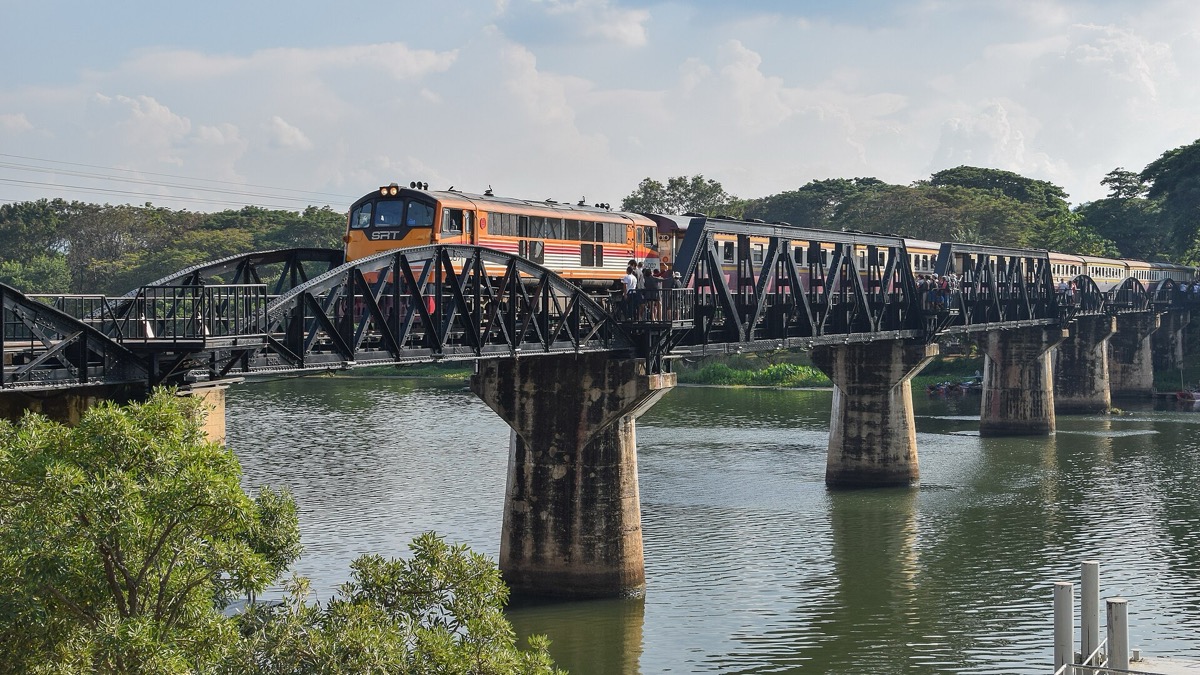
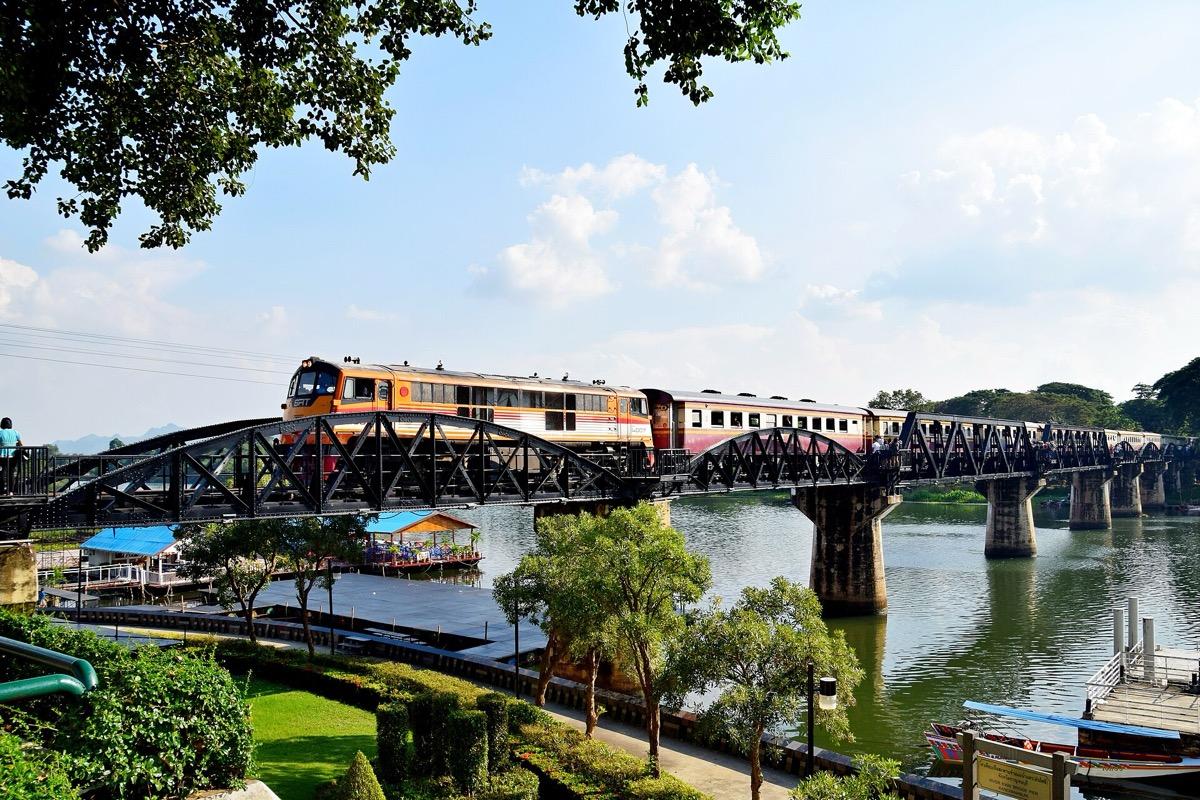
A steel truss railway bridge over a wide brown river under a blue sky
The Kwai bridge at Tha Makham, Kanchanaburi, November 2015. Krzysztof Golik · CC BY-SA 4.0

David Lean · Columbia · 1957 · Ceylon and Thailand

The Bridge on the River Kwai

The bridge David Lean blew up was a set near Kitulgala, in Ceylon. The one in Thailand is real: built by prisoners of war, bombed, and rebuilt. Slide through its years, then go on to what the railway left.

Sources

The spans

Eleven spans, three years

A drawing of the steel bridge at Tha Makham. Slide through its years.

A drawing, not a survey: the page does not say which two spans fell, so these are shown in the middle.

11 curved · 0 angular · 0 fallen

June 1943. 11 curved spans stand, 0 angular, 0 fallen.

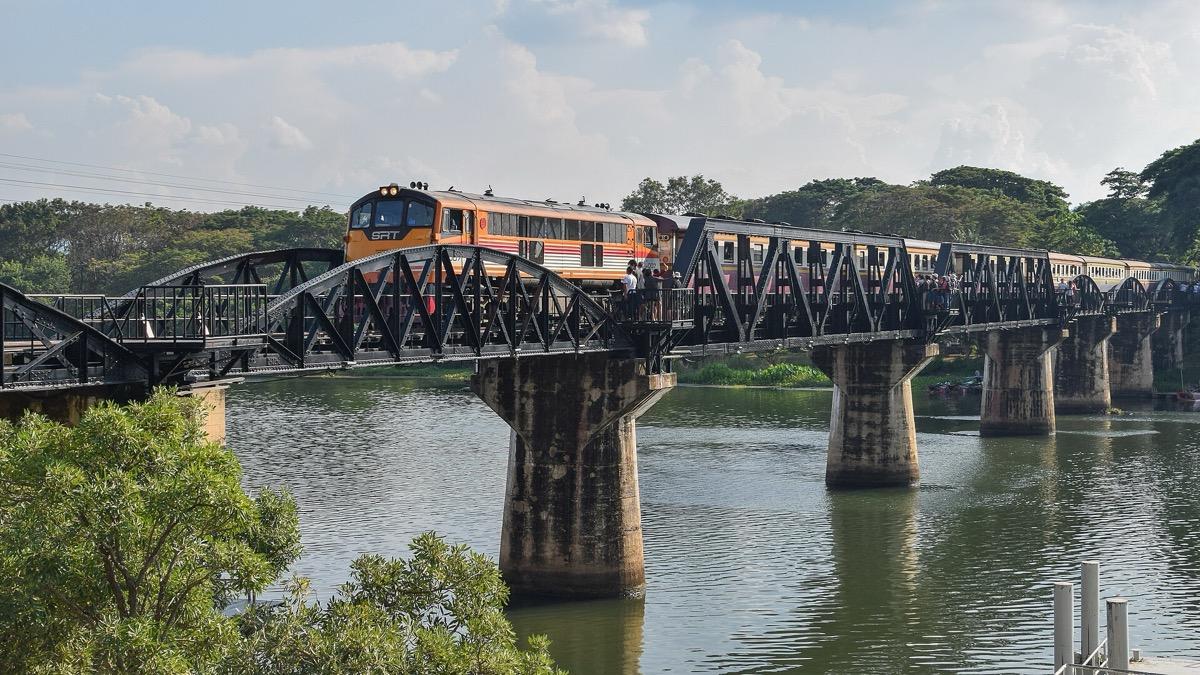
A wooden bridge was finished in February 1943 and a steel and concrete one in June 1943. The steel bridge had eleven curved-truss spans, brought by the Japanese from Java in 1942.

British prisoners of war arrived at Tamarkan on 26 October 1942 to build it. About 1,000 worked on it at first, led by Colonel Philip Toosey.

Sources
Curved and angular steel spans of a railway bridge seen from the riverside
The bridge from the river bank, November 2015. Krzysztof Golik · CC BY-SA 4.0

Not the bridge

The one on screen was a set

The film was made in Ceylon, now Sri Lanka, and its bridge was built near Kitulgala. The novel’s bridge did not cross the river then known as the Kwai. The Mae Klong was renamed the Khwae Yai in the 1960s as a result of the film.

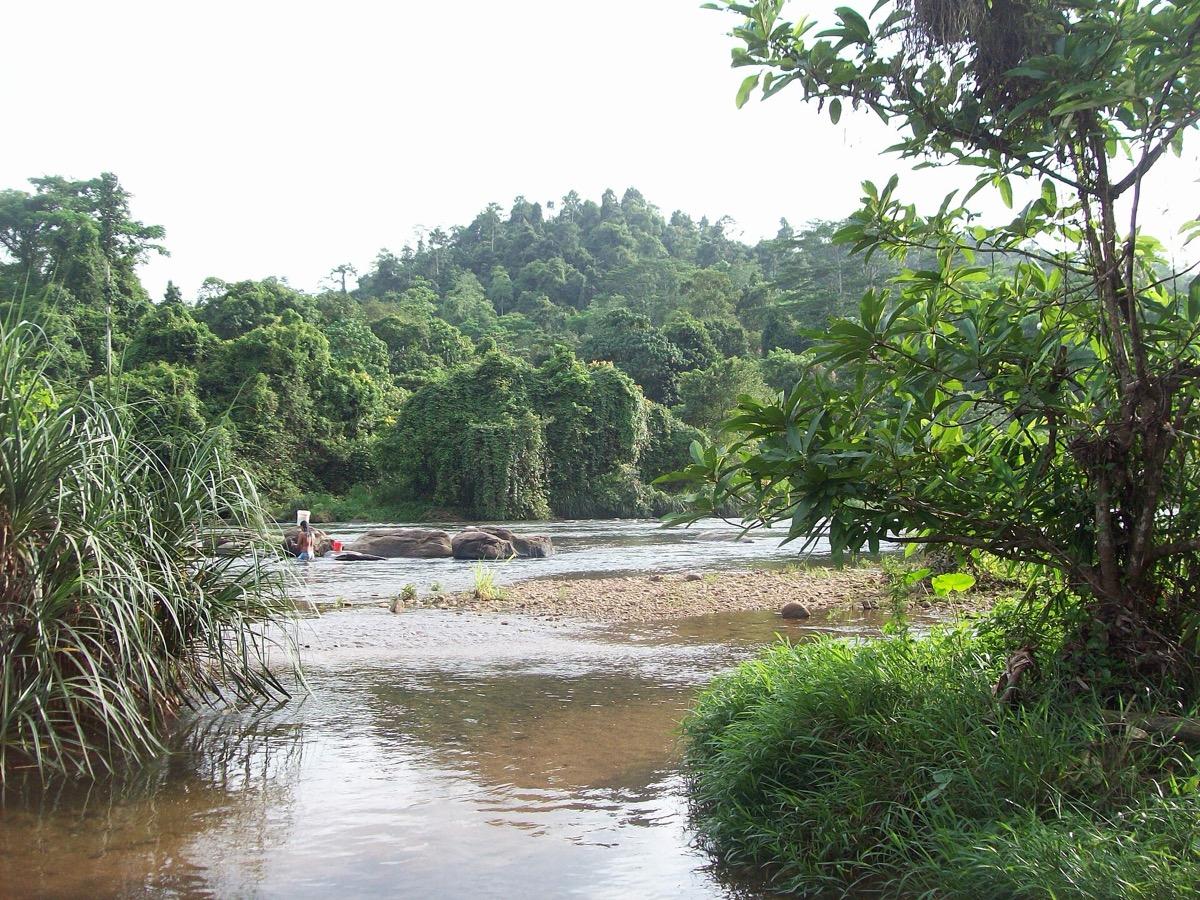
A broad river with wooded banks and a far shore
The Kelani river at Kitulgala, seen from the Rest House, 2012. Pol van den Scheetek · CC BY 3.0

Sri Lanka

Kitulgala, the film bridge

Filming of the explosion is set for 10 March 1957; Lean stops it when a cameraman cannot clear the bridge in time, and the repaired train is blown up the next morning.

The Kelani is wide at Kitulgala but shallow, apart from a deep channel near the far bank. Nothing remains now except the concrete foundations for the bridge.

A river town. The concrete foundations of the film bridge are all that is left. Rafting trips start a few kilometres upstream.
Sources
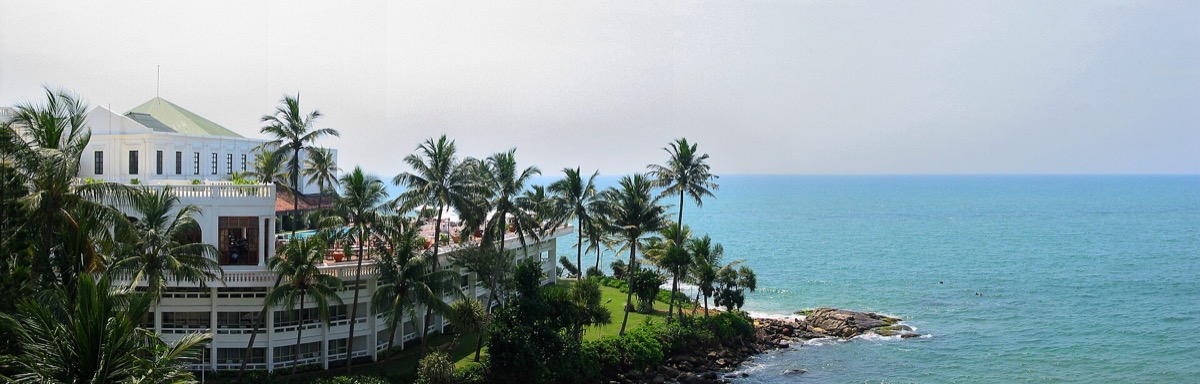
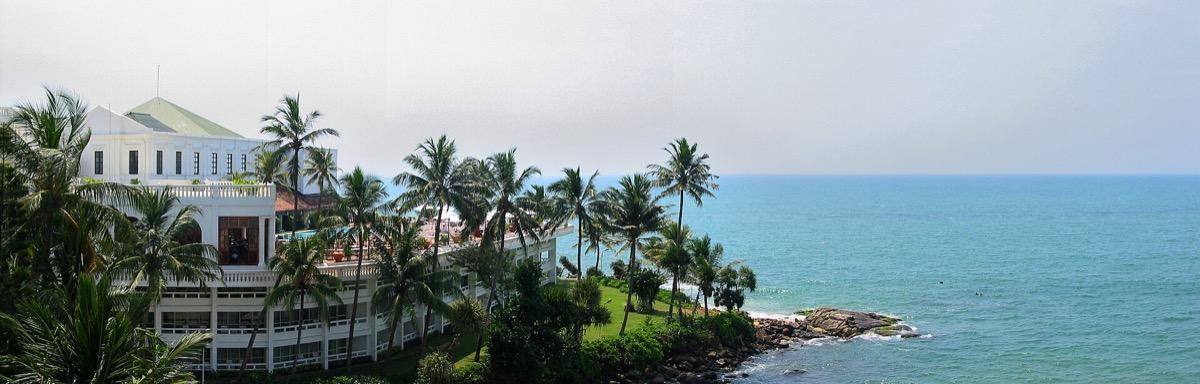
A long white colonial hotel front above a beach
Mount Lavinia Hotel, February 2005. Hansueli Krapf · CC BY-SA 3.0

Sri Lanka

Mount Lavinia Hotel

The Mount Lavinia Hotel was used as the hospital location in the film.

Sir Thomas Maitland, governor of British Ceylon, began a residence on the site in 1806; works were completed in 1830. In the Second World War the British Army used it as a hospital from 1942 to 1946.

A working hotel on the coast south of Colombo. The front and grounds are seen from Hotel Road; ask at reception about visiting.

Sources

More from David Lean

Lean also directed Lawrence of Arabia (1962), which was Alec Guinness’s fourth film with him, and Summertime (1955), shot entirely in Venice. Wikipedia: David Lean

The line

What the railway left

The railway ran 415 km from Ban Pong in Thailand to Thanbyuzayat in Burma, and opened on 25 October 1943. At least 250,000 Southeast Asian civilians were put to forced labour on it, and more than 90,000 of them died. About 12,000 Allied prisoners died, 12,621 of 61,811, about 20 per cent.

Sources
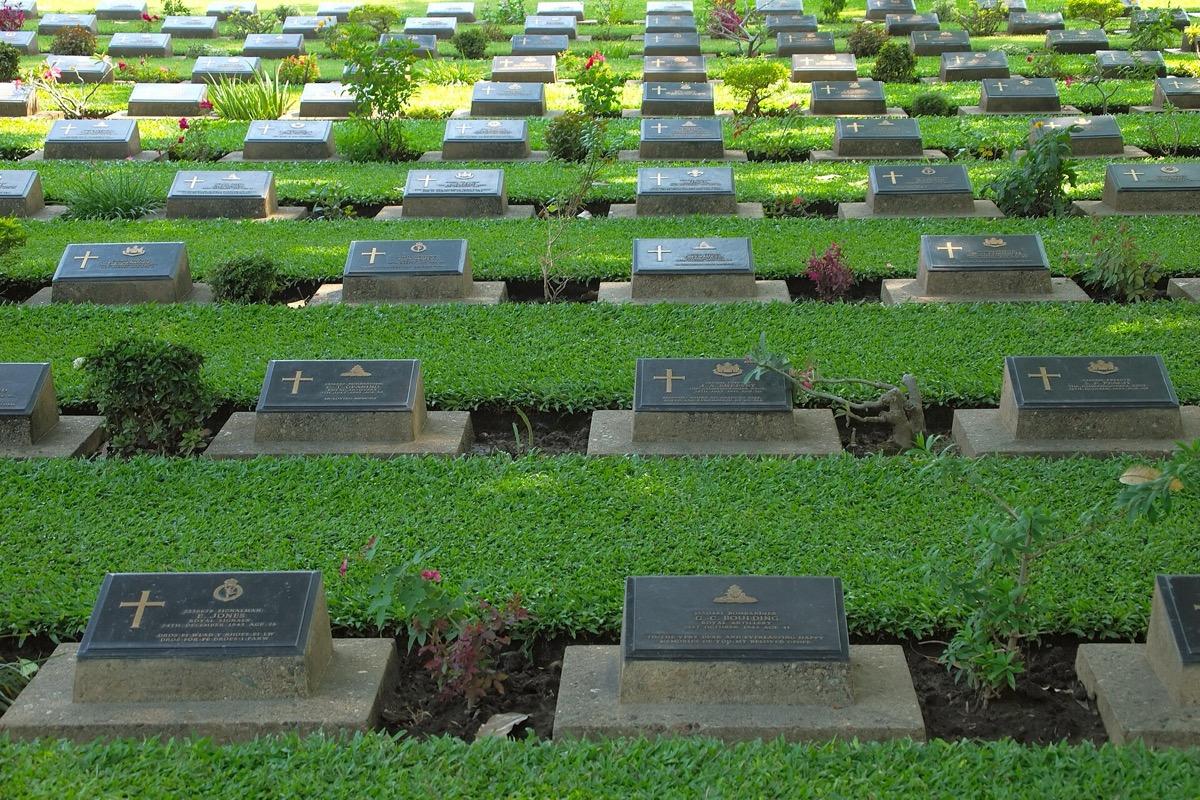
  • Rows of flat grave markers on a lawn under trees
    Kanchanaburi War Cemetery, April 2010. Vyacheslav Argenberg · CC BY 4.0

    Kanchanaburi

    Kanchanaburi War Cemetery

    It is the main cemetery for prisoners who died in Japanese hands while building the Burma Railway.

    It holds 6,982 graves: 1,896 Dutch and 5,085 Commonwealth war graves, and one non-war grave.

    An open Commonwealth War Graves Commission cemetery in the town, next to an older Chinese cemetery. Visit quietly.

    Sources
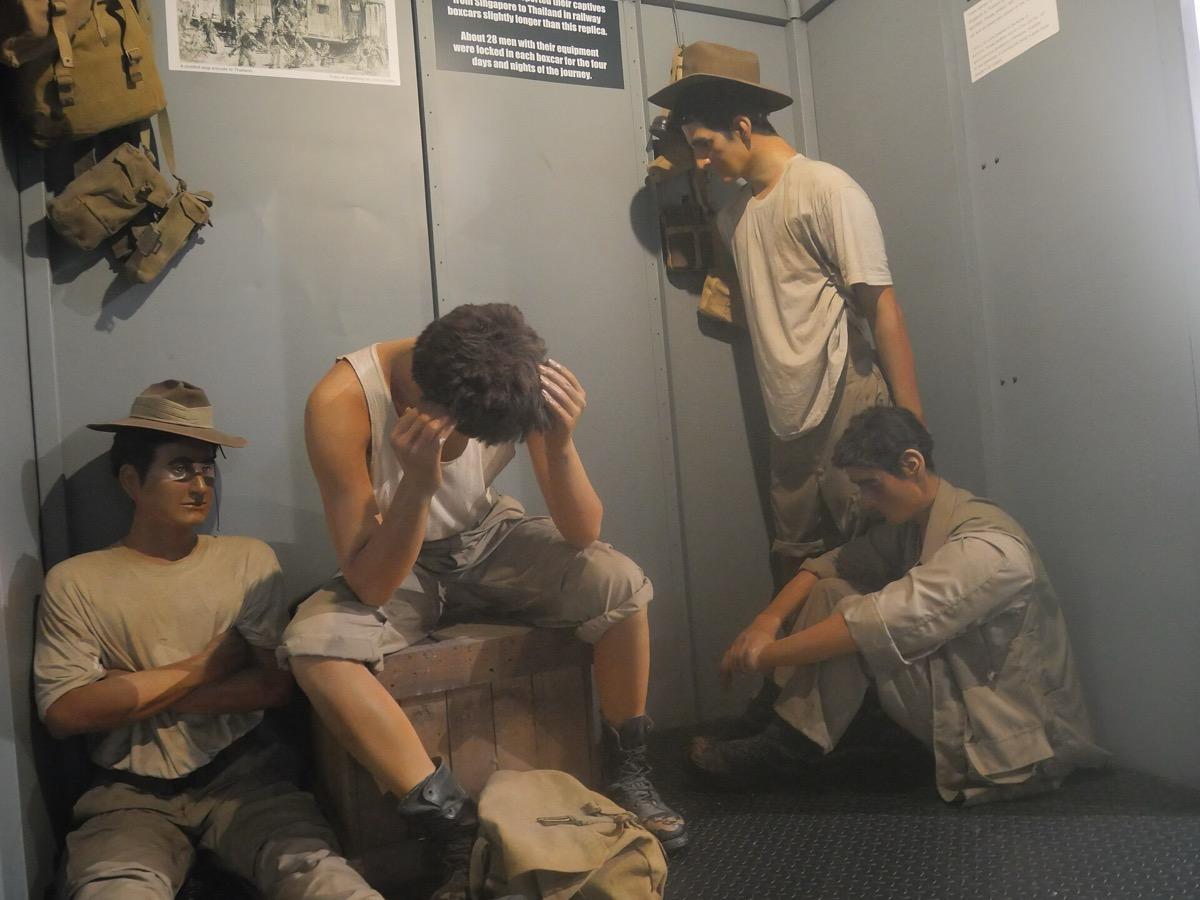
  • A reconstructed railway boxcar inside a museum gallery
    The boxcar entrance at the Thailand-Burma Railway Centre, October 2023. Arthur Taksin · CC BY 4.0

    Kanchanaburi

    Thailand–Burma Railway Centre

    It is a museum and research centre west of the Kanchanaburi War Cemetery, privately funded and founded by the Australian Rod Beattie.

    It sits in the former headquarters of the Imperial Japanese Army, a building prisoners and Asian forced labourers had built.

    A museum across a side road from the cemetery. Check its own site for hours and entry.

    Sources
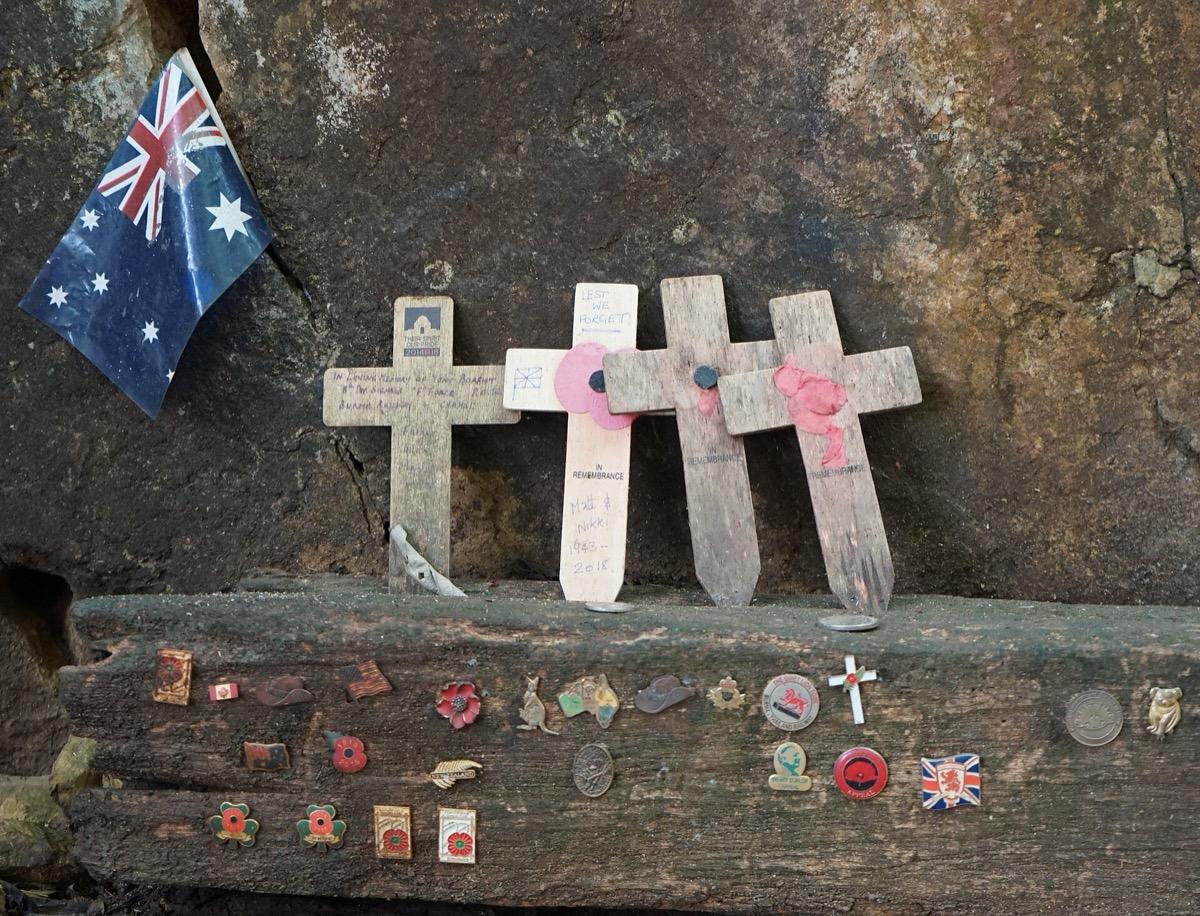
  • A narrow cutting through rock with forest above
    The cutting at Hellfire Pass, October 2018. Nina R from Africa · CC BY 2.0

    Up the line

    Hellfire Pass

    It is the largest rock cutting on the Burma Railway, about 75 m long and 25 m deep.

    Prisoners worked 18 hours a day, and the cutting took about six weeks.

    A memorial museum and a walking trail down into the cutting and along the old track bed. Far from the town: allow a day.

    Sources
  • A long low bamboo-walled hut under a tin roof
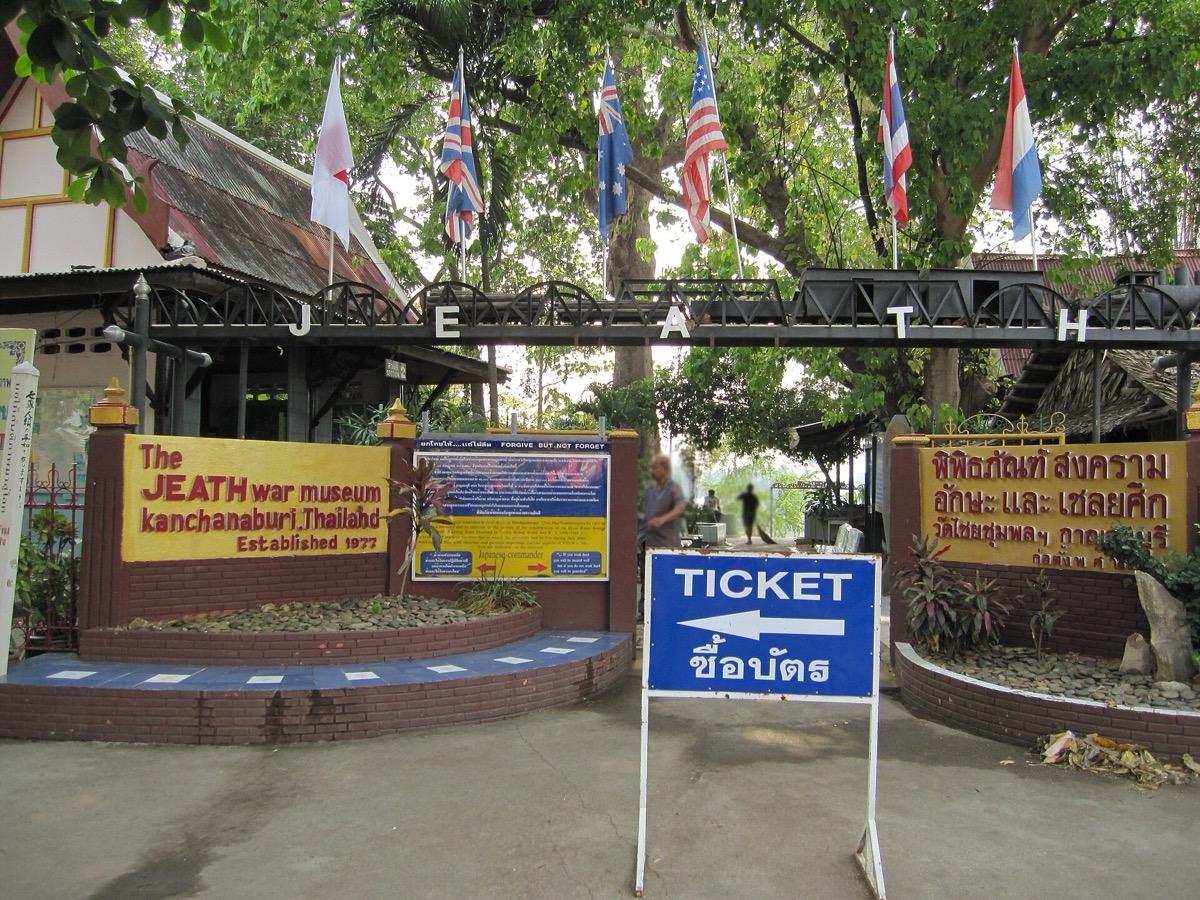
    The JEATH War Museum, Kanchanaburi, March 2010. Horiuchi · Public domain

    Kanchanaburi

    JEATH War Museum

    The name stands for Japanese, English, Australian, American, Thai and Dutch.

    It was founded in 1977 by the chief abbot of Wat Chaichumpol, on the temple grounds where the Khwae Yai and Khwae Noi meet.

    A small museum in temple grounds where the two rivers meet. Photographs are not allowed in the first section.

    Sources

About 130 km of the line in Thailand remains, with trains running to Nam Tok.

Go and see

The river and the line

The Kwai bridge, the cemetery, the railway centre and the temple museum are all in Kanchanaburi. Hellfire Pass is a day trip up the line. In Sri Lanka only foundations remain of the film bridge, and the pin is on the town, not the site.

Sources

Where it is now

7 places in Sri Lanka and Thailand.

Pins mark public places; private homes are named but not pinned.

  • Approximate area. A river town. The concrete foundations of the film bridge are all that is left. Rafting trips start a few kilometres upstream.
  • Exact filming spot not recorded. A working hotel on the coast south of Colombo. The front and grounds are seen from Hotel Road; ask at reception about visiting.

  1. A broad river with wooded banks and a far shore
    The Kelani river at Kitulgala, seen from the Rest House, 2012. Pol van den Scheetek · CC BY 3.0

    Sri Lanka · The Kelani river at Kitulgala, Sabaragamuwa Province

    Kitulgala, the film bridge

    The film was made in Ceylon, now Sri Lanka, and its bridge was built near Kitulgala.

    A river town. The concrete foundations of the film bridge are all that is left. Rafting trips start a few kilometres upstream.
    Sources
    Explore this place →
  2. A long white colonial hotel front above a beach
    Mount Lavinia Hotel, February 2005. Hansueli Krapf · CC BY-SA 3.0

    Sri Lanka · 100 Hotel Road, Mount Lavinia

    Mount Lavinia Hotel

    The Mount Lavinia Hotel was used as the hospital location in the film.

    A working hotel on the coast south of Colombo. The front and grounds are seen from Hotel Road; ask at reception about visiting.

    Sources
    Explore this place →
Viator · Ad / affiliate

Kanchanaburi bridge and railway tours

Kanchanaburi, Thailand

Live marketplace results for day trips to the Kwai bridge, the cemetery and the railway. Check which stops each includes. Pictured: the bridge, 2015.

Live marketplace results · itineraries change

Compare tours
Viator · Ad / affiliate

Hellfire Pass day trips

Kanchanaburi Province, Thailand

Live marketplace results for trips up the line to Hellfire Pass. Check which stops each includes. Pictured: the cutting, 2018.

Live marketplace results · itineraries change

Compare tours

Stay

A room on the coast.

A hotel in Sri Lanka whose rooms stood in for the hospital on screen.

Mount Lavinia Hotel

Mount Lavinia Hotel

Mount Lavinia, Sri Lanka

A hotel on the coast south of Colombo, in a mansion begun in 1806. Scenes of the 1957 film were shot here. Pictured: the hotel, 2005.

Check rooms

Dates, prices, rooms and stock change: confirm with the provider before you travel or buy. A stay or tour is described as a filming location only where the card says so.

The archive

Every place and moment behind this page, with sources.

7 of 7 places · 12 of 12 stories

  • Explore this place →
    • The explosion

      Filming of the explosion is set for 10 March 1957; Lean stops it when a cameraman cannot clear the bridge in time, and the repaired train is blown up the next morning.

    • The foundations

      Only the concrete foundations of the film bridge remain at Kitulgala.

  • Explore this place →
    • The hospital

      The Mount Lavinia Hotel stands in for the hospital in the film.

  • Explore this place →
    • Prisoners build the bridge

      British prisoners reach Tamarkan on 26 October 1942 to build the bridge; the wooden bridge is done by February 1943.

    • The bridges are bombed

      The RAF bombs the bridges in February 1945; the railway bridges are destroyed on 24 June 1945.

    • The rebuilt bridge

      Angular truss spans from Japan replace the two fallen curved ones; the bridge is complete in 1952.

    • A river renamed

      The Mae Klong is renamed the Khwae Yai in the 1960s as a result of the film.

  • Explore this place →
    • The cemetery takes shape

      The cemetery takes its present form in February 1956, a year before the film opens.

  • Explore this place →
    • The centre opens

      A privately funded museum opens in a former Japanese army headquarters, across from the cemetery.

  • Hellfire Pass

    Konyu Cutting, Tenasserim Hills, Kanchanaburi Province

    Explore this place →
    • Six weeks

      Prisoners cut the largest rock cutting on the line in about six weeks, working 18 hours a day.

    • The first dawn service

      The first Anzac Day dawn service is held at the pass.

  • Explore this place →
    • A temple museum

      The chief abbot of Wat Chaichumpol founds the JEATH museum on temple land.

Keep exploring

Where next?

Every place in The Bridge on the River Kwai leads somewhere else.

On the mapExplore the atlasOpen the map
Your atlas

Keep The Bridge on the River Kwai with the places you mean to see.

How saving works

Once a week

New places near you, once a week.

One story, one place and one thing to do near you. Free, and you can stop any time.

TermsPrivacyCookiesDelete accountAffiliate disclosureLegal