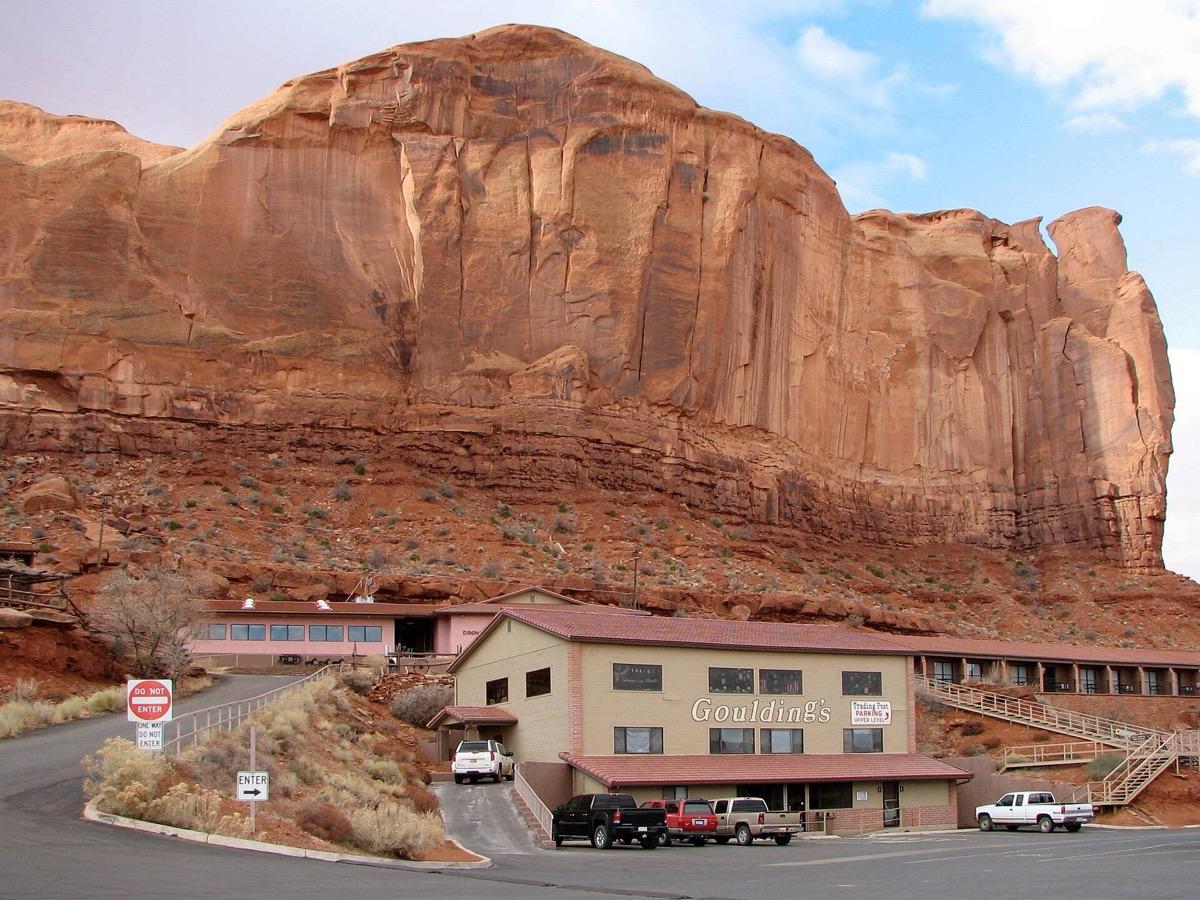
A tent city at Goulding’s
Within weeks, “more than 100 people” from the cast and crew lived in a tent city outside the Gouldings’ front door. Ford took the spare room and John Wayne a tent, the Deseret News reported.
Overland waybill · John Ford · United Artists · 1939
Ford’s first picture in Monument Valley was pitched by a trader with a binder of photographs. The valley is Navajo Nation land, and the rest of the road was shot in California. Six places hang on the tongue of this coach.
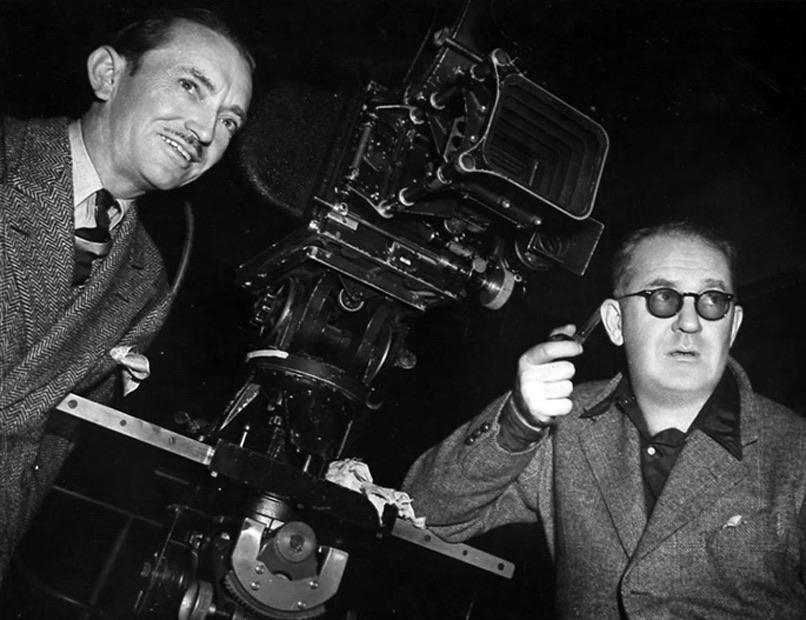
The binder · summer 1938
In summer 1938 the Gouldings drove to Hollywood with a binder of 8-by-10 photographs of Monument Valley by Josef Muench, the Deseret News wrote, to ask John Ford to shoot his next Western there.
At the United Artists studio a receptionist said Harry needed an appointment. He rolled out his bedroll to wait, and before security came the Stagecoach location manager saw the photographs and asked where the place was.
Goulding’s own page says they went to Hollywood “with only $60 in their pockets”, and that this led Ford to make Stagecoach.
Where did the crew sleep?
Within weeks, “more than 100 people” from the cast and crew lived in a tent city outside the Gouldings’ front door. Ford took the spare room and John Wayne a tent, the Deseret News reported.
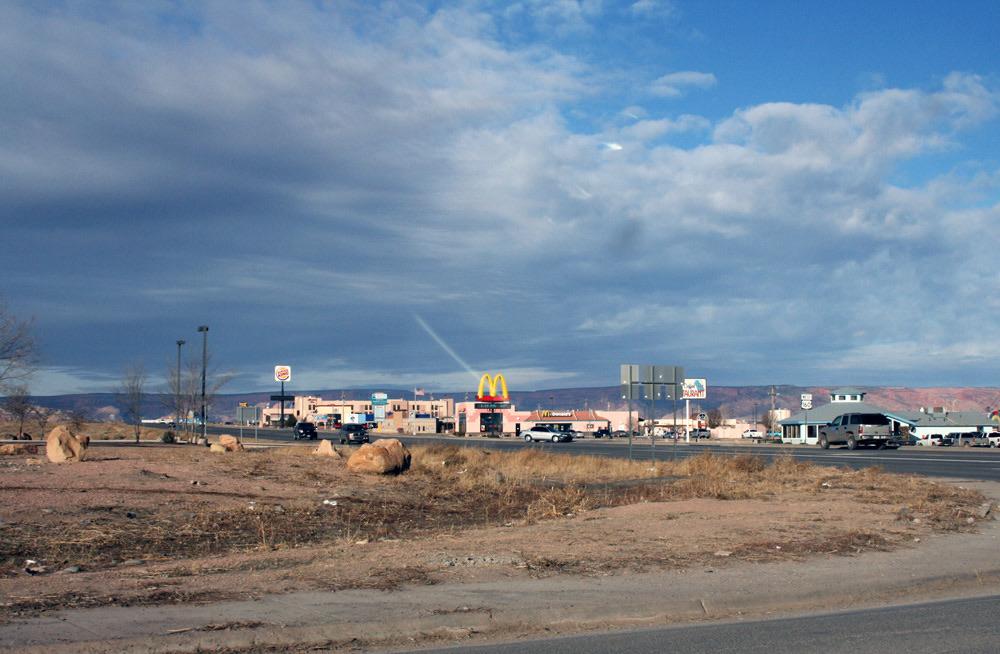
Wikipedia says the crew was housed in an old Civilian Conservation Corps camp in northeastern Arizona, in strong winds and low temperatures at 5,700 feet.
The Deseret News puts the cast and crew in a tent city by the Gouldings’ door instead. The two accounts differ on where they slept.
The drop
For the coach stunt, Yakima Canutt had yokes and tongues modified for extra handholds and extra room between the teams. Widen the room on this tongue. Only then can the stuntman drop to a hitch point and open the place hung there.
0 of 6 drops made
The stuntman is on the coach and the teams are tight. Widen the room, then pick a hitch point.
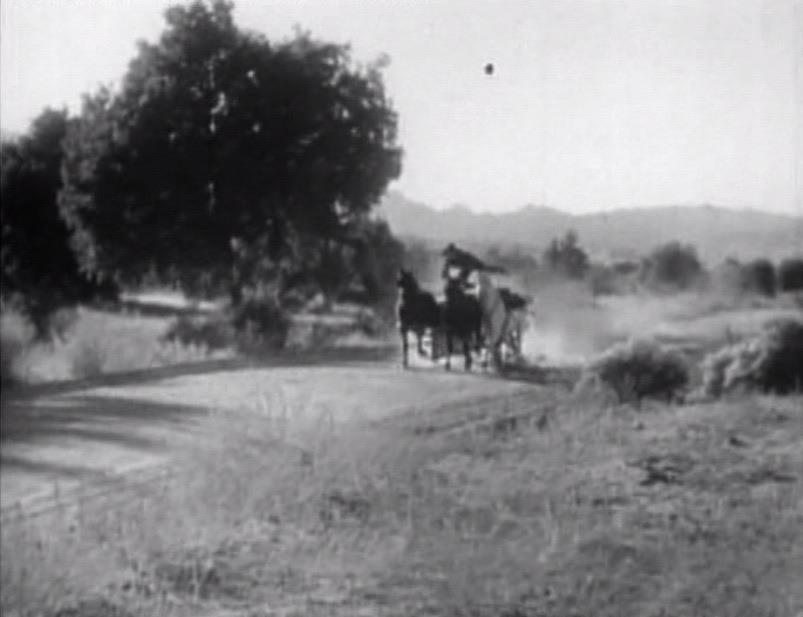
It was a drop from a stagecoach that Canutt first did in Riders of the Dawn (1937), doubling Jack Randall. In Stagecoach he doubled John Wayne in the coach stunts.
One road, three states
The story runs along one stage road to Lordsburg. The film was shot in places that are hundreds of miles apart.
On the page
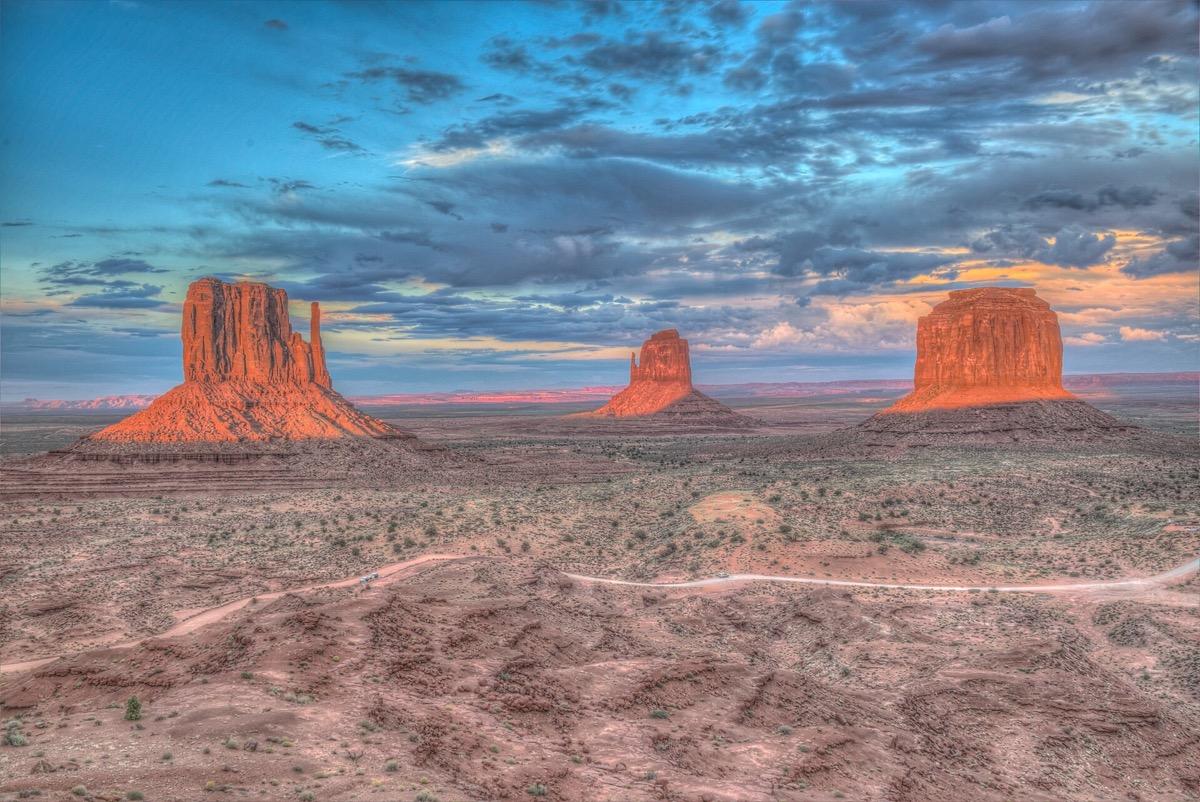
The finale in Lordsburg, New Mexico
On the ground
The closing scene is set in Lordsburg, New Mexico, but was filmed with Monument Valley’s landscape, which Wikipedia says leaves visible geographic jumps.
On the page
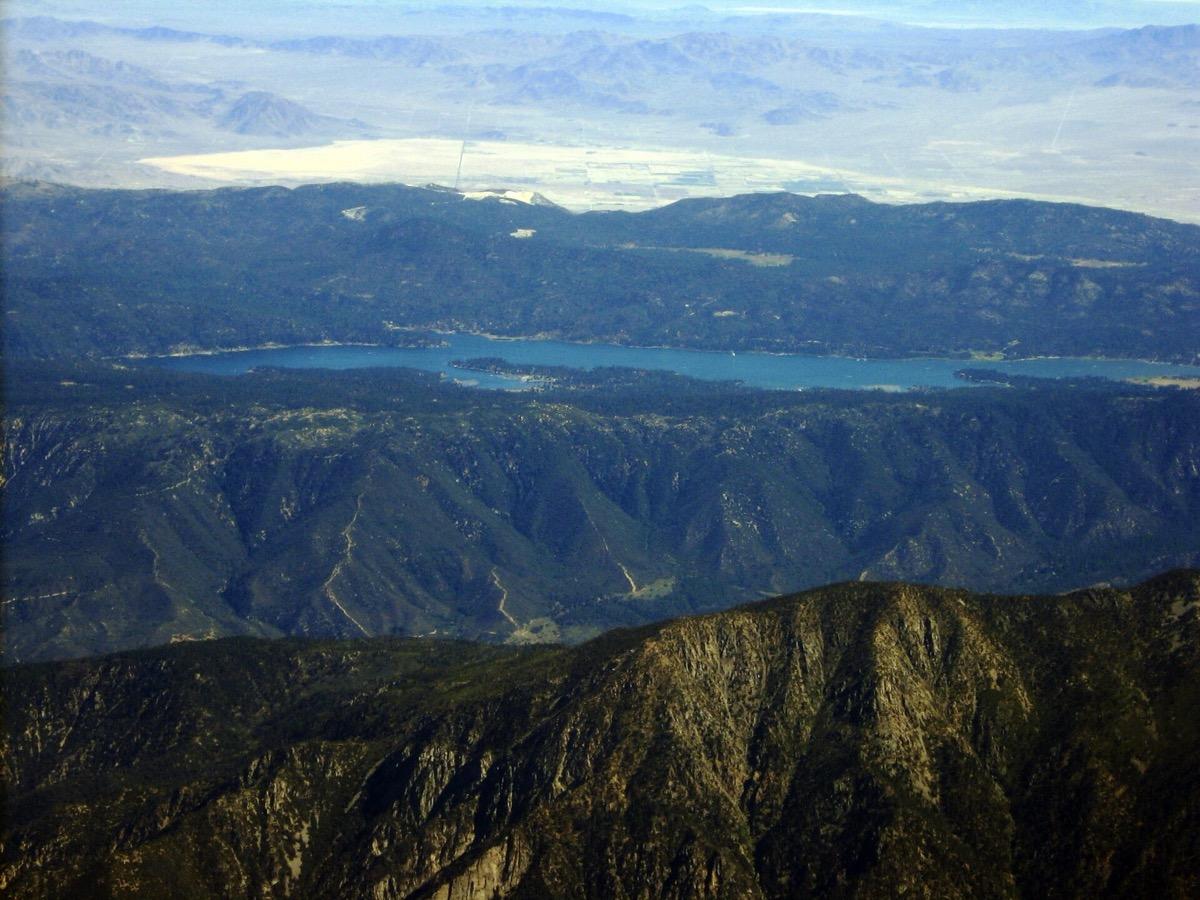
The Apache attack on the stage road
On the ground
Wikipedia says the Apache attack sequences, with riders on galloping horses and Yakima Canutt’s stunts, were filmed at Lucerne Dry Lake near Victorville.
On the page
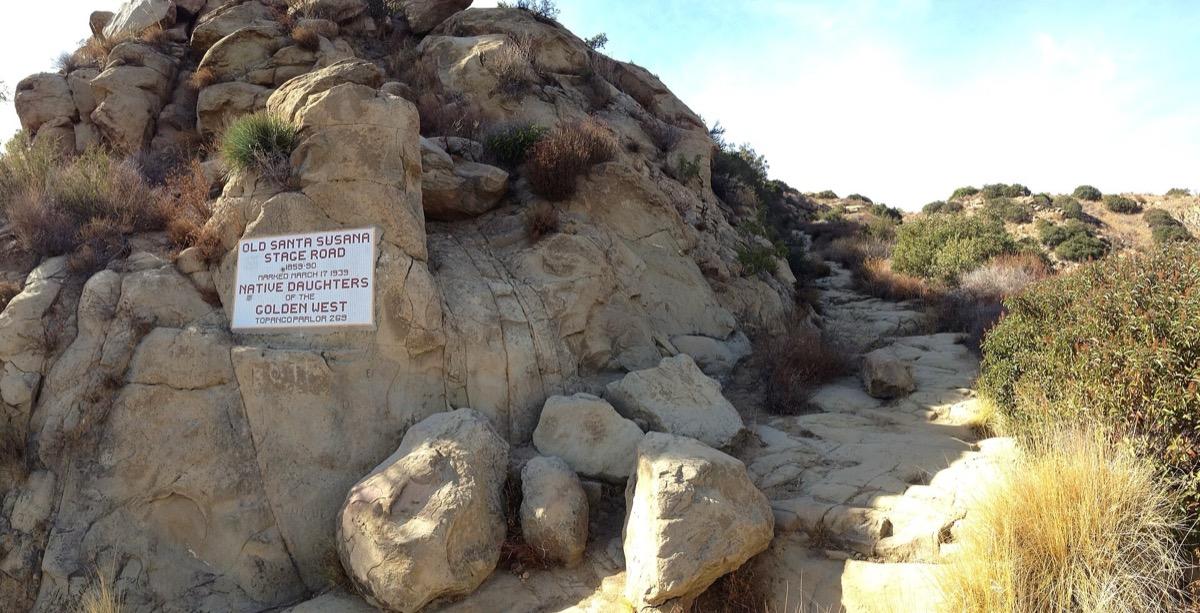
The stage’s arrival at Apache Wells
On the ground
A fan blog of the ranch’s locations puts the stage’s arrival at Apache Wells north-west of Garden of the Gods, with rock formations behind. It says no building was put up there and the adobe shots look like studio work.
The next stop
Monument Valley, Goulding’s and Kayenta are on Navajo Nation land: pay the park fee, stay on the marked road and book a Navajo-guided tour for anywhere else. Kernville is a town, Garden of the Gods is public parkland, and Lucerne Dry Lake is open desert with nothing marked.
6 places you can visit, on the Arizona–Utah line and across California.
Pins mark public places; private homes are named but not pinned.
Exact filming spot not recorded. Navajo Nation land on the Arizona–Utah line. The tribal park charges an entry fee and the visitor centre is the way in. Stay on the marked loop road, and book a Navajo-guided tour for anywhere else.
Exact filming spot not recorded. A lodge, museum and restaurant just off US 163 in Utah, on Navajo Nation land. The museum is in the old trading post; check its page for hours.
Approximate area. A Navajo Nation town with motels, fuel and food, 25 miles south of the valley. No film site is marked here; the pin is the town.
Navajo Nation, Arizona and Utah · Monument Valley Tribal Park Road, on the Arizona–Utah line
The Navajo Nation, whose reservation contains Monument Valley, regards it as sacred, Wikipedia says. Its Navajo name is Tsé Biiʼ Ndzisgaii, “valley of the rocks”.
Navajo Nation land on the Arizona–Utah line. The tribal park charges an entry fee and the visitor centre is the way in. Stay on the marked loop road, and book a Navajo-guided tour for anywhere else.
Navajo Nation, Arizona and Utah · Gouldings Trading Post Road, Oljato-Monument Valley, Utah
Wikipedia puts the trading post building at 1928, seven years after Harry Goulding bought 640 acres. It was a trading post and the Gouldings’ home before it became a lodge.
A lodge, museum and restaurant just off US 163 in Utah, on Navajo Nation land. The museum is in the old trading post; check its page for hours.
Navajo Nation, Arizona and Utah · Kayenta, Navajo Nation, Arizona
Kayenta is part of the Navajo Nation, at the junction of US 160 and the southern end of US 163. Its Navajo name is Tó Dínéeshzheeʼ.
A Navajo Nation town with motels, fuel and food, 25 miles south of the valley. No film site is marked here; the pin is the town.
Stay
Goulding’s Lodge, on Navajo Nation land at the edge of the valley.
Oljato-Monument Valley, Utah
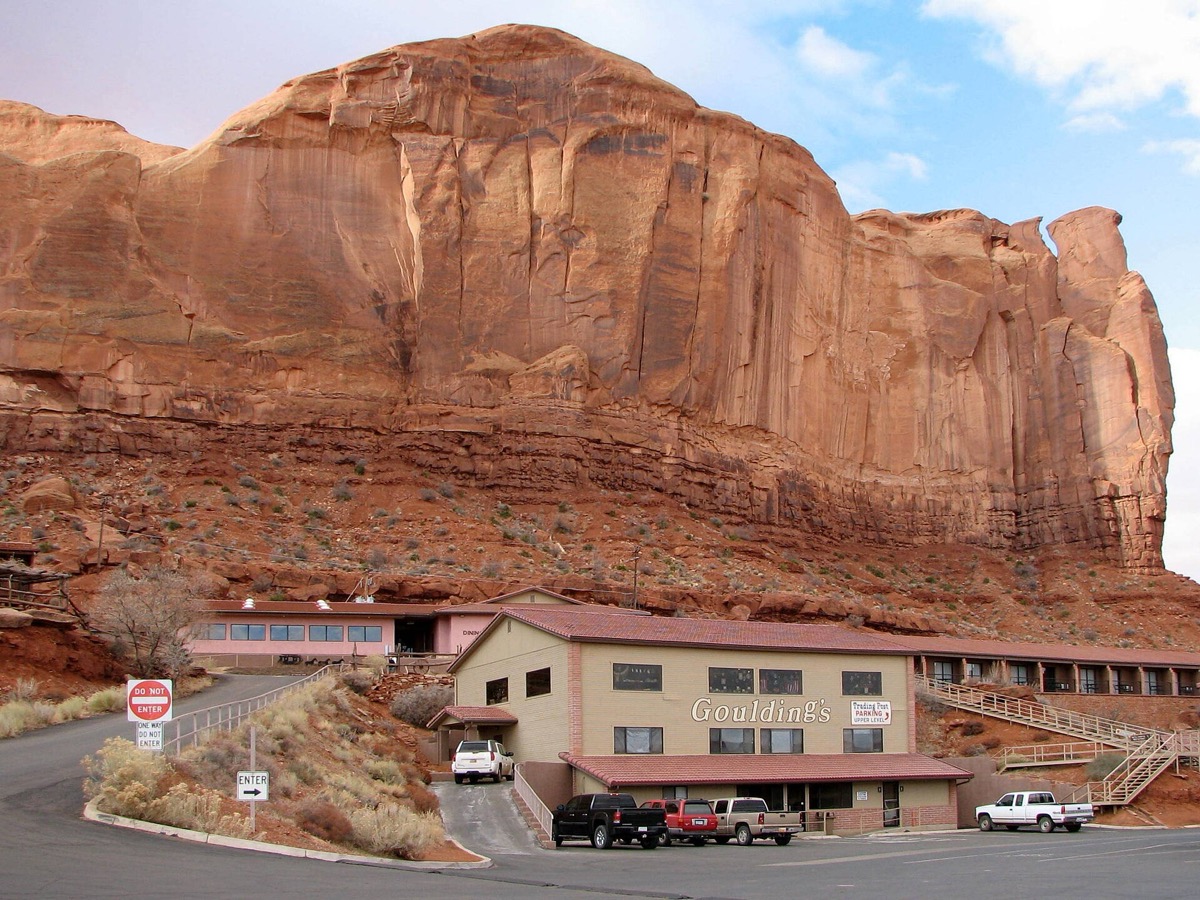
Rooms, villas and a campground at the trading post where the 1938 shoot camped, now owned by the Navajo Nation. Pictured: the lodge, 2009.
Check roomsGo there
The museum in the old trading post, Navajo-guided tours, the tribal park and live tour results.
Oljato-Monument Valley, Utah
The museum in the Gouldings’ old trading post. The page lists no hours here, so check it before you go. Pictured: the lodge, 2009.
See the museumMonument Valley, Navajo Nation
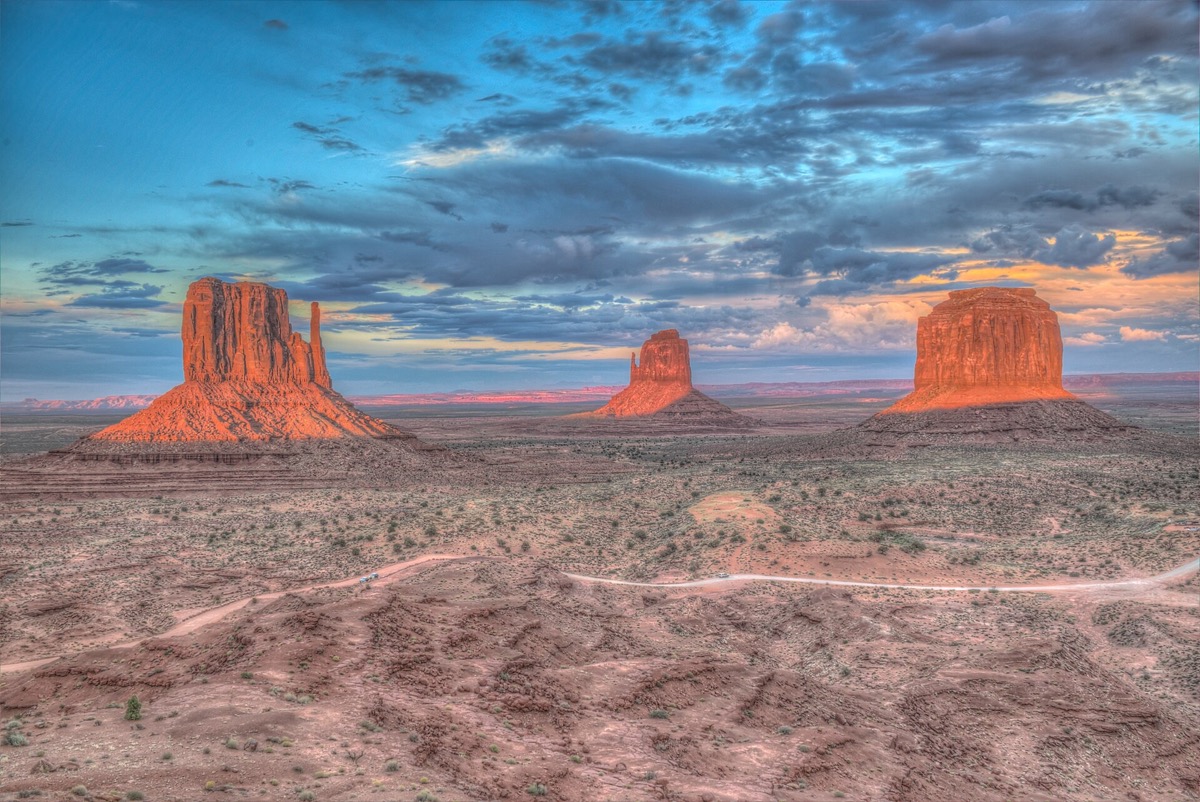
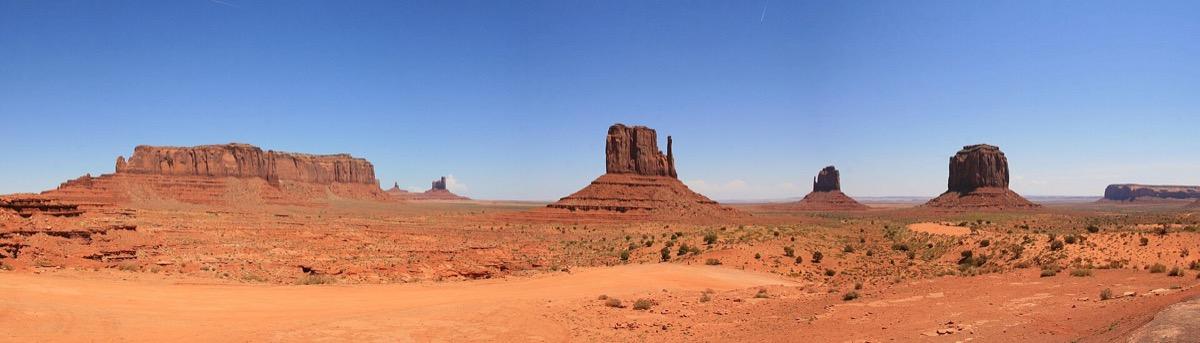
Scenic tours led by local Navajo guides, run from the lodge. The page lists no tour types, so ask when you book. Pictured: the Mitten Buttes, 2016.
Plan a tourMonument Valley, Navajo Nation
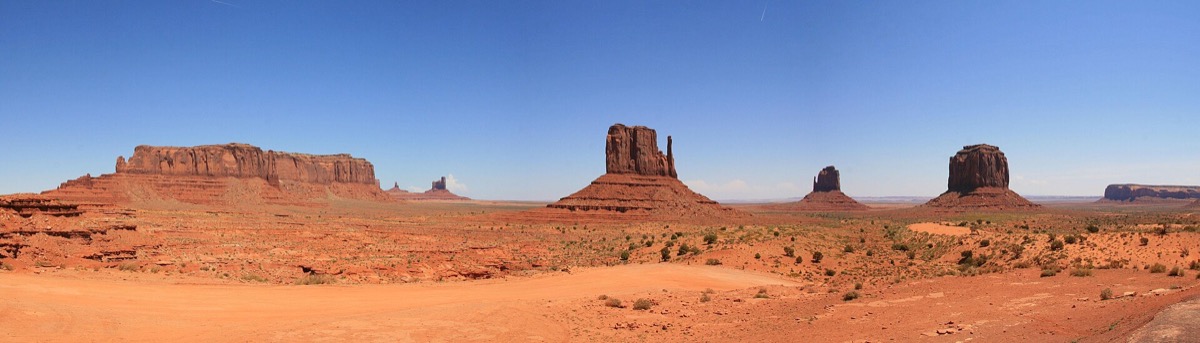
The park’s own page: the 17-mile loop road, the visitor centre and the guided tours into places the road does not reach. Pictured: the valley, 2009.
Visit the park pageDates, prices, rooms and stock change: confirm with the provider before you travel or buy. A stay or tour is described as a filming location only where the card says so.
Every place and moment behind this page, with sources.
6 of 6 places · 12 of 12 stories
Monument Valley Tribal Park Road, on the Arizona–Utah line
Stagecoach is John Ford’s first picture to use Monument Valley as a location.
Hundreds of Navajos are recruited as extras, paid $5 a day or $8 on horseback, and a medicine man is the official weatherman.
The closing scene, set in Lordsburg, New Mexico, is filmed with Monument Valley’s landscape.
Gouldings Trading Post Road, Oljato-Monument Valley, Utah
Harry Goulding takes a binder of photographs of the valley to Hollywood and pitches John Ford for his next Western.
More than 100 cast and crew live in a tent city outside the Gouldings’ door, with Ford in the spare room.
Kayenta, Navajo Nation, Arizona
The crew is housed in an old CCC camp in northeastern Arizona, in strong wind and low temperatures at 5,700 feet.
Kernville, Kern County, California
Scenes are shot on the Kern River near Kernville.
The 1948 Isabella Dam project moves Kernville upstream, and the old townsite becomes a historical landmark.
Lucerne Lake, north of Lucerne Valley, San Bernardino County, California
Yakima Canutt drops from the stagecoach on Lucerne Dry Lake, doubling John Wayne.
Canutt devises modified yokes and tongues for extra handholds and extra room between the teams.
The Apache attack, with riders at a gallop, is filmed on the dry lake.
Red Mesa Road, Chatsworth, Los Angeles
Chatsworth footage is blended with Monument Valley shots, and a fan blog puts the stage’s arrival at Apache Wells beside Garden of the Gods.
Every place in Stagecoach leads somewhere else.
Once a week
One story, one place and one thing to do near you. Free, and you can stop any time.